
Archive
Book Review: Hunger by Jackie Morse Kessler (Series, #1)
 Summary:
Lisabeth Lewis thought it was just a nightmare. Death coming to her when she tried to commit suicide with her mom’s antidepressants and offering to make her Famine–one of the four horsemen of the apocalypse–instead of letting her die. It’s just all way too ironic, her as Famine. After all, she’s fat. She has to watch what she eats very carefully. The Thin voice tells her all the time exactly how many calories each bit of food is and how much exercise it’ll take to burn it off. Yes. Lisabeth Lewis is fat. So why would Death assign Famine to her anyway?
Review:
When I heard the concept of this new YA series–each horseman of the apocalypse representing and dealing with a mental health issue relevant to teens–I was incredibly skeptical. Writing about mental illness in a way that teens can relate to without talking down to them as well as in a responsible manner is difficult enough without having a fantasy element present. Toss in the fantasy and I was worried this would either read like one of those old 1950s cautionary films shown in highschools or would miss dealing with the mental illness entirely. Boy was I wrong. Kessler has found such a unique, creative way to address a mental illness yet cushions it in the fantasy so that it isn’t too in your face. It’s the ideal scenario for teens reading about it, but it’s also enjoyable for adults.
The fantasy element is very tongue-in-cheek. It strongly reminds me of Buffy the Vampire Slayer in style. For instance, Death resembles a heroin-chic dead rock star, and he speaks in a mix of classic English and mocking teen speak to Lisa.
“Thou art Famine, yo,” Death said. “Time to make with the starvation.” (Location 661)
It quickly becomes apparent that Death and the Horsemen aren’t entirely what they initially seem to be. Indeed, they seem to function to get Lisa out of her own head and problems and to look at the greater world around her. She literally travels the world on her horse and sees real hunger, and it affects her. It doesn’t make her feel guilty for being anorexic, but it makes her want to be better so she will be strong enough to help others. That’s a key element of any mental illness treatment. Getting the person to see outside of themselves, and Kessler has personified it through the Four Horsemen.
She, Lisabeth Lewis, seventeen and anorexic and suicidal and uncertain of her own path–she’d done something that mattered. She’d ignored her own pain and had helped others. Maybe she wanted to live after all. (Location 2007)
Of course the non-fantastical passages dealing with Lisa’s anorexia and her friend’s bulimia are incredibly realistic. If they weren’t, the book would immediately fail as the whole thing would ring false to the teens reading it. Her anorexia is dealt with as a very real thing even as the Four Horsemen are presented as either truth or hallucinations of her starved mind. This is key. The anorexia cannot be presented as an element of fantasy.
I was concerned the ending would be too clean-cut. I won’t give any spoilers, but suffice it to say, Kessler handles the ending in a realistic, responsible manner. There are no easy solutions, but there are solutions to strive for.
Overall, Hunger takes the incredibly real problem of anorexia and presents it with a touch of fantasy to help bring the reader not only into the mind of the anorexic but also outside of herself to look at the bigger picture. It is an inspiring, fresh take on YA lit dealing with mental illness, and I highly recommend it to fans of YA lit as well as those interested in literature dealing with mental illnesses.
5 out of 5 stars
Source: Amazon

Counts For:

Book Review: Touched by an Alien by Gini Koch (Series, #1)
 Summary:
Katherine “Kitty” Katt manages to get released early from a dull day of jury duty only to find herself confronted with an angry man who sprouts wings and starts flinging knives from their tips toward everyone in the vicinity. Kitty attacks and stops him and quickly finds herself sucked into a world she was unaware existed. A world of alien refugees defending Earth and themselves from a bunch of fugly alien parasites. She soon discovers her ordinary parents are more involved in this secret world than she would ever have dreamed. On top of that, she’s increasingly finding herself falling for one of the alien hunks who announced his intentions to marry her almost immediately upon meeting her.
Review:
I received a free Kindle edition of the second book in the series, Alien Tango, last year and read it without realizing at first that it was part of a series. I immediately fell in love with the world and Kitty and decided I needed to go back and read the first entry in the series. This reverse approach definitely gave me a different perspective on the story, but it certainly didn’t make me love it any less.
What makes this series epically entertaining is well-established in this first entry. First, the paranormal element is aliens in lieu of something more widely used. Everything has the clean, secret government agency tinge to it instead of the dirty mafia feel many other paranormals elicit. The aliens are aliens, yes, but they’re also a secret government agency. Imagine Men in Black only the men in black are all aliens.
Second, Kitty Katt is a heroine who clearly epitomizes the modern woman. She can take care of herself, but that doesn’t mean she doesn’t like having a man around too. She’s smart, witty, sassy, and sexy, but she has her flaws and weak spots too. She has sex on the day she meets a man, but she’s still aware enough of social norms that she takes care to attempt to hide that fact from the majority of people around her. On the other hand, she herself doesn’t regret that act in the slightest. She so clearly reflects what it is to be a modern American woman that I can’t help but applaud Gini Koch. I hope to see more heroines like Kitty Katt in the near future.
The action itself is vastly entertaining, particularly if you enjoy scifi. The fugly parasites are imaginative, disgusting, and frightening simultaneously. The Big Bad is scary and crafty. The solution to the Big Bad is seriously entertaining. I honestly cannot say enough good things about the scifi in this book.
Overall, Gini Koch’s Kitty Katt series has not failed to leave me glued to my iPod screen yet. It’s sharp, modern, unique, and vastly entertaining. I practically throw copies at lovers of paranormal romance to read, but also highly recommend it to fans of scifi and modern heroines as well.
5 out of 5 stars
Source: Amazon

Book Review: Zoo City by Lauren Beukes
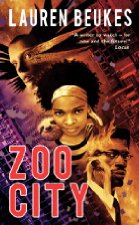 Summary:
In the near future those who’ve committed a serious wrong for which most would feel guilty are given an animal by the spiritual world. They are known as Zoos, and the animals attempt to guide them back to the straight and narrow as well as keeping the Undertow at bay. Separation is painful and almost impossible. If the animal dies, the Zoo dies. Zinzi December of Johannesburg is one of these Zoos. Her animal is a sloth, and her magical power is finding lost things. Normally she sticks to everyday objects such as keys in the sewer, but when a music producer approaches her via his assistants for help in finding a missing teen Afropop star, she bends the rules. She just may come to regret that decision.
Review:
Beukes excels at world-building, setting a vivid example of how to use showing not telling to its best, fullest extent. I was instantly swept into this fantastical version of a nation I’ve never been to, yet somehow was able to quickly decipher which elements were pure fantasy and which based on the realities of modern South Africa. The reader comes to understand how Zoos first showed up and why they exist without even really realizing she is acquiring this information.
Similarly, the character of Zinzi was a refreshing change from the typical urban fantasy female lead. While she is clever and fairly fit, she is neither abnormally strong not incapable of making bad decisions. She is a three-dimensional character with both positive and negative qualities. She is not simply the put-upon dark heroine. Her struggles are real and current, not simply in the past. At first it appears that Beukes is going to fall into the completely redeemed heroine trope, but instead Zinzi still has demons to face. She must repeatedly fall and get back up, something that rings as far more real than one epic fall followed by heroine perfection.
The one draw-back is that the plot is a bit confusing. I had to re-read the climax to fully understand exactly what had been revealed as the big secret Zinzi was discovering. Part of that was due to a couple of elements of the plot that seemed not to mesh well with the rest of it. Some of the important fantasy parts of the plot should have, perhaps, had a bit more explanation. There is a lot going on in this novel and sometimes it can be a bit overwhelming for the reader who is new not only to the fantastical elements of the tale, but to the South African cultural elements as well. Although the plot is ultimately decipherable, it is not immediately easy to follow.
Overall this is a creative, unique piece of urban fantasy that simultaneously presents a truly flawed heroine and takes the genre into a city many modern readers are not familiar with. I recommend it to fans of urban fantasy as well as fans of African literature.
4 out of 5 stars
Source: Gift

Book Review: Farewell by Honore de Balzac
 Summary:
Philip, a colonel in the military, lost his love Genevieve in Siberia when retreating from the Russians. Years later, he randomly stumbles upon her in a country house with her uncle, having lost her mind from her horrible experiences in Siberia with the military after they lost each other. She is only capable of saying one word. “Farewell.”
Review:
I decided to read a Balzac work due to a reference in the musical The Music Man. The elderly ladies of the town think the librarian is scandalous because she keeps works of Balzac in the library. Clearly I needed to know what all the fuss was about, so I decided to see for myself.
My first instinct is that this classic work of tragedy shouldn’t actually be that scandlous, which perhaps was the point in The Music Man. These elderly ladies are *so* ridiculous to object to Balzac. In any case, however, in retrospect I can see what is so shocking. The incredible weakness of mind and character demonstrated by both Philip and Genevieve are both irritating and depressing. I’m not sure what point Balzac was trying to make, but all I could think was that both of them needed to man up.
That’s not to say the book isn’t well-written though. The translation is lovely, and I’m sure in the original French it is even prettier. Just imagining Genevieve only being able to say “Adieu” sounds prettier than “Farewell.” The scenes are vividly described, and the reader is certainly engaged.
Overall, it is a well-told tragedy that suffers a bit from weak characterization. I recommend it to fans of tragedies and classic French literature.
3.5 out of 5
Source: Audible app for the iPod touch, iPhone, and iPad

Book Review: How to Be a Hepburn in a Hilton World: The Art of Living with Style, Class, and Grace by Jordan Christy
 Summary:
This book is a call to action for intelligent American women to start addressing our current image problem. Increasingly, women are willing to give away all the self-respect our suffragette fore-mothers fought for in return for their quick 15 minutes of fame or even 15 minutes of attention from that one dude. Christy calls on women to appreciate the relatively recent freedom we now have as a gender by pursuing knowledge, class, and dignity in lieu of late-night dancing on stripper poles at clubs. The book serves not only as a call to action, but also as a how to guide, featuring chapters on classy dress for every personality, good friends, dating, body image, and more.
Review:
I admit that I largely bought this book because the women of classic cinema–from Audrey Hepburn to Katherine Hepburn–are my heroes. They exuded femininity and strength simultaneously. What’s more attractive than that? Overall, though, I think this book is a bit behind where I am in my personal growth as a woman, although that doesn’t make the message any less important.
For instance, I really didn’t need Christy to tell me to love and accept my body and eat healthily. I already do both those things. On the other hand, I know some women who would really need that chapter, so I certainly didn’t mind it being in the book. Similarly, I’m a nerd. I don’t need to be told not to be a Stupid Girl (as those hoo-ha flashing reality tv stars are often called). I suppose if I was a bit younger or raised a bit differently though I might be intrigued by this book if for no other reason than the idea that class and intelligence are actually more attractive than that kind of behavior.
The two chapters on style were actually quite useful. Fashion sense that’s practical and attractive simultaneously while reflecting my personality is something I struggle with. I found the quizzes to help you determine your style and colors that work best for you to be truly enlightening. Christy offers up sample core items for the various personality types, and I immediately wanted to acquire the ones that suited my own. It was worth reading the book for the fashion sense alone.
Overall, I appreciate a book calling on women to respect themselves and behave like intelligent human beings. To pursue the goals and passions or fore-mothers fought so hard for. I definitely think those who would benefit the most from this book might be the ones least likely to read it–like oh think of the Jersey Shore female cast members. On the other hand, everyone has moments when they get tired of the partying lifestyle. Having a book like this out there for them to grasp onto with such an attractive cover to boot is definitely a good thing. I’d recommend giving it a go if you’re an intelligent woman seeking for encouragement in your pursuit of class and goals or if you’re a partier thinking about changing your lifestyle.
3.5 out of 5 stars
Source: Amazon

Book Review: Eros and Psyche by Robert Bridges
 Summary:
This twelve section poem re-tells the mythological love story of Eros and Psyche with each section representing one month of the year. Psyche, a mortal, and Eros, a god, fall in love, but Eros’s goddess mother, Aphrodite, disapproves of her son loving a mortal. They therefore must face trials and tribulations to be together.
Review:
Since this re-telling of the Eros and Psyche myth was originally written in English, it is actually quite beautiful to read and/or listen to. The use of the twelve months to tell the story lends it a certain relaxing quality, even when the lovers are facing trials and tribulations.
The story itself is typical of a myth. Someone wants something. A god or goddess doesn’t want them to have it. They face trials and tribulations before besting or being accepted by the god/dess. Nothing new there. What is new is how prettily the tale is told.
It’s a short read, but it features some well-loved figures from mythology including Pan and Demeter. There’s a particularly fun gathering of the gods and goddesses toward the end that demonstrates the interaction and clash of personalities that the Greeks and Romans believed in.
Overall, this retelling is well-handled, and the poetry is beautiful. If you enjoy poetry or mythology, you will enjoy this read.
3 out of 5 stars
Source: Audiobooks app for the iPod, iPhone, and iPad

Book Review: It by Stephen King

Summary:
In the late 1950s in the small town of Derry, Maine, children are being mysteriously murdered. Seven misfit and outcast kids band together to face It, and they think they’ve beaten it, but 27 years later, the murders return. Vaguely remembering a promise they all made, the now adults return to their hometown of Derry to face It again.
Review:
This tale is largely known in the States as “that scary clown story,” so for years I avoided it. I’ve been terrified of clowns for as long as I can remember. My parents tell me that the first time I ever saw one, I screamed uncontrollably. My only encounter with Stephen King’s It (as it’s known in the States) was with a diorama of the clown from the movie in a haunted house I went through in Salem, MA. It scared the crap out of me, so I was a bit nervous to read this book. However, having read the Dark Tower series, I wanted to read all of the other stories that King lists as taking place in the same general universe, and It was one of them. So I manned up and read it, and boy am I ever glad I did.
This is not a cheesy scary clown story. What it is is first a character study and second a commentary on growing up. The dual horror of being a kid and being excited and afraid to grow up and being an adult and being excited and concerned that you are grown up and may have lost a part of yourself in childhood. King very clearly demonstrates that being a kid isn’t all fun and games–most of the kids in the group of 7 have bad home lives–but there is an essential hope that children have that is hard to reclaim as an adult. A child is able to have a horrible experience with a shape-shifting werewolf or a bunch of bullies and then walk a couple of blocks and forget about it and be excited to see American Bandstand that night. Children are incredibly resilient, and King demonstrates that.
What makes the story though is the return to Derry 27 years later. King puts a hope in adults that although they may not remember exactly what it is to be a resilient child, they can still repossess that power in later life. Although the first inclination of kids to survive is to forget the bad, an adult can remember and still survive. For at the beginning, the characters don’t want to remember what happened to them as kids.
Did he remember? Just enough not to want to remember any more. (Location 1416)
Yet the characters are brave and face their childhoods. Yes, King personifies both the childhood evils and the remembering of them as an adult with It, but that’s part of what makes the story powerful. There’s a reason people refer to memories as personal demons. That’s how they feel. In the end, the way the characters grow and change and overcome is to find
A way to be people that had nothing to do with their parents’ fears, hopes, constant demands. (Location5631)
Beyond the excellent symbolism and allegory for the experience of surviving bad things in your childhood and facing them again as an adult, the horror itself is wonderful. It comes at just the right frequency so that the reader settles into a sense of security only to be blind-sided by a terrifically horrifying experience. There were sections that literally had me jumping at the sound of my own phone ringing in the silence. These are some of the better passages of creepy horror that I’ve read written by King.
Of course, the allusions to the universe of the Gunslinger are there. It gave me chills to recognize them as I read. Among just a few were the turtle, spiders, and other worlds than these. One particular line that gave me chills of recognition that other fans of the Dark Tower series will be sure to appreciate is
Eddie had drawn his aspirator. He looked like a crazed malnourished gunslinger with some weird pistol. (Location 20760)
Combining everything from the horror to the allegory of facing childhood demons to the allusions to the Dark Tower series make Stephen King’s It a remarkable read. I recommend it to fans of Stephen King, as well as anyone interested in the idea of childhood demons who feels they can handle passages of horror.
5 out of 5 stars
Source: Amazon

Book Review: The Duchess of Malfi by John Webster
 Summary:
The Duchess of Malfi has been widowed young. She wants to remarry, but her brothers wish for her to remain single. She enters into a secret marriage and is blisfully happy…..until her brothers find out.
Review:
This classic play, first performed in 1614, is everything you’d expect from the early tragedies. There’s greed, vengeance, mysterious children, weeping women, and more. This one is slightly different in that it is drenched in Catholicism and contains a truly evil brother. I wish I could say this play made me think the way A Doll’s House
However, if you find the plot appealing and enjoy a good, old-fashioned tragedy, then you should give this play a shot.
3 out of 5 stars
Source: Audiobooks app for iTouch, iPhone, and iPad

Book Review: Heart’s Blood by Juliet Marillier
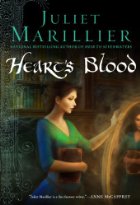 Summary:
This retelling of the classic fairy tale, Beauty and the Beast, is set in a medieval Ireland facing the constant threat of Norman invasion. Caitrin, an Irish lass trained in the trade of a scribe by her now deceased father, runs away from an abusive situation and stumbles upon the mysterious Whistling Tor. The crippled lord of the area lives in Whistling Tor and seeks a scribe. The local villagers warn Caitrin against taking the summer job due to a fear of the host living on the hill, but Caitrin sees no other choice.
Review:
Fantasy is one of those genres that I have never been able to get into, but I do love fairy tales, so I thought maybe a retelling of a classic would work for me. When will I ever learn that I just don’t like fantasy?
Marillier does all the elements of a fantasy book well. She sets up the mysterious, old land of Ireland with just enough description to place the reader there but not so much as to slow down the action. Gothic mystery seeps through every page. The idea of the non-human servants and household members of the castle are creatively handled, as is the lord’s beast-like qualities. The members of the host who could so easily have flowed together are artfully individualized.
Additionally, the romance between Caitrin and the lord of the castle is one I actually approve of for once in a YA book. They both are flawed and have issues to work on, but love each other and have good hearts. Thank you. That’s what a relationship is supposed to look like. I would be entirely comfortable seeing a teenage girl reading this. It’s a healthy, realistic relationship.
Still, though, I had to force myself to slog through the book. I was bored a lot of the time. I don’t like long descriptive passages of a forest. I don’t like reading about dull politics of various areas of Ireland. I’m not interested in explanations of the other-worldly figures. The most interesting part to me was the mirrors all over the household, and they were not addressed fully to my liking. In spite of being able to recognize this as a well-told story, it failed to draw me in. I don’t particularly know why. My best guess is that it is fantasy, and fantasy has always bored me. I was hoping venturing away from the more typical knights in shining armor and dragons style fantasy would solve the problem, but I was wrong.
Thus, this YA fantasy retelling of Beauty and the Beast is creative and well-done. I recommend it to those who know they enjoy a good fantasy story, but those who do not should probably skip it.
3 out of 5 stars
Source: PaperBackSwap

Book Review: Lunch in Paris: A Love Story, With Recipes by Elizabeth Bard
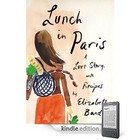 Summary:
Elizabeth has always been drawn to museums and the Old World, so when she’s doing her graduate work in London and meets Gwendal, a Frenchman, she jumps right into dating him. Gradually she falls for not just Gwendal, but Paris in general, especially the food. This memoir tells about her falling in love and the process of becoming an expat in France through the lens of food.
Review:
This memoir starts out strong. Who doesn’t enjoy a good real life love story? Paris sounds incredibly romantic and appealing to anyone who enjoys open food markets, museums, and the big city charm of small spaces. Two things held me back from really enjoying the book though.
First, as a vegetarian, I really didn’t appreciate the incredibly long and frequent sections describing eating meat, cooking meat, how awesome meat is, etc… Where Elizabeth describes her future husband, Gwendal, telling her “I love you” for the first time over a piece of bloody meat, I was thoroughly distracted by the poor, dead, bleeding animal. I could not identify with Elizabeth at all in these frequent sections. How can she claim to be a romantic at heart yet have so much of her life revolve around eating innocent creatures? I wound up skimming a lot.
Granted, I know readers who enjoy eating meat themselves won’t be bothered by these passages, but I am fairly certain they’ll be irritated by the change of tone of voice partway through the narrative. From telling us about how lucky she is to be living this life in Paris, Elizabeth suddenly changes into a bit of a pity party. Poor Elizabeth, living in Paris with a man who loves her, cooking food for him every day, giving tours of the Louvre. This isn’t how she imagined her life would work out. Um….ok. I’d suggest Elizabeth try reading some memoirs of true struggles such as The Glass Castle and get back to us.
Overall, the scenes of real Paris life are interesting and enjoyable, but the frequent scenes featuring bloody meat and Elizabeth’s pity party really detract from the book. If you are a meat eater yourself and a foodie, you’ll probably enjoy this memoir anyway. I’d advise others to stay away.
3 out of 5 stars
Source: Amazon

 Support my work with a tip or browse my shop for curated book club guides, how to guides, cross-stitch patterns, and more!


This work by Amanda Nevius is licensed under a Creative Commons Attribution-Noncommercial-No Derivative Works 3.0 United States License.
 Opinions of a Wolf