
Archive
Book Review: Hetalia: Axis Powers Volume 2 by Hidekaz Himaruya (Series, #2) (Manga)
 Summary:
The manga featuring the countries from WWII as characters is back this time focusing more on the future of the nations after WWII instead of the history before WWII. Russia’s dilemmas with his sisters the Ukraine and Belarus are explored. Canada’s persistent ability to somehow be invisible to most of the rest of the G8 nations (and also to be mistaken for America). The various vignettes are punctuated with Japan-kun and America-kun visiting each other’s homes and attempting to reach a cultural understanding.
Review:
Himaruya’s tongue in cheek representation of global politics and national cultures is just as strong here as in the first entry into the series. I appreciate that he addressed before and after WWII first. It puts everything into an interesting historic perspective.
The art is still gorgeous. The countries who are “relatives” of each other are similar looking but still decipherable from each other (although Canada probably wishes he looked a bit less like America). There is a lot to feast your eyes upon on every page.
I again found myself laughing uproariously at the wit within the pages. Every country is teased by the author, including his own. He points out shortcomings without judging them too harshly. It is what it is, and the more I read nations as characters, the easier it is to see the world as one big loopy extended family.
I particularly appreciate how Himaruya explains the former Soviet Union nations’ problems so clearly. It’s something that I must admit as an American we didn’t ever really address in school, so this was all new to me and yet I came away knowing the facts from a manga.
That’s what makes this series awesome. It’s factual without being judgmental. It sees the humor in local customs and quirks. And somehow it teaches you something in the meantime. Highly recommended to all. Just remember to start reading it at the back. ;-)
5 out of 5 stars
Source: Public Library

Previous Books in Series:
Hetalia: Axis Powers, Vol. 1
Book Review: From This Moment On by Shania Twain
 Summary:
Shania Twain shot to fame on the country music charts in 1995 with her second album The Woman in Me. Her music was part of the new generation of 90s country, featuring such artists as Toby Keith, Tim McGraw, Faith Hill, etc…, that would blend country and pop for a new sound. In her memoir Shani recounts her life from her childhood in the northern part of Ontario, Canada to her sudden fame to the heartbreaking realization that her husband was cheating on her with her best friend to her recovery and new life.
Review:
While other girls of the 90s were obsessed with The Spice Girls and Britney Spears, I fan girled out over Shania Twain. My family was a country music household to begin with, so getting my parents to be cool with me listening to pop was always a creative act. (I remember I got away with listening to Britney Spears by getting my mother to listen to Hit Me Baby One More Time and like it and then revealed that it was Britney Spears. I’ve always been a wily lady.) In any case, I needed to employ none of this trickery to listen to Shania. As country music she had the stamp of approval, plus my big brother had bought her cd. I was 8 years old when The Woman in Me came out, and I remember being completely blown away by “Any Man of Mine.” (Go watch the video. I can wait.) I was blown out of the water. Whereas most country I’d heard prior was all about love and heartbreak and cheating husbands, here was a woman saying loud and proud that she deserves to be treated right, dammit! Let’s just say it really appealed to the feminist inside me. When I found out she was from “the bush” of Canada and a poor family closely tied to Native culture, well, I was insanely curious, but Shania has always kept her private life private, so I was left to wonder. Needless to say, when I heard at the beginning of this year that Shania would be publishing a memoir, I pre-ordered it. I had to know more about this woman whose music so spoke to lonely little rural girl of the 90s.
Shania’s memoir is very different from any others I have read. She does not involve many storytelling tropes. She only quotes people twice in the entire book. She reflects a lot, similar to, perhaps, if you’ve ever had the chance to listen to an older relative think out loud about her life. It does not read like a story, but it does feel as if you were granted a couple hours of private access to one of the more private country stars.
The strongest part of the book is without a doubt when she is reflecting on her family and upbringing in Canada. It becomes abundantly clear that perhaps Shania’s reclusiveness has more to do with the fact that while she loved music she had no dreams of being a star. Her mother decided her daughter would be a star and pushed her into it.
Imagine what a burden that is for a young girl. I just wanted music, not necessarily a music career. But because I felt obligated by her dedication to me her singer, I never had the heart to consider anything else in life, even though I’d dreamed of maybe becoming a veterinarian. I also developed a passion for design and architecture that continues to this day. In fact, that’s probably what I would have pursued had my mother not been so forceful about music. (location 1634)
I find it fascinating how often famous people were pushed into that career path as a child. What makes parents do this? I remember when I was a kid I wanted to “be a star,” and my father sat me down and told me to think really hard about it, because I’d lose all privacy and normalcy. I gave up on the idea and decided to be a reclusive writer instead. So what makes other parents push their kids into it?
Well, it’s obvious Shania’s mother had an incredibly rough life. Her family was below the poverty line with young mouths to feed. Her mother’s relationship was abusive, and she struggled with depression.
The perpetual undertow of financial instability took its tool in other ways, as it usually does, compromising my parents’ love for each other at times and no doubt feeding my mother’s recurrent bouts of depression. (location 189)
Ah. I can only guess that Shania’s mother saw a chance for financial stability for her daughter’s future in her talent, pinpointing most of her life’s troubles on a lack of money. Funny how Shania then succeeded and went on to have similar problems simply on the opposite end of the financial spectrum.
The section of the book dealing with fame, recording, making music videos, etc… is frankly disappointing. Shania barely brushes the surface of what actually went on behind the scenes, instead focusing in on how drained and dissatisfied her newfound fame made her feel. Passages largely read like this:
I was starting to feel as if I’d lost my chops at life’s fundamentals—and I’d been someone who could survive on my own in a cabin in the woods with no running water or electricity in subzero temperatures and snow up to my butt. Now, with a skilled full-time staff at home to handle every domestic and personal chore for me, I felt…useless and inept. (location 4905)
An interesting reflection, no doubt, but I really wanted to know what happened during the, at the time controversial, “The Woman in Me” video shoot in Egypt, for example. Details like this combined with the reflections on the dissatisfaction of fame would have made for a more powerful book, in my opinion.
The last section of the book addresses Shania’s time off from music, the birth of her son Eja, and the dissolution of her marriage to music producer Mutt Lange. This part is hard to read, because it is so abundantly clear that those around her have used and abused Shania (her husband cheated on her with her best friend in Switzerland). This is a woman for whom for her whole life family and being in touch with nature have mattered to her far more than anything else, and yet these things seem to be denied her. It saddens me that the woman who sang such strong music has in fact spent most of her life trying to make other people happy. This memoir was written as a way to deal with the end of her marriage, and I hope that through it Shania has found some peace and starts listening to her heart about what she really values and needs. It is so evident in the last third of the book that she is trying to buy happiness with more and more property and perfectly built homes. If only there was some way for the peace and quiet loving singer/songwriters of the world to get their music to others without suffering from the entrapment of fame. Maybe the internet will help with that.
Overall, I found this to be a moving memoir, if a bit flawed. It meanders sometimes and skips over some things that fans would definitely want to know about, but it is an interesting insight into the mind and life of a famous country singer and gives an interesting look at the negative effects of fame, even if they aren’t as huge as drug overdoses.
4 out of 5 stars
Source: Amazon

Giveaway: Like One of the Family by Alice Childress
 I’m pleased to be offering up my first ever giveaway! Out of appreciation to Beacon Press for their generosity in giving both myself and Amy copies of Like One of the Family (review) in support of our The Real Help Reading Project, I’d like to spread the love by passing on the copy to another lucky person!
What You’ll Win: One previously read print copy of Like One of the Family by Alice Childress. (It did ride around in my purse on the T, so we are not talking pristine, here).
How to Enter: Leave a comment with your email address so I can contact the winner for his/her mailing address!
Rules: US ONLY. Sorry, I can’t afford to mail anywhere else. If you have a friend in the States willing to let you use their address, that will work too, though. The mailing address must be in one of the 50 US states or Puerto Rico, however. (If you’re an international address, sign up for the same book being given away on Amy’s blog internationally).
Contest Ends: November 26th! The date of our next The Real Help post ;-)
Enter away! Spread the word! Show your love for black women writers and the real experiences of domestic black workers in the 1950s and 1960s! Thanks!
Book Review: Like One of the Family by Alice Childress (The Real Help Reading Project)
 Summary:
Originally published as a serial in African-American papers in the 1950s this series of monologue-style short stories are all in the voice of Mildred–a daytime maid for white families in New York City. The monologues are all addressed to her best friend and downstairs neighbor, Marge, who is also a maid. The stories range from encounters with southern relatives of moderately minded employers to picnics threatened by the Ku Klux Klan to more everyday occurrences such as a dance that went bad and missing your boyfriend. Mildred’s spitfire personality comes through clearly throughout each entry.
Review:
With completion of this book, Amy and I are officially halfway through our The Real Help Reading Project! This book is our first piece of fiction to directly foray into the time era and relationships depicted in The Help, whereas the rest have shown the slave culture and racial issues leading up to that time period. I’m glad we got the historical context from our previous reads before tackling this one written during the Civil Rights era by an author who periodically worked as a maid herself.
The introduction by Trudier Harris is not to be missed. She provides excellent biographical details of Alice Childress, who was not only a black writer of fiction, but also wrote and performed in plays. I am very glad I took the time to read the introduction and get some context to the author. Harris points out that in real life some of the things the character Mildred says to her employers would at the very least have gotten her fired, so to a certain extent the situations are a bit of fantasy relief for black domestic workers. Mildred says what they wish they could say. Since we know Childress was a domestic worker herself, this certainly makes sense. I would hazard a guess that at least a few of the stories were real life situations that happened to her reworked so she got to actually say her mind without risking her livelihood. I love the concept of this for the basis of a series of short stories.
More than any other work we’ve read, Like One of the Family demonstrates the complexities of living in a forcibly segregated society. Mildred on the one hand works in close contact with white people and subway signs encourage everyone in New York City to respect everyone else, and yet her personal life is segregated. Mildred frequently points out how she can come into someone else’s home to work, but it wouldn’t be acceptable in society for that person to visit her as a friend or vice versa.
Another issue that Childress demonstrates with skill is how a segregated, racist society causes both black and white people to regard each other with undue suspicion. In one story Mildred’s employer asks her if it’s too hot for a dress Mildred already ironed for her and ponders another one. Mildred assumes that if she agrees with her employer that it’s too hot for the first dress, she’ll have to stay late to iron. Her employer instead of getting angry realizes that Mildred has been mistreated this way before and takes it upon herself to reassure Mildred that she herself is perfectly capable of ironing her own dresses and will not keep Mildred longer than their agreed upon quitting time. Of course, Mildred sometimes is the one who must hold her temper and calm irrational fears. In one particularly moving section she encounters a white maid in their respective employers’ shared washroom. The woman is afraid to touch Mildred, and it takes Mildred holding her temper and carefully explaining that they are more similar than different before the woman realizes how much more she has in common with Mildred than with her white employer. These types of scenes show that the Civil Rights movement required bravery in close, one-on-one settings in addition to the more obvious street demonstrations and sit-ins.
Of course the stories also highlight the active attempts at exploitation domestics often encountered. Mildred herself won’t put up for it, but Childress manages to also make it evident that some people might have to simply to get by. An example of this sort of exploitation is the woman who upon interviewing Mildred informs her that she will pay her the second and fourth week of every month for two weeks, regardless of whether that month had five weeks in it or not. What hits home reading these serials all at once that perhaps wouldn’t otherwise is how frequent such a slight was in a domestic’s life during this time period. Mildred does not just have one story like this. She has many.
Of course sometimes reading Mildred’s life all at once instead of periodically as it was intended was a bit desensitizing. Although Mildred had every right to be upset in each situation related, I found myself noticing more and more that Mildred was simply a character for Childress to espouse her views upon the world with. I quickly checked myself from getting bugged by that, though. Of course Childress had every right to be upset and did not originally intend this to be a book of Mildred’s life. Mildred was a vehicle through which to discuss current issues highly relevant to the readers of the paper. It is important in reading historic work to always keep context in mind.
Taking the stories as a whole, I believe they show what must have been one of the prime frustrations for those who cared about Civil Rights during that era, whether black or white. Mildred puts it perfectly:
I’m not upset about what anybody said or did but I’m hoppin’ mad about what they didn’t say or do either! (page 167)
Passivity in changing the system is nearly as bad as actively working to keep the system, and Mildred sees that. Of course what Mildred highlights is a key conundrum for the black domestic worker of the time–speak up and risk your job or stay silent at a cost to the overall condition of those stuck in the system? A very tough situation, and I, for one, am glad that many strong men and women of all races took the risk to stand up and change it.
Source: Copies graciously provided to both Amy and myself by the publisher in support of the project (Be sure to sign up for the giveaway. US only and International).

Discussion Questions:
- How do you think domestics decided where to draw the line in what they would and would not put up with in employment in white people’s homes?
- Some of Mildred’s employers seem to be sensitive to the racial and inequality issues and are very kind to Mildred. Be that as it may, do you think it is/was possible to hire a maid for your home and not have a racist mind-set?
- Do you think the employers Childress depicts attempting to exploit Mildred were doing so out of racism, a power-trip, or greediness or some combination or all three?
- Mildred points out multiple times that she feels that the public ads encouraging people to accept each other “in spite of” their differences are still racist. Do you think this is true?
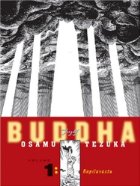
Book Review: Buddha Volume 1 Kapilavastu by Osamu Tezuka (Graphic Novel) (series, #1)
 Summary:
The tale of the Buddha’s life is told peripherally to those of fictional, central characters. There is Tatta, an untouchable who can inhabit the bodies of animals. He is joined by Chapra, a slave who wants to become a warrior. Also there is Chapra’s mother and a young monk. Their lives are impacted by the birth of the Buddha.
Review:
I picked this up randomly from the shelf in the library, and I must say I was expecting a bit more focus on the Buddha than is present in the story. Instead this is one of those tales about fictional people living in the shadow of a world-changing person. I honestly was really excited about the idea of the story of the Buddha told in the graphic novel style, so that was a bit of a disappointment to me.
The art style is interesting. Somewhere between manga and more western-style animation. The characters are really easy to tell apart, though, which was a nice change from some manga.
Although the Buddha is mostly gestating and being born during the course of the book, Buddhist ideas are still present periodically in the storyline. One of my favorites is when a saint chastises the monk for how he orders Tatta to use his talents:
To save just one human, you mindlessly harnessed numerous beasts to an impossible task…and killed them one by one! The beasts you bent to your purpose all suffered greatly and died cruelly! You believe that human lives are sacrosanct while animal lives are worthless?!?! You saved [the human], but the beasts that you sacrificed for his sake are now beyond saving. Life is sacred whether or not it is human! (page 350-1)
It was fun to see these sorts of ideals in the context of a story, and I do always enjoy reading a graphic novel. The main story itself fell flat for me though. It mostly focuses in on Chapra attempting to become a great warrior and save his mother from being a slave, which I fail to see how that relates to the Buddha. As I said, though, this book was not what I was expecting, and I don’t tend to really go for warrior/mother tales. Except Oedipus.
Overall, the art is an interesting style and some of the ideas contained within the book are fun to see in fiction, but the main storyline separate from Buddha’s life simply did not resonate with me. Perhaps it will with you.
3 out of 5 stars
Source: Public Library

Bloggers’ Alliance of Nonfiction Devotees (BAND): November Discussion: Reading for a Cause
 BAND is a monthly discussion group of book bloggers who love nonfiction! If you’d like to join us, check out our tumblr page.
I am super excited to get to host BAND this month! Because, well, who doesn’t love talking about something they love, right?
I firmly believe in knowledge being power. This is how my dad raised me, and I am forever grateful for that. The more knowledge you have the more strongly you can support your cause. This idea was further developed in me when I went to Brandeis University for undergrad. Brandeis is built around the concept of social justice, and in all of our classes we learned that you can change the world one mind at a time.
Even though I’m out of Brandeis now, I’ve done my best to apply this concept to my reading. I seek to constantly attain greater knowledge in areas that matter to me. Pick your cause and read all about it, essentially.
My very first cause was the health and obesity crisis in the US. I was unhealthy. My family was unhealthy. Most of Americans are unhealthy, so I started reading about alternatives to the way I was raised (the SAD–Standard American Diet). I read a wide arrange of information including excerpts from The China Study, The Blood Type Diet, Vegetarianism for Dummies, and many many more from back before my book blogging days that I unfortunately did not keep good track of. I still have a section of my tbr pile about addressing the health crisis in the US. It matters to me. And I hope that even just by seeing me read the book or seeing a blog post about it, it’ll help to start engaging others into changing their lifestyles.
This reading naturally led me into reading about animal rights, which is something I am incredibly passionate about today. I love nonfiction science books about the inner life of animals, the social networks of dolphins and elephants, and the cruelty of factory farms. I wish I could get one of these books in a week, but for right now I’ll settle for as many as possible, haha.
More recently I’ve become interested in the history of racism in the US and how that history impacts social interactions today. This is what spurred me on to ask Amy to do The Real Help Reading Project with me, and I hope that our presence online discussing these books will help to broaden and change some minds.
Maybe it’s a bit idealistic to think one can evoke social justice and change purely through what you read, but it’s something I can’t help but believe in. I guess Brandeis taught me well.
What about you?
Do you read nonfiction to help support a cause(s)?
Leave links to your posts in the comments! (I have issues making link collectors work for me). Thanks!
Friday Fun! (Yeah, I’m Kind of All Over the Place Today)
Hello my lovely readers! I am sitting here with sore ribs from my work-out last night. Do not ask what happened. I have no idea. I think I might have to blame the Roman Chair though.
The deadline for Tova Gallagher 2 is fast approaching. Like, I’m starting to get a little panicky about it. It’s a Thanksgiving story, so I absolutely need to finish it like yesterday. Then I need to design the cover. *breathes* Finishing the draft is my major serious for REALZ goal for this weekend. I refuse to let ya’ll down!
I am currently obsessed with the admittedly horrible but still frighteningly addictive “Sexy and I Know It” by LMFAO. It’s my favorite post-workout song for this section, “Girl look at that body. Ah. Girl look at that body. Ah. Girl look at that body. I work out!” Ridiculous, I know, but it matches my after workout celebratory spirit so HAH.
This weekend I will be:
- Writing Tova 2
- Yoga-ing it up
- Training with my trainer
- Getting smoothies from the new smoothie place near me
- Watching nerdy shit with my friend K
- Making something in my crockpot
- Writing Tova 2
Look, I made bookends! Happy weekends all!
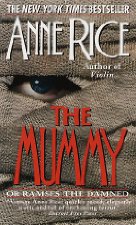
Book Review: The Mummy by Anne Rice (series #1)
 Summary:
Julie Stratford’s father is a retired shipping mogul who now spends his time as an archaeologist in Egypt. He uncovers a tomb that claims to be that of Ramses the Damned, even though his tomb was already found. Everything in the tomb is written in hieroglyphs, Latin, and Greek, and the mummy is accompanied by scrolls claiming that Ramses is immortal, was a lover of Cleopatra, and can and will rise again.
Review:
I’m a fan of Anne Rice. Her Vampire Chronicles are a lovely mix of social commentary, lyrical writing, and all the best tropes of genre fiction, so I was excited to stumble upon a cheap copy of The Mummy in the second-hand section of the bookstore. I wanted to love it. I really did. But whereas the Vampire Chronicles contain valid social commentary, this is so stereotypical of mainstream romance a la The Titanic that I was sorely disappointed.
Again, the language is lyrical and gorgeous. Rice without a doubt is incredibly talented at putting together sentences that read like a rich tapestry of old. There is no rushing to get the story out as is so often found in more modern writing. It’s fun to indulge the senses and oneself in the scene.
The plot, though, ohhhh the plot. It’s so mainstream romance it hurts. And yes, I know I read and enjoy (and write) paranormal romance, but the difference is that PNR is oftentimes tongue in cheek. It knows it’s ridiculous and over the top and doesn’t take itself too seriously. It’s meant to be fun and ridiculous. Rice is being serious here, however, and that’s why the plot bugs me. Let’s look at it for a second, shall we?
Girl is engaged to the perfect guy but she mysteriously does not think she loves him. Girl meets immortal man who is so hot he would be voted hottest man alive every year forever. Girl immediately “falls in love” with immortal guy. Girl ditches perfect guy for immortal guy. Girl and immortal guy have lots of the hot hot sex. Immortal guy causes a series of unfortunate events in pursuit of his ex-lover. Girl insists she still loves guy but cannot forgive him. Girl decides life is pointless without immortal guy. Girl attempts to kill herself. Immortal guy saves her. Girl forgives immortal guy. Girl agrees to become immortal too. Yay happily ever after.
Like….just……there are SO MANY parts of that that piss me the fuck off. So. Many. The main female character (Julie) is a shallow douchebag in spite of claiming to be a modern, progressive woman. She does not “fall in love” with Ramses. She falls in lust with him. He gives her tinglies in all the right places. He ditches her to pursue his ex-lover (Cleopatra). She, at first, rightfully tells him she can’t forgive him for that. But then she TRIES TO OFF HERSELF. OVER A GUY. And the only reason she doesn’t succeed is douchebag saves her. I just….wow. Not a plot I can respect. Not a plot that gives us anything different from the patriarchal rigamarole so often forced upon us. Anne Rice. I am disappointed.
Then there’s the odd eurocentrism at work in the narration. Even though Julie’s father loves Egypt and Ramses is, um, Egyptian, for some reason everything modern and European is what is impressive to everyone. I suppose I could maybe (maybe) forgive that, but then there’s the fact that the elixir that makes people immortal also for some mysterious reason turns their brown eyes blue. So nobody immortal has brown eyes. I don’t think I need to unpack why that’s offensive for you all. I trust you can figure that out for yourselves. Unlike Rice.
So, essentially, The Mummy is a beautifully written book that is destroyed by a kind of offensive, all-too-common plot and Eurocentrism. Even beautiful writing can’t overcome that.
3 out of 5 stars
Source: Harvard Books

Movie Review: Martha Marcy May Marlene (2011)
 Summary:
Martha calls her sister to come get her from the Catskills. She’s been missing for two years. Over the course of the next two weeks, her behavior becomes increasingly abnormal in ways her sister cannot understand, while the audience sees flashbacks to where Martha was for the previous two years–living in an abusive cult.
Review:
This is the best representation of PTSD I’ve seen on film to date. Martha’s outbursts of violence, sobbing, and even loss of bladder control seem completely out of the blue to her sister and brother-in-law, but she and audience can clearly see what minor things brought them on. Anything from a pine cone falling on the roof to a spoon clanking against a glass to a hand placed in just the wrong place on her body can set her off.
The audience is left with many gaping holes and unanswered questions in the plot line, but this is one of the rare instances where that works. We are seeing things through Martha’s eyes in the bits and pieces typical of someone with PTSD. The film is more about giving us a sense of what it is to be Martha than telling us the story. It is a character study through and through.
The filmography feels documentary style instead of film style. It is gritty and sometimes shaky. This sets the appropriate tone for the film.
The acting is what seals the deal for this film though. Everyone is excellent, but Elizabeth Olson is superb. She *is* Martha Marcy May. She acts from the top of her head to the tips of her toes. I hope she continues to make wise movie role choices, because she could have a major acting career ahead of her.
The one drawback to the film is the ambiguous, sudden ending. I get it that the director was trying to help the audience feel the paranoia Martha feels, but the ending was so jarring that it drew away power from the rest of the film.
Overall, this is a serious, powerful look at PTSD through the eyes of a sufferer. I highly recommend it.
4 out of 5 stars
Source: Movie Theater
Reading Challenge: R.eaders I.mbibing P.eril (RIP) VI Wrap-up!
 Carl‘s RIPVI is officially over. Sadness! I love celebrating the crisp, fall air with some deliciously frightening reads. As I promised, I did much better this year! I signed up for Peril the First for which I had to read four books. I read:
- Hunt Beyond the Frozen Fire
by Gabriel Hunt (review)
- The Lady in the Lake
by Raymond Chandler (review)
- My Life as A White Trash Zombie
by Diana Rowland (review)
- Symphony of Blood
by Adam Pepper (review)
- Dark Harvest
by Norman Partridge (review)
- Horns
by Joe Hill (review)
- The Monstrumologist
by Rick Yancey (review)
Wow! Not only did I do better this year, but I almost doubled my goal! Plus, every single one of those books came straight from my tbr pile, so the challenge really helped out with getting that smaller as well. Of the books read for the challenge, I have to say that my favorite was The Monstrumologist. It went straight to my keep forever bookshelf after I finished reading it. I almost made it to eight books, but alas, I will be finishing Anne Rice’s The Mummy today. A bit late. ;-)
I also really enjoyed visiting other blogs to check in on what people thought of various spooky books I’ve read over time. I think the most controversial one was probably The Turn Of The Screw

RIP is everything that’s great about a reading challenge. Loosely structured but with a theme and community and with multiple participation levels so everyone can get involved. I can’t wait for next year!
 Support my work with a tip or browse my shop for curated book club guides, how to guides, cross-stitch patterns, and more!


This work by Amanda Nevius is licensed under a Creative Commons Attribution-Noncommercial-No Derivative Works 3.0 United States License.
 Opinions of a Wolf