
Archive
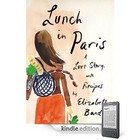
Book Review: Lunch in Paris: A Love Story, With Recipes by Elizabeth Bard
 Summary:
Elizabeth has always been drawn to museums and the Old World, so when she’s doing her graduate work in London and meets Gwendal, a Frenchman, she jumps right into dating him. Gradually she falls for not just Gwendal, but Paris in general, especially the food. This memoir tells about her falling in love and the process of becoming an expat in France through the lens of food.
Review:
This memoir starts out strong. Who doesn’t enjoy a good real life love story? Paris sounds incredibly romantic and appealing to anyone who enjoys open food markets, museums, and the big city charm of small spaces. Two things held me back from really enjoying the book though.
First, as a vegetarian, I really didn’t appreciate the incredibly long and frequent sections describing eating meat, cooking meat, how awesome meat is, etc… Where Elizabeth describes her future husband, Gwendal, telling her “I love you” for the first time over a piece of bloody meat, I was thoroughly distracted by the poor, dead, bleeding animal. I could not identify with Elizabeth at all in these frequent sections. How can she claim to be a romantic at heart yet have so much of her life revolve around eating innocent creatures? I wound up skimming a lot.
Granted, I know readers who enjoy eating meat themselves won’t be bothered by these passages, but I am fairly certain they’ll be irritated by the change of tone of voice partway through the narrative. From telling us about how lucky she is to be living this life in Paris, Elizabeth suddenly changes into a bit of a pity party. Poor Elizabeth, living in Paris with a man who loves her, cooking food for him every day, giving tours of the Louvre. This isn’t how she imagined her life would work out. Um….ok. I’d suggest Elizabeth try reading some memoirs of true struggles such as The Glass Castle and get back to us.
Overall, the scenes of real Paris life are interesting and enjoyable, but the frequent scenes featuring bloody meat and Elizabeth’s pity party really detract from the book. If you are a meat eater yourself and a foodie, you’ll probably enjoy this memoir anyway. I’d advise others to stay away.
3 out of 5 stars
Source: Amazon

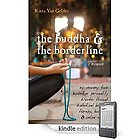
Book Review: The Buddha and the Borderline: My Recovery from Borderline Personality Disorder through Dialectical Behavior Therapy, Buddhism, and Online Dating by Kiera Van Gelder
 Summary:
Kiera here recounts her struggle with mental illness, first undiagnosed and indescribable, marked by episodes of self-harming, frantic attempts to avoid abandonment (such as writing a boy a letter in her own blood), alcohol and narcotic abuse, among other things. Then she recounts how she was finally diagnosed with Borderline Personality Disorder (definition) and her struggles to recover from this difficult mental illness usually caused by a combination of brain chemistry and trauma in childhood. Kiera recounts her experience with the most effective treatment for BPD–Dialectical Behavior Therapy (DBT). She honestly discusses her struggles to encounter and interact with the world and establish relationships, often utilizing online dating websites. Finally she brings us to her final step in the recovery process, her embracing of Buddhism, which much of DBT’s therapy techniques are based upon.
Review:
Many memoirs talk about events in a person’s life, but the thing about mental illness, is the person writing the memoir must somehow be able to show her audience what it is to be inside that head. Inside that person who perceives the world in her own unique, albeit messed-up,way. It takes a certain level of brutal honesty with yourself to be able to do so. Kiera achieves this with flying colors here.
BPD is an illness that, unless you have encountered it in your own life either by having it yourself or caring deeply for someone who does, is often difficult to clearly describe in a sympathetic manner. Popular culture wants us to believe that these, by and large female, sufferers are akin to the femme fatale or the main character in Fatal Attraction. But people with BPD aren’t bunny boilers. They are individuals who experience emotions much more extremely than everyday people do. A visual Kiera uses throughout the book that I believe is quite apt is that a person with BPD is like a person with third degree burns all over their body. A touch that wouldn’t hurt a non-injured person makes the burned person cry. That’s what emotions are like for people with BPD.
Kiera depicts what it feels to suffer from BPD with eloquent passages such as these:
I am always on the verge of drowning, no matter how hard I work to keep myself afloat. (Location 236-240)
In an instant, I shift from a woman to a wild-haired girl kicking furniture to a balled-up weeping child on the bed, begging for a touch. (Location 258-263)
Similarly Kiera addresses topics that non-mentally ill people have a difficult time understanding at all, such as self-injury, with simultaneously beautiful and frightening passages.
I grew more mindful as the slow rhythm of bloodletting rinsed me with clarity. It wasn’t dramatic; it was familiar and reassuring. I was all business, making sure not to press too deep. (Location 779-783)
But of course it isn’t all dark and full of despair. If it was, this wouldn’t be the beautiful memoir that it is. Kiera’s writing not only brings understanding to those who don’t have BPD and a familiar voice to those who do, but also a sense of hope. I cheerleader who made it and is now rooting for you. Kiera speaks directly to fellow Borderlines in the book, and as she proceeds throug her recovery, she repeatedly stops and offers a hand back to those who are behind her, still in the depths of despair. Having BPD isn’t all bad. People with BPD are highly artistic, have a great capacity for love.
I become determined to fight–for my survival, and for my borderline brothers and sisters. We do not deserve to be trapped in hell. It isn’t our fault. (Location 1672-1676)
So while it’s undeniable that BPD destroys people, it can also open us to an entirely new way of relating to ourselves and the world–both for those of us who have it, and for those who know us. (Location 5030-5033)
Ironically, the word “borderline” has become the most perfect expression of my experience–the experience of being in two places at once: disordered and perfect. The Buddha and the borderline are not separate–without one, the other could not emerge. (Location 5051-5060)
Combine the insight for people without BPD to have into BPD with the sense of connection and relating for people with BPD reading this memoir, and it becomes abundantly clear how powerful it is. Add in the intensely loving encouragement Kiera speaks to her fellow Borderlines, and it enters the category of amazing. I rarely cry in books. I cried throughout this one, but particularly in the final chapter.
This is without a doubt the best memoir I have read. I highly recommend it to everyone, but particularly to anyone who has BPD, knows someone with BPD, or works with the mentally ill. It humanizes and empathizes a mental illness that is far too often demonized.
5 out of 5 stars
Read my fiction novella starring a main character with BPD. I read this book partially as research for it.
Source: Amazon

Book Review: Jesus Land by Julia Scheeres
 Summary:
In this memoir, Julia recalls growing up in a conservative Calvinist family in Indiana with her two adopted black brothers and the parental abuse and general racism they faced. The last part of the memoir recalls her time spent in the Dominican Republic at a fundamentalist Christian reform school–Escuela Caribe–and the further abuse inflicted upon herself and David there.
Review:
I heard about this memoir due to the section on Escuela Caribe. A cousin of mine was sent there by her parents in the 2000s and when googling it, I came across all the controversy surrounding the school with this memoir frequently cited. I therefore expected this book to predominantly be about a vicious reform school. In fact, it is a stunning exploration of race and racism in the United States.
Julia was four when her parents adopted David, and they immediately bonded. Julia frequently expresses feeling as if David, who is only a few months younger than herself, is her twin brother. They are happy siblings and oblivious to the racism around them until their parents adopt another boy a year older than them, Jerome, so that David can “have one of his own kind around.” Jerome is violent, steals, slacks at school, and molests Julia. Julia eventually comes to wonder why her parents beat Jerome and David when they sin but simply send her to her room. This combined with Jerome’s continued attempts to convince David to side with him against “the whiteys” is confusing and painful to Julia. Julia and David feel as if they are truly brother and sister, why doesn’t anyone else treat them that way? Julia beautifully depicts her own struggles against imitating racist actions and words as well as her brother David’s struggles against internalizing the racism they are surrounded with.
The other element strong in the memoir is a bracing look at the violence, anger, and fear often found in fundamentalist Christian homes. Children are guided with anger and violence instead of love due to the Bible verse “spare the rod, spoil the child.” Julia’s parents believed in this, and Escuela Caribe clearly firmly believes it as well. They believe the children are horrible people and the sin must be beaten out of them, whether with belts, boxing gloves, over-exercising, humiliation, or excruciating physical labor. This is important for people to know about, and Julia paints a clear picture in an unbiased voice. Indeed, this is the least biased narrative voice I’ve ever read in a memoir, which makes it all that much more believable and painful to read.
Julia’s writing talent is strong, and she weaves a painful narrative that is difficult to put down and forces the reader to confront racism and abuse in American culture. I recommend it to anyone who enjoys memoirs or has an interest in race relations or fundamentalist Christianity.
4 out of 5 stars
Source: Swaptree

Book Review: A Million Miles in a Thousand Years by Donald Miller
 Summary:
In this memoir Donald Miller recalls how turning his previous memoir into a movie impacted his life. When working on the script, Donald learned what makes a good story and started applying it to his current life. He went from sitting on the couch all day watching tv to biking across the country to raise money for clean water in Africa.
Review:
This book could have been brilliant. It contains various clear information on what makes a good story that is quite useful to writers. It also is inspirational in asking us to stop watching characters live stories and live our own. Unfortuantely, Miller persists in plopping in his spiritual ideas, which tend toward the mainstream Christian variety. I don’t mind skimming over a few praise God’s. I do, however, get profoundly irritated when a writer goes from saying something meaningful like life is about what we learn and not about achieving something in particular to saying that the people with the worst lives have it the best because they’ll appreciate heaven more. Um, excuse me, what the hell?! It’s such an odd mental position to take. Can you imagine saying that to someone with AIDs or a starving child or someone who’s being abused? Then, to take the mental oddness further, he goes on to seek to help people better their lives. That’s great that he does that, but it seems that based on his theory that a rough life leads to a better after-life that he’s just stealing a good after-life from these people. My brain hurts just thinking about that mind-fuck.
I guess what made the book such a frustrating read for me is that I can see Miller being so close to a humanist view but then ruining his current life by pining for the after-life. He talks a lot about what makes a good story but I bet even he could see that a movie wouldn’t be any fun if a character spends the whole film pining for something that he isn’t sure is actually going to happen to the extent that he misses things happening right now.
That said, the book is well-written and does contain some memorable scenes and people. Actually, I wish the book had been about some of the people featured in it in lieu of Miller, such as the family that went around interviewing world leaders with their children or the man who went from a childhood in the ghetto to running a law firm to running a mentoring program. At least we get to hear a bit about them though.
On the other hand, Miller’s view of the world tends to rip you from the story and make you want to smack him upside the head. Like when he tells the story of how a man stole his ex-girlfriend’s cat and then told her on the phone he was going to hurt it if she didn’t come back to him then proceeded to squeeze the cat until it cried. Miller called this “depravingly charming” (219). Um, no, it’s awful! And Miller finds this story inspiring because the man “found Jesus” and “changed.”
It basically reads almost as if two different people wrote the memoir. One who recognizes we have one life to live and it’s better to live it doing things than sitting on the couch. The other spends his time with his head in the clouds hoping for the after-life and believing in the power of a dead man. If you can handle the cognitive dissonance in those two stances, you’ll enjoy the book as it is written well. If you find it as troubling as I do, though, you should skip it.
2.5. out of 5 stars
Source: Won from Minski of okay, peanut

Book Review: Mommie Dearest by Christina Crawford
 Summary:
In the early days of Hollywood, Joan Crawford became one of the first celebrities to adopt children. From the outside, it looked like her children had it all–presents, inherent fame, an apparently adoring mother. However, in Christina’s tell-all memoir, she reveals the truth behind the image. A mother obsessed with cleanliness and rigid rules. A mother who demanded her children worship her like her fans did in order to receive her love. A mother so desperate to cling to her days of fame that she attempted to beat down any glimmer of success in her children. A mother who Christina still desperately loved to the bitter end.
Review:
This memoir is a must read for anyone who thinks that having money and being a celebrity automatically makes for a good parent. Joan Crawford expected her four adopted children to be exactly what she wanted them to be instead of loving them for their uniqueness and human imperfections. Christina’s situation gradually worsens as she becomes older and starts to show glimmers of being her own person. The scenes of abuse in Christina’s childhood are the best written in the book. It is clear that she remembers them vividly and can still identify with the emotions that went through her as a child and young teenager.
*spoiler warning*
That said, Christina never manages to disentangle herself from her mother. In spite of everything her mother has done, Christina still attempts anything and everything to reconcile with her, apparently ignoring or forgetting the fact that she never did anything wrong to cause her mother’s behavior in the first place. Joan Crawford is a cruel, spiteful, evil person, and Christina naively continues to seek her love even in her 30s. This makes it more sad than most memoirs about abuse as it seems that Christina never truly overcame her abuser.
*end spoiler*
The writing, beyond the scenes of abuse, is sub-par. Christina has a tendency to ramble a bit in an uninteresting way. She also seems to not understand which parts of her life to skim over a bit. I mean, did we really need to know exactly when in a funeral her husband hands her a paper cup of water? No. Additionally, she obviously had a bad editor, as there are quite a few spelling and grammar mistakes, which is odd for a mass market paperback.
Overall, it’s worth a read if you’re into memoirs or the inside Hollywood scoop. All others should probably give it a pass though.
3 out of 5 stars
Source: Swaptree

Book Review: The Glass Castle By Jeannette Walls
 Summary:
Jeannette Walls, a successful writer for MSNBC, hid the real story of her childhood for years. In her memoir she finally lets the world know the truth. She was raised by an alcoholic father and an incredibly selfish artist mother, both of whom were brilliant. Yet their personal demons and quirks meant Jeannette was raised in near constant neglect and also suffered emotional and some physical abuse. The memoir chronicles her changing perception of her parents from brilliant counter-culturalists to an embarassment she wanted to escape.
Review:
Jeannette’s memoir is incredibly well-written. She manges to recapture her young perceptions at each point in the story from her idolization of her father at the age of five to her disgust at her mother at the age of fifteen. Often memoirs about bad childhoods are entirely caught up in the writer’s knowledge as an adult that this was all wrong. While this is most certainly true, it makes for a better experience for the reader to almost feel what it is like for a child to become disillusioned of her parents. Children naturally love their parents, and abused and/or neglected children are no different. It is just for them instead of just realizing their parents are human like children from normal families do, they also realize that their parents screwed them over. Jeannette subtly and brilliantly presents this realization and all the pain that comes with it. She doesn’t want to believe her father would endanger her when he’s drunk. She doesn’t want to believe that her mother makes her children eat popcorn for three days straight while she herself pigs out on all the king-sized chocolate bars she can eat. Yet Jeannette cannot escape the facts.
This memoir is also different from other bad childhood memoirs in that Jeannette never loses compassion for her parents. As her awareness grows throughout the book, she also struggles to understand how her parents ended up the way they did. [Spoiler Warning] A particularly moving scene is when the family goes to visit Jeannette’s father’s mother in spite of his protests. Jeannette walks in on her grandmother claiming to be mending her brother’s pants while they are still on him, but actually groping him. Jeannette’s reaction, after saving her brother from the groping, is to wonder if maybe this is why her father drinks so much. Maybe her grandmother did the same thing to her father, and there was no one to save him. Maybe these are really the demons he is fighting. To realize this, to even care about it after everything her father has put her through is truly remarkable. [End Spoiler]
Jeannette is an excellent writer and an incredible human being. Readers will be astounded not only at her unique, messed-up childhood but also at how she overcame it and simultaneously maintained sympathy for her parents who so wronged her. Jeannette is an inspiration in multiple ways, and her memoir is definitely worth the read.
4 out of 5 stars
Source: Library

Book Review: I’m Perfect; You’re Doomed By Kyria Abrahams
 Summary:
Kyria Abrahams is rising in visibility in comic circles. She originally wanted to tell her memoir as a one-woman show, but instead ended up writing it down as a book. Kyria’s memoir takes the reader from an inside look at what it was like to be raised a Jehovah’s Witness in Rhode Island in the late 1980s and early 1990s to her marriage at 16 to her eventual disfellowship. Not your typical serious-toned memoir, Kyria approaches her heavy material with a comic’s graceful tongue-in-cheek snark.
Review:
Anyone who had a fundamentalist upbringing will find the first half of Kyria’s book incredibly relatable and will be relieved at being granted permission to laugh at the absurd concerns fundie kids get saddled with. Kyria was encompassed in a conservative world continually seeing demons lurking around every corner, or even in that plate you stupidly bought at a yardsale from that old woman who is probably a witch. A typical example of her writing style can be found in the first chapter, “The succession of power was this: Jesus was the head over man; man was the head over woman; and woman was the head over cooking peach cobbler and shutting up.” It’s rare to find a laugh out loud memoir dealing with something as intense as being raised in a cult, and Kyria handles it well.
This style holds out through Kyria’s early teen years and her rebellion of marrying a Witness eight years older than her. It starts to fall apart after the wedding though. The writing becomes fuzzy. It’s unclear exactly how much time has passed or why she suddenly stopped going to the Meetings (the Witness version of church services). This, to me, should have been one of the most compelling parts of the book. Why did she leave? Why was she so incredibly desperate to be disfellowshipped that she actually asked for it at the meeting about her adultery? Although earlier in the book, Kyria demonstrates remarkable acumen at analyzing herself and her behavior, at the end of the book she loses this. I am certain, as an ex-fundie myself, that Kyria spent a lot of time analyzing why she left, yet none of this introspection is written into the book.
Similarly, the reader is left really wondering about Kyria’s OCD. While it was excruciatingly debilitating in her mid to late teens, it seems to suddenly mostly disappear, or at least disappear enough so that she can live in a crappy apartment in a bad neighborhood by herself. I’m not discrediting Kyria, but what happened in that interim?
The seemingly sudden decision to get disfellowshipped and the lack of information on her OCD are the two most glaring examples of the disjointedness of the second half of the book. Of greater concern to me, though, is the fact that Kyria really does seem worse off at the end of the memoir than at the beginning. She ends up in a crappy apartment, drinking and doing drugs fairly consistently, screwing random poets, having given herself permission to “fuck up.” This is a stereotype of the ex-fundie woman, and I have to say it’s a fairly accurate one. Normally though, this is a phase the person goes through before finding her own new footing using morals she has chosen for herself. I’m a bit concerned that ending on the rebelling and going crazy note rather than the finding the new footing note will make fundamentalists feelvindicated. They will point to this as evidence that they are correct that apostates really are worse off. What concerns me more though is the general population reading this book, the ones raised normally who are not apostates, were given no guides by Kyria to understand why she behaved the way she behaved. There are very good reasons why ex-fundies go crazy for a little bit. They weren’t given the tools to deal with the world. The lack of introspection in the second half of the book will leave people who haven’t experienced it thinking the problem is Kyria’s inherent nature and not the way she was nurtured.
The book still does provide good insight into the world of those people who knock on your door in pairs. Additionally, it is refreshing to read a funny memoir about a serious topic.
3.5 out of 5 stars
Source: Library

Book Review: The Unlikely Disciple By Kevin Roose
 Summary:
The Unlikely Disciple: A Sinner’s Semester at America’s Holiest University chronicles Kevin Roose’s “take it to the streets” approach to the conservative/liberal culture divide in America. At the time a student at Brown, Roose decided to spend his semester abroad at infamous Liberty University, one of the best-known Christian fundamentalist colleges in the United States. He wanted an insider’s view, so for that semester he presented himself as a recent Sinner’s Prayer convert, and sought to blend in with Liberty students, doing what they would do.
Review:
You would expect a book like this to come from an Anthropology major, but Roose is actually a Journalism major, and it quite honestly shows. Roose seeks to honestly present his experiences, peppered with periodic facts about the Bible, Christianity, and the history of Liberty. While I didn’t need these explanations, I’m sure many readers would, so they are useful. However, Roose repeatedly fails to truly analyze in any sort of a detached manner the fundamentalist community. This causes the book to fall short of being academic and reading much more like a short memoir.
While Roose’s writing is surprisingly quite good, his experiment has a few fundamental flaws. I get it that Roose had to seek to blend in in order to get an insider’s view of the fundamentalist community. However, he repeatedly fails to encounter the very real experience of not fitting in among fundamentalists. Kids who are raised in the community didn’t choose to embrace this way of living the way Roose did. They are born into it; it’s drilled into their heads their whole lifetime; and they often must face the very real possibility that if they leave it they lose their families. Roose wasn’t raised believing in hell as a a real place. He never spent nights up worrying and crying over good family members who just aren’t “saved.” It truly frustrated me when I saw three possibilities in the book for him to have investigated what it’s like for people raised in the faith.
First, he goes to a meeting of a support group for men struggling with homosexual tendencies, but he went once and he didn’t then seek out anybody from this group to talk to him about what it’s like to be gay and a fundamentalist. What was he thinking? This was the perfect opportunity!
Second, Roose dates a girl, Anna, who states to him that she’s a more liberal Christian than Liberty would want. He never extensively talks with her what it’s like for women in fundamentalism. In fact, he never really seeks out the women at Liberty much at all. He goes on a few dates to help maintain his facade, but he doesn’t seem to have truly sought to befriend the women at all.
Third, he overhears some of his friends discussing how much it pains them to think of good unsaved people going to hell and worse saved people going to heaven. This is a classic issue for people raised in fundamentalist Christianity, and Roose simply comments on it in about one paragraph. You would think he would have sought to address the very real psychological pain contained in that conversation he overheard, yet he didn’t.
What bothered me most about Roose’s experience is he comes away saying that fundamentalist Christianity isn’t all that bad. The people in it are by-and-large nice folk, and we shouldn’t let a little political disagreement interfere with more cross-cultural understanding. Well, that’s easy enough for a straight, white male to say. Of course he found it mostly tolerable! His two greatest struggles were no sex for a semester and trying not to swear. He isn’t a person who believes hell is a real place struggling to combat his homosexuality. He isn’t a woman being repeatedly told she must submit to her husband and that it is unbiblical for her to teach men. I know that Roose can’t help it that he isn’t any of those people, yet he could have sought to tell their stories too. The fundamentalist kids at Liberty were nice to him because they thought he belonged, and after that because they knew about the book and wanted to look good.
In the end, The Unlikely Disciple grants the reader a view of what it’s like to be fundamentalist if you fit right in and believe it. It fails to bring up the very real dangers for people raised in the faith who don’t just naturally fit right in.
I’m concerned that it will make fundamentalist Christianity look far too safe to those who don’t encounter it much in their day to day life. Although the writing is good, this concern leads me to give it:
3 out of 5 stars
Source: Library

 Support my work with a tip or browse my shop for curated book club guides, how to guides, cross-stitch patterns, and more!


This work by Amanda Nevius is licensed under a Creative Commons Attribution-Noncommercial-No Derivative Works 3.0 United States License.
 Opinions of a Wolf