
Archive
Book Review: The Buddha and the Borderline: My Recovery from Borderline Personality Disorder through Dialectical Behavior Therapy, Buddhism, and Online Dating by Kiera Van Gelder
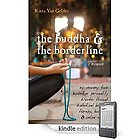 Summary:
Kiera here recounts her struggle with mental illness, first undiagnosed and indescribable, marked by episodes of self-harming, frantic attempts to avoid abandonment (such as writing a boy a letter in her own blood), alcohol and narcotic abuse, among other things. Then she recounts how she was finally diagnosed with Borderline Personality Disorder (definition) and her struggles to recover from this difficult mental illness usually caused by a combination of brain chemistry and trauma in childhood. Kiera recounts her experience with the most effective treatment for BPD–Dialectical Behavior Therapy (DBT). She honestly discusses her struggles to encounter and interact with the world and establish relationships, often utilizing online dating websites. Finally she brings us to her final step in the recovery process, her embracing of Buddhism, which much of DBT’s therapy techniques are based upon.
Review:
Many memoirs talk about events in a person’s life, but the thing about mental illness, is the person writing the memoir must somehow be able to show her audience what it is to be inside that head. Inside that person who perceives the world in her own unique, albeit messed-up,way. It takes a certain level of brutal honesty with yourself to be able to do so. Kiera achieves this with flying colors here.
BPD is an illness that, unless you have encountered it in your own life either by having it yourself or caring deeply for someone who does, is often difficult to clearly describe in a sympathetic manner. Popular culture wants us to believe that these, by and large female, sufferers are akin to the femme fatale or the main character in Fatal Attraction. But people with BPD aren’t bunny boilers. They are individuals who experience emotions much more extremely than everyday people do. A visual Kiera uses throughout the book that I believe is quite apt is that a person with BPD is like a person with third degree burns all over their body. A touch that wouldn’t hurt a non-injured person makes the burned person cry. That’s what emotions are like for people with BPD.
Kiera depicts what it feels to suffer from BPD with eloquent passages such as these:
I am always on the verge of drowning, no matter how hard I work to keep myself afloat. (Location 236-240)
In an instant, I shift from a woman to a wild-haired girl kicking furniture to a balled-up weeping child on the bed, begging for a touch. (Location 258-263)
Similarly Kiera addresses topics that non-mentally ill people have a difficult time understanding at all, such as self-injury, with simultaneously beautiful and frightening passages.
I grew more mindful as the slow rhythm of bloodletting rinsed me with clarity. It wasn’t dramatic; it was familiar and reassuring. I was all business, making sure not to press too deep. (Location 779-783)
But of course it isn’t all dark and full of despair. If it was, this wouldn’t be the beautiful memoir that it is. Kiera’s writing not only brings understanding to those who don’t have BPD and a familiar voice to those who do, but also a sense of hope. I cheerleader who made it and is now rooting for you. Kiera speaks directly to fellow Borderlines in the book, and as she proceeds throug her recovery, she repeatedly stops and offers a hand back to those who are behind her, still in the depths of despair. Having BPD isn’t all bad. People with BPD are highly artistic, have a great capacity for love.
I become determined to fight–for my survival, and for my borderline brothers and sisters. We do not deserve to be trapped in hell. It isn’t our fault. (Location 1672-1676)
So while it’s undeniable that BPD destroys people, it can also open us to an entirely new way of relating to ourselves and the world–both for those of us who have it, and for those who know us. (Location 5030-5033)
Ironically, the word “borderline” has become the most perfect expression of my experience–the experience of being in two places at once: disordered and perfect. The Buddha and the borderline are not separate–without one, the other could not emerge. (Location 5051-5060)
Combine the insight for people without BPD to have into BPD with the sense of connection and relating for people with BPD reading this memoir, and it becomes abundantly clear how powerful it is. Add in the intensely loving encouragement Kiera speaks to her fellow Borderlines, and it enters the category of amazing. I rarely cry in books. I cried throughout this one, but particularly in the final chapter.
This is without a doubt the best memoir I have read. I highly recommend it to everyone, but particularly to anyone who has BPD, knows someone with BPD, or works with the mentally ill. It humanizes and empathizes a mental illness that is far too often demonized.
5 out of 5 stars
Read my fiction novella starring a main character with BPD. I read this book partially as research for it.
Source: Amazon

Movie Review: Back from the Edge (2006)
Summary:
This is a documentary produced by New York-Presbyterian Hospital on Borderline Personality Disorder (BPD). BPD is an Axis II personality disorder that generally first shows up in teen years or young adulthood. According to the DSM-IV-TR, to be diagnosed, a person must have 5 or more of the following 9 symptoms:
- frantic efforts to avoid real or imagined abandonment (some clinicians expand this to include fear of abandonment)
- a pattern of unstable and intense interpersonal relationships characterized by alternating between extremes of idealization and devaluation
- unstable self-image or sense of self (identity disturbance)
- impulsivity in at least two areas that are potentially self-damaging (such as sex, spending, substance abuse, reckless driving, etc…)
- recurrent suicidal behavior, gestures, threats or self-mutilating behavior (such as cutting, burning, head banging, etc…)
- a marked reactivity of mood (e.g., intense episodic dysphoria, irritability, or anxiety usually lasting a few hours and only rarely more than a few days)
- chronic feelings of emptiness
- inappropriate, intense anger or difficulty controlling anger
- transient, stress-related paranoid ideation or severe dissociative symptoms (from page 710 of the DSM)
BPD affects approximately 10 million Americans or about 2% of the population. It is more prevalent than bipolar disorder or schizophrenia. 75% of those with BPD are female.
This documentary features interviews with people who have BPD, their families, and leading clinicians specializing in BPD such as Dr. John Gunderson, Dr. Marsha Linehan, and Dr. Perry Hoffman.
Review:
This documentary is divided into sections starting with each of the symptoms then leading through causes, treatment options, and hope for remission. Each section start with a quote directly from a person with BPD.
This documentary is beautifully done. We see pictures of the people with BPD from their past including both the good times and the bad. We also see excerpts from their journals and letters sent to others. The clinicians all display evident empathy and desire to help not only the patients but their families, friends, and other loved ones. The family members are given the space to express their confusion over their loved ones’ behaviors before they were diagnosed and relief after.
It’s not common to see a documentary of a mental illness that does such an excellent job of humanizing an illness that can be scary both to those who have it and those who don’t. The clinicians carefully explain in clear terms the causes behind the most frightening BPD symptoms–self-injury, clinging, and suicidal ideation (a lack of caring whether or not you die). They show real brain scans comparing BPD brain activity with that of non-BPD brain activity.
My only complaint is that they do not discuss the fact that numerous studies have shown a marked prevalence of abusive childhoods among people with BPD. They are far more likely than the non-BPD person to have been abused physically, emotionally, or sexually by at least one caregiver. I believe they generally left this out from a desire to create a welcoming atmosphere for family members, but it is important for people to know that it takes both a certain environment and the BPD-specific brain chemistry and pathways for BPD to develop.
That said, this is still a very important documentary. It offers so much hope for both those with BPD and those who care for someone with BPD. The filmmakers obviously want the public to know that BPD is treatable, contrary to the stigma attached to it. Most people with BPD who get treatment go into remission (most of the symptoms are gone) in about 2 years. It is so important for everyone to understand mental illnesses. I highly recommend this documentary.
4 out of 5 stars
Source: library

If you found this review helpful, please consider tipping me on ko-fi, checking out my digital items available in my ko-fi shop, buying one of my publications, or using one of my referral/coupon codes. Thank you for your support!
Book Review: Pretties By Scott Westerfeld (Series, #2)
 Summary:
Tally Youngblood lives in a dystopian society where everyone is given an operation at the age of 16 that makes them perfectly pretty. What is not known by the general population is that during the operation lesions are put on the brain to make people dumbed down and easy to control. A few people are selected to be “Specials.” They don’t have the lesions and control the rest of the society. Some people resist the operation and the control and live in the wilderness, calling themselves “Smokies.”
After being captured from The Smoke, Tally has been made pretty. She has mostly forgotten her experiences and has a new boyfriend, Zane. They belong to a New Pretty clique called The Crims. The book follows what occurs after teens from the New Smoke bring Tally pills created by adults in the New Smoke that are supposed to cure the brain lesions. She and Zane share them and begin plotting their resistance of the regime and escape from New Pretty Town.
Review:
I am quite torn about this book.
On the one hand, I like that Westerfeld is clearly gradually moving our traditional hero, Tally, toward turning into one of the bad guys in this society. It’s a move not commonly seen in YA lit, and I think it’s a bold thing to do. It could lead teens to question what makes people behave badly versus what makes people behave well. It’s a bit reminiscent to me of the key question in Wicked: Are people born bad or do circumstances make them that way?
On the other hand, I am profoundly disturbed at how Westerfeld presents Shay, Tally’s one-time best friend and the one who came up with the plan to escape to The Smoke in the first book, Uglies. Tally followed Shay there, won over the guy Shay had her eye on, and betrayed Shay to the Specials, causing her to be turned Pretty. Oh, and in Pretties she completely leaves Shay out of the whole pills-curing-people-and-escaping-to-New-Smoke-thing.
Since Tally is leaving Shay out, Shay is left to her own devices. These are delineated in the chapter titled “The Cutters.” In this chapter Tally and Zane discover that Shay has discovered a way to temporarily clear the fuzziness in her head caused by the operation. She is ceremonially cutting herself and has some followers who are now doing the same. They call their clique “The Cutters.”
Self-injury is a real element of multiple mental illnesses. People suffering from depression, post-traumatic stress disorder, dissociative identity disorder, and borderline personality disorder will display this symptom. However, it is most well-known and highly associated with Borderline Personality Disorder (BPD), which is already stigmatized and misunderstood by the media and general population.
Westerfeld’s presentation of self-injury in his storyline reinforces multiple stereotypes regarding it. First is the idea that self-injurers only cut. This is not the case. Burning, head banging, hitting things until your knuckles bleed, picking at and peeling skin, and pulling out hair are just some of the multiple methods people used. Cutting, burning, and head banging are the most common. Thus, showing all of The Cutters using the exact same self-injury method to clear their heads is misleading.
Second, Shay and the other Cutters proudly display their scars and make a show of the bleeding. Self-injurers must face the prejudice that they do this for attention, that they do it in places people will notice to garner that attention. For the vast majority of self-injurers this is not the case. They do it in places that are easy to hide, such as upper thighs, or purposefully wear long sleeves to hide the marks. They are usually profoundly ashamed of what they did, or at least terrified that people will find out. It would be much more accurate to portray Shay cutting herself in a private room and have Tally accidentally see it, than to have the large ceremony in the middle of a park that is portrayed in the book.
Third, while it is true that some self-injurers say their mind feels clearer from injuring, others say it helps them shut down emotions they don’t want to feel. It’s perfectly plausible for Shay to be in the former group, but it seems to me that at least one of her followers would be in the latter group.
My real issue though comes from the fact that Tally seeing Shay self-injuring is the final decisive straw to her. She emphatically announces that Shay is crazy, and Zane agrees with her. No one dissents from this viewpoint. Shay’s scars are the markers that she’s gone off her rocker; there’s no turning back. To top it all off, the cutting is what makes the evil Specials decide that Shay and her group should be Specials themselves, thus associating self-injury not only with “being crazy” but also with being evil. Additionally, the ceremony in the middle of the woods is clearly connotated as being primitive.
Can you imagine what reading this portrayal would do to a teen struggling with self-injury? She is portrayed as purely crazy, evil, and primitive. Shay is a lost cause in the book, and clearly the teen must be too. So little sympathy is given to Shay. Not even a spark of goodness is visible in her.
I’m not the type to say that if you display thus-and-such group as evil you’re saying they’re all evil. I think it’s just as discriminatory to always portray a certain group as good. However, the portrayal of Shay turns so one-dimensional with the on-set of her self-injury. There is zero depth to her character, zero exploration of her as a conflicted person. She could have had rich character development. Indeed, the entire group of “Cutters” could have been a wonderful opportunity for Westerfeld to explore more depth in his story-telling.
Yet he went the easy, sensationalist route and portrayed an evil, crazy, primitive female slashing her arms while reciting a spell, letting the blood drip down in the rain.
An incredible image to visualize? Yes. A deep, accurate one? No.
2.5 out of 5 stars
Source: Library
Previous Books in Series:
Uglies

 Support my work with a tip or browse my shop for curated book club guides, how to guides, cross-stitch patterns, and more!


This work by Amanda Nevius is licensed under a Creative Commons Attribution-Noncommercial-No Derivative Works 3.0 United States License.
 Opinions of a Wolf