
Archive
Book Review: Buddha Volume Two The Four Encounters by Osamu Tezuka (Series, #2) (Graphic Novel)
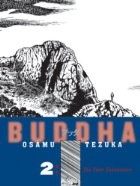 Summary:
The second entry in the novelization of the Buddha’s life takes us through Siddhartha’s youth spent as a prince. He meets a mysterious Brahmin who tells him he is destined to help the whole world, not rule a single kingdom. Siddhartha is weak, frequently sleeps, and has visions. He is discontent as a prince yet reluctant to abandon his people. On an adventure outside the castle walls he meets a grown-up Tatta and falls for a slave woman, Migaila. Conflict between what he believes and his duties as a prince seem central to the plot, yet in fact it is Siddhartha’s reluctance to follow his calling and leave the castle to be a monk that is at the core of the conflict.
Review:
I was pleased to see this entry in the series jump right into Siddhartha’s life instead of those on the periphery, yet Tezuka also brings in the major characters from the first book as minor characters in this one. It works well, definitely better than the first book. However, I am left wondering if the love between Siddhartha and a slave woman was based at all on fact or hearsay or purely came out of Tezuka’s mind. It would definitely give a new perspective on Siddhartha to know he once had an ill-fated love affair.
Although it’s important to know where the Buddha came from, it is difficult and not particularly enjoyable to read about the time in his life when he was a spoiled brat. Siddhartha does not treat his wife or his father well. Although he has natural talents with meditation and visions, he surprisingly lacks compassion for others. One of the things I like, of course, about the Buddha is that he did start out this way. He’s not perfect; he just learned and worked toward Nirvana. So it’s important to see this part of his life, even if it is uncomfortable to read.
I again felt distracted by the characters Tezuka made up though. I wish he had stuck to a straight-forward graphic novelization of Siddhartha or the legends of the Buddha at least. The weakest points of the book are the parts including characters Tezuka made up purely on his own.
The art is again enjoyable but not amazing. The pictures show the story but do not suck you in. They give the feeling of being there to do a job, not necessarily to provide a memorable visual experience to the reader.
Overall, it’s an interesting new way to explore the life of the Buddha, but I would not recommend it to someone completely new to Siddhartha. It is an improvement over the first entry, and hopefully they will continue to improve, but an idea that could have been great is simply average. That’s disappointing.
3.5 out of 5 stars
Source: Public Library

Previous Books in Series:
Buddha, Volume 1: Kapilavastu
Book Review: Buddha Volume 1 Kapilavastu by Osamu Tezuka (Graphic Novel) (series, #1)
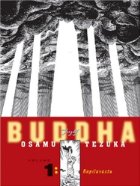 Summary:
The tale of the Buddha’s life is told peripherally to those of fictional, central characters. There is Tatta, an untouchable who can inhabit the bodies of animals. He is joined by Chapra, a slave who wants to become a warrior. Also there is Chapra’s mother and a young monk. Their lives are impacted by the birth of the Buddha.
Review:
I picked this up randomly from the shelf in the library, and I must say I was expecting a bit more focus on the Buddha than is present in the story. Instead this is one of those tales about fictional people living in the shadow of a world-changing person. I honestly was really excited about the idea of the story of the Buddha told in the graphic novel style, so that was a bit of a disappointment to me.
The art style is interesting. Somewhere between manga and more western-style animation. The characters are really easy to tell apart, though, which was a nice change from some manga.
Although the Buddha is mostly gestating and being born during the course of the book, Buddhist ideas are still present periodically in the storyline. One of my favorites is when a saint chastises the monk for how he orders Tatta to use his talents:
To save just one human, you mindlessly harnessed numerous beasts to an impossible task…and killed them one by one! The beasts you bent to your purpose all suffered greatly and died cruelly! You believe that human lives are sacrosanct while animal lives are worthless?!?! You saved [the human], but the beasts that you sacrificed for his sake are now beyond saving. Life is sacred whether or not it is human! (page 350-1)
It was fun to see these sorts of ideals in the context of a story, and I do always enjoy reading a graphic novel. The main story itself fell flat for me though. It mostly focuses in on Chapra attempting to become a great warrior and save his mother from being a slave, which I fail to see how that relates to the Buddha. As I said, though, this book was not what I was expecting, and I don’t tend to really go for warrior/mother tales. Except Oedipus.
Overall, the art is an interesting style and some of the ideas contained within the book are fun to see in fiction, but the main storyline separate from Buddha’s life simply did not resonate with me. Perhaps it will with you.
3 out of 5 stars
Source: Public Library
Book Review: The Buddha and the Borderline: My Recovery from Borderline Personality Disorder through Dialectical Behavior Therapy, Buddhism, and Online Dating by Kiera Van Gelder
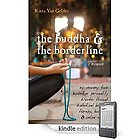 Summary:
Kiera here recounts her struggle with mental illness, first undiagnosed and indescribable, marked by episodes of self-harming, frantic attempts to avoid abandonment (such as writing a boy a letter in her own blood), alcohol and narcotic abuse, among other things. Then she recounts how she was finally diagnosed with Borderline Personality Disorder (definition) and her struggles to recover from this difficult mental illness usually caused by a combination of brain chemistry and trauma in childhood. Kiera recounts her experience with the most effective treatment for BPD–Dialectical Behavior Therapy (DBT). She honestly discusses her struggles to encounter and interact with the world and establish relationships, often utilizing online dating websites. Finally she brings us to her final step in the recovery process, her embracing of Buddhism, which much of DBT’s therapy techniques are based upon.
Review:
Many memoirs talk about events in a person’s life, but the thing about mental illness, is the person writing the memoir must somehow be able to show her audience what it is to be inside that head. Inside that person who perceives the world in her own unique, albeit messed-up,way. It takes a certain level of brutal honesty with yourself to be able to do so. Kiera achieves this with flying colors here.
BPD is an illness that, unless you have encountered it in your own life either by having it yourself or caring deeply for someone who does, is often difficult to clearly describe in a sympathetic manner. Popular culture wants us to believe that these, by and large female, sufferers are akin to the femme fatale or the main character in Fatal Attraction. But people with BPD aren’t bunny boilers. They are individuals who experience emotions much more extremely than everyday people do. A visual Kiera uses throughout the book that I believe is quite apt is that a person with BPD is like a person with third degree burns all over their body. A touch that wouldn’t hurt a non-injured person makes the burned person cry. That’s what emotions are like for people with BPD.
Kiera depicts what it feels to suffer from BPD with eloquent passages such as these:
I am always on the verge of drowning, no matter how hard I work to keep myself afloat. (Location 236-240)
In an instant, I shift from a woman to a wild-haired girl kicking furniture to a balled-up weeping child on the bed, begging for a touch. (Location 258-263)
Similarly Kiera addresses topics that non-mentally ill people have a difficult time understanding at all, such as self-injury, with simultaneously beautiful and frightening passages.
I grew more mindful as the slow rhythm of bloodletting rinsed me with clarity. It wasn’t dramatic; it was familiar and reassuring. I was all business, making sure not to press too deep. (Location 779-783)
But of course it isn’t all dark and full of despair. If it was, this wouldn’t be the beautiful memoir that it is. Kiera’s writing not only brings understanding to those who don’t have BPD and a familiar voice to those who do, but also a sense of hope. I cheerleader who made it and is now rooting for you. Kiera speaks directly to fellow Borderlines in the book, and as she proceeds throug her recovery, she repeatedly stops and offers a hand back to those who are behind her, still in the depths of despair. Having BPD isn’t all bad. People with BPD are highly artistic, have a great capacity for love.
I become determined to fight–for my survival, and for my borderline brothers and sisters. We do not deserve to be trapped in hell. It isn’t our fault. (Location 1672-1676)
So while it’s undeniable that BPD destroys people, it can also open us to an entirely new way of relating to ourselves and the world–both for those of us who have it, and for those who know us. (Location 5030-5033)
Ironically, the word “borderline” has become the most perfect expression of my experience–the experience of being in two places at once: disordered and perfect. The Buddha and the borderline are not separate–without one, the other could not emerge. (Location 5051-5060)
Combine the insight for people without BPD to have into BPD with the sense of connection and relating for people with BPD reading this memoir, and it becomes abundantly clear how powerful it is. Add in the intensely loving encouragement Kiera speaks to her fellow Borderlines, and it enters the category of amazing. I rarely cry in books. I cried throughout this one, but particularly in the final chapter.
This is without a doubt the best memoir I have read. I highly recommend it to everyone, but particularly to anyone who has BPD, knows someone with BPD, or works with the mentally ill. It humanizes and empathizes a mental illness that is far too often demonized.
5 out of 5 stars
Read my fiction novella starring a main character with BPD. I read this book partially as research for it.
Source: Amazon

Book Review: The Windup Girl by Paolo Bacigalupi
 Summary:
In this steampunk vision of a possible dystopian future, carbon usage and genetic engineering caused the world to nearly collapse. Whole nations have been lost to starvation due to exorbitant prices charged by the genetic engineering calorie companies and also due to the rising seas from global warming caused by carbon usage. Domestic cats have been wiped out by cheshires–genetically engineered cats that can appear and disappear, just like the cat in Alice in Wonderland. Thailand, through strict military enforcement of calorie and carbon consumption, has managed to hold back both the sea with a sea wall and starvation. The Thai work diligently to rid their nation of windups–genetically engineered living creatures. As Buddhists, they believe these windups have no souls. Within this world we see glimpses of five very different lives. There’s Anderson, a foreigner from Detroit who claims to be running a factory but is actually a calorie company spy. His manager, Hock Seng, is a survivor of the Malaysian civil war where Muslim fundamentalists attempted to kill all the Chinese immigrants. Jaidee and Kanya work for the Environment Ministry, also known as white shirts. They are the military enforcers of all the environmental laws, but they are struggling against the Trade Ministry that wants to open their borders back up to foreign trade. Finally, there’s Emiko. She is a Japanese windup girl. The Japanese created windups due to a severe lack of young people to care for the old. She came over both as a secretary and lover of her owner who had to do business in Thailand, but he then decided it would be cheaper to leave her behind than to take her on the return trip. She now is a spectacle in sex shows in the ghetto of Krung Thep. These lives slowly intertwine, and through them, Bacigalupi shows how easily civil war can erupt.
Review:
I fully admit that this book was out of my comfort zone. I don’t normally read books on political intrigue and intertwining lives. I tend to stick to ones that talk about one individual person, and that’s what I was expecting from a book called The Windup Girl. That’s why I took the time to write a detailed summary, so you all would have a clearer picture of what this book is about than I did. This is another one of those books that I almost gave up on early in. Bacigalupi doesn’t take the time to truly set up the world. Things have names and are briefly or not at all described, so you have to fill in the gaps yourself. I think if I hadn’t read steampunk before, I would have been at a loss. For instance, he never explains exactly what a dirigible is, although we know they are sky ships. It is not until the end of the book when one gets blown up and a character refers to it as a creature that it becomes apparent that they are living creatures used as sky ships. This is just one example of many ways in which the world building is sloppy. It takes until solidly halfway through the book for a clear picture of Krung Thep to emerge. Additionally, this is one of those books that tosses around non-English words where English ones would entirely suffice. For example, all of the foreigners are called farang, not foreigners. It makes sense to use a Thai word where there is no English equivalent, but it’s just superfluous to toss them around when there is one. Technically these characters are supposedly speaking entirely in Thai. We know that. Bacigalupi doesn’t need to throw Thai words in periodically just to remind us. Still, though, I kept reading beyond the first couple of chapters, mainly because I bought the book on my Kindle app, and I don’t tend to waste money. In the end, I’m glad I kept reading.
Although the setting and world building is rough, the story itself is quite interesting. Many perspectives are offered on these issues that potentially could become issues in real life. What are the rights and roles of genetically engineered living beings? Is nature the way it’s always been better or genetic engineering the next step in evolution? One of the pro-genetic engineering characters states:
We are nature. Our every tinkering is nature, our every biological striving. We are what we are, and the world is ours. We are its gods. Your only difficulty is your unwillingness to unleash your potential fully upon it. (Location 6347-6350)
It is an interesting question. Will our next phase of evolution happen in the traditional manner, or is the next phase actually us using our brains to improve?
The Buddhist concepts sprinkled throughout the text are also quite enjoyable. The characters struggle to maintain their belief in karma and reincarnation in spite of the issues of windups. It clearly depicts how religion must struggle to adapt to change. Additionally, the concepts of fate and karma and how much one can actually do to improve one’s lot in life are explored in an excellent manner through multiple characters. It reminded me a lot of how the Dark Tower series explores the similar idea of ka (fate). One sentence that really struck me on this theme was:
He wonders if his karma is so broken that he cannot every truly hope to succeed. (Location 8388-8393)
I was just discussing a similar concept with a friend the other day, so it really struck me to see it in print.
Additionally, the ending truly surprised me, even though it’s evident throughout most of the book that a civil war is coming. I always enjoy it when a book manages to surprise me, and this one definitely did.
Overall, although Bacigalupi struggles with world building, his intertwined characters and themes are thought-provoking to read. I’m glad I went out of my comfort zone to read this book, and I would recommend it to anyone who enjoys the themes of fate, evolution, nature, karma, or political intrigue.
3.5 out of 5 stars
Source: Amazon

 Support my work with a tip or browse my shop for curated book club guides, how to guides, cross-stitch patterns, and more!


This work by Amanda Nevius is licensed under a Creative Commons Attribution-Noncommercial-No Derivative Works 3.0 United States License.
 Opinions of a Wolf