
Archive
Book Review: The Department of Magic by Rod Kierkegaard, Jr.
 Summary:
Di Angelo and Farah thought they were getting a typical, boring DC government job. But it turns out they have been assigned to the Department of Magic, and whether they like it or not, their horogaunt boss is having them face down demons, shifters, and more in repeated robberies to gather the pieces of George Washington in the hopes to bring him back to life to fight off the ancient Mexican gods who were stirred out of slumber by all the talk of the ancient Mayan prophecy of the end of the world in 2012.
Review:
I have not hated a book this much since finishing Anne Rice’s The Wolf Gift in February (review). On the plus side, this means you all get to enjoy an angry Amanda take-down style review. On the minus side, I had to suffer through this horrible thing. But this is what book reviewers do. We suffer through things and tell you about them so you don’t have to.
This book has a triple-whammy of awful. It has so many grammar and spelling mistakes that I can’t believe it ever made it through an editor (oh but it did!). The plot is confusing and ill-paced. Finally, and most importantly, it is so prejudiced I had to double-check that this wasn’t a pen-name for Ann Coulter. Too often I’ve made these assertions in the past but been unable to truly show them to you since it was a library book or some such. Enter: the kindle. But first let me quickly explain the plot/structure/pacing issues.
So Farah and Di Angelo aka Rocky are hired by this mysterious department in the US government. There is a lot that makes zero sense about the department. First, it appears to only consist of Rocky, Farah, and their boss Crawley (a horogaunt). Anyone who has worked in the US government *raises hand* knows that they do not underhire. They overhire. So this just makes the author look like he knows nothing about government.
Throughout the book, Farah and Rocky have this problem of carrying out covert operations for the department and almost getting arrested and wanted for murder and blah blah blah. Um, excuse me. This is the motherfuckin government. If they want George Washington’s sword they “borrow” it. If they can’t “borrow” it, they send in government agents and protect them from prosecution because, I reiterate, this is the motherfuckin government. A department that supposedly exists to keep America aligned with the goddess America and protected from demons and vampires and what-have-you that no one else knows about would probably be a Big Deal on the inside. So this plot point makes no sense.
Then there’s the pacing issues. The pacing goes up and down and up and down and the reader keeps prepping for a climax only to get none. I think you see the analogy I am going for here. And it sucks.
Moving right along, let’s get to just a few of the more egregious grammar, spelling, and other writing I caught in this *laughs hysterically* edited book.
rung off. (location 385)
Americans hang up. No one in this book is British. The narrator is not British. This is stupid.
He could feel her hot breath, fetid as a zoo animal’s gorged on fresh meat. (location 752)
This is a bad analogy, as any high school student can tell you, because the vast majority of people don’t KNOW what a zoo animal’s breath smells like. An analogy is supposed to help a reader connect an unknown thing to a known thing.
Kabbala (location 858)
This is not how you spell Kabbalah.
Then she pulled both of their caps off and bit him on the mouth. (location 1889)
No, this is not a scene between one of our heroes and a demon. This is supposed to be Farah romantically kissing Rocky. Was that the image you got from that? Didn’t think so.
The most terrifying form devils or demons can take. No one has lived to describe them. (location 1889)
This comes from the federal book on beasts and demons that our heroes read and start every chapter with an excerpt from. Question. If no one has ever lived to describe these demons then a) how do you know they exist and b) how the hell are you describing them in this book?!
Her face was beautiful, appearing radiantly soft-cheeked and virginal in one instant, a rotting grinning skull, a death-mask in the next. (location 3922)
If you are writing a sentence comparing something from one instant to the next, you can’t compare three things! Two. Two is your limit.
Ok, but obviously I wouldn’t hate a book this hard for bad plot and some (ok a lot of) writing problems. I’d give advice and encouragement. The hating on the book comes from the prejudice hitting me left and right. It was like running the obstacle course in Wipe-Out! I can’t and won’t support or recommend a book to someone else as not for me but maybe for them when it’s this painfully prejudiced throughout. Let’s begin, shall we?
Look, hon, you know you’ve got zero will-power. Honestly you’re like a lesbian. You go out with this guy a couple times, you’ll move in together on your third date. I see him all day, every day. I don’t want him underfoot when I come home too. Plus he’s too poor for you. (location 741)
Oh look! Homophobia! The sad part is you can tell that Kierkegaard thinks he’s being funny when he’s just flat-out offensive. To top off this delightful bit of dialogue, we’ve got classism. And I feel I should mention the man they are talking about is an Iraq War vet. But he’s poor. And clearly that is what matters in dating. Homophobia is not quite this blatant throughout the rest of the book, although we do have a *delightful* scene in which Bobbi (a girl) shows up to seduce Rocky, who she thinks is gay, since Farah spread a rumor that Rocky is gay to keep her fiancee from being upset that she’s working with a man. Yeah. That happened.
There is more blatant classism, though.
Baltimore is the blue-collar ugly step-sister of the white-collar Washington DC metropolitan area. (location 1250)
Noooo, comparing hardworking people with blue collar jobs to the ugly stepsisters in Cinderella is not offensive at all.
*sighs*
Also, pretty much every demon “disguises” themself as a homeless person. This means almost every homeless person our heroes run into is a demon. Seriously.
And what about women?
The reason I’m so into Nineteenth Century romantic literature, I guess, is because I love anything that reminds me of growing up with my mom and my sisters and gets me inside women’s heads. (location 1214)
Yes! Let’s just go ahead and say that Jane fucking Austen represents every woman’s head everywhere in the 21st century. That’s just awesome.
Speaking of women, I will say this. Farah is the more talented of the duo in climbing, which is nice. However, she and every other woman are presented as shallow and obsessed with fashion. Also, a baby is born, and Farah turns overnight into a doting mother-figure when she was a sorority-sister type girl mere hours before. Meanwhile, the actual mother fails at parenting, and the only explanation for this utter lack of ability with babies is that she is a vampire.
I’m not sure what the precise word is for it….xenophobia perhaps? But Kierkegaard makes it abundantly clear that only Protestants have the whole religion thing right.
White or “good” magic, he told her, already had a name. It was called “prayer.” And even prayer, unless directly addressed to God the Creator, is in essence a Luciferian transaction, because it relies on the intercession of intermediaries, such as saints or boddhis, and inevitably involved some sort of quid pro quo. (location 1545)
Speaking of religion, no hateful book would be complete without some anti-semitism tossed in there, would it?
Freemasons–A Lucifer-worshipping conspiracy cult dedicated to Zionist one-world government, heirs of the Christ-murdering Pharisees and the Knights Templar. (location 1596)
Christ. Murdering. Pharisees. He actually went there. And not only are they the Christ killers but! They also secretly run the world through a Satan-worshipping secret organization!
I would have thrown the book across the room at this point, but it was on my kindle, and I love my kindle.
And finally. To round it all out. We’ve got some good, old-fashioned American racism.
First we have the black man who spoke entirely normally until this sentence:
You got any questions you need to axe me, you know where I live. (location 1193)
Then we have the Asian-American man who can’t pronounce his own name:
There they consecutively picked up a squat red-faced Asian named Robert, which he pronounced as “Robot,” and a noisy and vituperative older black man in a water-sodden daishiki named Walkie-Talkie. (location 3225)
Beyond these blatant examples there’s the fact that every person of color is either actually a demon in disguise or working for the seedy underground of some sort of organization. The exception to this is Farah, who is Lebanese-American, but Kierkegaard takes extreme care to point out that she is NOT Muslim. She’s one of the Christian Lebanese-Americans. She also basically acts just like a white sorority girl but with an exotic look!!
See? See? I just. *sighs* The only people who might not be horribly offended by this book are the type of people I don’t really want to recommend books to anyway, except to be like “Here, read this book that might make you realize what a douchebag you are being, like say some classics of black literature or books on how hard it is to be gay in an evangelical family or maybe read about the real history of the Bible.” You see my point.
The only people who would enjoy this book are people who have this same prejudiced world-view against basically everyone who isn’t a white, straight, Protestant, American male. So, I guess, if that’s you, have at it? But it’s riddled with spelling, grammar, and plot problems, so you won’t enjoy it anyway. So hah.
1 out of 5 stars
Source: Netgalley
Book Review: The Bay of Foxes by Sheila Kohler
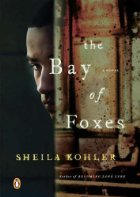 Summary:
Dawit is a twenty year old Ethiopian refugee hiding out illegally in Paris and barely surviving. One day he runs into the elderly, famous French writer, M., in a cafe. Utterly charmed by him and how he reminds her of her long-lost lover she had growing up in Africa, she invites him to come live with her. But Dawit is unable to give M. what she wants, leading to dangerous conflict between them.
Review:
This starts out with an interesting chance meeting in a cafe but proceeds to meander through horror without much of a point.
Although in the third person, we only get Dawit’s perspective, and although he is a sympathetic character, he sometimes seems not entirely well-rounded. Through flashbacks we learn that he grew up as some sort of nobility (like a duke, as he explains to the Romans). His family is killed and imprisoned, and he is eventually helped to escape by an ex-lover and makes it to Paris. This is clearly a painful story, but something about Dawit in his current state keeps the reader from entirely empathizing with him. He was raised noble and privileged, including boarding schools and learning many languages, but he looks down his nose at the French bourgeois, who, let’s be honest, are basically the equivalent of nobility. He judges M. for spending all her money on him instead of sending it to Ethiopia to feed people, but he also accepts the lavish gifts and money himself. Admittedly, he sends some to his friends, but he just seems a bit hypocritical throughout the whole thing. He never really reflects on the toppling of the Emperor in Ethiopia or precisely how society should be ordered to be better. He just essentially says, “Oh, the Emperor wasn’t all that bad, crazy rebels, by the way, M., why aren’t you donating this money to charity instead of spending it on me? But I will tooootally take that cashmere scarf.” Ugh.
That said, Dawit is still more sympathetic than M., who besides being a stuck-up, lazy, self-centered hack also repeatedly rapes Dawit. Yeah. That happened. Quite a few times. And while I get the point that Kohler is making (evil old colonialists raping Ethiopians), well, I suppose I just don’t think it was a very clever allegory. I’d rather read about that actually happening.
In spite of being thoroughly disturbed and squicked out by everyone in the story, I kept reading because Kohler’s prose is so pretty, and I honestly couldn’t figure out how she’d manage to wrap everything up. What point was she going to make? Well, I got to the ending, and honestly the ending didn’t do it for me. I found it a bit convenient and simplistic after the rest of the novel, and it left me kind of wondering what the heck I just spent my time reading.
So, clearly this book rubbed me the wrong way, except for the fact that certain passages are beautifully written. Will it work for other readers? Maybe. Although the readers I know with a vested interest in the effects of colonialism would probably find the allegory as simplistic as I did.
2 out of 5 stars
Source: Netgalley
Counts For:
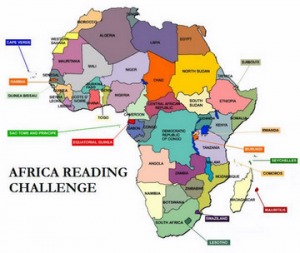
Specific country? Ethiopia. South African author.
Book Review: The Mount by Carol Emshwiller (Bottom of TBR Pile Challenge)
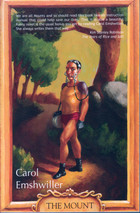 Summary:
Charley is an 11 year old Seattle and wants to be the best mount there is for his owner, Little Master. He eats his dry cakes, practices on the go-round, and behaves well. Little Master mostly likes their lessons. His ears wiggle, so Charley knows he’s giggling. But one day Wilds attack the village. They say that people are meant to be people, not mounts for Hoots. But the Hoots say the mounts were made for them, see how the primate species are perfectly designed for riding? It’s all very confusing for Charley.
Review:
It doesn’t take much guess-work to figure out how this wound up on my TBR pile. It’s a rather obvious allegory for animal rights, although instead of apes enslaving people like in Planet of the Apes, it’s an alien species with cat-like ears and weak legs enslaving humans. The concept is a good one, but the execution fell short for me, which is sad, because I wanted to love it.
The structure of the book is problematic. The first chapter is from the perspective of an entirely random Hoot who we never see again. Ever. We also never see his mount again. This is just weird. The rest of the book is told from the first person perspective of Charley, except for one random chapter narrated by his father. I don’t mind switching perspectives, but there should be some sort of consistency about it, and we should have at least a vague idea who the character in the new perspective is.
I also found myself completely baffled by Charley. In spite of being enslaved by the Hoots, he still wishes to use a bit one day and other things that drive his father nuts, and one cannot help but agree with his father. He never seems to really learn better through the book either. He persists in loving his Hoot and being a mount for his Hoot. That doesn’t work as an allegory for animal rights or slavery.
Emshwiller does show how teenage boys clash with their fathers very well, however. Charley’s relationship with his dad, Heron, is well fleshed-out and intriguing. They want to connect and love each other but struggle with how, exactly, to do that when they are so different yet so similar. Looking back, this relationship is what kept me reading. It shines in spite of the other oddities in the book.
I won’t spoil it, but the ending bothered me as well, and I found it profoundly confusing. In fact, I’d say for the book as a whole I am simply left perplexed by it. I feel like I missed something or didn’t quite get an accurate picture of the world they are living in or something.
Overall, it’s a very different take on humans being enslaved by another species, but its execution is rather disappointing. Recommended to readers with a marked interest in scifi depictions of human slavery.
3 out of 5 stars
Source: PaperBackSwap

Book Review: Beyond the Misty Shore by Vicki Hinze (Series, #1)
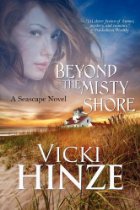 Summary:
Maggie Wright comes to the cozy Maine bed and breakfast, Seascape, not for a vacation, but to investigate the mysterious death of her cousin, Carolyn. Carolyn’s artist fiancee, TJ MacGregor, just so happens to be staying at Seascape, but a mysterious force is preventing him from leaving. Despite the tragedy standing between them, they start to fall for each other.
Review:
This is obviously a romance with a dash of mystery and a touch of ghosts. Maine is a wonderful setting, particularly for a paranormal romance. This one just didn’t work for me, although I can clearly see how it will be able to find an audience.
I found the writing, particularly the romance, to ring a bit….old-fashioned and conservative. The characters all seem to speak in the same speaking style as the elderly woman who manages the inn. That works for her, and she is definitely my favorite character in the book, but it doesn’t work so well for TJ and Maggie who are both young and from New Orleans. I’m sure some readers would find the clean, conservative manner in which they talk a bit of fresh air, but to me it was dull and felt like a book my grandma gave me to get started out in romances when I was in middle school.
Similarly, the way the entire town is willing to appease the local pastor when it comes to things like alcohol and condoms kind of enraged me. For instance, the convenience store will only sell condoms to married couples upon the request of the pastor. I mean WHAT?! That is just not even LEGAL. But. As a book reviewer, I can definitely see that a more conservative crowd would appreciate the idea of a town where that sort of understanding could exist.
So, ignoring the fact that this book is far too conservative for me, there is one other issue that bothered me. I found the mystery of Carolyn’s death entirely confusing. At first I thought that Maggie came to Seascape to investigate the death because Carolyn died up there, but toward the end of the book, it sounds like she died in New Orleans. Which was it? And if she did die in New Orleans, then why did Maggie go to Seascape in the first place? Also, people think the car crash was mysterious because the painting she had with her was undamaged, but then toward the end of the book they say no the undamaged painting wasn’t found at the car, it’s just that it had disappeared and reappeared. Or something. I’m still very confused about everything about Carolyn, which is problematic given that this is the central conflict keeping our romantic couple apart. The mystery should be mysterious but not illogical.
Overall, this is a romance novel that was not for me, but will appeal to more conservative romance readers. People looking for an old-timey style romance with a touch of ghosts will appreciate it.
3 out of 5 stars
Source: Netgalley

Book Review: Sisterhood Everlasting by Ann Brashares (Series, #5)
 Summary:
The Septembers are all 29 years old now and spread out all over the globe. Bee is expending her energy biking up and down the hills of San Francisco while Eric works as a lawyer. Carmen has a recurring role on a tv show filming in NYC and is engaged to Jones, an ABC producer. Lena teaches art at RISD and lives a quiet life in her studio apartment, except for the one day a week she practices Greek with an elderly woman. Tibby took off to Australia with Brian months ago, and everyone else is in limbo waiting for her to get back. They all feel a bit disconnected until Tibby sends Bee, Carmen, and Lena tickets to come to Greece for a reunion. What they find when they arrive is not what anyone expected.
Review:
You guys. You guys. This book shattered me. I am not a crier, and I actually had tears fall while reading this book. I read it in one day. I could not put it down. As someone who grew up with The Sisterhood of the Traveling Pants, I found the sudden jump forward in age (we used to be about the same age, and now they are older than me) a bit disconcerting and unexpected, but nowhere near as unexpected as the rest of the book.
I complained to anyone who would listen at the beginning that I hated it. That I hated what Brashares was doing, and omg why would she do this. But as the story progressed, she swept me along, and suddenly I realized that yes this is tougher by far than the earlier books. It’s not the light girl power read the first or even the second one was. But it shouldn’t be. They’re 29. They’re older. Their problems should be bigger and more adult, and the lessons here hurt more to read because they’re tougher ones to learn. It’s precisely the direction the books should have taken. The girls change and, dare I say it, actually grow the fuck up unlike a certain other foursome that have a tv show.
I won’t tell you what made the book so powerful, because that’d spoil it. But I will tell you, my fellow fans, to push past the first quarter of the book where you’re angry and want to throw it across the room in a Carmen-like rage. Give Brashares the chance she earned with the first three to gradually show you what she’s doing. It’s an emotional journey that’s well worth taken. Fans might be frustrated at first, but those who stick it out and love the series for what it really is will love this entry. I don’t doubt it at all. Plus, Brashares hinted that there might be still more to come.
5 out of 5 stars
Source: Netgalley

Previous Books in Series
Sisterhood of the Traveling Pants
The Second Summer of the Sisterhood
Girls in Pants: The Third Summer of the Sisterhood
Forever in Blue: The Fourth Summer of the Sisterhood


Book Review: The Value of Rain by Brandon Shire
 Summary:
Charles hasn’t been home since his mother and uncle sent him away to an insane asylum at the age of fourteen after he was found in the embrace of his first love–Robert. Now, ten years later, his mother, Charlotte, is dying, and he comes back to take his revenge.
Review:
This is one of those genre-defying books. Although classified as LGBTQIA+, it is so much more than a genre. Shire explores the devastating effects of prejudice, hate, secrets, and lies throughout family generations, and that is something that is simultaneously universal and tragic.
The book constantly takes the reader by surprise. At first it seems an expected my-family-didn’t-love-me-because-I’m-gay story, but Charles does *not* get a free pass simply because he is hurt by his family. He is given chances at new life and redemption from a hate-enshrouded existence, but he doesn’t choose that path. It is painful to watch, and yet simultaneously understandable. I applaud Shire for not taking the easy way and by making Charles an easy hero.
The writing is particularly eloquent and strong in description, especially when describing painful topics. For instance:
She had lived in the maze of Charlotte’s thumbprint and she had not survived. (location 1349)
On the other hand, the dialogue sometimes struggles in comparison to the lyrical descriptions. For instance, characters often say people’s names more frequently than is natural. This is a kink that I am sure will be ironed out with time and experience.
I also loved and was totally shocked by the ending. That is not an easy thing to do to this reader.
Overall this book represents all that can be great about indie publishing. It is a deep, dark story with a minority, tragic hero that most likely would not be told at a traditional publishing house due to the fact that it does not easily fit into any one genre or marketing scheme. Of course, that is also why I love it.
Recommended to those with an interest in LGBTQIA+ main characters and multi-generational family dramas.
4 out of 5 stars
Source: Kindle copy from author in exchange for my honest review

Note: Half of all proceeds donated to LGBT Youth Charities.
Cookbook Review: Olive Trees and Honey: A Treasury of Vegetarian Recipes from Jewish Communities Around the World by Gil Mars
 Summary:
Just as the title implies, this is a collection of recipes from Jewish communities around the world that are suitable for vegetarians.
Review:
Vegans beware. When this says it’s a vegetarian cookbook, it really means it! Almost every recipe is drenched in animal products, primarily dairy and eggs.
The Introduction explains the various food cultures that have sprung up in Jewish communities around the world, complete with maps and such. This part was fascinating, although I felt that it was a bit too Old Wold focused. I know for instance that there are strong Jewish cultures in Argentina and Brooklyn, but they are not included in the book.
After the Introduction is an explanation of vegetarian foods incorporated into Jewish holidays. I found this part rather averagely done and skimmed over it.
The recipes are oddly divided up. The chapters are: cheese and dairy spreads; pickles, marinated vegetables, and relishes; salads; soups; savory pastries; cooked vegetable dishes; vegetable stews; legumes; grains; dumplings and pasta; eggs; sauces and seasonings. As you can tell, some of the recipes are put together based on the type of dish (salad, soup) and others based on the ingredients (eggs, legumes). This makes the book appear disorganized. Also the complete lack of dessert is sad.
Beyond the maps in the Introduction, there are no pictures. Additionally, the recipes are mostly designed to serve 6 to 8. I’m not sure what planet the author is from, but that is not a typical family sized meal in America. I must admit, that I didn’t try any of the recipes because I couldn’t find a single one I wanted to try. They are all completely swimming in cholesterol and insane food portion sizes. Looking at the soups, which should presumably be a healthier option, the Persian Onion Soup on page 123 contains 3 eggs and the Hungarian Cream of Mushroom Soup on page 125 contains TWO CUPS of sour cream. Similarly, almost all of the breads and pastries are fried. My cholesterol practically spiked just looking at the cookbook.
Essentially, then, this book is a good introduction to Old World style Jewish food but ignores the healthier options that I know from experience exist in Jewish communities in the Americas. It is difficult to enjoy the cookbook since there are no pictures or colors. Additionally, all of the recipes are designed for 6 to 8 servings, which is a bit large for the typical American household. Overall, then, I would recommend this book to those with a vested interest in Jewish culture and cuisine who can see past the dull layout and design of the cookbook.
3 out of 5 stars
Source: Public Library

Book Review: Death By Petticoat: American History Myths Debunked by Mary Miley Theobald
 Summary:
This history book has assembled the most often-repeated myths of US History and one-by-one debunks them.
Review:
There is not much to say about a book that is so short. Listing only 63 myths, each summed up within one or two sentences and then “debunked” in under a page, it is possibly the shortest history book I’ve ever read.
The myths and debunking are interesting, but there’s far too few of them. Additionally, while images are given citations, the debunkments aren’t! Well, why should I believe what you’re saying, Theobald, as compared to anyone else? Just because you *claim* there aren’t any records of thus-and-such doesn’t mean that there aren’t unless you back it up with solid evidence. While I enjoyed the myths and the talk about them, I can’t take it seriously as an academic due to a complete lack of citations.
The cover is super-cute though.
Overall, recommended to people who want to know what the myths are, but not to anyone seeking serious history.
2 out of 5 stars
Source: Netgalley

Book Review: The Far Side of the Sky by Daniel Kalla
 Summary:
After Kristallnacht, Franz Adler, a secular Austrian Jew, is desperate to save the remaining members of his family–his daughter Hannah and sister-in-law Esther. The only place they’re able to find letting in refugees is the relatively border-lax Shanghai.
Meanwhile, Mah Soon Yi, aka Sunny, the daughter of a Chinese doctor and American missionary, is trying to deal with the partial Japanese occupation of her home city of Shanghai while working as a nurse in one of the large hospitals and volunteering in the Jewish Refugee Hospital.
Review:
It’s difficult to review a book that the author obviously put a lot of research effort into, as well as passion for social justice, but that I just personally didn’t end up liking. The story itself isn’t bad, if a bit far-fetched. Clearly based in fact and solid research. I believe the problem lies a bit in the writing.
When I read historic fiction, I like seeing history through the eyes of one person (possibly two). It brings the huge picture you get otherwise down to a personable level. The problem with this book is that it kind of fails to keep things at that personal level. There’s far too much contact with actual big movers and shakers from the historic events. How the heck is this Dr. Adler in so much contact with the Japanese and Nazi elite? One scene like that can be quite powerful in a book, but not multiple ones. It takes it from the realm of historic fiction to that of fantasy.
Additionally, I feel that a bit too often Kalla tells instead of shows. Two characters will be talking about something the reader doesn’t yet know about, such as how the city of Shanghai is set up politically, and instead of putting it into the dialogue, the book just says “And then he told him about thus and such.” That makes for dull reading.
So, really, to me, the plot itself is unique in choosing a population and area of WWII that is not written about that much. The author clearly did his research and has a passion for the time period and issues faced by the people, but the story would be better served if it was made more about the everyman and dialogue and action were used more effectively.
Overall, this is a unique piece of historic fiction that will mainly appeal to fans of the genre looking for a new area of WWII to read about.
3 out of 5 stars
Source: Netgalley

Book Review: A Cold Night for Alligators by Nick Crowe
 Summary:
One day on his way home from work, a homeless man shoves Jasper in front of a subway train. Waking up months later from a coma with medical leave from his job, his (now ex) girlfriend living in his house with her new boyfriend, religious Donny, Jasper decides to join Donny and his best friend Duane on a trip south from Canada to Florida. Donny and Duane are going fishing, but Jasper is on a hunt for his brother who disappeared ten years ago at the age of seventeen. He has a hunch he may have returned to what was previously a happy family vacation spot.
Review:
This is one of those situations where I recognize that the book is well-written, but personally I just didn’t like it. The combination of the plot and characters struck a sour note for me, although I can see other people enjoying it.
I struggled because I simply did not find a single character to like. I didn’t like Jasper, his ex Kim, her new boyfriend Donny, the best friend Duane, the long lost Aunt Val, well, you get the picture. None of them were people I could relate to or sympathize with. Not a single one! That is rare in a book for me. I can relate to characters from all over the world and all over time itself, but here. Yeesh. I mean, it’s bad when you’re agreeing with the villain (who you also don’t like) that the main character is a pussy. That’s just generally a bad sign.
I also found myself struggling some with the flow of the plot. It’s rather unevenly structured with random side stories such as an entire chapter devoted to Duane taking a bar bet to eat 19 pickled eggs. So much time devoted to this point (that was gross to read about) and it never turned out to be relevant. It felt at certain points like Crowe was writing just to write, and it’s not that they’re badly done scenes, they’re just not relevant to the book.
Similarly, and consider this your spoiler alert, characters escape alligators just a few too many times. Having one character who is a gator whisperer is fine, but having other characters repeatedly escaping gators is just insanity and unbelievable. It left me wondering if Crowe has ever actually watched the Discovery Channel.
Overall, this is a book that left me decidedly lukewarm. The characters are so average as to be dull, and the way they look on the rest of the world left me feeling a bit sour. I would recommend this book to people who enjoy literary fiction that moves at a slow pace, as well as those interested in a Canadian’s view of Florida.
3 out of 5 stars
Source: Netgalley

 Support my work with a tip or browse my shop for curated book club guides, how to guides, cross-stitch patterns, and more!


This work by Amanda Nevius is licensed under a Creative Commons Attribution-Noncommercial-No Derivative Works 3.0 United States License.
 Opinions of a Wolf