
Archive
Book Review: Sophie and the Rising Sun by Augusta Trobaugh
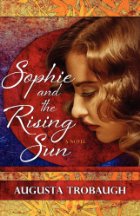 Summary:
Sophie was raised in the rural American south by her elderly widowed mother and two crazy aunts. She was always reserved and a real lady, especially after having lost the first boy she liked in the Great War. Now the year is 1941, and her neighbor Miss Anne has taken on a Japanese-American gardener. He’s not white, but he’s not quite black either, and he and Sophie have painting in common.
Review:
I was excited to see an Asian male/white female (amwf, as it’s known online) story pop up on Netgalley. They can be hard to find, and I thought the dual extra setting of the racist rural south and WWII would make it more interesting. I still don’t doubt that these positive things are what the author was going for, but it didn’t quite come through for me in the story.
Trobaugh picked an interesting writing structure that I found worked well for the story. It’s a mix of an elderly Miss Anne relating her part of the story of what she saw occur between Sophie and Mr. Oto and an omniscient third person narration. This lets the reader see both what the town saw as well as some private moments between Sophie and Mr. Oto that we would not have otherwise seen. It also helped keep the pace flowing forward.
There were also some truly beautiful sequences in the book, such as this sentence:
Too hot. Feel like Satan sucking the breath right out of this old world. (location 1631)
I am disappointed then that I felt the story itself didn’t live up to the writing. Trobaugh falls prey to some stereotyping tropes, and I don’t believe she realized she did. I genuinely believe she meant the story to be progressive, but the two minority characters in the story are two-dimensional and essentially act out the roles assigned to them in American pop culture.
In spite of falling for a white woman, everything else about Mr. Oto is stereotype 101 for Asian-American men. He is: quiet, reserved, effeminate, painfully polite, and bows all the time. The bowing really bothered me, because Mr. Oto was born in America to first generation immigrant parents. I don’t know any first generation Americans who hold on to societal norms from their parents’ country around anyone but their family. The bowing is used as a plot device to show how Mr. Oto is “different” and makes some of the rural whites uncomfortable. I kept hoping that maybe Mr. Oto was putting on an act for the white people to keep himself safe and we would see that he was actually a strong man around Sophie in private, but no. He is precisely the emasculating stereotype of an Asian-American male that we first see.
The other minority character is “Big Sally.” She is, surprise surprise, domestic help. Anyone who was here for The Real Help Reading Project will be aware of all the stereotypes surrounding black women domestic workers. The main one being of course that they’re happy to be the help and will gladly help out white women who are kind to them with their problems. Kind of the all-knowing wise woman who just so happens to scrub your floors. I was truly saddened to see Sally show up and play this role to a T. She overcleans around the white women she doesn’t like to make them feel dirty, but she has no problem stepping right in and fixing everything up for Sophie. There is a scene that made me cringe where she sits down and has a heart-to-heart with Sophie and basically sorts out all of her life problems. I know that Trobaugh thought she was writing a positive image of a black woman, but the character is pure stereotype. She exists to help Sophie and Miss Anne. She ends up being buddy-buddy with Miss Anne and living with her. In the 1940s and 1950s rural south. Yeah. Right. I’m not saying there can’t be a black woman character who is domestic help. That was indeed reality for that historical time period. But why couldn’t there be a scene where Sally and Mr. Oto talk about being othered in the town? Where they talk about the dangers to Mr. Oto after Pearl Harbor and how they are similar to some of what Sally has faced as a black woman? That would have been a truly progressive plot element, and I’m sorry the opportunity wasn’t taken.
Overall then, Trobaugh can indeed write. The book was highly readable and contains some eloquent passages. In spite of attempting a progressive message, though, the book falls to the easier method of plugging in a couple of stereotyped, two-dimensional characters. I hope in future works Trobaugh will put more work into developing truly three-dimensional minority characters. This will strengthen her work and make it more than just a piece of chick lit repeating the same old tropes.
3 out of 5 stars
Source: Netgalley

Book Review: Thieftaker by D. B. Jackson (Series, #1)
 Summary:
After spending over a decade serving hard labor in the Caribbean for mutiny and conjuring, Ethan has finally made it back to Boston. He now makes his living as a thieftaker, essentially a private investigator who hunts down stolen items, using his conjuring where necessary to help him out. But the year is 1767 and trouble is starting to brew in Boston. The Stamp Tax has been enacted, and the people don’t like it. There are even riots in the street. Against this back-drop, Ethan is asked to find a brooch that was stolen–from the body of a dead girl. He doesn’t usually take on cases involving murder, but this one is different.
Review:
It’s probably hard to tell from this blog, because they’re hard to find, but I am a real sucker for a good Boston during the American Revolution story. So when this title showed up I snapped it up. I’m glad I did because it’s an interesting take on the Stamp Act Riots.
This is an interesting piece of historic fiction, because it’s more like urban fantasy historic fiction. Is that a genre? Can it be? What on earth would we call it? In any case, I was in heaven, because I love BOTH urban fantasy and history so having both in one book was heaven. I mean first it’s breeches and three corner hats then it’s look at this illusion of a creepy little girl. Brilliant.
I struggled a bit with Ethan, which in retrospect wasn’t a bad thing. That shows he’s a realistic, well-rounded character. But let’s be honest. I’m more of a Sam Adams revolutionary type. Ethan served in the British Navy and is all “oh these hooligans.” This bothered me a lot! Especially when I got suspicious that the book as a whole would lean Tory. But! This all ends up being part of the character development, which in the end is what makes the book stronger. Ethan isn’t sure about protesting and fighting the aristocracy at first. But he changes his mind with time. This makes for a great plot-line. I like it. I do hope in the sequel we will get less of this hemming and hawing about owing things to the crown and yadda yadda. DOWN WITH THE KING. Ahem.
As a Bostonian, can I just say, I haven’t seen a book so intent on giving actual street names and buildings before, but it worked. They are totally accurate. I could completely visualize not just the streets but the entire routes Ethan was walking along. Granted, it was as if through a looking glass, since when I walk them they’re a bit different than in 1767, but still. It was very cool. I also really appreciated the depiction of the South Enders, since I spend quite a bit of time in Southie. Seeing the historical versions was really fun.
The magic portion of the book was also unique. Ethan has to cut himself to get blood to work the more powerful spells. The less powerful ones he can work with surrounding grasses, plants, etc… This makes the interesting problem that people struggle in fist-fighting him because if he bleeds he just uses it to work spells. It’s a nice touch.
So with all this glowing, why not five stars? Well, honestly, Ethan bugged me so much for the first 2/3 of the book that I kept almost stopping in spite of all the good things. He’s just such a…a…Tory. For most of the book. Instead of being angry at the man for putting him in prison for conjuring, he blames himself. Instead of being angry that the rich just keep getting richer while he struggles to pay his rent, he blames himself. You get the picture. Being irritated almost constantly by Ethan kind of pulled me out of the world and the story, which I wish hadn’t happened, because it really is such a cool world. I get what Jackson was trying to do, character development wise, but the payoff in the end was almost missed because I kept stopping reading due to being irritated with Ethan. Perhaps if his change of heart had started to show up a bit sooner it would have worked better for me.
Overall, though, this is well-researched and thought out version of Boston during the Stamp Act Riots. Fans of historic fiction and urban fantasy will get a kick out of seeing the latter glamoring up the former.
4 out of 5 stars
Source: NetGalley

Book Review: The Bay of Foxes by Sheila Kohler
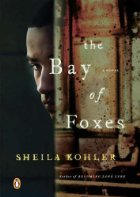 Summary:
Dawit is a twenty year old Ethiopian refugee hiding out illegally in Paris and barely surviving. One day he runs into the elderly, famous French writer, M., in a cafe. Utterly charmed by him and how he reminds her of her long-lost lover she had growing up in Africa, she invites him to come live with her. But Dawit is unable to give M. what she wants, leading to dangerous conflict between them.
Review:
This starts out with an interesting chance meeting in a cafe but proceeds to meander through horror without much of a point.
Although in the third person, we only get Dawit’s perspective, and although he is a sympathetic character, he sometimes seems not entirely well-rounded. Through flashbacks we learn that he grew up as some sort of nobility (like a duke, as he explains to the Romans). His family is killed and imprisoned, and he is eventually helped to escape by an ex-lover and makes it to Paris. This is clearly a painful story, but something about Dawit in his current state keeps the reader from entirely empathizing with him. He was raised noble and privileged, including boarding schools and learning many languages, but he looks down his nose at the French bourgeois, who, let’s be honest, are basically the equivalent of nobility. He judges M. for spending all her money on him instead of sending it to Ethiopia to feed people, but he also accepts the lavish gifts and money himself. Admittedly, he sends some to his friends, but he just seems a bit hypocritical throughout the whole thing. He never really reflects on the toppling of the Emperor in Ethiopia or precisely how society should be ordered to be better. He just essentially says, “Oh, the Emperor wasn’t all that bad, crazy rebels, by the way, M., why aren’t you donating this money to charity instead of spending it on me? But I will tooootally take that cashmere scarf.” Ugh.
That said, Dawit is still more sympathetic than M., who besides being a stuck-up, lazy, self-centered hack also repeatedly rapes Dawit. Yeah. That happened. Quite a few times. And while I get the point that Kohler is making (evil old colonialists raping Ethiopians), well, I suppose I just don’t think it was a very clever allegory. I’d rather read about that actually happening.
In spite of being thoroughly disturbed and squicked out by everyone in the story, I kept reading because Kohler’s prose is so pretty, and I honestly couldn’t figure out how she’d manage to wrap everything up. What point was she going to make? Well, I got to the ending, and honestly the ending didn’t do it for me. I found it a bit convenient and simplistic after the rest of the novel, and it left me kind of wondering what the heck I just spent my time reading.
So, clearly this book rubbed me the wrong way, except for the fact that certain passages are beautifully written. Will it work for other readers? Maybe. Although the readers I know with a vested interest in the effects of colonialism would probably find the allegory as simplistic as I did.
2 out of 5 stars
Source: Netgalley
Counts For:
Specific country? Ethiopia. South African author.

Book Review: The Far Side of the Sky by Daniel Kalla
 Summary:
After Kristallnacht, Franz Adler, a secular Austrian Jew, is desperate to save the remaining members of his family–his daughter Hannah and sister-in-law Esther. The only place they’re able to find letting in refugees is the relatively border-lax Shanghai.
Meanwhile, Mah Soon Yi, aka Sunny, the daughter of a Chinese doctor and American missionary, is trying to deal with the partial Japanese occupation of her home city of Shanghai while working as a nurse in one of the large hospitals and volunteering in the Jewish Refugee Hospital.
Review:
It’s difficult to review a book that the author obviously put a lot of research effort into, as well as passion for social justice, but that I just personally didn’t end up liking. The story itself isn’t bad, if a bit far-fetched. Clearly based in fact and solid research. I believe the problem lies a bit in the writing.
When I read historic fiction, I like seeing history through the eyes of one person (possibly two). It brings the huge picture you get otherwise down to a personable level. The problem with this book is that it kind of fails to keep things at that personal level. There’s far too much contact with actual big movers and shakers from the historic events. How the heck is this Dr. Adler in so much contact with the Japanese and Nazi elite? One scene like that can be quite powerful in a book, but not multiple ones. It takes it from the realm of historic fiction to that of fantasy.
Additionally, I feel that a bit too often Kalla tells instead of shows. Two characters will be talking about something the reader doesn’t yet know about, such as how the city of Shanghai is set up politically, and instead of putting it into the dialogue, the book just says “And then he told him about thus and such.” That makes for dull reading.
So, really, to me, the plot itself is unique in choosing a population and area of WWII that is not written about that much. The author clearly did his research and has a passion for the time period and issues faced by the people, but the story would be better served if it was made more about the everyman and dialogue and action were used more effectively.
Overall, this is a unique piece of historic fiction that will mainly appeal to fans of the genre looking for a new area of WWII to read about.
3 out of 5 stars
Source: Netgalley

Book Review: Beast Saves the Brothers and Sisters of the Cosmic I Am by G. W. Davies
 Summary:
Lisa Miller can’t believe she’s off chasing after her fraternal twin sister, Millie, yet again. After her sister ran away to join the hippie commune, Lovestock, she thought it was out of her system. But a hippie named Beast from Millie’s past shows up in town, and together they head off for Montana following The Two who claim to be in contact with the Twellorasians who will soon arrive to whisk away their followers. Along the way, they pick up a junkie jazz trumpeter and his drummer and get tailed by the drug dealer the junkie stole heroin from.
Review:
I kept reading this book thinking, “I should be finding this funny. I should be enjoying this story. I should be lost in this world,” but I never once laughed and glanced at the clock more times than I can count. I think I’m really just not the intended audience for this book.
The storyline is definitely unique and zany without being unbelievable. The split of the camp into the hippies who follow The Two and the hippies who follow the jazz trumpeter was a great move and added depth to the story. The characters are easily differentiated and fairly well-rounded. There are two bisexual characters presented in a positive light, which was nice. The dialogue is snappy.
There is a serial rapist element to the story that some might find triggering. I, personally, don’t think it’s played for laughs and Davies handles both male and female rape well. But readers wary of that content should be aware it is in the book.
I think three elements really made the book a miss for me. The humor is not my style. It’s composed of a lot of similes and tongue-in-cheek references to 1960s culture (like the Beatles and stoners) that I just personally don’t find funny. Second, the story is set in the 1960s in the middle of hippie culture, and that’s the sort of setting that takes an amazing storyline to leave me satisfied. Third, I disliked the ending, but I know some people will love it.
Overall, although this book didn’t do it for me, it is well-written, and I believe it will appeal to those with a vested interest in the 1960s and hippie culture.
3 out of 5 stars
Source: Kindle copy from the author in exchange for my honest review

Book Review: Like One of the Family by Alice Childress (The Real Help Reading Project)
 Summary:
Originally published as a serial in African-American papers in the 1950s this series of monologue-style short stories are all in the voice of Mildred–a daytime maid for white families in New York City. The monologues are all addressed to her best friend and downstairs neighbor, Marge, who is also a maid. The stories range from encounters with southern relatives of moderately minded employers to picnics threatened by the Ku Klux Klan to more everyday occurrences such as a dance that went bad and missing your boyfriend. Mildred’s spitfire personality comes through clearly throughout each entry.
Review:
With completion of this book, Amy and I are officially halfway through our The Real Help Reading Project! This book is our first piece of fiction to directly foray into the time era and relationships depicted in The Help, whereas the rest have shown the slave culture and racial issues leading up to that time period. I’m glad we got the historical context from our previous reads before tackling this one written during the Civil Rights era by an author who periodically worked as a maid herself.
The introduction by Trudier Harris is not to be missed. She provides excellent biographical details of Alice Childress, who was not only a black writer of fiction, but also wrote and performed in plays. I am very glad I took the time to read the introduction and get some context to the author. Harris points out that in real life some of the things the character Mildred says to her employers would at the very least have gotten her fired, so to a certain extent the situations are a bit of fantasy relief for black domestic workers. Mildred says what they wish they could say. Since we know Childress was a domestic worker herself, this certainly makes sense. I would hazard a guess that at least a few of the stories were real life situations that happened to her reworked so she got to actually say her mind without risking her livelihood. I love the concept of this for the basis of a series of short stories.
More than any other work we’ve read, Like One of the Family demonstrates the complexities of living in a forcibly segregated society. Mildred on the one hand works in close contact with white people and subway signs encourage everyone in New York City to respect everyone else, and yet her personal life is segregated. Mildred frequently points out how she can come into someone else’s home to work, but it wouldn’t be acceptable in society for that person to visit her as a friend or vice versa.
Another issue that Childress demonstrates with skill is how a segregated, racist society causes both black and white people to regard each other with undue suspicion. In one story Mildred’s employer asks her if it’s too hot for a dress Mildred already ironed for her and ponders another one. Mildred assumes that if she agrees with her employer that it’s too hot for the first dress, she’ll have to stay late to iron. Her employer instead of getting angry realizes that Mildred has been mistreated this way before and takes it upon herself to reassure Mildred that she herself is perfectly capable of ironing her own dresses and will not keep Mildred longer than their agreed upon quitting time. Of course, Mildred sometimes is the one who must hold her temper and calm irrational fears. In one particularly moving section she encounters a white maid in their respective employers’ shared washroom. The woman is afraid to touch Mildred, and it takes Mildred holding her temper and carefully explaining that they are more similar than different before the woman realizes how much more she has in common with Mildred than with her white employer. These types of scenes show that the Civil Rights movement required bravery in close, one-on-one settings in addition to the more obvious street demonstrations and sit-ins.
Of course the stories also highlight the active attempts at exploitation domestics often encountered. Mildred herself won’t put up for it, but Childress manages to also make it evident that some people might have to simply to get by. An example of this sort of exploitation is the woman who upon interviewing Mildred informs her that she will pay her the second and fourth week of every month for two weeks, regardless of whether that month had five weeks in it or not. What hits home reading these serials all at once that perhaps wouldn’t otherwise is how frequent such a slight was in a domestic’s life during this time period. Mildred does not just have one story like this. She has many.
Of course sometimes reading Mildred’s life all at once instead of periodically as it was intended was a bit desensitizing. Although Mildred had every right to be upset in each situation related, I found myself noticing more and more that Mildred was simply a character for Childress to espouse her views upon the world with. I quickly checked myself from getting bugged by that, though. Of course Childress had every right to be upset and did not originally intend this to be a book of Mildred’s life. Mildred was a vehicle through which to discuss current issues highly relevant to the readers of the paper. It is important in reading historic work to always keep context in mind.
Taking the stories as a whole, I believe they show what must have been one of the prime frustrations for those who cared about Civil Rights during that era, whether black or white. Mildred puts it perfectly:
I’m not upset about what anybody said or did but I’m hoppin’ mad about what they didn’t say or do either! (page 167)
Passivity in changing the system is nearly as bad as actively working to keep the system, and Mildred sees that. Of course what Mildred highlights is a key conundrum for the black domestic worker of the time–speak up and risk your job or stay silent at a cost to the overall condition of those stuck in the system? A very tough situation, and I, for one, am glad that many strong men and women of all races took the risk to stand up and change it.
Source: Copies graciously provided to both Amy and myself by the publisher in support of the project (Be sure to sign up for the giveaway. US only and International).

Discussion Questions:
- How do you think domestics decided where to draw the line in what they would and would not put up with in employment in white people’s homes?
- Some of Mildred’s employers seem to be sensitive to the racial and inequality issues and are very kind to Mildred. Be that as it may, do you think it is/was possible to hire a maid for your home and not have a racist mind-set?
- Do you think the employers Childress depicts attempting to exploit Mildred were doing so out of racism, a power-trip, or greediness or some combination or all three?
- Mildred points out multiple times that she feels that the public ads encouraging people to accept each other “in spite of” their differences are still racist. Do you think this is true?
Book Review: The Group by Mary McCarthy
 Summary:
A collection of women graduate from Vassar in the 1930s. Their friendship is known collectively as “The Group,” and their distinctive Vassar education has given them a distinctly liberal view on the world. How this changes with time as they repeatedly encounter societal expectations and relationship problems are told through a series of vignettes that focus in on moments in their lives over the seven years after graduation.
Review:
I am so glad that Nymeth’s review made me add this to my wishlist. This piece of historical fiction told entirely through women’s lives looks at women’s issues in an oft-ignored time period–1930s America. Particular issues that impact these women’s lives and dreams include birth control, gender norms, violence against women, and social justice.
Moving smoothly through the seven years but changing perspectives by spending a chapter or two on each woman in turn, we get a glimpse of their lives. For instance, early in the book we see Kay’s life in detail, but later we only catch glimpses of it through her friends’ eyes. This lends a greater sense of depth and mystery to these women’s lives. What happened to change them? How drastic of an impact did certain events have on their lives? Are they truly happy now? Much like real life, the reader can only speculate based on the limited information she has.
The style of looking at women’s issues in history through the lives of multiple women lends a depth to the story that would not be there if it was told in the traditional manner of focusing in on one single woman. The, essentially, cluster-fuck of circumstances, expectations, and personality that come together to create the different lives they end up leading is endlessly fascinating to study and ponder.
This book humanizes women’s issues in the 1930s and brings them to light in an engrossing manner. I highly recommend this book to anyone with a love of historic fiction or an interest in women’s issues.
5 out of 5 stars
Source: PaperBackSwap

 Support my work with a tip or browse my shop for curated book club guides, how to guides, cross-stitch patterns, and more!


This work by Amanda Nevius is licensed under a Creative Commons Attribution-Noncommercial-No Derivative Works 3.0 United States License.
 Opinions of a Wolf