
Archive
Book Review: Death By Petticoat: American History Myths Debunked by Mary Miley Theobald
 Summary:
This history book has assembled the most often-repeated myths of US History and one-by-one debunks them.
Review:
There is not much to say about a book that is so short. Listing only 63 myths, each summed up within one or two sentences and then “debunked” in under a page, it is possibly the shortest history book I’ve ever read.
The myths and debunking are interesting, but there’s far too few of them. Additionally, while images are given citations, the debunkments aren’t! Well, why should I believe what you’re saying, Theobald, as compared to anyone else? Just because you *claim* there aren’t any records of thus-and-such doesn’t mean that there aren’t unless you back it up with solid evidence. While I enjoyed the myths and the talk about them, I can’t take it seriously as an academic due to a complete lack of citations.
The cover is super-cute though.
Overall, recommended to people who want to know what the myths are, but not to anyone seeking serious history.
2 out of 5 stars
Source: Netgalley

Book Review: The Last Hunger Season: A Year in an African Farm Community on the Brink of Change by Roger Thurow
 Summary:
Smallholder farmers make up the majority of Kenya’s food production and yet they face multiple challenges from inefficient planting techniques to bad seed markets that lead to an annual wanjala–hunger season. One Acre Fund, an ngo, saw the gap and came in with a vision. Sell farmers high quality seeds and fertilizers on credit, delivered to their villages, on the condition they attend local farming classes. Roger Thurow follows four families as they try out becoming One Acre farmers.
Review:
Every once in a while there’s a book that you know will impact your entire life. I know this is one of those books.
Thurow strikes the perfect balance between narrating the farmers’ lives and knowledgeably discussing the global politics and environmental problems that also impact the hunger. The information he hands out would be riveting in any case, but how he narrates it kicks it up to another level.
Central to the book is this question:
Why were people still dying of hunger at the beginning of the twenty-first century when the world was producing—and wasting—more food than ever before? (location 202)
I know we all know there is hunger in the world, but it can be easy to ignore when it doesn’t have a face like David or Dorcas, two of the children featured whose mothers flat out do not have food to give them. During the wanjala, since it is most of the families’ first years using One Acre Fund, they do not have enough maize (their staple crop) from the year before. Thus while watching their fields grow, they don’t have enough food to feed their families. During the height of the wanjala the families routinely have tea for breakfast and lunch and maybe some boiled vegetables or bananas for dinner. And they still must farm and go to school. I can’t recall the last time I’ve been so humbled.
Don’t get me wrong. The families profiled in this book aren’t put on a pedestal or romanticized or distanced. They are very real. But their strength and wisdom in the face of so many challenges has no other option but to be inspirational. Because it is so real.
You don’t focus on the afflictions you have, on your poverty; you focus on where you are going. (location 1469)
Makes you feel bad for complaining about morning commutes, doesn’t it?
Beyond talking about the disgusting fact that there is still hunger in a world with so much plenty and demonstrating the resilience of the families, the book also discusses One Acre Fund’s poverty fighting ideas. Basically they operate on the teach a man to fish principle. Thurow talks about how Youn, the founder, believes that bringing in food aid to feed farmers is absurd. We should instead be helping them to farm better. Beyond it not being sustainable to feed everyone year after year, it robs the farmers of their dignity. This was the point I liked best. These people are not dumb or lazy. They are victims of a system that is not working. Helping them help themselves lets them retain their humanity and dignity. I think that’s something that is often missing in charity work and ngos, but it’s vital to truly changing the game.
Overall, if you want a book that will challenge your perceptions, humble you, broaden your horizons, and help you see how to truly fight global poverty, this is the book for you. In other words, this is recommended for everyone.
5 out of 5 stars
Source: Netgalley

Counts For:
Specific country? Kenya

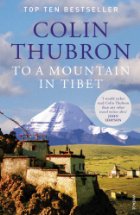
Book Review: To a Mountain in Tibet by Colin Thubron (Audiobook narrated by Steven Crossley)
 Summary:
After the death of his mother, who also was his last living family member, Colin set out on a journey to the mountain of Kailas in Tibet. The mountain is holy to both Hindus and Buddhists and is closely associated with the process of dying and crossing over. Through his eyes we see the people of Tibet and his emotional journey.
Review:
I am not sure if words can describe what an epic miss this book was for me. The combination of British western eyes othering Tibetans, an entire chapter dedicated to his father’s big game hunting, a surprising lack of emotional processing of death, and the *shudders* British accented narrator imitating Indian and Tibetan accents…..oh god. It was painful.
I see nothing wrong with a Western person traveling and appreciating something revered in another culture. If it is done right, it can be a beautiful thing. A lesson in how we are all different and yet the same. Yet through Colin’s eyes I felt as if I was very uncomfortably inhabiting the shoes of a colonizing douchebag. Perhaps part of it was the narration style of Crossley, but it felt as if Colin was judging and caricaturing all of the Tibetans and Indians he met. There was so little empathy from someone supposedly on this journey to deal with death of loved ones. You’d expect more from him. I could accept this perspective more if either Colin learned over the course of the trip or this was an older memoir, but neither is true! This is a recent memoir, and Colin is the exact same self-centered prick he was when he went in.
Similarly, Colin when he is not othering the Tibetans and Indians is either reminiscing joyfully on his father’s exploits as a big game hunter and basically colonizing douche in India or giving us a history lesson in Hinduism and Buddhism. Ok? But he’s not an expert in these religions and also that was not the point of the book? A few explanations here and there, sure, but if I wanted to learn about Buddhism or Hinduism, I sure wouldn’t be getting it from a travel memoir from an old British dude. I’m just saying.
Overall, this is an incredibly odd book. It is a book out of time that feels as if it should have been written by an understandably backward gentleman traveler in the early 1900s, not by a modern man. I honestly cannot recommend it to anyone.
2 out of 5 stars
Source: Audible

Book Review: Evolution in a Toxic World: How Life Responds to Chemical Threats by Emily Monosson
 Summary:
Monosson attempts to explain both current and possible future impacts of chemical pollutants on humans by examining how life responded to toxic threats in the past.
Review:
Allow me to preface my review by saying that although I am not a scientist, my profession is that of a medical librarian, so scientific jargon is not new to me. I would therefore say my understanding of science is somewhere above average American but below actual scientist. I had the impression from the description that this book is written by a scientist for public consumption aka the average American. It misses the mark.
The content is great and informative, but it is couched in such an overload of scientific jargon and an assumption of an above average understanding of how the human body works that it was incredibly difficult to get through in order to glean out the interesting information. Thank goodness I had the kindle version and could look up words easily as I went, or I would have given up within the first chapter. Additionally, just when things were starting to get interesting, such as with how DDT impacts development in utero, Monosson would switch topics. Very frustrating!
That said, I did learn quite a bit from this book. It was just difficult to get to these understandable tidbits given the writing style and structure. Here are a few interesting things I learned:
Like some pervasive computer operating systems, p53 is an archetypical example of the unintelligent design and compromise that is inherent in evolution—a multifunctional, multipurpose transcriptional coordinator that has only lately been retasked to the job of tumor suppression in large, long-lived orgasms….At the end of the day p53, together with all our other suppressor mechanisms, fails half of humanity. (location 1314)
Though two species may share a common ancestor and hence a common ancestral receptor or enzyme, once they part ways on the family tree, the branches evolve independently. (location 1670)
For a genetically male mammal to come out looking and functioning male, he requires in utero exposure to hormones like testosterone and its more potent derivative, dihydrotestosterone, along with a functioning AR. An embryo lacking either hormones or a properly functioning AR (or exposed to chemicals that disrupt either receptor or hormone production) will take on a female appearance, despite possessing a Y chromosome….work by Kelce, Gray, and others revealed that a metabolite of the pesticide DDT was an even more potent inhibitor of the AR than was vinclozolin. Given the ubiquity of DDT and its metabolites, this was a potentially explosive finding. (location 1716)
If our CYP enzymes are increasingly metabolizing a variety of pharmaceuticals, what happens when we add one more, or change our diet, or breathe in chemicals like polyaromatics bound to micron-sized air pollution particulates? (location 2509)
Ultimately though, although I learned a lot, the reading experience itself was a bit daunting for the average American. I believe this book would best be enjoyed by a scientist for whom evolution is not their normal research area. They thus would have an easier time with the jargon, but also not already know what Monosson is talking about.
3 out of 5 stars
Source: NetGalley

Friday Fun! (Holy Busyness Batman!)
My lovely readers! Boy am I ever glad I gave you guys the heads up that things would slow down around here for the next few months. I’m not even sure how long it’s been since I posted a Friday Fun. A couple of weeks?
In any case, my new job is AWESOME, and I am so blissfully happy that after years of struggling through school and in a bad economy that I wound up with a job in the field and area of librarianship that I wanted in the city that I love. I love my commute! I love my coworkers! I love my patrons! I love the view from my shared office! I love that I HAVE an office! I love that I’m getting to go to the Medical Library Association’s 2012 conference in Seattle!
But it is also a huge learning process and I find myself with a brain refusing anymore information by the time I hit the T at the end of the day. This means that all three of my nonfiction reads I had started before working at my new library, as well as during the first week, have hit the wayside. Cannot. Do. It. I need memoirs and paranormal romance and swashbuckling and FICTIONAL STORYLINES FOR THE LOVE OF GOD. I cannot read and attempt to comprehend things about evolution in a toxic world or why you should eat this and not that. Nope. Can’t do it. At least not right now. So, yes. I’m going to attempt to struggle my way through the three nonfiction reads I had started with a chapter a day. Beyond that, no more. I mean, I have to work on learning PHP for my new job. One can only handle so much nonfiction in one day. That said, I still want to do Diet for a New America, but I think I’m going to have to rework it somehow. Maybe make it a challenge instead of a project. That way I won’t feel bad if it takes me a while to get to the next book. I still intend to finish, buuuut probably not by the end of 2012 *snort*
Speaking of diet and health, I have discovered ZUMBA and it is AWESOME. I’ve always been a dancer from a very young age (before I got fat and unhealthy) and for some reason even though I’ve recovered my fitness, I was ignoring dance. No more! Zumba is basically dance aerobics only using Latin dance and a mix of Latin music and modern popular songs. (I think to date my favorite routine has been the one we did to I’m Sexy and I Know It. It involved showing off our guns). Anywhooo I love the Latin dancing because it is all hip shaking, but it’s also a great class to go to once a week because long-term cardio is still what is really difficult for me, but the class and instructor are just so dang FUN that I am bound and determined to make it through. And I do. I just also have at least one point in every class where I am certain I am going to die. Then we pretend to be roping a cow, and I suddenly am fine. ;-)
Happy weekends everyone! Tomorrow is my first day as a Saturday librarian, and I am mad excited. (Which seems to be my perpetual state of emotion nowadays).
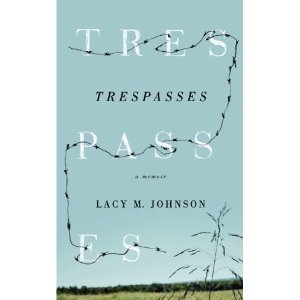
Book Review: Trespasses: A Memoir by Lacy M. Johnson
 Summary:
Lacy grew up in Missouri to a traditional, poor farming family that never bothered to keep track of its European roots. Through interviews with her family members and a series of personal vignettes, Lacy explores what it is to be white and poor in America, the farming community, and the odd in-between Missouri inhabits as not quite southern and not quite midwestern.
Review:
The concept behind this book is excellent. The execution is discombobulated with a few gems at best, off-putting to the reader at worst.
I think what is most difficult about this book as a reader is that we jump around through time and situations with no guidance. Who is Judith? How is she related to Archie? For that matter, how is she related to the author? We have no real idea. I’m not against the jumps around the family time-line as a method in contrast to the more traditional linear timeline, but the reader needs to know who we are reading about. I honestly think an intro with a simple, straight-forward family tree would have helped immensely. Instead we have to wait until later in the book to determine who these women are that the author is speaking about. It leaves things confused.
Then there’s the narration style. It jumps from “you are so and so” to third person to first person past to first person present without any real rhyme or reason. I can appreciate the style of the individual vignettes. Individually, they are well-written. But assembled together into one single book where they are all supposed to tell a cohesive story, they are puzzling and off-putting.
The absolute strength of the work is when Lacy puts down her story-telling mantel and simply talks about the history of the terms “white trash, cracker,” what it is to grow up white trash, what it is to change class setting from poor to academic. These were interesting and relatable. I believe this is the author’s strong point and would encourage her to pursue this in future works. It is certainly an experience that she is not alone in having in her lifetime.
Overall although the concept of this memoir is strong and unique, the method of time-jumping vignettes and constantly changing narration styles make for a confusing read. I would recommend you browse a copy in a library or a bookstore if you are interested in the author’s writing style or one or two particular vignettes, but not venture beyond that.
2 out of 5 stars
Source: NetGalley

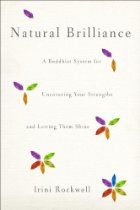
Book Review: Natural Brilliance: A Buddhist System for Uncovering Your Strengths and Letting Them Shine by Irini Rockwell
 Summary:
Utilizing the traditional Buddhist five wisdoms–presence, clarity, richness, passion, and action, Rockwell seeks to show readers their own personal strengths and possible weaknesses. Rockwell then seeks to demonstrate how to bring out the other three to four wisdoms within your personality to achieve more balance.
Review:
Before I had a book blog, I read quite a bit of Buddhist literature. My minor was Religious Studies, and I also had an interest in it from a psychiatric and personal perspective. Certain aspects of Buddhism are used in modern psychiatric treatments, for instance. In any case, this is not my first Buddhist read. I am familiar with a lot of the terminology and ideas. This book though was nearly impossible to follow. Quite possibly the worst book on Buddhism I’ve ever come across.
First, there’s how Rockwell talks about the five wisdoms. Instead of consistently calling them by either their English name, Sanskrit name, or a hyphenated version of the two like most Buddhist works do, Rockwell bafflingly switches back and forth between English and Sanskrit without any rhyme or reason. Particularly in an ebook where it’s difficult to flip back to the earlier pages where the wisdoms were introduced, this makes it really hard to follow the author’s thought-process.
Similarly, random information is inserted but then not fully explained. I wonder if in the print version these are set apart in boxes? Not sure. For instance, the section introducing the five wisdoms has a completely random blip about the colors Tibetan Buddhism associates with them inserted in the text between the fourth and fifth wisdoms. It’s just jarring and odd.
Finally, I didn’t really learn anything of value from the book. Rockwell talks at length about what a person who is mostly possessing the wisdom of passion might look, behave, and even dress like, but not much is discussed about how to put this knowledge to good use. It’s almost as if Rockwell got so caught up in describing the wisdoms that he forgot to talk to us about how to put this knowledge to much use. Besides, does it really help to know to label the person who is passionate as exhibiting the passion wisdom? We already know instinctively what they are like and how to deal with them. Labeling it doesn’t really help, does it?
Overall, I found this book to offer very little in a way of self-improvement or aid in dealing with people. It is confusingly organized without much valuable information within it. Although it is a readable book that is not at all offensive, it just doesn’t seem like reading it is worth the time.
2 out of 5 stars
Source: NetGalley

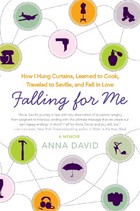
Book Review: Falling For Me: How I Hung Curtains, Learned to Cook, Traveled to Seville, and Fell in Love by Anna David
 Summary:
Anna David is a successful writer in her mid 30s living in NYC when an overwhelming depression hits her. She’s still single. What’s wrong with her? While fighting off tears in the self-help section, she finds a copy of Sex and the Single Girl by Helen Gurley Brown, which was a bestseller in the 1960s. Essentially a guide to being happy single while still keeping an eye open for Mr. Right, Anna instantly connects with Helen Gurley Brown and decides to spend the next year challenging herself and taking advantage of everything being single has to offer.
Review:
It should really need no explaining why I picked this book up. I’ve always been the relationship type (even when I tried not to be), but I also won’t settle for just anybody, and sometimes that combination leads to some ennui. I was hoping I would find a connection to and insight from Anna, and I was certainly right about that.
The very first chapter has Anna breaking down in line for food in her head, basically saying, “I’m going to be alone forever,” and going on from there adding that she’ll be the crazy old maid cat lady and going further and further on into ridiculousness that really doesn’t seem that ridiculous when it’s your brain saying it to yourself. I knew instantly that Anna and I would get along.
As opposed to a lot of other single gal memoirs, the focus is neither just love yourself the way you are nor fake everything to land a man. It’s more like….Do you have any idea how lucky you are to even have this phase in your life? You’re single! You can do anything, go anywhere, decorate however you want, and etc… Anna realizes that she hasn’t been taking full advantage of the things being single affords to her. Things like deciding to house swap and live for a month in Seville (try doing that with a baby) or taking French classes in the evening or spending the day rollerblading and winding up in a park in the sun. So Anna isn’t just trudging along being herself. She’s pushing herself to try new things, go new places, and yes the future Mr. Anna may be there, but even if he’s not, she’s still having a fun time doing it.
The book also addresses another common issue among single women and, well, people in general–grass is always greener syndrome. Anna eventually realizes that she seems to think all of her problems will just disappear if and when she gets married, when that is really not the case at all if you pay an iota of attention to married couples.
One specific line in S&SG that I keep thinking of—“I’ve never met a completely happy single girl or a completely happy married one”—and how it’s helped me to see that I’m somehow convinced that getting to the next stage will make me instantly joyous. (page 36)
The other thing that is sooo relatable that Anna talks about is how it’s so easy to become so desperate for a partner that you start trying to change yourself for him or worry constantly about whether or not you’re good enough for him, when that’s not how dating is supposed to work!
You spend all your time trying to manipulate a guy into wanting you to be his girlfriend when what you should be doing is enjoying yourself and then later figuring out if you even want him as a boyfriend. (page 205)
There are definitely things about Anna that I don’t like or I disagree with (for instance, she eats veal and foie gras, ahem, the book almost got thrown across the room at that point), but even though we’re different, we’re also the same. We’re two single gals who are wondering why everyone else seems to be coupling up but me? What Anna slowly realizes over her year-long experiment is that there is no timeline for love and marriage. It’s not like it’s a game of musical chairs and she’ll be left the only one without one. Maybe her music is just playing at a different speed. I think that’s a really important thing to remember and touching to see someone else struggling with, because it’s far too easy to start pressuring ourselves and the men we date into situations that just aren’t right for either of us. It’ll happen when it happens.
This is a rare instance when I feel the need to sort of reveal the ending. I was worried the book would end with Anna abundantly happy in a relationship, kind of like Eat, Pray, Love, which honestly would only have made me more depressed. Like the book was all about yay singlehood but I still landed a man, right? But no. Who Anna falls in love with is not a man, but herself.
Here’s what I’ve come to understand: I used to not really believe I deserved thick, gorgeous panels for my windows or to pull books from a bookshelf specifically selected for my apartment. It didn’t occur to me that I was worth cooking homemade chicken soup for or dressing in beautiful clothes. I thought I was half a person because I didn’t have a partner but that when I had one, I’d do those things for him. Now I see that I’m entirely whole so that if and when I find him, we can be two whole people together, not the person and a half we would have been. (page 305)
Yes, yes, yes! Finally. A book about being single and loving yourself and taking care of yourself and being a whole person as just you. Sure, the professionals tell us that, but it’s super-nice to get to hear it from a gal who could easily be somebody I have bimonthly cocktails with.
I highly recommend this book to any single ladies in their 20s and up. It’s a nice reminder that we’re not the only ones learning to love ourselves and be patient for the right person.
4 out of 5 stars
Source: Public Library

Book Review: Nano House: Innovations for Small Dwellings by Phyllis Richardson
 Summary:
A nano house is a super-small house, generally between 300 and under 1,000 square feet. This book shows off nano houses from all over the world with different goals in mind, from an eco-friendly retreat that blends in with the surroundings to pod buildings that could be assembled into space-saving towers in the city to more traditional house boats. One goal of all the houses remains the same. How little space can one person or family take up to make the smallest impact on the environment?
Review:
I became fascinated with nano houses after stumbling across a few on the internet. One that sticks out in my mind is a couple that built theirs together and had a blog about it. There was another one in Australia that the woman made from plastic bottles and dirt. The whole concept was just so….refreshing. A small space that is uniquely you (or your family) that fits in just right with your surroundings. So when I found out about a book coming out collecting a bunch of these houses together, I put myself on the hold list at the library immediately. I wanted to know more details about building these remarkable little houses and the kind of people who are choosing them. Unfortunately, this book missed the entire soul of the blogs and blurbs I’d found online.
Instead of seeking out individuals and families who designed and built their homes themselves, the houses here were all made by architectural firms or design students. If you’ve ever met that snotty whoever in the bar who just can’t stop talking about his high-class ideas for making the whole world more up to his par, then you know the vibe this book sends off in waves. It’s not enough to make a small, livable house with minor impact, no, they must use this new, experimental flooring or make the house look like a storage shed or design their own perfectly circular furniture or give a speech about the revolutionary concept of having a yard on the roof of your houseboat. Um, newsflash, pretty sure I came up with that idea when I was 5.
Instead of interviewing the people who live in these houses, the author talks about what the houses are like and why they are built. We get to hear nothing about actually *living* in a nano house. Indeed, some of the houses were simply made for design contests or as student projects with no intention of anyone living in them at all, which seems to be the OPPOSITE of environmentally friendly if you ask me.
In fact, the whole book reads like greenwashing. Oh, they say anyone can afford to buy this house or live there, but in fact it’s the “eccentric” wealthy who own these houses as second homes or vacation homes or a place to stick guests so they aren’t in the main house….but it’s environmentally friendly, so it’s all cool. What I wanted to see was game changers. Ordinary people who chose to make their own home their own way. What I got instead was annoying architectural design students and getaways for the wealthy. Plus, there are not nearly enough pictures of the houses to get a good idea of what they are actually like, and any floor plans are printed so small that they are impossible to read.
Overall, this book has a great title, but is a huge disappointment. It reads like a bunch of wealthy people patting each other on the back at a party at the Ritz, missing the entire soul of the environmental movement.
2 out of 5 stars
Source: Public Library

Book Review: A Stolen Life by Jaycee Dugard
 Summary:
On June 10, 1991, eleven year old Jaycee Lee Dugard was abducted from her school bus stop by Phillip and Nancy Garrido with the aid of a stun-gun. Jaycee was locked up in a backyard compound and repeatedly raped and abused by Phillip in a bid to satisfy his pedophilia. Over the course of her 18 year captivity, Jaycee gave birth to two daughters in the compound. Eventually with her increasing age, the sexual assaults stopped, but she was still held captive. Finally, on August 26, 2009, Phillip brought Jaycee and her daughters with him to the parole office in an attempt to explain away why he was spotted in public with the two girls. Jaycee, who hadn’t been allowed to speak her name for 18 years, was able to write it down for the police. This is the memoir of her experience and gradual recovery from the captivity.
Review:
Jaycee wrote this memoir without the assistance of a ghost writer, something very uncommon in memoirs by victims of abduction. She states in the beginning that her way of remembering things is a bit off because of the trauma, but that her way of telling her story will provide a genuine experience for the reader to truly see how the abduction affected her. She is correct that the memoir is not set up in a traditional way, but this tends to make for stronger books when discussing something as painful as this. It reminds me a bit of the very non-traditional story-telling methods used in another memoir When Rabbit Howls. Eliminating the ghost writer and letting the victim speak grants us, the readers, the opportunity to truly connect with a survivor. I humbly thank Jaycee for her bravery in this.
Most of the chapters start with Jaycee remembering the events from the perspective of her younger self. This absolutely makes scenes such as her first molestation by Phillip incredibly haunting. She then ends each chapter with a reflection from her adult, free perspective on the past. This structure is unique, but it provides an interesting perspective, showing both Jaycee the victim and Jaycee the survivor. Toward the end of the book this structure is lost a bit as we suddenly are shown many pages from the journal Jaycee carefully kept in captivity, as well as talking in a more present manner about the therapy she’s been going through. Her therapist sounds truly remarkable. She uses horses to help the survivors deal with problems, which seems to work incredibly well for Jaycee who often only had animals around to talk to during her 18 year ordeal.
Although Jaycee does recount her abuse and manipulation at the hands of Phillip, that is not at all what stands out in this memoir. What comes across is what a strong, sensitive, caring woman Jaycee is. She is not lost in woe is me. She does not even think she has it the worst of anyone in the world. The one thing she repeatedly states she’s learned is that she was not assertive enough as a little girl, and that personality trait backfired on her repeatedly throughout the ordeal. She states that she sees this as the reason abuse of all kinds are able to go on, because people don’t speak up.
There are moments in which all of us need to have a backbone and feel that we have the right to say no to adults if we believe they are doing the wrong thing. You must find your voice and not be afraid to speak up. (page 143)
This message of “speak up” is stated repeatedly throughout the book and leaves the reader feeling empowered rather than downtrodden at such a tale. If Jaycee could live through such a situation and come out of it stronger and as an advocate for victims and survivors of abuse to speak up, how can any of us do any less?
I recommend this book to those who enjoy memoirs and survival stories and can handle scenes of a disturbing nature.
4 out of 5 stars
Source: Amazon

 Support my work with a tip or browse my shop for curated book club guides, how to guides, cross-stitch patterns, and more!


This work by Amanda Nevius is licensed under a Creative Commons Attribution-Noncommercial-No Derivative Works 3.0 United States License.
 Opinions of a Wolf