
Archive
Book Review: Vow of Silence By Robert Laughlin
 Summary:
In an alternate universe, Karlan escapes the drudgery of his family’s farm by moving to the nation’s capital when it is discovered he is one of the few possessing a memory strong enough to join an elite group known as Datists. Datists, utilizing memory techniques, are responsible for all knowledge in this society that has not discovered writing. All goes well until he is assigned a specialty that wreaks havoc on his humanity.
Review:
When I first started reading this book, I was immediately struck by how much the story-telling style reminded me of European literature in the 19th century. Less action-oriented, it is much more prone toward introspection, like Frankenstein or Dracula. I enjoy this writing style as much as I enjoy the more modern style, so it was nice to see this in a new novel.
Laughlin does an excellent job of making the reader sympathize with someone who goes on to essentially lose his humanity. He turns Karlan into a monster, yet the reader, instead of being horrified, understands why Karlan does what he does. Making your main character an anti-hero is difficult to pull off, but when done well goes far in making the reader ponder things she might not have otherwise.
[spoiler warning]
I also was surprised and appreciative of the fact that Laughlin gives Karlan a chance to win back his humanity, ironically by causing a revolution by not doing anything. Even though Karlan is left essentially alone and broken, he gets to see the revolution he helped cause transform his oppressive society into an engaging one.
[end spoiler]
Unfortunately, Laughlin’s writing style is not entirely consistent throughout. Some passages are more engaging than others. While most of the book flows well, parts of it drag. This is Laughlin’s first book, however, so hopefully this will improve with time.
Vow of Silence is published by an indie publisher, Trytium Publishing. This is not the same as being self-published. Laughlin still had to sell his story to them and standard contracts are still involved, but it does mean that they don’t have as many resources as mainstream publishers. This means that the binding isn’t as strong in the book, and the type-set is a bit odd. However, I doubt that a mainstream publisher would have given this work a chance, and it is a great story. I encourage you to buy a copy and support indie publishing if you are interested in reading the book.
4 out of 5 stars
Source: Library

Book Review: Breathers By S. G. Browne

Summary:
Billing itself as a rom-zom-com (romantic zombie comedy), Breathers looks to get into the psyche of those reanimated corpses out to eat your brains, not to mention deep-fry your fingers. Andy is in his 30s and living in his parents’ basement after reanimating from a car crash that left his wife permanently dead. Andy is depressed and slowly decaying, but all that changes when he starts attending Undead Anonymous weekly meetings. There he meets Rita, and together with other members, they stumble upon southern zombie Ray who gives them jars of his venison that tastes remarkably good to Andy and has some interesting affects on him.
Review [spoiler warning]:
Breathers starts out with a bang. Nothing sucks you in quite like a main character waking up from an alcohol-induced blackout to discover he’s killed his parents and stuffed their dismembered bodies in the fridge and freezer. Browne’s dark humor serves the storyline well. It’s not easy to take a repulsive, cannibalistic, walking corpse and make him a sympathetic character instead of the terrifying other, and Browne achieves this…..to a certain extent.
At first Andy and the reader don’t know that the “venison” he’s eating is actually people. Both the reader and Andy see the positive effects of eating humans before they fully realize that’s what he’s eating. (Although, come on, I had my definite suspicions, even in a world where vampires are “vegetarians” and have Tru Blood.) Andy stops decaying and starts protesting for his civil rights to be reinstated, for zombies to be recognized as equal and valid. This is a popular, obvious analogy for various human rights fights going on around the globe. Awesome. It’s great for people who aren’t ordinarily treated as an other to get a first-person account of what that’s like.
This analogy though is why I have a bit of a problem with the twist toward the end whereby we see that eating humans leads to cravings for more humans and eventually we have a full-out blood bash eating a house full of frat boys. Aesthetically, as a horror fan, I love the blood bash. Nothing quite like reading a first-person account of what it’s like to eat another human being alive. However, the lesson learned here is that while the other may seem cute and cuddly, all your suspicions about them are true. Don’t trust them for a minute or they’ll turn full evil on you.
Browne doesn’t seem to have an issue demonizing select groups. The whole frat boys stealing limbs from zombies as pledges followed by the zombies eating the frat boys and their various one-night stands and girlfriends reeks of a weak, geeky boy’s wet dream. Revenge of the nerds zombie-style.
It’s unfortunate that Browne lets his bitterness undermine his enjoyable writing style–a wonderful mix of humor and horror. Hopefully his next effort leaves the personal grudges behind and just gives us the humorous horror we want.
If you found this review helpful, please consider tipping me on ko-fi, checking out my digital items available in my ko-fi shop, buying one of my publications, or using one of my referral/coupon codes. Thank you for your support!
3.5 out of 5 stars
Length: 310 pages – average but on the longer side
Source: Library
Buy It (Amazon or Bookshop.org)
Book Review: Pretties By Scott Westerfeld (Series, #2)
 Summary:
Tally Youngblood lives in a dystopian society where everyone is given an operation at the age of 16 that makes them perfectly pretty. What is not known by the general population is that during the operation lesions are put on the brain to make people dumbed down and easy to control. A few people are selected to be “Specials.” They don’t have the lesions and control the rest of the society. Some people resist the operation and the control and live in the wilderness, calling themselves “Smokies.”
After being captured from The Smoke, Tally has been made pretty. She has mostly forgotten her experiences and has a new boyfriend, Zane. They belong to a New Pretty clique called The Crims. The book follows what occurs after teens from the New Smoke bring Tally pills created by adults in the New Smoke that are supposed to cure the brain lesions. She and Zane share them and begin plotting their resistance of the regime and escape from New Pretty Town.
Review:
I am quite torn about this book.
On the one hand, I like that Westerfeld is clearly gradually moving our traditional hero, Tally, toward turning into one of the bad guys in this society. It’s a move not commonly seen in YA lit, and I think it’s a bold thing to do. It could lead teens to question what makes people behave badly versus what makes people behave well. It’s a bit reminiscent to me of the key question in Wicked: Are people born bad or do circumstances make them that way?
On the other hand, I am profoundly disturbed at how Westerfeld presents Shay, Tally’s one-time best friend and the one who came up with the plan to escape to The Smoke in the first book, Uglies. Tally followed Shay there, won over the guy Shay had her eye on, and betrayed Shay to the Specials, causing her to be turned Pretty. Oh, and in Pretties she completely leaves Shay out of the whole pills-curing-people-and-escaping-to-New-Smoke-thing.
Since Tally is leaving Shay out, Shay is left to her own devices. These are delineated in the chapter titled “The Cutters.” In this chapter Tally and Zane discover that Shay has discovered a way to temporarily clear the fuzziness in her head caused by the operation. She is ceremonially cutting herself and has some followers who are now doing the same. They call their clique “The Cutters.”
Self-injury is a real element of multiple mental illnesses. People suffering from depression, post-traumatic stress disorder, dissociative identity disorder, and borderline personality disorder will display this symptom. However, it is most well-known and highly associated with Borderline Personality Disorder (BPD), which is already stigmatized and misunderstood by the media and general population.
Westerfeld’s presentation of self-injury in his storyline reinforces multiple stereotypes regarding it. First is the idea that self-injurers only cut. This is not the case. Burning, head banging, hitting things until your knuckles bleed, picking at and peeling skin, and pulling out hair are just some of the multiple methods people used. Cutting, burning, and head banging are the most common. Thus, showing all of The Cutters using the exact same self-injury method to clear their heads is misleading.
Second, Shay and the other Cutters proudly display their scars and make a show of the bleeding. Self-injurers must face the prejudice that they do this for attention, that they do it in places people will notice to garner that attention. For the vast majority of self-injurers this is not the case. They do it in places that are easy to hide, such as upper thighs, or purposefully wear long sleeves to hide the marks. They are usually profoundly ashamed of what they did, or at least terrified that people will find out. It would be much more accurate to portray Shay cutting herself in a private room and have Tally accidentally see it, than to have the large ceremony in the middle of a park that is portrayed in the book.
Third, while it is true that some self-injurers say their mind feels clearer from injuring, others say it helps them shut down emotions they don’t want to feel. It’s perfectly plausible for Shay to be in the former group, but it seems to me that at least one of her followers would be in the latter group.
My real issue though comes from the fact that Tally seeing Shay self-injuring is the final decisive straw to her. She emphatically announces that Shay is crazy, and Zane agrees with her. No one dissents from this viewpoint. Shay’s scars are the markers that she’s gone off her rocker; there’s no turning back. To top it all off, the cutting is what makes the evil Specials decide that Shay and her group should be Specials themselves, thus associating self-injury not only with “being crazy” but also with being evil. Additionally, the ceremony in the middle of the woods is clearly connotated as being primitive.
Can you imagine what reading this portrayal would do to a teen struggling with self-injury? She is portrayed as purely crazy, evil, and primitive. Shay is a lost cause in the book, and clearly the teen must be too. So little sympathy is given to Shay. Not even a spark of goodness is visible in her.
I’m not the type to say that if you display thus-and-such group as evil you’re saying they’re all evil. I think it’s just as discriminatory to always portray a certain group as good. However, the portrayal of Shay turns so one-dimensional with the on-set of her self-injury. There is zero depth to her character, zero exploration of her as a conflicted person. She could have had rich character development. Indeed, the entire group of “Cutters” could have been a wonderful opportunity for Westerfeld to explore more depth in his story-telling.
Yet he went the easy, sensationalist route and portrayed an evil, crazy, primitive female slashing her arms while reciting a spell, letting the blood drip down in the rain.
An incredible image to visualize? Yes. A deep, accurate one? No.
2.5 out of 5 stars
Source: Library
Previous Books in Series:
Uglies

Book Review: I’m Perfect; You’re Doomed By Kyria Abrahams
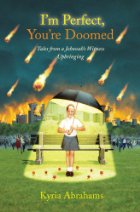 Summary:
Kyria Abrahams is rising in visibility in comic circles. She originally wanted to tell her memoir as a one-woman show, but instead ended up writing it down as a book. Kyria’s memoir takes the reader from an inside look at what it was like to be raised a Jehovah’s Witness in Rhode Island in the late 1980s and early 1990s to her marriage at 16 to her eventual disfellowship. Not your typical serious-toned memoir, Kyria approaches her heavy material with a comic’s graceful tongue-in-cheek snark.
Review:
Anyone who had a fundamentalist upbringing will find the first half of Kyria’s book incredibly relatable and will be relieved at being granted permission to laugh at the absurd concerns fundie kids get saddled with. Kyria was encompassed in a conservative world continually seeing demons lurking around every corner, or even in that plate you stupidly bought at a yardsale from that old woman who is probably a witch. A typical example of her writing style can be found in the first chapter, “The succession of power was this: Jesus was the head over man; man was the head over woman; and woman was the head over cooking peach cobbler and shutting up.” It’s rare to find a laugh out loud memoir dealing with something as intense as being raised in a cult, and Kyria handles it well.
This style holds out through Kyria’s early teen years and her rebellion of marrying a Witness eight years older than her. It starts to fall apart after the wedding though. The writing becomes fuzzy. It’s unclear exactly how much time has passed or why she suddenly stopped going to the Meetings (the Witness version of church services). This, to me, should have been one of the most compelling parts of the book. Why did she leave? Why was she so incredibly desperate to be disfellowshipped that she actually asked for it at the meeting about her adultery? Although earlier in the book, Kyria demonstrates remarkable acumen at analyzing herself and her behavior, at the end of the book she loses this. I am certain, as an ex-fundie myself, that Kyria spent a lot of time analyzing why she left, yet none of this introspection is written into the book.
Similarly, the reader is left really wondering about Kyria’s OCD. While it was excruciatingly debilitating in her mid to late teens, it seems to suddenly mostly disappear, or at least disappear enough so that she can live in a crappy apartment in a bad neighborhood by herself. I’m not discrediting Kyria, but what happened in that interim?
The seemingly sudden decision to get disfellowshipped and the lack of information on her OCD are the two most glaring examples of the disjointedness of the second half of the book. Of greater concern to me, though, is the fact that Kyria really does seem worse off at the end of the memoir than at the beginning. She ends up in a crappy apartment, drinking and doing drugs fairly consistently, screwing random poets, having given herself permission to “fuck up.” This is a stereotype of the ex-fundie woman, and I have to say it’s a fairly accurate one. Normally though, this is a phase the person goes through before finding her own new footing using morals she has chosen for herself. I’m a bit concerned that ending on the rebelling and going crazy note rather than the finding the new footing note will make fundamentalists feelvindicated. They will point to this as evidence that they are correct that apostates really are worse off. What concerns me more though is the general population reading this book, the ones raised normally who are not apostates, were given no guides by Kyria to understand why she behaved the way she behaved. There are very good reasons why ex-fundies go crazy for a little bit. They weren’t given the tools to deal with the world. The lack of introspection in the second half of the book will leave people who haven’t experienced it thinking the problem is Kyria’s inherent nature and not the way she was nurtured.
The book still does provide good insight into the world of those people who knock on your door in pairs. Additionally, it is refreshing to read a funny memoir about a serious topic.
3.5 out of 5 stars
Source: Library

Book Review: The Carousel Painter By Judith Miller (ARC)
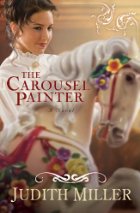 I was quite excited to be the recipient of my first ARC (Advanced Reading Copy). I hadn’t realized when I put myself on the list that The Carousel Painter was published by Bethany House, a Christian publishing group. I actually read a lot of Bethany House books when I was growing up, so I am quite familiar with the genre, but since deconverting from Christianity at 20, let’s just say, Christian fiction isn’t my first reading choice. However, I’d made a promise to the publisher, so I decided to give it a fair shot. Not to mention, this would be a great exercise in being a fair critic.
Summary:
After her father dies, leaving her without family, Carrington Brouwer moves from France to Ohio to stay with her friend Augusta Galloway while looking for work in the late 1800s. Augusta’s father owns a carousel factory, and Carrie sees an opportunity to put her painting skills to good use. At the pressure of the women of the family, Mr. Galloway hires her, even though she will be the only woman working in the factory. Carrie must deal with the prejudices and fears of the men and their wives, as well as of the community, while addressing her own problems with pride and God. She also must deal with Augusta’s suitor, Tyson, who makes inappropriate moves on her and attempts to pin the theft of Mrs. Galloway’s jewels on her.
Review:
Miller possesses writing talent on the sentence level, for sure. The sentences flow well, and the dialogue is relatively believable. She shows forward-thinking for her genre by giving Carrie an independent spirit and not condemning it. At first I was excited that she seemed to be offering a relatively unique storyline to her genre.
However, the addition about half-way through of the plot-line of Carrie being a suspect in the theft of Mrs. Galloway’s jewels is a widely used one. The good Christian must suffer and have faith her innocence will be proven in the end. It was incredibly predictable. Plus it simply felt out of place and jarring given the beginning of the story.
I was also bothered by Carrie’s quirk of giggling when she’s nervous or upset. It’s such a misogynistic stereotype–the giggling female, and it simply did not fit with the rest of Carrie’s character.
I did appreciate, and I think fans of the genre will too, that Carrie’s faith and God were not the focus of nearly every single the page. Carrie growing in faith is part of her life and is addressed as such, but it is not the focus of the story. It’s simply a fact about her that comes up periodically. I know when I was into Christian lit as a teen, I would often wish they’d just tell me the story for once instead of preaching all the time. Yet I also know that fans of Christian lit will expect at least a little bit about God in the story. I think Miller struck this balance well.
Overall, it’s a step in the right direction for the genre, but Miller could have done a much better job writing a believable, unpredictable storyline while pushing the envelope against misogyny.
2.5 out of 5 stars
Source: ARC from publisher via LibraryThing‘s Early Reviewers program.

Book Review: The Hunger Games by Suzanne Collins
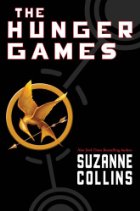
I’m going to start to attempt to feature a review of a book, videogame, or movie once a month. Be warned there may be spoilers. Here’s the first!
Summary:
A dystopian novel set in a future on the North American continent where the USA used to be. Land mass is significantly less due to global warming, and a new nation has been in place for quite some time called Panem. It consists of 12 districts and the capitol. Once a year each district must send one adolescent boy and one adolescent girl, chosen by a lottery, to the capitol to participate in The Hunger Games. The Hunger Games is a reality show that takes place in an environmental dome, each year the environment is different. The adolescents must fight until only one remains alive. The book focuses on a girl, Katniss, who ends up being the girl token from District 12.
Review:
I absolutely loved this book. I read it in one day, as I could not put it down. While I love reading, this type of all-engrossing engagement with a book has not happened for me in a long time.
First of all, I love the fact that the hero of the novel is female. Far too much literature out there features a male main character, and most of the books featuring female main characters are those gushy girly-girl books. They may be a fun quick read, but they don’t have any meat. This isn’t true of The Hunger Games. Katniss needs to be smart and strong in her struggle to stay alive, not only during The Games, but before even entering them. She is the sole provider for her mother and sister. Here is a strong female character, but simultaneously Collins does not make an issue of the fact that she is female. Since it is a first-person narrative, you don’t even realize her gender until around three pages in. Some reviewers *cough* male ones *cough* have complained that Katniss is cold, unfeeling, and not feminine. These complaints wouldn’t be made if she was a male character in the exact same situation behaving the exact same way. Katniss does have feelings, just as people of both genders do, but she is in a tough situation and must make tough choices. It’s wonderful to watch her struggle to make the right ones.
I also like that Collins took something we use as entertainment, reality tv, and shows how easily it could come to be distorted and used as a horrifying tool against the people. Dystopian literature is strongest when it takes something from the present and shows a plausible way it could go horribly awry.
Finally, Collins’ writing is beautiful. The conversations flow easily, the action sequences are vividly depicted, and secondary characters are quickly fleshed-out as complete people.
My only complaint is a major spoiler, as it has to do with the end of the book, so I will just let it be known that I am on Team Peeta and this is one decision of Katniss’s that makes very little sense to me.
5 out of 5 stars
Source: Library

 Support my work with a tip or browse my shop for curated book club guides, how to guides, cross-stitch patterns, and more!


This work by Amanda Nevius is licensed under a Creative Commons Attribution-Noncommercial-No Derivative Works 3.0 United States License.
 Opinions of a Wolf