
Archive
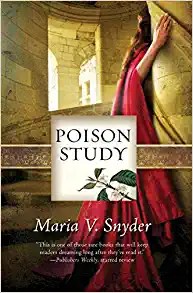
Book Review: Poison Study by Maria V. Snyder (Series, #1) (Bottom of TBR Pile Challenge)
Summary:
Yelena is on death row for killing a man in the military state of Ixia but on the day of her execution she faces a choice. Become the Commander’s food taster and face possible death by poison every day or be hanged as planned. Being a smart person, Yelena chooses the former. Now that she has admittance to the inner circle of the military state, she quickly comes to see that not everything is quite as it seems….not even her own personal history or her heart.
Review:
*sighs* You guys. I have got to stop letting people convince me to pick up books using the phrase, “I know you don’t like [blank] but!” That is how this book wound up on my tbr pile. “I know you don’t like fantasy, but!” and also “I know you don’t like YA, but!” oh and “I know you don’t like romance in YA, but!” A reader knows her own taste. And I don’t like any of those. I still came at it with hope, though, since I did like one fantasy book I read this year (Acacia). There’s a big difference in how they wound up on my pile though. I chose Acacia myself because its reviews intrigued me. Poison Study was foisted upon me by well-meaning friends. So, don’t get my review wrong. This book isn’t bad. It’s just what I would call average YA fantasy. Nothing made it stand-out to me, and it felt very predictable.
The world of Ixia felt similar to basically every other fantasy world I’ve seen drawn out, including ones friends and I wrote up in highschool. Everyone has to wear a color-coded uniform that makes them easily identifiable. There are vague similarities to the middle ages (like Rennaisance-style fairs). There are people in absolute control. There is magic and magicians who are either revered or loathed. There are all the things that are moderately similar to our world but are called something slightly different like how fall is “the cooling season.” Some readers really like this stuff. I just never have. I need something really unique in the fantasy world to grab me, like how in the Fairies of Dreamdark series the characters are tinkerbell-sized sprites in the woods who ride crows. That is fun and unique. This is just….average.
Yelena’s history, I’m sorry, is totally predictable. I knew why she had killed Reyad long before we ever find out. I suspected early on how she truly came to be at General Brazell’s castle. I didn’t know the exact reason he had for collecting these people, but I got the gist.
And now I’m going to say something that I think might piss some readers off, but it’s just true. What the hell is it with YA romance and exploitative, abusive douchebags? This may be a bit of a spoiler, but I think any astute reader can predict it from the first chapter who the love interest is, but consider yourself warned that it’s about to be discussed. Yelena’s love interest is Valek, the dude who is the Commander’s right-hand man and also who offers her the poison taster position and trains her for it. He manipulates her throughout the book, something that Yelena herself is completely aware of. There are three things that he does that are just flat-out abusive. First, he tricks her into thinking that she must come to see him every two days for an antidote or die a horrible death of poisoning. (Controlling much?) Second, he sets her up in a false situation that she thinks is entirely real to test her loyalty to him. (Manipulative and obsessive much?) Finally, and this is a bit of a spoiler, even after professing his love for her, he asserts that he would kill her if the Commander verbally ordered it because his first loyalty is to him. What the WHAT?! Even the scene wherein he professes his love for Yelena he does it in such a way that even she states that he makes her sound like a poison. There’s a healthy start to a relationship. *eye-roll* All of this would be ok if Yelena ultimately rejects him, asserting she deserves better. But she doesn’t. No. She instead has happy fun sex times with him in the woods when she’s in the midst of having to run away because Valek’s Commander has an order out to kill her. This is not the right message to be sending YA readers, and yet it’s the message YA authors persist in writing. I could go into a whole diatribe on the ethics of positively depicting abusive relationships in literature, especially in YA literature, but that should be its own post. Suffice to say, whereas the rest of the book just felt average to me, the romance soured the whole book. It is disappointing.
Ultimately then, the book is an average piece of YA fantasy that I am sure will appeal to fantasy fans. I would recommend it to them, but I feel that I cannot given the positively depicted unhealthy romantic relationship the main character engages in.
2 out of 5 stars
Source: PaperBackSwap

Waiting For Daybreak Blog Tour: Author’s Wrap-up!

Wow. It’s hard to believe my first book release blog tour is over. Overall, this was a very wonderful experience, and I learned a lot about running a tour, which I will share with other indie authors in future posts. This post though is about Waiting For Daybreak
I of course was pleased (and relieved) to see that bloggers mostly enjoyed my first novel. Getting so much feedback and opinions let me see what quips and qualms were personal and what were things to bare in mind for my future books.
So what things did people disagree on? The ending was mostly loved, although a few people thought it was a bit abrupt. The length was deemed just right by some and too short by others. Some people found the level of information about the zombies and amount of horror content just right. Others wanted more. These are all choices that are ultimately up to the author, and I’m still pleased with the choices I made (or rather with the direction Frieda dictated the story to go).
The one universal quip, and which I admit I have always known is a fault of mine, was a desire for stronger setting/world building. Although the world is always 100% clear in my mind, I can sometimes struggle to be sure that it is coming through on the page. I have come up with a few strategies to improve this in future books and appreciate the honest feedback from all the bloggers.
The fact that everyone was so honest means I can trust that the one thing that everyone loved is truly good. That is character building. People loved Frieda, and they loved Snuggles. They found her three-dimensional and well-rounded. Flawed, aggravating sometimes even, but ultimately understandable. A few people even mentioned that they came away with more empathy for people with a mental illness. You guys, this feedback blew me away. My whole concept and point was to create a main character in a genre book with a mental illness as a way to fight stigma and ableism. The fact that this worked on any level at all…. Well. It rocked my world. I hope seeing people talk about relating to Frieda and feeling for her will be an encouragement to people dealing with mental illnesses. Plus, on a writer’s level, it’s just good to know that I can create deeply flawed characters who are still someone readers can root for.
I couldn’t’ve asked for much more from a blog tour for a debut book. It’s strong, solid feedback for a first novel. I know more clearly what I do well and what to keep a closer eye on in my editing process.
In addition to the feedback, I got to get to know a bunch of book bloggers. I’ve never interviewed an author on my own blog before, and participating in interviews made me see how much fun they can be! They gave me the chance to explain where my idea came from, clarify some aspects of who I am and how I write, and just connect on a more personal level with my readers. It was so much fun! Also having the blogs host giveaways of my book brought it to a broader audience. It was so nice for me to see who chose to enter the giveaways and why. I also greatly appreciated the space for guest posts to talk more about my own perspective of my book. It was all-in-all a very positive experience for me.
One thing that came up repeatedly during the tour was people wondering precisely what mental illness Frieda has. I honestly didn’t realize people would be so curious about this! I’ve added an author’s note explaining her mental illness to the ebook versions (although I couldn’t add a note on to the print version). I will reproduce it here now so those with review copies, giveaway copies, or the print book can satisfy their curiosity. :-)
Frieda has Borderline Personality Disorder, commonly known as BPD. The Diagnostic Statistical Manual IV-TR, which psychiatrists use in diagnosing mental illnesses, requires that a person exhibit at least five of the nine symptoms associated with BPD. Frieda has all except for number one.
The diagnostic criteria are:
“(1) frantic efforts to avoid real or imagined abandonment. Note: Do not include suicidal or self-mutilating behavior covered in Criterion 5.
(2) a pattern of unstable and intense interpersonal relationships characterized by alternating between extremes of idealization and devaluation
(3) identity disturbance: markedly and persistently unstable self-image or sense of self
(4) impulsivity in at least two areas that are potentially self-damaging (e.g., spending, sex, substance abuse, reckless driving, binge eating). Note: Do not include suicidal or self-mutilating behavior covered in Criterion 5.
(5) recurrent suicidal behavior, gestures, or threats, or self-mutilating behavior
(6) affective instability due to a marked reactivity of mood (e.g., intense episodic dysphoria, irritability, or anxiety usually lasting a few hours and only rarely more than a few days)
(7) chronic feelings of emptiness
(8) inappropriate, intense anger or difficulty controlling anger (e.g., frequent displays of temper, constant anger, recurrent physical fights)
(9) transient, stress-related paranoid ideation or severe dissociative symptoms”
MICHAEL B. FIRST, M.D., ed. 2000. Diagnostic and Statistical Manual of Mental Disorders – 4th Ed. (DSM-IV-TR™, 2000). Washington, DC. American Psychiatric Association. ISBN 0-89042-024-6, ISBN 0-89042-025-4. STAT!Ref Online Electronic Medical Library. http://online.statref.com/document.aspx?fxid=37&docid=314. 8/30/2012 12:18:14 PM CDT (UTC -05:00).
For more information on BPD, please see the DSM-IV-TR cited above.
There were two other things everyone wanted to know. 1) will there be a sequel? and 2) what am I currently working on?
I didn’t write Waiting For Daybreak
My current work in progress is a dark fantasy. It is set in the Lovecraft universe and follows four siblings fifteen years after the Dark Ones have taken over Boston. It will examine many themes, but the primary ones will be sibling relationships and what makes family family. Each of the siblings will take turns expressing themselves, and I’m very excited about the opportunity to get into four very different minds. I’ve had a love for Cthulhu for a long time, so I am truly enjoying getting to bury myself in this world.
I think that’s about it for my wrap-up, except for the all-important huge THANK YOU to every single participating blogger!!! Thank you for being willing to accept indie books in general and mine in particular. Thank you for your honesty in reviewing and positivity in hosting guest posts, interviews, and giveaways. Thank you for helping my writing to reach a broader audience. Thank you for everything you did to help make my first blog tour and novel release a success! There wouldn’t even have been a blog tour without you all, and I look forward to hopefully working with you all again in the future.
Note: If you would like to see the reviews, interviews, and guest posts, please check out the blog tour and reviews page. It will remain up and be updated with new reviews as they show up, even though the tour is now over. If you are interested in more of my writing, please check out my publications page. Thanks!
Friday Fun! (Relaxation and Final Week of Blog Tour Updates)
Hello my lovely readers!
I had the best weekend last weekend. It included bicycle rides, farm stands, picnics, and listening to a record player. Super relaxing. :-) Which is a good thing because this week was orientation for another school (think of them as like departments) at my university. Busy busy! I found ways to relax though. I of course got in my gym time. I don’t always manage to do spin classes because of how the timing works with my schedule, but I was able to this week. I was really pleased to see that my leg strength has drastically improved. My level ten of difficulty used to be gear twelve. Now it’s gear eighteen. Yay! I also started playing a new videogame this week. I picked up Donkey Kong Country Returns for my wii. It’s super fun! Very old school side-scroller but still integrates the wii motion controllers in well. I do die a lot in it, but I’ve never been a great videogamer. I just enjoy it.
This was the final week of the Waiting For Daybreak
Just a Lil’ Lost posted a review where she states, “McNeil brings a fresh voice with this zombie apocalypse-type story. She has written a character that is refreshing and different from others I have read.”
Obsessions of a Library Gurl (who, full disclosure, is my friend but who was able to use her librarian talents to offer a fair, even-handed review), also posted a review stating, “It was an easy read and one I was able to quickly get into.”
Obsessions of a LibraryGurl also interviewed me. Check that out to hear what I think about zombies as an analogy for rape.
Reflections of a Book Addict posted a review where he states, “In all, it is an awesome read that really gets you in tune with Frieda’s struggle with the undead.”
Reflections of a Book Addict also interviewed me. Check that out to find out more about my own pets. Also, comment on the interview post to be entered in the final giveaway of the tour!
And that’s it! Hard to believe the final week of the tour is over. Many thank you’s to everyone who helped make the last week varied and exciting!
Also, happy weekends to my blog followers. :-)
Book Review: Fire in the Ashes: Twenty-Five Years Among the Poorest Children in America by Jonathan Kozol
 Summary:
Jonathan Kozol’s books about his social justice work among inner city children in the 1980s and 1990s brought attention to the starkly uneven educational opportunities presented to children in America. Now the children he originally met are young adults, and through this memoir telling of his friendships with them, he explores their lives and what it means to be successful when everything is stacked against you.
Review:
Long-time followers of my blog know that my undergraduate university (Brandeis University) seeks to instill in its students a sense of social justice, and that certainly worked with me. So when books like this pop up, I’m instantly interested in reading them. True equality means equal opportunities and safety for all, and a book like this is a bit unique in that it doesn’t just look at inequalities but also examines the long-term effects of attempts at intervening and helping people who basically got the short end of the stick. Kozol succeeds quite well in analyzing what has worked and what hasn’t in the Bronx where a large part of his social justice career has been.
The chapters each focus on a different child, although a couple of children get their own chapters. Kozol met the children either in one of the infamous 1980s NYC homeless shelters or at an after-school tutoring program offered at a church (St Ann’s) in the Bronx. There are a few things that are immediately apparent from observing the long-term trajectory of these kids, which is why a book like this is so valuable for social justice work.
First, all of the kids who were homeless or who spent a long time in homeless shelters had many more problems and difficulties later in life. It is clear that homelessness has a long-lasting negative impact on children, no matter how many good opportunities come to them later in life. Similarly, girls seem to stand a better chance than boys of climbing out of the poverty they grew up in. Kozol never makes any clear speculative statements as to why he thinks this is, but the multiple lives we observe clearly demonstrate that boys are more targeted than girls both by the crime lords and by the police. They are both presumed to want to participate in crime and presumed to already be participating in crime. If you live in just this neighborhood and see just this world where almost everyone you see except maybe a parent or a teacher expects you to become a criminal, it’s no wonder that the boys are struggling more than the girls. This is a great example of how patriarchy hurts men too. These assumptions about masculinity and roles in the community are hurting them.
The other big theme of the book is of course how educational inequality entrenches classism and racism. Kozol has spent most of his career working in improving education so it’s not surprising this is a theme of the book. One thing that stood out to me was how quickly kids are lost if they never get a firmly established literacy and sense of confidence in their ability to learn. Once kids start getting held back a grade or fall below grade level, it is incredibly easy to become discouraged and turn to what appears to be an easier life of crime. And it’s not the kids’ fault that they are struggling at school. The class sizes are too large, the teachers are frequently inexperienced or, in the case of one school, were never even trained as teachers at all. There is frequent teacher turnover, too heavy of a focus on just getting the kids to pass the achievement tests and not establish real learning and literacy. There is a real problem with violence and bullying. The list goes on and on. It goes beyond the schools though. Outside of school the children are never truly safe. There are shootings and stabbings and rapes, and we’re not talking down an alley. We’re talking in the lobby or stairwell or elevator of their apartment buildings. How can anyone focus on learning and growing up when that is all around them? It’s a big problem, and one that is not easily solved.
Kozol ends the book by talking about what he sees as progress and how the now grown-up kids he worked with see possible solutions. He’s adamant that even small gains are gains. He views any child whose life ultimately is one of peace and self-worth as an accomplishment, whether they even completed high school or not. To a certain extent I agree with him, but to a certain extent I agree much more with one of the grown-up kids (who just so happens to be about my age) who argues that small changes aren’t good enough. That the inequality is so deeply entrenched that we must truly rock the system and not just save one child at a time. She does ultimately agree that the small changes are still worthy of praise and is working on a degree in sociology so she may go back to the Bronx and focus in on small changes. That then is the question at the heart of this book and one for which there are no easy answers. How do we fix this problem?
It’s difficult to say who this book will appeal to. It’s not a clear treatise on the educational system or social justice. It is one man’s observations of the lives and life stories of inner city youth he worked with. It is not academic per se but it’s also not exactly a memoir either. I think perhaps that it will appeal most to anyone whose day to day job involves having small influences on the education of individuals. It clearly shows how much impact one person can have on another person’s life, particularly when it comes to education and literacy.
Overall then I recommend this to those who work in education whether formally or informally. It is encouraging to see the perspective of an older person who has clearly seen how his life work has impacted the kids he worked with.
4 out of 5 stars
Source: Netgalley

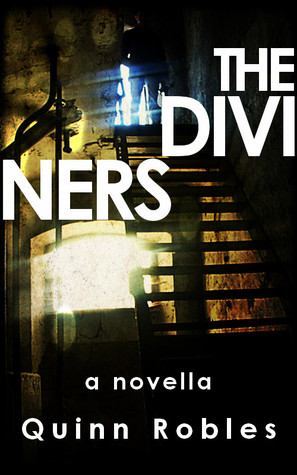
Book Review: The Diviners by Quinn Robles
 Summary:
In a world where the 1% has taken over the government and resources and the rest are left to fend for themselves, the Symmonds siblings seek to keep starvation at bay with their divining abilities. Everyone knows diviners can find a water source with two rods, but the Symmonds siblings can find much more, including lost people. When they are asked to find girls most likely stolen by the government for sex slavery, they must face a choice. Should they risk it all to save them?
Review:
I actually hesitated over whether or not to review this book because it does not appear to be available for sale anymore in spite of coming out just this February. This shows me that perhaps the author is already aware that it wasn’t quite ready for publication, so why pile it on? But I did promise a review in exchange for a copy, and I also review everything I read, so I ultimately decided to review. But I will keep it short and try to offer simply constructive criticism.
There are two issues with the book. One is some awkward sentence structures and flat-out wrong grammar. This is something that could be quickly fixed in another editing pass, which I recommend. The other is larger, though. The world building is confusing and weak. It took me until around 75% through the kindle book to finally figure out what was going on in this world, and some of it was still unclear. For instance, what I think is a branch of the government (still not sure) is called the “Jacobs,” but they are just called the Jacobs for so long with no other information that at first it seems that they are a rival family or something. The little information the reader does get about the dystopian world is delivered via information dump. It’s not smoothly written into the story. It is told to the reader like a confusing history book. If this wasn’t a review copy, I would have quit in the first chapter, because it’s simply not pleasant to receive information via info dump. The dystopian world itself, though, is interesting and timely. It’s based around the Occupy movement’s rhetoric about the 1% with the wealthy ultimately blatantly taking over. I could see a lot of people really enjoying the mix of that with the more fantastical element of divining. The characters are also fairly well-rounded and easy to tell apart.
Overall I would say it’s a good idea and a good first draft, but it needs some reworking and editing. I hope that’s what this author is doing and that she keeps at it, because her ideas are definitely unique.
2 out of 5 stars
Source: Kindle copy from author in exchange for my honest review
Currently unavailable to buy, but check out the author’s website
Friday Fun! (Lovecraft Film Fest and Blog Tour Updates)
Hello my lovely readers!
You might not all know of my love for the Lovecraft universe, but it is intense. I think it is wonderfully creative horror, I love that Lovecraft encouraged other authors to enter and use his world, and I even have a piece of art of Cthulhu rising from the ocean and rocking out on a guitar. It will probably come as no shock then since I’ve already written about zombies that my next book will be set in the Lovecraftverse. So it was wonderful timing that a local indie theater, the Brattle, had a Lovecraft film festival last weekend. Clearly I had to go! I wasn’t able to make it to every night, but I went the last night (on Sunday) when they showed In the Mouth of Madness

The cool thing about the Brattle, besides being an indie theater that shows old and new films, is that they sell beer and wine to drink during the movie. How cool is that?! I know. So cool.
So I had a nice beer of some sort and settled in to watch the movie. It basically is about the dark ones crossing over into our reality due to an opening made by a horror writer named Sutter Cane (who clearly is supposed to be Stephen King). It was intensely meta, and I loved it! Highly recommended.
And now it’s time for the weekly Waiting For Daybreak
Offbeat Vagabond posted a review where she states, “I would love to see this made into a movie/TV show. This would look and feel great. Waiting For Daybreak will give you such a unique outlook on the world through Frieda’s eyes. Highly recommended.”
Offbeat Vagabond also interviewed me. Check that out to find out what authors inspire me. She also is running a giveaway that ends today, so be sure to enter that right away if you want another chance at a free copy!
Mervi’s Book Reviews posted a review stating, “The story’s strength is definitely Frieda who has to confront her inner demons in addition to the zombies. She also doesn’t go the usual way of becoming somehow cured or getting some powers to survive.”
Blood, Sweat, and Books also posted a review where she states, “Waiting For Daybreak has just enough Action, Romance, and Angst to satisfy even the most jaded Zombie fan. I look forward to reading more from this Author.”
Blood, Sweat, and Books also interviewed me. Check that out to find out what my favorite quote is.
Paperless Reading posted a review, where he states, “Even though Waiting for Daybreak is a quick read, it has a fully fleshed out story with a fascinating and different lead character and is very entertaining overall.”
Last but not least, An Eclectic Bookshelf posted a review stating, “This was an entertaining post apocalyptic zombie novel that also makes the reader think about how the normalcy of life is relative. It isn’t always a light and easy novel to read due the characters McNeil has utilised but these characters are what make it unique. I think any fan of post apocalyptic survival horror that is after something a little bit different and thought provoking will enjoy this.”
I was also interviewed at An Eclectic Bookshelf. Check that out to find out what books have had the greatest influence on me.
That’s it for the tour for this week! Thanks once again to every participating blog!
And to my blog followers, happy weekends!
Book Review: Germline by T. C. McCarthy (Series, #1) (Audiobook narrated by Donald Corren)
 Summary:
Oscar is a reporter and lands an assignment with Stars and Stripes to go over to Kazakhstan and report on the new war between the US and Russia over resources needed for technology. This is a new kind of warfare. One fought mostly underground, and with the soldiers permanently wearing suits. Plus they’re fighting side-by-side with Genetics–human-looking robots who are all female and all look alike. Oscar started out just wanting a Pulitzer in between his drug addiction, which is easily fueled in Kaz. But Kaz changes people.
Review:
It’s been a while since I ventured in military scifi. I usually stick with the more sociological/psych experiment or cyberpunk areas of the genre, but this one just stuck out to me. I think its combination of aspects is just intriguing–a drug addicted journalist, a future war on earth, underground warfare, and robots. It certainly held my attention and flamed my interest in military scifi, plus it wound up counting for the MIA Reading Challenge, which was an added bonus.
Oscar is a well-rounded character. At first he seems flat and frankly like a total douchebag, but that’s because he’s a depressed drug addict. We learn gradually what landed him there and how he grows out of it with time. It’s an interesting character development arc because although many arcs show how war leads to alcoholism or drug addiction, in Oscar’s case although it at first makes his addiction worse, it ultimately helps him beat it. Because he ultimately snaps and realizes that the drugs are not helping the problems. They’re just making them worse. This is so key for anyone struggling with an addiction to realize. Pain in the present to feel better in the future. And McCarthy does an excellent job showing this progression without getting preachy. Sometimes you want to throttle Oscar, but you ultimately come to at least respect him if not like him. I wasn’t expecting such strong characterization in a military scifi, and I really enjoyed it.
The world McCarthy has built is interesting. The war itself is fairly typical–first world countries butting heads over resources in third world countries. But the content of the battles and the fighting methods are futuristic enough to maintain the scifi feel. There are the Genetics of course, and they are used by both sides. It’s interesting that the Americans use only female Genetics, and that is explained later on. There are also different vehicles and weapons that are scary but still seem plausible. Of course there’s also the suits the soldiers permanently wear, the front-line tunnels (the “subterrene”). It all adds up to a plausible future war.
Now, I will say, some of the battle scenes and near misses that Oscar has seem a bit of a stretch. I know odd things happen in war, and anyone can get lucky, but. Everyone’s luck runs out eventually. It seemed sometimes as if McCarthy wrote himself into a corner then had to figure out a way to make his main character survive. Escaping danger is fine, and necessary for the book to continue. But it should seem like a plausible escape. And if you have one that seems miraculous, it seems a bit excessive to me to have more than one.
The audiobook narrator did a fine job, in my opinion. He didn’t add anything to the story but he also didn’t detract from my enjoyment. I will note, however, that he pronounced “corpsman” wrong, saying the “s,” which is supposed to be silent. This only came up a few times and didn’t really bother me, but some readers, particularly ones who have been in the military themselves, might be bothered. Nothing else was mispronounced, and the voices used fit the characters nicely.
Overall, this piece of futuristic military scifi showcases both war and addiction in an engaging manner. Some readers may be off-put by Oscar at first, but stick it out. It takes many interesting turns. Recommended to scifi fans, whether they generally like military scifi or not.
4 out of 5 stars
Source: Audible

Counts For:
Book Review: Fire Baptized by Kenya Wright (Series, #1)
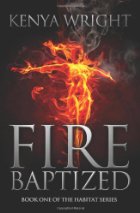 Summary:
The humans won the supe-human war, and now all supernaturals are confined to caged cities whose bars are made up of every metal that is harmful to supes. They also all have a brand on their forehead letting everyone now immediately what type of supernatural they are–crescent moon for shifter, full moon for vampire, wings for fairy, X for mixbreed, which is what Lanore just happens to be. Lanore is hoping to be the first mixie to graduate from the caged city’s university, and she also works on the side with another mixie, Zulu, to run a mixie civil rights group. The purebloods by and large hate mixies. As if her life wasn’t already complicated enough, one night Lanore witnesses a murder, and the murderer turns out to be a serial killer. Now Lanore is on his list.
Review:
I am so glad I accepted this review copy. The branding of supes and caged cities was enough to show me that this is a unique urban fantasy series, but I wasn’t aware that it’s also a heavily African-American culture influenced series, and that just makes it even more unique and fun.
It’s not new to parallel supe civil rights issues with those of minorities, but they often flounder. Wright’s book depicts the complexities eloquently. Making a group within the supes that the supes hate makes it more closely parallel the real world. The addition of the brands on the foreheads also makes the supernatural race immediately identifiable just as race is in the real world by skin color. The caged cities are also a great analogy of inner city life and how much of a trap it can feel like. The fact that Lanore accidentally witnesses a murder on her way home from school is something that can and does happen in the real world.
The other element that I really enjoyed is how Wright brings the African-American religion of Santeria into the mix. She provides multiple perspectives on the religion naturally through the different characters. Lanore doesn’t believe in any religion. MeShack, her ex-boyfriend and roommate, does, and it helps him in his life. And of course the serial killer also believes in Santeria but is going about it the wrong way, as Lanore eventually learns. The book naturally teaches the reader a few things about Santeria, which is often maligned and misunderstood in America. But it does it within the course of the story without ever feeling preachy.
The sex scenes (we all know we partially read urban fantasy for those) were hot and incorporated shifter abilities without ever tipping too far into creepy beastiality land. They were so well-written, I actually found myself blushing a bit to be reading them on the bus (and hoped no one would peak over my shoulder at that moment).
The plot itself is strong through most of the book. The serial killer is genuinely scary, and Lanore doesn’t suddenly morph into some superhero overnight. She maintains her everywoman quality throughout. I wasn’t totally happy with the climax. I didn’t dislike it, but I also think the rest of the book was so well-done that I was expecting something a bit more earth-shattering.
There are two things in the book that knocked it down from loved it to really liked it for me. They both have to do with Zulu. Zulu is a white guy, but his beast form is a black dude with silver wings. I am really not sure what Wright is trying to say with this characterization and plot point. It wasn’t clear when it first happens, and I was still baffled by the choice by the end of the book. In a book that so clearly talks about race, with an author so attuned to the issues innate in race relations, it is clear that this was a conscious choice on her part. But I am still unclear as to why. Hopefully the rest of the books in the series will clear this up for me. My other issue is with how possessive Zulu is of Lanore. He essentially tells her that she’s his whether she likes it or not, and she goes along with it. Why must this theme come up over and over again in urban fantasy and paranormal romance? A man can have supernatural powers and not use them as an excuse to be an abusive douche. I’m just saying. But. This is part of a series, so perhaps these two issues will be addressed in the next book. But for right now, I’m kinda sad that Lanore chose Zulu.
Overall, this is a unique piece of urban fantasy. The tables are turned on the supes with them in caged cities, and the creative use of forehead brands and the existence of mixed-breed supernaturals are used intelligently as a commentary on race relations in the United States. I highly recommend it to urban fantasy fans and am eagerly anticipating reading the next entry in the series myself.
4 out of 5 stars
Source: Kindle copy from author in exchange for my honest review

Book Review: Quiet: The Power of Introverts in a World That Can’t Stop Talking by Susan Cain
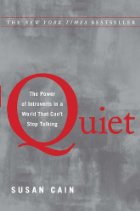 Summary:
Cain explains how the Extrovert Ideal became the norm in Western culture then proceeds to define the reality of the existence of both introverts and extroverts, not just among humans, but in the non-human animal kingdom as well. She explains the pluses and minuses of both personalities and provides advice for individuals, parents, and businesses in bringing out the best potential in both.
Review:
This book has been all the rage among book bloggers, which probably isn’t that surprising. Readers tend to be introverts, and the book’s title certainly implies that it’s all about us. In actuality though, although the book does have a focus on introverts, it also contains lots of information on extroverts and how we are all different but equally valuable to the world. Indeed, the Introduction features a statement that basically defines the point of the book as a whole:
Our lives are shaped as profoundly by personality as by gender or race. And the single most important aspect of personality—the “north and south of temperament,” as one scientist puts it—is where we fall on the introvert-extrovert spectrum. (page 2)
After the Introduction, the book is divided into four parts: The Extrovert Ideal, Your Biology Your Self, Do All Cultures Have an Extrovert Ideal, and How to Love How to Work. As someone who was a History major in undergrad, I found the first section completely fascinating. It explains how western culture, particularly American culture, went from an introvert ideal to an extrovert one. It, not surprisingly, was all tied up with the Industrial Revolution. Before the Industrial Revolution people mostly interacted with people they had known most of their lives or who they would have time to get to know. After, if you wanted to make it in the business world, you had to make an amazing first impression. This push to give off the aura of friendly and awesome edged out the prior expectation to develop a moral character. This section also talks about how Evangelical Protestants take the Extrovert Ideal to an even greater extreme:
If you don’t love Jesus out loud, then it must not be real love. It’s not enough to forge your own spiritual connection to the divine; it must be displayed publicly. (page 69)
I’ve taken the Meyers-Brigg personality test multiple times at various points in my life. I am always solidly an INTJ. The I is for introvert. I was also raised Evangelical (although I am now an Agnostic). This section rocked my world. I even mentioned on GoodReads that it basically explained my life to me. Cain talks about how difficult it can be to be an introverted child or young person being raised in a culture of Extrovert Ideal. I wasn’t just raised in the American one (who just so happen to be the most extroverted people on the planet, page 186), but I was also raised in the most Extrovert Ideal culture within that culture–Evangelical. It’s no wonder I had some issues figuring out who I am and being ok with that. I can barely fathom what a difference it would have made in loving and accepting myself if I’d even just been told it is just as ok to worship alone in the woods as to be loud and proud about it in public.
The next section is more sciencey and discusses the biology behind personality differences. This section can definitely be empowering as it lets people know precisely how you became an introvert or extrovert. The overarching philosophy is that more sensitive babies, as in ones who are more easily startled or frightened of strangers, are predispositioned to become introverts. Nurture also affects this, of course. Cain discusses the good qualities of both highly sensitive and less sensitive kids and how how they are raised can either bring out the good or the bad in either natural temperament. Of course this is a great area for parents and those who work with kids, but it also explains to the reader how they got this way and what false ideas they might have about themselves. For me, this is the section that explained to me why I’m so passionate about causes like vegetarianism and mental illness advocacy. Introverts tend to be oriented around causes. An example of an introvert/extrovert pair who both got things done in their own way that Cain uses is Eleanor and Franklin Roosevelt. This is a wisely chosen example because both are people to look up to who played to their own personality strengths.
Personally I wasn’t so into the next section. As compared to the other sections that are three chapters, this one consists of only one. It essentially compares Asian culture to Western culture since Asian culture tends to idealize introversion over extroversion. I felt that this chapter was a bit rushed and less in-depth. Cain tried to cover both the experiences of Asian-Americans and all Asian culture as a whole. I understand that she wanted to address multicultural understandings of personality, but it does seem that this topic could be a book in and of itself. It felt a bit similar to the instances when in my job as an education and reference librarian that I tell a student their topic is too broad to possibly cover in one paper (or one thesis). It seems that a quick chapter on introversion versus extroversion worldwide could have been mentioned in the first section as a comparison without devoting a whole section to it. Similarly, the issues specific to immigrants to America from nations with an Introvert Ideal would have worked well in a different section. This would have felt more integrated and flowed better.
The final section contains advice on using your personality to your advantage in your life and also on how to strike a compromise with someone you care about of a different personality type. Overall, this section was well-written, although I felt not enough attention was given to “pseudo-extroverts,” introverts who have learned to pass as extroverts. This is a fascinating topic, particularly to an introvert who is constantly mistaken for an extrovert. I think this is the reality for a lot of people, and it deserved a bit more attention and research. For instance, Cain says in passing:
Emotional labor, which is the effort we make to control and change our own emotions, is associated with stress, burnout, and even physical symptoms like an increase in cardiovascular disease. (page 223)
I really wanted to know more about this! Particularly since I care so much about health and wellness. It almost seemed as if pseudo-extroversion deserved its own chapter.
The rest of the section though was great and quite helpful. I think if everyone followed the advice in it on dealing with other personality types and creating a loving environment for kids on both ends of the introvert/extrovert spectrum that we would have a much more positive world. Perhaps her best piece of relationship advice is A Free Trait Agreement.
A Free Trait Agreement acknowledges that we’ll each act out of character some of the time—in exchange for being ourselves the rest of the time. (page 221)
So for a couple consisting of an introvert and an extrovert they will go out some Friday nights and stay in and snuggle and read others. Preferably about 50/50. Mutual compromise. It’d be good to keep this in mind more often.
Overall, this is a well-written, accessible book regarding personality psychology and the history of it. It does flounder in some places and could have used another once-over for structure and focus, but it is well worth your time to read.
4 out of 5 stars
Source: Amazon

Friday Fun! (In Which I Walk Across All of Boston and Blog Tour Updates)
Hello my lovely readers!
Another busy week at work this week (as it will be until the end of September, so be prepared to hear that sentence repeatedly). I finally got my booty outdoors this week, though, and I have the tan-lines to prove it!
On Sunday, I went for a long (accompanied) walk along the Charles River. It was completely gorgeous, but I did manage to get a bit of a burn. According to my dad, I do this every year and always along the Charles. Oops? Maybe next year I’ll finally remember to put on sunblock….
On Tuesday (my work-week Monday), I was meeting up with someone in the North End for gelatto, which I totally did not end up eating, but anyway. I decided that since he couldn’t make it there until 7 at the earliest and I had a couple of hours to kill, I would walk it. Bad. Idea.
My work is on the south side of Boston, so I basically walked across the entire city. In flat pretty sandals. And now I have the shin splints to prove it. Again, oops? You may have noticed that I don’t always manage to think my plans all the way through. On the plus side, I got to see the Public Gardens and got a sandwich from the Clover food truck in Boston Common. On the minus side, my shins were too sore for zumba on Wednesday.
I know, I know. #firstworldproblems
Anyway, after all that walking, instead of gelatto I had a glass of sangria, because that is obviously infinitely better. :-D
Also, the best street for gelatto in the North End is Hanover Street, not Salem Street. Just fyi.
Anyway, so that was my super-exciting week! Now on to the weekly Waiting For Daybreak
It was a much busier week this week, which was of course exciting!
Wickedly Bookish interviewed me. Check that out to find out my self-publishing advice!
Wickedly Bookish also hosted a giveaway that is still open. If you have yet to win a copy, definitely consider entering.
Ellie Hall posted a review (that is also cross-posted to 1889 Labs) where she says, “The story flies by and it is thoroughly engrossing, with periods of action and adrenaline nicely balanced by periods of memory and self-reflection. The sense of danger and suspense is well developed, and the narrator’s doubts and fears are easily understood.”
The Book Hoard‘s review says, “If anyone had told me that I’d enjoy a zombie apocalypse a year ago, I’d have told them they were nuts. However, I have come to enjoy a few zombie apocalypse stories like Waiting For Daybreak.”
The Book Hoard is also hosting a giveaway that is still open. That’s two! Two chances to win a copy! Ah-ha-ha.
Last but not least, Persephone’s Winged Reviews posted a review stating, “At the end of the day, it’s much more about Frieda trying to find out what normal means in a world gone wrong instead of a zombie book. I believe that it is a fresh take on zombies in the fiction genre.”
Thanks once again to every single participating book blogger! I truly appreciate you giving me (and my writing) time and space on your blogs.
To all my loyal blog readers, happy weekends! *waves*
 Support my work with a tip or browse my shop for curated book club guides, how to guides, cross-stitch patterns, and more!


This work by Amanda Nevius is licensed under a Creative Commons Attribution-Noncommercial-No Derivative Works 3.0 United States License.
 Opinions of a Wolf