
Archive
Book Review: Lemon Reef by Robin Silverman
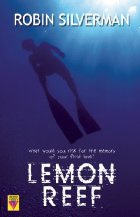 Summary:
Jenna is a high-powered, newly appointed commissioner in San Francisco where she lives with her wife and their dog. Life is good, and Jenna tries not to think too much about her rough childhood and teen years growing up in Florida. But a phone call comes in. Her first love, Del, has died diving at lemon reef at the young age of 30. The mutual friend invites Jenna to the funeral, but when she arrives in Florida, she discovers that there’s more to it than that. Del’s mother, Pascale, wants her help in getting custody of Del’s daughter, Khila, instead of her father, Talon, who Pascale insists must have murdered Del.
Review:
This book was a bit of an emotional roller-coaster to read, which of course is a sign of a good book.
The plot structure is incredibly complex and engaging without ever being confusing. There is the mystery of Del’s death, but also (for the reader) the mystery of why and how Del and Jenna’s romance ended tragically, as it is evident it did. In addition there is the powerful emotions of a first love and first romance for a pair of teens who must grow up too fast thanks to the rough circumstances they find themselves in. Silverman handles the past reminisces intermingled with the current mystery and discoveries quite eloquently. I found myself admiring her talent in plot structuring throughout.
There are no easy answers in this book, and no one is easily demonized, including Talon. Every single character has flaws and good qualities. Del stands up for her siblings but won’t stand up for her love of Jenna. Jenna loves people but can sometimes get too caught up in her own world and her own needs. Pascale was an alcoholic when Del was in highschool but successfully quits in order to be able to spend time with her granddaughter. Del’s sister Nicole breaks a lot of laws (including breaking and entering and prostitution), but she is fiercely loyal and stands up for those she loves. The complexity of the characters and the situation is part of what makes it such an emotional read. There’s no one to easily blame for the problems these women find themselves in. I think this complexity points to Silverman’s experience both as a counselor and a lawyer. She clearly understands human psychology and how problems are not always black and white but can be very gray.
The writing is lovely and fills in the framing of the plot and the characters. There are lines that just totally grab you.
Because minds do blow and hearts do break. Those are not just sayings. And wolves and roaches are not the only creatures that chew off their legs to get out of traps—human beings do that, too. (location 3058)
I also really enjoyed that while Jenna’s coming out story (told in flash-backs and reminiscing) is rather typical, Del’s is much more complex. She is bi but is uncomfortable with the fact that she likes women too. She doesn’t want people to know, doesn’t say a thing about it to her sisters, denies it even. But we find out later that there were other ways in which it was clear she did identify as bi and part of the community. I won’t say how, because I don’t want to spoil the surprise. But I found this complexity interesting. It shows how for Jenna she had to push and come out because there was no other option. Del could sometimes pass but not always and clearly it was a struggle for her throughout her whole life. This shows an understanding of what it is to be bi that I honestly was not expecting, as it is hard to find that in novels.
There were, unfortunately, a couple of things that didn’t quite live up to the rest of the book. There were a few passages that weren’t as well-written or well-edited that detracted from the overall beauty of the book. For instance, there is a scene in which a character points a flashlight at a floor but the narrator calls it the ground. Things like that that are periodically clunky. I’m sure this will improve with time, though, as this is Silverman’s first work of fiction.
I also was disappointed that we didn’t get to see very much at all in regards to how this whole drama of the first love’s mysterious death impacted Jenna’s relationship with her wife. I was hoping this would be at least touched upon in the last chapter, but instead we just see Madison show up with Jenna for the funeral. Since I had come to care for Jenna, I wanted to know how such a dramatic, emotional event would affect her new life and marriage with Madison. It seems obvious to me that such an incident would at least lead to a few discussions and maybe difficult moments between a married couple. I wanted to see that and not seeing it made Madison and Jenna’s marriage to her feel more like a prop than an actual element of Jenna’s life.
Overall, though, this is a unique work of GLBTQ lit. Its themes of reconciling with your past, coming out, being queer, and first love are all beautifully told within a plot that keeps the reader invested and interested. I highly recommend it to GLBTQ readers, but also to anyone with an interest in stories addressing the complexity of human relationships and the long-reaching impact of first loves.
4 out of 5 stars
Source: Netgalley

Book Review: To ‘Joy My Freedom: Southern Black Women’s Lives and Labors After the Civil War by Tera W. Hunter (The Real Help Reading Project)
 Summary:
Hunter examines the lives of southern black women, particularly southern domestic workers, by narrowing her focus in on the development of the city of Atlanta after the Civil War. Since many ex-slaves moved to Atlanta and then migrated again north during the Great Migration decades later, this makes for an excellent focal point for the topic. By examining black women’s lives in Atlanta both in and out of their employer’s homes, she is able to dissect the roles of race, class, and gender in the elite’s attempts to maintain dominance in America.
Review:
I’ve said throughout the project that the nonfiction books have come up a bit short for me. Although they’ve contained valuable information, they haven’t been the most readable. Nonfiction can tell a story too, and Hunter does exactly that. She explores so much more than just the women’s lives in relation to their employers. Atlanta truly comes to life as we see the women commute to work via bicycle so as to avoid racist trolley lines and kick up their heels on the interracial Decatur Street after dark. We also get to see the empowering role of secret societies in black women’s lives, as well as reclamation of performing in black face and the terrifying resurgence of the Ku Klux Klan. It is impossible not to be moved and outraged by the tale of these women’s struggles. The book addresses three issues: classism, racism, and sexism.
In spite of Americans being told repeatedly that the American Dream is available to all if you work hard enough, Hunter quickly shows how the poor are fighting a losing battle and on top of it are demonized by the wealthy. For instance, the use of debt to keep the poor enslaved:
Poor women often borrowed money in meager amounts, less than one dollar at a time, amassed running accounts for several months or years, and repaid ever-accumulating interest in small installments. Many moneylenders were usurious. It was common for borrowers to pay 250 to 3500 percent interest on small sums, which exacerbated poverty with interminable debt. Fannie Holman, a washerwoman, borrowed between $60 and $90 over a two- or three-year period. Though she would repay over $1,000, the creditor applied it to defray the interest but not the principal of the loan. (page 134)
Similarly, upper class employers’ attempts to control every aspect of their employee’s lives, claiming a right over their bodies:
Dance halls were a menace, declared Proctor, because “the servant class tried to work all day and dance all night.” He warned employers that household laborers would not perform well if they used their leisure unproductively—dancing instead of resting in preparation for the next day of work. (page 179)
Hunter via maps and clear explanations demonstrates how the wealthy acquired the highest land in Atlanta most conveniently near shopping and such, while the poor and blacks were forced into the lowest land that, in addition, sewage was dumped into. These conditions combined with the poor housing provided by slumlords made a perfect scenario for disease, and yet the poor were blamed for the outbreak of tuberculosis in the city and even accused of exposing wealthy whites to it:
Tuberculosis signified more than a purely physiological condition. The disease became a medium for “framing” tensions in labor and race relations, with the rhetoric cloaked in scientific and medical legitimacy. (page 187)
Of course, the fact that black workers were poor was no coincidence. The entire city conspired since the Civil War to make black Americans poor and keep them that way. The wealthy whites, and in a lot of cases the poor whites, wanted black people out of sight and out of mind unless they were actively in service to them
Jim Crow and domestic labor thus represented contradictory desires among urban whites striving to distance themselves from an “inferior race,” but dependent on the very same people they despised to perform the most intimate labor in their homes. (page 105)
Segregation was not a system imposed entirely from above; it also helped to advance the interests of white workers, who were able to gain status from their position in the social hierarchy above all blacks. (page 119)
Jim Crow parks were designed not simply to put white urbanites closer to nature, but also to give them moments of reprieve and distance from blacks in order to channel racial friction in “wholesome” directions. (page 147)
Of course, on top of having their fight for the right over their own bodies and lives depicted by the ruling white class as them being uppity servants and uppity blacks, women had the additional injustice of having their femininity and womanhood called into question.
Like the defiant women in Galveston, strikers in Atlanta showed little attachment to prevailing middle-class conventions of femininity. As they did on other occasions, working-class women used street fights to settle disputes that jeopardized their unity and engaged in militant resistance. (page 89)
The moral implications of women consuming intoxicating substances troubled many middle-class blacks and whites. Women not only evaded laws prohibiting them from entering saloons, they frequented bar room “annexes,” they drank alcohol in alleys and streets, and they sold beer from their homes. (page 165)
I usually don’t quote this much, but the whole book is just so good. The three-way injustices faced by black working class women is palpable throughout. Facing one alone would be daunting enough, but facing three feels terrifyingly insurmountable even just reading about it, let alone living it. And yet some black domestic workers did pull through in spite of the odds and do great things. Women like Carrie Steele.
Former slave Carrie Steele, a stewardess and cook at the train station, volunteered her time as a probation officer for children in trouble with the law. This experience and her childhood as an orphan inspired her to start an orphanage in 1890. She believed that many of the children she came in contact with had fallen on hard times because they had no families to take care of them. Steele raised money to purchase four acres of land and the orphans’ first home by selling her own house, writing and selling her autobiography, and soliciting funds from generous individuals, black and white. By 1898 the Steele orphanage consisted of a brick building, hospital, and schoolhouse, and more than two hundred children had passed through its portals since its founding. (page 142)
Inspirational. Humbling. Awe-inspiring. Words that describe both Carrie Steele’s life and the book as a whole. Read it.
Source: Public Library

Discussion Questions:
- Why do you think Decatur Street was allowed to continue in spite of being the only known location in Atlanta where the races mingled?
- Hunter values the dance halls for the role of letting off steam and embracing black culture they played in black Americans’ lives. How do you feel about them?
- In spite of viewing black Americans as “unclean,” white Atlantans persisted in sending their laundry out to black homes to be washed. Why do you think people were able to hold onto such illogical dichotomies?
- Given the depiction of of everything stacked against them, do you view drug dealers, bootleggers, prostitutes, etc… differently now than you did before?
If you found this review helpful, please consider tipping me on ko-fi, checking out my digital items available in my ko-fi shop, buying one of my publications, or using one of my referral/coupon codes. Thank you for your support!
Book Review: The Street by Ann Petry (The Real Help Reading Project)
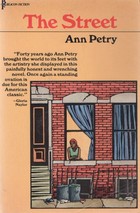 Summary:
In 1944 Lutie Johnson believes that all it takes is hard work to succeed, so when she finds an apartment in Harlem that she can move into with her son, Bub, she sees it as a step up. Get him away from her dad’s gin-drinking girlfriend and all the roomers packed in the house. But it seems as though her hard work does nothing against the street and the walls that the white people build around the colored people brick by brick.
Discussion:
It’s hard to believe that Amy and I only have three books left after this in our project. Although we rather arbitrarily assigned the order of the books, I’m glad this one came toward the end. I doubt I would have understood the events in it or valued its perspective as much without the nonfiction reading we did prior.
The book is exquisite in the way it demonstrates how a racist society tears families apart. Hearing about black men being unable to find work in our nonfiction readings felt so cold and stark; I was left unable to understand why that would cause a man to leave his family. But through Lutie I came to understand. At first she doesn’t understand how her husband could cheat on her and be so fine with them breaking up, but eventually she does understand. He couldn’t find work in the city as a black man. She finds work as a maid in a white family’s house. She’s gone most of the time. He feels emasculated. Now, I know my feminist followers will object to this, but I remind you, this was not a choice on black families’ parts back then. It was forced upon them. Anything that is forced upon you can cause real self-esteem problems. As Lutie says, how can one manage a family in conditions like that?
Petry also clearly demonstrates how this break up of the home then leads to a generation of lost children. with Lutie working all day, her son, Bub, comes home to an empty, dank apartment. He takes up with the wrong crowds, because it’s scary to be in the apartment alone. He’s only eight. It’s easy to understand how he makes bad judgment calls, especially when his mother is constantly worrying about money around him. Seeing it spelled out with “real” people makes it all more understandable than the numbers and statistics found in Labor of Love, Labor of Sorrow. In Lutie’s case, her family fell apart twice before she even really realized it was happening.
The other strong element in this book was the hopelessness of the capitalistic American Dream. Not just the hopelessness of it, but the harmfulness of it. Lutie herself realizes that she never thought of anything but keeping her family afloat until going to work for the wealthy white family in Connecticut where she “learned” that all it takes is hard work and perseverance to become wealthy. What a false lesson. What a horrible thing to believe at face value. Yet, Lutie does, and it influences almost every single decision she makes for herself and Bub that leads to their ultimate downfall. Yes, part of their downfall is absolutely brought about by racism, but part is brought about by her believing in the system and not rebelling against it.
For instance, instead of spending what little time she does have outside of work with Bub teaching him and helping him, Lutie spends it pursuing a singing career. After being gone working in civil services all day, she leaves Bub alone at night yet again. Similarly, she penny-pinches and yells at Bub so much that Bub starts to believe that they are desperate for money, when in fact his mother is just attempting to save up to move to a better neighborhood. I get the value of a better neighborhood, but I think Lutie underestimates the value of her own impact on her son. She studies angrily at night instead of making the studying a bonding thing. She tells him he can’t stay up and read because of the cost of the electricity, which just blew my mind because you would think she would want him to read. It all adds up until Bub is not only almost constantly alone but also worrying about money at the age of eight. I can’t help but think if Lutie had just focused on making their home the best she could and making Bub feel happy and safe that it might have come out better. I’m not judging Lutie. It’s so incredibly easy to get caught up in the capitalistic belief system, especially when you’ve been scrambling your whole life and see money as a way to combat racism. I found myself constantly wishing and hoping that Lutie would stumble across some sort of progressive society that would help her fight for justice. Of course, in the real world, that doesn’t often happen, and Petry does an amazing job depicting real life in the real Harlem of the 1940s.
Of course, Lutie and her family are not the only ones unhappy. Although she only works for them for a few chapters in the book, the white family from Connecticut is profoundly unhappy, and Lutie sees it. The husband and wife ignore each other. The husband is raging with alcoholism. The wife is so focused on affairs that she ignores her son. The son just wants attention and can only get it from the maid. The brother-in-law kills himself on Christmas morning.
Why do I bother pointing this out? Well, it’s just further evidence the constant theme throughout our reading project. Racism and inequality hurt everyone in the society. Some more than others, yes, but it hurts everyone. The true values of life–love, time, companionship, laughter–they’re lost amidst the fight to maintain inequality and acquire money. And that’s largely what slavery was all about, wasn’t it? Establishing a plantation to become filthy rich instead of a farm where you make ends meet. And the perceived need for a plantation leads to a desire for cheap labor which leads to slavery which leads to maintaining racism in your head to justify it. And after Emancipation, the desire to hold onto your filthy wealth leads you to judge others as below you when they’re not. And racism is an “easy” way to do that.
But where does that leave those caught in the system? For Lutie, it leaves her a truly lost cause and her son yet another black boy with a record. Revolution and change takes time, effort, bravery. Even in the simple day to day decision to choose quality time over money. To choose to go against the American, consumer grain and just try to make a quality life for yourself. It’s fascinating and appalling how deeply entrenched in our culture the perception of wealth equaling quality of life is, yet it’s there. I think, to me, that is what is most appalling in the idea of “The Help.” Most people do not need a maid. Unless you are in a wheelchair or missing limbs or blind or have some other physical limitation, you do not need a maid. And yet some classes of society view it as necessary to make someone else clean up after them in their own home. Nobody is above cleaning up the filth from themselves and their own family. Nobody. And in the meantime, those that they hire to clean it up must do double-duty and clean up two homes and are left without enough energy for quality time with their own family. It honestly disgusts me.
Source: Public Library

Please head over to Amy’s post to discuss this book!
Book Review: My Life as a White Trash Zombie by Diana Rowland

Summary:
Angel wakes up in the hospital to discover she was found naked and overdosed on drugs on the the side of the road in her small town after a fight with her boyfriend, Randy. Someone mysteriously drops off medicinal energy drinks along with a note that she must work loyally for at least a month at a job newly acquired for her at the city morgue. A high school drop-out living with her alcoholic and periodically abusive father, Angel decides that she should seize this opportunity. It certainly helps that pills and alcohol no longer seem to do anything for her. As her oddly gloppy energy drinks start to run out, though, Angel finds herself having cravings for something found in the morgue–brains.
Review:
I bought the kindle edition of this book the instant it came out as a birthday present to myself for two reasons. First, the title is amazing. Second, look at that cover! Yeah, the whole thing just screamed my named. My instincts were right, too.
It’s been a long time since I read a book that hits all the elements I love in literature like this one–urban fantasy style horror, a setting that rings familiar to me, a completely relatable main character, and a fun love interest. It’s a world that’s simultaneously familiar and special, which is what makes urban fantasy fun. Angel’s world of trailers, beer cans, and nothing to do reminds me a lot of my childhood growing up in Vermont. On the other hand, Angel has cravings for brains. And she somehow manages to keep this a secret in a small town, certainly a monumental task.
Angel’s problems are a combination or fantastical ones (must find brains to survive) and completely real world ones (a history of an abusive mother and a father with alcoholism). Angel has a lot to overcome even before she gets zombified, but the zombification adds an element of distance that allows tough things to be talked about without that dragging down dullness often found in literary fiction.
Rowland reworks the zombie trope without completely removing the essentials of a zombie. Angel can function in day to day life as long as she has brains once every two days or so. If she doesn’t have them though, her senses slowly dull and she gradually turns into the lurching monster simply desiring brains that we all know from the classic zombie movies. This really works, because it allows Angel to be a part of society, yet still be the monster we’ve all grown to know and love.
That said, I will say that I am getting a bit tired of the monsters surviving by working in a morgue trope. I wish Rowland had come up with something a bit more creative for how Angel gets her hands on brains than that. It’s starting to seem like the staff of the morgues in all of urban fantasy consist entirely of monsters and sociopaths. Thinking more outside the box would have made me love the book instead of really liking it.
Overall, this zombie book gave me thrills, chills, and laughs galore, but it also brought me close to tears. It’s genre fiction with a heart, and I highly recommend it to anyone willing to see zombies (or white trash) in a whole new light.
If you found this review helpful, please consider tipping me on ko-fi, checking out my digital items available in my ko-fi shop, buying one of my publications, or using one of my referral/coupon codes. Thank you for your support!
4 out of 5 stars
Length: 320 pages – average but on the longer side
Source: Purchased

Buy It (Amazon or Bookshop.org)

Counts For:

Book Review: The Buddha and the Borderline: My Recovery from Borderline Personality Disorder through Dialectical Behavior Therapy, Buddhism, and Online Dating by Kiera Van Gelder
 Summary:
Kiera here recounts her struggle with mental illness, first undiagnosed and indescribable, marked by episodes of self-harming, frantic attempts to avoid abandonment (such as writing a boy a letter in her own blood), alcohol and narcotic abuse, among other things. Then she recounts how she was finally diagnosed with Borderline Personality Disorder (definition) and her struggles to recover from this difficult mental illness usually caused by a combination of brain chemistry and trauma in childhood. Kiera recounts her experience with the most effective treatment for BPD–Dialectical Behavior Therapy (DBT). She honestly discusses her struggles to encounter and interact with the world and establish relationships, often utilizing online dating websites. Finally she brings us to her final step in the recovery process, her embracing of Buddhism, which much of DBT’s therapy techniques are based upon.
Review:
Many memoirs talk about events in a person’s life, but the thing about mental illness, is the person writing the memoir must somehow be able to show her audience what it is to be inside that head. Inside that person who perceives the world in her own unique, albeit messed-up,way. It takes a certain level of brutal honesty with yourself to be able to do so. Kiera achieves this with flying colors here.
BPD is an illness that, unless you have encountered it in your own life either by having it yourself or caring deeply for someone who does, is often difficult to clearly describe in a sympathetic manner. Popular culture wants us to believe that these, by and large female, sufferers are akin to the femme fatale or the main character in Fatal Attraction. But people with BPD aren’t bunny boilers. They are individuals who experience emotions much more extremely than everyday people do. A visual Kiera uses throughout the book that I believe is quite apt is that a person with BPD is like a person with third degree burns all over their body. A touch that wouldn’t hurt a non-injured person makes the burned person cry. That’s what emotions are like for people with BPD.
Kiera depicts what it feels to suffer from BPD with eloquent passages such as these:
I am always on the verge of drowning, no matter how hard I work to keep myself afloat. (Location 236-240)
In an instant, I shift from a woman to a wild-haired girl kicking furniture to a balled-up weeping child on the bed, begging for a touch. (Location 258-263)
Similarly Kiera addresses topics that non-mentally ill people have a difficult time understanding at all, such as self-injury, with simultaneously beautiful and frightening passages.
I grew more mindful as the slow rhythm of bloodletting rinsed me with clarity. It wasn’t dramatic; it was familiar and reassuring. I was all business, making sure not to press too deep. (Location 779-783)
But of course it isn’t all dark and full of despair. If it was, this wouldn’t be the beautiful memoir that it is. Kiera’s writing not only brings understanding to those who don’t have BPD and a familiar voice to those who do, but also a sense of hope. I cheerleader who made it and is now rooting for you. Kiera speaks directly to fellow Borderlines in the book, and as she proceeds throug her recovery, she repeatedly stops and offers a hand back to those who are behind her, still in the depths of despair. Having BPD isn’t all bad. People with BPD are highly artistic, have a great capacity for love.
I become determined to fight–for my survival, and for my borderline brothers and sisters. We do not deserve to be trapped in hell. It isn’t our fault. (Location 1672-1676)
So while it’s undeniable that BPD destroys people, it can also open us to an entirely new way of relating to ourselves and the world–both for those of us who have it, and for those who know us. (Location 5030-5033)
Ironically, the word “borderline” has become the most perfect expression of my experience–the experience of being in two places at once: disordered and perfect. The Buddha and the borderline are not separate–without one, the other could not emerge. (Location 5051-5060)
Combine the insight for people without BPD to have into BPD with the sense of connection and relating for people with BPD reading this memoir, and it becomes abundantly clear how powerful it is. Add in the intensely loving encouragement Kiera speaks to her fellow Borderlines, and it enters the category of amazing. I rarely cry in books. I cried throughout this one, but particularly in the final chapter.
This is without a doubt the best memoir I have read. I highly recommend it to everyone, but particularly to anyone who has BPD, knows someone with BPD, or works with the mentally ill. It humanizes and empathizes a mental illness that is far too often demonized.
5 out of 5 stars
Read my fiction novella starring a main character with BPD. I read this book partially as research for it.
Source: Amazon

Book Review: The Glass Castle By Jeannette Walls
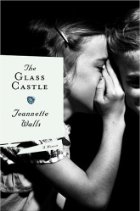 Summary:
Jeannette Walls, a successful writer for MSNBC, hid the real story of her childhood for years. In her memoir she finally lets the world know the truth. She was raised by an alcoholic father and an incredibly selfish artist mother, both of whom were brilliant. Yet their personal demons and quirks meant Jeannette was raised in near constant neglect and also suffered emotional and some physical abuse. The memoir chronicles her changing perception of her parents from brilliant counter-culturalists to an embarassment she wanted to escape.
Review:
Jeannette’s memoir is incredibly well-written. She manges to recapture her young perceptions at each point in the story from her idolization of her father at the age of five to her disgust at her mother at the age of fifteen. Often memoirs about bad childhoods are entirely caught up in the writer’s knowledge as an adult that this was all wrong. While this is most certainly true, it makes for a better experience for the reader to almost feel what it is like for a child to become disillusioned of her parents. Children naturally love their parents, and abused and/or neglected children are no different. It is just for them instead of just realizing their parents are human like children from normal families do, they also realize that their parents screwed them over. Jeannette subtly and brilliantly presents this realization and all the pain that comes with it. She doesn’t want to believe her father would endanger her when he’s drunk. She doesn’t want to believe that her mother makes her children eat popcorn for three days straight while she herself pigs out on all the king-sized chocolate bars she can eat. Yet Jeannette cannot escape the facts.
This memoir is also different from other bad childhood memoirs in that Jeannette never loses compassion for her parents. As her awareness grows throughout the book, she also struggles to understand how her parents ended up the way they did. [Spoiler Warning] A particularly moving scene is when the family goes to visit Jeannette’s father’s mother in spite of his protests. Jeannette walks in on her grandmother claiming to be mending her brother’s pants while they are still on him, but actually groping him. Jeannette’s reaction, after saving her brother from the groping, is to wonder if maybe this is why her father drinks so much. Maybe her grandmother did the same thing to her father, and there was no one to save him. Maybe these are really the demons he is fighting. To realize this, to even care about it after everything her father has put her through is truly remarkable. [End Spoiler]
Jeannette is an excellent writer and an incredible human being. Readers will be astounded not only at her unique, messed-up childhood but also at how she overcame it and simultaneously maintained sympathy for her parents who so wronged her. Jeannette is an inspiration in multiple ways, and her memoir is definitely worth the read.
4 out of 5 stars
Source: Library

Book Review: Breathers By S. G. Browne

Summary:
Billing itself as a rom-zom-com (romantic zombie comedy), Breathers looks to get into the psyche of those reanimated corpses out to eat your brains, not to mention deep-fry your fingers. Andy is in his 30s and living in his parents’ basement after reanimating from a car crash that left his wife permanently dead. Andy is depressed and slowly decaying, but all that changes when he starts attending Undead Anonymous weekly meetings. There he meets Rita, and together with other members, they stumble upon southern zombie Ray who gives them jars of his venison that tastes remarkably good to Andy and has some interesting affects on him.
Review [spoiler warning]:
Breathers starts out with a bang. Nothing sucks you in quite like a main character waking up from an alcohol-induced blackout to discover he’s killed his parents and stuffed their dismembered bodies in the fridge and freezer. Browne’s dark humor serves the storyline well. It’s not easy to take a repulsive, cannibalistic, walking corpse and make him a sympathetic character instead of the terrifying other, and Browne achieves this…..to a certain extent.
At first Andy and the reader don’t know that the “venison” he’s eating is actually people. Both the reader and Andy see the positive effects of eating humans before they fully realize that’s what he’s eating. (Although, come on, I had my definite suspicions, even in a world where vampires are “vegetarians” and have Tru Blood.) Andy stops decaying and starts protesting for his civil rights to be reinstated, for zombies to be recognized as equal and valid. This is a popular, obvious analogy for various human rights fights going on around the globe. Awesome. It’s great for people who aren’t ordinarily treated as an other to get a first-person account of what that’s like.
This analogy though is why I have a bit of a problem with the twist toward the end whereby we see that eating humans leads to cravings for more humans and eventually we have a full-out blood bash eating a house full of frat boys. Aesthetically, as a horror fan, I love the blood bash. Nothing quite like reading a first-person account of what it’s like to eat another human being alive. However, the lesson learned here is that while the other may seem cute and cuddly, all your suspicions about them are true. Don’t trust them for a minute or they’ll turn full evil on you.
Browne doesn’t seem to have an issue demonizing select groups. The whole frat boys stealing limbs from zombies as pledges followed by the zombies eating the frat boys and their various one-night stands and girlfriends reeks of a weak, geeky boy’s wet dream. Revenge of the nerds zombie-style.
It’s unfortunate that Browne lets his bitterness undermine his enjoyable writing style–a wonderful mix of humor and horror. Hopefully his next effort leaves the personal grudges behind and just gives us the humorous horror we want.
If you found this review helpful, please consider tipping me on ko-fi, checking out my digital items available in my ko-fi shop, buying one of my publications, or using one of my referral/coupon codes. Thank you for your support!
3.5 out of 5 stars
Length: 310 pages – average but on the longer side
Source: Library
Buy It (Amazon or Bookshop.org)
 Support my work with a tip or browse my shop for curated book club guides, how to guides, cross-stitch patterns, and more!


This work by Amanda Nevius is licensed under a Creative Commons Attribution-Noncommercial-No Derivative Works 3.0 United States License.
 Opinions of a Wolf