
Archive
Book Review: Whitewash: The Disturbing Truth About Cow’s Milk and Your Health by Joseph Keon
 Summary:
Joseph Keon seeks to combat the cultural myth of dairy being a necessary part of a healthy diet perpetuated by the milk moustache ads with his book citing multiple scientific studies that have been swept under the rug by those being paid by the dairy lobbyists. Although Keon cares about animal welfare as well (and there is a chapter on the suffering of dairy cows), the book predominantly focuses on debunking multiple myths surrounding human consumption of dairy: the overly-hyped “need” for calcium, that dairy is good for children, and the idea that dairy prevents disease. Keon additionally alarmingly shows the various chemical, virus, and bacteria contaminants commonly found in dairy. Citing multiple scientific studies, he unequivocally demonstrates that contrary to what the dairy industry and government want you to think, dairy is actually bad for your health.
Review:
I’ve been a vegetarian for five years as of January 2011 (working on my sixth year). I’ve honestly stayed away from books on veganism, because I had a feeling vegans were right, and I could not see myself ever giving up cheese. How odd that I could give up so many other things I was raised on like bacon, chicken nuggets, etc… but not cheese. With my recent increased interest in my health, though, I had already decided to cut back on my cheese consumption, so I figured why not give a book on dairy a go. The first few chapters were definitely pushing the buttons I already subconsciously knew–we don’t need dairy, it’s unnatural to consume the milk of another creature intended for their young, etc…. Where I suddenly found myself nodding along and saying yes, though, was when Keon got into the similarities between how adults and children act about cheese and addicts. Keon starts the section by clearly defining addiction:
“Addictions are considered diseases because they are out of our control, often so much so that they lead us to behave in ways that are dangerous to our health. In its most basic definition, an addiction occurs when we are physiologically or psychologically dependent upon a habit-forming substance or behavior, to the point where its elimination from our life may result in trauma or suffering.” Location 721
Keon then goes on to explain exactly what about cheese makes it so addicting when we know it’s bad for us.
“Research has shown detectable amounts of compounds identical to the narcotic opiate morphine in cow’s milk. Study of the morphine found in milk has confirmed it has identical chemical and biological properties to the morphine used as an analgesic. A plausible assumption is that all mammals produce this opiate compound to make sure their offspring return to the breast to acquire essential nutrients and to bond with the mother.” Location 722
Whoa. So cheese, basically, is morphine. The chemical that is healthy for a calf to ingest as it causes her to return to the mother for food, comfort, and safety, when consumed by people causes us to return repeatedly in an addictive manner to a substance that is really, almost pure fat. WOW. You know those life-changing moments? I had one right there.
There are two other sections that are mind-blowing in Keon’s book. The first deals with multiple first world “diseases” that are often actually allergic reactions caused by prolonged exposure to the allergen–cow’s milk. When we take all races into consideration, most people are allergic to cow’s milk: 90% of Asian-Americans, 75% of African-Americans, 50% of Latino-Americans, and 25% of Caucasian-Americans (Location 900). Yet despite these known statistics, the federal government continues to push dairy onto schools at the dairy lobbyists’ urgings.
“The policy of pushing milk upon children in inner-city schools is particularly problematic when we take race into account. African-American children have a lactose intolerance rate of about 75 percent…..Worse, children who have made the healthful transition to beverages made from rice, soy, or almonds are out of luck when they get to school. That’s because any public school in America that attempts to serve these beverages in place of cow’s milk will lose its federal support.” (Location 2163)
Being constantly exposed to an allergen in childhood can cause or exacerbate multiple issues such as colic, irritable bowel syndrome, eczema, acne, asthma, headaches, Crohn’s Disease, chronic nasal congestion, fatigue, depression, joint pain, and even autism.
Keon also addresses the issue of osteoporosis and breast cancer, two issues of utmost concern for women in particular. Whereas women are told that drinking milk will help prevent the former and will not be a contributing factor in the latter, the science actually demonstrates both statements to be false. If a woman follows a typical Western diet, the consumption of that much protein causes her body to become acidic and leech calcium. Studies have shown that no amount of extra calcium consumed can keep up with the leeching. This means that consuming three glasses of milk a day will do nothing for a woman following an omnivorous diet. Add to this the fact that
“Milk has been associated with increased risk for breast cancer, and the combination of pesticides and radiation have been proposed as one possible explanation.” (Location 1816)
When the fact that dairy consumption does not prevent osteoporosis is combined with the association with breast cancer, one is left wondering why there aren’t government campaigns warning women to stay away from dairy to save their lives! (Oh yeah. The dairy lobbies. Money. It always comes down to money). Further, studies have shown that
By age sixty-five, women who have followed a meat-centered diet have lost, on average, 35 percent of their bone mass, while women who have followed a plant-centered diet have lost only about half that amount: 18 percent.” (Location 3195)
I’ve only touched on the surface of the shocking facts backed up by science contained in this book, focusing in on the ones that stuck out the most strongly to me. If you have any interest at all in your health and/or the health of your children, I urge you to read this book. Educate yourself on the facts instead of listening to government programs and advertising caused by dairy lobbyists who are only after your money. Dig for the truth. Read this book.
5 out of 5 stars
Source: Amazon

Book Review: How to Be a Hepburn in a Hilton World: The Art of Living with Style, Class, and Grace by Jordan Christy
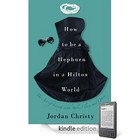 Summary:
This book is a call to action for intelligent American women to start addressing our current image problem. Increasingly, women are willing to give away all the self-respect our suffragette fore-mothers fought for in return for their quick 15 minutes of fame or even 15 minutes of attention from that one dude. Christy calls on women to appreciate the relatively recent freedom we now have as a gender by pursuing knowledge, class, and dignity in lieu of late-night dancing on stripper poles at clubs. The book serves not only as a call to action, but also as a how to guide, featuring chapters on classy dress for every personality, good friends, dating, body image, and more.
Review:
I admit that I largely bought this book because the women of classic cinema–from Audrey Hepburn to Katherine Hepburn–are my heroes. They exuded femininity and strength simultaneously. What’s more attractive than that? Overall, though, I think this book is a bit behind where I am in my personal growth as a woman, although that doesn’t make the message any less important.
For instance, I really didn’t need Christy to tell me to love and accept my body and eat healthily. I already do both those things. On the other hand, I know some women who would really need that chapter, so I certainly didn’t mind it being in the book. Similarly, I’m a nerd. I don’t need to be told not to be a Stupid Girl (as those hoo-ha flashing reality tv stars are often called). I suppose if I was a bit younger or raised a bit differently though I might be intrigued by this book if for no other reason than the idea that class and intelligence are actually more attractive than that kind of behavior.
The two chapters on style were actually quite useful. Fashion sense that’s practical and attractive simultaneously while reflecting my personality is something I struggle with. I found the quizzes to help you determine your style and colors that work best for you to be truly enlightening. Christy offers up sample core items for the various personality types, and I immediately wanted to acquire the ones that suited my own. It was worth reading the book for the fashion sense alone.
Overall, I appreciate a book calling on women to respect themselves and behave like intelligent human beings. To pursue the goals and passions or fore-mothers fought so hard for. I definitely think those who would benefit the most from this book might be the ones least likely to read it–like oh think of the Jersey Shore female cast members. On the other hand, everyone has moments when they get tired of the partying lifestyle. Having a book like this out there for them to grasp onto with such an attractive cover to boot is definitely a good thing. I’d recommend giving it a go if you’re an intelligent woman seeking for encouragement in your pursuit of class and goals or if you’re a partier thinking about changing your lifestyle.
3.5 out of 5 stars
Source: Amazon

Book Review: Lunch in Paris: A Love Story, With Recipes by Elizabeth Bard
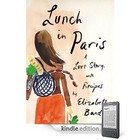 Summary:
Elizabeth has always been drawn to museums and the Old World, so when she’s doing her graduate work in London and meets Gwendal, a Frenchman, she jumps right into dating him. Gradually she falls for not just Gwendal, but Paris in general, especially the food. This memoir tells about her falling in love and the process of becoming an expat in France through the lens of food.
Review:
This memoir starts out strong. Who doesn’t enjoy a good real life love story? Paris sounds incredibly romantic and appealing to anyone who enjoys open food markets, museums, and the big city charm of small spaces. Two things held me back from really enjoying the book though.
First, as a vegetarian, I really didn’t appreciate the incredibly long and frequent sections describing eating meat, cooking meat, how awesome meat is, etc… Where Elizabeth describes her future husband, Gwendal, telling her “I love you” for the first time over a piece of bloody meat, I was thoroughly distracted by the poor, dead, bleeding animal. I could not identify with Elizabeth at all in these frequent sections. How can she claim to be a romantic at heart yet have so much of her life revolve around eating innocent creatures? I wound up skimming a lot.
Granted, I know readers who enjoy eating meat themselves won’t be bothered by these passages, but I am fairly certain they’ll be irritated by the change of tone of voice partway through the narrative. From telling us about how lucky she is to be living this life in Paris, Elizabeth suddenly changes into a bit of a pity party. Poor Elizabeth, living in Paris with a man who loves her, cooking food for him every day, giving tours of the Louvre. This isn’t how she imagined her life would work out. Um….ok. I’d suggest Elizabeth try reading some memoirs of true struggles such as The Glass Castle and get back to us.
Overall, the scenes of real Paris life are interesting and enjoyable, but the frequent scenes featuring bloody meat and Elizabeth’s pity party really detract from the book. If you are a meat eater yourself and a foodie, you’ll probably enjoy this memoir anyway. I’d advise others to stay away.
3 out of 5 stars
Source: Amazon

Book Review: The Buddha and the Borderline: My Recovery from Borderline Personality Disorder through Dialectical Behavior Therapy, Buddhism, and Online Dating by Kiera Van Gelder
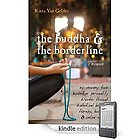 Summary:
Kiera here recounts her struggle with mental illness, first undiagnosed and indescribable, marked by episodes of self-harming, frantic attempts to avoid abandonment (such as writing a boy a letter in her own blood), alcohol and narcotic abuse, among other things. Then she recounts how she was finally diagnosed with Borderline Personality Disorder (definition) and her struggles to recover from this difficult mental illness usually caused by a combination of brain chemistry and trauma in childhood. Kiera recounts her experience with the most effective treatment for BPD–Dialectical Behavior Therapy (DBT). She honestly discusses her struggles to encounter and interact with the world and establish relationships, often utilizing online dating websites. Finally she brings us to her final step in the recovery process, her embracing of Buddhism, which much of DBT’s therapy techniques are based upon.
Review:
Many memoirs talk about events in a person’s life, but the thing about mental illness, is the person writing the memoir must somehow be able to show her audience what it is to be inside that head. Inside that person who perceives the world in her own unique, albeit messed-up,way. It takes a certain level of brutal honesty with yourself to be able to do so. Kiera achieves this with flying colors here.
BPD is an illness that, unless you have encountered it in your own life either by having it yourself or caring deeply for someone who does, is often difficult to clearly describe in a sympathetic manner. Popular culture wants us to believe that these, by and large female, sufferers are akin to the femme fatale or the main character in Fatal Attraction. But people with BPD aren’t bunny boilers. They are individuals who experience emotions much more extremely than everyday people do. A visual Kiera uses throughout the book that I believe is quite apt is that a person with BPD is like a person with third degree burns all over their body. A touch that wouldn’t hurt a non-injured person makes the burned person cry. That’s what emotions are like for people with BPD.
Kiera depicts what it feels to suffer from BPD with eloquent passages such as these:
I am always on the verge of drowning, no matter how hard I work to keep myself afloat. (Location 236-240)
In an instant, I shift from a woman to a wild-haired girl kicking furniture to a balled-up weeping child on the bed, begging for a touch. (Location 258-263)
Similarly Kiera addresses topics that non-mentally ill people have a difficult time understanding at all, such as self-injury, with simultaneously beautiful and frightening passages.
I grew more mindful as the slow rhythm of bloodletting rinsed me with clarity. It wasn’t dramatic; it was familiar and reassuring. I was all business, making sure not to press too deep. (Location 779-783)
But of course it isn’t all dark and full of despair. If it was, this wouldn’t be the beautiful memoir that it is. Kiera’s writing not only brings understanding to those who don’t have BPD and a familiar voice to those who do, but also a sense of hope. I cheerleader who made it and is now rooting for you. Kiera speaks directly to fellow Borderlines in the book, and as she proceeds throug her recovery, she repeatedly stops and offers a hand back to those who are behind her, still in the depths of despair. Having BPD isn’t all bad. People with BPD are highly artistic, have a great capacity for love.
I become determined to fight–for my survival, and for my borderline brothers and sisters. We do not deserve to be trapped in hell. It isn’t our fault. (Location 1672-1676)
So while it’s undeniable that BPD destroys people, it can also open us to an entirely new way of relating to ourselves and the world–both for those of us who have it, and for those who know us. (Location 5030-5033)
Ironically, the word “borderline” has become the most perfect expression of my experience–the experience of being in two places at once: disordered and perfect. The Buddha and the borderline are not separate–without one, the other could not emerge. (Location 5051-5060)
Combine the insight for people without BPD to have into BPD with the sense of connection and relating for people with BPD reading this memoir, and it becomes abundantly clear how powerful it is. Add in the intensely loving encouragement Kiera speaks to her fellow Borderlines, and it enters the category of amazing. I rarely cry in books. I cried throughout this one, but particularly in the final chapter.
This is without a doubt the best memoir I have read. I highly recommend it to everyone, but particularly to anyone who has BPD, knows someone with BPD, or works with the mentally ill. It humanizes and empathizes a mental illness that is far too often demonized.
5 out of 5 stars
Read my fiction novella starring a main character with BPD. I read this book partially as research for it.
Source: Amazon

Thumbing Through Thoreau: A Book of Quotations by Henry David Thoreau compiled by: Kenny Luck illustrated by: Jay Luke and Ren Adams
 Summary:
This nonfiction work is a collection of Thoreau quotes. The quotes are divided into sections: society and government, spirituality and nature, and love. Each page features one quote printed in an artistic font and a black and white illustration of some element of nature.
Review:
This is one of those coffee table books that most people will know right away whether it’s up their alley or not, and there honestly isn’t that much to say about it in a review. If you really enjoy Thoreau, then an illustrated book of his quotes will probably be something you’ll like. However, personally, much as I like Thoreau, the illustrations don’t particularly strike my fancy, so I feel that this book fails to impress. That may be partly due to the fact that I’m a local and have been to Walden Pond multiple times myself, and I find that black and white line drawings tend to, in general, fail to live up to photography of nature. Art is definitely relative though, so you might quite enjoy the illustrations. You can check out galleries of sample illustrations here and here and decide for yourself.
Overall, I’d recommend a print copy of this book to fans of Thoreau who also enjoy the illustrations. It’s not for me, but I’m sure it will strike the fancy of some people quite well.
3 out of 5 stars
Source: free eBook from the publisher, Tribute Books

Book Review: The Creation of Psychopharmacology By David Healy
 Summary:
A historical look at the emergence and development of psychopharmacology (psychiatric drugs) from the earliest time of psychiatry to the end of the 20th century. Particular attention is paid to the impact psychiatric societies, economic systems, cultures, and drug companies have had on psychopharmacology. Psychiatric drugs explored in-depth include chlorpromazine and SSRIs (Selective Serotonin Reuptake Inhibitors aka antidepressants).
Review:
I was quite excited to learn about the topic of this book, as psychopharmacology is one of the key aspects of psychiatric treatment. It is therefore unfortunate that the author, Healy, allows his own biases to get in the way of presenting factual information.
The first portion of the book that discusses asylums and the original drugs discovered by scientists to work on psychoses does present the facts in an unbiased manner. Unfortunately, Healy could not possibly write in a much more boring manner. I have never in my life read a text that is so stale, and I do read scientific nonfiction for work on a fairly steady basis, so this is not a bias of my own against scientific writing. The man just drones on and on.
The larger problem arises in the second half of the book when Healy arrives in the 20th century. Healy’s obvious anti-drug and anti-psychiatry bias emerges. He flat-out gets facts wrong and displays paranoia, ranging from the typical conspiracy theory that the mental health community is in league with the drug companies to the more extreme idea that depression shouldn’t be treated because then there would be no more art or spirituality. He also claims that personality disorders should not be treated, comparing such treatment to cosmetic surgery. This claim is offensive and harmful to people who wish to become higher functioning, happier individuals.
Healy goes on to offer predictions as to the direction psychology and psychiatry will take in the 21st century. Now that we are a decade in to that century, I can definitively tell you his predictions are wrong. He argues that an increasing number of drugs will be used to remove most individuality and that therapy will continue to fall by the wayside. In fact, the first decade of the 21st century saw a new movement toward CBT (Cognitive Behavioral Therapy) and DBT (Dialectical Behavioral Therapy), which are all about helping an individual change their harmful behaviors, thoughts, and tendencies purely through therapeutic techniques. Healy is attempting to fear-monger his readers into believing psychiatry and psychology wish to drug us all up, when in fact the mental health community wants to use what works best in each situation. Contrary to his claims, there are in fact biological bases for some mental health issues.
Although his facts are accurate in the earlier history of psychopharmacology, the second half of the book presents false facts and harmful ideas. Due to this fact, I cannot recommend this book. For an educated look at mental health and drugs, take a look at the DSMIV and the PDR.
1 out of 5 stars
Source: Library

 Support my work with a tip or browse my shop for curated book club guides, how to guides, cross-stitch patterns, and more!


This work by Amanda Nevius is licensed under a Creative Commons Attribution-Noncommercial-No Derivative Works 3.0 United States License.
 Opinions of a Wolf