
Archive
Movie Review: The Tourist (2010)
 Summary:
The Scotland Yard is watching Elise Ward in the hopes that her ex-boyfriend, Alexander, who owes millions of pounds of back taxes, will contact her. They get their chance when he does, telling her to come to Venice and choose a random tourist of his height and build to trick the cops into thinking is him. The cops don’t fall for it, but unfortunately the mobster Alexander stole billions of pounds from does.
Review:
I’ve been a fan of Angelina Jolie and Johnny Depp since I can remember, so that pretty much is the entire reason why I went to go see this film. Unfortunately, I have to say, Angelina and Johnny are starting to show their age. For a film largely based on youth-filled action and passion, this is a bit distracting. Although I enjoyed the old-fashioned storyline, I think I would have enjoyed it better with younger casting. I’m not ageist, but when a storyline is so youthfully oriented, the casting should match.
The storyline itself is thoroughly engaging and refreshing. It’s a romcom in the style of Cary Grant classics like Bringing Up Baby. There’s a bunch of slightly over the top but still believable action. It doesn’t rely on idiocy of the main characters or klutziness to move the story along. It’s over-the-top enough to be engaging and escapist, but still believable instead of laughable.
There are enough plot twists to keep it engaging, and the cinematography strikes the proper balance between clear action-filled shots, quieter romantic scenes, and the more technical scenes of Scotland Yard observing the whole situation.
Overall, it’s an enjoyable film that unfortunately suffers from miscasting. Hopefully romcoms coming out of Hollywood will continue moving in this direction anyway.
3 out of 5 stars
Source: I saw this in theaters.

Book Review: Arizona Free by Doug Martin
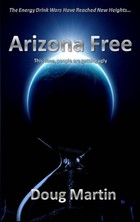 Summary:
Three white collar schmucks sign up for a classic pyramid scheme selling energy drinks known as DINAmite. Gradually, they start noticing disturbing changes in the consumers of the energy drinks and find themselves pulled into the world of a nefarious plot to change humanity as we know it.
Review:
Not in years have I read a book I disliked this much. I generally try to find at least one redeeming quality when reviewing a book, remembering that not everyone likes what I enjoy, but honestly. This book is terrible, and I have zero idea how it managed to get published in the first place. The publisher’s website doesn’t give very much information on how and why they choose books to publish, so no answers to that particular question were found there. Anyway. On to why this is the first book ever to receive one star here on Opinions of a Wolf.
First, there’s the writing. I felt like I had landed back in beginner’s creative writing in high school and had been assigned the worst writer’s short story to critique. It abounds with showing, not telling. The dialogue is painfully fake sounding. Most of the characters are completely unmemorable, and the few that managed to put some image into my brain were simply charicatures lacking any dimensions at all.
I’ve read books before that struggled with sophomoric writing but that at least showed potential through a strong, uniquely imagined plot. There is none of that here. The plot changes its mind so many times throughout that I honestly have no idea what actually happened in the end. I’m completely baffled. You can’t throw that many surprises at a reader without offering some modicum of explanation or elaboration. The characters are simply straight up told “This is happening now,” and they go along with it.
Of course writing and plot are the core of what makes a good book, so it’s bad enough this book fails on both of those already, but it’s topped off with a nice icing of homophobia and womanizing. The characters and the narrator repeatedly make slams against gay people. One of the characters, Catherine, plays tennis with a lesbian, who yet again is a characature who speaks in the most fake Russian accent ever. This lesbian tennis player is interested in Catherine, and this of course grosses out everyone in the story, including Catherine. Also, the lesbian is turned into a hulk-like villain, complete with horns. I was so disgusted by the homophobia that I almost stopped reading the book, but I refuse to write reviews of books I didn’t finish, and frankly, I wanted a bad review of this homophobic piece of trash out there.
Bottom line, I can’t recommend it to anyone. It’s completely made up of bad writing, terrible plot structure, and rampant homophobia.
1 out of 5 stars
Source: Free copy via LibraryThing‘s EarlyReviewers program

Book Review: Anna and the French Kiss by Stephanie Perkins
 Summary:
Anna Oliphant’s dad totally sold out and started writing crappy books that for some reason became incredibly popular. Now he’s insisting that she spend her senior year at a boarding school–School of America in Paris. Anna knows she should be enjoying her year abroad, after all, it is Paris! But she can’t help but miss her friends and family at home. She slowly starts to find her own new circle of friends and discover the wonderful things in Paris…..and to realize that she may be falling for one of her friends. A boy who is decidedly off-limits for multiple reasons.
Review:
Perkins takes a typical YA storyline–teenage girl sent away to boarding school, complete with teen angst–and puts just the right amount of her own twists and flavors in it to make for a delightful, unique read. I enjoyed this as an adult, but I’m sure 15 year old me would have been in love with it, re-reading it, and sighing over the main interest St. Clair.
The setting of Paris is delightful. Perkins captures the binary of excitement and trepidation at being in another country for the first time enough so that Anna is realistic but not annoying. Similarly, all of the characters act like actual human beings. They are neither perfect nor evil. They are simply doing their best to figure out how to function in the world. I appreciated this, and I’d imagine teen readers would too. Similarly, Perkins describes Paris in such a way that I wanted to move there instantaneously myself if for no other reason than the descriptions of the bread and eating meals in cemeteries. This is what it should be to be young. Angst combined with first-time glorious experiences.
Perkins manages to be both subtly funny:
“Huh?” I have such a way with words. I should write epic poetry or jingles for cat food commercials. (Location 1054-1058)
And perfectly capture what it is to be an adolescent female:
It makes me dizzy. It smells like freshly scrubbed boy. It smells like him. (Location 3100-3104
This is what an ideal YA book should be. Realistic about what young people face, but also about who young people are. Holding out hope that they can become good people, and they can learn and grow and overcome their mistakes. I highly recommend it to teen girls, as well as to adult women who still enjoy YA.
5 out of 5 stars
Source: Amazon

Movie Review: Saw (2004)
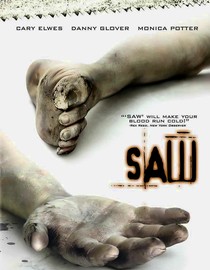 Summary:
Two men wake to find themselves chained on opposite sides of a worn-down, underground bathroom, the newest victims of Jigsaw. Jigsaw doesn’t actually commit murder himself, but instead puts people into situations where they have to make horrible choices in an attempt to save their own life. These men are told the only way out is for one of them to kill the other, and as their time limit ticks on greater amounts of information are revealed about the men’s lives and Jigsaw’s previous victims.
Review:
My very first comment as the end credits rolled was, “Holy crap, I can see why this became a franchise.” The story is sufficiently complex to hold interest. Jigsaw is incredibly creepy as he uses a voice distorted puppet to communicate to his victims. Puppets are always creepy. Bottom line. I love the concept of a serial kidnapper/torturer doing so presumably to teach people a lesson as opposed to just really enjoying gore.
Speaking of gore, it definitely exists in the film, but the most gut-wrenching moments take place just off-screen. Apparently this was re-edited as the original cut showed those moments on-screen, and the MPAA required the cuts for it to receive an R rating. Personally, I think given their low budget, it works better letting the audience’s imagination fill in the worst moments.
Also, Losties will be pleased to know that Michael Emerson, aka creeptastic Ben, has a rather significant role in the film. I loved his acting so much in Lost, and his work here is just as good. I may have squealed a bit every time he showed up on screen. One casting negative, though, is Cary Elwes, who plays one of the men locked in the bathroom, has the worst fake American accent ever. He repeatedly slips in and out of it. I have no idea why they didn’t either just let him be British or hire an American actor for the part. Very odd.
Overall, this horror movie primarily gives viewers chills from the whole idea of such a situation far more so than gore. If horror movies are your thing, you definitely need to give the Saw franchise a shot. It became a franchise for a reason.
5 out of 5 stars
Source: Netflix

Book Review: To Say Nothing of the Dog by Connie Willis
 Summary:
Ned Henry is a time-traveling historian at Oxford, who has unfortunately been assigned to Lady Shrapnell’s quest to recreate an historic church. For the last…god knows how long, he’s been searching for the bishop’s bird stump in the 1940s. He finds himself suffering from time-lag and is promised a vacation in Victorian England where Lady Shrapnell can’t find him. Of course, the Oxford historians need him to take care of one teeny tiny little incongruity caused by fellow time-traveling historian, Verity, who just so happens to be as beautiful as a naiad. Of course, that could just be the time-lag talking.
Review:
Wow. Wow. I literally hugged this book multiple times as I was reading it. I love it that much. You know that old Looney Tunes cartoon with the abominable snowman who finds Bugs Bunny and then scoops him up and rocks him saying, “I will hug him and love him and squeeze him and call him George” ? If I was the abominable snowman, this book would be my Bugs Bunny.
It is incredibly witty in that highly intelligent manner that expects you to be educated to get the joke. Multiple references to classic literature, historic events, and more tossed around as quips and comparisons to events characters are currently going through. It also features the put-upon hero, Ned, who maintains a good sense of humor about the whole thing in that lovely self-deprecating way that makes me wish the character could pop out of the book and be my best friend.
Additionally, I love history as long-time readers of this blog know. History was one of my two majors in university. I was the 7 year old girl who sat around watching war movies and PBS documentaries. I also love scifi. Hence, the entire concept of time-travel is one of my all-time favorite things, and Willis handles it so intelligently and beautifully! I love that time travel is something only the academics do since everyone else finds it dull once it’s discovered they can’t loot from the past. It makes so much sense! I love the implication that non-academics are quite happy with shopping malls while Ned and Verity go traipsing around through the past navigating a world distantly related to our own. One of my favorite moments is when Ned discovers that Victorians actually used exclamations like “pshaw” that are found in Victorian novels. It’s a historian’s dream come true!
Finally, a significant portion of the storyline revolves around cats. Adding an extra layer of awesome to this is the fact that cats are extinct in the future, so Ned has never encountered one before. He makes the initial mistake of thinking cats are like dogs. Any cat lovers, I’m sure, can envision the hilarity that ensues from this little thought process. Also, seriously, Willis clearly understands animals perfectly. The mannerisms of the cats and the bull dog, Cyril, are written to a T.
Put together humor, time travel, history, and animals, and this is the perfect read. If you enjoy any one of those things, but definitely if you enjoy more than one of them, you absolutely must give this book a chance. I haven’t loved a book this much in years, and I just….I just want to spread the love. I also want to go re-read it right now.
5 out of 5 stars
Source: PaperBackSwap

Book Review: How To Be An American Housewife by Margaret Dilloway
 Summary:
Shoko dealt with the consequences of her decision to acquiesce to her father’s wishes and marry an occupying American soldier and return with him to America in the 1940s. She did her best to hold onto the best parts of being a Japanese woman and meet the expectations of being an American housewife. But now she is sick from an enlarged heart, possibly the result of radiation from the bombs dropped on Nagasaki, and the consequences of her multiple decisions made in the war and occupation years are coming back to haunt her. Although her relationship with her biracial daughter, Suiko, is strained, Suiko still does her best to assist her mother, and in the process, learns something about herself.
Review:
I came into this book expecting it to be your typical book about an immigrant adapting herself to the surrounding culture. That’s really not what this book is about, and that actually is a good thing. It subtly addresses how complex not only family can be but inter-cultural relations as well. The world no longer consists of the simple, straight-forward rules that Shoko grew up with. Since the world is a smaller place, the concepts of what one should or should not do slowly change throughout her life.
Of course, I find everything about Japan completely fascinating, so I enjoyed getting to see it not only through Shoko’s eyes, but through her daughter Suiko’s as well. Japan truly has changed drastically in the last 70 or so years, and showing the difference in experience simply from Grandmother Shoko to graddaughter Helena is astounding. Often in America we only think about how our own nation has changed, but this is true for others as well. Reading about it is a mind-broadening experience.
Dilloway also handles the delicate situation of dealing not only with your parents’ immortality but also their fallibility and essential humanness in a gentle manner. It is there, but it is not preachy. It simply reflects the experience of realizing as an adult that your parents are people too, and they’ve had their own life experiences that they regret or have dealt with in their own way.
Still, although I found the story enjoyable to read, it fell short of being deeply moving or memorable. It felt as if it ended too soon, or we didn’t find out enough about everyone’s stories. In particular although I understood and felt for Shoko at the beginning of the story, by the end I felt distanced from her, wheras I was still rooting for Suiko. I think some of the choices Dilloway made for Shoko did not fit with the tone of the rest of the story.
Overall, I recommend this enjoyable read to fans of contemporary or historical realistic fiction with themes of inter-generational and inter-cultural conflicts.
4 out of 5 stars
Source: Amazon

Book Review: A Tale of Two Demon Slayers by Angie Fox (Series, #3)
 Summary:
Lizzie is ready for a vacation what with having spent the last month first saving her grandmother from the second level of hell and then saving Las Vegas from a hoard of succubi. Plus lying around on the beach in Greece with her hunky Griffin boyfriend, Dimitri, sounds like quite the treat. Of course, nothing in Lizzie’s new life ever goes as smoothly as planned. Their arrival in Greece leads to the discovery that someone has stolen something from Dimitri. Something intertwined with Lizzie and that has put the whole Helios Griffin clan in danger.
Review:
Due to the title and the various repercussions so far to Lizzie sharing her demon slayer nature with Dimitri, I expected this book to deal with that. Actually, the story it told was far more engaging and interesting. Can Dimitri with his classical European family of tradition work in a relationship with Lizzie and her globe-trotting work and crazy motorcycle gang witch family?
Although the situations surrounding this romance are highly paranormal, the relationship itself is very normal. Lizzie struggles to trust in Dimitri’s love for her, let alone allow him to love her. Dimitri struggles to find balance between his life and family and Lizzie. It gives a heart to the overall action and story that was missing in the other volumes.
The paranormal aspects are stronger this time around too. The paranormal world seems to mesh together in a better way. The addition of more animals besides Pirate make for a more entertaining menagerie. Dimitri in particular is more fleshed out now that we see his family and where he comes from. New characters too are well-drawn, particularly Lizzie’s new teacher.
Fox manages to avoid common paranormal romance cliches this time around, although at first the reader thinks she is falling into them. This combined with drastically improved sex scenes, the better characterization, and the addition of a real world heart to the story makes for a far better tale overall. I’m glad the humor in the previous two books kept me around for this one.
Overall, this is an excellent example of everything paranormal romance should be–colorful characters, believable paranormal circumstances, the heart of the story relatable to real world circumstances, good sex scenes, and plot twists that manage to avoid cliches. It is thoroughly entertaining, and I highly recommend it to all paranormal romance lovers.
5 out of 5 stars
Source: Amazon

Previous Books in Series:
The Accidental Demon Slayer, review
The Dangerous Book for Demon Slayers, review
Book Review: Eva by Peter Dickinson
 Summary:
Eva wakes up from a car accident to discover that her scientist, chimp researcher parents have allowed for her to be part of a new experiment. Her brain patterns have been implanted into a chimp’s brain. She is a human brain trapped in a chimp’s body. What will this mean for Eva? For the chimps? For the world?
Review:
This a truly horrifying concept. What would it be like to wake up from a car accident in a body that is not your own? There is much potential for exploration here, but the direction Dickinson took it in fell flat for me.
The setting is a near future in which the world is vastly overpopulated and nearly all animal species have died out except for chimps, who are all kept in captivity. It’s odd in a world that is so overpopulated that the vast majority of people never leave their apartments that scientists have made such an ethically questionable move to save human lives. As Eva herself points out, not only is there the problem of what it means to be a human in a chimp’s body, but also there’s the fact that the chimp essentially had to die for Eva to live. How is that right or fair?
I appreciate that Dickinson has Eva start to identify with the animals and fight for animal rights, yet I simultaneously did not appreciate his depiction of the inner workings of animals and their social groups. In spite of Eva being one of and among them, Dickinson persists in presenting them from a largely disconnected human perspective. I’ve read more sympathetic passages on the inner workings of animal groups on vegetarian websites than I got from Eva’s perspective as, essentially, one of the chimps herself.
*spoiler warning* Some readers will also be disturbed by the fact that Eva goes on to mate with one of the chimps. Although this is not shown, it is shown that a male is interested in Eva when she is in estrus, and it is later shown that she has had multiple chimp babies. Although I am highly sympathetic to animal rights, this is far too close to beastiality for my own comfort. Perhaps if Dickinson had addressed the issue and made it a thought-provoking issue instead of glossing over it I would feel differently. But he truly just makes it happen and tries to skip over the issue. I found this disturbing and was disappointed that this overshadowed the more interesting questions of animal rights versus human welfare. *end spoiler*
Overall, the book is well-written and thought-provoking, but falls far short of what it could have been. I’m sure there must be better YA books out there that address the issue of animal rights in a clearer, less disturbing manner.
2 out of 5 stars
Source: Swap.com

Movie Review: Soylent Green (1973)
 Summary:
In the then moderately distant future of 2022, the world has turned to being a congested chaos due to overpopulation and global warming. People survive on various colors of food-like paste sold by Soylent, the favorite of which is Soylent Green. When a police man is called in to investigate the murder of an unusually wealthy man, he realizes it all has to do with the Soylent Corporation and makes a sinister discovery.
Review:
Obviously I came at this movie knowing the “spoiler” that Soylent Green is people. What scifi nerd hasn’t heard that quote? Still, even coming in knowing the big secret, I was expecting more from this film. By far the most enjoyable portion takes place in the wealthy man’s condo where we learn women have come to be attached to condo’s as part of the “furniture” and are passed along with the condo from owner to owner. In return for being the lady of the house, they get safety, security, and food. A whole other story could be told with what is essentially a return to the caveman way of doing things. Unfortunately, this gets glossed over for the supposedly more interesting plot line.
The story is told like a 1970s futuristic version of a film noir. We have the detective fighting all odds to get to the nitty gritty truth of the story. Of course, this is the 1970s version of a future dystopia. As such, the wealthy dwellings look straight out of a 1970s porno, and the unfortunate dystopic surroundings of the poor look eerily similar to a hot and sweaty version of communist Russia. It’s an odd dichotomy that doesn’t quite work.
I was waiting for the film to move from setting up the dystopia to slowly building the horror up, but it never happened. Honestly, given the intensely overpopulated surroundings these people live in and severe lack of food, I actually came away thinking that recycling the dead almost seemed logical, and being a vegetarian, that’s quite the leap for me to make! Clearly the film missed its mark somehow. When the policeman rants about the humans being treated as cattle, all I could think was how earlier in the film both he and a friend drooled over a slab of beef. Why should I be horrified that he feels as if he’s being treated like cattle when he would willingly treat cattle exactly the same way? I was left with no sympathy for him, only for the women who get passed along as furniture with the condo’s in this future.
Overall, Soylent Green had the potential to tell an interesting story of a future where women revert back to their old subservient roles as a survival tactic. Instead, it unfortunately veers off toward a storyline I find unsympathetic and that rings as falsely horrifying given the general set-up of the movie. There are far better 1970s horror films out there, as well as better dystopias.
2 out of 5 stars
Source: Netflix

Book Review: S by John Updike
 Summary:
Letters, both hand-written and recorded onto tapes, tell the story of Sarah, a North Shore housewife of a wealthy Massachusetts General Hospital doctor who one day in 1986 decides to go and join a commune in the Arizona desert. Gradually through the letters both her past and her experiences in the commune are revealed.
Review:
I was intrigued by this book for multiple reasons. I’ve always enjoyed epistolary novels. I found Updike’s more famous novel, The Three Witches of Eastwick, endlessly entertaining. Also, I’ve always been fascinated by communes and cults. This book certainly contains all three elements. Sarah’s letters compel the reader to get through them as quickly as possible. Whether she’s discussing the commune or her past life on the North Shore, the letters are truly fascinating. Perhaps this is partly because there’s a Stepford-wife like quality to Sarah’s past life, and her current life is so over the top from anything most modern Americans experience. It provides a fascinating contrast.
The book therefore starts out strong, but falters more and more the further toward the end it gets. The more about Sarah is revealed, the less sympathetic she becomes. Additionally, due to the nature of the epistolary novel, some of her actions are not entirely revealed, thus leaving the ending a bit confusing. Frankly, the ending simultaneously surprised and disappointed me. I was left wondering what on earth Updike’s point had been. Was it a feminist stance? Was it misogynistic? Was it just a portrait of a person? The great variety between all these possibilities should demonstrate how confusing the ending is.
It’s interesting to note that Sarah is depicted as a descendant of Hester Prynne of The Scarlet Letter. I’m sure this plays into the interpretation of the book a great deal, although personally, I am not sure how.
Overall, this epistolary novel starts out strong and engaging, but the ending leaves the reader a bit confused and let down. If you’re a big Updike or epistolary novel fan, you will still enjoy the book enough to make it worth your while to read, but all others should probably give it a pass.
3 out of 5 stars
Source: Swap.com

 Support my work with a tip or browse my shop for curated book club guides, how to guides, cross-stitch patterns, and more!


This work by Amanda Nevius is licensed under a Creative Commons Attribution-Noncommercial-No Derivative Works 3.0 United States License.
 Opinions of a Wolf