
Archive
Book Review: The World Inside by Robert Silverberg
 Summary:
Hundreds of years in the future, Earth society has dealt with the population crisis by discovering the ability to build Urban Monads (urbmons). Each building is 1,000 stories and houses around 880,000 people. This vertical hive living has allowed for most of the land to be farmland, managed by communes still living in the traditional horizontal style. It’s a beautiful day in Urbmon 116, and we’ll get to meet people from each level of the city from artistic San Francisco to academic Shanghai to ruling Louisville. Their lives of enforced zero privacy, no locked doors, mandatory acceptance of sexual requests from anyone of age, and a reverence for fertility resulting in uncontrolled population growth present a unique social situation. An academic wonders if humanity has forcibly evolved itself to naturally enjoy the Urbmon lifestyle or if it is a cultural influence forced upon them. Maybe these next few days will help him tell.
Review:
This book is such a creative imagining of a possible future, one I certainly never had thought of. Silverberg approaches his storytelling by at first making it seem as if we will be exposed to a series of vignettes about the inhabitants of Urbmon 116, but then their interconnection suddenly becomes apparent as the dual climaxes approach. I was certainly not bored with the vignette portion as the society of the Urbmon is so interesting, but the interconnection moved it from being an interesting book to a powerful book.
The World Inside is a look at what would happen if the most fundamentalist pro-lifers were to win the majority and gain great power. There is no birth control, every fetus conceived is brought to childhood (although the gender may be manipulated to maintain a balance). Interestingly, in order for this pro-life construct to gain power, they also had to make concessions to the free love folks. Everyone gets married at a very young age, but there is no such thing as sexual loyalty. People are encouraged to nightwalk–leave their own abode at some point after midnight and enter another apartment and have sex with one of the adults there. Often the husband or wife will stay in the room in spite of the sex going on in the same bed as them with their spouse. This is explained as a necessary way to maintain harmony in the building. It is intriguing to see such a lack of regard for parental loyalty to each other in a society that encourages so much procreation, yet it all makes sense.
That is really what makes this such a strong book. It’s such a plausible future, given the proper circumstances, that it gives chills, and yet Silverberg still shows the basic humanity in these people, stuck in a culture, a society that they have little to no control over. If they fail to fit into the social constructs at all, they are simply put down the chute–killed and used as fuel for the building. There is no room for real discourse or exploration of where they may have gone wrong. It’s a social construct that happened out of necessity due to humanity’s refusal to stop procreating so much. They gave up all their other freedoms for that one. Even the freedom to chose to be monogamous if you want. It is such an emotional, thought-provoking warning gong. It’s definitely a book I will hold onto and re-read.
If you enjoy scifi, dystopias, or philosophical explorations of the human condition, you will definitely enjoy this book. I highly recommend it.
5 out of 5 stars
Source: PaperBackSwap

Book Review: Breakfast at Tiffany’s: A Short Novel and Three Stories by Truman Capote
 Summary:
Breakfast at Tiffany’s
A nameless narrator recalls the eccentric 19 year old neighbor he once had in New York City–Holiday Golightly. He reflects on their friendship of just over one year, and wonders where she is now.
“House of Flowers”
Ottilie works as a prostitute in Port Au Prince. She lives in a beautiful house with fine things, but one day at a cock fight, she falls in love and leaves the city for the country with her new husband. Will she regret her decision?
“A Diamond Guitar”
A man in prison for 99 years plus 1 day in a tropical location is well-respected by the other prisoners for his ability to read. One day, a new inmate arrives serving a 2 year sentence. He is young, beautiful, and can play the guitar wonderfully.
“A Christmas Memory”
A man recalls his early Christmases spent with an older relative who had never wandered far from home, but had a love of life the other adults in his family mistook for a bad influence.
Review:
I read this book due to watching Breakfast at Tiffany’s (review) and really enjoying it. Various friends told me they were curious to know my reaction to the different ending in the book, so I decided to read it.
Capote’s strength as a writer is in setting the scene. I could vividly picture the scenes in every single story, despite their vastly different settings. This is what made the stories readable in spite of their plotlines being not particularly my cup of tea. I felt that Capote just approached the edge of something phenomenal, biting, and truthful, but then stopped. Stories that could have been touching and powerful were therefore decidedly average.
What I loved about the movie version of Breakfast at Tiffany’s is that it took a loving look at someone with mental issues and showed how she could get better. There is none of that hope in the short novel. Holly comes off entirely as someone out to use other people, and there is an unforgivable scene with her cat. I came away hating Holly, whereas I felt I was made to understand a possibly unlikable person in the film. This made the short novel quite disappointing and is exemplary of everything I disliked in this collection of Capote’s works.
That said, his writing style is highly readable, and I enjoyed the message in “A Christmas Memory” very much, even if the title is entirely uncreative.
My advice to any who love the film is to skip this if they wish their opinion of the characters to remain untarnished. Those who enjoy mid 20th century American short fiction will enjoy this collection, however.
3 out of 5 stars
Source: PaperBackSwap

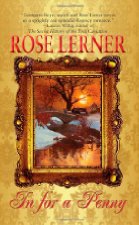
Book Review: In For a Penny by Rose Lerner
 Summary:
Nev Bedlow’s partying days are over. His father got his brains blown out in a duel, and now Nev must deal with the family’s massive debt, as well as tend to their much too neglected country estate. He must marry new money and pretty, witty Penelope seems just the ticket.
Penelope wasn’t after a title. In fact, she was dutifully waiting, hoping her parents would eventually approve an engagement with her friend Edward, but when Lord Bedlow shows up asking for her hand in marriage, she finds herself saying yes.
The new couple not only must get to know each other and see if love can form, but also deal with the threat of a riot of the tenants, Nev’s impatient younger sister Louisa, and threatening neighbors.
Review:
Regency romance isn’t normally my thing, but I read a review on a book blog (I can’t remember which) that intrigued me. It was well worth it. In For a Penny doesn’t look at the past through rose-colored lenses. It faces the facts of life back then for men as well as women of all stations. However, unlike books of that time period that ignored the occurrence of things like sex, this book includes them. Put those two together, and you get a really pleasant read.
The characters are highly relatable and are not stock characters. Penelope is virginal and innocent due to her station, not because that’s just how women were. An actress is provided as a nice contrast, showing that with the sexual freedom of lower classes came great risk. Nev sports his own kind of innocence, a complete obliviousness to the pain and suffering in the world that then comes to meet him head-first. Instead of a dashing lord, we see a young man whose father failed to properly prepare him for adulthood. It puts exactly the type of human emotion into the story that is necessary for the romance to ring true.
That said, I didn’t completely love it. There were a few scenes that read a bit clunky. Beyond that, I’m not sure why I didn’t love it. I suspect that it’s just that it’s not my favorite genre, and thus even though it is done well, it will never be an intensely loved book in my mind.
However, I was pleasantly surprised by the real emotions and situations in this regency romance and hope to come across more like it. If you enjoy romance or historical fiction, I encourage you to give this book a chance. I bet you will enjoy it.
4 out of 5 stars
Source: PaperBackSwap

Book Review: Oryx and Crake by Margaret Atwood
 Summary:
Snowman used to be Jimmy. Jimmy was a word person in a science person world. He couldn’t splice genes to make rakunks or even to make new types of plants. He could sell them to the public who lived outside of the safe Compounds though. Jimmy was with Oryx, although he had to share her with Crake. Now, Snowman must take care of the Crakers with their rainbow of colors, naturally insect-repellant skin, and complex mating rituals. Snowman is alone except for the Crakers. Everyone else died in the bloody pandemic. Or did they?
Review:
This is a companion novel to Year of the Flood (review), although Oryx and Crake was published first. Companion novel means they’re set in the same time-span in the same universe and some characters may briefly cross over, but you don’t necessarily need to read them in a particular order or even read all of them.
Atwood is one of my favorite authors, so I have no idea how to react to the fact that I didn’t like this book. I didn’t hate it, but I didn’t like it. It was a bit of a struggle to get through. As usual, Atwood sets scenes beautifully, but I felt no emotion driving the story. I believe Oryx and Crake suffers from the fact that love triangle of Oryx, Crake, and Jimmy is only hinted at throughout the book, only to be revealed in such a manner that it rings false. Jimmy seems to surf through life on a wave of ennui, until Oryx shows up and cheers him up, but how does she do it? We just don’t ever really find out, because our narrator is Snowman–the version of Jimmy who’s lost his mind. Perhaps Atwood was trying to show a culture that had reached a point where people just couldn’t be truly happy. That’s a good thing to show, but it makes for a boring narrator.
What I really wanted to know about was what made Crake do the things he did. He’s clearly either a mad-man or a genius, but we never get to find out much about him at all. I wish he had been the narrator. To see inside his mind would have been amazing. I could have even overlooked the fact that he’s not a woman.
That’s the other thing that bugged me about this book. Atwood usually writes with female main characters, but in this instance, men were the main players. That kind of pisses me off. Was she unable to imagine a woman doing something so evil? A woman being so stupid? That’s just as sexist as women never being the hero. I would have enjoyed the book so much more if Jimmy and Crake were women (heck, Oryx could have stayed a woman too. That would have been an interesting change).
When you compare this to Year of the Flood, it’s evident that what Oryx and Crake lacks is the emotions driving the bigger picture. It’s a well-imagined and creative big picture, which is what makes the book still readable. I’m sure some people would like it, but don’t come into it expecting Atwood’s more typical emotion-driven story. You won’t find it.
3 out of 5 stars
Source: PaperBackSwap

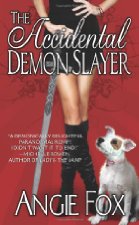
Book Review: The Accidental Demon Slayer by Angie Fox
 Summary:
Lizzie’s life is all about control. Her library books are never late, her preschool class is extremely well-behaved, and she always grocery shops with lists. In fact, to date the only out-there thing she’s ever done is to adopt her terrier, Pirate. On her 30th birthday, though, her long-lost grandmother shows up, and she just happens to be a biker babe. Oh, and she’s here to warn Lizzie that the minute she turns 30 her slayer powers will go into full effect and a fifth level demon wants them. Before she knows it, she’s caught up in a whirlwind of roadkill witches, griffins, demons, and switch stars.
Review:
This is a refreshing twist in the paranormal romance genre. No vampires to be seen so far and demons are just demons not fallen angels seeking redemption. Lizzie reads kind of like a reluctant ninja, which is a nice change from the boring girl suddenly made exciting by the appearance of vampires. Her life is suddenly made exciting due to a change that took place inside herself, not outside.
I also really enjoyed that her slayer powers come about when she turns 30, not at adolescence or at 18 or at 21. Thirty makes sense because she actually gets a chance to grow up before dealing with all of this stuff. Plus it gives older readers who long ago gave up on getting a letter from Hogwarts a chance to still imagine a fantastical life for themselves.
On the other hand, Fox does not entirely escape from paranormal romance (or heck, just romance) tropes. There’s this really cute guy and she instantly feels a magical connection but oh my goodness something is holding them apart until they stop letting it but then she gets instantly angry at him. For a writer who put in some very creative elements, such as the witches being elderly grandmas who still kick butt, I was expecting far more from the romance portion. Also, the sex scene really fell flat. I’m not sure if this was due to the way she wrote about the sex or the fact that I just didn’t believe any of the emotions between the two, but it was a disappointment either way.
Similarly, Lizzie hems and haws over being a demon slayer rather late in the game at a point at which it is obvious she really enjoys it but for some reason isn’t realizing it? It just doesn’t make sense and rings false.
However, I still plan on reading the sequel, because the romance was such a minor portion of the storyline, and Lizzie is at least a strong female character who remains feminine. I’m not big into the hardened heart tattoo covered female leads who seem to be the only paranormal alternative to moony-eyed emo chicks. Lizzie lands smack between the two, which lends to the unique qualities in the book.
If you enjoy paranormal romance with a twist, you’ll enjoy this series. Similarly, if you want a humorous, gentler introduction to the genre, try this book out.
3.5 out of 5 stars
Source: SwapTree

Book Review: Love Among the Chickens by P. G. Wodehouse
 Summary:
Jeremy Garnet, a novelist, is living a relatively quiet bachelor life in London when his old school friend Stanley Ukridge shows up. Ukridge is starting a chicken farm with his wife, Millie, and wants “Garnie old boy” to come stay with them. He’ll get to write in the country in exchange for a few hours of work a day. In spite of the fact that Ukridge is planning to run the chicken farm without any prior knowledge or studying “the better for innovation, my boy,” Garnie takes him up on it. Of course, life with the eccentric Ukridge surrounded by chickens isn’t quite the quiet writing environment Garnie was planning on. Not to mention the Irish professor neighbor’s lovely daughter that Garnie can’t quite get out of his head.
Review:
There’s no doubt about it. Wodehouse is pleasantly droll. It was, however, necessary for me to remind myself a few times of the time period this was written in as certain portions had the feminist in me going “Whaaaat?!”
Ukridge and Millie are a delightful couple. He’s got zany ideas; she’s endlessly supportive. He clearly is madly in love with her and vice versa. They’re exactly the sort of people I would want as neighbors, because you’d never get bored with them around. Ukridge doesn’t mean to do wrong by anybody. He just doesn’t get how society thinks it should function. He does everything his own way, and Millie is along for the ride.
Wodehouse also manages to actually create personalities in the animals that are around from Bob the dog to Edwin the cat to Aunt Elizabeth the evil chicken (named after the aunt that didn’t want Millie to marry Ukridge). The animals are a part of everything that is going on. The characters actually talk to them, interact with them, and the animals respond. It’s something that happens in my own life, but that I don’t usually see in books, so I was delighted to see it here.
On the other hand, chickens are only half of the title, and I must say, I was not fond of the love half. Garnie’s relationship with Phyllis just hit all the wrong notes for me. First, Garnie claims to have fallen in love with her at first sight upon seeing her on the train, yet at that portion of the book all he talks about is how lovely her eyes are. Sounds more like lust to me. Then there’s the fact that Phyllis’s personality stinks. She’s dull, boring, and frankly rude. She’s square under her egotistical father’s thumb too. I don’t see what Garnie sees in her. Then of course there’s the fact that Garnie pretty much stalks her for a portion of the book. He goes to her father’s farm every night after dusk, sits in the bushes, and listens to her sing. That’s creepy, but when he tells her later, she laughs and is delighted. People! Stalking is not romantic. Gah!
I wish Wodehouse had simply written about Ukridge and Millie, as they are clearly the couple that is actually interesting. In spite of the fact that he didn’t do that though, I really liked this book. People who appreciate a book for the scenes in it and not the overarching plot will like it as well.
4 out of 5 stars
Source: Librivox recording by Mark Nelson via the Audible app for the iTouch and iPhone

Book Review: Revolution Is Not a Dinner Party by Ying Chang Compestine
 Summary:
Ling lives in China with her surgeon father and traditional Chinese medicine doctor mother. She enjoys her English lessons with her father and hates that her mother makes her eat things like seaweed and tofu. She hears talk about a revolution, and it comes home when her father’s study is converted into a one-room apartment for Comrade Li. Everything in her apartment complex starts to get scary with speakers blaring Mao’s teachings all day and more and more rules, but when her upstairs neighbor, Dr. Wong, disappears, Ling really starts to realize that this revolution is no dinner party.
Review:
I read some really amazing books set in China in undergrad. Balzac and the Little Chinese Seamstress springs to mind, so I came in to this book expecting to love it. I found myself struggling at first, however. I believe it’s the narration style. It is a child’s voice, but it is told in the first person past tense. That would make sense if it was an adult or even an older child looking back, but the narration doesn’t know any more than the child in the moment does. Again, that would make sense if it was the present tense, but it isn’t. I found it all very distancing, and it made it difficult to get into the story. An afterword informed me that this is a “fictionalized” look at real events in the author’s life. This explains the narration style, but I really wish she would have just told her memoir. Imagine, she really lived through revolutionary China with a Western-educated surgeon father. That’s such an excellent story in and of itself; I don’t see why she felt the need to fictionalize it.
Once I got past the narration style, I really appreciated two elements of this story. One is that it takes a completely unglamorized look at what any massive political change looks like to a child. Through the eyes of a child who doesn’t understand politics, it just all looks so silly. At one point she says she doesn’t understand why she shouldn’t wear flowered dresses if she likes them. Reading that makes you stop and think. It really should be that simple, the way a child sees it. People should be able to do the things they enjoy, yet adults make everything so painful and complicated.
The other element, and what is the core of the story, is that this is really a story about a father/daughter relationship, and I have a serious soft spot for those. I think they aren’t looked at in a positive light in literature enough, and Compestine presents it in such a beautiful, realistic manner.
However, even with these two positive elements, I have to say that I don’t see this story sticking in my head the way other non-western fiction has. It feels like a one-time read to me. Maybe that wouldn’t be the case, except that the ending is so abrupt. I feel that Compestine left the whole story untold, maybe because she was at a loss between fiction and memoir.
Overall, if you can enjoy the narration style and like non-western father/daughter stories, you will find your time reading this book well-spent.
3.5 out of 5 stars
Source: PaperBackSwap

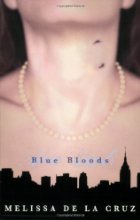
Book Review: Blue Bloods by Melissa de la Cruz (Series, #1)
 Summary:
The students at Duchesne Academy in New York City appear to be your typical bunch of wealthy, elite teenagers. Naturally gorgeous twins Mimi and Jack rule the school. Bliss became part of Mimi’s entourage when her oil wealthy Texas family moved to NYC. Schuyler is part of the crowd of misfits who wear goth clothes instead of the more typical Louis Vuitton. They all gradually discover, however, that the secret to their families’ wealth isn’t just that they came over on the Mayflower. They are Blue Bloods–vampires who retire from their human shells every 100 years or so then come back with the same blood. Their teenage years are vulnerable ones, and someone or something out there is managing to kill some of the young Blue Bloods.
Review:
The vampire lore behind this story is not my style. It is so much not my style that just writing the above summary made me cringe. None of the official summaries of the book reveal much about the vampire lore, so let me tell you just in case it’s not your style either. Blue Bloods is heavily steeped in Christianity. The vampires are fallen angels who are attempting to atone for their rebellion. They face hundreds of years of punishment trapped in human bodies that they must eventually retire then return in new ones. The vampires accomplish this reincarnation by taking some of the blood from the dead vampire and implanting it into a vampire woman’s uterus. It all rings as a bit odd when you have a teenage character who’s never done anything more wrong than sneak into a club be told that she must atone for this rebellion against god that she doesn’t even remember doing hundreds of years ago. It really takes the bite out of vampires and makes them kind of pathetic.
Where the book is strongest is oddly where the vampire thing is on the back burner. Schuyler and Bliss get to model for a jean company, and that scene was actually quite enjoyable to read. If this had been your more typical murder mystery at an elite high school, I think it would have been a much better book.
Some reviewers had a problem with the presence of teenage drinking, drugging, and sex. I actually thought the sex was handled quite well, with teens talking about it a lot but nobody actually managing to do it. That read as very real. The alcohol is kind of a non-factor, since vampires can’t be affected by alcohol. My only confusion with this is if that’s the case, then why are they risking breaking the law to drink? I suppose it seems minor compared to convincing a human to become your familiar so you can feed off them. The drugs are entirely presented in a negative light the few times they are briefly mentioned.
What shocked me, and I can’t believe how infrequently this is mentioned, is that there is incest and the vampires accept it. Gah! There are times when incest is present in a book, and it is handled so that all sides of the issue may be seen–all of the accompanying emotions are delicately handled. Here, the vampires just say that it’s the way it should be and are protective of the siblings. Not much else is said of it, beyond a few teen vampires being grossed out, but it is made clear that their reactions are considered inappropriate by the vampires.
That said, it’s not badly written on a sentence level. It reads naturally, which is probably the only reason I struggled through the cringe-inducing lore. It is essentially Gossip Girl crossed with Vampire Diaries with some incest and Christianity tossed in. If that’s your thing, you will enjoy it. All others should probably pass though.
2.5 out of 5 stars
Source: PaperBackSwap

Book Review: Bug Jack Barron by Norman Spinrad
 Summary:
Jack Barron was a baby Bolshevik hippie in his Berkeley days. He even set up the Social Justice League, which is now the third party competing against the Democrats and Republicans. All those high ideals got set aside with age and the offer of a weekly, vidphone-in program: Bug Jack Barron. He’s happy with the money and the calm embracing of reality, but Benedict Howards of the Freezer Foundation is about to shake it all up.
Benedict Howards is in mad pursuit of one thing–human immortality. He’s cryogenically freezing those who hope that some day the key to immortality may be found. Of course, they have to pay a high price for it, but there’s more to Bennie than meets the eye, and the money for those freezes might not be going to the research they claim to be. Best of all, he has the best bargaining ticket out there–free freezes, and he wants Jack Barron to be his own publicity machine.
Barron doesn’t think he’d ever cave to the likes of Benedict Howards, but when his long lost, baby Bolshevik love, Sara returns to his life, everything changes.
Summary:
Bug Jack Barron has a complex plot that is difficult to summarize and attempts to be a tour de force but that ultimately fell flat for me. It’s the perfect example of a scifi concept that didn’t age well. Published in 1969, the thoughts and ideas of the 1960s are rampant throughout. A large part of the plot revolves around a future where blacks and whites are still segregated by virtue of wealth in America. In fact, an entire piece of the plot revolves around the fact that a black man could never be president of the US. That kind of falls flat when you’re reading the book and your current president is a black man. Spinrad completely mispredicted where race relations would be at in the US in the future, and that soured the rest of the book to me.
Then there’s Sara, Jack’s love. She is the quintessential great woman behind a great man. Without Sara, Jack wouldn’t be great at all. He’d never meet his potential. Yet the relationship is hardly reciprocal. In fact, Sara seems much worse off for being involved with Jack at all. She doesn’t seem to improve or embrace her greater self as a result. I expected much more of Spinrad who wrote A World Between in which he pointed out how much good the two genders can do for each other. It’s not like Spinrad is critical of this woman behind the man set-up either. There’s an entire section where Sara regrets her misunderstanding of Jack’s macho nature as bad and instead embraces his man-nature greed for power as something she could never have. Excuse me, Spinrad, I would like to introduce you to Queen Elizabeth, Marie Antoinette, Madonna, etc… It’s bad enough that some modern cultures are still telling us women that we can only be our greatest when inspiring a great man. I don’t need it in my scifi.
Then there’s the whole immortality issue, which is largely what the book revolves around. I know some readers would find this idea very intriguing and would enjoy seeing how society would deal with it. The thing is, I’ve never been someone who wants to live forever. It all seems very natural that there’s life and death and why on earth would I want to live forever? It seems rather selfish, adolescent, and silly to me. I can understand not wanting to age. Wanting to have a young body throughout your 80 or so years on earth, but never dying? That wouldn’t be a trump card Benedict Howards could use on me, so I have a hard time sympathizing with Jack and Sara.
That said, Spinrad’s writing style is quite enjoyable as before. He writes in semi-run-on sentences that read as the characters’ trains of thought. It’s a great way of showing, not telling. Additionally, I could see other people being able to put aside the completely miscalculated race relations and enjoying the immortality part. It’s not badly written, ignoring the misogynistic Sara story arc, it’s just not my cup of tea.
3 out of 5 stars
Source: PaperBackSwap

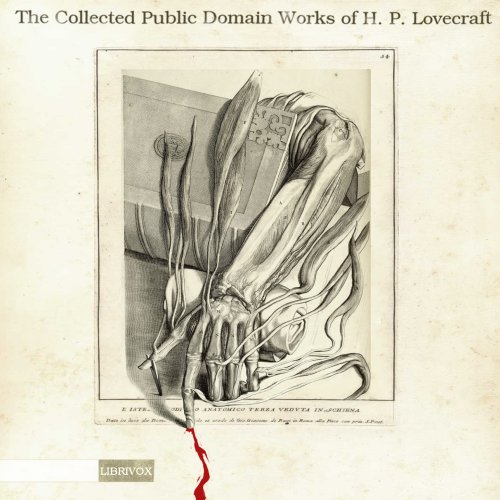
Book Review: The Collected Public Domain Works of H. P. Lovecraft
 Summary:
Lovecraft was an American author of horror living during the late 19th and early 20th centuries. He has a bit of a cult following, largely due to a creature featured in some of his stories known as Cthulu. (I’d link, but your experience will be much more amusing if you google “cthulu”). Some common themes in his horror include eerie things coming from ocean depths, scientific reanimation of corpses, human-like apes, the dreamworld, and ancient myths being fact. This collection includes 24 short stories–The Alchemist, The Beast in the Cave, Beyond the Wall of Sleep, The Cats of Ulthar, Celephais, The Crawling Chaos, Dagon, The Doom that Came to Sarnath, Ex Oblivione, Facts Concerning the Late Arthur Jermyn and His Family, Herbert West: Reanimator, Memory, The Music of Erich Zann, The Nameless City, Nyarlathotep, The Picture in the House, Polaris, A Reminiscence of Dr. Samuel Jackson, The Statement of Randolph Carter, The Street, The Terrible Old Man, The Tomb, The Tree, and The White Ship.
Review:
I decided I needed to actually read some Lovecraft after getting swept up in the Cthulu subculture last December through Cthulumas hosted on Tor.com. So I searched Librivox via the Audible app and found this collection. Unfortunately, there was no Cthulu in it. Also unfortunately, I wasn’t too impressed by most of the stories.
I think the main issue is that a lot of the horror just didn’t age well. Lovecraft’s stories depend largely on the unknown, only a lot of what was unknown in his time is known now. For instance one of his stories focuses around the mystery of the North Star, which isn’t so mysterious anymore. They also depend on unexplored territories on the continents, whereas now it’s space that is unexplored. I can’t get into the character’s mindset of fear when he reads simply as naive and uneducated.
His stories that center around the hypothetical reanimation of the dead are some of the best ones. They read like a mix of zombie and Frankenstein, and it works because we still don’t know what happens after death. Herbert West: Reanimator was one of the only stories to give me the actual chills.
I would be amiss not to mention the racism evident in his stories. Any that feature Africa talk of a pervasive fear of what lies in the depths of the continent and repeatedly mention apes mixing with men. Even if he was unaware that he was harboring racism, these read at the very least as being anti-miscegenation. It’s hard to listen to stories whose horror centers around fear of what people look like as opposed to what they may be capable of doing.
Similarly, he read as being anti-science. Any scientists in his short stories are portrayed as sticking their noses where they don’t belong. Apparently, we can never fathom the universe, so we better not. It’ll hurt us if we try. I found myself rolling my eyes at the sleep stories. They were all so ridiculous when I know doctors and researchers studying sleep. It’s really not this dangerous other-world he presents it to be.
Where Lovecraft is at his strongest is when he veers from his typical themes. My loyal readers probably won’t be surprised at all that one of the most pleasurable reads to me was The Cats of Ulthar, which basically presents animals as sentient and capable as humans.
I can only hope that the Cthulu stories fall more in the category of Herbert West: Reanimator and The Cats of Ulthar. The rest wrought a decided “meh” reaction from me. I’d recommend them only if you have no issue reading horror centering around unknowns that are now known.
2 out of 5 stars
Source: Librivox recording via Audible app for the iTouch and iPhone
 Support my work with a tip or browse my shop for curated book club guides, how to guides, cross-stitch patterns, and more!


This work by Amanda Nevius is licensed under a Creative Commons Attribution-Noncommercial-No Derivative Works 3.0 United States License.
 Opinions of a Wolf