
Archive
Book Review: The Forest of Hands and Teeth by Carrie Ryan (Series, #1)
 Summary:
Mary’s world is tightly controlled by the Sisters and the Guardians. The Sisters show the village how to find favor with God via the yearly and daily rituals. The Guardians check and maintain the fence that keeps the Unconsecrated out. The Sisters says the Unconsecrated came with the Return as a punishment to the people. This is why they must maintain God’s favor. But Mary dreams of the tales of the ocean and tall buildings her mother told her about, and her mother’s mother for generations back. She will need those dreams when her world is turned upside down with a breach of the fence. They’ve happened before, but never like this.
Review:
This is an interesting take on the traditional zombie tale. In lieu of starting with the outbreak or just after the outbreak, Ryan envisions what life would be like for the descendants of the few who’ve managed to survive. Of course the sheer number of zombies in the world means it’s impossible for the few survivors left to kill them all, so they must live with constant vigilance. In the case of Mary’s village, they’ve turned to religion to maintain the level of control required to keep them all safe. This is the strongest portion of the book as it leads to interesting questions. The threat outside the fence is indeed real. Mary’s questions are making it difficult for the Sisters to maintain the control needed and prevent panic in the village. On the other hand, the Sisters aren’t exactly being honest with the population or giving them a happy life. They’re just giving them a life.
Where the action supposedly picks up with the breach of the fence is where the book sort of left me behind. The fact of the matter is, I wound up caring more about the village than Mary, and I don’t think I was supposed to. Where I was supposed to be rooting for Mary, I found myself rooting for the community, the group of survivors. Mary’s individualism rings as starkly selfish to me in light of the very real threat around them. This is odd because generally I’m in favor of people being themselves and not necessarily following the group, but that’s different when a crisis is being faced. I found myself wishing it had read more like Elizabeth Gaskell’s classic Cranford, which is a study of a town and not an individual.
Of course, that’s not the type of book Ryan set out to write. She set out to write a book about a girl in a future where zombies are a fact of life. She writes beautifully, with exquisite sentences that read more like an 18th century novel than a 21st century one. I also am certain that the teenage audience this YA book is aimed at will be rooting for Mary in her quest to find herself and her dreams.
If you are a teen or a teen at heart looking for an adventure tale with a touch of romance, you will enjoy this book. If traditional zombies are what you are after, however, you should look elsewhere.
3.5 out of 5 stars
Source: PaperBackSwap

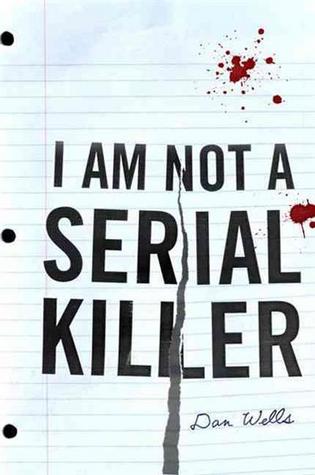
Book Review: I Am Not a Serial Killer by Dan Wells
 Summary:
Fifteen year old John Wayne Cleaver has an odd fascination with the bodies he helps cremate in the family mortuary. He also has difficulty feeling any emotions. He even has been studying serial killers for years. He is not one, however. At least, not yet. His therapist believes John may have Antisocial Personality Disorder, but both he and John hope John can learn to control his illness, an illness John refers to as Mr. Monster. However, when bodies start appearing on the streets of the town gruesomely murdered, John wonders how long he can keep Mr. Monster in check.
Review:
I originally had high expectations for this book. Then I had to wait for it so long that they waned, and I felt that it was probably just going to be a watered down YA version of Dexter. Then I grabbed it for my camping trip because I am insane and love to terrify myself when sleeping in the middle of nowhere in the woods with strange men with hatchets I don’t know a mere campsite away. It didn’t turn out to be a watered down Dexter. It also isn’t terrifying. The best word I can think to describe this book is relatable.
Dan Wells chose to write a YA book about mental illness and couch it with some supernatural features and a premise that will appeal to any teens, not just those struggling with a mental illness themselves. These were both smart moves as it makes I Am Not a Serial Killer more widely appealing. However, he not only chose to depict a mental illness, he chose to depict one of the ones that is the most difficult for healthy people to sympathize with and relate to–antisocial personality disorder. John Cleaver has no empathy, and this baffles those who naturally feel it.
Yet Wells manages to not only depict what makes John scary to those around him, but also how it feels to be John. He simultaneously depicts the scary parts of having a mental illness with the painful parts for the one struggling with it. John makes up rules for himself to try to control his behavior. He has to think things through every time he interacts with people or he will do or say the wrong thing. John is fully aware that he doesn’t fit in, but he wants to. He wants to be healthy and normal, but he also wants to be himself, which at this point in time includes the behavior that is his illness.
Of course, this is a book about a serial killer, and it delivers there. The death scenes hold just the right level of gruesomeness without going over the top. Anyone with a love of the macabre will also enjoy the mortuary scenes, which depict the right combination of science and John’s morbid fascination. There also is a tentatively forming teen dating relationship that is simultaneously sweet and bit nerve-wracking.
I feel I would be amiss not to mention that there is some self-harm in this book. It is very brief and is clearly shown as a part of John’s illness. In fact for the first time in reading about it in any book I can say the author handled it quite well, depicting the self-injurer and his reasons for doing so sympathetically and correctly, but without making it seem like something the reader should copy.
Overall this book delivers the thrills and chills it promises, but does so without demonizing John Cleaver. It depicts what it feels like to have a mental illness in a powerful, relatable manner while still managing to be a fast-paced YA thriller. I highly recommend it to anyone who enjoys YA, books dealing with mental illness, or thrillers.
5 out of 5 stars
Source: PaperBackSwap

Book Review: House of Stairs by William Sleator
 Summary:
Five sixteen year old orphans living in state institutions are called to their respective offices, blindfolded, and dropped off in a building that consists entirely of stairs and landings. There appears to be no way out. The toilet is precariously perched in the middle of a bridge, and they must drink from it as well. To eat they must bow to the whims of a machine with odd voices and flashing lights. It is starting to change them. Will any of them fight it, or will they all give in?
Review:
This book was enthralling from the first scene, featuring Peter awakening on a landing intensely disoriented and frightened. Showing a bunch of teenagers obviously in an experiment opens itself up to caricature and stereotype, but Sleator skillfully weaves depthves and intricacies to them.
The writing is beautiful, smoothly switching viewpoints in various chapters from character to character. Hints are dropped about the outside world, presumably future America, that indicate the teens are from a land ravaged by war and intense morality rules. For instance, their state institutions were segregated by gender. Sleator weaves these tiny details into the story in subtle ways that still manage to paint a clear framework for the type of cultural situation that would allow such an experiment to take place.
It is abundantly clear throughout the book that the teens are facing an inhumane experiment. Yet what is not clear at first is what a beautiful allegory for the dangerous direction society could take this story is. Not in the sense that a group of teens will be forcibly placed in a house of stairs, but that some more powerful person could mold our surroundings to make us do what they want us to do. To remove our most basic humanity. This is what makes for such a powerful story.
It’s also nice that friendship in lieu of romance is central to the plot. Modern day YA often focuses intensely on romance. Personally, my teen years were much more focused on friendship, and I enjoyed seeing that in this YA book. I also like how much this humanizes the animals facing animal testing, and Sleator even dedicates the book to “the rats and pigeons who have already been there.”
House of Stairs, quite simply, beautifully weaves multiple social commentaries into one. It is a fast-paced, engrossing read, and I highly recommend it to everyone.
5 out of 5 stars
Source: PaperBackSwap

Book Review: Feed by M. T. Anderson
 Summary:
Titus is your typical teenager of future America. He lives in a suburb where his parents program the weather. He drives an upcar. He’s got a feed–a microchip in his brain that allows him to chat silently with people, shop, look up anything he wants to know more about, etc… He’s also got a lesion, but a lot of people have those now. He is quite ordinary. But he meets a girl on a trip to the moon who is anything but ordinary. A girl who got the feed late and dares to question it.
Review:
This book has a great concept, essentially exploring what the world would be like if twitter was implanted into our brains. This is rather extraordinary given that twitter didn’t even exist yet when Anderson wrote it. It explores losing our individuality to machines and consumerism. Ceasing to care about important information due to being bombarded by inane information at all hours of the day. I just wish Anderson had taken this concept a different direction.
I immediately connected with Violet, the girl Titus meets on the moon. She’s quirky, is homeschooled, and really is a bit of a nerd who just wants a chance to try out hanging out with the popular kids and doing what they do. Titus is a complete and total asshole to her. I suppose I could forgive him for that if he showed that he learned anything from coming into contact with a person as powerful as Violet, but he doesn’t. He ditches her when she needs him most because she’s making him uncomfortable. He wants to stay in the cocoon of his feed-driven life, and nothing she does or says can change that. He clearly goes from girl to girl, using them up like paper towels or tissues, and then on to the next one. Maybe that was Anderson’s point–that the feed has dehumanized the people who have it–but it made for a less powerful book than if Titus had learned something. Anything.
Similarly some questions just aren’t answered simply because Titus doesn’t care, so we aren’t allowed to know. In particular the lesions are set up as some sinister mystery, but then we never find out why they are occurring. Nobody even really speculates as to why they’re showing up. They’re just there. I seriously doubt there’d be zero speculation over such a phenomenon, even in a future where people are obsessed with consumerism.
Overall, the concept and writing on a sentence level are good, but the story as a whole left me feeling empty and disappointed. There’s telling a bleak story, and then there’s telling a story that’s sympathetic to a jerkwad. This is the latter. If that type of story is something you enjoy, you will enjoy this book. Everyone else should look elsewhere, perhaps to The Hunger Games if you’re looking for a YA dystopia.
3 out of 5 stars
Source: Swaptree

Book Review: Blue Bloods by Melissa de la Cruz (Series, #1)
 Summary:
The students at Duchesne Academy in New York City appear to be your typical bunch of wealthy, elite teenagers. Naturally gorgeous twins Mimi and Jack rule the school. Bliss became part of Mimi’s entourage when her oil wealthy Texas family moved to NYC. Schuyler is part of the crowd of misfits who wear goth clothes instead of the more typical Louis Vuitton. They all gradually discover, however, that the secret to their families’ wealth isn’t just that they came over on the Mayflower. They are Blue Bloods–vampires who retire from their human shells every 100 years or so then come back with the same blood. Their teenage years are vulnerable ones, and someone or something out there is managing to kill some of the young Blue Bloods.
Review:
The vampire lore behind this story is not my style. It is so much not my style that just writing the above summary made me cringe. None of the official summaries of the book reveal much about the vampire lore, so let me tell you just in case it’s not your style either. Blue Bloods is heavily steeped in Christianity. The vampires are fallen angels who are attempting to atone for their rebellion. They face hundreds of years of punishment trapped in human bodies that they must eventually retire then return in new ones. The vampires accomplish this reincarnation by taking some of the blood from the dead vampire and implanting it into a vampire woman’s uterus. It all rings as a bit odd when you have a teenage character who’s never done anything more wrong than sneak into a club be told that she must atone for this rebellion against god that she doesn’t even remember doing hundreds of years ago. It really takes the bite out of vampires and makes them kind of pathetic.
Where the book is strongest is oddly where the vampire thing is on the back burner. Schuyler and Bliss get to model for a jean company, and that scene was actually quite enjoyable to read. If this had been your more typical murder mystery at an elite high school, I think it would have been a much better book.
Some reviewers had a problem with the presence of teenage drinking, drugging, and sex. I actually thought the sex was handled quite well, with teens talking about it a lot but nobody actually managing to do it. That read as very real. The alcohol is kind of a non-factor, since vampires can’t be affected by alcohol. My only confusion with this is if that’s the case, then why are they risking breaking the law to drink? I suppose it seems minor compared to convincing a human to become your familiar so you can feed off them. The drugs are entirely presented in a negative light the few times they are briefly mentioned.
What shocked me, and I can’t believe how infrequently this is mentioned, is that there is incest and the vampires accept it. Gah! There are times when incest is present in a book, and it is handled so that all sides of the issue may be seen–all of the accompanying emotions are delicately handled. Here, the vampires just say that it’s the way it should be and are protective of the siblings. Not much else is said of it, beyond a few teen vampires being grossed out, but it is made clear that their reactions are considered inappropriate by the vampires.
That said, it’s not badly written on a sentence level. It reads naturally, which is probably the only reason I struggled through the cringe-inducing lore. It is essentially Gossip Girl crossed with Vampire Diaries with some incest and Christianity tossed in. If that’s your thing, you will enjoy it. All others should probably pass though.
2.5 out of 5 stars
Source: PaperBackSwap

Book Review: Viola in Reel Life by Adriana Trigiani
 Summary:
Viola loves her life in Brooklyn with her quirky filmmaker parents. Unfortunately, they need to go to Afghanistan to make a documentary and have dumped her in an Indiana boarding school for a year. Can Viola see past her homesickness and embrace what Prefect Academy has to offer or will she be Queen Snark for a year?
Review:
I came at this book simultaneously expecting to like it and not like it. I expected to like it, because when I was in the YA age group, I loved boarding school books, and I’ve read Trigiani’s Big Stone Gap trilogy and really liked her writing. On the other hand, reviews online stated they disliked it due to a negative portrayal of Indiana and what they felt was a lack of understanding of teenagers. Well, I liked Viola in Reel Life, and I would like to offer up rebuttals to both opinions.
First, the book is written from Viola’s perspective. She’s a fourteen year old who has spent her entire life in Brooklyn, and she didn’t want to go to boarding school. Her negative comments about Indiana are to be expected in this case. She’s a New Yorker in the country for the first time. Of course she’s going to think the fashion stinks. Of course she’s going to miss the noise of the city. Personally, I found Indiana and the folks in it to be portrayed in a positive light, because despite her anger and snark, they persist at comforting her homesickness and winning her over. She comes to like aspects of Indiana just as much as she likes aspects of Brooklyn. That is a key part of her growing up that is the main storyline. She has to learn to make home wherever she is and be independent. That point would not have come across strongly if she loved everything about Indiana from the moment she arrived.
Now to those who felt it was too young for teenagers, I think you’re starting to fall for the media’s portrayal of all teens as growing up very fast. They’re not all having sex, doing drugs, and drinking. I wasn’t that type of teen, and even teens who are can appreciate that not everyone is living a Gossip Girl life. It is a clean book, and I liked that because it left room for me to focus on Viola growing as a person. The kids are kind of innocent, and Viola acknowledges that she’s led a protected life so far. On the other hand, Viola and her friends have to deal with step-parents, new siblings, serious family illness, money problems, and more. Their problems are middle class type problems, but what’s wrong with that? Not everyone grows up abused or poor or filthy rich or debaucherous. The overall messages are excellent ones for teen girls to hear–be loyal to your friends, grow up and help your parents, don’t choose a boy over yourself, do your best and be gracious. Plus the storyline supporting these messages is fun and interesting to read.
My only complaint with the book is the minor sub-plot of a ghost. I don’t think it really fit in very well with the overall world and feel of the book. I would have much preferred that Viola find an old diary or something that made her come to understand Prefect Academy better. However, it wasn’t in the book enough to make me dislike the story.
Overall, it’s a fun read, and I recommend it if you enjoy YA lit or stories set in boarding schools.
4 out of 5 stars
Source: Won on Reading Sarah’s blog. Thanks!

Book Review: Leviathan By Scott Westerfeld
Thanks to my friend Margaret for lending me her ARC of Leviathan! I’ve enjoyed Scott Westerfeld’s other YA books, and my recent surge in curiosity about steampunk (due to love of the fashion) made me extra-curious about this new YA steampunk book.
 Summary:
World War I takes on a whole new look when the Allied powers function utilizing machine-like, genetically engineered animals, and the Axis powers use tanks that walk using steam power. In this alternate history reside Deryn and Alek. Deryn is a teenaged Scottish girl who pretends to be a boy so she can join the air service working aboard the Leviathan–an ecosystem that resembles a zeppelin. Alek as the son of the assassinated Austrian archduke must go into hiding in Switzerland, escaping with a few loyal servants and a walker–one of the walking tanks. Their worlds end up colliding, as worlds tend to do in a world war.
Review:
This book should come with a warning. “By YA we mean for middle schoolers younger than the characters, not late teens like Westerfeld’s other books.” Although this is technically YA, it reads like a children’s book. Some would say the lovely illustrations throughout made it feel that way, but I don’t think that’s the case. Some adult books are full of wonderful illustrations, yet we still know they are meant for adults. I really think it’s the storyline and the writing that came off so young this time. Maybe Westerfeld wanted to write younger, but his publisher should have notified his fans that this is a book meant for younger people.
Westerfeld does an excellent job of explaining the Darwinist world in a subtle way to the reader. I have difficulty even explaining the flying ecosystems to people, yet I understood them perfectly in the book. Similarly, I had no issue picturing the walkers, even though I couldn’t fathom why anyone would want to build such a thing. I also liked Deryn. She is a well-rounded character–with flaws, but still someone a young audience can look up to. Similarly, the most intelligent person on the airship is a woman, which is a feature I highly appreciated.
On the other hand, I found Alek to be a completely confusing and unsympathetic character. At first I thought he was about nine years old, then overnight he seems to be fifteen. Yes, I know his parents died, but I don’t think a fifteen year old would be playing with toy soldiers the night prior, regardless. Similarly, Alek repeatedly makes stupid decisions. I know characters sometimes make them, but he makes them so often that I just want to slap him upside the head. There is very little that is redeemable about Alek. By the time he makes a wise decision, I was so sick of him that it failed to raise my opinion of him at all.
Similarly, I’m bothered that all of the servants loyal to Alek are men. Why couldn’t a single woman be loyal to him? Deryn’s world consists of both powerful men and women, yet Alek’s is entirely male except for his low-born mother. I know this is early 20th century, but if you’re going alternate history, why not empower a few more women along the way?
Even though there is steam power and Victorian clothing in an alternate history, Leviathan didn’t feel very steampunky to me because, well, the setting is Victorian! Maybe I’m too into steampunk fashion, but I would have been far more impressed if all these things were true in an alternate history of the Vietnam War, for instance, or even World War II. I think World War I is just far too close to the actual Victorian age to truly feel like an alternate, steampunk world. I get enjoying books written in the Victorian era from a steampunk viewpoint, but current authors could be far more creative when utilizing this genre.
Finally, I have to say, I hate the ending! I know Westerfeld is a huge fan of writing trilogies, but this ending is far too abrupt. I was left going “what the hell?” instead of feeling pleasantly teased about the second book in the series.
Leviathan isn’t a bad book. It isn’t painful to read, and the storyline is enjoyable. It’s kind of like a mash-up of Jurassic Park, 20,000 Leagues Under the Sea, and your typical 21st century YA novel. Only minus all the blood, guts, and gore. Middle schoolers with a taste for the whacky will enjoy it. Older teens and adults should choose more sophisticated steampunk–perhaps even the classic 20,000 Leagues Under the Sea.
3 out of 5 stars
Source: Borrowed ARC from a friend

Book Review: Pretties By Scott Westerfeld (Series, #2)
 Summary:
Tally Youngblood lives in a dystopian society where everyone is given an operation at the age of 16 that makes them perfectly pretty. What is not known by the general population is that during the operation lesions are put on the brain to make people dumbed down and easy to control. A few people are selected to be “Specials.” They don’t have the lesions and control the rest of the society. Some people resist the operation and the control and live in the wilderness, calling themselves “Smokies.”
After being captured from The Smoke, Tally has been made pretty. She has mostly forgotten her experiences and has a new boyfriend, Zane. They belong to a New Pretty clique called The Crims. The book follows what occurs after teens from the New Smoke bring Tally pills created by adults in the New Smoke that are supposed to cure the brain lesions. She and Zane share them and begin plotting their resistance of the regime and escape from New Pretty Town.
Review:
I am quite torn about this book.
On the one hand, I like that Westerfeld is clearly gradually moving our traditional hero, Tally, toward turning into one of the bad guys in this society. It’s a move not commonly seen in YA lit, and I think it’s a bold thing to do. It could lead teens to question what makes people behave badly versus what makes people behave well. It’s a bit reminiscent to me of the key question in Wicked: Are people born bad or do circumstances make them that way?
On the other hand, I am profoundly disturbed at how Westerfeld presents Shay, Tally’s one-time best friend and the one who came up with the plan to escape to The Smoke in the first book, Uglies. Tally followed Shay there, won over the guy Shay had her eye on, and betrayed Shay to the Specials, causing her to be turned Pretty. Oh, and in Pretties she completely leaves Shay out of the whole pills-curing-people-and-escaping-to-New-Smoke-thing.
Since Tally is leaving Shay out, Shay is left to her own devices. These are delineated in the chapter titled “The Cutters.” In this chapter Tally and Zane discover that Shay has discovered a way to temporarily clear the fuzziness in her head caused by the operation. She is ceremonially cutting herself and has some followers who are now doing the same. They call their clique “The Cutters.”
Self-injury is a real element of multiple mental illnesses. People suffering from depression, post-traumatic stress disorder, dissociative identity disorder, and borderline personality disorder will display this symptom. However, it is most well-known and highly associated with Borderline Personality Disorder (BPD), which is already stigmatized and misunderstood by the media and general population.
Westerfeld’s presentation of self-injury in his storyline reinforces multiple stereotypes regarding it. First is the idea that self-injurers only cut. This is not the case. Burning, head banging, hitting things until your knuckles bleed, picking at and peeling skin, and pulling out hair are just some of the multiple methods people used. Cutting, burning, and head banging are the most common. Thus, showing all of The Cutters using the exact same self-injury method to clear their heads is misleading.
Second, Shay and the other Cutters proudly display their scars and make a show of the bleeding. Self-injurers must face the prejudice that they do this for attention, that they do it in places people will notice to garner that attention. For the vast majority of self-injurers this is not the case. They do it in places that are easy to hide, such as upper thighs, or purposefully wear long sleeves to hide the marks. They are usually profoundly ashamed of what they did, or at least terrified that people will find out. It would be much more accurate to portray Shay cutting herself in a private room and have Tally accidentally see it, than to have the large ceremony in the middle of a park that is portrayed in the book.
Third, while it is true that some self-injurers say their mind feels clearer from injuring, others say it helps them shut down emotions they don’t want to feel. It’s perfectly plausible for Shay to be in the former group, but it seems to me that at least one of her followers would be in the latter group.
My real issue though comes from the fact that Tally seeing Shay self-injuring is the final decisive straw to her. She emphatically announces that Shay is crazy, and Zane agrees with her. No one dissents from this viewpoint. Shay’s scars are the markers that she’s gone off her rocker; there’s no turning back. To top it all off, the cutting is what makes the evil Specials decide that Shay and her group should be Specials themselves, thus associating self-injury not only with “being crazy” but also with being evil. Additionally, the ceremony in the middle of the woods is clearly connotated as being primitive.
Can you imagine what reading this portrayal would do to a teen struggling with self-injury? She is portrayed as purely crazy, evil, and primitive. Shay is a lost cause in the book, and clearly the teen must be too. So little sympathy is given to Shay. Not even a spark of goodness is visible in her.
I’m not the type to say that if you display thus-and-such group as evil you’re saying they’re all evil. I think it’s just as discriminatory to always portray a certain group as good. However, the portrayal of Shay turns so one-dimensional with the on-set of her self-injury. There is zero depth to her character, zero exploration of her as a conflicted person. She could have had rich character development. Indeed, the entire group of “Cutters” could have been a wonderful opportunity for Westerfeld to explore more depth in his story-telling.
Yet he went the easy, sensationalist route and portrayed an evil, crazy, primitive female slashing her arms while reciting a spell, letting the blood drip down in the rain.
An incredible image to visualize? Yes. A deep, accurate one? No.
2.5 out of 5 stars
Source: Library
Previous Books in Series:
Uglies

Book Review: The Hunger Games by Suzanne Collins
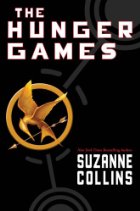
I’m going to start to attempt to feature a review of a book, videogame, or movie once a month. Be warned there may be spoilers. Here’s the first!
Summary:
A dystopian novel set in a future on the North American continent where the USA used to be. Land mass is significantly less due to global warming, and a new nation has been in place for quite some time called Panem. It consists of 12 districts and the capitol. Once a year each district must send one adolescent boy and one adolescent girl, chosen by a lottery, to the capitol to participate in The Hunger Games. The Hunger Games is a reality show that takes place in an environmental dome, each year the environment is different. The adolescents must fight until only one remains alive. The book focuses on a girl, Katniss, who ends up being the girl token from District 12.
Review:
I absolutely loved this book. I read it in one day, as I could not put it down. While I love reading, this type of all-engrossing engagement with a book has not happened for me in a long time.
First of all, I love the fact that the hero of the novel is female. Far too much literature out there features a male main character, and most of the books featuring female main characters are those gushy girly-girl books. They may be a fun quick read, but they don’t have any meat. This isn’t true of The Hunger Games. Katniss needs to be smart and strong in her struggle to stay alive, not only during The Games, but before even entering them. She is the sole provider for her mother and sister. Here is a strong female character, but simultaneously Collins does not make an issue of the fact that she is female. Since it is a first-person narrative, you don’t even realize her gender until around three pages in. Some reviewers *cough* male ones *cough* have complained that Katniss is cold, unfeeling, and not feminine. These complaints wouldn’t be made if she was a male character in the exact same situation behaving the exact same way. Katniss does have feelings, just as people of both genders do, but she is in a tough situation and must make tough choices. It’s wonderful to watch her struggle to make the right ones.
I also like that Collins took something we use as entertainment, reality tv, and shows how easily it could come to be distorted and used as a horrifying tool against the people. Dystopian literature is strongest when it takes something from the present and shows a plausible way it could go horribly awry.
Finally, Collins’ writing is beautiful. The conversations flow easily, the action sequences are vividly depicted, and secondary characters are quickly fleshed-out as complete people.
My only complaint is a major spoiler, as it has to do with the end of the book, so I will just let it be known that I am on Team Peeta and this is one decision of Katniss’s that makes very little sense to me.
5 out of 5 stars
Source: Library

 Support my work with a tip or browse my shop for curated book club guides, how to guides, cross-stitch patterns, and more!


This work by Amanda Nevius is licensed under a Creative Commons Attribution-Noncommercial-No Derivative Works 3.0 United States License.
 Opinions of a Wolf