
Archive
Book Review: God Bless You, Mr. Rosewater by Kurt Vonnegut

Summary:
A satire on free enterprise, money, and capitalism in America told by examining the fictional Rosewaters–an uber-wealthy American family whose ancestor acquired his wealth by essentially profiteering during the Civil War. The current Rosewater fights in WWII and returns with two crazy ideas. First, that everyone deserves to be equally happy. Second, that people who inherited wealth did nothing to deserve it. He responds to this conundrum of conscience by returning to his ancestor’s hometown and using the Rosewater Foundation to help the “useless poor.” In the meantime, a lawyer by the name of Mushari decides to attempt to prove that Mr. Rosewater is insane, and the foundation money should be handed off to his cousin, currently a suicidal, middle-class insurance man.
Review:
How to review Vonnegut? Upheld as the epitome of 20th century American writing. He is certainly prolific, and some of his books absolutely deserve the high praise (Slaughterhouse-Five
I think part of the problem stems from the fact that the first third of the book is focused on Eliot Rosewater, the next on his cousin, and the last on Eliot again. Just as I was getting into Eliot’s story, it switched to his cousin. Then when I was getting into his cousin’s story, it switched back to Eliot. To top it all off, the ending left me with little to no resolution on either one. Maybe Vonnegut’s point is that capitalism either makes you crazy or depressed with no way out? I’m not sure.
That’s not to say that this wasn’t a fun read, though. Vonnegut crafts the mid-western town Eliot lives in and the Rhodes Island seacoast town his cousin lives in with delicious detail. What is interesting about both are of course the people in the towns surrounding the main characters, and not the main characters themselves. In particular the Rhodes Island town is full of surprisingly well-rounded secondary characters from the cousin’s wife who’s experimenting in a lesbian relationship, to the local fisherman and his sons, to the local restaurant owner who is intensely fabulous (yes, the gay kind of fabulous. There’s quite a bit of LGBTQIA+ in this book). I was so interested in this town. This was a town that actually demonstrated the problems innate in some people having too much money while others don’t have enough. This was so much more interesting than Rosewater’s sojourn in Indiana. But then! Just when I was really getting into it and thinking this book might approach Slaughterhouse-Five
Much more interesting than the heavy-handed money message was the much more subtle one on the impact of war. Mr. Rosewater’s sanity issues go back to WWII. I won’t tell you what happened, because the reveal is quite powerful. Suffice to say, Vonnegut clearly understood the impact WWII had on an entire generation and clearly thought about the impact of war on humanity in general. In this way, this book is quite like Slaughterhouse-Five
Overall, if you’re a Vonnegut enthusiast, enjoy reading for setting and character studies, and don’t mind a message that’s a bit heavy-handed, you will enjoy this book. Folks just looking for a feel of what makes Vonnegut held in such high esteem should stick to Slaughterhouse-Five
If you found this review helpful, please consider tipping me on ko-fi, checking out my digital items available in my ko-fi shop, buying one of my publications, or using one of my referral/coupon codes. Thank you for your support!
3.5 out of 5
Length: 190 pages – average but on the shorter side
Source: PaperBackSwap
Buy It (Amazon or Bookshop.org)
Book Review: Beowulf by Anonymous/Unknown
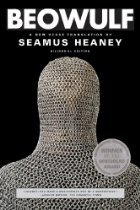 Summary:
This classic, epic poem tells the story of the life of Beowulf, a Geat warrior. In his youth, Beowulf assists the Danes who are being terrorized by a monster named Grendel. He defeats Grendel and Grendel’s mother single-handedly in hand to hand combat. When the Geatish king dies, Beowulf acts as guardian of the kingdom while the prince grows up. All is well until a dragon starts to terrorize the land.
Review:
Having read The Odyssey, The Iliad, and The Aeneid and liking them all quite well (in spite of the fact that The Aeneid is a Roman rip-off of the Greek epics) I was expecting something somewhat different from Beowulf than what I got. Although the adventures in these epics generally center around one or two characters, they are also the tales of the history of an entire people. Since Beowulf conducts pretty much all of his battles on his own, I don’t really get that vibe from Beowulf. It also is odd to me that these people seem to have a real talent for pissing off monsters buried deep in the Earth. Whereas the other epic poems are about battles between nations and the impact that has on individuals, this is really just about some guy who goes around killing monsters that people have managed to royally piss off. It’s kind of like reading a videogame in which every level consists of one monstrous boss.
Maybe this whole difference in tone is due to the fact that this pagan history is being told by a Christian narrator, whereas the other epics are told by pagan narrators. There’s definitely a vibe of “oh those silly old pagans” to Beowulf, which makes it rather hard to relate to the characters.
On the other hand, just as in the other classic, epic poems, the language is beautiful. Since I listened to this as an audiobook, I got to really listen to it. Hearing epic poetry read aloud is almost always better than reading it, as the oral tradition is where they came from. Bloody scenes manage to come across as exquisite due purely to the language being used.
If you enjoy epic poetry, you’ll definitely enjoy Beowulf. However, if you’re new to epic poems, I’d recommend you start with The Odyssey instead.
3 out of 5 stars
Length: 245 pages – average but on the shorter side
Source: Librivox recording via Audiobooks app for the iTouch
Buy It (Amazon or Bookshop.org)
If you found this review helpful, please consider tipping me on ko-fi, checking out my digital items available in my ko-fi shop, buying one of my publications, or using one of my referral/coupon codes. Thank you for your support!
 Support my work with a tip or browse my shop for curated book club guides, how to guides, cross-stitch patterns, and more!

This work by Amanda Nevius is licensed under a Creative Commons Attribution-Noncommercial-No Derivative Works 3.0 United States License.

