
Archive
Book Review: Witchcraft for Wayward Girls by Grady Hendrix
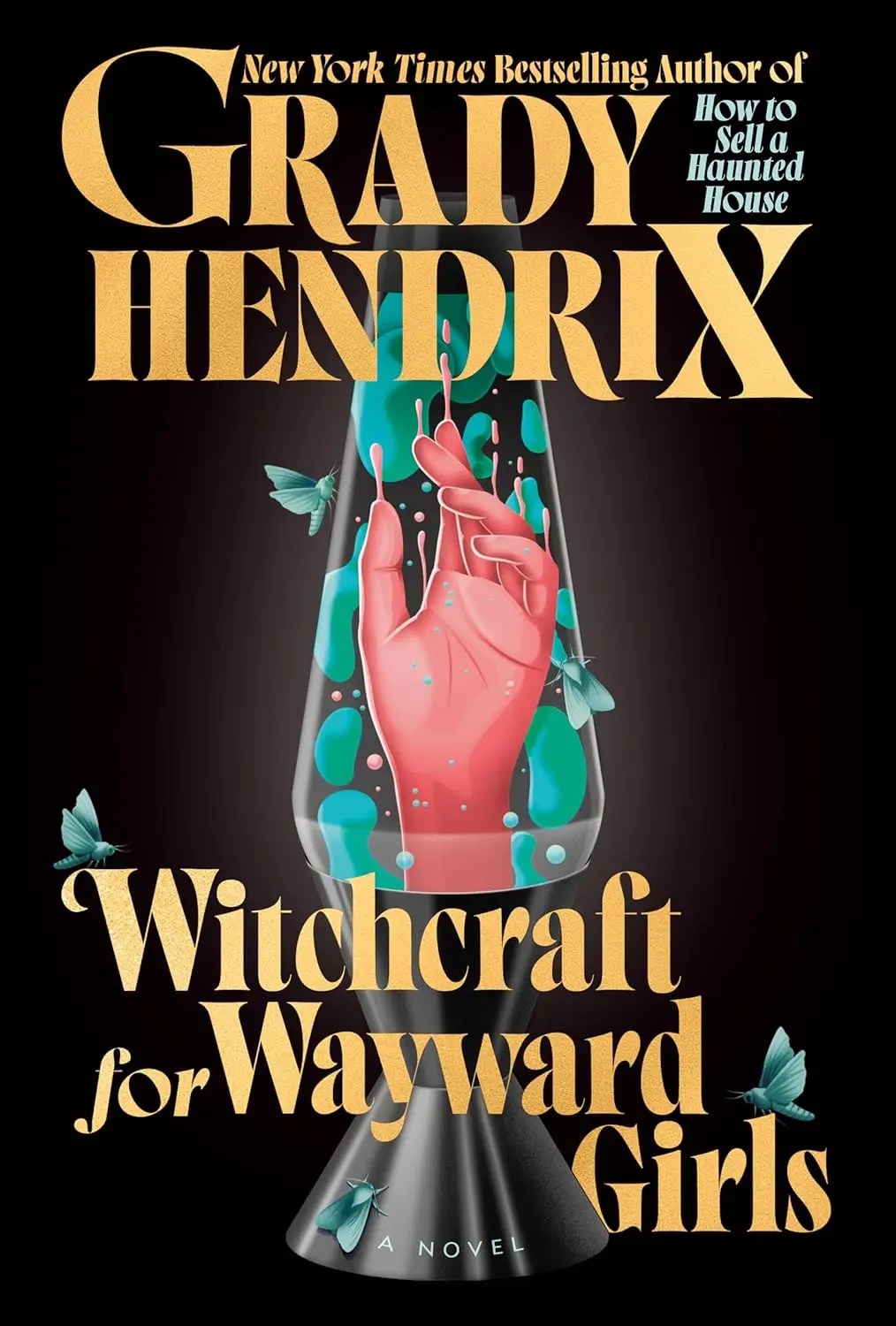
A chilling blend of historical fiction and supernatural horror, this novel explores what happens when pregnant teenage girls—hidden away in a 1970s home for wayward girls—discover the dark power of witchcraft.
Summary:
They call them wayward girls. Loose girls. Girls who grew up too fast. And they’re sent to the Wellwood Home in St. Augustine, Florida, where unwed mothers are hidden by their families to have their babies in secret, give them up for adoption, and most important of all, to forget any of it ever happened.
Fifteen-year-old Fern arrives at the home in the sweltering summer of 1970, pregnant, terrified and alone. Under the watchful eye of the stern Miss Wellwood, she meets a dozen other girls in the same predicament. There’s Rose, a hippie who insists she’s going to find a way to keep her baby and escape to a commune. And Zinnia, a budding musician who knows she’s going to go home and marry her baby’s father. And Holly, a wisp of a girl, barely fourteen, mute and pregnant by no-one-knows-who.
Everything the girls eat, every moment of their waking day, and everything they’re allowed to talk about is strictly controlled by adults who claim they know what’s best for them. Then Fern meets a librarian who gives her an occult book about witchcraft, and power is in the hands of the girls for the first time in their lives. But power can destroy as easily as it creates, and it’s never given freely. There’s always a price to be paid…and it’s usually paid in blood.
Review:
I had previously read Grady Hendrix’s My Best Friend’s Exorcism and remembered liking it more than I actually did. When I revisited my review, I realized I had enjoyed the concept far more than the execution—and unfortunately, that’s exactly how I feel about this book as well.
One thing I didn’t realize before picking this up is that Hendrix is a male author. I read My Best Friend’s Exorcism digitally, so it wasn’t until I saw the author photo on my library copy that it became obvious. Now, that’s not to say men can’t or shouldn’t write about women’s issues—but in my experience, if a book is expressly about women’s experiences (such as pregnancy and abortion), I tend to dislike it when it’s written by a man. Hendrix acknowledges this in a note, explaining that his inspiration came from a family member’s experience as a wayward girl, and I appreciate the personal connection as well as the research he put in. That said, I still struggled with the execution. In retrospect, this also explains issues I had with My Best Friend’s Exorcism—especially the queer-baiting between the two best friends. The way their relationship was written didn’t quite reflect how best girlfriends interact. I now wonder if Hendrix was inserting subtext without realizing it. But I digress—back to this book.
This is a long book, and it takes quite a while before the supernatural horror elements appear. When they do, they feel sporadic—as if the book can’t quite decide whether it wants to be historical fiction or horror. According to the author’s note, an earlier version was pure historical fiction, and it shows. The witchcraft elements feel both tacked-on and underwhelming, lacking the impact they seem to be aiming for. The spellcasting scenes, in particular, drag on too long—the book repeatedly emphasizes how rituals are tedious, repetitive, and boring, and then actually makes the reader sit through them in full dialogue.
The novel also struggles with whether the witches are heroes or villains. At first, they seem to empower the girls in a feminist, girl-power way, but later, they’re positioned as the main threat. I can see the poetic logic in showing that these girls had no real options, but at the same time, a novel like this needs a stronger thematic core—a sense of hope, justice, or at least a clear vision for a better future. On the plus side, I never knew what would happen next or how it would wrap up. Even when I felt frustrated, I kept reading simply because I needed to know how it all ended.
While the book does include a Black teen girl at the home, the handling of race and racism felt superficial at best. The only acknowledgment of racism in 1970s Florida is a scene where the home’s director initially wants to separate the Black girl from the others, only for a hippie character to protest and swap rooms with her. That’s it. This felt wildly unrealistic for the time period.
Beyond this, there are three other Black characters: the cook, the maid (her sister), and a driver. While these are historically accurate roles, the cook is a blatant magical negro trope, complete with a sassy personality and a role that exists entirely to serve and clean up after the white girls. I cringed. A lot. The white characters take advantage of her kindness without any acknowledgment of how their actions impact her life. I also disliked how Black characters’ skin tones were described.
Readers should be aware that this book includes:
- Graphic descriptions of self-injury related to spellcasting.
- Traumatic childbirth.
- Forced institutionalization & adoption.
- Emotional abuse.
- Mentions of CSA & child abuse (off-page).
- A spellcasting scene with explicit Christian blasphemy. (Expected for witches, but I do think it could have achieved the same effect without spelling out the blasphemy.)
Ultimately, this is historical fiction with horror elements rather than a true horror novel. It would have benefited from stronger thematic direction and a more nuanced approach to diversity, avoiding the Magical Negro trope. The book understands that these wayward homes were a problem, but it doesn’t seem to take a stance on what should have been done differently. It sends mixed messages about abortion, single teen motherhood, and autonomy—leaving it feeling murky rather than impactful. Recommended for readers who enjoy historical fiction with a touch of horror—and who don’t mind waiting for the horror to arrive. For those interested in the real history behind these homes, The Girls Who Went Away is a must-read.
If you found this review helpful, please consider tipping me on ko-fi, checking out my digital items available in my ko-fi shop, buying one of my publications, using one of my referral/coupon codes, or signing up for my free microfiction monthly newsletter. Thank you for your support!
3 out of 5 stars
Length: 482 pages – chunkster
Source: Library
Buy It (Amazon or Bookshop.org)
Friday Fun! (What’s Important to Me)
Hello my lovely readers! I’ve been spending a lot of time thinking the last few months about what really matters to me. I guess you’d say what values I hold dear. I didn’t just stick with the ones I was raised with. I’ve done a lot of research and soul-searching to figure out what’s important to me. That’s what makes me stick so strongly to my guns on things I truly believe in. The more time that has passed since I’ve gotten back on my feet from the awfulness that was winter, the more I realize that what it all boils down to, for me, is that I haven’t lost hope in the world. I have hope that we can change the world. I have hope we can make it a better place. I have hope we can fix the trajectories of previous generations’ bad decisions. I have hope that the cycles of violence, grief, and pain can stop. We only have to want it. I firmly believe that Gandhi was right when he said “Be the change you wish to see in the world.” That is at the core of my belief system. I don’t have faith in a god or spirits to fix things. I don’t have faith in government to fix things. But I do have faith in myself. I have faith that I can change for the better. The cycles of violence and pain stop with me. That basic philosophy extends out into everything else I do, from my firm belief in vegetarianism (that is gradually moving toward veganism) to my commitment to someday adopt at least one child. And I just can’t be around negative people anymore. I can’t be close to people who are willing to just give up. Humanity didn’t struggle and evolve so much to just quit evolving. It’s just that maybe the next step of evolution has more to do with our minds and our behaviors than how our bodies work.
Namaste, yo.
Adoptionversary!
One year ago today, I picked up my kitty, Ayla, from the MSPCA. Two days earlier, we chose each other. I was looking around, trying to decide on an adult cat. Ayla was cute and timid. She seemed sweet, but a bit overwhelmed. I was trying to decide between her and another cat. I opened her cage, and she timidly stuck her head forward and licked my hand. My heart melted. She’d chosen me. Who could refuse that?

When I first brought her home. She was so tiny!
Although the first couple of days were interesting getting to know each other, she’s quickly become my furry best friend. Ayla keeps me company at night. She meows excitedly at the door when she hears me getting home. She plays with me. When I got the stomach flu, she put her paws up on the edge of the toilet and licked me while I was puking. She snuggles me and purrs. She’s the perfect, sweet, snuggly kitty-cat match for me, and I’m so glad we found each other.
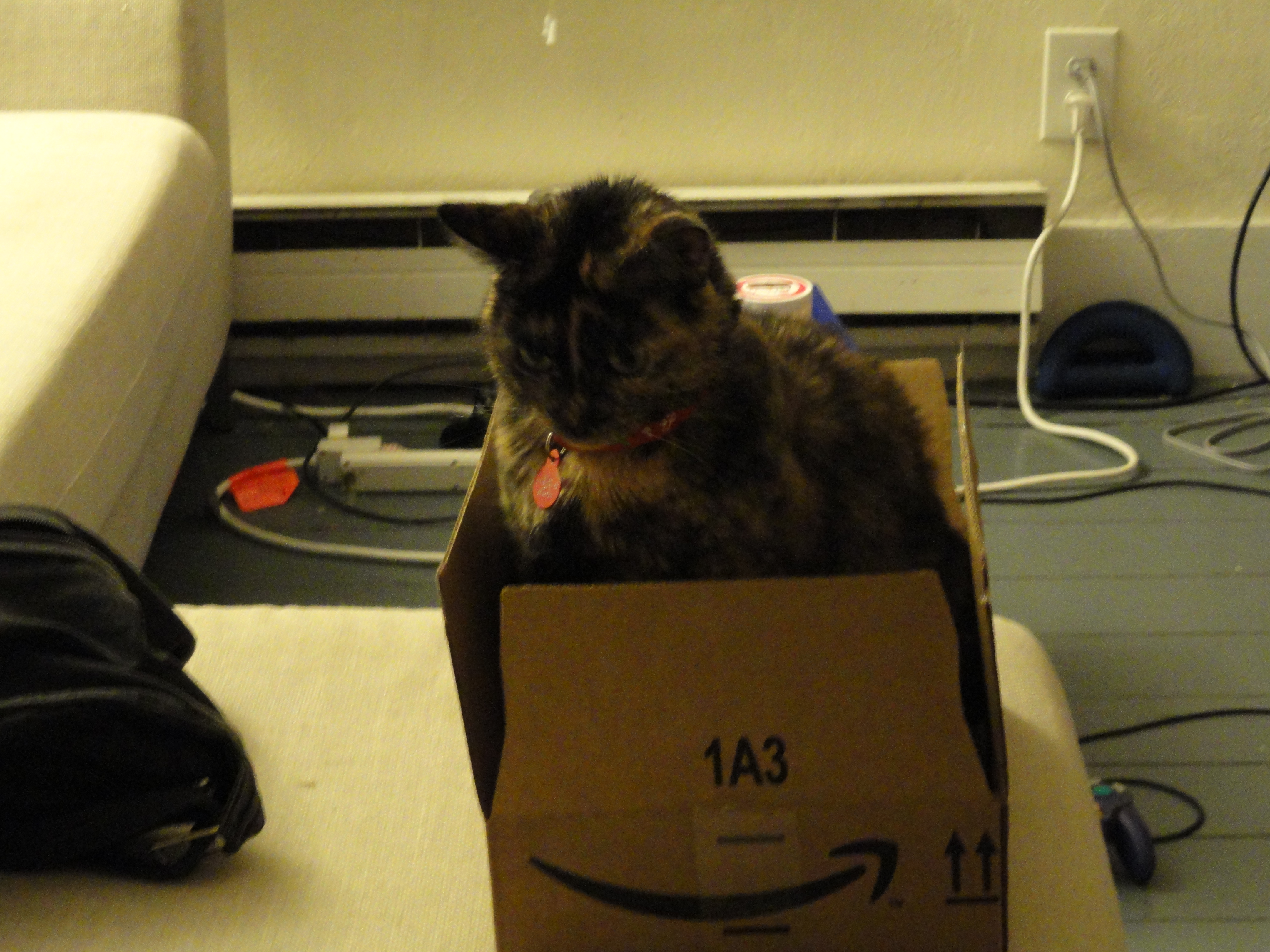
Ayla now. She loves to steal my boxes.
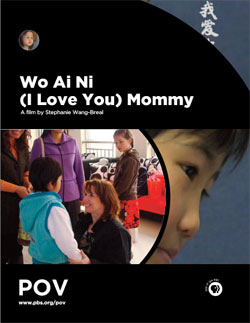
Movie Review: Wo Ai Ni (I Love You) Mommy (2010)
 Summary:
This documentary follows the adoption of Fang Sui Yong, an 8 year old Chinese girl, by the Sadowsky’s, a Jewish family from Long Island. The filmmaker seeks to highlight the particular issues faced when adopting older children internationally.
Review:
This is one of those films that shows how difficult life can be, and that sometimes there is no good choice. There’s only the iffy choice that’s a bit better than the alternative. Sui Yong (who now goes by “Faith,” so I”ll call her that for the rest of the review) didn’t want to leave China. She was quite happy living with her foster family, and had never seen a white person before. This is all the film tells us at first, so you immediately wonder, why can’t Faith stay with the foster family? It turns out that foster families can’t adopt the children they’re caring for in China, and it is unlikely Faith would have stayed with them for her whole childhood. Additionally, Faith is special needs with a club foot and dropped wrists. Her foster parents state that she would face great difficulty in China, being treated as an outcast. Her foster parents want her to be adopted. They see that her future in China is very bleak.
That doesn’t mean that her transition to the US went perfectly, of course. The culture shock Faith faces is severe, even if just looking at going from hearing Mandarin and Cantonese to hearing English all the time. Donna Sadowsky is obviously a tough love type mom, believing that being firm will be the fastest way to help Faith acclimate. Personally I believe she was a bit too tough. Some of the learning could have been made into a bit more of a game. More understanding could have been shown for her special needs. But I only saw a brief film of two years of the time they spent together. It’s almost impossible to tell Faith’s personality from that much film. Maybe they tried taking it a bit easier on her, and she slacked off too much. Maybe the doctors told them Faith could do certain things that it turned out she couldn’t. It’s hard to tell.
An interesting element of the film is the fact that the filmmaker, a one-woman team, speaks Mandarin, and so translates sometimes for the family. This of course means that she has a direct impact on the story she’s documenting. It’s quite interesting to watch and to consider how much documenting a story impacts it.
Overall, this is a very interesting documentary. Many people are hesitant to adopt older children. This film shows that it can be done, as well as the great need for families for older and special needs children internationally. It brings up interesting questions regarding international and transracial adoption, as well as demonstrating how quickly the American consumer culture impacts children. I highly recommend it to anyone with an interest in international adoption or the issues related to it.
4 out of 5 stars
Source: PBS website
Book Review: Mommie Dearest by Christina Crawford
 Summary:
In the early days of Hollywood, Joan Crawford became one of the first celebrities to adopt children. From the outside, it looked like her children had it all–presents, inherent fame, an apparently adoring mother. However, in Christina’s tell-all memoir, she reveals the truth behind the image. A mother obsessed with cleanliness and rigid rules. A mother who demanded her children worship her like her fans did in order to receive her love. A mother so desperate to cling to her days of fame that she attempted to beat down any glimmer of success in her children. A mother who Christina still desperately loved to the bitter end.
Review:
This memoir is a must read for anyone who thinks that having money and being a celebrity automatically makes for a good parent. Joan Crawford expected her four adopted children to be exactly what she wanted them to be instead of loving them for their uniqueness and human imperfections. Christina’s situation gradually worsens as she becomes older and starts to show glimmers of being her own person. The scenes of abuse in Christina’s childhood are the best written in the book. It is clear that she remembers them vividly and can still identify with the emotions that went through her as a child and young teenager.
*spoiler warning*
That said, Christina never manages to disentangle herself from her mother. In spite of everything her mother has done, Christina still attempts anything and everything to reconcile with her, apparently ignoring or forgetting the fact that she never did anything wrong to cause her mother’s behavior in the first place. Joan Crawford is a cruel, spiteful, evil person, and Christina naively continues to seek her love even in her 30s. This makes it more sad than most memoirs about abuse as it seems that Christina never truly overcame her abuser.
*end spoiler*
The writing, beyond the scenes of abuse, is sub-par. Christina has a tendency to ramble a bit in an uninteresting way. She also seems to not understand which parts of her life to skim over a bit. I mean, did we really need to know exactly when in a funeral her husband hands her a paper cup of water? No. Additionally, she obviously had a bad editor, as there are quite a few spelling and grammar mistakes, which is odd for a mass market paperback.
Overall, it’s worth a read if you’re into memoirs or the inside Hollywood scoop. All others should probably give it a pass though.
3 out of 5 stars
Source: Swaptree

 Support my work with a tip or browse my shop for curated book club guides, how to guides, cross-stitch patterns, and more!


This work by Amanda Nevius is licensed under a Creative Commons Attribution-Noncommercial-No Derivative Works 3.0 United States License.
 Opinions of a Wolf