
Archive
Book Review: Beautiful Ugly by Alice Feeney
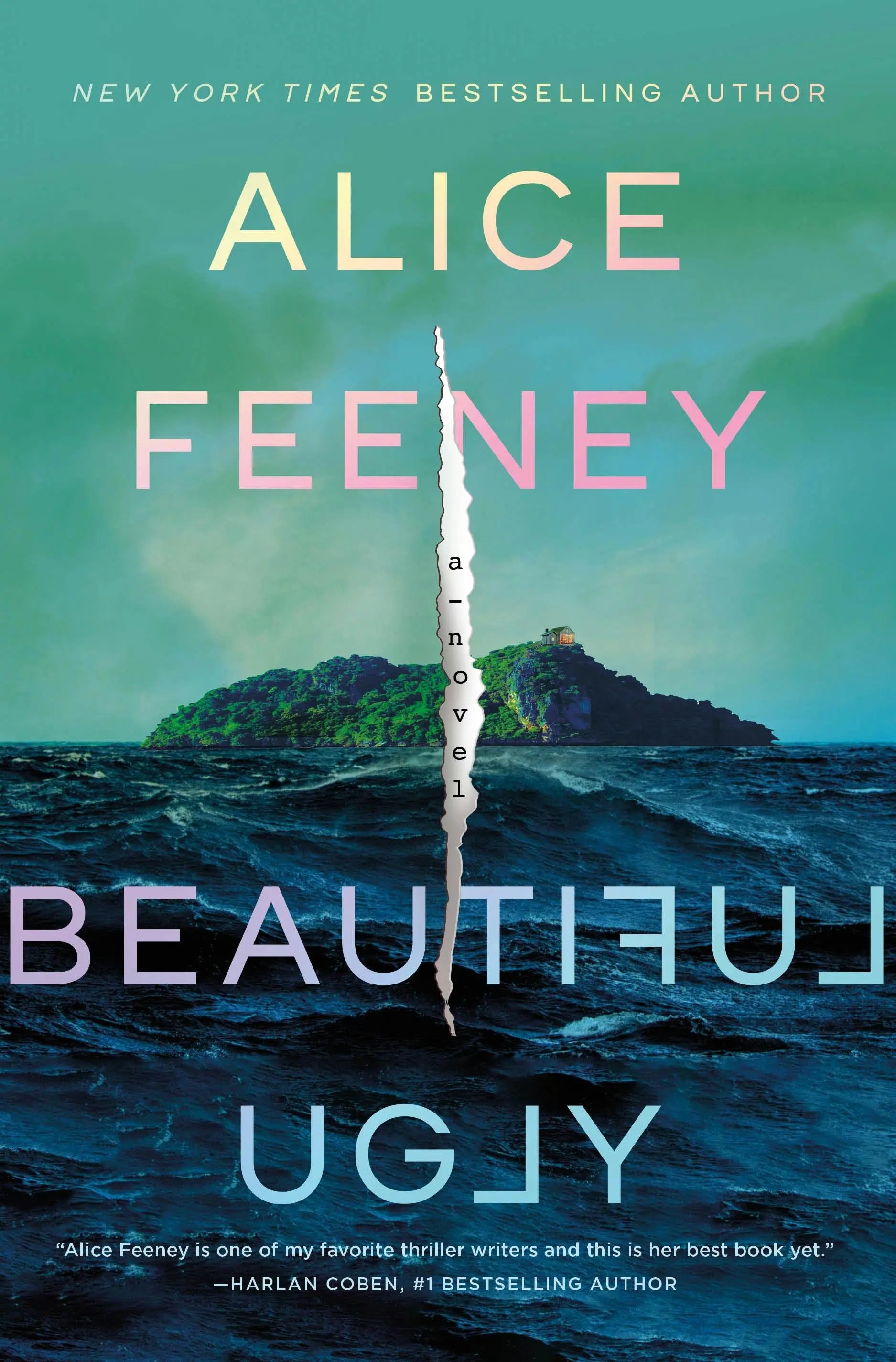
A psychological thriller about a grieving husband who sees his missing wife’s double on a remote Scottish island.
Summary:
Author Grady Green is having the worst best day of his life.
Grady calls his wife to share some exciting news as she is driving home. He hears Abby slam on the brakes, get out of the car, then nothing. When he eventually finds her car by the cliff edge the headlights are on, the driver door is open, her phone is still there. . . but his wife has disappeared.
A year later, Grady is still overcome with grief and desperate to know what happened to Abby. He can’t sleep, and he can’t write, so he travels to a tiny Scottish island to try to get his life back on track. Then he sees the impossible — a woman who looks exactly like his missing wife.
Wives think their husbands will change but they don’t.
Husbands think their wives won’t change but they do.
Review:
My memory told me I loved Alice Feeney’s thrillers—but after reading Beautiful Ugly and looking back at my past reviews, it turns out I only truly loved one (Rock Paper Scissors) and was lukewarm on another (Daisy Darker). With this latest being a miss, I probably won’t be rushing to pick up her next.
Right away, I was thrown a bit off course by the main character. When I reach for a thriller by a woman author, I typically expect a woman protagonist. Here, we follow Grady, a grieving husband and struggling novelist. We do get flashbacks to his wife before her disappearance, but Grady’s perspective never quite worked for me. I also rarely enjoy main characters who are writers—it often feels too navel-gazey (with the notable exception of Misery). That worked against Grady, too.
When Grady travels to a remote Scottish island—sent there by his agent-slash-his-wife’s-godmother—it should have been an atmospheric pivot. But while the setting is strange, it didn’t strike me as compelling. The book leans heavily on Grady’s alcoholism to make him an unreliable narrator, a device that can be effective (as in The Girl on the Train), but here felt more like a trope than an integral part of the story.
And unfortunately, it wasn’t just Grady. I didn’t connect with any of the characters—not the wife, the godmother, the ferrywoman, or the shopkeeper. That can still work if it’s a “love to hate them” type of book, but this wasn’t that. And when a book doesn’t give you characters to root for, you need a satisfying plot to carry the weight. Instead, I felt let down.
The book hinges on two major twists, and both left me feeling frustrated. One relies on the main character deliberately withholding information from the reader, which feels like a cheat—especially when we’re in his head for much of the book. The second twist is more straightforward, but felt over-the-top and unearned.
That said, there are a few bright spots. I appreciated the inclusion of a woman pastor and a same-sex couple among the tiny island’s population. The cast also includes a bit of racial and ethnic diversity. Also Grady’s dog is a breath of fresh air in every scene he’s in. However, the second twist somewhat undercut those thoughtful touches in a way that felt disappointing.
Content notes: CSA, death of children, infertility treatment, and murder.
Despite my frustrations, I’ll give the book credit for being readable and engaging. I wanted to know what happened, and I did enjoy the shifting points of view and timelines.
Overall, this is a thriller for readers who don’t mind a twist that plays unfairly with what the narrator reveals, and who enjoy mysterious settings and shifting perspectives—even if there’s no one to root for.
If you found this review helpful, please consider tipping me on ko-fi, checking out my digital items in my ko-fi shop, buying one of my publications, using one of my referral or coupon codes, signing up for my free microfiction monthly newsletter, or tuning into my podcast. Thank you for your support!
3 out of 5 stars
Length: 306 pages – average but on the longer side
Source: Library
Buy It (Amazon or Bookshop.org)
Book Review: Daisy Darker by Alice Feeney
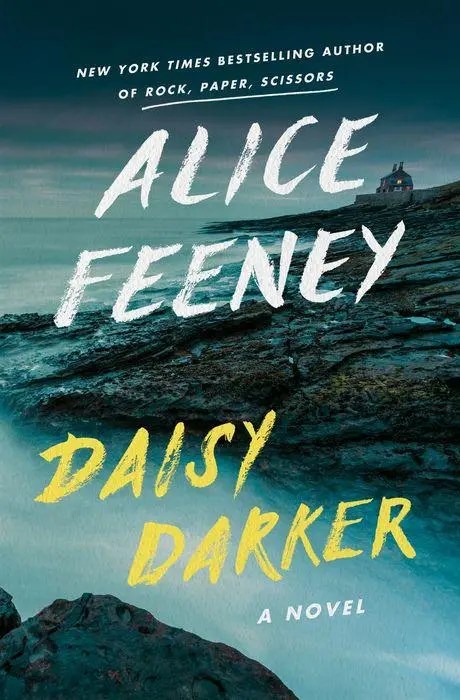
When Daisy and her family go to her grandmother’s island home for her 80th birthday, they’re surprised when the family members start dropping dead, one an hour. Who has it in for the Darker family?
Summary:
After years of avoiding each other, Daisy Darker’s entire family is assembling for Nana’s 80th birthday party in Nana’s crumbling gothic house on a tiny tidal island. Finally back together one last time, when the tide comes in, they will be cut off from the rest of the world for eight hours.
The family arrives, each of them harboring secrets. Then at the stroke of midnight, as a storm rages, Nana is found dead. And an hour later, the next family member follows…
Trapped on an island where someone is killing them one by one, the Darkers must reckon with their present mystery as well as their past secrets, before the tide comes in and all is revealed.
Review:
*This review is going to contain many spoilers for the twists in Daisy Darker. If you do not wish to be spoiled, please click away!*
This book is a send-up to the Agatha Christie classic And Then There Were None without the ties to the hideously racist children’s counting rhyme and minstrel song (note that link reveals the original racist language used in Agatha Christie’s). The similarities are clear: people are invited to an island where they then start dying off one by one. But if you are familiar with that book then one of the big plot twists in this one will not be a plot twist to you – the majority of the people invited to this island are responsible either for murder or for covering it up. Rather than using a pre-existing nursery rhyme, this book uses a brand-new poem written in the style of a nursery rhyme to predict the deaths of the characters. Another similarity includes the use of a red herring to deflect suspicion from the real person (or in this case, people) orchestrating the deaths. A big difference here, though, is that this a family drama. It’s not seemingly disconnected strangers. They are a family with…problems.
This is what I thought the twist was going to be: it was Conor’s dad who had faked his own death previously to get away from the Darker family. So I really wasn’t expecting the simultaneous reveal of Trixie holding the smoking gun while telling Aunt Daisy that she’s a ghost. I felt like I’d been Sixth Sensed all over again. Then the backstory of how Daisy was killed is revealed, and I realized…this book is And Then There Were None crossed with The Sixth Sense crossed with I Know What You Did Last Summer.
I’ve been wrestling with why I felt, as I said in my immediate quick GoodReads review, bamboozled by this book. I went back and checked a few key scenes to make sure it was possible for Daisy to have been a ghostly presence. For example: the reading of the will. But she inherited something! I thought. No, Nana just mentioned donating to some of Daisy’s favorite charities. So, in all the scenes I thought of, it was possible for Daisy to be a ghost. This was well done narratively. So why did I feel so bamboozled? I think for me it came down to this: this is told in the first-person from Daisy’s perspective, and it all hangs on her not remembering she’s a ghost. (This is a lot like The Sixth Sense). We’re supposed to believe she doesn’t remember she’s a ghost because the level of trauma from how she died is too hard to bare so she blocks it out, and she’s always been isolated so it’s not strange to her that people don’t talk to her or notice her. Ok, fine, but where does she live? She thinks she’s an adult who pops over to take care of Trixie routinely when she’s not volunteering in an elder care facility. Where is she when she’s not with Trixie? Does she just drop off the face of the planet? Wouldn’t she realize she never goes home? That she has nowhere to call home whatsoever?
The other thing is that the character of Conor I feel acts incredibly out of character for who he’s been presented to be the night of the I Know What You Did Last Summer incident. He has been shown to be a kind boy who is madly in love with Rose. But he sleeps with Lily then convinces everyone to throw Daisy into the ocean to save his future. Whereas Rose going along with what everyone else suggested without protesting too much and Lily being fine with it made sense to me because they both bullied their little sister, Conor being the instigator did not. For me, I needed more evidence of the fact he would be capable of such a thing from the very many home movies the crew watched over the course of the night. He was in them, but there was no sign of this selfish, mean, self-preservation streak whatsoever. In fact, the only time he sort of lied was when he didn’t want to admit to Nancy that he got beat up at school because he got into a fistfight trying to defend Lily’s honor. (This also further demonstrates how strange it is that he slept with Lily that same night.)
My other issue is that I get the vibe we’re supposed to like Nana, but I don’t. In fact, I think she has far more culpability than the narrative wants us to feel. She’s the matriarch of this atrocious family. She absolutely favored one of the Darker girls over the others. I think we’re supposed to think that’s fair and justified since Nancy favored Rose and Lily over Daisy but that’s not how it works. Two wrongs don’t make a right. Favoring one child over others creates a hateful environment for them all. The bullying of Daisy from Rose and Lily, and Daisy’s secret attacks back at them could have been worked on if any one adult stepped in and tried to do so. Nana knew what was going on and didn’t do anything about it. She just allowed Daisy to get her revenge. I do get it that part of the point of the book is this is a terrible family but I also think we’re supposed to see Nana in a positive light. But the terribleness must have started somewhere. Similarly, even though I felt sympathy for Daisy in flashbacks, in the moment (when I thought she was a grown-up and not a ghost), she seemed overwrought, dramatic, and annoyed me. I’m also confused about what she thinks she did wrong to Conor that warrants her needing to apologize.
Overall, I found this book to be a good thriller. I think it could have moved into great thriller territory with characters acting more within character (or better explained out of character behavior) and a ghost who knows she’s a ghost. In all honesty, I could have really gotten behind a story where Daisy shows up on Halloween night when the space between worlds is thin and watches as her family starts to drop dead while discovering her niece can speak to her. I don’t think the extra twist of finding out she’s a ghost was actually necessary.
If you found this review helpful, please consider tipping me on ko-fi, checking out my digital items available in my ko-fi shop, buying one of my publications, or using one of my referral/coupon codes. Thank you for your support!
3 out of 5 stars
Length: 352 pages – average but on the longer side
Source: Library
Buy It (Amazon or Bookshop.org)
 Support my work with a tip or browse my shop for curated book club guides, how to guides, cross-stitch patterns, and more!


This work by Amanda Nevius is licensed under a Creative Commons Attribution-Noncommercial-No Derivative Works 3.0 United States License.
 Opinions of a Wolf