
Archive
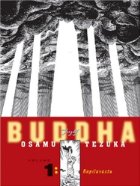
Book Review: Buddha Volume 1 Kapilavastu by Osamu Tezuka (Graphic Novel) (series, #1)
 Summary:
The tale of the Buddha’s life is told peripherally to those of fictional, central characters. There is Tatta, an untouchable who can inhabit the bodies of animals. He is joined by Chapra, a slave who wants to become a warrior. Also there is Chapra’s mother and a young monk. Their lives are impacted by the birth of the Buddha.
Review:
I picked this up randomly from the shelf in the library, and I must say I was expecting a bit more focus on the Buddha than is present in the story. Instead this is one of those tales about fictional people living in the shadow of a world-changing person. I honestly was really excited about the idea of the story of the Buddha told in the graphic novel style, so that was a bit of a disappointment to me.
The art style is interesting. Somewhere between manga and more western-style animation. The characters are really easy to tell apart, though, which was a nice change from some manga.
Although the Buddha is mostly gestating and being born during the course of the book, Buddhist ideas are still present periodically in the storyline. One of my favorites is when a saint chastises the monk for how he orders Tatta to use his talents:
To save just one human, you mindlessly harnessed numerous beasts to an impossible task…and killed them one by one! The beasts you bent to your purpose all suffered greatly and died cruelly! You believe that human lives are sacrosanct while animal lives are worthless?!?! You saved [the human], but the beasts that you sacrificed for his sake are now beyond saving. Life is sacred whether or not it is human! (page 350-1)
It was fun to see these sorts of ideals in the context of a story, and I do always enjoy reading a graphic novel. The main story itself fell flat for me though. It mostly focuses in on Chapra attempting to become a great warrior and save his mother from being a slave, which I fail to see how that relates to the Buddha. As I said, though, this book was not what I was expecting, and I don’t tend to really go for warrior/mother tales. Except Oedipus.
Overall, the art is an interesting style and some of the ideas contained within the book are fun to see in fiction, but the main storyline separate from Buddha’s life simply did not resonate with me. Perhaps it will with you.
3 out of 5 stars
Source: Public Library

Bloggers’ Alliance of Nonfiction Devotees (BAND): November Discussion: Reading for a Cause
 BAND is a monthly discussion group of book bloggers who love nonfiction! If you’d like to join us, check out our tumblr page.
I am super excited to get to host BAND this month! Because, well, who doesn’t love talking about something they love, right?
I firmly believe in knowledge being power. This is how my dad raised me, and I am forever grateful for that. The more knowledge you have the more strongly you can support your cause. This idea was further developed in me when I went to Brandeis University for undergrad. Brandeis is built around the concept of social justice, and in all of our classes we learned that you can change the world one mind at a time.
Even though I’m out of Brandeis now, I’ve done my best to apply this concept to my reading. I seek to constantly attain greater knowledge in areas that matter to me. Pick your cause and read all about it, essentially.
My very first cause was the health and obesity crisis in the US. I was unhealthy. My family was unhealthy. Most of Americans are unhealthy, so I started reading about alternatives to the way I was raised (the SAD–Standard American Diet). I read a wide arrange of information including excerpts from The China Study, The Blood Type Diet, Vegetarianism for Dummies, and many many more from back before my book blogging days that I unfortunately did not keep good track of. I still have a section of my tbr pile about addressing the health crisis in the US. It matters to me. And I hope that even just by seeing me read the book or seeing a blog post about it, it’ll help to start engaging others into changing their lifestyles.
This reading naturally led me into reading about animal rights, which is something I am incredibly passionate about today. I love nonfiction science books about the inner life of animals, the social networks of dolphins and elephants, and the cruelty of factory farms. I wish I could get one of these books in a week, but for right now I’ll settle for as many as possible, haha.
More recently I’ve become interested in the history of racism in the US and how that history impacts social interactions today. This is what spurred me on to ask Amy to do The Real Help Reading Project with me, and I hope that our presence online discussing these books will help to broaden and change some minds.
Maybe it’s a bit idealistic to think one can evoke social justice and change purely through what you read, but it’s something I can’t help but believe in. I guess Brandeis taught me well.
What about you?
Do you read nonfiction to help support a cause(s)?
Leave links to your posts in the comments! (I have issues making link collectors work for me). Thanks!
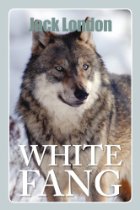
Book Review: White Fang by Jack London
 Summary:
White Fang is born in the wild 1/4 dog and 3/4 wolf. He soon finds himself back in the realm of man when his mother returns to the Indian camp she had left. Thus begins the struggle between White Fang’s desire for the companionship of the human gods and the call of the wild inside him.
Review:
This companion novel to The Call of the Wild flips the original story on its head. Instead of it being a dog feeling the call of the wild, we have a wolf feeling the call of the companionship of man, in spite of mistreatment. The story doesn’t quite work as well when reversed in that way, though.
Both White Fang and Buck suffer mistreatment at the hands of men that is incredibly painful for an animal lover to read about. Whereas this served to make it understandable why Buck leaves for the wild, though, it makes it difficult to understand why White Fang doesn’t do the same. Yes, eventually he meets a master who loves him and cares for him, but for years prior that is not the case. Perhaps London is attempting to demonstrate the intense loyalty of dogs to their masters whether or not they deserve it. It is true that animal rights workers see this sort of situation over and over again, yet White Fang is mostly wolf. It is difficult to believe his wild nature would not take over at some point, particularly when being mistreated. If this story was told of a dog and not a wolf, it would make more sense.
That said, London’s strength at delving into the animal world without personifying them to be more human than they are is still incredibly strong here. The animals are not personified but they are humanized. By that I mean, their personalities and instincts are clear and understandable. It is difficult to imagine anyone reading this book then proceeding to abuse an animal. They are truly remarkable creatures, London excels at demonstrating this.
Overall, this book is not as amazing as The Call of the Wild but it is well-worth the read for more time spent seeing animals through Jack London’s eyes. Recommended.
4 out of 5 stars
Length: 208 pages – average but on the shorter side
Source: Purchased

Buy It (Amazon or Bookshop.org)
Companion Book:
The Call of the Wild, review
If you found this review helpful, please consider tipping me on ko-fi, checking out my digital items available in my ko-fi shop, buying one of my publications, or using one of my referral/coupon codes. Thank you for your support!
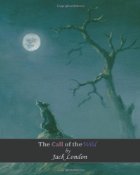
Book Review: The Call of the Wild by Jack London
 Summary:
Buck is a spoiled southern dog enjoying a posh life when one of the family’s servants steals him and sells him away to be a sled dog for the Alaska gold rush. Buck soon goes from an easy life to one of trials and tribulations as the result of humans fawning over a golden metal, but it might not be all bad for him in the wild Alaskan north.
Review:
How did I make it to be 24 years old without having read this American classic? My shame was somewhat alleviated when my dad told me he was in his 20s too when he read it for the first time. Honestly, I can see why this book is talked about so much.
Jack London understands animals. He doesn’t present them as talking to each other the way humans speak, but he does present them as sentient beings with unique personalities and ways of interacting. It’s not easy for them to understand what humans want, and yet humans expect them to figure it out. Of course, London also highlights the wildness at the heart of every tamed animal. That is part of what makes them amazing, beautiful creatures.
I can’t say too much more without spoiling the book. I can say that I rarely cry for a book, but I cried for this one. Animal advocates would do well to simply encourage people to read this book. I have a hard time imagining anyone not sympathizing with animals more after reading it.
Beyond that, London’s writing is vivid, the story complex and engrossing. I highly recommend it to everyone.
5 out of 5 stores
Source: Audiobooks app for the iTouch, iPhone, and iPad

Book Review: Eva by Peter Dickinson
 Summary:
Eva wakes up from a car accident to discover that her scientist, chimp researcher parents have allowed for her to be part of a new experiment. Her brain patterns have been implanted into a chimp’s brain. She is a human brain trapped in a chimp’s body. What will this mean for Eva? For the chimps? For the world?
Review:
This a truly horrifying concept. What would it be like to wake up from a car accident in a body that is not your own? There is much potential for exploration here, but the direction Dickinson took it in fell flat for me.
The setting is a near future in which the world is vastly overpopulated and nearly all animal species have died out except for chimps, who are all kept in captivity. It’s odd in a world that is so overpopulated that the vast majority of people never leave their apartments that scientists have made such an ethically questionable move to save human lives. As Eva herself points out, not only is there the problem of what it means to be a human in a chimp’s body, but also there’s the fact that the chimp essentially had to die for Eva to live. How is that right or fair?
I appreciate that Dickinson has Eva start to identify with the animals and fight for animal rights, yet I simultaneously did not appreciate his depiction of the inner workings of animals and their social groups. In spite of Eva being one of and among them, Dickinson persists in presenting them from a largely disconnected human perspective. I’ve read more sympathetic passages on the inner workings of animal groups on vegetarian websites than I got from Eva’s perspective as, essentially, one of the chimps herself.
*spoiler warning* Some readers will also be disturbed by the fact that Eva goes on to mate with one of the chimps. Although this is not shown, it is shown that a male is interested in Eva when she is in estrus, and it is later shown that she has had multiple chimp babies. Although I am highly sympathetic to animal rights, this is far too close to beastiality for my own comfort. Perhaps if Dickinson had addressed the issue and made it a thought-provoking issue instead of glossing over it I would feel differently. But he truly just makes it happen and tries to skip over the issue. I found this disturbing and was disappointed that this overshadowed the more interesting questions of animal rights versus human welfare. *end spoiler*
Overall, the book is well-written and thought-provoking, but falls far short of what it could have been. I’m sure there must be better YA books out there that address the issue of animal rights in a clearer, less disturbing manner.
2 out of 5 stars
Source: Swap.com

 Support my work with a tip or browse my shop for curated book club guides, how to guides, cross-stitch patterns, and more!


This work by Amanda Nevius is licensed under a Creative Commons Attribution-Noncommercial-No Derivative Works 3.0 United States License.
 Opinions of a Wolf