
Archive
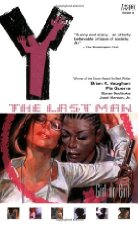
Book Review: Y: The Last Man: Girl on Girl by Brian K. Vaughan (Series, #6) (Graphic Novel)
 Summary:
We catch up with Yorick, 355, and Dr. Mann on board a freighter headed for Australia by way of Japan. They seem to have abandoned their hunt for Ampersand the monkey for now. The captain of the ship is gorgeous and has the hots for Yorick, but trouble arrives in the form of an Australian submarine. Is it the freighter or the submarine that is the pirates?
Review:
So the title is sort of a double entendre. We do get an excellent lesbian sex scene (inter-racial no less!), but we also have the war between the submarine of women and the ship of women. Haha, well played, Vaughan!
The great thing about this entry in the series is that by itself it has a lot of very cool elements, but it also moves the plot forward. We find out some about what’s been happening on the other side of the globe since the men died, characters hook up, and we get some really good action. It gets us places (specifically moving across the ocean), but it doesn’t feel like a filler book the way #4 did.
Plus, the Pacific Islander ship captain is really hot and badass.
Overall, this is an excellent entry in the series that is entertaining and moves the plot forward. Fans will not be disappointed.
5 out of 5 stars
Source: Public Library

Previous Books in Series
Y: The Last Man: Unmanned
Y: The Last Man: Cycles
Y: The Last Man: One Small Step
Y: The Last Man: Safeword
Y: The Last Man: Ring of Truth
Book Review: The Rabbi’s Cat 2 by Joann Sfar (Series, #2) (Graphic Novel)
 Summary:
The talking cat with the big ears who offers insightful commentary on his rabbi master and life in Algeria in the early 20th century is back. The rabbi’s daughter is fighting with her husband (also a rabbi), and the cat is quite happy with that. It means more snuggles from his mistress, Zlabya. Of course, the talking cat also has a couple of adventures. First he and a snake tag along with the famous Malka and his lion on a trek around the desert. Then, a stowaway Russian Jew shows up in Zlabya’s house, and he understands the cat! Soon a rag-tag bunch are off looking for the mysterious lost city of Jerusalem. We thus get to see a lot of Africa through the cat’s eyes.
Review:
I have to say, I didn’t enjoy this sequel quiiite as much as the original. I suspect that the fact that I was less familiar with the topics the cat is offering snarky commentary on had something to do with this. I really don’t know much about Northern Africa or the “lost city of Jerusalem,” so I’m sure I missed some of the inside jokes. Whereas the previous book was mostly about Jews in Algeria and the French occupation, this book seems to talk a lot more about the relative merits of the various monotheistic religions and why can’t we all just be friends.
While on their various treks, the groups run across some Muslim tribes who state that Jews are their brothers who they respect, but it is still their duty to attempt to get them to convert. The rabbi eloquently states that he is too old to learn a new language for prayer, and he is sure god will understand. Similarly, the Russian Jew falls in love with an African woman (I am uncertain from which country), and they ask the rabbi to marry them. He says he can only marry two Jews, and she states she is glad to take her husband’s god as her own. Exasperated, the rabbi states it is not that simple, she must study for years, but then relents when seeing how in love they are and says that god will understand. The cat too has learned when to hold his tongue around extremists, although he still offers commentary to the other animals, whether over an obsessive Muslim prince or a Kabbalistic elderly rabbi. What is incited repeatedly in this book is extremism in favor of tolerance and love, which is certainly always a good message.
The other message is never to judge someone as less intelligent than you simply because they speak a different language or their ways are different. I really like how this is carried over into the animal kingdom where the cat even seeks to understand the snake. At first the cat thinks the snake just willy-nilly bites people and animals, but then he realizes that this is his only tool of friendship. And yet although we should seek to understand, the cat also doesn’t hang around too long anyone who is extremist or annoying. The Muslim prince and the English explorer (who thinks the Algerians don’t bathe) are both quickly dumped by the traveling group.
While these are all good messages, I must say I missed the no holding back talking cat of the first book. I suppose he’s older and wiser, but I like him precisely because I can’t imagine a talking cat ever actually holding his tongue. Seeing him do so in this book made me kind of sad. Also, I feel like the story of Zlabya and her husband got dumped partway through and never picked back up. We know they’re fighting a lot, but then we just leave them and go off on an adventure across Africa. It felt like a final chapter was missing from the book.
Overall, this is an interesting look at the intersection of many cultures, religions, and races on the continent of Africa through the unique eyes of a rabbi’s cat, a wandering lion, and a friendly snake. If you enjoyed the first book, you shouldn’t skip this one.
3.5 out of 5 stars
Source: Public Library

Previous Books in Series:
The Rabbi’s Cat
Counts For:

Specific country? Algeria, primarily
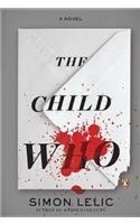
Book Review: The Child Who by Simon Lelic
 Summary:
A gruesome murder has thrown a British county up-in-arms, and Leo Curtice finds himself the attorney randomly assigned to defend the murderer–a 12 year old boy who killed and sexually assaulted an 11 year old girl. He finds himself seeking to understand what would make a 12 year old kill and finding more empathy for the boy than those around him think is allowable. Meanwhile, threats start coming in against his own family, including his 15 year old daughter.
Review:
This is a ripped from the headlines style novel that falls far short of others in its genre. Apparently, Britain has a real problem with child murderers. The thing is, though, when you’re writing a ripped from the headlines type story, your fictional version needs to bring something to the table that the real life stories and newspaper articles can’t or don’t. 
It’s also problematic when you google about child murderers in Britain and the stories that come up are far more fascinating than the novel you just read. Stories like Robert Thompson and Jon Venables, two ten year olds who tortured and murdered a two year old. Or Mary Bell an eleven year old who killed and tortured other children without remorse. In contrast our story here is about a twelve year old boy who hits on an eleven year old, is rebuffed, and proceeds to knock her down, bludgeon her, and assault her with a stick. Horrible? Yes. But with far more motive than two ten year olds abducting and killing a two year old. See the difference? The true to life stories push us to question and understand human development and behavior. The fake one seems rather easily written off as a vicious twelve year old who can’t handle the word no from a girl he likes. It’s as if the author was trying to play off of a phenomenon in Britain but missed the crux of what makes it so fascinating. Twelve is hardly a youth in the way that ten is.
Then there is the whole side-plot about Curtice’s daughter. From the beginning of the book you think she was murdered eventually somehow in some connection with the case. Wanting to find out how this occurred is what keeps the reader interested and the plot moving in spite of the problems addressed earlier. This, though, is ultimately a red herring of a plot point. The daughter was a runaway. Yes, the father didn’t know it at first, but she just ran away because of all the stress from the case. That’s it. As a reader, it felt like Lelic played a dirty trick on me, and I really didn’t like that.
Ultimately, Lelic tried to write a ripped from the headlines style story akin to Room
2 out of 5 stars
Source: Netgalley

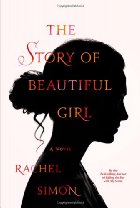
Book Review: The Story of Beautiful Girl by Rachel Simon
 Summary:
Martha, a retired, widowed schoolteacher, thought her life was pretty much over until one night when a young intellectually disabled white woman and a deaf black man show up on her doorstop in the rain holding a newborn baby. Soon people from a nearby mental institution show up to take them back away. The young woman, Linny, seems terrified and asks Martha to hide the baby. The man, Homan, escapes. Martha goes on the lam to keep the baby girl out of the institution, and Linny and Homan fight against all odds attempting to reunite their family.
Review:
I received the audiobook version of this as a gift for one of the holiday swaps I participated in in December. It was my first time reading the audiobook version of a modern story, as I’m a cheapskate and usually just get ones for free that are out of copyright. It was thus an entirely different experience to be forced to slow down when reading this piece of historic fiction about a very dark secret in American history–mental institutions. The amount of time that Linny and Homan are forced to spend simply waiting for their lives to get better. Waiting for people to recognize their humanity. It hit me much harder than if I had been able to read this in a couple of hours. (Each disc is about 1 hour long, and there are 10 discs). The wrongness of it all. The amount of time and lives wasted simply because the able-minded and able-bodied didn’t seek to understand or to grant these people the basic human right of self-direction.
The story itself is told from multiple viewpoints–Linny, Homan, Martha, Kate (a caregiver at the institution), and later Julia (the baby daughter when she grows up). Mostly Simon does a great job switching among the different voices, particularly representing Linny. She does not overinflate her internal dialogue to be that of a person with an average IQ, but she still clearly represents Linny’s humanity. I am a bit skeptical of the voice given to Homan though, mostly his tendency to give people bizarre nicknames like “roof giver.” I know that neither
Simon nor I know a deaf person who is unable to communicate with those around him, so really it is all guess-work as to what his internal dialogue would be like. But I can’t help but feel like it’s not quite there. On the other hand, his confusion and frustration at people talking around him, over him, and treating him like he’s stupid just because he’s deaf is very well done.
In retrospect, I’m not quite sure why so much time was devoted to Martha and Julia when Julia was a baby. Her story doesn’t end up being nearly as important as the Homan/Linny romance, so this focus feels a bit like a red herring. I would definitely shorten those chapters.
The use of artwork and items of visual significance to the characters is gorgeous though. Lighthouses are a central feature, and I don’t even like lighthouses myself, but I still found myself moved by how important the visual arts can be to people. This is a book that, surprisingly, winds up being almost a battle cry for the arts. For their value in helping us connect with each other and hold on to our humanity. I think any artist or someone who is a fan of the arts would appreciate this book for that reason.
On the other hand, Simon is clearly a person of some sort of faith, with a belief in god and the tendency for things to all work out right in the end. I’m…not that type of person. So when characters wax eloquent about god or an overall plan or the ability of evil people to repent and turn good, well, it all feels a bit more like fantasy than historic fiction to me. I probably would have been irritated by this less if I had had the ability to skim over those parts though.
In the end, though, I came away from this book appreciating its uniqueness and all the good qualities it had to offer. It demonstrates through a beautiful story why it’s so important not to institutionalize the mentally ill or mentally challenged. It shows the power of love to overcome race and disabilities. It is the story of the power and beauty of resiliency.
Overall, I recommend this work of historic fiction to fans of historic and contemporary fiction, advocates of the mentally ill or mentally challenged, and those just simply looking for a unique love story.
4 out of 5 stars
Source: Gift

Counts For:
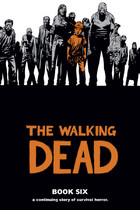
Book Review: The Walking Dead, Book Six by Robert Kirkman (Series, #6) (Graphic Novel)
 Summary:
The group continues to slowly lose their collective minds, although it is quickly made evident that they haven’t gone as crazy as some groups when they find themselves stalked by living cannibals. Toss in a preacher who failed to protect his flock and what turned out to be a pack of lies from the scientist, and it’s no wonder the group is suspicious when a couple of men approach and offer them refuge in an idyllic community just outside of DC. They in their state of PTSD can’t stop seeing danger around every corner and don’t even realize the dangerous ones just might be themselves.
Review:
You know how they say you can always find someone in the world worse off than you? Well, the first part of book 6 seems to be all about proving that’s true, perhaps in a way to humanize the group prior to how abundantly evident their loss of humanity is in contrast to the DC compound. That isn’t to say I particularly enjoyed the cannibalism plot-line. I can see its value, yes, but I also feel like we’d already seen how bad humanity can go in Woodbury, and if people are going to be eating people, that’s what you have zombies for. So the first half of the book is kind of meh to me.
On the other hand, seeing our group in the DC compound is delicious. I think one of the pieces of artwork in the appendix at the back explores the contrast eloquently. Michonne is dressed up talking to a group of women at a party, but she’s hiding a sword behind her back. The group has become so used to constantly being turned on and at war with the zombies and other survivors that they cannot relax. Classic PTSD. It’s fascinating to see how even Carl can recognize that they are no longer like these people who’ve been able to have downtime in the zombie war. Anybody who understands war and trauma at all would know that these people need special care. Even just the way they clump up and sleep all together in spite of being offered separate quarters is a symptom of PTSD, and yet the DC group makes Rick a cop. Um….ok. A seriously questionable choice there, but then again, the mayor of DC did used to be in politics. And we all know how smart those types can be. *eye-roll*
In any case, it’s obvious that this book is setting things up for a show-down between our traumatized group and the DC folks. I’m enjoying seeing our main guys turn slowly evil, and I’m curious to see how far Kirkman is willing to take it. That said, the first half of the book with the cannibals seemed kind of unnecessary to me. I’d rather have seen more zombies. Overall, it moves the plot forward, but that plot momentum is left mostly to the second half of the book. Worthy of the series and hopefully book 7 will live up to the build-up.
4 out of 5 stars
Source: Public Library

Previous Books in Series:
The Walking Dead, Book One
The Walking Dead, Book Two
The Walking Dead, Book Three
The Walking Dead, Book Four
The Walking Dead, Book Five
Book Review: Succubus Blues by Richelle Mead (Series, #1) (Bottom of TBR Pile Challenge)
 Summary:
Georgina Kincaid is a succubus. Has been for hundreds of years. She’s currently assigned to the demon district of Seattle, but she’s not really feeling being a succubus anymore. Oh, sure, she still needs to eat sexual energy from men, but she tries to keep it to the low-lifes, like cheaters, and avoid the good guys. Thankfully her demon boss lets her lack of stealing souls for the bad side slide. All in all, life is pretty good for Georgina. Her favorite author is even coming to do a reading at the bookstore she works at! But one night a vampire is killed and threats start coming in against all the baddies in Seattle–including Georgina.
Review:
Sometimes the books I’ve read for the Bottom of TBR Pile Challenge make me wonder what the hell past Amanda was thinking, and other times they make me realize that past Amanda was still me…..and I really do love to love the bad guys. And hoo boy is this book ever about the bad guys! Also, sex. Lots of sex. I mean, a succubus has gotta eat.
Getting an urban fantasy that isn’t all about a demon slayer but instead is about the demons is just awesome. It is really fun to be rooting for the succubus, demons, and vampires, but not in a Sookie Stackhouse sort of way. These guys are the other side of the war, and are they ever fun. It’s obvious that Mead is aware that she’s flipping the typical story on its head from a delicious tongue-in-cheek scene in which an angel’s helper shows up completely covered up and mocking Georgina’s sexy succubus outfit and blushing at all the swear words the bad crowd tosses around. And it’s so true! The good guys wouldn’t be *fun*. The good guys would be boring, and they sure as hell wouldn’t say fuck.
Also, it’s nice that for once we pop into the middle of the main character’s life instead of meeting her right when she gets her powers. It lends more depth to the character, adds mystery, and lets us just get on with the supernatural. This makes for a much faster moving plot as well, which is definitely appreciate. Plus, there’s the historical aspect to Georgina’s flashbacks, and that’s always fun.
The sex scenes are well-written. Um, really well-written. *coughs* The love interest is realistically attractive and intelligent, which is pure win. For once we aren’t stuck with a gorgeous, perfect man. We have an imperfect one who is still totally loveable.
So what’s keeping it from five stars for me? I’m not a fan that Georgina has somehow turned into a reluctant succubus. I want my succubus to steal men’s life energy and LIKE IT. But I get it that this makes Georgina more lovable to probably just about everyone else. I am still hoping that this reluctance will change in the next book. Haha.
Overall, this is a delicious urban fantasy that I highly recommend to fans of the genre who enjoy steamy sex and rooting for the bad guys.
4 out of 5 stars
Source: PaperBackSwap

Book Review: Tundra 37 by Aubrie Dionne (Series, #2)
 Summary:
Gemme is the Matchmaker for her generation on board the Expedition a spaceship that has been headed toward Paradise 18 for hundreds of years and multiple generations in the hopes of saving humanity from extinction due to the failure of Earth. The ship is driven by a pair of seers–twins from Old Earth who have been kept alive an abnormally long amount of time by being hooked up to machines and virtually made part of the ship. The seers make a mistake for the first time in hundreds of years and end up in a meteor shower and having to crash-land on the barely inhabitable ice planet Tundra 37. Gemme finds herself reassigned from Matchmaker to the exploratory team Alpha Blue with the hunky Lieutenant that the computer system matched her with just before blowing off into space during the meteor shower. Can she land the hunk without anyone knowing about the match? And will the colonists manage to survive Tundra 37?
Review:
Although this is the second book in the series, which I didn’t realize at first, it appears that each book follows a different spaceship that left Earth, so I really do not think it’s necessary to read them in order. I didn’t feel like I was missing anything, for instance.
It’s been a while since I read a book this bad that came from a publishing house, but it does happen. This is part of why I firmly believe it shouldn’t matter if a work is self-published or indie published or traditionally published. Bad books happen everywhere. Although it definitely is more baffling when something like this slips through a publishing house. (Then again, Twilight happened…..)
There is just so much wrong with this book. The characters struggle in this odd land between one-dimensional and three-dimensional. They’re two-dimensional? The structure itself is odd. We jump around at illogical points between Gemme/Lieutenant, the Seers’ lives on Old Earth, and the little crippled girl on the ship, Vira. I’d just get interested, finally, in one of the plots and then get yanked over to another one, only to have it happen all over again. Actually, the Seers’ lives are interesting and unique. I wish Dionne had simply told their story and ignored the total snoozefest that is the love interest between Gemme and the Lieutenant. These are all moderately minor things though that I could still see another reader enjoying, if it weren’t for the things that make zero fucking sense. There’s so many of them, I’m just gonna go ahead and bullet-point them for ya’ll.
- When the ship first crash-lands, the Seers (telekinetic, all-knowing types) announce that they have enough fuel to keep everyone warm and everything running for three months. Mysteriously, this number changes to three days without any explanation.
- Seriously, how could one person’s entire career be matchmaking one generation that fits on-board a space-ship? Plus, all she does is double-check the matches the computer sets up. This could be done in a day or two. A week at the most.
- NOBODY noticed little Vira’s telekinetic powers before now? Puhleeze.
- Supposedly the Seers’ eggs have been randomly implanted into random women for all the generations on-board the ship in the hopes of getting another Seer. Nobody knows this except the Matchmakers. Fact: The Seers are African-American. Double-fact: It appears almost everyone else on-board the ship is white. And you expect me to believe nobody noticed the random inter-racial babies popping up?! When these people mate for life? Apparently the facts of genetics that are so important to these people are completely unnoticed when it comes to race. HUH
As if these inconsistencies were not enough, there’s also the fact that Dionne simply tries to do too much throughout the book. Among the ideas and storylines going in this rather short book (thank god), we’ve got:
- People reliving their past lives in their dreams.
- Soulmates from past lives finding each other.
- The humans’ attempts to survive on Tundra 37.
- The explanation of how this ship got in the air in the first place.
- One seer’s love story.
- The story of the seers’ relationship with each other on Old Earth.
- How Old Earth went to hell.
- Vira being telekinetic and hiding it.
- An “evil entity” on board the ship.
- The mysterious orb.
- The mysterious beacon.
- The Gemme/Lieutenant/Luna love triangle (wtf is with the love triangles in romance novels?!)
Basically, the problem is, you can either tell the story of the Seers’ lives or the story of the colonist’s lives on Tundra 37. You can’t really do both. It’s confusing and jarring and seriously that orb/beacon thing was totally unnecessary for either one. This is honestly an understandable problem. Authors sometimes get too much going at once. But how it made it through editing and to publication in this format is beyond me. Could it be a typical outerspace, clean romance? (There is no sex). Sure! Is it the way it is now? Hell no! How it is now is a confusing mess that’s simply exhausting to read. Not what your typical romance reader is looking for or, really, any reader for that matter. Definitely give this one a pass.
2 out of 5 stars
Source: NetGalley

Previous Books in Series:
Paradise 21

Book Review: The Broken Sword by Joseph Robert Lewis (Series, #2)
 Summary:
The international bunch from the first book is back, this time with their lives intersecting in Espani. Taziri is now flying the Halycon 2, which is an airplane instead of an airship. Major Zidane is working as flight security, and Keenan is her copilot. Qhora and Lorenzo are married and living in Madrid running a fencing school. One day, Taziri’s flight drifts a bit off-course, while bringing passengers from Italia to Mazigh, and they happen to spot a brand-new Espani warship that promptly shoots at them. Forced down over Espani, Taziri takes her passengers to Lorenzo’s home, where they stumble into the middle of his personal quest to find the skyfire stone. A stone that fell from heaven in the frigid northern part of Espani, and that is supposed to emit heat that Lorenzo hopes will save the faith of his fellow Espanis.
Review:
In the first book, Lewis surprised me by writing a steampunk that I actually enjoyed. In this one, he managed to do that with a fantasy. Definitely impressive.
Whereas the first book focused on Taziri and the Mazigh steampunk science, this one focuses in on Espani–a culture that shuns science and instead trusts in faith. This is certainly not a set-up that would lead me to be sympathetic toward Lorenzo at all, and yet. It’s hard to blame someone for having faith in a country where people routinely interact with ghosts and water spirits. Eventually it comes to make sense why the Espani are so steeped in their faith and why it’s important to Lorenzo. It is his culture, after all. His culture, his land, his people. He’s afraid that the steampower and innovations from the southern nations are going to overpower and ruin Espani. It’s a culture clash from history only turned a bit on its head with Europe being the one to cling to the old ways. I think addressing the issue this way makes it more understandable and thought-provoking for the reader.
My complaint in the first book was there was too much exposition and it took too long to get the action going. Not a problem here! The plot jumps right in with both feet and sweeps along at a good, steady pace. The method of switching character perspectives in each chapter also works better in this book than in the first one. Perhaps this is because we know and understand them better, but I also think that the overall plot is just better and more tightly structured this time around.
The settings evoked are again stunning, only this time the direct opposite of Mazigh. The frozen north is something I have an affinity for myself, having grown up near the Canadian border in Vermont, and Lewis demonstrates how weather affects culture quite well.
Not to be outdone, Syfax imitated her [taking a shot of vodka] and almost choked on the burning in his throat, but he held it back and managed a grin. “You drink this for fun?”
“No, I drink it to get drunk, major. When you live in a climate like this, some nights are best spent with your brain on fire, burning your blood from the inside out.” (location 1929)
Can I also say, this book has a very hot, sex-positive, sex scene, and I like it, and can we get more of that please? ;-)
Two things I didn’t like quite so much. First, Taziri’s plot again mostly involves her wanting to get back to her family and missing her daughter. This feels a bit too much like a repeat of the first book. Second, where were all the Espani women? I cannot think of a single significant one encountered in a whole book set there. This made me sad after the large presence of females in the first book. Qhora talks about Espani female gentility and such, but we don’t ever really see it.
Overall, this is a fulfilling follow-up to the first book that does not suffer from the middle book in the trilogy plight that so often occurs to book two. The setting is different, and the action is tighter. I’m excited to read the final book in the trilogy and am certain fans of the first book will not be disappointed by this one.
Oh, and Lewis? Can you please write something set in the New World? I need more giant, purring tigers in my life.
4 out of 5 stars
Source: Kindle copy from the author in exchange for my honest review

Previous Books in Series:
The Burning Sky
Book Review: Y: The Last Man: Ring of Truth by Brian K. Vaughan (Series, #5) (Graphic Novel)
 Summary:
Yorick, Dr. Mann, and Agent 355 (not to mention Ampersand) have finally made it to California, which surprisingly has managed to mostly avoid the chaos taking over the rest of the US. Dr. Mann is hard at work attempting to figure out why Yorick and Ampersand have survived for so long. Meanwhile, the crazed assassins who broke off of 355’s Culper Ring are in hot pursuit of the whole bunch.
Review:
I’m pleased to say that this entry in the series returned to the former glory of volume 3 and avoided the oddness of volume 4.
Perhaps what’s best is how much Yorick is growing as a character. Finally! He actually has sex! And makes plans. And thinks things through. But not always, so he’s still him.
There is a lot of productivity in the storyline too. I like that Dr. Mann actually considers a fantastical explanation for Yorick’s survival so far. It adds another aspect to her character and the storyline as well. In fact this choice of believing known fact or believing in a fantasy is a recurring theme in this entry in the series, and one that I really enjoyed.
The art continues to be good, the storyline moves right along, Yorick is less annoying, plus sex! Definitely a worthwhile entry in the series.
5 out of 5 stars
Source: Public Library
Previous Books in Series
Y: The Last Man: Unmanned
Y: The Last Man: Cycles
Y: The Last Man: One Small Step
Y: The Last Man: Safeword
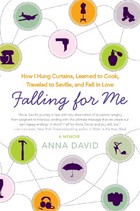
Book Review: Falling For Me: How I Hung Curtains, Learned to Cook, Traveled to Seville, and Fell in Love by Anna David
 Summary:
Anna David is a successful writer in her mid 30s living in NYC when an overwhelming depression hits her. She’s still single. What’s wrong with her? While fighting off tears in the self-help section, she finds a copy of Sex and the Single Girl by Helen Gurley Brown, which was a bestseller in the 1960s. Essentially a guide to being happy single while still keeping an eye open for Mr. Right, Anna instantly connects with Helen Gurley Brown and decides to spend the next year challenging herself and taking advantage of everything being single has to offer.
Review:
It should really need no explaining why I picked this book up. I’ve always been the relationship type (even when I tried not to be), but I also won’t settle for just anybody, and sometimes that combination leads to some ennui. I was hoping I would find a connection to and insight from Anna, and I was certainly right about that.
The very first chapter has Anna breaking down in line for food in her head, basically saying, “I’m going to be alone forever,” and going on from there adding that she’ll be the crazy old maid cat lady and going further and further on into ridiculousness that really doesn’t seem that ridiculous when it’s your brain saying it to yourself. I knew instantly that Anna and I would get along.
As opposed to a lot of other single gal memoirs, the focus is neither just love yourself the way you are nor fake everything to land a man. It’s more like….Do you have any idea how lucky you are to even have this phase in your life? You’re single! You can do anything, go anywhere, decorate however you want, and etc… Anna realizes that she hasn’t been taking full advantage of the things being single affords to her. Things like deciding to house swap and live for a month in Seville (try doing that with a baby) or taking French classes in the evening or spending the day rollerblading and winding up in a park in the sun. So Anna isn’t just trudging along being herself. She’s pushing herself to try new things, go new places, and yes the future Mr. Anna may be there, but even if he’s not, she’s still having a fun time doing it.
The book also addresses another common issue among single women and, well, people in general–grass is always greener syndrome. Anna eventually realizes that she seems to think all of her problems will just disappear if and when she gets married, when that is really not the case at all if you pay an iota of attention to married couples.
One specific line in S&SG that I keep thinking of—“I’ve never met a completely happy single girl or a completely happy married one”—and how it’s helped me to see that I’m somehow convinced that getting to the next stage will make me instantly joyous. (page 36)
The other thing that is sooo relatable that Anna talks about is how it’s so easy to become so desperate for a partner that you start trying to change yourself for him or worry constantly about whether or not you’re good enough for him, when that’s not how dating is supposed to work!
You spend all your time trying to manipulate a guy into wanting you to be his girlfriend when what you should be doing is enjoying yourself and then later figuring out if you even want him as a boyfriend. (page 205)
There are definitely things about Anna that I don’t like or I disagree with (for instance, she eats veal and foie gras, ahem, the book almost got thrown across the room at that point), but even though we’re different, we’re also the same. We’re two single gals who are wondering why everyone else seems to be coupling up but me? What Anna slowly realizes over her year-long experiment is that there is no timeline for love and marriage. It’s not like it’s a game of musical chairs and she’ll be left the only one without one. Maybe her music is just playing at a different speed. I think that’s a really important thing to remember and touching to see someone else struggling with, because it’s far too easy to start pressuring ourselves and the men we date into situations that just aren’t right for either of us. It’ll happen when it happens.
This is a rare instance when I feel the need to sort of reveal the ending. I was worried the book would end with Anna abundantly happy in a relationship, kind of like Eat, Pray, Love, which honestly would only have made me more depressed. Like the book was all about yay singlehood but I still landed a man, right? But no. Who Anna falls in love with is not a man, but herself.
Here’s what I’ve come to understand: I used to not really believe I deserved thick, gorgeous panels for my windows or to pull books from a bookshelf specifically selected for my apartment. It didn’t occur to me that I was worth cooking homemade chicken soup for or dressing in beautiful clothes. I thought I was half a person because I didn’t have a partner but that when I had one, I’d do those things for him. Now I see that I’m entirely whole so that if and when I find him, we can be two whole people together, not the person and a half we would have been. (page 305)
Yes, yes, yes! Finally. A book about being single and loving yourself and taking care of yourself and being a whole person as just you. Sure, the professionals tell us that, but it’s super-nice to get to hear it from a gal who could easily be somebody I have bimonthly cocktails with.
I highly recommend this book to any single ladies in their 20s and up. It’s a nice reminder that we’re not the only ones learning to love ourselves and be patient for the right person.
4 out of 5 stars
Source: Public Library

 Support my work with a tip or browse my shop for curated book club guides, how to guides, cross-stitch patterns, and more!


This work by Amanda Nevius is licensed under a Creative Commons Attribution-Noncommercial-No Derivative Works 3.0 United States License.
 Opinions of a Wolf