
Archive
Book Review: The Day of the Triffids by John Wyndham
 Summary:
Bill wakes up in the hospital the day after a worldwide comet show with his eyes still bandaged from a triffid accident. His regular nurse doesn’t show up and all is quieter than it should be except for some distraught murmurings. Shortly he finds out that everyone who saw the comet show has lost their sight, leaving a random bunch of people who just so happened to miss it the only sighted humans left in the world. A hybrid plant created years ago for its highly useful oil, the triffid, is able to walk and eats meat. Swarms of them are now wreaking full havoc on the people struggling to save the human race.
Review:
This book reads like the novelization of a 1950s horror film. Man-eating plants! Dangerous satellite weapons of mass destruction! Humanity being reduced to the countryside! Classic morals versus new morals! This is not a bad thing, and Wyndham seems to be conscious of the innate ridiculousness of his tale, as it possess a certain self-aware wittiness not often present in apocalyptic tales.
Bill is a well-drawn character who is enjoyable as a hero precisely because he is an everyman who is simultaneously not devoid of personality. He is not the strongest or the smartest survivor, but he is just strong and smart enough to survive. Similarly, his love interest, Josella, impressively adapts and changes over time, and their love story is actually quite believable, unlike those in many apocalyptic tales. In fact, all of the characters are swiftly developed in such a way that they are easy to recognize and tell apart. This is important in a tale with so much going on.
On the other hand, the action is stuttering. It never successfully builds to an intense, breaking point. Multiple opportunities present themselves, but Wyndham always pulls the story back just before a true climax. After this has been done a few times, the reader loses the ability to feel excitement or interest in the characters and simply wants the tale to be over. In a way it is almost as if Wyndha couldn’t quite decide which direction to take the action, so took it briefly in all directions instead. This makes for a non-cohesive story that pulls away from the investment in the rich characters.
Additionally, I do not believe the whole concept of the triffids was used to its fullest extent. The name of the book has triffids in it, for goodness sake. I expect them to feature more prominently and fearfully than they do. Perhaps I’ve just read too many zombie books, but the triffids just seem more like a pest than a real threat. The concept of man-eating plants taking over the world is a keen one, and I wish Wyndham had invested more into it.
Overall, the book is a quick, entertaining, one-shot read that could have been much more if Wyndham had made better choices as an author. I recommend it to kitschy scifi and horror fans looking for a quick piece of entertainment.
3.5 out of 5 stars
Source: PaperBackSwap

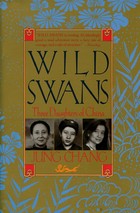
Book Review: Wild Swans: Three Daughters of China by Jung Chang
Summary:
In this memoir, Jung Chang recounts the lives of herself, her mother, and her grandmother growing up in pre-communist, revolutionary, and communist China. Mixing extensive historical facts with intensely personal remembrances, Jung Chang presents a vivid portrait of real life in China.
Review:
As an American, I was raised being told communism is bad, but not particularly taught much about it. So when Meghan blogged about this memoir, I was immediately intrigued. My history BA taught me to favor first-person accounts over academic ramblings, so a memoir of communist China from a woman’s perspective was frankly ideal.
It has been a very long time since I’ve learned so much from a memoir. Chang was extremely careful to verify the facts of the historical events surrounding her family’s various issues. Starting with her grandmother who had bound feet and was essentially sold by her family as a concubine, Change moves up through the drastic changes in China. From her mother who was part of the communist revolution to herself who ended up an ex-patriot in Britain.
My preconceived notions of communism were frankly tromped upon by this memoir. As a liberal person, I never quite understood what was so bad about communist China. Chang makes it clear throughout the book that the governing body of China never actually lived up to the communist ideals of her revolutionary parents. The passage where Chang best explains the warped version of communism enacted by Mao states:
The Cultural Revolution not only did nothing to modernize the medieval elements in China’s culture, it actually gave them political respectability. ‘Modern’ dictatorship and ancient intolerance fed on each other. Anyone who fell foul of the age-old conservative attitudes could now become a political victim. (page 413)
Thus, communism in China was and is not at all what many hippie Westerners believe and/or believed it to be.
Beyond opening up understanding of communist China, this memoir also distinctly demonstrates the human spirit under pressure. From Chang’s father who stood by his ideals at all costs to her grandmother who simply wanted everyone in her family to be comfortable and happy to neighbors with their own agendas, Chang demonstrates how an oppressive regime s bring out both the best and the worst in human nature.
This is a fascinating book both for its insider’s view of communist China as well as its female perspective on said regime. Similarly, it offers an intriguing commentary on human nature. I recommend it to anyone interested in the history of China as well as those with an interest in women’s studies or political science history.
5 out of 5 stars
Source: SwapTree (now defunct)

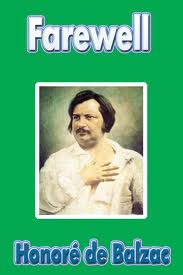
Book Review: Farewell by Honore de Balzac
 Summary:
Philip, a colonel in the military, lost his love Genevieve in Siberia when retreating from the Russians. Years later, he randomly stumbles upon her in a country house with her uncle, having lost her mind from her horrible experiences in Siberia with the military after they lost each other. She is only capable of saying one word. “Farewell.”
Review:
I decided to read a Balzac work due to a reference in the musical The Music Man. The elderly ladies of the town think the librarian is scandalous because she keeps works of Balzac in the library. Clearly I needed to know what all the fuss was about, so I decided to see for myself.
My first instinct is that this classic work of tragedy shouldn’t actually be that scandlous, which perhaps was the point in The Music Man. These elderly ladies are *so* ridiculous to object to Balzac. In any case, however, in retrospect I can see what is so shocking. The incredible weakness of mind and character demonstrated by both Philip and Genevieve are both irritating and depressing. I’m not sure what point Balzac was trying to make, but all I could think was that both of them needed to man up.
That’s not to say the book isn’t well-written though. The translation is lovely, and I’m sure in the original French it is even prettier. Just imagining Genevieve only being able to say “Adieu” sounds prettier than “Farewell.” The scenes are vividly described, and the reader is certainly engaged.
Overall, it is a well-told tragedy that suffers a bit from weak characterization. I recommend it to fans of tragedies and classic French literature.
3.5 out of 5
Source: Audible app for the iPod touch, iPhone, and iPad

Book Review: Cthulhurotica an anthology published by Dagan Books
 Summary:
This collection of short stories, art, and poetry pay homage to H. P. Lovecraft’s Cthulu mythos by adding an erotic twist. Lovecraft was notoriously up-tight about sex, yet his mythos inspires erotica. Stories, poetry, and art draw inspiration from everything from Nyarlathotep, to the Old Ones, to Cthulu himself. These works of art promise spine tingles of both horror and pleasure.
Review:
I knew the instant I saw the gorgeous cover and read the title of this book that I had to read it. I am completely taken with the Cthulu mythos and always felt the only thing it was missing was some raunchy sex. This collection definitely tastefully delivers on both. You won’t find pages and pages of sex, rather the sexual encounters occur as a key plot point to the various stories, rather like well-written sex scenes in romance novels. Only with tentacles. And gore.
Naturally as with any short story collection there are tales deliciously pulled off and others less so. Thankfully, most of the short stories fall into the previous category. Three in particular–“The Fishwives of Sean Brolly”, “The Assistant from Innsmouth”, and “The Summoned”–really rocked my world as they are not only deliciously entertaining, but also offer thoughtful commentary on gender roles and relationships. In fact this is what moves the collection from just a bit of fun to thought-provoking territory, and that is always the sign of a good story.
Further, I am quite pleased to point out that the collection is very GLBTQ friendly. Multiple stories feature non-heteronormative relationships, and the GLBTQ characters are as well-rounded as the straight ones. I offer my applause to Dagan Books for its choices of stories to include.
As far as the artwork, it is all beautiful and impressive. Enough so that I’m seriously considering acquiring a paper copy to keep kicking around my apartment. The pictures suck the viewer in in the tradition of the classic piece of tentacle erotic art “The Fisherman’s Wife.”
Overall, this is a highly entertaining read. Although some of the stories fall short of others in the collection, most of them offer up chills and delights in addition to social commentary. I highly recommend it to those fond of the Lovecraft universe as well as those with an interest in gender/sexuality.
4 out of 5 stars
Source: Amazon

Book Review: How to Be a Hepburn in a Hilton World: The Art of Living with Style, Class, and Grace by Jordan Christy
 Summary:
This book is a call to action for intelligent American women to start addressing our current image problem. Increasingly, women are willing to give away all the self-respect our suffragette fore-mothers fought for in return for their quick 15 minutes of fame or even 15 minutes of attention from that one dude. Christy calls on women to appreciate the relatively recent freedom we now have as a gender by pursuing knowledge, class, and dignity in lieu of late-night dancing on stripper poles at clubs. The book serves not only as a call to action, but also as a how to guide, featuring chapters on classy dress for every personality, good friends, dating, body image, and more.
Review:
I admit that I largely bought this book because the women of classic cinema–from Audrey Hepburn to Katherine Hepburn–are my heroes. They exuded femininity and strength simultaneously. What’s more attractive than that? Overall, though, I think this book is a bit behind where I am in my personal growth as a woman, although that doesn’t make the message any less important.
For instance, I really didn’t need Christy to tell me to love and accept my body and eat healthily. I already do both those things. On the other hand, I know some women who would really need that chapter, so I certainly didn’t mind it being in the book. Similarly, I’m a nerd. I don’t need to be told not to be a Stupid Girl (as those hoo-ha flashing reality tv stars are often called). I suppose if I was a bit younger or raised a bit differently though I might be intrigued by this book if for no other reason than the idea that class and intelligence are actually more attractive than that kind of behavior.
The two chapters on style were actually quite useful. Fashion sense that’s practical and attractive simultaneously while reflecting my personality is something I struggle with. I found the quizzes to help you determine your style and colors that work best for you to be truly enlightening. Christy offers up sample core items for the various personality types, and I immediately wanted to acquire the ones that suited my own. It was worth reading the book for the fashion sense alone.
Overall, I appreciate a book calling on women to respect themselves and behave like intelligent human beings. To pursue the goals and passions or fore-mothers fought so hard for. I definitely think those who would benefit the most from this book might be the ones least likely to read it–like oh think of the Jersey Shore female cast members. On the other hand, everyone has moments when they get tired of the partying lifestyle. Having a book like this out there for them to grasp onto with such an attractive cover to boot is definitely a good thing. I’d recommend giving it a go if you’re an intelligent woman seeking for encouragement in your pursuit of class and goals or if you’re a partier thinking about changing your lifestyle.
3.5 out of 5 stars
Source: Amazon

Book Review: Eros and Psyche by Robert Bridges
 Summary:
This twelve section poem re-tells the mythological love story of Eros and Psyche with each section representing one month of the year. Psyche, a mortal, and Eros, a god, fall in love, but Eros’s goddess mother, Aphrodite, disapproves of her son loving a mortal. They therefore must face trials and tribulations to be together.
Review:
Since this re-telling of the Eros and Psyche myth was originally written in English, it is actually quite beautiful to read and/or listen to. The use of the twelve months to tell the story lends it a certain relaxing quality, even when the lovers are facing trials and tribulations.
The story itself is typical of a myth. Someone wants something. A god or goddess doesn’t want them to have it. They face trials and tribulations before besting or being accepted by the god/dess. Nothing new there. What is new is how prettily the tale is told.
It’s a short read, but it features some well-loved figures from mythology including Pan and Demeter. There’s a particularly fun gathering of the gods and goddesses toward the end that demonstrates the interaction and clash of personalities that the Greeks and Romans believed in.
Overall, this retelling is well-handled, and the poetry is beautiful. If you enjoy poetry or mythology, you will enjoy this read.
3 out of 5 stars
Source: Audiobooks app for the iPod, iPhone, and iPad

Book Review: It by Stephen King

Summary:
In the late 1950s in the small town of Derry, Maine, children are being mysteriously murdered. Seven misfit and outcast kids band together to face It, and they think they’ve beaten it, but 27 years later, the murders return. Vaguely remembering a promise they all made, the now adults return to their hometown of Derry to face It again.
Review:
This tale is largely known in the States as “that scary clown story,” so for years I avoided it. I’ve been terrified of clowns for as long as I can remember. My parents tell me that the first time I ever saw one, I screamed uncontrollably. My only encounter with Stephen King’s It (as it’s known in the States) was with a diorama of the clown from the movie in a haunted house I went through in Salem, MA. It scared the crap out of me, so I was a bit nervous to read this book. However, having read the Dark Tower series, I wanted to read all of the other stories that King lists as taking place in the same general universe, and It was one of them. So I manned up and read it, and boy am I ever glad I did.
This is not a cheesy scary clown story. What it is is first a character study and second a commentary on growing up. The dual horror of being a kid and being excited and afraid to grow up and being an adult and being excited and concerned that you are grown up and may have lost a part of yourself in childhood. King very clearly demonstrates that being a kid isn’t all fun and games–most of the kids in the group of 7 have bad home lives–but there is an essential hope that children have that is hard to reclaim as an adult. A child is able to have a horrible experience with a shape-shifting werewolf or a bunch of bullies and then walk a couple of blocks and forget about it and be excited to see American Bandstand that night. Children are incredibly resilient, and King demonstrates that.
What makes the story though is the return to Derry 27 years later. King puts a hope in adults that although they may not remember exactly what it is to be a resilient child, they can still repossess that power in later life. Although the first inclination of kids to survive is to forget the bad, an adult can remember and still survive. For at the beginning, the characters don’t want to remember what happened to them as kids.
Did he remember? Just enough not to want to remember any more. (Location 1416)
Yet the characters are brave and face their childhoods. Yes, King personifies both the childhood evils and the remembering of them as an adult with It, but that’s part of what makes the story powerful. There’s a reason people refer to memories as personal demons. That’s how they feel. In the end, the way the characters grow and change and overcome is to find
A way to be people that had nothing to do with their parents’ fears, hopes, constant demands. (Location5631)
Beyond the excellent symbolism and allegory for the experience of surviving bad things in your childhood and facing them again as an adult, the horror itself is wonderful. It comes at just the right frequency so that the reader settles into a sense of security only to be blind-sided by a terrifically horrifying experience. There were sections that literally had me jumping at the sound of my own phone ringing in the silence. These are some of the better passages of creepy horror that I’ve read written by King.
Of course, the allusions to the universe of the Gunslinger are there. It gave me chills to recognize them as I read. Among just a few were the turtle, spiders, and other worlds than these. One particular line that gave me chills of recognition that other fans of the Dark Tower series will be sure to appreciate is
Eddie had drawn his aspirator. He looked like a crazed malnourished gunslinger with some weird pistol. (Location 20760)
Combining everything from the horror to the allegory of facing childhood demons to the allusions to the Dark Tower series make Stephen King’s It a remarkable read. I recommend it to fans of Stephen King, as well as anyone interested in the idea of childhood demons who feels they can handle passages of horror.
5 out of 5 stars
Source: Amazon

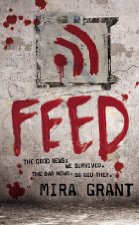
Book Review: Feed by Mira Grant (Series, #1)
 Summary:
Adopted brother and sister Shaun and Georgia Mason are part of the first generation to not remember a world without zombies. The Rising occurred when a cure for the common cold combined with a cure for cancer to create the Kellis-Amberlee virus. Now everyone has dormant KA cells in their body that can be activated anytime they come into contact with the live virus. But that’s not all that’s changed. The Rising led to bloggers becoming the more trusted news source, and Shaun and Georgia are part of the newly important news group of bloggers. Their big break comes when they’re asked to be part of the media team for one of the presidential candidates, and their new job opens a whole world of intrigue.
Review:
I wanted to love this book. I wanted it to be a 5 star read. The world Grant creates is incredibly interesting. Urban and rural structures designed specifically with zombies in mind. Taking blood tests just to enter a town or a hotel as a routine part of your day. The KA virus being in non-zombies as well as zombies. The whole concept of bloggers rocking the media world. (I mean, hello, I’m a blogger. This is a fun idea). Even though I usually find politics dull in books, the politics in this one were actually interesting since so much of the campaigns revolve around the zombie wars.
So why didn’t I love it? The characters. I have serious issues with the two main characters–Shaun and Georgia. There is a creepy, incestuous vibe rampant around the both of them throughout the book that I don’t feel Grant ever sufficiently addresses. They are nearly completely inseparable. Georgia is in her young 20s, Shaun is 19ish, and they still sleep in the same bed together whenever they get the chance to. In their underwear. Neither of them has ever dated anyone, in spite of the fact that the presence of zombies doesn’t keep anyone else their age from dating. The scenes between Shaun and Georgia read like scenese between lovers. He even puts his hand on the small of her back at one point, something that I’ve only ever had men I’m dating seriously do to me. Don’t get me wrong. I can handle incest in a book, but a) Grant skims over it and doesn’t address it and b) it doesn’t seem to serve the storyline here at all. It’s decidedly odd that in a zombie novel, the part that creeped me out had nothing to do with the zombies. See what I’m saying?
Overall, the world-building is excellent, but the characterization takes away from it. If you like reading books purely for the aura of zombie, you’ll enjoy it. Those more interested in the characters should check out The Forest of Hands and Teeth
3.5 out of 5 stars
Source: PaperBackSwap

Book Review: The Duchess of Malfi by John Webster
 Summary:
The Duchess of Malfi has been widowed young. She wants to remarry, but her brothers wish for her to remain single. She enters into a secret marriage and is blisfully happy…..until her brothers find out.
Review:
This classic play, first performed in 1614, is everything you’d expect from the early tragedies. There’s greed, vengeance, mysterious children, weeping women, and more. This one is slightly different in that it is drenched in Catholicism and contains a truly evil brother. I wish I could say this play made me think the way A Doll’s House
However, if you find the plot appealing and enjoy a good, old-fashioned tragedy, then you should give this play a shot.
3 out of 5 stars
Source: Audiobooks app for iTouch, iPhone, and iPad

Book Review: A Doll’s House by Henrik Ibsen

Summary:
It’s Christmas time and Nora is eagerly getting ready for the holidays with her husband, Torvald, their children, and their friend Dr. Rank when her old friend, Christine, shows up in town. Christine is recently widowed and is looking for work. Nora, who appears flighty and silly at first, informs Christine that she saved her husband’s life when they were first married by taking a loan from, essentially, a loan shark to pay for them to take a trip to Italy. He remains unaware of both the loan she is working on repaying and the fact that his life was ever in danger. Unfortunately, things come to a head when the man who loaned her the money, Krogstad, threatens to reveal all to her husband.
Review:
This three-act dramatic play was first performed in 1879. It explores the nature of domestic relationships in a way that still holds relatability and power today. The play accomplishes this using the same set design of the Helmer family’s living room throughout all three acts. I found myself impressed by the different feelings evoked by the identical set in each act.
Get the full text of this review by clicking here! (It is 7 paragraphs total with 604 words).
4 out of 5 stars
Length: 88 pages – novella/short nonfiction
Source: Audiobooks app for the iTouch, iPhone, and iPad.
Buy It (Amazon or Bookshop.org)
 Support my work with a tip or browse my shop for curated book club guides, how to guides, cross-stitch patterns, and more!


This work by Amanda Nevius is licensed under a Creative Commons Attribution-Noncommercial-No Derivative Works 3.0 United States License.
 Opinions of a Wolf