
Archive
Book Review: Witchcraft for Wayward Girls by Grady Hendrix
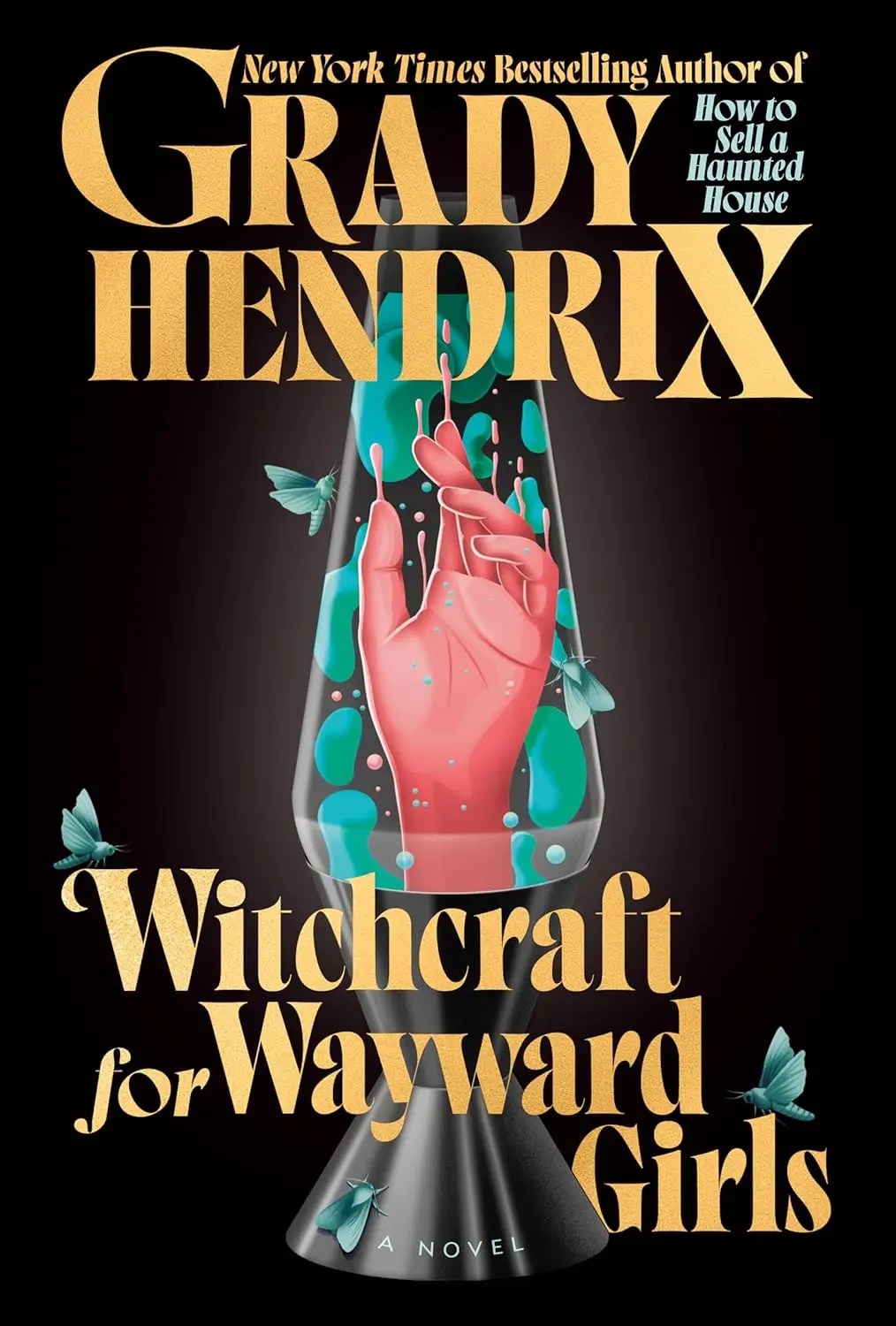
A chilling blend of historical fiction and supernatural horror, this novel explores what happens when pregnant teenage girls—hidden away in a 1970s home for wayward girls—discover the dark power of witchcraft.
Summary:
They call them wayward girls. Loose girls. Girls who grew up too fast. And they’re sent to the Wellwood Home in St. Augustine, Florida, where unwed mothers are hidden by their families to have their babies in secret, give them up for adoption, and most important of all, to forget any of it ever happened.
Fifteen-year-old Fern arrives at the home in the sweltering summer of 1970, pregnant, terrified and alone. Under the watchful eye of the stern Miss Wellwood, she meets a dozen other girls in the same predicament. There’s Rose, a hippie who insists she’s going to find a way to keep her baby and escape to a commune. And Zinnia, a budding musician who knows she’s going to go home and marry her baby’s father. And Holly, a wisp of a girl, barely fourteen, mute and pregnant by no-one-knows-who.
Everything the girls eat, every moment of their waking day, and everything they’re allowed to talk about is strictly controlled by adults who claim they know what’s best for them. Then Fern meets a librarian who gives her an occult book about witchcraft, and power is in the hands of the girls for the first time in their lives. But power can destroy as easily as it creates, and it’s never given freely. There’s always a price to be paid…and it’s usually paid in blood.
Review:
I had previously read Grady Hendrix’s My Best Friend’s Exorcism and remembered liking it more than I actually did. When I revisited my review, I realized I had enjoyed the concept far more than the execution—and unfortunately, that’s exactly how I feel about this book as well.
One thing I didn’t realize before picking this up is that Hendrix is a male author. I read My Best Friend’s Exorcism digitally, so it wasn’t until I saw the author photo on my library copy that it became obvious. Now, that’s not to say men can’t or shouldn’t write about women’s issues—but in my experience, if a book is expressly about women’s experiences (such as pregnancy and abortion), I tend to dislike it when it’s written by a man. Hendrix acknowledges this in a note, explaining that his inspiration came from a family member’s experience as a wayward girl, and I appreciate the personal connection as well as the research he put in. That said, I still struggled with the execution. In retrospect, this also explains issues I had with My Best Friend’s Exorcism—especially the queer-baiting between the two best friends. The way their relationship was written didn’t quite reflect how best girlfriends interact. I now wonder if Hendrix was inserting subtext without realizing it. But I digress—back to this book.
This is a long book, and it takes quite a while before the supernatural horror elements appear. When they do, they feel sporadic—as if the book can’t quite decide whether it wants to be historical fiction or horror. According to the author’s note, an earlier version was pure historical fiction, and it shows. The witchcraft elements feel both tacked-on and underwhelming, lacking the impact they seem to be aiming for. The spellcasting scenes, in particular, drag on too long—the book repeatedly emphasizes how rituals are tedious, repetitive, and boring, and then actually makes the reader sit through them in full dialogue.
The novel also struggles with whether the witches are heroes or villains. At first, they seem to empower the girls in a feminist, girl-power way, but later, they’re positioned as the main threat. I can see the poetic logic in showing that these girls had no real options, but at the same time, a novel like this needs a stronger thematic core—a sense of hope, justice, or at least a clear vision for a better future. On the plus side, I never knew what would happen next or how it would wrap up. Even when I felt frustrated, I kept reading simply because I needed to know how it all ended.
While the book does include a Black teen girl at the home, the handling of race and racism felt superficial at best. The only acknowledgment of racism in 1970s Florida is a scene where the home’s director initially wants to separate the Black girl from the others, only for a hippie character to protest and swap rooms with her. That’s it. This felt wildly unrealistic for the time period.
Beyond this, there are three other Black characters: the cook, the maid (her sister), and a driver. While these are historically accurate roles, the cook is a blatant magical negro trope, complete with a sassy personality and a role that exists entirely to serve and clean up after the white girls. I cringed. A lot. The white characters take advantage of her kindness without any acknowledgment of how their actions impact her life. I also disliked how Black characters’ skin tones were described.
Readers should be aware that this book includes:
- Graphic descriptions of self-injury related to spellcasting.
- Traumatic childbirth.
- Forced institutionalization & adoption.
- Emotional abuse.
- Mentions of CSA & child abuse (off-page).
- A spellcasting scene with explicit Christian blasphemy. (Expected for witches, but I do think it could have achieved the same effect without spelling out the blasphemy.)
Ultimately, this is historical fiction with horror elements rather than a true horror novel. It would have benefited from stronger thematic direction and a more nuanced approach to diversity, avoiding the Magical Negro trope. The book understands that these wayward homes were a problem, but it doesn’t seem to take a stance on what should have been done differently. It sends mixed messages about abortion, single teen motherhood, and autonomy—leaving it feeling murky rather than impactful. Recommended for readers who enjoy historical fiction with a touch of horror—and who don’t mind waiting for the horror to arrive. For those interested in the real history behind these homes, The Girls Who Went Away is a must-read.
If you found this review helpful, please consider tipping me on ko-fi, checking out my digital items available in my ko-fi shop, buying one of my publications, using one of my referral/coupon codes, or signing up for my free microfiction monthly newsletter. Thank you for your support!
3 out of 5 stars
Length: 482 pages – chunkster
Source: Library
Buy It (Amazon or Bookshop.org)
Book Review: How to Say Babylon: A Memoir by Safiya Sinclair
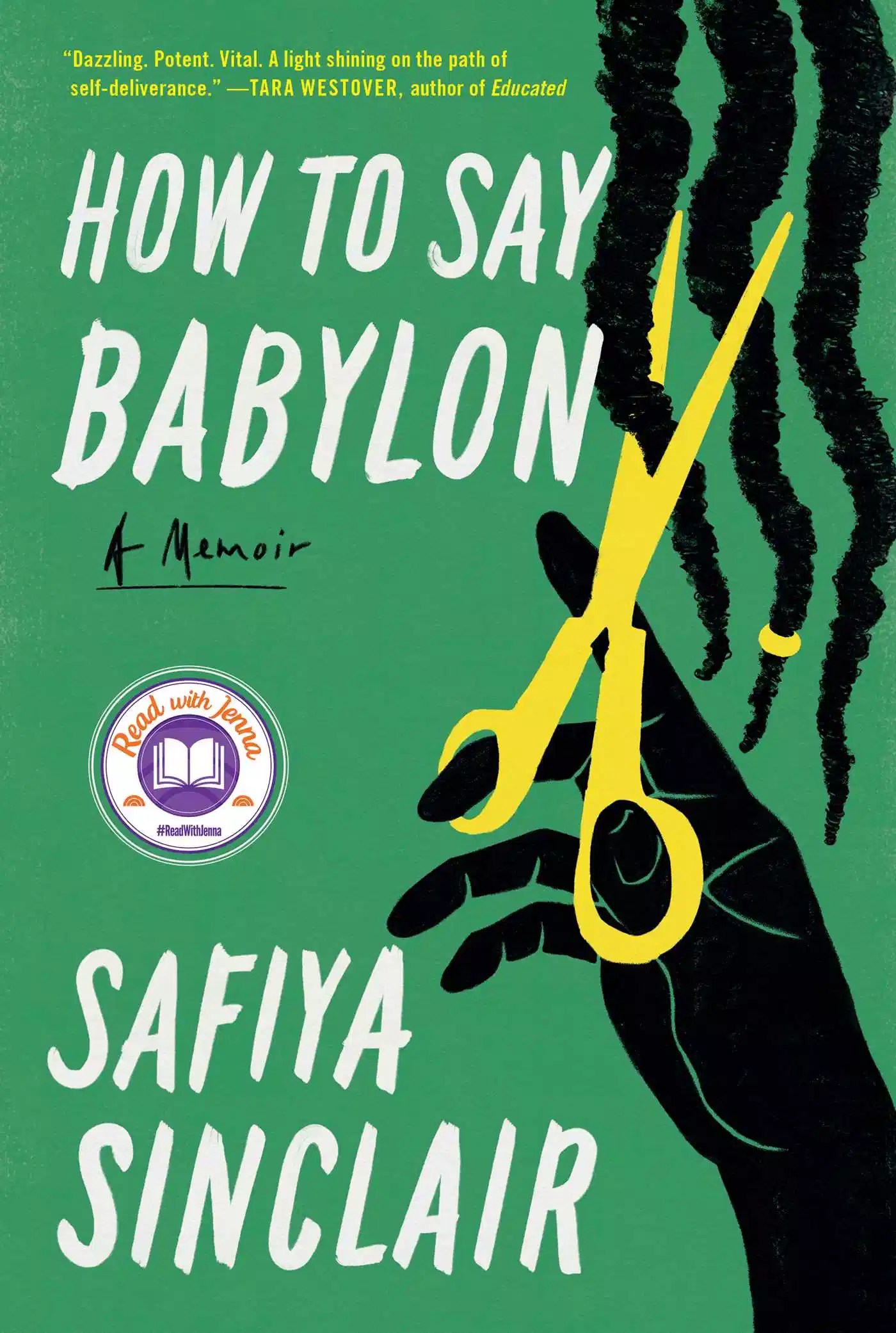
A poet recalls her childhood growing up as a minoritized Rastafarian in Jamaica with an abusive father.
Summary:
Throughout her childhood, Safiya Sinclair’s father, a volatile reggae musician and militant adherent to a strict sect of Rastafari, became obsessed with her purity, in particular, with the threat of what Rastas call Babylon, the immoral and corrupting influences of the Western world outside their home. He worried that womanhood would make Safiya and her sisters morally weak and impure, and believed a woman’s highest virtue was her obedience.
In an effort to keep Babylon outside the gate, he forbade almost everything. In place of pants, the women in her family were made to wear long skirts and dresses to cover their arms and legs, head wraps to cover their hair, no make-up, no jewelry, no opinions, no friends. Safiya’s mother, while loyal to her father, nonetheless gave Safiya and her siblings the gift of books, including poetry, to which Safiya latched on for dear life. And as Safiya watched her mother struggle voicelessly for years under housework and the rigidity of her father’s beliefs, she increasingly used her education as a sharp tool with which to find her voice and break free. Inevitably, with her rebellion comes clashes with her father, whose rage and paranoia explodes in increasing violence. As Safiya’s voice grows, lyrically and poetically, a collision course is set between them.
Review:
I picked this memoir up because I was interested in learning more about Rastafarianism. I was a religious studies minor in university, but Rastafarianism wasn’t something we’d touched on. The beginning of this book really delivered on educating me about the faith.
The memoir starts with a little introduction to Rastafarianism along with a brief history of Safiya’s father’s childhood and her mother’s childhood and what led each of them to convert to Rastafarianism. The religion sprang up in the 1930s as a faith of the most oppressed peoples in Jamaica. There is some disagreement as to whether Rastafarianism is a sect of Christianity or a separate faith entirely. Most Rastas believe that the Ethiopian Emperor Ras Tafari was the second coming of Christ. (In spite of him directly telling Rastas when he visited Jamaica that he was not Christ. Rastas felt that’s something Christ would say.) Just as with all faiths, there is a spectrum of beliefs and observances among Rastas. But there are three that are common.
First that the hair should not be cut, instead left in its natural state, leading them to dreadlocking it. Second, reggae as spiritual music. Third, smoking marijuana for spiritual experiences. Many Rastas are vegetarian, some are strict vegans. (Read more.) Something I found really beautiful was how Rastas adjust their speech, specifically how they will say “the I-and-I” as a reminder that God is indwelling in them. Safiya’s father will sometimes say “the I-man” to clarify when it was something limited to just him, and not him and God. The only thing I knew about Rastafarianism before I read this book was that it was common in Jamaica, so I learned a lot in an easy, beautiful way. The author didn’t just rely on her own childhood understanding of the faith but also interviewed Rasta elders and did some additional reading for the book. And it shows. To me, this was the strongest part of the book.
I thought when I picked this up it was a memoir of religion, but I think after reading it would be more accurate to say it was a memoir about an abusive father/daughter relationship that was at least a bit entwined with religion. So the focus was the abuse, not the religion. But it was necessary to understand the religion in order to understand some of where her father was coming from. Safiya’s father was on the more conservative end of the spectrum with regards to Rastafarianism. (He was also a reggae musician who kept running up against bad luck.) The family were strict vegans. He was more patriarchal and quite concerned about keeping his daughters safe from “Babylon” (the outside influence and dangers) in a way he wasn’t so much about his son.
But there are things that surprised me given the clear conservative lean of the family. The children all go to school. The daughters are encouraged to excel just as much as the son is. (The author even gets into an elite private school on scholarship, something that makes her parents very proud.) The children are allowed to continue living at home, even when they do things that go against the Rastafarian way. For example, the author models and cuts off her dreadlocks. I also was surprised to learn that Rastas were treated poorly in Jamaica while the author was growing up. She’s ridiculed due to being Rasta, and it wasn’t possible for her to pass as no one else seemed to have dreadlocks.
The abuse, though, is quite brutal. I was expecting from the book’s description emotional/spiritual abuse. Those do exist. But serious physical abuse does as well. One chapter titled “The Red Belt” made my chest ache to read. Any reader going into the book should be aware of this. I think some readers will relate to how Safiya deals with her father, and others will struggle to understand it.
The author is primarily a poet. Her work in poetry is what helped her achieve her goal of emigrating from Jamaica. Her poetic skills are evident in this book. I’m sure a reader who loves poetry will connect with this more than I did. I struggle to connect with poetry and so, even though I saw the beauty in the words, I struggled for them to move me. Similarly, while I always love to hear people talk about what they love doing, I didn’t connect with the author’s connection to poetry the way I would if I loved it similarly.
Overall, this is a book that will mean a lot to a reader who loves poetry and is able to read passages about physical and emotional abuse. Readers who like to root for someone to pivot into a life entirely different from how they grew up.
If you found this review helpful, please consider tipping me on ko-fi, checking out my digital items available in my ko-fi shop, buying one of my publications, using one of my referral/coupon codes, or signing up for my free microfiction monthly newsletter. Thank you for your support!
3 out of 5 stars
Length: 352 pages – average but on the longer side
Source: Library
Buy It (Amazon or Bookshop.org)
Book Review: Poison Study by Maria V. Snyder (Series, #1) (Bottom of TBR Pile Challenge)
Summary:
Yelena is on death row for killing a man in the military state of Ixia but on the day of her execution she faces a choice. Become the Commander’s food taster and face possible death by poison every day or be hanged as planned. Being a smart person, Yelena chooses the former. Now that she has admittance to the inner circle of the military state, she quickly comes to see that not everything is quite as it seems….not even her own personal history or her heart.
Review:
*sighs* You guys. I have got to stop letting people convince me to pick up books using the phrase, “I know you don’t like [blank] but!” That is how this book wound up on my tbr pile. “I know you don’t like fantasy, but!” and also “I know you don’t like YA, but!” oh and “I know you don’t like romance in YA, but!” A reader knows her own taste. And I don’t like any of those. I still came at it with hope, though, since I did like one fantasy book I read this year (Acacia). There’s a big difference in how they wound up on my pile though. I chose Acacia myself because its reviews intrigued me. Poison Study was foisted upon me by well-meaning friends. So, don’t get my review wrong. This book isn’t bad. It’s just what I would call average YA fantasy. Nothing made it stand-out to me, and it felt very predictable.
The world of Ixia felt similar to basically every other fantasy world I’ve seen drawn out, including ones friends and I wrote up in highschool. Everyone has to wear a color-coded uniform that makes them easily identifiable. There are vague similarities to the middle ages (like Rennaisance-style fairs). There are people in absolute control. There is magic and magicians who are either revered or loathed. There are all the things that are moderately similar to our world but are called something slightly different like how fall is “the cooling season.” Some readers really like this stuff. I just never have. I need something really unique in the fantasy world to grab me, like how in the Fairies of Dreamdark series the characters are tinkerbell-sized sprites in the woods who ride crows. That is fun and unique. This is just….average.
Yelena’s history, I’m sorry, is totally predictable. I knew why she had killed Reyad long before we ever find out. I suspected early on how she truly came to be at General Brazell’s castle. I didn’t know the exact reason he had for collecting these people, but I got the gist.
And now I’m going to say something that I think might piss some readers off, but it’s just true. What the hell is it with YA romance and exploitative, abusive douchebags? This may be a bit of a spoiler, but I think any astute reader can predict it from the first chapter who the love interest is, but consider yourself warned that it’s about to be discussed. Yelena’s love interest is Valek, the dude who is the Commander’s right-hand man and also who offers her the poison taster position and trains her for it. He manipulates her throughout the book, something that Yelena herself is completely aware of. There are three things that he does that are just flat-out abusive. First, he tricks her into thinking that she must come to see him every two days for an antidote or die a horrible death of poisoning. (Controlling much?) Second, he sets her up in a false situation that she thinks is entirely real to test her loyalty to him. (Manipulative and obsessive much?) Finally, and this is a bit of a spoiler, even after professing his love for her, he asserts that he would kill her if the Commander verbally ordered it because his first loyalty is to him. What the WHAT?! Even the scene wherein he professes his love for Yelena he does it in such a way that even she states that he makes her sound like a poison. There’s a healthy start to a relationship. *eye-roll* All of this would be ok if Yelena ultimately rejects him, asserting she deserves better. But she doesn’t. No. She instead has happy fun sex times with him in the woods when she’s in the midst of having to run away because Valek’s Commander has an order out to kill her. This is not the right message to be sending YA readers, and yet it’s the message YA authors persist in writing. I could go into a whole diatribe on the ethics of positively depicting abusive relationships in literature, especially in YA literature, but that should be its own post. Suffice to say, whereas the rest of the book just felt average to me, the romance soured the whole book. It is disappointing.
Ultimately then, the book is an average piece of YA fantasy that I am sure will appeal to fantasy fans. I would recommend it to them, but I feel that I cannot given the positively depicted unhealthy romantic relationship the main character engages in.
2 out of 5 stars
Source: PaperBackSwap

 Support my work with a tip or browse my shop for curated book club guides, how to guides, cross-stitch patterns, and more!


This work by Amanda Nevius is licensed under a Creative Commons Attribution-Noncommercial-No Derivative Works 3.0 United States License.
 Opinions of a Wolf