
Archive
Book Review: The Edible Woman by Margaret Atwood (Bottom of the TBR Pile Challenge)
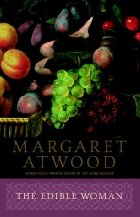 Summary:
It’s the 1960s in Canada, and Marian McAlpin is working writing and analyzing surveys for a marketing research firm. She has a feminist roommate she doesn’t quite understand, and hangs out with the three office virgins for lunch. Her boyfriend is comfortable and familiar. When he proposes to her, the office virgins think she’s hit the jackpot, her roommate questions why she’s following the norm, and her married and very pregnant friend seems hesitant about her fiancee. None of this really bothers Marian, though. What does bother her is that, ever since her engagement, there are more and more things she simply can’t eat. First meat then eggs then even vegetables! She thinks of herself causing them suffering, and she just can’t stomach them. What will happen to her if there’s eventually nothing left for her to eat?
Review:
I’m a fan of a few Margaret Atwood books, and the concept of this book intrigued me. Since I run the Mental Illness Advocacy Reading Challenge, I was also wondering if this might actually be a new take on anorexia. Unfortunately, Marian is not really anorexic, it’s more of an elaborate, overdone metaphor. Perhaps the plot is simply dated, but the interesting concept, when fleshed-out, comes out rather ho-hum.
The novel is divided into three parts, with Marian using first-person narration for the first and third parts, with third person narration taking over for the second. This is meant to demonstrate how Marian is losing herself and not feeling her own identity. It’s an interesting writing device, and one of the things I enjoyed more in the book. It certainly is jarring to suddenly go from first to third person when talking about the main character, and it sets the tone quite well.
It’s impossible to read this book and not feel the 1960s in it. Marian is in a culture where women work but only until marriage, where women attending college is still seen as a waste by some, and where there is a small counter-cultural movement that seems odd to the mainstream characters and feels a bit like a caricature to the modern reader. However, the fact that Marian feels so trapped in her engagement, which could certainly still be the case in the 1960s, doesn’t ring as true, given the people surrounding Marian. Her roommate is counter-cultural, her three office friends claim to want a man but clearly aren’t afraid of aging alone and won’t settle. Her married friend shares household and child rearing with her husband, at least 50/50. It’s hard to empathize with Marian, when it seems that her trap is all of her own making in her own mind. She kind of careens around like aimless, violent, driftwood, refusing to take any agency for herself, her situation, or how she lets her fiancee treat her. It’s all puzzling and difficult to relate to.
The Marian-cannot-eat-plot is definitely not developed as anorexia. Marian at first stops eating certain meats because she empathizes with the animals the meat came from. As a vegetarian, I had trouble seeing this as a real problem and fully understood where Marian was coming from. Eventually, she starts to perceive herself as causing pain when eating a dead plant, bread, etc… The book presents both empathizing with animals and plants as equally pathologic, which is certainly not true. Marian’s affliction actually reminded me a bit of orthorexia nervosa (becoming unhealthily obsessed with healthy eating, source) but the book itself presents eliminating any food from your diet as pathologic. Either Marian eats like everyone else or she is going off the deep-end. There is no moderate in-between.
What the Marian-cannot-eat-plot is actually used for is as a metaphor for how Marian’s fiancee (or her relationship with him) is supposedly consuming her. The more entwined with her fiancee she becomes in society’s eyes, the closer the wedding comes, the less Marian is able to consume, because she herself is being consumed. This would be quite eloquent if Marian’s fiancee or her relationship with him was actually harmful or consuming, but it certainly does not come across that way in what we see of it in the book.
Marian presents herself to her boyfriend then fiancee as a mainstream person, and he treats her that way. He does one thing that’s kind of off-the-rocker (crashes his car into a hedge) but so does she on the same night (runs away in the middle of dinner, across people’s backyards, for no apparent reason and hides under a bed while having drinks with three other people at a friend’s house). The only thing that he does that could possibly be read as a bit cruel is when she dresses up for a party he states that he wishes she would dress that way more often. It’s not a partner’s place to tell the other how they should dress, but it’s also ok to express when you like something your partner is wearing. Personally I thought the fiancee really meant the latter but just struggled with appropriately expressing it, and Marian herself never expresses any wants or desires directly to him on how they interact, what they wear, what they eat, how they decorate, etc…, so how could he possibly know? In addition to never expressing herself to her fiancee, Marian also cheats on him, so how exactly the fiancee ends up the one being demonized in the conclusion of the book is a bit beyond me. He’s bad because he wanted to marry her? Okay…… The whole thing reads as a bit heavy-handed second-wave feminism to me, honestly. Marriage seems to be presented in the book as something that consumes women, no matter if they choose it or are forced into it by society. It is not presented as a valid choice if a woman is able, within her society and culture, to make her own choices.
In spite of these plot and character issues, the book is still an engaging read with an interesting writing style. I was caught up in the story, even if I didn’t really like the ideas within it.
Overall, this is a well-written book with some interesting narrative voice choices that did not age well. It is definitely a work of the 1960s with some second-wave feminism ideas that might not sit well with modern readers. Recommended to those interested in in a literary take on second-wave feminism’s perception of marriage.
3 out of 5 stars
Source: Better World Books

Book Review: The Second Lives of Honest Men by John R. Cameron
 Summary:
Professor Jacob Wentworth is the last of his kind, the only humanities professor at the university. With his retirement at the end of the year, the humanities department will officially be closed. But when the university’s star genius student, Bryce, takes a liking for Jacob and what he can teach him, Jacob stays on indefinitely. Jacob has refused to ever use the Interface directly. He won’t put in the contacts or earbuds that open up a whole virtual world. He doesn’t want to give the Company that much control over his life. In spite of his tutelage, years later Bryce is working on improving the Interface, making it into a brain implant instead of contacts. But Bryce’s connection with Jacob has done something to him, and he finds himself distracted by building a time machine and not wanting to help the Company anymore. Together they decide to bring Abraham Lincoln to the present, replacing him with a double just moments before his death. Maybe it will take a man out of time to save the future.
Review:
When this book was submitted to me during my annual review copy open submissions, I was immediately intrigued by the combination of a dystopian future with time-travel and history. Cameron’s story didn’t disappoint. The book gives a unique flair to the concept of fighting an overpowering dystopian government with the addition of time-travel and a historical figure that makes it engaging and highly readable.
The futuristic setting is both well-imagined and evoked in a non-intrusive, showing not telling way. It is easy to relate to Jacob immediately on his walk to work, and the futuristic elements are introduced gradually. It helps that Jacob is a bit of a luddite, as it gives him a bit of an outsider’s perspective to describe things to the reader. The futuristic tech described in the book is well-imagined. High tech contact lenses are definitely the wave of the future, and jumping from that to a neural interface makes total sense. Cameron also takes into account other elements of the future beyond the science, such as climate, politics, and trends. It’s a fun world to visit in spite of it being a dystopia.
Jacob and Bryce start out a bit two-dimensional but grow to be three-dimensional over the course of the story. The addition of the female biologist who assists them manages to add both diversity and a romance, which is nice. She also much more quickly takes on a three-dimensional quality. Having her and the romance around really kick the whole story up a notch. Abraham Lincoln was probably the most difficult character to handle, since he is obviously based on a real person. He is presented respectfully, yet still as a flawed human being. When he speaks, his words are accessible yet sound just different enough to provide the reader with the consistent cue that he is a man out of time.
The plot mostly works well, moving in a logical, well thought-out manner. The end has a bit of a deus ex machina that is rather disappointing.
*spoiler*
A main character is saved from death via time travel, thus making all of the main character “good guys” survive the battle with the Company. Stories about battles of one ideal against another are generally better if at least some casualties are had. I do not count a minor secondary character who dies, since that is akin to killing off a red shirt in Star Trek.
*end spoiler*
Some readers may be bothered by the level of anti-tech found in the book. The Interface isn’t just bad because the new neural version will give the Company control over people. It also is bad because it supposedly inhibits the development of the users’ brains, rendering them to an elementary level of intelligence. The book also strongly argues the idea that friends in virtual reality aren’t real friends, and that old tech, such as print books, are better. Even television is lauded as better than any virtual reality activity. I’m fine with not agreeing 100% with the protagonists in a story. It’s not necessary for me to enjoy it, and I appreciate seeing their perspective and the freedom fight that follows. However, this perspective may bother some readers, so they should be aware it exists within the story.
Overall, this is a well-written, original take on the idea of fighting a dystopian future with an advisor ripped out of time. The book is weakened a bit by a deus ex machina ending. Some readers may not like or enjoy the anti-tech position of the protagonists. It is still a fun frolic through a richly imagined possible future. Recommended to fans of dystopian scifi and US History.
4 out of 5 stars
Source: Kindle copy from author in exchange for my honest review

Book Review: Midnight in Peking: How the Murder of a Young Englishwoman Haunted the Last Days of Old China by Paul French
 Summary:
In 1937 the entire world is on the brink of war. In Peking, China, the Japanese invaders are encroaching. In the midst of this chaos the adopted daughter of British consulman is brutally murdered, her body found in the shadow of the Fox Tower, universally viewed with suspicion by the Pekingers as haunted by spirits. Due to the special circumstances, the murder investigation requires the presence of both a Chinese and a British investigator. They must race to find Pamela’s murderer before the Japanese engulf the city.
Review:
This true crime novel takes a bit to get things set up, but once they are, oh my how it sucks you in.
My fellow librarians will appreciate the backstory of how this true tale was discovered by French. In the Afterword he states that he was digging around in some archives and stumbled upon a box of evidence that Pamela’s father sent off to the government, which was never really looked at and just put away in storage and then into archives. It was through libraries that he even discovered this fascinating, intersectional true crime. I think that’s encouraging to any librarian who has ever spent hours making a finding aid for archives.
So just what makes this true crime more fascinating than others? Pamela was the adopted daughter of Werner, and her adoptive mother died at a young age. She had been away at boarding school in Tientsin and was home for the holidays. Because she was born in China but was also adopted by British consulman, there is an interesting assimilation into Chinese culture going on in her life that we don’t often see in Western novels. Peking itself featured the legations and white districts for multiple different white Western countries. This means that because Pamela was technically a British citizen murdered on Chinese ground both the Chinese and the British police force had to be involved and work together in the investigation. Officer Han and DCI Dennis certainly make for a unique investigation team. In addition, Pamela’s body was discovered in the shadow of the Fox Tower, and this led to speculation about fox spirits, which in Chinese tradition show up as wily women. Of course quickly the seedy underbelly of Peking is implicated, featuring a multicultural bunch of addicts, dope dealers, brothels, and more, and naturally some of the classy elite start to be implicated into that underworld as well. Add in the fact that the Japanese invasion was encroaching and toss in the first rumblings of Communism, and it makes for a story that is impossible to not find fascinating.
French unfurls the story well. He quotes only when it is fairly certain what was said, but summarizes scenes well. A clear picture of both Pamela and Peking are rendered fairly early in the novel. I also appreciate that he spent time at the end talking about what happened to all of the key players and discussing how all-encompassing the Japanese invasion were. I think what he handled best though was presenting people as individuals and not representative of their race or nation or even class. In a true crime as multicultural as this one, that is important. It’s also nice that in a story that could have easily turned into victim blaming, which happens so often when the victim is a young woman, he eloquently avoids any hint of that:
Pamela wasn’t perfect; she was making the same mistakes many girls do when experimenting with their independence, their newfound power on men. Her tragedy was to encounter the wrong men, at just the wrong moment. (location 2834)
I did, however, feel that the beginning was a bit lacking. It took a bit to truly get into the story. A faster pace or a more clear this is where we are going set-up would have been nice. At first it felt like the rather dull story of some poor little imperialist rich girl. But that’s not the story at all. The story is that of an adopted girl in a country where she just so happens to be the color of worldwide colonizers, but it is instead the story of a diverse group of people horrified by the brutal murder of a young woman by a diverse group of sick, twisted people. It would be nice if that was more clear from the beginning.
Overall, this is a well-told, historic true crime novel that manages to avoid victim blaming and also embrace multiculturalism. It will be of particular interest to anyone with a fascination for Chinese or WWII history.
4 out of 5 stars
Source: Netgalley

Book Review: Across the Table / Dancing on Sunday Afternoons by Linda Cardillo (Bottom of TBR Pile Challenge)
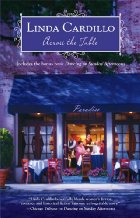 Summary:
This book actually consists of two different books packaged together into one. They are both standalones, not in a series together.
Across the Table
Follow three generations of an Italian-American Boston family, starting with Rose, who marries a navy seaman right before WWII breaks out. The family ultimately buys a restaurant on Salem Street in the historic North End, and food and the family business both help keep the family together through trials and heart-aches.
Dancing on Sunday Afternoons
Cara goes to care for her grandmother, Giulia, who has fallen and broken her hip on a visit back to the old country of Italy. While visiting her, Giulia reveals to her the story of her first love who died when Cara’s father was just a baby.
Review:
This book made it onto my tbr pile because I found it on trash day on top of a neighbor’s recycling pile. It was one of those cases where obviously someone had given up actually packing for their move and was just chucking it all. The book was in pristine condition, so I yoinked it away (along with two others). Shocker: when I opened this to read it, I discovered that it’s signed by the author. I also didn’t realize until I started reading it that there’s actually two totally separate books in it. The cover only says the first title and mentions a bonus book in rather small type. So this one was full of surprises!
Across the Table
This story is based on the author’s family history, and you can honestly tell. It’s full of so much heart and reality. It’s not your typical romance or women’s fiction. The family felt entirely real, and you could understand why they made the choices they did, even if you wouldn’t have done the same thing. I found Rose by far to be the most interesting, but that’s not really a surprise. I’ve always had a thing for the 1940s, and her life in that decade was simultaneously unique and typical. She spent a couple of years before the war on a tropical island (whose name I cannot remember, I apologize) with her husband. It all felt very South Pacific, but she states that spending this time there gave her and her husband a solid base for the rest of their lives together. They had to really depend on each other. She also said that living there made her question the racism she was raised in and ultimately stop her racist thoughts and actions. They were never extreme, just that avoidance of people visibly different from you that you sometimes see. I also loved that the story is based to solidly in Boston. Cardillo obviously grew up here or visited family a lot here, since she understands simple things like how it takes an hour at least to get from the North End to Cambridge, or how different one side of the river is from the other. The family business and food aspects were also perfectly handled. Just enough to set the atmosphere but not so heavy-handed you wonder if the author forgot about the relationships at the heart of the story. There’s also a nice touch of an uncle/brother/son who is gay, and his Catholic family’s reaction to this is a positive, refreshing change. Perhaps even more so since the reader knows the story is based on a real family. Overall, I absolutely loved this book. It had everything I like in both historic and women’s fiction.
5 out of 5 stars
Dancing on Sunday Afternoons
In contrast, this book was far more tedious and full of cliches and….well basically everything that I don’t like about historic and women’s fiction. Giulia’s immigration story and her family are not particularly easy to empathize with. Her family is incredibly wealthy in Italy, and everyone worries more about appearances than about actually doing the right thing. Even Giulia’s rebellion of marrying the man she wants to marry isn’t all that admirable. She only does it ultimately with the family’s blessing, and her reaction when her husband dies is appalling. (This is not a spoiler. You learn in the first chapter that Giulia’s first husband died). I know that old families really could be like this, but I guess it made less sense being told this way since Giulia was telling the story to her modern granddaughter. I didn’t see any wisdom of age coming through in the telling. I know when my older family members tell me something from their youth, they also discuss what they learned from it. They try to impart some wisdom on me so I don’t make similar mistakes or so that I’m willing to take similar risks. Giulia’s story just doesn’t feel like an elderly person relating to a young family member. I suppose if you really love historic, clean romance novels, you might enjoy this one more than I did. Personally I need this genre to have something extra to really grab me.
3 out of 5 stars
Overall, then, I must average the two books out. I loved the first, but felt that I was not the target audience for the second. It is worth noting that the second was actually Cardillo’s first novel, so her second book was a big improvement. I’ll be keeping my eye on this author, particularly for more work set in Boston. As far as recommendations go, I recommend these books to fans of historic fiction with a focus on romance and women’s personal lives.
4 out of 5 stars
Source: recycling bin

Book Review: The Value of Rain by Brandon Shire
 Summary:
Charles hasn’t been home since his mother and uncle sent him away to an insane asylum at the age of fourteen after he was found in the embrace of his first love–Robert. Now, ten years later, his mother, Charlotte, is dying, and he comes back to take his revenge.
Review:
This is one of those genre-defying books. Although classified as LGBTQIA+, it is so much more than a genre. Shire explores the devastating effects of prejudice, hate, secrets, and lies throughout family generations, and that is something that is simultaneously universal and tragic.
The book constantly takes the reader by surprise. At first it seems an expected my-family-didn’t-love-me-because-I’m-gay story, but Charles does *not* get a free pass simply because he is hurt by his family. He is given chances at new life and redemption from a hate-enshrouded existence, but he doesn’t choose that path. It is painful to watch, and yet simultaneously understandable. I applaud Shire for not taking the easy way and by making Charles an easy hero.
The writing is particularly eloquent and strong in description, especially when describing painful topics. For instance:
She had lived in the maze of Charlotte’s thumbprint and she had not survived. (location 1349)
On the other hand, the dialogue sometimes struggles in comparison to the lyrical descriptions. For instance, characters often say people’s names more frequently than is natural. This is a kink that I am sure will be ironed out with time and experience.
I also loved and was totally shocked by the ending. That is not an easy thing to do to this reader.
Overall this book represents all that can be great about indie publishing. It is a deep, dark story with a minority, tragic hero that most likely would not be told at a traditional publishing house due to the fact that it does not easily fit into any one genre or marketing scheme. Of course, that is also why I love it.
Recommended to those with an interest in LGBTQIA+ main characters and multi-generational family dramas.
4 out of 5 stars
Source: Kindle copy from author in exchange for my honest review

Note: Half of all proceeds donated to LGBT Youth Charities.
Book Review: The Group by Mary McCarthy
 Summary:
A collection of women graduate from Vassar in the 1930s. Their friendship is known collectively as “The Group,” and their distinctive Vassar education has given them a distinctly liberal view on the world. How this changes with time as they repeatedly encounter societal expectations and relationship problems are told through a series of vignettes that focus in on moments in their lives over the seven years after graduation.
Review:
I am so glad that Nymeth’s review made me add this to my wishlist. This piece of historical fiction told entirely through women’s lives looks at women’s issues in an oft-ignored time period–1930s America. Particular issues that impact these women’s lives and dreams include birth control, gender norms, violence against women, and social justice.
Moving smoothly through the seven years but changing perspectives by spending a chapter or two on each woman in turn, we get a glimpse of their lives. For instance, early in the book we see Kay’s life in detail, but later we only catch glimpses of it through her friends’ eyes. This lends a greater sense of depth and mystery to these women’s lives. What happened to change them? How drastic of an impact did certain events have on their lives? Are they truly happy now? Much like real life, the reader can only speculate based on the limited information she has.
The style of looking at women’s issues in history through the lives of multiple women lends a depth to the story that would not be there if it was told in the traditional manner of focusing in on one single woman. The, essentially, cluster-fuck of circumstances, expectations, and personality that come together to create the different lives they end up leading is endlessly fascinating to study and ponder.
This book humanizes women’s issues in the 1930s and brings them to light in an engrossing manner. I highly recommend this book to anyone with a love of historic fiction or an interest in women’s issues.
5 out of 5 stars
Source: PaperBackSwap

Book Review: A Doll’s House by Henrik Ibsen

Summary:
It’s Christmas time and Nora is eagerly getting ready for the holidays with her husband, Torvald, their children, and their friend Dr. Rank when her old friend, Christine, shows up in town. Christine is recently widowed and is looking for work. Nora, who appears flighty and silly at first, informs Christine that she saved her husband’s life when they were first married by taking a loan from, essentially, a loan shark to pay for them to take a trip to Italy. He remains unaware of both the loan she is working on repaying and the fact that his life was ever in danger. Unfortunately, things come to a head when the man who loaned her the money, Krogstad, threatens to reveal all to her husband.
Review:
This three-act dramatic play was first performed in 1879. It explores the nature of domestic relationships in a way that still holds relatability and power today. The play accomplishes this using the same set design of the Helmer family’s living room throughout all three acts. I found myself impressed by the different feelings evoked by the identical set in each act.
Get the full text of this review by clicking here! (It is 7 paragraphs total with 604 words).
4 out of 5 stars
Length: 88 pages – novella/short nonfiction
Source: Audiobooks app for the iTouch, iPhone, and iPad.
Buy It (Amazon or Bookshop.org)
 Support my work with a tip or browse my shop for curated book club guides, how to guides, cross-stitch patterns, and more!


This work by Amanda Nevius is licensed under a Creative Commons Attribution-Noncommercial-No Derivative Works 3.0 United States License.
 Opinions of a Wolf