
Archive
Book Review: Midnight in Peking: How the Murder of a Young Englishwoman Haunted the Last Days of Old China by Paul French
 Summary:
In 1937 the entire world is on the brink of war. In Peking, China, the Japanese invaders are encroaching. In the midst of this chaos the adopted daughter of British consulman is brutally murdered, her body found in the shadow of the Fox Tower, universally viewed with suspicion by the Pekingers as haunted by spirits. Due to the special circumstances, the murder investigation requires the presence of both a Chinese and a British investigator. They must race to find Pamela’s murderer before the Japanese engulf the city.
Review:
This true crime novel takes a bit to get things set up, but once they are, oh my how it sucks you in.
My fellow librarians will appreciate the backstory of how this true tale was discovered by French. In the Afterword he states that he was digging around in some archives and stumbled upon a box of evidence that Pamela’s father sent off to the government, which was never really looked at and just put away in storage and then into archives. It was through libraries that he even discovered this fascinating, intersectional true crime. I think that’s encouraging to any librarian who has ever spent hours making a finding aid for archives.
So just what makes this true crime more fascinating than others? Pamela was the adopted daughter of Werner, and her adoptive mother died at a young age. She had been away at boarding school in Tientsin and was home for the holidays. Because she was born in China but was also adopted by British consulman, there is an interesting assimilation into Chinese culture going on in her life that we don’t often see in Western novels. Peking itself featured the legations and white districts for multiple different white Western countries. This means that because Pamela was technically a British citizen murdered on Chinese ground both the Chinese and the British police force had to be involved and work together in the investigation. Officer Han and DCI Dennis certainly make for a unique investigation team. In addition, Pamela’s body was discovered in the shadow of the Fox Tower, and this led to speculation about fox spirits, which in Chinese tradition show up as wily women. Of course quickly the seedy underbelly of Peking is implicated, featuring a multicultural bunch of addicts, dope dealers, brothels, and more, and naturally some of the classy elite start to be implicated into that underworld as well. Add in the fact that the Japanese invasion was encroaching and toss in the first rumblings of Communism, and it makes for a story that is impossible to not find fascinating.
French unfurls the story well. He quotes only when it is fairly certain what was said, but summarizes scenes well. A clear picture of both Pamela and Peking are rendered fairly early in the novel. I also appreciate that he spent time at the end talking about what happened to all of the key players and discussing how all-encompassing the Japanese invasion were. I think what he handled best though was presenting people as individuals and not representative of their race or nation or even class. In a true crime as multicultural as this one, that is important. It’s also nice that in a story that could have easily turned into victim blaming, which happens so often when the victim is a young woman, he eloquently avoids any hint of that:
Pamela wasn’t perfect; she was making the same mistakes many girls do when experimenting with their independence, their newfound power on men. Her tragedy was to encounter the wrong men, at just the wrong moment. (location 2834)
I did, however, feel that the beginning was a bit lacking. It took a bit to truly get into the story. A faster pace or a more clear this is where we are going set-up would have been nice. At first it felt like the rather dull story of some poor little imperialist rich girl. But that’s not the story at all. The story is that of an adopted girl in a country where she just so happens to be the color of worldwide colonizers, but it is instead the story of a diverse group of people horrified by the brutal murder of a young woman by a diverse group of sick, twisted people. It would be nice if that was more clear from the beginning.
Overall, this is a well-told, historic true crime novel that manages to avoid victim blaming and also embrace multiculturalism. It will be of particular interest to anyone with a fascination for Chinese or WWII history.
4 out of 5 stars
Source: Netgalley

Book Review: Quiet: The Power of Introverts in a World That Can’t Stop Talking by Susan Cain
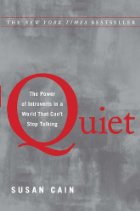 Summary:
Cain explains how the Extrovert Ideal became the norm in Western culture then proceeds to define the reality of the existence of both introverts and extroverts, not just among humans, but in the non-human animal kingdom as well. She explains the pluses and minuses of both personalities and provides advice for individuals, parents, and businesses in bringing out the best potential in both.
Review:
This book has been all the rage among book bloggers, which probably isn’t that surprising. Readers tend to be introverts, and the book’s title certainly implies that it’s all about us. In actuality though, although the book does have a focus on introverts, it also contains lots of information on extroverts and how we are all different but equally valuable to the world. Indeed, the Introduction features a statement that basically defines the point of the book as a whole:
Our lives are shaped as profoundly by personality as by gender or race. And the single most important aspect of personality—the “north and south of temperament,” as one scientist puts it—is where we fall on the introvert-extrovert spectrum. (page 2)
After the Introduction, the book is divided into four parts: The Extrovert Ideal, Your Biology Your Self, Do All Cultures Have an Extrovert Ideal, and How to Love How to Work. As someone who was a History major in undergrad, I found the first section completely fascinating. It explains how western culture, particularly American culture, went from an introvert ideal to an extrovert one. It, not surprisingly, was all tied up with the Industrial Revolution. Before the Industrial Revolution people mostly interacted with people they had known most of their lives or who they would have time to get to know. After, if you wanted to make it in the business world, you had to make an amazing first impression. This push to give off the aura of friendly and awesome edged out the prior expectation to develop a moral character. This section also talks about how Evangelical Protestants take the Extrovert Ideal to an even greater extreme:
If you don’t love Jesus out loud, then it must not be real love. It’s not enough to forge your own spiritual connection to the divine; it must be displayed publicly. (page 69)
I’ve taken the Meyers-Brigg personality test multiple times at various points in my life. I am always solidly an INTJ. The I is for introvert. I was also raised Evangelical (although I am now an Agnostic). This section rocked my world. I even mentioned on GoodReads that it basically explained my life to me. Cain talks about how difficult it can be to be an introverted child or young person being raised in a culture of Extrovert Ideal. I wasn’t just raised in the American one (who just so happen to be the most extroverted people on the planet, page 186), but I was also raised in the most Extrovert Ideal culture within that culture–Evangelical. It’s no wonder I had some issues figuring out who I am and being ok with that. I can barely fathom what a difference it would have made in loving and accepting myself if I’d even just been told it is just as ok to worship alone in the woods as to be loud and proud about it in public.
The next section is more sciencey and discusses the biology behind personality differences. This section can definitely be empowering as it lets people know precisely how you became an introvert or extrovert. The overarching philosophy is that more sensitive babies, as in ones who are more easily startled or frightened of strangers, are predispositioned to become introverts. Nurture also affects this, of course. Cain discusses the good qualities of both highly sensitive and less sensitive kids and how how they are raised can either bring out the good or the bad in either natural temperament. Of course this is a great area for parents and those who work with kids, but it also explains to the reader how they got this way and what false ideas they might have about themselves. For me, this is the section that explained to me why I’m so passionate about causes like vegetarianism and mental illness advocacy. Introverts tend to be oriented around causes. An example of an introvert/extrovert pair who both got things done in their own way that Cain uses is Eleanor and Franklin Roosevelt. This is a wisely chosen example because both are people to look up to who played to their own personality strengths.
Personally I wasn’t so into the next section. As compared to the other sections that are three chapters, this one consists of only one. It essentially compares Asian culture to Western culture since Asian culture tends to idealize introversion over extroversion. I felt that this chapter was a bit rushed and less in-depth. Cain tried to cover both the experiences of Asian-Americans and all Asian culture as a whole. I understand that she wanted to address multicultural understandings of personality, but it does seem that this topic could be a book in and of itself. It felt a bit similar to the instances when in my job as an education and reference librarian that I tell a student their topic is too broad to possibly cover in one paper (or one thesis). It seems that a quick chapter on introversion versus extroversion worldwide could have been mentioned in the first section as a comparison without devoting a whole section to it. Similarly, the issues specific to immigrants to America from nations with an Introvert Ideal would have worked well in a different section. This would have felt more integrated and flowed better.
The final section contains advice on using your personality to your advantage in your life and also on how to strike a compromise with someone you care about of a different personality type. Overall, this section was well-written, although I felt not enough attention was given to “pseudo-extroverts,” introverts who have learned to pass as extroverts. This is a fascinating topic, particularly to an introvert who is constantly mistaken for an extrovert. I think this is the reality for a lot of people, and it deserved a bit more attention and research. For instance, Cain says in passing:
Emotional labor, which is the effort we make to control and change our own emotions, is associated with stress, burnout, and even physical symptoms like an increase in cardiovascular disease. (page 223)
I really wanted to know more about this! Particularly since I care so much about health and wellness. It almost seemed as if pseudo-extroversion deserved its own chapter.
The rest of the section though was great and quite helpful. I think if everyone followed the advice in it on dealing with other personality types and creating a loving environment for kids on both ends of the introvert/extrovert spectrum that we would have a much more positive world. Perhaps her best piece of relationship advice is A Free Trait Agreement.
A Free Trait Agreement acknowledges that we’ll each act out of character some of the time—in exchange for being ourselves the rest of the time. (page 221)
So for a couple consisting of an introvert and an extrovert they will go out some Friday nights and stay in and snuggle and read others. Preferably about 50/50. Mutual compromise. It’d be good to keep this in mind more often.
Overall, this is a well-written, accessible book regarding personality psychology and the history of it. It does flounder in some places and could have used another once-over for structure and focus, but it is well worth your time to read.
4 out of 5 stars
Source: Amazon

Book Review: Rabid: A Cultural History of the World’s Most Diabolical Virus by Bill Wasik and Monica Murphy
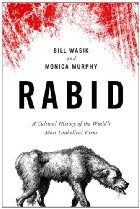 Summary:
Taking a cultural and public health perspective, husband/wife writing team, Wasik and Murphy, tell the history of the rabies virus through the present.
Review:
My new library (where I work as a librarian) serves a school of public health. Working with these students has opened up a whole new world of science to me. Public health is a fascinating combination of medicine, science, culture, and communication. So when I saw this public health book on Netgalley, I knew I needed to give it a shot.
This is a completely fascinating book. Prior to reading it, my main knowledge of rabies came from that episode of Dr. Quinn Medicine Woman where her adopted son’s dog gets rabies and bites her other adopted son’s fiancee. I didn’t really understand how much of a plague it used to be, but I did know that you’re required to get your pets vaccinated for it.
I learned SO MUCH from this book! And it wasn’t a struggle to read or absorb the information either. Wasik and Murphy strike that hard to find balance in writing science for the layman. They explain complex, scientific things without so much scientific terminology as to be a struggle for the average reader but with enough so that you’ve still learned something. For instance:
With most zoonotic leaps in disease, animal contact is the spark, but urbanization is the bone-dry tinder; a newly evolved pathogen can’t spread from person to person, after all, unless people run across one another in the first place. (location 453)
There are a few passages that use more scientific terminology than that, but they only use them after explaining them. You do not have to be a scientist to be able to read, enjoy, and learn from this book.
The basic structure of the book is typical of a history book. In fact, think of it kind of as a scientific history book. It starts with the earliest accounts of rabies and moves up through time to the present. The strongest passages are: Greco-Roman history of the disease, Dark Ages history of the disease, Pasteur’s creation of a vaccination, and the modern day outbreak in Bali. These strike the perfect balance of discussing the understanding and treatment of the disease and the reflections of rabies and fear of rabies in popular culture of that time period.
For instance, in the Greco-Roman period we learn:
Pliny’s thoughts tend to involve using the animal to treat the man. His best-known cure—to “insert in the wound ashes of hairs from the tail of the dog that inflicted the bite”—lives on today in our expression “hair of the dog,” referring to a not-quite-so-dubious hangover remedy. (location 473)
Or this fascinating bit of public health history in the Pasteur section:
Pasteur’s collaborator Roux believed that Pasteur selected rabies as a subject for research as a calculated bit of stagecraft, so that his ideas about vaccination would attract maximum public interest. (location 1714)
The other sections, particularly the era after the vaccine to about the 1980s, suffer a bit from a lack of focus and direction. There’s a part where the authors try to convince us that zombies are a reflection of a latent fear of rabies. Ok? But that’s rather speculative compared to the rest of the book. There are other elements of pop culture that are nowhere near as loosely connected that they discuss, such as the actual rabies books and movies that came out in the UK when the Chunnel was put in and people were afraid that rabid animals would come over to the island nation from France. That is a tight, interesting connection. The zombie one was a bit of a stretch. I was more interested in more information on things like Old Yeller and why the authors think that even with the vaccine in the US and very little threat at the time the public still was fascinated with the idea of a rabid dog.
The book also explores other zoonotic diseases (diseases that originate in non-human animals). Although this is also technically not rabies, this connection makes a lot more sense, particularly since more started cropping up in the 20th century after rabies was beaten down by vaccination. The knowledge we have from working against rabies and promoting vaccination of it via public health initiatives could really help with things like HIV/AIDS and H1N1. This is using past public health experience to aid in future endeavors, which helps give the book a certain umph and validity for modern readers.
So, although the book struggles a bit during the early 20th century time period, the rest of it is very well put-together. It is written at the appropriate level for a popular science history book. It is easy to learn from and includes lots of fascinating tid-bits in addition to the basic rabies history and information. It also demonstrates as a kind of side-story the history of public health. I recommend it to anyone with an interest in the history of rabies, the history of vaccination, and most especially to those with an interest in public health issues.
4 out of 5 stars
Source: Netgalley

Book Reread Review: Strawberry Girl by Lois Lenski
 Summary:
Birdie’s just moved to Floridy from Caroliny to farm strawberries with her family. But their neighbors, squatters headed by a mean drunk of a dad, won’t make life easy for them.
Review:
Rereading a childhood favorite is a dangerous endeavor. However, last year rereading Reddy Fox went well, so when the ebook version of this Lois Lenski classic showed up on Netgalley, I just had to try it out. I can see why I enjoyed it as a child, but I can’t really imagine adding it to the collection if I was a public librarian or, in the realm of more possibility, giving it to my nephew.
This is part of a series that Lenski wrote and illustrated in the 1940s about children living in different regions of America. The thought process was that kids saw children around the world in literature but not the vastly different ways of growing up all over America. A good idea, for sure. I can totally see why these books, written in painstaking vernacular to boot, were popular back then. They just didn’t age as well as they could have. Or, at least, this one didn’t.
Unlike the Little House series where the problems and dramas and joys are relatable, Birdie’s family basically repeatedly lets the neighbors walk all over them. There are also odd conundrums, such as how is Birdie’s family so working class and yet mysteriously has money? Most bothersome, though, is the fact that the central conflict of neighbor worthless father is wrapped up overnight when he gets saved at a revival meeting. Only the most evangelical of children will accept that as a fix. Plus, it gives an unrealistic expectation to children that the serious problem of an addicted parent can be solved with some yelling from a preacher. Not the most useful of message to be giving to children.
Although it’s not an unenjoyable read and the details of life in rural Florida in the 1940s are painstakingly accurate, it just simply hasn’t aged as well as other classics. It is still well-written, researched, and illustrated, however. I’d recommend it to adults with an interest in the history of American children’s literature.
3 out of 5 stars
Source: Netgalley

Book Review: Death By Petticoat: American History Myths Debunked by Mary Miley Theobald
 Summary:
This history book has assembled the most often-repeated myths of US History and one-by-one debunks them.
Review:
There is not much to say about a book that is so short. Listing only 63 myths, each summed up within one or two sentences and then “debunked” in under a page, it is possibly the shortest history book I’ve ever read.
The myths and debunking are interesting, but there’s far too few of them. Additionally, while images are given citations, the debunkments aren’t! Well, why should I believe what you’re saying, Theobald, as compared to anyone else? Just because you *claim* there aren’t any records of thus-and-such doesn’t mean that there aren’t unless you back it up with solid evidence. While I enjoyed the myths and the talk about them, I can’t take it seriously as an academic due to a complete lack of citations.
The cover is super-cute though.
Overall, recommended to people who want to know what the myths are, but not to anyone seeking serious history.
2 out of 5 stars
Source: Netgalley

Reading Project: The Real Help–Helping Put “The Help” in Historical Context (Co-hosted With Amy of Amy Reads)
What’s a Reading Project?
I am really excited to be doing my first social justice themed reading project, which is different from a reading challenge. A reading challenge challenges you to broaden your reading horizons. A reading project takes a topic that matters to you (or that should matter to you) and creates a reading list about that topic by people who know to help you learn about it, as well as drive discussion on such an important topic. Now, allow me to explain the genesis of and reasons behind my first reading project.
What Led to the Project
I’ve grown to become good friends with Amy of Amy Reads over the past year, and when Kathryn Stockett’s The Help blew up in literary circles then became a movie, well, both of our ires got up. We discussed back and forth the issues via gchat, tumblr, and twitter, sending articles and mini-rants to each other and just generally being peeved that so much of the population got swept up into something so offensive to both black and white women in 2011 for goodness sake.
Let me explain to you in my own words my problem with The Help. Stockett is a white woman who grew up in the south with black maids. She claims that when her maid died she felt regret at never having gotten to know her as a real person, so she decided to write this fiction book about black maids in her home state in the 1960s. Right away, I was offended that her instinct was to write a fictional account instead of, oh I dunno, maybe making an effort to fight racism by befriending black people?
For those who don’t know, The Help is about a college educated white woman who comes home and interviews the black maids in her town and publishes their stories. I cannot really wrap my mind around the thought that Stockett thought of doing a project like this, but instead of being an editor of a collection of memoirs and real-life scenarios by black domestic workers she chose to fictionalize the whole process.
This leads me to one of my largest points. The Help is Stockett living in a fantasy land version of history. One of the first things you learn as a history major is to NOT romanticize the past. You have to get up close and personal with how ugly it truly was. Shows like Leave It To Beaver completely leave out real issues like racism, classism, sexism, etc… This is what Stockett is repeating. She regrets her relationship with her own black maid, so she writes a truly mary-sue style book wherein a college educated white woman gets to know the black female domestic workers and comes to their aid. This isn’t reality. This isn’t a harmless feel-good book/movie. It’s Stockett’s fantasy method of dealing with the racism she grew up with. Why not instead have written a book about a white woman who goes to college in the north and comes to regret the racism she was raised with? Who confronts the fact that she spent more time being cared for by a black woman than her own mother? That would have been real. That would have been something respectful to talk about. Instead, though, she chose to write a fantasy version of the 1960s American South where the racism really isn’t so bad and a white female activist isn’t put into any danger by her activism.
The whole thing is offensive. It’s offensive to black and white women. It’s offensive to black domestic workers of the past and present. It’s offensive to white women who faced real danger and estrangement from their families protesting racism. It’s offensive to the black people who stood up for themselves and fought racism without any white people coming along and telling them they should. And yet people are happily taking the blue pill and revising history.
Thankfully, not everyone is doing that. Slowly Amy and I started to see similar reactions to our own throughout the web. Here are just a few examples:
Indeed, with regard to the white children for whom they cared, black women often felt levels of “ambiguity and complexity” with which our “cowardly nation” is uncomfortable. Yes, my grandmother had a type of love for the children for whom she cared, but I knew it was not the same love she had for us. (Shakesville)
The Help is billed as inspirational, charming and heart warming. That’s true if your heart is warmed by narrow, condescending, mostly racist depictions of black people in 1960s Mississippi, overly sympathetic depictions of the white women who employed the help, the excessive, inaccurate use of dialect, and the glaring omissions with regards to the stirring Civil Rights Movement in which, as Martha Southgate points out, in Entertainment Weekly, “…white people were the help,” and where “the architects, visionaries, prime movers, and most of the on-the-ground laborers of the civil rights movement were African-American.” The Help, I have decided, is science fiction, creating an alternate universe to the one we live in. (Roxanne Gay)
And indeed, the stories of black domestic workers during the Civil Rights Movement are compelling narratives that deserve to be told. But by telling them through the lens of the benevolent white onlooker (Emma Stone’s “Skeeter” in The Help, who records the stories of the maids), it dilutes the message and impact. The black women who struggled during that time are strong enough to stand on their own. They don’t need an interpreter to serve as a buffer between them and the audience, to make their experiences more palatable for today’s viewers. (Kimberley Engonmwan)
It’s frustrating because in these narratives—written by privileged Whites—Black people are always passive. Things are done to them or for them, but they are never the agents of their own liberation. (And sorry, but no, telling the Nice White Lady about your shitty boss isn’t being an agent of your own liberation—not when Black women were actually organizing against Jim Crow, segregation, lynchings and violence, and the intimidation of Black voters.) (Feministe)
What really pushed it over the edge for me, though, and got me going from stewing to activisting (that is a word because I say so) was when someone tweeted a link to the American Black Women Historian’s response to The Help that is not only eloquently put, but also includes a suggested reading list at the end. The reading list got my wheels turning and next thing I knew I was emailing Amy to suggest we do something with that list.
What the Project Is
There are 10 books on the suggested reading list, 5 fiction and 5 nonfiction. For the next five months we will be hosting a project to read one fiction and one nonfiction book and discuss the content and issues raised. One blogger will host each book. For the first month, Amy will be hosting the nonfiction book, and I will be hosting the fiction book. Other bloggers with an interest in the project are welcome to host! Just email me and (opinionsofawolf [at] gmail [dot] com) and Amy (amy.mckie [at] gmail [dot] com) to let us know your interest and what book you might like to host the discussion for.
The fiction book will be discussed on the second Saturday of the month, and the nonfiction book will be discussed on the fourth Saturday of the month. The first Saturday of the month will wrap-up the previous month’s discussions and announce the next two books.
So next Saturday I will be discussing A Million Nightingales
On the 24th, Amy will be discussing Labor of Love, Labor of Sorrow: Black Women , Work, and the Family, from Slavery to the Present
We encourage you to join in with us on the project to stop letting people revise history. Get to know the facts behind the history of black domestic workers in the United States and read fictionalized accounts of the experiences written black writers, all recommended by educated historians.
Books of the Project
Fiction:
Like One of The Family: Conversations from a Domestic’s Life
The Book of Night Women
Blanche on the Lam
The Street
A Million Nightingales
Non-Fiction:
Out of the House of Bondage: The Transformation of the Plantation Household
To ‘Joy My Freedom: Southern Black Women’s Lives and Labors after the Civil War
Labor of Love, Labor of Sorrow: Black Women , Work, and the Family, from Slavery to the Present
Living In, Living Out: African American Domestics and the Great Migration
Coming of Age in Mississippi
Book Review: Hetalia: Axis Powers by Hidekaz Himaruya (series, #1) (manga)
 Summary:
The nations involved in WWII and the events leading up to it are personified as over-the-top manga characters and through manga-style scenarios the historic events leading up to WWII are explored.
Review:
One of my good friends loaned this to me informing me that I would love it. I DID. I REALLY DID. I haven’t seen WWII this funny since Hogan’s Heroes was a mild obsession of mine in middle school, only this is historically accurate.
Each nation’s stereotypes (that are partly true) are blown over the top for the manga characters. France is proud and snobby but pathetically weak. The UK acts like a put-upon uncle who really just wants everyone to start acting their age. Japan is impatient with Germany for including Italy in their alliance. Italy is really short and loves pasta. The US can’t stop eating hamburgers long enough to speak with his mouth empty. It just goes on and on from there. Every page or two depicts a different historic event that set the scene for WWII to explode across the globe, complete with footnotes to clarify anything that might not be entirely clear from the manga-style interaction.
I was a History major in undergrad, and WWII was “my war.” (Every History major has a favorite war. My close second was the Revolutionary War, but I digress). In any case, I have a lot of knowledge about WWII, and Himaruya clearly knows his stuff, but he also gets the irony and funny aspects of different cultures clashing, and that’s what makes Hetalia so incredible. It felt like reading nonfiction in an incredibly entertaining way. It reminds me of back when the History Channel was amazingly cool.
I can’t wait to swap this for the next book in the series from my friend. I’m incredibly curious as to how Himaruya will handle the more serious topics such as the Bataan Death March and the Holocaust in the future entries.
While I loved this book, I primarily recommend it to fans of humorous manga and WWII buffs primarily. I have the feeling others might not “get it.”
5 out of 5 stars
Source: Borrowed

Bloggers’ Alliance of Non-fiction Devotees (BAND): August Discussion: How Did You Get Into Non-fiction?
Hi guys! It’s hard to believe a month has gone by already since our very first non-fiction discussion in July. This month Amy is hosting, and she asks us how did we get into non-fiction?
I actually found myself baffled by this question. Um, I don’t remember not reading non-fiction? I was raised very religious, although I’m now agnostic, as most of you know. Anyway, because my parents were religious, I was encouraged (strongly) to read my Bible every day. That combined with the kid versions of the Bible were probably my earliest forays into what is technically considered non-fiction. *coughs, coughs*
My earliest memories of non-fiction reading that wasn’t connected to religion is a toss-up between cats, airplanes, and westward expansion. I was fascinated with all three, although cats probably won. I had an ongoing campaign from when I could speak until the age of seven to get a cat when my parents finally caved. I used to wreak havoc in the non-fiction section of the library taking out every single book on whatever topic fascinated me at the moment.
My love of non-fiction definitely played into my first choice of major in undergrad–History with a focus on US History. These classes consisted almost entirely of reading primary documents, and I loved it. I was also finally surrounded by other people my age who felt the same excitement at reading non-fiction as I did. So you see, I never really “got into” non-fiction. I was born that way. Haha.
Check out the non-fiction books I’ve reviewed and discussed since the July discussion:
Bloggers’ Alliance of Nonfiction Devotees (BAND): July Discussion: Favorite Type of Nonfiction
Hi guys! So the lovely Amy (of Amy Reads) let me know of a new organization of bloggers who love to read nonfiction–Bloggers’ Alliance of Nonfiction Devotees. The group has a tumblr, and basically the various members will post links to their reviews of nonfiction books as well as participate in themed discussions once a month. You all know that I definitely partake in nonfiction periodically, so I couldn’t pass up the opportunity to be involved!
This month’s topic is our favorite type of nonfiction. I’d be hard-pressed to choose just one, so I’m going to cheat a bit and talk about, well, three of them.
First, the type of nonfiction that I continued to read even when working full-time and attending grad school at night was memoirs. Memoirs hold a special allure for me. Nothing connects me to people from different walks of life than mine quite like reading their first-hand account of their own life. I especially love memoirs by people who suffer from mental illnesses or have survived abusive situations. Memoirs simply never fail to touch me, even if I disagree with the author on a lot of points. It is truly astounding how different and yet the same we all are.
Second, I love books on health for the layman, particularly books on vegetarianism and veganism. I have a whole pile of tbr books just waiting for me about the health crisis in the US, such as Diet for a New America

Finally, I was a history major in undergrad, and history books still appeal to me. Currently I am reading a biography on Heinrich Himmler
So that’s the types of nonfiction I love! What about you, my lovely readers?
Book Review: To Say Nothing of the Dog by Connie Willis
 Summary:
Ned Henry is a time-traveling historian at Oxford, who has unfortunately been assigned to Lady Shrapnell’s quest to recreate an historic church. For the last…god knows how long, he’s been searching for the bishop’s bird stump in the 1940s. He finds himself suffering from time-lag and is promised a vacation in Victorian England where Lady Shrapnell can’t find him. Of course, the Oxford historians need him to take care of one teeny tiny little incongruity caused by fellow time-traveling historian, Verity, who just so happens to be as beautiful as a naiad. Of course, that could just be the time-lag talking.
Review:
Wow. Wow. I literally hugged this book multiple times as I was reading it. I love it that much. You know that old Looney Tunes cartoon with the abominable snowman who finds Bugs Bunny and then scoops him up and rocks him saying, “I will hug him and love him and squeeze him and call him George” ? If I was the abominable snowman, this book would be my Bugs Bunny.
It is incredibly witty in that highly intelligent manner that expects you to be educated to get the joke. Multiple references to classic literature, historic events, and more tossed around as quips and comparisons to events characters are currently going through. It also features the put-upon hero, Ned, who maintains a good sense of humor about the whole thing in that lovely self-deprecating way that makes me wish the character could pop out of the book and be my best friend.
Additionally, I love history as long-time readers of this blog know. History was one of my two majors in university. I was the 7 year old girl who sat around watching war movies and PBS documentaries. I also love scifi. Hence, the entire concept of time-travel is one of my all-time favorite things, and Willis handles it so intelligently and beautifully! I love that time travel is something only the academics do since everyone else finds it dull once it’s discovered they can’t loot from the past. It makes so much sense! I love the implication that non-academics are quite happy with shopping malls while Ned and Verity go traipsing around through the past navigating a world distantly related to our own. One of my favorite moments is when Ned discovers that Victorians actually used exclamations like “pshaw” that are found in Victorian novels. It’s a historian’s dream come true!
Finally, a significant portion of the storyline revolves around cats. Adding an extra layer of awesome to this is the fact that cats are extinct in the future, so Ned has never encountered one before. He makes the initial mistake of thinking cats are like dogs. Any cat lovers, I’m sure, can envision the hilarity that ensues from this little thought process. Also, seriously, Willis clearly understands animals perfectly. The mannerisms of the cats and the bull dog, Cyril, are written to a T.
Put together humor, time travel, history, and animals, and this is the perfect read. If you enjoy any one of those things, but definitely if you enjoy more than one of them, you absolutely must give this book a chance. I haven’t loved a book this much in years, and I just….I just want to spread the love. I also want to go re-read it right now.
5 out of 5 stars
Source: PaperBackSwap

 Support my work with a tip or browse my shop for curated book club guides, how to guides, cross-stitch patterns, and more!


This work by Amanda Nevius is licensed under a Creative Commons Attribution-Noncommercial-No Derivative Works 3.0 United States License.
 Opinions of a Wolf