
Archive
Book Review: The $100 Startup: Reinvent the Way You Make a Living, Do What You Love, and Create a New Future by Chris Guillebeau
 Summary:
Guillebeau investigated what makes microbusinesses (small businesses typically run by one person) successful by conducting a multiyear study interviewing more than 100 successful microbusiness entrepreneurs. Here he presents his findings on what makes for a successful microbusiness and offers advice on how you can become a successful microbusiness entrepreneur too.
Review:
I found this book in a list of top books for small businesses published in 2012. The title totally intrigued me, since starting up a business with very little funds is quite appealing. I’m so glad I picked it up. This is an awesome small business book. It’s written for entrepreneurs, not MBAs, and it’s easy to understand, concise, engaging, and memorable. Perhaps most importantly, the few tips and tricks I’ve tried out so far have actually worked.
The book is clearly organized with no-nonsense, easy-to-understand chapter titles like “Hustling: The Gentle Art of Self-Promotion” accompanied by memorable, informative illustrations. This organization extends to the content of the chapters. When possible, Guillebeau provides subcategories and lists, putting the information into smaller, more digestible chunks. His writing also captures this no-nonsense, straight-forward style.
Focus relentlessly on the point of convergence between what you love to do and what other people are willing to pay for. (loc 2406)
It’s pretty near impossible to misunderstand any of the points he makes. The chapters also provide graphs, illustrations, references, and guides to further aid you in following the steps laid out.
In spite of laying out steps and guidelines, Guillebeau successfully avoids promoting an unbelievable “one-size fits all” miracle model. He talks about what worked and didn’t work for the successful entrepreneurs he interviewed, but he also points out repeatedly that it’s important that the reader understand herself and her strengths and weaknesses and always remember she knows her potential business and personality the best.
People who know less about the business than me do not get to make decisions about it. (loc 3296)
This honesty that one-size does not fit all and the clarity with which Guillebeau presents his research grants the book a trustworthy, believable vibe. It instills faith in the reader and brings out her passion for her own ideas. Plus, the fact that this is based on real research and not just Guilleabeau’s own experiences means the tricks and tips are more likely to work. Nothing works perfectly every time, and the market is an unpredictable place, but having this research as a guide can help the reader avoid at least some of the hiccups, bumps, and pitfalls in starting and running a microbusiness.
Overall this is a well-organized, honest book clearly written for the entrepreneur, not an MBA. It is based on market research, not exclusively the author’s own experiences, and offers tips and advice, not a one-size fits all model. Anyone interested in starting their own small business or in what makes small businesses succeed should definitely give this book a read.
5 out of 5 stars
Source: Library
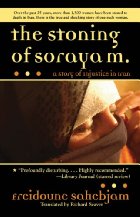
Book Review: The Stoning of Soraya M.: A Story of Injustice in Iran by Freidoune Sahebjam (Bottom of TBR Pile Challenge)
Summary:
Sahebjam, a French-Iranian journalist, was traveling through Iran in the 1980s when he had to stop in a small village. An elderly woman, Zahra, asked him for tea so she could tell him the story of what happened to her niece, Soraya, mere weeks before. Sahebjam grants narrative to her tale to get the story of injustice out.
Soraya was a typical rural Iranian woman. Married to a villager at a young age. Her husband, Ghorban-Ali, became less and less invested in his family and more and more likely to beat them. He also became increasingly interested in young women in the city. When a criminal posing as a mullah comes to town, Ghorban-Ali sees the perfect opportunity to be rid of his wife without any costs of divorce. He, the mullah, and an easily swayed widower friend corroborate to falsely accuse Soraya of adultery and sentence her to death by stoning.
Review:
Things can easily go awry when the powers of justice are held in the hands of a select few. A lot rests on whether or not those few are good people. This book tells that tale, and it tells it movingly, regardless of whether or not all the facts of the story are precisely correct. The biggest facts are accurate, and that is what matters.
Sahebjam is a French-Iranian journalist. He thus has both the perspective of insider and outsider, which is the ideal one for a story like this. He understands the people and the village but he also knows how to present and explain things to the non-Iranian reader. Sahebjam clearly and honestly states from the beginning that he got this tale from one eyewitness. Some might argue that this story thus isn’t researched well enough or thoroughly vetted. It is indeed one eyewitness account passed through an author (and for English speakers, a translator). But the core of the injustice is verifiable: the handling of adultery in Islam. Combine this with religion and state being one and the same, and it’s easy to see how if this story didn’t indeed already happen how it could easily come to be.
The first half of the book introduces us to Sahebjam, Zahra (the aunt), and Soraya, as well as the organization of the small town and the adultery laws as followed by fundamentalist Islam. Sahebjam does a good job introducing all the people and explaining the context of the injustice without overwhelming the reader with info dumping.
Essentially, in Islam, when it comes to adultery, the woman has to do all the proving.
When a man accuses his wife [of adultery], she has to prove her innocence [in Islam]. This is the law. On the other hand, if a woman makes an accusation against her husband, she has to produce proof. (location 1079)
If the woman is wealthy, she can pay off the mullah (think of it as paying a penance in Catholicism). But:
In most cases the woman [accused of adultery in Iran] is poor—which means she is a virtual slave to her husband. She has no rights, except for the meager right to remain silent. All the husband needs to win his case of infidelity is two eyewitnesses, who are generally friends and accomplices. As for the accused woman, she has to prove her innocence and that is impossible: no one will come to her aid; no one will bear witness on her behalf. (location 129)
Regardless of whether or not Soraya was a real person (and I do believe she was), these are problematic laws that leave the door wide open for abuse by a few corrupt people. This book demonstrates that danger eloquently.
Sahebjam clearly made a choice to make the tale flow better by giving it some narrative qualities. He inserts dialogue he clearly wasn’t there to hear, and he even talks about what was going on inside people’s heads. I didn’t like that he did the latter, especially. I understand dialogue can help make a nonfiction book flow a bit, and I’m ok with that. But claiming to know what was going on inside people’s minds turned me off the narrative a bit. It leaves the door open for criticism of a story that needs to be taken seriously, and I wish he had made other narrative choices.
At first, it is easy to be irritated by Soraya’s choice to remain silent when accused. She gives up so quickly, one wonder why she never advocates for herself. But in retrospect, it’s a clear, yet subtle, depiction of what can happen to a victim of abuse over time. Eventually their spirit is just beaten out of them. Soraya demonstrates what happens when abused people are left to deal with the abuse and abuser on their own.
Overall, this book highlights the inequality innate is Muslim adultery laws, as well as the dangers of leaving justice to the hands of a few. The narrative structure doesn’t precisely suit a nonfiction account of an event, but the bones at the core of the injustice are still verifiably true. Readers who prefer a dry, precise nonfiction might not be able to look past the narrative structure. Those who can will find a moving tale of how easy it is for injustice to take over a community.
4 out of 5 stars
Source: Amazon

Book Review: Chop Suey: A Cultural History of Chinese Food in the United States by Andrew Coe (Bottom of TBR Pile Challenge)
 Summary:
American Chinese food is different from Chinese Chinese food. This is a well-known fact. Coe tells the history of how Chinese food came to America and changed and adapted to the cuisine we know today. Along the way, some of the stories of Chinese immigrants to America and Chinese-Americans are told as well.
Review:
I love food, and I love history, so a book telling the history of a specific cuisine totally appealed to me. Unfortunately, this book missed the mark for what could have been an enticing history of American style Chinese food. Instead, it gets hung up in the early history of both Chinese food in China and Chinese food in America in the 1800s then hops, skips, and jumps over how it changed through the 1900s up to present. While this information is interesting, it is not the history of American Chinese food it is presented as.
The main issue with the book is it spends almost 1/4 of its time exploring the history of Chinese food in China. While I learned some interesting facts, such as that tofu was invented in the Han Dynasty (page 80), this information is not necessary to convey how Chinese food came to America and changed. A much briefer introduction to where Chinese food was at before coming to America would have sufficed. The best part of the book is when it discusses Chinese food in America in the 1800s and explores how US-born Americans’ embracing of Chinese food or not depended on many factors such as the current rates of xenophobia, job markets, and prices. Viewing the history of the American west coast through the perspective of Chinese immigration and Chinese restaurants was truly fascinating. One of the more fascinating things that I learned in this section was a detail of the history of the racist perception of Asian men as not masculine. In that time period, when Chinese immigrants were competing with white Americans and Irish immigrants for railroad and other jobs, the backlash was that since Chinese men “didn’t need” to eat meat to work long hours they could afford to take a lower rate of pay. Articles attacked the Chinese diet as a sign that Chinese men are less masculine since they “don’t need” meat the way white American and Irish-American men do. One article title from this time period cited in the book is “Some Reasons for Chinese Exclusion. Meat vs. Rice. American Manhood against Asiatic Coolieism. Which Shall Survive?” by Samuel Gompers (page 141). As a vegetarian, I found it fascinating that the sexist perception of a less meat-centric diet (the Chinese did indeed eat meat, just less than American men), has both such a far-reaching history and was used to fuel xenophobia and racism against immigrant workers. It is clear to me after reading this that a large part of the work for vegetarians is to get rid of the faulty correlation between meat and masculinity. I could see fixing this having other positive outcomes as well, such as fighting against misperceptions of the masculinity of other cultures.
Unfortunately, the wonderful details found in the chapters on the 1800s gradually cease to exist as the book moves up through time. While the 1920s get some special attention, such as touching on the fact that Chinese restaurants survived Prohibition well because they had never served alcohol anyway (page 189), slowly these details fall away until we get nothing but the bare bones of how Chinese restaurants functioned and interacted with American history in the rest of the 20th century up to present. There is even one rather aggravating long aside exploring President Nixon’s visit to China. While his visit to China definitely gave a resurgence of interest in Chinese food in the US, it was again unnecessary to give such incredible details on Nixon’s visit. It could have been simply stated, instead, that Nixon visited China, bringing Chinese food to the forefront of American thought again and giving a resurgence of interest in Chinese cuisine. The book has a tendency to lollygag on topics that are not actually what the book is supposed to be about. While these topics can be interesting and Coe explores them well, they are not what the book supposedly is about. It would be better to present the book with a different title or edit the focus back to simply Chinese-American cuisine.
One other factor that made me enjoy the book less is that Coe shows a clear bias toward Chinese culture. There is nothing wrong with enjoying Chinese culture, but Coe says some things that if he had said them in reverse would be considered completely unacceptable to say. He frequently presents the Chinese people as more civilized, their way of doing things as more logical and simply better, and even scoffs at the level of advancement of European countries compared to China at one point (page 94). Lack of bias and simply presenting the facts is the strength of historical nonfiction works. It would have been nice to see that level of professionalism in this book, regardless of Coe’s personal views.
Overall then, while I learned some new facts about both Chinese-American cuisine and Chinese-American history, the book wanders significantly through Chinese history and Chinese cuisine as well. Interesting, but not what the title implies the book is about. Coe also shows some bias that should not be present in a history book. These are easily skimmed over, however, and thankfully do not come up very often. Recommended to those with an interest in both Chinese-American and Chinese history in addition to the history of American style Chinese cuisine, as all three are covered rather equally.
3 out of 5 stars
Source: Amazon

Book Review: Where the Blind Horse Sings: Love and Healing at an Animal Sanctuary by Kathy Stevens (Bottom of TBR Pile Challenge)
 Summary:
When Kathy Stevens decided to change careers mid-life, she wanted to do something that would help animals and let her teach. She landed on the idea of founding an animal sanctuary. But this book is very minimally about Kathy. It is mostly about the animals that came to find a safe haven at the sanctuary she founded. Animals like Rambo the sheep who guards other animals. Paulie a former cockfighting rooster who loves car rides. And of course a blind horse once terrified to move who now goes for trail rides.
Review:
This book wasn’t what I was expecting, which was an account of setting up and running an animal sanctuary. Instead it is a collection of short stories about individual animals who live at Catskill Animal Sanctuary, in the vein of James Herriot, although not quite to that classic’s level.
The stories are roughly grouped based on the situations that led the animals to the sanctuary, their personality, and of course some ultimate peaceful deaths at the sanctuary. I was a bit frustrated that instead of telling one animal’s story end to end, they were split up among sections. I can understand not wanting to end every chapter with an animal’s death, but I also think seeing one animal’s life in a complete story would be more touching. On the other hand, I also appreciated how clearly the different animals’ personalities were drawn without ever venturing into the land of hypothesizing. One doesn’t have to impose their own beliefs on an animal to clearly see the difference between a hurt, abused animal and a happy one. Stevens presents the difference quite clearly without venturing into speculation, which I think will give the book the broadest audience.
In spite of the dark past lives of these once abused animals, the book is a light read, both in spirit and in content. You won’t learn the nitty gritty of founding and running an animal sanctuary, which I think is too bad. It’d be nice if there was even an epilogue about more of the day to day realities of rescuing animals. On the other hand, the light, easy read gives the book a broader audience. It also features a suggested further reading list at the end, as well as links to the sanctuary’s website and invitations to visit, so those who want more can seek it out.
Overall, this is a well-written, feel-good collection of stories of the animals of Catskill Animal Sanctuary. It doesn’t provide much insider information on the running of animal rescue charities, but it does provide insight into the personalities of farm animals. Recommended to animal lovers who enjoy short stories.
4 out of 5 stars
Source: Amazon

Book Review: Midnight in Peking: How the Murder of a Young Englishwoman Haunted the Last Days of Old China by Paul French
 Summary:
In 1937 the entire world is on the brink of war. In Peking, China, the Japanese invaders are encroaching. In the midst of this chaos the adopted daughter of British consulman is brutally murdered, her body found in the shadow of the Fox Tower, universally viewed with suspicion by the Pekingers as haunted by spirits. Due to the special circumstances, the murder investigation requires the presence of both a Chinese and a British investigator. They must race to find Pamela’s murderer before the Japanese engulf the city.
Review:
This true crime novel takes a bit to get things set up, but once they are, oh my how it sucks you in.
My fellow librarians will appreciate the backstory of how this true tale was discovered by French. In the Afterword he states that he was digging around in some archives and stumbled upon a box of evidence that Pamela’s father sent off to the government, which was never really looked at and just put away in storage and then into archives. It was through libraries that he even discovered this fascinating, intersectional true crime. I think that’s encouraging to any librarian who has ever spent hours making a finding aid for archives.
So just what makes this true crime more fascinating than others? Pamela was the adopted daughter of Werner, and her adoptive mother died at a young age. She had been away at boarding school in Tientsin and was home for the holidays. Because she was born in China but was also adopted by British consulman, there is an interesting assimilation into Chinese culture going on in her life that we don’t often see in Western novels. Peking itself featured the legations and white districts for multiple different white Western countries. This means that because Pamela was technically a British citizen murdered on Chinese ground both the Chinese and the British police force had to be involved and work together in the investigation. Officer Han and DCI Dennis certainly make for a unique investigation team. In addition, Pamela’s body was discovered in the shadow of the Fox Tower, and this led to speculation about fox spirits, which in Chinese tradition show up as wily women. Of course quickly the seedy underbelly of Peking is implicated, featuring a multicultural bunch of addicts, dope dealers, brothels, and more, and naturally some of the classy elite start to be implicated into that underworld as well. Add in the fact that the Japanese invasion was encroaching and toss in the first rumblings of Communism, and it makes for a story that is impossible to not find fascinating.
French unfurls the story well. He quotes only when it is fairly certain what was said, but summarizes scenes well. A clear picture of both Pamela and Peking are rendered fairly early in the novel. I also appreciate that he spent time at the end talking about what happened to all of the key players and discussing how all-encompassing the Japanese invasion were. I think what he handled best though was presenting people as individuals and not representative of their race or nation or even class. In a true crime as multicultural as this one, that is important. It’s also nice that in a story that could have easily turned into victim blaming, which happens so often when the victim is a young woman, he eloquently avoids any hint of that:
Pamela wasn’t perfect; she was making the same mistakes many girls do when experimenting with their independence, their newfound power on men. Her tragedy was to encounter the wrong men, at just the wrong moment. (location 2834)
I did, however, feel that the beginning was a bit lacking. It took a bit to truly get into the story. A faster pace or a more clear this is where we are going set-up would have been nice. At first it felt like the rather dull story of some poor little imperialist rich girl. But that’s not the story at all. The story is that of an adopted girl in a country where she just so happens to be the color of worldwide colonizers, but it is instead the story of a diverse group of people horrified by the brutal murder of a young woman by a diverse group of sick, twisted people. It would be nice if that was more clear from the beginning.
Overall, this is a well-told, historic true crime novel that manages to avoid victim blaming and also embrace multiculturalism. It will be of particular interest to anyone with a fascination for Chinese or WWII history.
4 out of 5 stars
Source: Netgalley

Book Review: Fire in the Ashes: Twenty-Five Years Among the Poorest Children in America by Jonathan Kozol
 Summary:
Jonathan Kozol’s books about his social justice work among inner city children in the 1980s and 1990s brought attention to the starkly uneven educational opportunities presented to children in America. Now the children he originally met are young adults, and through this memoir telling of his friendships with them, he explores their lives and what it means to be successful when everything is stacked against you.
Review:
Long-time followers of my blog know that my undergraduate university (Brandeis University) seeks to instill in its students a sense of social justice, and that certainly worked with me. So when books like this pop up, I’m instantly interested in reading them. True equality means equal opportunities and safety for all, and a book like this is a bit unique in that it doesn’t just look at inequalities but also examines the long-term effects of attempts at intervening and helping people who basically got the short end of the stick. Kozol succeeds quite well in analyzing what has worked and what hasn’t in the Bronx where a large part of his social justice career has been.
The chapters each focus on a different child, although a couple of children get their own chapters. Kozol met the children either in one of the infamous 1980s NYC homeless shelters or at an after-school tutoring program offered at a church (St Ann’s) in the Bronx. There are a few things that are immediately apparent from observing the long-term trajectory of these kids, which is why a book like this is so valuable for social justice work.
First, all of the kids who were homeless or who spent a long time in homeless shelters had many more problems and difficulties later in life. It is clear that homelessness has a long-lasting negative impact on children, no matter how many good opportunities come to them later in life. Similarly, girls seem to stand a better chance than boys of climbing out of the poverty they grew up in. Kozol never makes any clear speculative statements as to why he thinks this is, but the multiple lives we observe clearly demonstrate that boys are more targeted than girls both by the crime lords and by the police. They are both presumed to want to participate in crime and presumed to already be participating in crime. If you live in just this neighborhood and see just this world where almost everyone you see except maybe a parent or a teacher expects you to become a criminal, it’s no wonder that the boys are struggling more than the girls. This is a great example of how patriarchy hurts men too. These assumptions about masculinity and roles in the community are hurting them.
The other big theme of the book is of course how educational inequality entrenches classism and racism. Kozol has spent most of his career working in improving education so it’s not surprising this is a theme of the book. One thing that stood out to me was how quickly kids are lost if they never get a firmly established literacy and sense of confidence in their ability to learn. Once kids start getting held back a grade or fall below grade level, it is incredibly easy to become discouraged and turn to what appears to be an easier life of crime. And it’s not the kids’ fault that they are struggling at school. The class sizes are too large, the teachers are frequently inexperienced or, in the case of one school, were never even trained as teachers at all. There is frequent teacher turnover, too heavy of a focus on just getting the kids to pass the achievement tests and not establish real learning and literacy. There is a real problem with violence and bullying. The list goes on and on. It goes beyond the schools though. Outside of school the children are never truly safe. There are shootings and stabbings and rapes, and we’re not talking down an alley. We’re talking in the lobby or stairwell or elevator of their apartment buildings. How can anyone focus on learning and growing up when that is all around them? It’s a big problem, and one that is not easily solved.
Kozol ends the book by talking about what he sees as progress and how the now grown-up kids he worked with see possible solutions. He’s adamant that even small gains are gains. He views any child whose life ultimately is one of peace and self-worth as an accomplishment, whether they even completed high school or not. To a certain extent I agree with him, but to a certain extent I agree much more with one of the grown-up kids (who just so happens to be about my age) who argues that small changes aren’t good enough. That the inequality is so deeply entrenched that we must truly rock the system and not just save one child at a time. She does ultimately agree that the small changes are still worthy of praise and is working on a degree in sociology so she may go back to the Bronx and focus in on small changes. That then is the question at the heart of this book and one for which there are no easy answers. How do we fix this problem?
It’s difficult to say who this book will appeal to. It’s not a clear treatise on the educational system or social justice. It is one man’s observations of the lives and life stories of inner city youth he worked with. It is not academic per se but it’s also not exactly a memoir either. I think perhaps that it will appeal most to anyone whose day to day job involves having small influences on the education of individuals. It clearly shows how much impact one person can have on another person’s life, particularly when it comes to education and literacy.
Overall then I recommend this to those who work in education whether formally or informally. It is encouraging to see the perspective of an older person who has clearly seen how his life work has impacted the kids he worked with.
4 out of 5 stars
Source: Netgalley

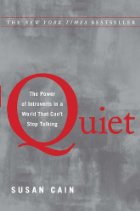
Book Review: Quiet: The Power of Introverts in a World That Can’t Stop Talking by Susan Cain
 Summary:
Cain explains how the Extrovert Ideal became the norm in Western culture then proceeds to define the reality of the existence of both introverts and extroverts, not just among humans, but in the non-human animal kingdom as well. She explains the pluses and minuses of both personalities and provides advice for individuals, parents, and businesses in bringing out the best potential in both.
Review:
This book has been all the rage among book bloggers, which probably isn’t that surprising. Readers tend to be introverts, and the book’s title certainly implies that it’s all about us. In actuality though, although the book does have a focus on introverts, it also contains lots of information on extroverts and how we are all different but equally valuable to the world. Indeed, the Introduction features a statement that basically defines the point of the book as a whole:
Our lives are shaped as profoundly by personality as by gender or race. And the single most important aspect of personality—the “north and south of temperament,” as one scientist puts it—is where we fall on the introvert-extrovert spectrum. (page 2)
After the Introduction, the book is divided into four parts: The Extrovert Ideal, Your Biology Your Self, Do All Cultures Have an Extrovert Ideal, and How to Love How to Work. As someone who was a History major in undergrad, I found the first section completely fascinating. It explains how western culture, particularly American culture, went from an introvert ideal to an extrovert one. It, not surprisingly, was all tied up with the Industrial Revolution. Before the Industrial Revolution people mostly interacted with people they had known most of their lives or who they would have time to get to know. After, if you wanted to make it in the business world, you had to make an amazing first impression. This push to give off the aura of friendly and awesome edged out the prior expectation to develop a moral character. This section also talks about how Evangelical Protestants take the Extrovert Ideal to an even greater extreme:
If you don’t love Jesus out loud, then it must not be real love. It’s not enough to forge your own spiritual connection to the divine; it must be displayed publicly. (page 69)
I’ve taken the Meyers-Brigg personality test multiple times at various points in my life. I am always solidly an INTJ. The I is for introvert. I was also raised Evangelical (although I am now an Agnostic). This section rocked my world. I even mentioned on GoodReads that it basically explained my life to me. Cain talks about how difficult it can be to be an introverted child or young person being raised in a culture of Extrovert Ideal. I wasn’t just raised in the American one (who just so happen to be the most extroverted people on the planet, page 186), but I was also raised in the most Extrovert Ideal culture within that culture–Evangelical. It’s no wonder I had some issues figuring out who I am and being ok with that. I can barely fathom what a difference it would have made in loving and accepting myself if I’d even just been told it is just as ok to worship alone in the woods as to be loud and proud about it in public.
The next section is more sciencey and discusses the biology behind personality differences. This section can definitely be empowering as it lets people know precisely how you became an introvert or extrovert. The overarching philosophy is that more sensitive babies, as in ones who are more easily startled or frightened of strangers, are predispositioned to become introverts. Nurture also affects this, of course. Cain discusses the good qualities of both highly sensitive and less sensitive kids and how how they are raised can either bring out the good or the bad in either natural temperament. Of course this is a great area for parents and those who work with kids, but it also explains to the reader how they got this way and what false ideas they might have about themselves. For me, this is the section that explained to me why I’m so passionate about causes like vegetarianism and mental illness advocacy. Introverts tend to be oriented around causes. An example of an introvert/extrovert pair who both got things done in their own way that Cain uses is Eleanor and Franklin Roosevelt. This is a wisely chosen example because both are people to look up to who played to their own personality strengths.
Personally I wasn’t so into the next section. As compared to the other sections that are three chapters, this one consists of only one. It essentially compares Asian culture to Western culture since Asian culture tends to idealize introversion over extroversion. I felt that this chapter was a bit rushed and less in-depth. Cain tried to cover both the experiences of Asian-Americans and all Asian culture as a whole. I understand that she wanted to address multicultural understandings of personality, but it does seem that this topic could be a book in and of itself. It felt a bit similar to the instances when in my job as an education and reference librarian that I tell a student their topic is too broad to possibly cover in one paper (or one thesis). It seems that a quick chapter on introversion versus extroversion worldwide could have been mentioned in the first section as a comparison without devoting a whole section to it. Similarly, the issues specific to immigrants to America from nations with an Introvert Ideal would have worked well in a different section. This would have felt more integrated and flowed better.
The final section contains advice on using your personality to your advantage in your life and also on how to strike a compromise with someone you care about of a different personality type. Overall, this section was well-written, although I felt not enough attention was given to “pseudo-extroverts,” introverts who have learned to pass as extroverts. This is a fascinating topic, particularly to an introvert who is constantly mistaken for an extrovert. I think this is the reality for a lot of people, and it deserved a bit more attention and research. For instance, Cain says in passing:
Emotional labor, which is the effort we make to control and change our own emotions, is associated with stress, burnout, and even physical symptoms like an increase in cardiovascular disease. (page 223)
I really wanted to know more about this! Particularly since I care so much about health and wellness. It almost seemed as if pseudo-extroversion deserved its own chapter.
The rest of the section though was great and quite helpful. I think if everyone followed the advice in it on dealing with other personality types and creating a loving environment for kids on both ends of the introvert/extrovert spectrum that we would have a much more positive world. Perhaps her best piece of relationship advice is A Free Trait Agreement.
A Free Trait Agreement acknowledges that we’ll each act out of character some of the time—in exchange for being ourselves the rest of the time. (page 221)
So for a couple consisting of an introvert and an extrovert they will go out some Friday nights and stay in and snuggle and read others. Preferably about 50/50. Mutual compromise. It’d be good to keep this in mind more often.
Overall, this is a well-written, accessible book regarding personality psychology and the history of it. It does flounder in some places and could have used another once-over for structure and focus, but it is well worth your time to read.
4 out of 5 stars
Source: Amazon

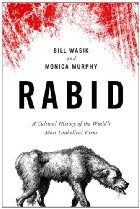
Book Review: Rabid: A Cultural History of the World’s Most Diabolical Virus by Bill Wasik and Monica Murphy
 Summary:
Taking a cultural and public health perspective, husband/wife writing team, Wasik and Murphy, tell the history of the rabies virus through the present.
Review:
My new library (where I work as a librarian) serves a school of public health. Working with these students has opened up a whole new world of science to me. Public health is a fascinating combination of medicine, science, culture, and communication. So when I saw this public health book on Netgalley, I knew I needed to give it a shot.
This is a completely fascinating book. Prior to reading it, my main knowledge of rabies came from that episode of Dr. Quinn Medicine Woman where her adopted son’s dog gets rabies and bites her other adopted son’s fiancee. I didn’t really understand how much of a plague it used to be, but I did know that you’re required to get your pets vaccinated for it.
I learned SO MUCH from this book! And it wasn’t a struggle to read or absorb the information either. Wasik and Murphy strike that hard to find balance in writing science for the layman. They explain complex, scientific things without so much scientific terminology as to be a struggle for the average reader but with enough so that you’ve still learned something. For instance:
With most zoonotic leaps in disease, animal contact is the spark, but urbanization is the bone-dry tinder; a newly evolved pathogen can’t spread from person to person, after all, unless people run across one another in the first place. (location 453)
There are a few passages that use more scientific terminology than that, but they only use them after explaining them. You do not have to be a scientist to be able to read, enjoy, and learn from this book.
The basic structure of the book is typical of a history book. In fact, think of it kind of as a scientific history book. It starts with the earliest accounts of rabies and moves up through time to the present. The strongest passages are: Greco-Roman history of the disease, Dark Ages history of the disease, Pasteur’s creation of a vaccination, and the modern day outbreak in Bali. These strike the perfect balance of discussing the understanding and treatment of the disease and the reflections of rabies and fear of rabies in popular culture of that time period.
For instance, in the Greco-Roman period we learn:
Pliny’s thoughts tend to involve using the animal to treat the man. His best-known cure—to “insert in the wound ashes of hairs from the tail of the dog that inflicted the bite”—lives on today in our expression “hair of the dog,” referring to a not-quite-so-dubious hangover remedy. (location 473)
Or this fascinating bit of public health history in the Pasteur section:
Pasteur’s collaborator Roux believed that Pasteur selected rabies as a subject for research as a calculated bit of stagecraft, so that his ideas about vaccination would attract maximum public interest. (location 1714)
The other sections, particularly the era after the vaccine to about the 1980s, suffer a bit from a lack of focus and direction. There’s a part where the authors try to convince us that zombies are a reflection of a latent fear of rabies. Ok? But that’s rather speculative compared to the rest of the book. There are other elements of pop culture that are nowhere near as loosely connected that they discuss, such as the actual rabies books and movies that came out in the UK when the Chunnel was put in and people were afraid that rabid animals would come over to the island nation from France. That is a tight, interesting connection. The zombie one was a bit of a stretch. I was more interested in more information on things like Old Yeller and why the authors think that even with the vaccine in the US and very little threat at the time the public still was fascinated with the idea of a rabid dog.
The book also explores other zoonotic diseases (diseases that originate in non-human animals). Although this is also technically not rabies, this connection makes a lot more sense, particularly since more started cropping up in the 20th century after rabies was beaten down by vaccination. The knowledge we have from working against rabies and promoting vaccination of it via public health initiatives could really help with things like HIV/AIDS and H1N1. This is using past public health experience to aid in future endeavors, which helps give the book a certain umph and validity for modern readers.
So, although the book struggles a bit during the early 20th century time period, the rest of it is very well put-together. It is written at the appropriate level for a popular science history book. It is easy to learn from and includes lots of fascinating tid-bits in addition to the basic rabies history and information. It also demonstrates as a kind of side-story the history of public health. I recommend it to anyone with an interest in the history of rabies, the history of vaccination, and most especially to those with an interest in public health issues.
4 out of 5 stars
Source: Netgalley

Book Review: The Bedwetter by Sarah Silerman (Bottom of TBR Pile Challenge)
 Summary:
Sarah Silverman is a petite, Jewish comedienne from New Hampshire who has written for SNL and has her own show The Sarah Silverman Program. This is her memoir.
Review:
This review needs a bit of backstory.
Once upon a time, I was dating a guy who is now so universally loathed by myself and my friends that we usually just refer to him as The Douche. Sometimes The Dickwad. One of his all-time favorite comics was (is?) Sarah Silverman, I’m not sure if that’s because A) he finds her funny B) she’s from NH and Jewish and he’s from NH and Jewish or C) he secretly wants to bang her. It is possible it is all three.
 In any case, I am not a fan of Sarah Silverman myself, but when I saw that she was coming to Brookline Booksmith to do a live reading and signing of her new book, I bought tickets for us to surprise him with. Because I am seriously that awesome of a girlfriend. I kid you not. In any case, I did also buy myself a book to have signed because who goes to a book signing and reading doesn’t get a copy signed?
When I say that I’m not a fan of Sarah Silverman I don’t mean oh I don’t really know I never watched or heard or blah de blah. That’s not how my relationship with my ex (The Douche) worked. He liked her, ergo I wound up watching basically everything she ever did. I don’t dislike the woman, but honestly her sense of humor is not my style. It doesn’t offend me, but it also doesn’t make me laugh. The most she might get is a snort.
You can see how non-plussed I was by the whole event from this Friday Fun! post I did about it. (You may notice that post doesn’t mention my ex at all. Painting on the wall, Amanda. But I digress). In fact, the main things that stood out to me at the event were A) how poor Sarah seemed like an introvert who really just needed to be given a cup of tea and sent away from this huge crowd and B) how mortified I was by my ex trying desperately to be all “Hey I’m from NH too!” during the book signing. Dear Sarah, if you are reading this, I was the girl cringing next in line while you somehow managed to not be like “Wow another Jew in Brookline who has been to NH. I am shocked.” Also, we compared signatures later and my name got an exclamation point and a heart, which his did not. I told him that meant you liked me better. Possibly not true, but it was fun to use during fights, so. Brownie points to you, girlfriend.
In any case! Oddly, I still had this book, unread, on my shelf, signed by Sarah, over a year after my relationship with the ex dissolved. If that doesn’t say Bottom of TBR Pile I don’t know what does. But, I think it’s important to know the backstory of I’m not a fan and I got this book going to a book signing with my douchey ex who embarrassed me in front of a celebrity and I couldn’t pick it up for over a year due to a combination of first missing my ex while simultaneously loathing him then after that faded to just not being a fan so why would I pick up a book I would probably find not funny anyway?
Because I’m ocd about my tbr pile that’s why.
So. Knowing all of this, you will understand why my review you are about to read is more like “hey I’m a librarian so who might want to read this and what would they think” as opposed to “omg I love Sarah Silverman and here’s what I think of her book.” Capiche?
This is a memoir that says a lot without actually saying all that much. Sarah tells us some things about her childhood and adult life without actually getting into the nitty gritty real details of who Sarah is. The deeper moments we get are the best in the book–when she talks about struggling with depression in her pre and early teens and about being a long-term bedwetter. Beyond that, we don’t really get to know Sarah. What makes Sarah tick. How does she feel about being an agnostic while her sister is a rabbi on a kibbutz, for instance? Or how did it feel to have a relationship so abundantly in the public eye? (Hers with Jimmy Kimmel. Side-note: I’m Fucking Matt Damon is the only thing she’s done that I find uproariously funny).
Ok, I get it, some people aren’t comfortable talking about more personal stuff (even though that’s what people want in a memoir). But she’s a celebrity. She’s got unique experiences that can’t be all *that* personal. Like maybe she could talk a bit more about what being backstage at the MTV VMAs was like. But all we get is “oh the comics don’t get to see the act right before them.” Kind of disappointing.
There’s also the fact that the memoir is not particularly linear. It kind of swoops around in an ADD manner. Some readers might enjoy that. Others might be turned off. Again, that could be the sense of humor that I just don’t get.
Overall, it’s not a bad memoir. It’s not like it was torturesome to read. It just falls short of the level of information that people kind of expect from a celebrity memoir. It’s possible that it’s an uproariously funny piece of writing, but you’d have to be a fan of Sarah Silverman’s sense of humor to be able to determine that, which I am not.
Recommended for fans of Sarah Silverman with the understanding that it’s more a piece of comedic work than a revealing memoir.
3 out of 5 stars
Source: Brookline Booksmith

Or bid on my signed copy on ebay Auction now over!
Cookbook Review: Olive Trees and Honey: A Treasury of Vegetarian Recipes from Jewish Communities Around the World by Gil Mars
 Summary:
Just as the title implies, this is a collection of recipes from Jewish communities around the world that are suitable for vegetarians.
Review:
Vegans beware. When this says it’s a vegetarian cookbook, it really means it! Almost every recipe is drenched in animal products, primarily dairy and eggs.
The Introduction explains the various food cultures that have sprung up in Jewish communities around the world, complete with maps and such. This part was fascinating, although I felt that it was a bit too Old Wold focused. I know for instance that there are strong Jewish cultures in Argentina and Brooklyn, but they are not included in the book.
After the Introduction is an explanation of vegetarian foods incorporated into Jewish holidays. I found this part rather averagely done and skimmed over it.
The recipes are oddly divided up. The chapters are: cheese and dairy spreads; pickles, marinated vegetables, and relishes; salads; soups; savory pastries; cooked vegetable dishes; vegetable stews; legumes; grains; dumplings and pasta; eggs; sauces and seasonings. As you can tell, some of the recipes are put together based on the type of dish (salad, soup) and others based on the ingredients (eggs, legumes). This makes the book appear disorganized. Also the complete lack of dessert is sad.
Beyond the maps in the Introduction, there are no pictures. Additionally, the recipes are mostly designed to serve 6 to 8. I’m not sure what planet the author is from, but that is not a typical family sized meal in America. I must admit, that I didn’t try any of the recipes because I couldn’t find a single one I wanted to try. They are all completely swimming in cholesterol and insane food portion sizes. Looking at the soups, which should presumably be a healthier option, the Persian Onion Soup on page 123 contains 3 eggs and the Hungarian Cream of Mushroom Soup on page 125 contains TWO CUPS of sour cream. Similarly, almost all of the breads and pastries are fried. My cholesterol practically spiked just looking at the cookbook.
Essentially, then, this book is a good introduction to Old World style Jewish food but ignores the healthier options that I know from experience exist in Jewish communities in the Americas. It is difficult to enjoy the cookbook since there are no pictures or colors. Additionally, all of the recipes are designed for 6 to 8 servings, which is a bit large for the typical American household. Overall, then, I would recommend this book to those with a vested interest in Jewish culture and cuisine who can see past the dull layout and design of the cookbook.
3 out of 5 stars
Source: Public Library

 Support my work with a tip or browse my shop for curated book club guides, how to guides, cross-stitch patterns, and more!


This work by Amanda Nevius is licensed under a Creative Commons Attribution-Noncommercial-No Derivative Works 3.0 United States License.
 Opinions of a Wolf