
Archive
Cookbook Review: Olive Trees and Honey: A Treasury of Vegetarian Recipes from Jewish Communities Around the World by Gil Mars
 Summary:
Just as the title implies, this is a collection of recipes from Jewish communities around the world that are suitable for vegetarians.
Review:
Vegans beware. When this says it’s a vegetarian cookbook, it really means it! Almost every recipe is drenched in animal products, primarily dairy and eggs.
The Introduction explains the various food cultures that have sprung up in Jewish communities around the world, complete with maps and such. This part was fascinating, although I felt that it was a bit too Old Wold focused. I know for instance that there are strong Jewish cultures in Argentina and Brooklyn, but they are not included in the book.
After the Introduction is an explanation of vegetarian foods incorporated into Jewish holidays. I found this part rather averagely done and skimmed over it.
The recipes are oddly divided up. The chapters are: cheese and dairy spreads; pickles, marinated vegetables, and relishes; salads; soups; savory pastries; cooked vegetable dishes; vegetable stews; legumes; grains; dumplings and pasta; eggs; sauces and seasonings. As you can tell, some of the recipes are put together based on the type of dish (salad, soup) and others based on the ingredients (eggs, legumes). This makes the book appear disorganized. Also the complete lack of dessert is sad.
Beyond the maps in the Introduction, there are no pictures. Additionally, the recipes are mostly designed to serve 6 to 8. I’m not sure what planet the author is from, but that is not a typical family sized meal in America. I must admit, that I didn’t try any of the recipes because I couldn’t find a single one I wanted to try. They are all completely swimming in cholesterol and insane food portion sizes. Looking at the soups, which should presumably be a healthier option, the Persian Onion Soup on page 123 contains 3 eggs and the Hungarian Cream of Mushroom Soup on page 125 contains TWO CUPS of sour cream. Similarly, almost all of the breads and pastries are fried. My cholesterol practically spiked just looking at the cookbook.
Essentially, then, this book is a good introduction to Old World style Jewish food but ignores the healthier options that I know from experience exist in Jewish communities in the Americas. It is difficult to enjoy the cookbook since there are no pictures or colors. Additionally, all of the recipes are designed for 6 to 8 servings, which is a bit large for the typical American household. Overall, then, I would recommend this book to those with a vested interest in Jewish culture and cuisine who can see past the dull layout and design of the cookbook.
3 out of 5 stars
Source: Public Library

Book Review: Haunted by Glen Cadigan
 Summary:
Mark is an Iraq War vet with PTSD, so he counts himself lucky when a Gulf War vet gives him the chance to be a security guard at an office tower. Unfortunately, he’s the night watchman, and he doesn’t seem to be alone in the tower.
Review:
This is a unique, sympathetic story idea that is not as well-executed as it deserves.
Mark is ultimately a well-rounded character, but it takes too long to get to know him in this novella. Since it is in first-person narrative, he has the option of holding off on telling us about his PTSD symptoms and how they affect him. While a soldier would certainly most likely be more stoic in a traditionally masculine way, it gets in the way of the reader understanding where Mark is coming from and empathizing with him. He *tells* us that his PTSD makes his life difficult, but we don’t really ever see it.
Because this is a first person novella, this problem with the characterization gets in the way of the strengths of the scifi/fantasy plot, which is honestly fairly unique. I was glad I got to the end and saw the surprise reveal, but I certainly wasn’t expecting such a good twist from the rest of the book.
Essentially, the scifi/fantasy element of the book is strong, but the characterization at the center of the first person narrative is weak. Although Mark is a soldier, Cadigan shouldn’t be afraid to let us see the vulnerability of his PTSD. Recommended to fans of a unique ghost story looking for a quick read.
3 out of 5 stars
Source: Kindle copy from author in exchange for my honest review

Counts For:
Book Review: Death By Petticoat: American History Myths Debunked by Mary Miley Theobald
 Summary:
This history book has assembled the most often-repeated myths of US History and one-by-one debunks them.
Review:
There is not much to say about a book that is so short. Listing only 63 myths, each summed up within one or two sentences and then “debunked” in under a page, it is possibly the shortest history book I’ve ever read.
The myths and debunking are interesting, but there’s far too few of them. Additionally, while images are given citations, the debunkments aren’t! Well, why should I believe what you’re saying, Theobald, as compared to anyone else? Just because you *claim* there aren’t any records of thus-and-such doesn’t mean that there aren’t unless you back it up with solid evidence. While I enjoyed the myths and the talk about them, I can’t take it seriously as an academic due to a complete lack of citations.
The cover is super-cute though.
Overall, recommended to people who want to know what the myths are, but not to anyone seeking serious history.
2 out of 5 stars
Source: Netgalley

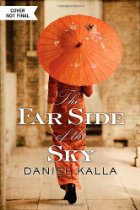
Book Review: The Far Side of the Sky by Daniel Kalla
 Summary:
After Kristallnacht, Franz Adler, a secular Austrian Jew, is desperate to save the remaining members of his family–his daughter Hannah and sister-in-law Esther. The only place they’re able to find letting in refugees is the relatively border-lax Shanghai.
Meanwhile, Mah Soon Yi, aka Sunny, the daughter of a Chinese doctor and American missionary, is trying to deal with the partial Japanese occupation of her home city of Shanghai while working as a nurse in one of the large hospitals and volunteering in the Jewish Refugee Hospital.
Review:
It’s difficult to review a book that the author obviously put a lot of research effort into, as well as passion for social justice, but that I just personally didn’t end up liking. The story itself isn’t bad, if a bit far-fetched. Clearly based in fact and solid research. I believe the problem lies a bit in the writing.
When I read historic fiction, I like seeing history through the eyes of one person (possibly two). It brings the huge picture you get otherwise down to a personable level. The problem with this book is that it kind of fails to keep things at that personal level. There’s far too much contact with actual big movers and shakers from the historic events. How the heck is this Dr. Adler in so much contact with the Japanese and Nazi elite? One scene like that can be quite powerful in a book, but not multiple ones. It takes it from the realm of historic fiction to that of fantasy.
Additionally, I feel that a bit too often Kalla tells instead of shows. Two characters will be talking about something the reader doesn’t yet know about, such as how the city of Shanghai is set up politically, and instead of putting it into the dialogue, the book just says “And then he told him about thus and such.” That makes for dull reading.
So, really, to me, the plot itself is unique in choosing a population and area of WWII that is not written about that much. The author clearly did his research and has a passion for the time period and issues faced by the people, but the story would be better served if it was made more about the everyman and dialogue and action were used more effectively.
Overall, this is a unique piece of historic fiction that will mainly appeal to fans of the genre looking for a new area of WWII to read about.
3 out of 5 stars
Source: Netgalley

Book Review: A Cold Night for Alligators by Nick Crowe
 Summary:
One day on his way home from work, a homeless man shoves Jasper in front of a subway train. Waking up months later from a coma with medical leave from his job, his (now ex) girlfriend living in his house with her new boyfriend, religious Donny, Jasper decides to join Donny and his best friend Duane on a trip south from Canada to Florida. Donny and Duane are going fishing, but Jasper is on a hunt for his brother who disappeared ten years ago at the age of seventeen. He has a hunch he may have returned to what was previously a happy family vacation spot.
Review:
This is one of those situations where I recognize that the book is well-written, but personally I just didn’t like it. The combination of the plot and characters struck a sour note for me, although I can see other people enjoying it.
I struggled because I simply did not find a single character to like. I didn’t like Jasper, his ex Kim, her new boyfriend Donny, the best friend Duane, the long lost Aunt Val, well, you get the picture. None of them were people I could relate to or sympathize with. Not a single one! That is rare in a book for me. I can relate to characters from all over the world and all over time itself, but here. Yeesh. I mean, it’s bad when you’re agreeing with the villain (who you also don’t like) that the main character is a pussy. That’s just generally a bad sign.
I also found myself struggling some with the flow of the plot. It’s rather unevenly structured with random side stories such as an entire chapter devoted to Duane taking a bar bet to eat 19 pickled eggs. So much time devoted to this point (that was gross to read about) and it never turned out to be relevant. It felt at certain points like Crowe was writing just to write, and it’s not that they’re badly done scenes, they’re just not relevant to the book.
Similarly, and consider this your spoiler alert, characters escape alligators just a few too many times. Having one character who is a gator whisperer is fine, but having other characters repeatedly escaping gators is just insanity and unbelievable. It left me wondering if Crowe has ever actually watched the Discovery Channel.
Overall, this is a book that left me decidedly lukewarm. The characters are so average as to be dull, and the way they look on the rest of the world left me feeling a bit sour. I would recommend this book to people who enjoy literary fiction that moves at a slow pace, as well as those interested in a Canadian’s view of Florida.
3 out of 5 stars
Source: Netgalley

Book Review: The Last Hunger Season: A Year in an African Farm Community on the Brink of Change by Roger Thurow
 Summary:
Smallholder farmers make up the majority of Kenya’s food production and yet they face multiple challenges from inefficient planting techniques to bad seed markets that lead to an annual wanjala–hunger season. One Acre Fund, an ngo, saw the gap and came in with a vision. Sell farmers high quality seeds and fertilizers on credit, delivered to their villages, on the condition they attend local farming classes. Roger Thurow follows four families as they try out becoming One Acre farmers.
Review:
Every once in a while there’s a book that you know will impact your entire life. I know this is one of those books.
Thurow strikes the perfect balance between narrating the farmers’ lives and knowledgeably discussing the global politics and environmental problems that also impact the hunger. The information he hands out would be riveting in any case, but how he narrates it kicks it up to another level.
Central to the book is this question:
Why were people still dying of hunger at the beginning of the twenty-first century when the world was producing—and wasting—more food than ever before? (location 202)
I know we all know there is hunger in the world, but it can be easy to ignore when it doesn’t have a face like David or Dorcas, two of the children featured whose mothers flat out do not have food to give them. During the wanjala, since it is most of the families’ first years using One Acre Fund, they do not have enough maize (their staple crop) from the year before. Thus while watching their fields grow, they don’t have enough food to feed their families. During the height of the wanjala the families routinely have tea for breakfast and lunch and maybe some boiled vegetables or bananas for dinner. And they still must farm and go to school. I can’t recall the last time I’ve been so humbled.
Don’t get me wrong. The families profiled in this book aren’t put on a pedestal or romanticized or distanced. They are very real. But their strength and wisdom in the face of so many challenges has no other option but to be inspirational. Because it is so real.
You don’t focus on the afflictions you have, on your poverty; you focus on where you are going. (location 1469)
Makes you feel bad for complaining about morning commutes, doesn’t it?
Beyond talking about the disgusting fact that there is still hunger in a world with so much plenty and demonstrating the resilience of the families, the book also discusses One Acre Fund’s poverty fighting ideas. Basically they operate on the teach a man to fish principle. Thurow talks about how Youn, the founder, believes that bringing in food aid to feed farmers is absurd. We should instead be helping them to farm better. Beyond it not being sustainable to feed everyone year after year, it robs the farmers of their dignity. This was the point I liked best. These people are not dumb or lazy. They are victims of a system that is not working. Helping them help themselves lets them retain their humanity and dignity. I think that’s something that is often missing in charity work and ngos, but it’s vital to truly changing the game.
Overall, if you want a book that will challenge your perceptions, humble you, broaden your horizons, and help you see how to truly fight global poverty, this is the book for you. In other words, this is recommended for everyone.
5 out of 5 stars
Source: Netgalley

Counts For:
Specific country? Kenya

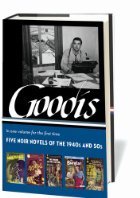
Book Review: David Goodis Five Noir Novels of the 1940s and 50s by David Goodis
 Summary:
The Library of America collects together great pieces of American literature into themed books. This can be anything from an author, to writing on aviation, to the Harlem Renaissance, to transcendentalism. This collection is David Goodis’s best works, all of which happen to be noir. Obviously the most well-known noir author is Raymond Chandler, but one of Goodis’s works was made into a Bogie and Bacall movie, so he’s not too far behind. The books in order of year published included in this collection are:
Dark Passage–A man framed for his wife’s murder escapes San Quentin and investigates the case with the aid of a beautiful woman in San Francisco.
Nightfall–A WWII veteran on his way to Chicago for a job finds himself inextricably linked to a robbery and murder and goes on the lam.
The Moon in the Gutter–A dockworker becomes obsessed with figuring out who raped his sister, leading to her ultimate suicide.
The Burglar–A man in his 30s who fell into the world of thieving during the Great Depression tries to get out but his tutor’s daughter keeps sucking him back in.
Street of No Return–A hobo finds himself implicated in a cop murder in the middle of race riots between whites and Puerto Ricans.
Review:
I am a huge fan of noir. I even took a noir class in undergrad, so when this showed up on Netgalley, I knew I wanted to read it, particularly since I recognizedDark Passage as a film I had watched last year. Surprisingly, we didn’t read any Goodis in that class, so it was fun to try out someone who’s not Chandler. I think Chandler found more of a niche than Goodis what with the fact his main character is the same in every novel. Goodis explores a bit more. His books all have a noir feel, but they don’t follow the exact same formula. For instance, instead of a hardboiled private dick, you might get a hardboiled thief or artist or hobo. Plus the books tend to be a bit more tragic than most noir I have read.
Goodis’s writing at the sentence level has the tongue-in-cheek wit that I so enjoy.
“Madge is a fine girl.”
“Maybe one of these days she’ll get run over by an automobile.”
“It’s something to pray for.” (location 801)
He also is fabulous at setting a scene so richly that it seems as if it is our world but simultaneously is Wonderland.
She had seated herself in a deep sofa that looked like it was fashioned from pistachio ice cream and would melt away any minute. (location 5039)
The mystery aspects of his storylines are unpredictable, don’t always wrap up neatly, and yet make sense once they are revealed to you. Unfortunately, these strengths are offset by his weak romance writing. Every single romantic interest in all of the books are a small-framed, lean woman with light brown hair. The author has a type, we can definitely see that. Beyond that, though, the love is always instant. They see each other across the room and fall for each other. And both people acknowledge this and say it’s something that can’t be helped and they are at its beck and call. This would be less of a bother except that the main characters often make important decisions based on this new “love.” For instance, one of the characters gives up his career for this woman he barely knows. Who does that?! It’s therefore difficult to be sympathetic to the characters when you are thrown out of believability. That’s unfortunate because the scene setting and mystery plots are so strong.
The best work of the bunch is The Moon in the Gutter where the impetus for a lot of the action is not the romantic interest, but the love between siblings. Additionally, it looks at issues of class, being stuck where you are, having who you can love and build a life with dictated to you by that classism innate in society. The grittiness is extreme. We’re talking about a dockworker dealing with his sister’s rape and subsequent suicide. Yet Goodis acknowledges the good there too for the blue collar dock workers and their families. Their lives are passionate and intense in a way that sitting around sipping wine and discussing the symphony just isn’t.
Overall, Goodis exhibits a lot of the qualities of good noir writing. His style is dark and gritty, often with a femme fatale. His stories offer more variety than those of other noir writers, but still fall solidly within and as a great example of the genre. I recommend this collection to those who know they are a fan of noir, and the book The Moon in the Gutter
4 out of 5 stars

Source: Netgalley
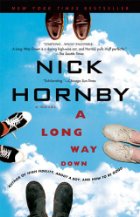
Book Review: A Long Way Down by Nick Hornby (Bottom of TBR Pile Challenge)
 Summary:
On New Year’s Eve, four incredibly different strangers accidentally meet on Topper’s House a popular local spot for suicides. Somehow running into each other leads to them taking the long way down that night instead of the quick one. What happens after is a continuance of their life stories that no one could have predicted.
Review:
I distinctly remember that this book made it into my tbr pile because of the suicide theme. What makes these four different people want to kill themselves, and what makes them not do it. Clearly this is a book about depression and suicidality. But it is not a depressing book. Not by far.
Without revealing too much, since the revelations are part of the fun of the read, I will just say that the four suicidal people span different generations, reasons, and nations of origin. Different levels of conservatism and liberalism. But what makes them come to understand each other is their universal depression and suicidal thoughts. This fact that someone out there gets them….well oftentimes that can help get a profoundly depressed or mentally unwell person over the hump. Feeling less alone.
Her past was in the past, but our past, I don’t know…Our past was still all over the place. We could see it every day when we woke up. (page 253)
In spite of this being a book about depressed people bonding over their depression, it doesn’t read as such. I was reading it on an airplane and found myself literally laughing out loud at sections. Because these people are brilliant. They have a great understanding of the world. Of art. Of relationships. Even of themselves.
I had that terrible feeling you get when you realize that you’re stuck with who you are, and there’s nothing you can do about it. (page 208)
That is, after all, frequently what depression can be all about. A profoundly clear understanding of how royally fucked up you are or your life is. What’s hard is seeing past that moment. The book is kind of a snapshot of the process of them learning to do that. And that’s what makes it so eloquent and poignant. Nothing is done melodramatically. Things are just presented as they are. Even down to the four being able to laugh together periodically (and make you laugh in the process). Depression isn’t just oh everything sucks nonstop. There are moments of laughter. It’s just that those moments are outweighed by the weight of the depression. Getting rid of that weight is a cleansing, uplifting process, and that’s how it feels to read this book. You bond and you laugh and you maybe even cry (if you have more susceptible tear ducts than this reader). And in the end you come to an understanding of that suicidal dark place without being abandoned in it.
Overall this book manages to eloquently present depression without being a depressing book. It is compelling to any reader who has ever struggled with a depressed period of life. Highly recommended to the depressed and the sympathetic. Both will be left feeling lighter and less alone.
4 out of 5 stars
Source: PaperBackSwap

Counts For:
Book Review: To a Mountain in Tibet by Colin Thubron (Audiobook narrated by Steven Crossley)
 Summary:
After the death of his mother, who also was his last living family member, Colin set out on a journey to the mountain of Kailas in Tibet. The mountain is holy to both Hindus and Buddhists and is closely associated with the process of dying and crossing over. Through his eyes we see the people of Tibet and his emotional journey.
Review:
I am not sure if words can describe what an epic miss this book was for me. The combination of British western eyes othering Tibetans, an entire chapter dedicated to his father’s big game hunting, a surprising lack of emotional processing of death, and the *shudders* British accented narrator imitating Indian and Tibetan accents…..oh god. It was painful.
I see nothing wrong with a Western person traveling and appreciating something revered in another culture. If it is done right, it can be a beautiful thing. A lesson in how we are all different and yet the same. Yet through Colin’s eyes I felt as if I was very uncomfortably inhabiting the shoes of a colonizing douchebag. Perhaps part of it was the narration style of Crossley, but it felt as if Colin was judging and caricaturing all of the Tibetans and Indians he met. There was so little empathy from someone supposedly on this journey to deal with death of loved ones. You’d expect more from him. I could accept this perspective more if either Colin learned over the course of the trip or this was an older memoir, but neither is true! This is a recent memoir, and Colin is the exact same self-centered prick he was when he went in.
Similarly, Colin when he is not othering the Tibetans and Indians is either reminiscing joyfully on his father’s exploits as a big game hunter and basically colonizing douche in India or giving us a history lesson in Hinduism and Buddhism. Ok? But he’s not an expert in these religions and also that was not the point of the book? A few explanations here and there, sure, but if I wanted to learn about Buddhism or Hinduism, I sure wouldn’t be getting it from a travel memoir from an old British dude. I’m just saying.
Overall, this is an incredibly odd book. It is a book out of time that feels as if it should have been written by an understandably backward gentleman traveler in the early 1900s, not by a modern man. I honestly cannot recommend it to anyone.
2 out of 5 stars
Source: Audible

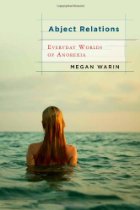
Book Review: Abject Relations: Everyday Worlds of Anorexia by Megan Warin
 Summary:
Warin, an anthropologist, takes an entirely new approach to anorexia, looking it from a purely cultural and anthropological perspective. She spends a couple of years interviewing women with anorexia at various points in the life of the illness from early treatment to recovery to relapse. In this way she analyzes not just the culture of women and men suffering from anorexia but also how anorexia is a response to the culture these people find themselves in.
Review:
This was my first read from the holdings of my new workplace. The instant I saw the title and book cover, I knew I needed to read it. The anthropology of anorexia? How fascinating!
It’s interesting that I feel I actually learned a bit more about anthropology than anorexia from this book, but perhaps that is because I am more familiar with the latter than the former. From my work in psychiatry and as a mental illness advocate, I was already aware that people suffering from anorexia have their own culture. I still highly valued seeing this presented in an academic fashion with a respect for the people involved. I commend Warin for her ability to interact with these women and glean a sense of how they came to be who they are now with a respect for them as people that is all too rare to see in this type of work.
So what of the anthropology then? What are abject relations? Over the course of the book I learned that abject relations are ambiguous relations.
What is abject is in between, ambiguous, and composite. Abjection is thus contrary to dualist concepts because it undermines and threatens that which is separate. As such, abjection is fundamentally concerned with the complexities and contradictions of relatedness. (page 184)
Whereas most books about eating disorders attempt to say THIS definitively caused it, this book’s premise is that the etiology is entirely ambiguous. What caused it, what makes it persist, what it is to suffer from anorexia. Nothing about it is clear-cut. That is the powerful statement of the book. There are no easy answers to anorexia, but we can do much more to understand it both as its own culture and as an aspect of our own.
This focus on anorexia as a response to the mainstream culture and a formation of a new culture leads Warin to question a lot of the inpatient treatment techniques. Warin sees anorexia as frequently about women attempting to assert a right to control over their own bodies that goes horribly awry, ripping the control out of society’s or tormentor’s hands, into their own, into ana’s hands, then into the hands of an authority figure again at treatment. Warin sees value in helping people suffering from anorexia recover in the context of society. Instead of feeding them alone in a single room have them cook and eat together in a group. This reenforces the cultural and connecting aspect of eating that they have been denying for so long.
It is an interesting idea to look at anorexia as an abject cultural response, but I don’t think it’s one that is quite as unique or revolutionary as Warin seems to think. Whereas there have always been those who think anorexia is the ultimate kowtowing to what society deems feminine, there have also been those who view it as women protecting themselves from being perceived as feminine, from having unwanted interactions with those who would objectify them. Perhaps it is really both, which is what makes it so hard to treat. I believe this is what Warin is trying to say, although she is often not as clear as she could be. She gets caught up in academic jargon. She is at her strongest when simply organizing her interactions with the women into themes and presenting them to the reader to do with what they will.
Overall, for an academic look at anorexia this is unique in that it is an anthropological study instead of a psychiatric one. Looking at a group of people who are a group simply because they share the same illness and studying their anthropology is a truly fascinating concept. The book is scientific, but it is social science and is thus easy enough for the mainstream reader to follow. It provides the human aspect of anorexia without sensationalizing. Anyone with an interest in eating disorders or anthropology will enjoy this book.
4 out of 5 stars
Source: Work Library

Counts For:

 Support my work with a tip or browse my shop for curated book club guides, how to guides, cross-stitch patterns, and more!


This work by Amanda Nevius is licensed under a Creative Commons Attribution-Noncommercial-No Derivative Works 3.0 United States License.
 Opinions of a Wolf