
Archive
Book Review: Love Among the Chickens by P. G. Wodehouse
 Summary:
Jeremy Garnet, a novelist, is living a relatively quiet bachelor life in London when his old school friend Stanley Ukridge shows up. Ukridge is starting a chicken farm with his wife, Millie, and wants “Garnie old boy” to come stay with them. He’ll get to write in the country in exchange for a few hours of work a day. In spite of the fact that Ukridge is planning to run the chicken farm without any prior knowledge or studying “the better for innovation, my boy,” Garnie takes him up on it. Of course, life with the eccentric Ukridge surrounded by chickens isn’t quite the quiet writing environment Garnie was planning on. Not to mention the Irish professor neighbor’s lovely daughter that Garnie can’t quite get out of his head.
Review:
There’s no doubt about it. Wodehouse is pleasantly droll. It was, however, necessary for me to remind myself a few times of the time period this was written in as certain portions had the feminist in me going “Whaaaat?!”
Ukridge and Millie are a delightful couple. He’s got zany ideas; she’s endlessly supportive. He clearly is madly in love with her and vice versa. They’re exactly the sort of people I would want as neighbors, because you’d never get bored with them around. Ukridge doesn’t mean to do wrong by anybody. He just doesn’t get how society thinks it should function. He does everything his own way, and Millie is along for the ride.
Wodehouse also manages to actually create personalities in the animals that are around from Bob the dog to Edwin the cat to Aunt Elizabeth the evil chicken (named after the aunt that didn’t want Millie to marry Ukridge). The animals are a part of everything that is going on. The characters actually talk to them, interact with them, and the animals respond. It’s something that happens in my own life, but that I don’t usually see in books, so I was delighted to see it here.
On the other hand, chickens are only half of the title, and I must say, I was not fond of the love half. Garnie’s relationship with Phyllis just hit all the wrong notes for me. First, Garnie claims to have fallen in love with her at first sight upon seeing her on the train, yet at that portion of the book all he talks about is how lovely her eyes are. Sounds more like lust to me. Then there’s the fact that Phyllis’s personality stinks. She’s dull, boring, and frankly rude. She’s square under her egotistical father’s thumb too. I don’t see what Garnie sees in her. Then of course there’s the fact that Garnie pretty much stalks her for a portion of the book. He goes to her father’s farm every night after dusk, sits in the bushes, and listens to her sing. That’s creepy, but when he tells her later, she laughs and is delighted. People! Stalking is not romantic. Gah!
I wish Wodehouse had simply written about Ukridge and Millie, as they are clearly the couple that is actually interesting. In spite of the fact that he didn’t do that though, I really liked this book. People who appreciate a book for the scenes in it and not the overarching plot will like it as well.
4 out of 5 stars
Source: Librivox recording by Mark Nelson via the Audible app for the iTouch and iPhone

Movie Review: Killer Klowns from Outer Space (1988)
 Summary:
It looks like a meteor has crashed near a small town, but it actually is a space ship. A space ship that looks exactly like a giant circus tent. Oh, and did I mention that it’s full of aliens that look like deformed clowns armed with guns that shoot cotton candy that wraps its victims up into cocoons? Facing off against these creatures are a teenage gal, her current flame, and the cop who used to date her. Will anyone in the town survive the night?
Review:
Confession. I used to be deathly afraid of clowns. We’re talking 5 year old me would instantaneously cry upon merely seeing one at a distance. Although I’m mostly over that now, I was a bit nervous that watching a clown horror movie would stir things back up. Well, I definitely wouldn’t call this a horror movie.
It is the perfect blend of ridiculousness and horror tropes that it takes to make a deliciously campy horror film. I found myself laughing throughout and delighted at the various directions the writers took traditional circus elements to make them dangerous and evil.
There’s popcorn that turns into evil clown heads (but only after being in a dark space). People are turned into pods of cotton candy that hang ominously inside the ship. The balloon animals come to life and are evil. To someone who always found the circus a bit….odd….it’s totally delightful.
The movie also has its own theme song that is still earworming me days later. The song, clothes, and acting are all wonderfully 80s. From the main girl’s hair to the grouchy cop to the teens running an ice cream truck in an attempt to get girls, it gets just the right combination of elements that screams–this is why the 80s was awesomely weird.
If you appreciate camp, the 80s, or light horror, you’ll enjoy this film.
4 out of 5 stars
Source: Netflix

Book Review: Revolution Is Not a Dinner Party by Ying Chang Compestine
 Summary:
Ling lives in China with her surgeon father and traditional Chinese medicine doctor mother. She enjoys her English lessons with her father and hates that her mother makes her eat things like seaweed and tofu. She hears talk about a revolution, and it comes home when her father’s study is converted into a one-room apartment for Comrade Li. Everything in her apartment complex starts to get scary with speakers blaring Mao’s teachings all day and more and more rules, but when her upstairs neighbor, Dr. Wong, disappears, Ling really starts to realize that this revolution is no dinner party.
Review:
I read some really amazing books set in China in undergrad. Balzac and the Little Chinese Seamstress springs to mind, so I came in to this book expecting to love it. I found myself struggling at first, however. I believe it’s the narration style. It is a child’s voice, but it is told in the first person past tense. That would make sense if it was an adult or even an older child looking back, but the narration doesn’t know any more than the child in the moment does. Again, that would make sense if it was the present tense, but it isn’t. I found it all very distancing, and it made it difficult to get into the story. An afterword informed me that this is a “fictionalized” look at real events in the author’s life. This explains the narration style, but I really wish she would have just told her memoir. Imagine, she really lived through revolutionary China with a Western-educated surgeon father. That’s such an excellent story in and of itself; I don’t see why she felt the need to fictionalize it.
Once I got past the narration style, I really appreciated two elements of this story. One is that it takes a completely unglamorized look at what any massive political change looks like to a child. Through the eyes of a child who doesn’t understand politics, it just all looks so silly. At one point she says she doesn’t understand why she shouldn’t wear flowered dresses if she likes them. Reading that makes you stop and think. It really should be that simple, the way a child sees it. People should be able to do the things they enjoy, yet adults make everything so painful and complicated.
The other element, and what is the core of the story, is that this is really a story about a father/daughter relationship, and I have a serious soft spot for those. I think they aren’t looked at in a positive light in literature enough, and Compestine presents it in such a beautiful, realistic manner.
However, even with these two positive elements, I have to say that I don’t see this story sticking in my head the way other non-western fiction has. It feels like a one-time read to me. Maybe that wouldn’t be the case, except that the ending is so abrupt. I feel that Compestine left the whole story untold, maybe because she was at a loss between fiction and memoir.
Overall, if you can enjoy the narration style and like non-western father/daughter stories, you will find your time reading this book well-spent.
3.5 out of 5 stars
Source: PaperBackSwap

Guest Book Review: The Works of Jeff Shaara
Welcome to the second entry in the guest reviews series I’m hosting. Please give your warmest attention to my guest, Jim Peterson!
Meet the Guest:
My name is Jim Peterson, and I’m the Technology Coordinator for the Goodnight Memorial Library in Franklin, KY. I wear two big hats here – both Technical Services Librarian & IT department. I manage the library’s website, fix, build, break (sometimes) and maintain all the computers, servers & network devices. I spend a lot of time in front of a computer screen most days. In my down time, I like to do vegetable gardening, landscaping, camp, hunt, fish – you know, all those good ole boy activities – as well as do customization work on my vehicles.
 Summary:
The works of Jeff Shaara are of historical fiction. What is unique about his books is that they are a chronological account of important periods in American history, as seen through the eyes of those who lived them. Characters are developed from much research, using personal letters, letters from loved ones, diary entries and written records from the periods. The Shaara works give you a true sense of what this country’s forefathers were thinking and feeling, absorbing you into the story as though you were standing right beside them. You hear the cracks of the rifles, the blasts of the canons, and the fiery, passionate rhetoric.
Review:
I am going to write about the works of Jeff Shaara, son of Michael Shaara. I feel that I can’t do the author justice without giving a little background on his father, who only published one book that was widely recognized. Michael’s book, The Killer Angels, was rejected by the first 15 publishers who saw the manuscript. It was eventually published in 1973 and was awarded the Pulitzer Prize for Fiction in 1975. Michael suffered a fatal heart attack in 1988 and never saw the legacy of his work come full circle. Some 19 years after it was published, the film Gettysburg (1993) was based on Killer Angels, and propelled the book to the top of the New York Times Bestseller List. Son Jeff rediscovered the manuscript of a baseball story, For Love of the Game, which was released in 1999 as a major motion picture starring Kevin Costner and Kelly Preston.
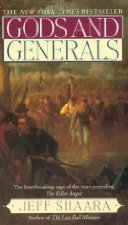
Jeff Shaara picked up the mantle of his father, Michael Shaara, in turning out great historical fiction after his father passed away in 1988. Jeff continued the story of the Civil War in writing Gods and Generals and The Last Full Measure, both of which were well-received with Gods and Generals winning the 1996 ALA William Young Boyd Award and being used as the basis for the motion picture Gods and Generals.
Jeff has also gone back in time, starting with the American Revolution and chronicling the travels and events surrounding Benjamin Franklin, John Adams, George Washington, John Hancock, and all the founding fathers of our country. In Rise to Rebellion and The Glorious Cause, you feel the suffering of the men at Valley Forge, and the frustration of George Washington as he tries to assemble and lead an army. You learn that Benjamin Franklin was quite eccentric, even by today’s standards. You feel the arrogance of the British through the eyes of Generals Gage and Cornwallis, as well as the weight of the defeats on both sides.
Jeff Shaara has also remembered to re-educate us on the wars that our own history books touch on only slightly. In Gone for Soldiers, we learn of the dominance of Winfield Scott and the rise of soldiers Robert E. Lee, Ulysses S. Grant and Andrew Jackson. We feel the Mexican heat as the soldiers battle it out against the best that the dictator Santa Anna has.
In all, Jeff Shaara has written nine New York Times Bestsellers. He has written To The Last Man, a novel of the First World war centering around John Pershing, the Red Baron and the Lafayette Escadrille, the wing of American fighter pilots who rebel against the President’s order to stay out of the war and help France fight off the Germans. This was another ALA Boyd Award winner as well.
So far, Shaara has written three novels on the Second World War, following Dwight Eisenhower, George Patton, Erwin Rommel, Omar Bradley and several others. They are just as detailed, just as engrossing, and just as not-put-down-able as the first one, and I can’t wait to see what comes next!
If you love historical fiction and American history, these books should definitely be on your must-read list.
5 out of 5 stars, every one!
Source:
Jeff Shaara’s website and The Goodnight Memorial Library
Check out
Jim on Twitter, Facebook, and his blog!
Thanks to Jim for participating! If you’re a librarian and would like to take part, please send me an email at opinionsofawolf (at) gmail (dot) com.
Book Review: Blue Bloods by Melissa de la Cruz (Series, #1)
 Summary:
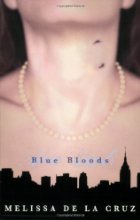
The students at Duchesne Academy in New York City appear to be your typical bunch of wealthy, elite teenagers. Naturally gorgeous twins Mimi and Jack rule the school. Bliss became part of Mimi’s entourage when her oil wealthy Texas family moved to NYC. Schuyler is part of the crowd of misfits who wear goth clothes instead of the more typical Louis Vuitton. They all gradually discover, however, that the secret to their families’ wealth isn’t just that they came over on the Mayflower. They are Blue Bloods–vampires who retire from their human shells every 100 years or so then come back with the same blood. Their teenage years are vulnerable ones, and someone or something out there is managing to kill some of the young Blue Bloods.
Review:
The vampire lore behind this story is not my style. It is so much not my style that just writing the above summary made me cringe. None of the official summaries of the book reveal much about the vampire lore, so let me tell you just in case it’s not your style either. Blue Bloods is heavily steeped in Christianity. The vampires are fallen angels who are attempting to atone for their rebellion. They face hundreds of years of punishment trapped in human bodies that they must eventually retire then return in new ones. The vampires accomplish this reincarnation by taking some of the blood from the dead vampire and implanting it into a vampire woman’s uterus. It all rings as a bit odd when you have a teenage character who’s never done anything more wrong than sneak into a club be told that she must atone for this rebellion against god that she doesn’t even remember doing hundreds of years ago. It really takes the bite out of vampires and makes them kind of pathetic.
Where the book is strongest is oddly where the vampire thing is on the back burner. Schuyler and Bliss get to model for a jean company, and that scene was actually quite enjoyable to read. If this had been your more typical murder mystery at an elite high school, I think it would have been a much better book.
Some reviewers had a problem with the presence of teenage drinking, drugging, and sex. I actually thought the sex was handled quite well, with teens talking about it a lot but nobody actually managing to do it. That read as very real. The alcohol is kind of a non-factor, since vampires can’t be affected by alcohol. My only confusion with this is if that’s the case, then why are they risking breaking the law to drink? I suppose it seems minor compared to convincing a human to become your familiar so you can feed off them. The drugs are entirely presented in a negative light the few times they are briefly mentioned.
What shocked me, and I can’t believe how infrequently this is mentioned, is that there is incest and the vampires accept it. Gah! There are times when incest is present in a book, and it is handled so that all sides of the issue may be seen–all of the accompanying emotions are delicately handled. Here, the vampires just say that it’s the way it should be and are protective of the siblings. Not much else is said of it, beyond a few teen vampires being grossed out, but it is made clear that their reactions are considered inappropriate by the vampires.
That said, it’s not badly written on a sentence level. It reads naturally, which is probably the only reason I struggled through the cringe-inducing lore. It is essentially Gossip Girl crossed with Vampire Diaries with some incest and Christianity tossed in. If that’s your thing, you will enjoy it. All others should probably pass though.
2.5 out of 5 stars
Source: PaperBackSwap

Book Review: Bug Jack Barron by Norman Spinrad
 Summary:
Jack Barron was a baby Bolshevik hippie in his Berkeley days. He even set up the Social Justice League, which is now the third party competing against the Democrats and Republicans. All those high ideals got set aside with age and the offer of a weekly, vidphone-in program: Bug Jack Barron. He’s happy with the money and the calm embracing of reality, but Benedict Howards of the Freezer Foundation is about to shake it all up.
Benedict Howards is in mad pursuit of one thing–human immortality. He’s cryogenically freezing those who hope that some day the key to immortality may be found. Of course, they have to pay a high price for it, but there’s more to Bennie than meets the eye, and the money for those freezes might not be going to the research they claim to be. Best of all, he has the best bargaining ticket out there–free freezes, and he wants Jack Barron to be his own publicity machine.
Barron doesn’t think he’d ever cave to the likes of Benedict Howards, but when his long lost, baby Bolshevik love, Sara returns to his life, everything changes.
Summary:
Bug Jack Barron has a complex plot that is difficult to summarize and attempts to be a tour de force but that ultimately fell flat for me. It’s the perfect example of a scifi concept that didn’t age well. Published in 1969, the thoughts and ideas of the 1960s are rampant throughout. A large part of the plot revolves around a future where blacks and whites are still segregated by virtue of wealth in America. In fact, an entire piece of the plot revolves around the fact that a black man could never be president of the US. That kind of falls flat when you’re reading the book and your current president is a black man. Spinrad completely mispredicted where race relations would be at in the US in the future, and that soured the rest of the book to me.
Then there’s Sara, Jack’s love. She is the quintessential great woman behind a great man. Without Sara, Jack wouldn’t be great at all. He’d never meet his potential. Yet the relationship is hardly reciprocal. In fact, Sara seems much worse off for being involved with Jack at all. She doesn’t seem to improve or embrace her greater self as a result. I expected much more of Spinrad who wrote A World Between in which he pointed out how much good the two genders can do for each other. It’s not like Spinrad is critical of this woman behind the man set-up either. There’s an entire section where Sara regrets her misunderstanding of Jack’s macho nature as bad and instead embraces his man-nature greed for power as something she could never have. Excuse me, Spinrad, I would like to introduce you to Queen Elizabeth, Marie Antoinette, Madonna, etc… It’s bad enough that some modern cultures are still telling us women that we can only be our greatest when inspiring a great man. I don’t need it in my scifi.
Then there’s the whole immortality issue, which is largely what the book revolves around. I know some readers would find this idea very intriguing and would enjoy seeing how society would deal with it. The thing is, I’ve never been someone who wants to live forever. It all seems very natural that there’s life and death and why on earth would I want to live forever? It seems rather selfish, adolescent, and silly to me. I can understand not wanting to age. Wanting to have a young body throughout your 80 or so years on earth, but never dying? That wouldn’t be a trump card Benedict Howards could use on me, so I have a hard time sympathizing with Jack and Sara.
That said, Spinrad’s writing style is quite enjoyable as before. He writes in semi-run-on sentences that read as the characters’ trains of thought. It’s a great way of showing, not telling. Additionally, I could see other people being able to put aside the completely miscalculated race relations and enjoying the immortality part. It’s not badly written, ignoring the misogynistic Sara story arc, it’s just not my cup of tea.
3 out of 5 stars
Source: PaperBackSwap

Book Review: The Collected Public Domain Works of H. P. Lovecraft
 Summary:
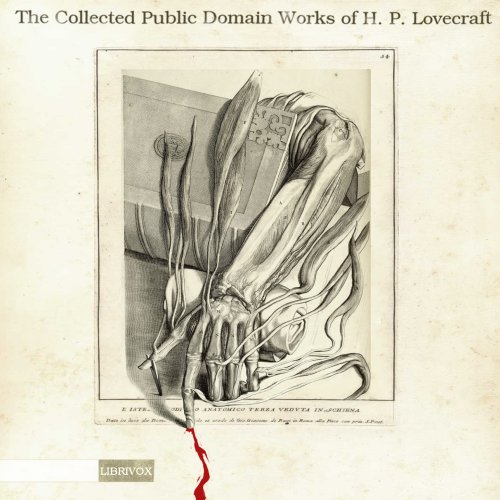
Lovecraft was an American author of horror living during the late 19th and early 20th centuries. He has a bit of a cult following, largely due to a creature featured in some of his stories known as Cthulu. (I’d link, but your experience will be much more amusing if you google “cthulu”). Some common themes in his horror include eerie things coming from ocean depths, scientific reanimation of corpses, human-like apes, the dreamworld, and ancient myths being fact. This collection includes 24 short stories–The Alchemist, The Beast in the Cave, Beyond the Wall of Sleep, The Cats of Ulthar, Celephais, The Crawling Chaos, Dagon, The Doom that Came to Sarnath, Ex Oblivione, Facts Concerning the Late Arthur Jermyn and His Family, Herbert West: Reanimator, Memory, The Music of Erich Zann, The Nameless City, Nyarlathotep, The Picture in the House, Polaris, A Reminiscence of Dr. Samuel Jackson, The Statement of Randolph Carter, The Street, The Terrible Old Man, The Tomb, The Tree, and The White Ship.
Review:
I decided I needed to actually read some Lovecraft after getting swept up in the Cthulu subculture last December through Cthulumas hosted on Tor.com. So I searched Librivox via the Audible app and found this collection. Unfortunately, there was no Cthulu in it. Also unfortunately, I wasn’t too impressed by most of the stories.
I think the main issue is that a lot of the horror just didn’t age well. Lovecraft’s stories depend largely on the unknown, only a lot of what was unknown in his time is known now. For instance one of his stories focuses around the mystery of the North Star, which isn’t so mysterious anymore. They also depend on unexplored territories on the continents, whereas now it’s space that is unexplored. I can’t get into the character’s mindset of fear when he reads simply as naive and uneducated.
His stories that center around the hypothetical reanimation of the dead are some of the best ones. They read like a mix of zombie and Frankenstein, and it works because we still don’t know what happens after death. Herbert West: Reanimator was one of the only stories to give me the actual chills.
I would be amiss not to mention the racism evident in his stories. Any that feature Africa talk of a pervasive fear of what lies in the depths of the continent and repeatedly mention apes mixing with men. Even if he was unaware that he was harboring racism, these read at the very least as being anti-miscegenation. It’s hard to listen to stories whose horror centers around fear of what people look like as opposed to what they may be capable of doing.
Similarly, he read as being anti-science. Any scientists in his short stories are portrayed as sticking their noses where they don’t belong. Apparently, we can never fathom the universe, so we better not. It’ll hurt us if we try. I found myself rolling my eyes at the sleep stories. They were all so ridiculous when I know doctors and researchers studying sleep. It’s really not this dangerous other-world he presents it to be.
Where Lovecraft is at his strongest is when he veers from his typical themes. My loyal readers probably won’t be surprised at all that one of the most pleasurable reads to me was The Cats of Ulthar, which basically presents animals as sentient and capable as humans.
I can only hope that the Cthulu stories fall more in the category of Herbert West: Reanimator and The Cats of Ulthar. The rest wrought a decided “meh” reaction from me. I’d recommend them only if you have no issue reading horror centering around unknowns that are now known.
2 out of 5 stars
Source: Librivox recording via Audible app for the iTouch and iPhone
Book Review: Scott Pilgrim By Bryan Lee O’Malley (Graphic Novel) (Series, #1-5)
 Summary:
Canadian Scott Pilgrim is 23 years old and has a case of what to do with myself quarter life crisis. He’s living in a studio apartment with Wallace (who is very gay), dating a 17 year old, and doesn’t have a job, but at least he’s got his band. Then he meets American Ramona Flowers and falls for her. Dating her comes with a catch, though. He’s got to defeat her 7 evil exes who really seem to enjoy jumping him when he least expects it.
Review:
Scott Pilgrim takes typical 20-something ennui and spices it up with a heavy dose of ninja fighting and videogame references, hitting its target audience dead-on. It’s the perfect mix of connection over real life issues and over generational references. It’s more than just a day in the life of Scott mixed with fighting evil exes, though. There’s a mystery to the whole situation. Why is Scott such a good fighter? Why does he fall so quickly for Ramona when nothing seems that special about her? What is up with Ramona anyway? It had me wishing that the sixth volume was out already so I could find out. (It comes out this summer).
The art is relatively average. Some of the characters and scenes are really well-drawn, but some of the minor characters blend together, particularly the women. I was left really confused about some of the women until later in the series where O’Malley put together a listing of all the characters. Even then, I thought they looked a bit too much alike. On the other hand, the art handles delicate scenes like sex and fighting really well, so it all balances out.
What really makes the series, though, is the creativity of the exes and the battles. They range from skateboarding to evil robots at concerts to races through value warehouse stores to (my absolute favorite) vegans with superpowers. Seriously, they have superpowers because they’re vegans. It’s the most awesome idea! Plus, there is a recipe for vegan shepherd’s pie given in the context of the story that I absolutely must try.
I definitely recommend this series to all 20-somethings, videogamers, and ninja-lovers. Plus, the movie version starring Michael Cera is coming out this summer, so you may as well whet your appetite for it by reading the books first.
4 out of 5 stars
Source: Borrowed
Books in Series:
Volume 1: Scott Pilgrim’s Precious Little Life
Volume 2: Scott Pilgrim vs. the World
Volume 3: Scott Pilgrim and the Infinite Sadness
Volume 4: Scott Pilgrim Gets It Together
Volume 5: Scott Pilgrim vs. the Universe
Volume 6: Scott Pilgrim’s Finest Hour (release date: July 20, 2010)

Movie Review: Back from the Edge (2006)
Summary:
This is a documentary produced by New York-Presbyterian Hospital on Borderline Personality Disorder (BPD). BPD is an Axis II personality disorder that generally first shows up in teen years or young adulthood. According to the DSM-IV-TR, to be diagnosed, a person must have 5 or more of the following 9 symptoms:
- frantic efforts to avoid real or imagined abandonment (some clinicians expand this to include fear of abandonment)
- a pattern of unstable and intense interpersonal relationships characterized by alternating between extremes of idealization and devaluation
- unstable self-image or sense of self (identity disturbance)
- impulsivity in at least two areas that are potentially self-damaging (such as sex, spending, substance abuse, reckless driving, etc…)
- recurrent suicidal behavior, gestures, threats or self-mutilating behavior (such as cutting, burning, head banging, etc…)
- a marked reactivity of mood (e.g., intense episodic dysphoria, irritability, or anxiety usually lasting a few hours and only rarely more than a few days)
- chronic feelings of emptiness
- inappropriate, intense anger or difficulty controlling anger
- transient, stress-related paranoid ideation or severe dissociative symptoms (from page 710 of the DSM)
BPD affects approximately 10 million Americans or about 2% of the population. It is more prevalent than bipolar disorder or schizophrenia. 75% of those with BPD are female.
This documentary features interviews with people who have BPD, their families, and leading clinicians specializing in BPD such as Dr. John Gunderson, Dr. Marsha Linehan, and Dr. Perry Hoffman.
Review:
This documentary is divided into sections starting with each of the symptoms then leading through causes, treatment options, and hope for remission. Each section start with a quote directly from a person with BPD.
This documentary is beautifully done. We see pictures of the people with BPD from their past including both the good times and the bad. We also see excerpts from their journals and letters sent to others. The clinicians all display evident empathy and desire to help not only the patients but their families, friends, and other loved ones. The family members are given the space to express their confusion over their loved ones’ behaviors before they were diagnosed and relief after.
It’s not common to see a documentary of a mental illness that does such an excellent job of humanizing an illness that can be scary both to those who have it and those who don’t. The clinicians carefully explain in clear terms the causes behind the most frightening BPD symptoms–self-injury, clinging, and suicidal ideation (a lack of caring whether or not you die). They show real brain scans comparing BPD brain activity with that of non-BPD brain activity.
My only complaint is that they do not discuss the fact that numerous studies have shown a marked prevalence of abusive childhoods among people with BPD. They are far more likely than the non-BPD person to have been abused physically, emotionally, or sexually by at least one caregiver. I believe they generally left this out from a desire to create a welcoming atmosphere for family members, but it is important for people to know that it takes both a certain environment and the BPD-specific brain chemistry and pathways for BPD to develop.
That said, this is still a very important documentary. It offers so much hope for both those with BPD and those who care for someone with BPD. The filmmakers obviously want the public to know that BPD is treatable, contrary to the stigma attached to it. Most people with BPD who get treatment go into remission (most of the symptoms are gone) in about 2 years. It is so important for everyone to understand mental illnesses. I highly recommend this documentary.
4 out of 5 stars
Source: library

If you found this review helpful, please consider tipping me on ko-fi, checking out my digital items available in my ko-fi shop, buying one of my publications, or using one of my referral/coupon codes. Thank you for your support!
Movie Review: Kung Fu Panda (2008)
 Summary:
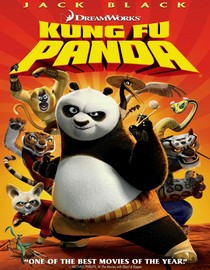
Po is a great big tub of a panda bear helping his dad run a noodle restaurant in Valley of Peace. He dreams of doing kung fu, in spite of his large size and being generally out of shape. When the valley is threatened by an escaped evil kung fu master and coincidence leads to Po being named the Dragon Warrior, he gets his chance to see if he can handle kung fu alongside the Master Shifu and his students, the Furious Five–Tigress, Crane, Mantis, Viper, and Monkey.
Review:
Although in some ways it’s your predictable kid’s movie (I mean, just look at the Furious Five’s names), in other ways it is delightfully surprising. Po’s dreams of being a kung fu warrior are pretty much just dreams to him. He never seriously thinks he could do it. He just likes watching from afar, but when the chance comes up to actually do it, he steps right up to the plate.
Sight gags are numerous, and the animation is largely delightful. All the birds have a certain adorable quality to them, and the Valley of Peace’s inhabitants are largely cute bunnies and pigs. Kung Fu Panda pokes fun at itself, such as with the fact that Po’s father, a bird, is not really his father. This rather obvious fact is used for jokes, but is never addressed.
Probably what is most enjoyable about the film, though, is that although Po becomes proficient at kung fu, his size doesn’t change. He goes from out of shape and large to in shape and large. Indeed, his belly fat ends up helping him out. Master Shifu admits that the struggles at first were largely his fault in trying to teach Po the way he taught the others, when Po is his own individual person.
A fun message supported by good animation, a cute storyline, and an all-star voice cast including Jack Black, Jackie Chan, and Angelina Jolie, Kung Fu Panda is definitely worth the watch.
4 out of 5 stars
Source: Video on Demand

 Support my work with a tip or browse my shop for curated book club guides, how to guides, cross-stitch patterns, and more!


This work by Amanda Nevius is licensed under a Creative Commons Attribution-Noncommercial-No Derivative Works 3.0 United States License.
 Opinions of a Wolf