
Archive
Book Review: Children of God by Mary Doria Russell (Series, #2)
 Summary:
Father Sandoz, the only person from the humanity’s first mission to Rakhat to return to Earth, has barely begun to recover from his ordeal when the Jesuits ask him to assist in preparing the second team. Reticent to assist anyone to go to Rakhat but enjoying the use of the languages again, he agrees.
Meanwhile, one survivor of the mission joins forces with the Runa and a rogue Jana’ata to bring about justice. What world will the second mission find when they return? It certainly won’t be the one previously held in a tenuous working balance between predator and prey.
Review:
The Sparrow really touched me, and I was eager to return to Rakhat, not to mention to see how Sandoz handled his recovery. What I found was a mixed bag. A creative expansion on the world of Rakhat but a message and character development that moved in directions that left me feeling very little.
The presence of humans upset the delicate balance between the Jana’ata and the Runa. The humans demonstrated to the Runa that they didn’t need the Jana’ata, and thus a revolution was born. The thing is though this culture is just so truly alien that it’s hard to root for the Runa or the Jana’ata.
The Jana’ata have a depraved world, yes, but they are also truly predators who evolved from predators. It’s hard to hate on them when they’re basically cats walking around in medieval clothes. Well, of course they’re acting barbaric. They’re cats! And the thing is, they’re not just cruel to the Runa, they’re cruel to each other as well.
The one real disjointed bit of the narrative is that this culture reads as a developing one, as if they are from the 1200s or 1300s on Earth. Yet they somehow have enough technology that they could broadcast music to Earth? It makes no sense that they would be so backwards and yet simultaneously so advanced in science.
Similarly, the Runa are a people with a culture but they also are a prey species. They reproduce like mad when they have enough food, and they act like herd animals. Yakking constantly and with no real art or science developing. It is easy to see how these two cultures came to co-exist, as well as the fact that they need each other. Put another way, everyone thinks deer are cute, and they are. But if they exist in a world with no natural predators, they soon over-run the place until they have too much population for the land to support, and they start to starve. Yes, the co-existence between the Jana’ata and the Runa could be handled better (certainly with more clarity and more maturity) but the Runa and Jana’ata need each other. They co-evolved.My perspective on the Runa and Jana’ata impacts how I feel about the rest of the book.
Russell presents the idea that it’s ok for the Runa to become the dominant culture so long as they “allow” the “good” Jana’ata (the ones who have sworn off eating Runa and struggle along eating the eggs of some other creature that can barely sustain them. Truly barely. One character has multiple problem pregnancies due to malnutrition). Positing the idea that the Jana’ata are bad because they are predators, and the Runa are good because they are herbivores (with some outliers in both groups of course) is just hard to swallow. Bad and good is much more nuanced than that. Is a shark bad because it eats a seal because it’s hungry? No. But if a shark kills a seal because it’s fun to kill a seal and then swims off without eating it? Then one could argue that’s a bad shark with a bad nature. This level of nuance is just something I felt was missing from the book and the world.
I also found Sandoz’s path back to god to be a bit irritating, as well as the repeatedly presented idea that we can all have different interpretations of the one god, but there is definitely one. A whole alien planet with two sentient species, and no one can even entertain the idea that there might be more than one god? People are allowed to think there’s not one at all, although the book does present this as a shortcoming of those people’s natures. Basically, if they were a bit more willing to open they could at least be agnostic about the idea. The ultimate “proof” of the existence of god in the book is something that made me laugh. I won’t reveal what is found but suffice to say that if you’ve heard the argument about a watch proving there’s a watchmaker, it’s very similar to that one. After the insight and the gray areas allowed in the first book with regards to faith, I was disappointed.
If my review seems a bit mixed and all over the place that’s because that’s how this book read to me. There were chapters of beauty and then others that made me sigh and still others that made me scratch my head. It’s a mixed bag of content set in a complicated world with an ending that some readers would definitely find satisfying but I do not. I still enjoyed the read overall simply because I love visiting the world of Rakhat. But would I want to visit it again? Given the direction it was going, probably not. Although I would gladly visit the future Earth that gets to meet a Jana’ata or a Runa on our own turf.
Overall, readers of the first book who enjoyed it for Rakhat will enjoy getting to know more about both the Runa and the Jana’ata culture will enjoy the sequel, whereas those who appreciated it for its nuance and exploration of gray areas and difficult topics will be less satisfied.
If you found this review helpful, please consider tipping me on ko-fi, checking out my digital items available in my ko-fi shop, buying one of my publications, or using one of my referral/coupon codes. Thank you for your support!
4 out of 5 stars
Length: 451 pages – chunkster
Source: Library
Previous Books in Series:
The Sparrow, review
Counts For:

Illness(es) featured: Autism Spectrum Disorder
2016’s Accepted Review Copies!
Here on Opinions of a Wolf, I accept submissions of review copies via a form between February and December. The books I accept will then be reviewed the following year. So, the books accepted for review here in 2016 were submitted in 2015. You can view more about my review process here. You may view the accepted review copies post for 2014 and 2015 by clicking on the years. For 2016, I decided to require authors to submit an excerpt along with their request, and I for the first time ever did not give a set number I would accept. Instead I accepted only those books that sparked my interest. Books I would have picked up anyway browsing in a bookstore or library, a thing that is difficult for indie authors to have happen. I basically view the submissions I receive as my own mini-bookstore of indie books.
This year there were 62 submissions. I accepted 7 books. This means I only accepted 11% of submitted books (down 5% from last year). Put another way, each book only had a 11% chance of being accepted.
I actively pursue submissions from women and GLBTQA authors, as well as books with GLBTQA content.
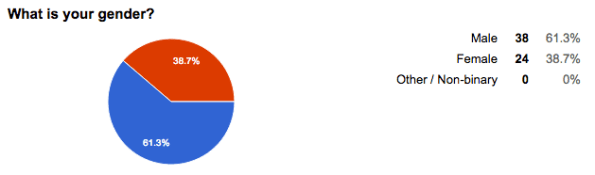
As you can see, 38.7% of authors submitting to me were women. I am disappointed to say this was not an increase from last year, in spite of my promotion efforts. Of the 7 books I accepted, 6 (86%) are written by women authors. Now, I do not preferentially choose books by women authors. My one rule is that I must not accept more books by male than female authors. This means the male authors submitting to me really failed to wow me, as I could have accepted 6 of them but ultimately only 1 appealed to me out of 38.

24.2% of authors submitting to me self-identify as GLBTQA. This is up from only 14% last year, a fact I am very happy about. Of the books I accepted, 4 (57%) were by GLBTQA authors. The GLBTQA authors really impressed me, you guys.

Interestingly, 29% of the books submitted to me have GLBTQA content. Again, this means cis-heterosexual authors are also writing about GLBTQA issues, which I appreciate. Of the books I accepted, 4 (57%) have GLBTQA content, and no, they are not the exact same 4 that have GLBTQA authors. Authors of all gender and sexual orientations write about people of all gender and sexual orientations, and this is definitely reflected in what was submitted to me.

You can see that the overwhelming majority of the books submitted to me were a scifi (37.1%) or thriller (32.3%) with horror a close third (22.6%). At the other end of the spectrum, nonfiction GLBTQA, nonfiction health and fitness, and nonfiction cookbook all had zero submissions. For fiction, cozies had the fewest submissions (3.2%), followed by a tie between paranormal or western romance and historical fiction with 6.5% each. Keep in mind that I let authors check off more than one genre, if their book fits in more than one.
Of the 7 accepted books, 3 are scifi, 2 urban fantasy, and 2 paranormal or western romance, along with 1 fantasy, 1 cozy, and 1 thriller. This means that only 5% (1 out of 20) of thrillers was accepted, whereas 50% (2 out of 4) of paranormal or western romance was.
I provide these stats for two reasons. First to give everyone an idea of the competition the accepted books were up against. It’s an accomplishment to be accepted for review here! Second, I want those considering submitting to me this year to look at these stats and take them into consideration when submitting. Consider the fact that I don’t want to read only scifi all year. If you have a nonfiction or a romance waiting to be reviewed, it has a higher chance of being accepted. But enough stats! It’s time to get to the accepted review copies!
The review copies are listed below in alphabetical order by title. Summaries are pulled from GoodReads or Amazon, since I have yet to read them myself and so cannot write my own. These books will be read and reviewed here in 2016, although what order they are read in is entirely up to my whim at the moment.

Black Magic and Mojitos
By: A.A. Chamberlynn
Genre: Urban Fantasy
Notable GLBTQA Content
Summary:
Zyan Star’s latest job is turning into a real Nightmare. Actually, a whole herd of them.

When supernatural bounty hunter Zyan Star jets down to Rio to meet a prospective client, everything goes as planned initially. That is, until she finds out the person hiring her is Raoul Cabrera, the half demon/half faery supernatural overlord of Brazil, who rubs elbows with Lucifer himself. And that he’s hired another bounty hunter, Donovan McGregor, to work with her.
Their target is a herd of Nightmares, horse spirits that torment people with visions of their worst fears before devouring their flesh. Zy and Donovan head out on the hunt, but it quickly becomes apparent that their client hasn’t given them all the facts. There’s a pissed-off, powerful witch summoning the Nightmares, and she’s out to exact some serious revenge on Raoul. Zy soon realizes she’s caught in the middle of a lover’s spat between two immensely powerful supernaturals, and it’s not clear whose side she should stand on. As if that weren’t enough, pulling off this job is going to require her to relive her worst fears and summon her own long-suppressed magical powers.
Let the supernatural Carnival begin.
Why I Accepted It:
It’s urban fantasy with evil horse spirits set in Brazil. Just typing that sentence gives me chills of excitement. And the excerpt I was given blew me away. And can I just say that cover (which I didn’t see when going through my submissions) is dynamite.
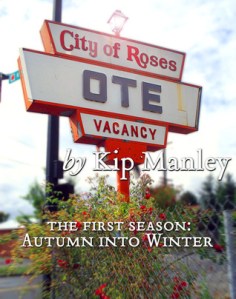
City of Roses Season One: Autumn Into Winter
By: Kip Manley
Genre: Paranormal or Western Romance, Urban Fantasy
Notable GLBTQA Content
Summary:
City of Roses is a serialized epic very firmly set in Portland, Oregon–an urban fantasy mixing magical realism with gonzo noirish prose, where sinister high-rise riverfront condos are fought by a sprawling tea-house constructed from scrap lumber and old windows, and ancient sea-gods retire to close-in Southeast apartments with lovely views. It’s the story of Jo Maguire, a highly strung, underemployed telemarketer, and what happens when she meets Ysabel, a princess of unspecified pedigree. Jo rather unexpectedly becomes Ysabel’s guardian and caretaker, and now must make a place for herself among Ysabel’s decidedly unusual family and friends–which involves rather more sword-play than most of us are used to.

This omnibus ebook collects the full first season of the critically acclaimed serial, chapters 1 – 22, also available in volume 1, “Wake up…” , and volume 2, The Dazzle of Day.
Why I Accepted It:
It just seemed so quirky. Much like Portland. And the excerpt, again, was great.

The Crow Box (Not released yet)
By: Nikki Rae
Genre: Paranormal or Western Romance
Summary:
The small wooden box is dirty, the size of a human fist, and sealed with wax. When Corbin takes it upon herself to clean it and break the seal, a voice she has tried to ignore gathers strength. Shadows play on the walls at night, and with a family history of mental illness, Corbin fears the worst. But the voice tells her it is real. That its name is Six and it will prove it in time.
Drawn to this mysterious entity, Corbin isn’t sure what to believe and the line between reality and her imagination blurs more every day.
Some doors should not be opened; can this one be closed?
Why I Accepted It:
The combination of the eerie foreboding nature of the summary with the author’s identifying it as a paranormal or western romance intrigued me. Plus the mental illness aspect fits right in with my ongoing Mental Illness Advocacy Reading Challenge.

The Fair & Foul
By: Allie Potts
Genre: Scifi
Summary:
Juliane has a supercomputer for a brain and she isn’t afraid to use it. Perhaps she should be.

Juliane Faris is a brilliant programmer determined to change the world through scientific and technical advancement. Blinded by ambition, she will do whatever it takes to secure her legacy including agreeing to participate in an experimental procedure. The procedure grants her unprecedented knowledge and cellular control over her body but threatens everything she holds dear including her sanity. When others undergo the same modifications it becomes apparent that not everyone can afford the price that this technology demands
Set in the not too distant future, The Fair & Foul is earth-based science fiction dealing with the next era of human evolution. The line between humanity and technology is blurring, and what seems like magic is only a scientific discovery away.
Why I Accepted It:
I’m a sucker for anything transhumanism, and this one stars a woman.

A Harvest of Ripe Figs
By: Shira Glassman
Genre: Cozy, Fantasy
Notable GLBTQA Content
Summary:
Esther of the Singing Hands is Perach’s Sweetheart, a young and beautiful musician with a Girl Next Door image. When her violin is stolen after a concert in the capital city, she doesn’t expect the queen herself to show up, intent upon solving the mystery.

But Queen Shulamit–lesbian, intellectual, and mother of the six month old crown princess–loves to play detective. With the help of her legendary bodyguard Rivka and her dragon, and with the support of her partner Aviva the Chef, Shulamit turns her mind toward the solution–which she quickly begins to suspect involves the use of illegal magic that could threaten the safety of her citizens.
Why I Accepted It:
It’s a cozy starring a happily partnered lesbian plus it has a dragon. I mean, how could I not?
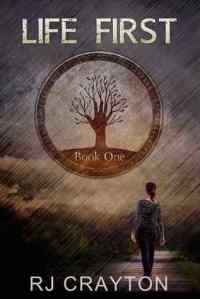
Life First
By: RJ Crayton
Genre: Scifi, Thriller
Summary:
Strong-willed Kelsey Reed must escape tonight or tomorrow her government will take her kidney and give it to someone else.

In this future forged by survivors of pandemics that wiped out 80 percent of the world’s population, life is valued above all else. The government of “Life First” requires the mentally ill to be sterilized, outlaws abortions and sentences to death those who refuse to donate an organ when told.
Determined not to give up her kidney, Kelsey enlists the help of her boyfriend Luke and a dodgy doctor to escape. The trio must disable the tracking chip in her arm for her to flee undetected. If they fail, Kelsey will be stripped of everything.
Why I Accepted It:
It hits on a lot of issues I like seeing looked at in scifi — organ donation, mental illness, and reproductive rights and issues.

Rymellan 1: Disobediece Means Death
By: Sarah Ettritch
Genre: Scifi
Notable GLBTQA Content
Summary:
Lesley and Mo can’t imagine life without each other. If it were up to them, they’d settle down, raise daughters, and lead happy, fulfilled lives. But they live on the planet Rymel, in a strict society that selects life-mates for its citizens and executes those who violate their life-bonds. Girlfriends since their teens, Lesley and Mo know they should break up but can’t let each other go. They dread the day the state summons them to meet their selected mates. Meet Lesley and Mo when they’re young adults in love and follow them until their time together runs out. Will they do what their society expects of them, or will they sacrifice their lives for their love?
Why I Accepted It:
The blurb and excerpt were just so cute, I couldn’t resist!

2015’s 5 Star Reads!
Since 2011, I’ve been dedicating a separate post from my annual reading stats post to the 5 star reads of the year. I not only thoroughly enjoy assembling the 5 star reads posts, but I also go back to them for reference periodically. It’s just useful and fun simultaneously! Plus it has the added bonus of giving an extra signal boost to the five star reads of the year. You may view the 5 star reads for 2011, 2012, 2013 , and 2014 by clicking on the years.
With no further ado, presenting Opinions of a Wolf’s 5 Star Reads for 2015!

Dreamsnake
By: Vonda N. McIntyre
Publication Date: 1978
Publisher: Houghton Mifflin
Genre: Scifi, Post-apocalyptic
Themes: Healing, Prejudices, Adoption, Hubris
Summary:
In a far-future, post-apocalyptic Earth, all medical aid is brought by healers. The healers use a trio of snakes to bring this healing. One newly-minted healer first visits the desert people, but mistakes lead to the loss of her dreamsnake, the only snake that can bring pain relief to the dying. She enters a journey to attempt to find a new dreamsnake.
Current Thoughts:
My full review of this book has yet to come, so I’ll keep my current thoughts short. A 1970s work of scifi by a woman that intrigued me due to many reviews mentioning the positive depiction of snakes. It wowed me. I read it via my Audible subscription, and I really am going to have to get a vintage paper copy for my female scifi collection.
Full review still to come.

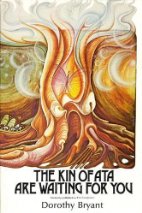
The Kin of Ata Are Waiting For You
By: Dorothy Bryant
Publication Date: 1971
Publisher: Evan Press
Genre: Scifi
Themes: Redemption, Self-Actualization, Healing, Mindfulness, Community
Summary:
Running from his demons, a man crashes his car and wakes up being assisted by a deceptively primitive people–the kin of Ata. He discovers that he’s been mysteriously brought to an island inhabited only by these people. As time passes, he comes to learn there is much more to them than first appears.
Current Thoughts:
This is a book I know I will revisit. The parable for self-actualization and the journey of mindfulness is something that rang so strongly with me. When I think about it, I remember it as a beautiful, touching book.
Full review

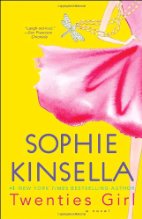
Twenties Girl
By: Sophie Kinsella
Publication Date: 2009
Publisher: Bantam Press
Genre: Chick Lit
Themes: Living Fully, Living Authentically
Summary:
Lara Lington has always had an overactive imagination, but suddenly that imagination seems to be in overdrive. Normal professional twenty-something young women don’t get visited by ghosts. Or do they?

When the spirit of Lara’s great-aunt Sadie–a feisty, demanding girl with firm ideas about fashion, love, and the right way to dance–mysteriously appears, she has one last request: Lara must find a missing necklace that had been in Sadie’s possession for more than seventy-five years, and Sadie cannot rest without it. Lara, on the other hand, has a number of ongoing distractions. Her best friend and business partner has run off to Goa, her start-up company is floundering, and she’s just been dumped by the “perfect” man. Sadie isn’t having any of it. And soon the question winds up being, who is really helping who?
Current Thoughts:
A book that really shows how great chick lit can be. What starts out light and ridiculous eventually hands over some real thought-provoking lessons about a life lived versus a life lived well. It was just the light, humorous take on life and death I needed when I picked it up. Also, I actually laughed out loud while reading it. A real complement.
Full review still to come.
Nonfiction November: Fiction and Nonfiction Book Pairings
I was looking forward to this week’s theme of Nonfiction November the most, because one of my favorite parts of being a librarian is “reader’s advisory.” Reader’s advisory is when you chat to a person about what they enjoy reading, what they’re interested in, what they’re looking for, and recommend a few books to them as books they might enjoy reading. (I don’t get to do this a ton as an academic medical librarian, but it does still come up sometimes). I view this as a book blogger version of that.
For this, I thought I would select out a few of my favorite fiction books and seek out nonfiction books that would pair well with them. If you read and enjoyed the fiction, consider checking out the nonfiction. Of course it will also work the other way around! If you’ve read the nonfiction book and enjoyed it, consider checking out the fiction.
First Pairing: Sled Dogs
 The Call of the Wild
by:
Jack London
Fiction
Blurb:
Buck is a spoiled southern dog enjoying a posh life when one of the family’s servants steals him and sells him away to be a sled dog for the Alaska gold rush. Buck soon goes from an easy life to one of trials and tribulations as the result of humans fawning over a golden metal, but it might not be all bad for him in the wild Alaskan north.

 Gold Rush Dogs
By:
Jane G. Haigh
Nonfiction
Blurb:
Dog lovers and history buffs will delight in this collection celebrating the beloved canines that offered companionship, protection, and hard work to their masters in the Far North.
Why pair it?
Buck, the main character (and dog) in The Call of the Wild is trained to be a sled dog for the gold rush (not the Iditarod). This nonfiction book is about the gold rush dogs.

Second Pairing: Women in Ancient Japanese Court Life
 Fudoki
By:
Kij Johnson
Fiction
Blurb:
An aging empress decides to fill her empty notebooks before she must get rid of them along with all of her belongings to retire to the convent, as is expected of her. She ends up telling the story of Kagaya-hime, a tortoiseshell cat who loses her cat family in a fire and is turned into a woman by the kami, the god of the road.

 Diary of Lady Murasaki
By:
Murasaki Shikibu
Nonfiction
Blurb:
The Diary recorded by Lady Murasaki (c. 973 c. 1020), author of The Tale of Genji, is an intimate picture of her life as tutor and companion to the young Empress Shoshi. Told in a series of vignettes, it offers revealing glimpses of the Japanese imperial palace the auspicious birth of a prince, rivalries between the Emperor’s consorts, with sharp criticism of Murasaki’s fellow ladies-in-waiting and drunken courtiers, and telling remarks about the timid Empress and her powerful father, Michinaga. The Diary is also a work of great subtlety and intense personal reflection, as Murasaki makes penetrating insights into human psychology her pragmatic observations always balanced by an exquisite and pensive melancholy.
Why pair it?
Fudoki features tales being told by an aging empress that illuminate women’s lives in ancient Japan. This nonfiction period piece is a diary by a real woman with an insider’s view of the same court life. Although not written by an empress, she was an empress’s companion.

Third Pairing: We’re Living in the Future the 1800s Scifi Imagined
 The Time Machine
By:
H.G. Wells
Fiction
Blurb:
Nobody is quite sure whether to believe their eccentric scientist friend when he claims to have invented the ability to travel through time. But when he shows up late to a dinner party with a tale of traveling to the year 802,700 and meeting the human race, now divided into the child-like Eloi and the pale ape-like ground-dwelling Morlocks, they find themselves wanting to believe him.

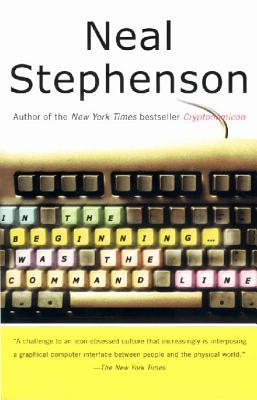 In the Beginning…Was the Command Line
By:
Neal Stephenson
Nonfiction
Blurb:
This is “the Word” — one man’s word, certainly — about the art (and artifice) of the state of our computer-centric existence. And considering that the “one man” is Neal Stephenson, “the hacker Hemingway” (Newsweek) — acclaimed novelist, pragmatist, seer, nerd-friendly philosopher, and nationally bestselling author of groundbreaking literary works (Snow Crash, Cryptonomicon, etc., etc.) — the word is well worth hearing. Mostly well-reasoned examination and partial rant, Stephenson’s In the Beginning… was the Command Line is a thoughtful, irreverent, hilarious treatise on the cyber-culture past and present; on operating system tyrannies and downloaded popular revolutions; on the Internet, Disney World, Big Bangs, not to mention the meaning of life itself.
Why this pairing?
Wells and Stephenson are both considered masters of the scifi genre. In this nonfiction piece, Stephenson explicitly draws comparisons between modern culture and the one envisioned by Wells in The Time Machine.

Fourth Pairing: Scandinavia Is Perfect….Or Is It?!
 The Unit
By:
Ninni Holmqvist
Fiction
Blurb:
In the Sweden of the near future women who reach the age of 50 and men who reach the age of 60 without having successfully acquired a partner or had children are deemed “dispensable” and sent to live in “a unit.” These units appear at first glance to be like a high-class retirement home, and indeed they have all the amenities. The residents, however, are required both to participate in medical experiments and to donate various organs and body parts up until their “final donation” of their heart anywhere from a year or a few years after their arrival in the unit. Dorrit arrives at the unit depressed, but accepting of her fate as the result of her independent nature, but when she falls in love, she starts to question everything.

 The Almost Nearly Perfect People: Behind the Myth of the Scandinavian Utopia
By:
Michael Booth
Nonfiction
Blurb:
The whole world wants to learn the secrets of Nordic exceptionalism: why are the Danes the happiest people in the world, despite having the highest taxes? If the Finns really have the best education system, how come they still think all Swedish men are gay? Are the Icelanders really feral? How are the Norwegians spending their fantastical oil wealth? And why do all of them hate the Swedes?
Michael Booth has lived among the Scandinavians, on and off, for over ten years, perplexed by their many strange paradoxes and character traits and equally bemused by the unquestioning enthusiasm for all things Nordic that has engulfed the rest of the world, whether it be for their food, television, social systems or chunky knitwear.
In this timely book he leaves his adopted home of Denmark and embarks on a journey through all five of the Nordic countries to discover who these curious tribes are, the secrets of their success and, most intriguing of all, what they think of each other. Along the way a more nuanced, often darker picture emerges of a region plagued by taboos, characterised by suffocating parochialism and populated by extremists of various shades.
They may very well be almost nearly perfect, but it isn’t easy being Scandinavian.
Why this pairing?
The Unit is a unique dystopia in that it is set in Sweden and takes various aspects of Swedish culture to their dystopic extremes. Since Scandinavia often comes across as idealistic, it was interesting to see a dystopia set there. This nonfiction work takes a long tough look at Scandinavia and exposes the minuses (in addition to the pluses) of living there.

That’s it for my pairings! I hope you all enjoyed them. I know that I certainly found a few new books for my wishlist!
Book Review: The Three Stigmata of Palmer Eldritch by Philip K. Dick
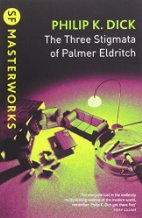 Summary:
Earth is overcrowded and overheated but people still don’t want to become colonists to other planets. The colonies on the other planets are so boring and depressing that the colonists spend all of their money on Can-D — a drug that lets them imagine themselves living in an idealistic version of Earth. The only trick is they have to set up dioramas of Earth first. The drug is illegal on Earth but the diorama parts are still created by a company there. When the famous Palmer Eldritch returns from the far-flung reaches of space, he brings with him a new drug, Chew-Z, that doesn’t require the dioramas. What the people don’t know, but one of the manager of the Can-D company soon finds out, is that Chew-Z sends those who take it into an alternate illusion controlled by Palmer Eldritch.
Review:
I love Philip K. Dick, and I have since first reading Do Androids Dream of Electric Sheep? So whenever I see his books come up on sale in ebook format, I snatch them up. I picked this up a while ago for this reason, and then randomly selected it as my airplane read on my honeymoon. Like many Dick novels the world of this book is insane, difficult to explain, and yet fun to visit and thought-provoking.
The world Dick has imagined is hilarious, although I’m not sure it was intended to be. Presciently, Dick sets up a future suffering from overpopulation and global warming, given that this was published in 1965, I find it particularly interesting that his mind went to a planet that gets too hot. Even though the planet is unbearably warm (people can only go outside at night and dusk/dawn), they still don’t want to colonize other planets. Colonizing the other planets is just that bad. So there’s a selective service by the UN, only instead of soldiers, those randomly selected are sent to be colonists. The wealthy can generally get out of it by faking mental illness, as the mentally ill can’t be sent away. This particular aspect of the book definitely reflects its era, as the 1960s was when the Vietnam War draft was so controversially going on.
I don’t think it’s going out on much a limb to say that drugs had a heavy influence on this book. Much of the plot centers around two warring drugs, and how altered perceptions of reality impact our real lives. One of the main characters starts out on Earth hearing about how the poor colonists have such a depressing environment that they have to turn to drugs to keep from committing suicide. But when he later is sent to Mars himself as a colonists, his impression is that in fact the colony is this downtrodden because no one tries very hard because they’re so much more focused on getting their next hit of Can-D. The Can-D has caused the lack of success on the planet, not the other way around. Whether or not he is accurate in this impression is left up to the reader.
Then of course there’s the much more major plot revolving around the new drug, Chew-Z. Without giving too much away, people think Chew-Z is a much better alternative to Can-D, but it turns out chewing it puts you under the control of Palmer Eldritch for the duration of your high, and if you overdose, you lose the ability to tell the difference between illusion and reality. The main character (and others who help him) thus must try to convince the humans that Chew-Z is bad for them before they ever even chew it. The main character has another side mission of getting people off of Can-D.
It sounds like a very anti-drugs book when summarized this way, but it felt like much more than that. People chewing Chew-Z can come to have an experience that sounds religious – seeing the three stigmata of Palmer Eldritch (a stigmata in Christian tradition is when God shows his favor on someone by giving them the marks of Jesus’ crucifixion. In this book, the three stigmata are three bodily aspects of Palmer that are unique to him). However, the experience of seeing the stigmata is in fact terrifying, not enlightening. The drugs thus represent more than drugs. They represent the idea that we could possibly know exactly what a higher power is thinking, and perhaps that it might be better to just go along as best we can, guessing, rather than asserting certainty.
All of this said, a few weaknesses of the 1960s are seen. I can’t recall a non-white character off the top of my head. Women characters exist, thank goodness, but they’re all secondary to the male ones, and they are divided pretty clearly into the virgin/whore dichotomy. They are either self-centered, back-stabbing career women, or a demure missionary, or a stay-at-home wife who makes pots and does whatever her husband asks. For the 1960s, this isn’t too bad. Women in the future are at least acknowledged and most of them work, but characterizations like this still do interfere with my ability to be able to 100% enjoy the read. Also, let’s not forget the Nazi-like German scientist conducting experiments he probably shouldn’t. For a book so forward-thinking on things like colonizing Mars and the weather, these remnants of its own time period were a bit disappointing.
Overall, though, this is a complex book that deals with human perception and ability. Are we alone in space? Can we ever really be certain that what we are seeing is in fact reality? How do we live a good life? Is escapism ever justified? Is there a higher power and if there is how can we ever really know what they want from us? A lot of big questions are asked but in the context of a mad-cap, drug-fueled dash around a scifi future full of an overheated planet and downtrodden Mars colonies. It’s fun and thought-provoking in the best way possible.
If you found this review helpful, please consider tipping me on ko-fi, checking out my digital items available in my ko-fi shop, buying one of my publications, or using one of my referral/coupon codes. Thank you for your support!
4 out of 5 stars
Length: 243 pages – average but on the shorter side
Source: Amazon

Book Review: The Kin of Ata Are Waiting for You by Dorothy Bryant
 Summary:
Running from his demons, a man crashes his car and wakes up being assisted by a deceptively primitive people–the kin of Ata. He discovers that he’s been mysteriously brought to an island inhabited only by these people. As time passes, he comes to learn there is much more to them than first appears.
Review:
I can’t recall exactly how this ended up in my tbr but I am certain it had something to do with it being older feminist scifi/fantasy, which I collect and read as much as possible. What I was expecting, particularly from a book from the 1970s, was a wishful book about an impossible utopia. What I got instead was a spiritual parable that left me breathless, surprised, and craving more–not out of the book but out of life.
The book starts slowly. The entire first chapter has the main character driving angrily down a road just after committing a murder during a fit of rage. He is not a character with which you can particularly empathize at this point, and it is confusing as to just when the titular Kin of Ata will show up. I admit that the first chapter moved so slowly and was so difficult to relate to that I was expecting the book to be a slog, but I persevered on, and in retrospect I appreciate the first chapter quite a bit. I’ll discuss why at the end of my review.
The man wakes up to people getting him out of the car and bringing him to a cave. They then bring him out of the cave to their hut-like homes. He perceives of them as primitive and judges them harshly. Gradually over time he comes to better understand them and their ways and to understand that he is not with primitive people hidden in the woods near his home. He is on an island, and he somehow was spirited there. I won’t discuss much more of the plot, because it could ruin it, but essentially the man is a stand-in for the reader. The Kin of Ata have spiritual lessons and teach them to the man, and in turn to the reader. It comes across much like a parable.
The Kin believe that humans need to remember and respect their dreams (actual dreams we have at night). They view our sleeping lives as just as important, if not more so, than our waking ones. They thus design their waking lives to be lived in the right manner so as to elicit the most powerful dreams. This means things like working but not too hard. Thus making yourself tired enough to sleep but not so tired that you sleep the sleep of the dead. It also means discussing your dreams every morning upon awaking. It means listening to your dreams and choosing daytime activities that suit what they are telling you. Put another way, the Kin choose daytime activities that fit the callings of their deepest souls. They essentially live a very mindful life that helps them achieve happiness and a peaceful community.
The main character starts out as a deep blight on the community. He keeps trying to force his ways upon them. He comes across as an angry cloud. In addition to being a murderer he also rapes one of the female Kin early on in the book. I found the depiction of this rape fascinating. The man sees people having sex with each other in what appears to him to be whenever one person demands it. In actuality, the people are choosing each other and subtlely letting each other know whether they want to have sex or not. The man decides he wants to participate and goes after one of the women. She indicates to him through cultural body language (these people do not speak much) that it is the wrong time. He does it anyway and she does not resist but she also does not participate. The whole community judges him as it being a wrong and a rape in spite of the fact that the woman never said no. The whole community views sex as only consensual if joyous consent is given, not just if the word “no” is not said. The man is startled and yet also immediately understands their point. He felt dirty and wrong after the sex and wasn’t sure why but now he understands and doesn’t know why he never thought of it this way before. He is utterly ashamed of himself.
Longtime readers of this blog know that I struggle with plots that ask us to empathize with a rapist. It honestly surprised me that this scene didn’t turn me off the book entirely. Yet this is also a huge turning point for the main character. He realizes that his way of doing things leads to him feeling bad and wrong and negatively impacts others. The woman spends several days in a cavelike place, which is basically where the Kin go to meditate. When she comes out, she forgives the man, because harboring a grudge against him would hurt her own ability to live the right path. I found the whole event of how the community confronts the man about his wrongdoing, how he responds to this confrontation, and how the woman handles it to be incredibly thought-provoking. It made me think about how much culture impacts people’s ability to even recognize when they’ve done something wrong. Also, much as I had heard many times growing up how harboring hate in your own heart poisons yourself and not the one who harmed you, seeing a character fully embrace this after a traumatic experience made it sink in much more for me than just hearing the saying ever did.
This scene also served another purpose. It reminded me that we’ve all done things we’re ashamed of and showed a path of redemption. The man starts to pursue living the right way. He has set-backs and stumbles. It sometimes takes years for him to see the results of certain actions that he starts doing the right way. It takes perseverance, unlike living the easy way, like he used to. It’s a powerful parable for practices such as meditation, for which you often don’t see results right away.
Similarly, again, I don’t want to spoil it, but the book demonstrates how it takes a community living right for a truly peaceful and happy community to exist. It also demonstrates, though, how one person who is very strong in their commitment to this right path can impact a whole community that is lost.
I promised to touch back on why I came to appreciate the first chapter. I appreciate it because it shows us the main character living his life following the wrong path within his own original community. It shows us where he came from before showing us how he develops into a life so much better through his work with the Kin. It also makes for a powerful bookend with the final chapter, whose surprise I will not reveal.
This is a powerful parable that demonstrates how much impact living mindfully can have, and also how important developing healthy communities is for the happiness and peace of all. It shows how wrong cultural ideals can lead people astray and hurt even the perpetrators of violence. Some may struggle with parts of the book, but that is part of the process of learning the lessons in the parable. I highly recommend this short book to all seeking a thought-provoking read.
If you found this review helpful, please consider tipping me on ko-fi, checking out my digital items available in my ko-fi shop, buying one of my publications, or using one of my referral/coupon codes. Thank you for your support!
5 out of 5 stars
Length: 228 pages – average but on the shorter side
Source: PaperBackSwap
Buy It (Amazon or Bookshop.org)
Book Review: UnWholly by Neal Shusterman (Series, #2) (Audiobook narrated by Luke Daniels)
 Summary:
Picking up where Unwind left off, UnWholly finds Risa and Connor managing the Graveyard full of unwinds themselves with no adults in site, and Lev struggling to find a purpose now that he’s both free of clapper chemicals and under the watchful eye of the government. Into the mix comes Cam, the first ever “rewind.” He’s been assembled completely from the parts of unwinds of every race and religion. And his creator intends to meddle with the runaway unwinds too.
Review:
I picked this up right after finishing the first on audiobook, because finding a fast-paced story with a good narrator can be harder than it sounds. So once I found that with the first book in the series and I saw the rest of it had the same narrator, I figured I may as well continue along with it. While I found the first book engaging and thought-provoking, I found myself periodically bored with the plot in this one, and also found it more difficult to suspend my disbelief than before.
The basic premise is that Connor is all torn up over having the arm of his once-rival (who also just so happened to threaten to rape his girlfriend, Risa). He thus holds Risa at arm’s-length (pun intended) because he’s afraid of what his own arm will do. While I appreciate the fact that it must be truly atrocious for your boyfriend to now have your attempted rapist’s arm, I think the fact that Connor lends the arm so much agency is a symptom of one particular idea in this world-building that just doesn’t work for me. The idea that body parts have their own spark of soul or agency or thought. It’s rife in this entry in the series, and it’s just plain weird to me. I can understand a character not bonding with a transplant that was forced upon him. I can understand it being weird for loved ones. I don’t, however, find myself able to suspend my disbelief enough to believe that someone’s arm has their personality in it so much that the person who it was transplanted onto would be afraid of it. It’s an arm, not a piece of brain or even a heart. The author does provide links to sources about transplant recipients feeling connected to the person whose body part they received or having memories or what have you. I appreciate that. But for me personally this plot point just does not work. Other readers may be able to suspend their disbelief better than I was able to. I for once can’t imagine not going near my own girlfriend because I was afraid of my arm. I also just disliked how much agency Connor removes from himself for his own temper. If he hits the wall when he’s angry it’s not him hitting the wall, it’s the arm hitting the wall. The arm got mad. The arm got out of control. There’s just a ridiculous lack of agency there, and I’m not super comfortable with that level of lack of agency being in a book marketed toward teenagers, who are at the best point in life for learning agency and responsibility.
I similarly have a hard time believing, from a neurological perspective, that the rewind boy, Cam, could exist. His brain is dozens’ of peoples all wound together. I could believe replacing a brain piece here or there with transplant technology, I couldn’t believe mish-mashing many together and having them actually function. Let alone with the only issue being that Cam struggles to learn to speak in words instead of metaphors. While Cam did strike me as grotesque, he mostly just struck me as an impossibility that I was then supposed to have sympathy for because he’s a person with his own feelings…but are they really? The whole thing was just a bit too bizarre for me.
On a related note, I found the scenes where Cam wakes up and learns to talk and slowly realizes what he is to be very tedious to read. They move slowly, and there is an attempt at building of suspense, but it is clear nearly immediately that Cam is a Frankenstein’s creature like experiment, even without Cam himself knowing it right away.
The other big new character is Starkey, a boy who was storked who is brought into the Graveyard. He’s basically exactly the same as Connor (he’s even still a white boy), the only difference being that was a stork and that he has no Risa to ease down his temper. I found his characterization to be uncreative, even if the building up of strife between the storks and the rest of the unwinds was a good plot point. It would have been better if the leader of the storks was more creative. Similarly, Starkey’s two main assistants are a black girl and an Indian-American boy. Just as with the first book, non-white people exist, but only as seconds to the white people. Why couldn’t either of them have been the leader of the storks?
All of these things said, there was still a lot of plot to keep the interest. I’ve barely touched on a couple of them. The world is still engaging, even if it’s hard to suspend the disbelief for it. I doubt I’d keep reading if I was reading this in print, but the audiobook narration makes it feel like listening to a movie, and it’s the perfect match for my commutes and doing dishes and such. Plus, now I’m curious as to where else the plot will go. I’m betting it will end up going in a direction I find it even harder to suspend my disbelief for, but it’ll be a fun ride seeing where that is.
Overall, fans of the first book may be disappointed by the slightly more meandering plot in this one. The addition of two new characters to follow will be distracting to some readers while others will find it adds to the interest and suspense. Some readers may be turned off by the continued lack of diversity in such a large cast of protagonists. The plot is engaging and the world is unique, though, so fans of YA dystopian scifi will probably still enjoy it.
If you found this review helpful, please consider tipping me on ko-fi, checking out my digital items available in my ko-fi shop, buying one of my publications, or using one of my referral/coupon codes. Thank you for your support!
3 out of 5 stars
Length: 416 pages – average but on the longer side
Source: Audible

 ,
, Book Review: Unwind by Neal Shusterman (Series, #1) (Audiobook narrated by Luke Daniels)
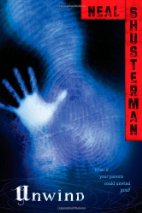 Summary:
In the near future, the Pro-Choice and Pro-Life debate explodes into a war called the Heartland War. The only way the war could reach a peace was to come to an agreement. There would be no abortion but when children are between the ages of 13 and 17 their parents can sign an order to have them unwound. New scientific technology allows doctors to transplant all of a person’s body parts. They will then “live on” in a “divided state.” Teens whose parents choose to sign an unwind order for them are rounded up by juvie cops and brought to Harvest Camps to await their fate. Some families, particularly from fundamentalist branches of all faiths, believe in tithing 10% of their children, and will have a child simply to raise them to be a tithe. Additionally, many children end up unwanted and living in State Homes, where they are all given the last name of Ward–for ward of the state.
Connor is a light-hearted bad boy who just accidentally found his own unwind orders in his parents’ desk and immediately goes on the run. Lev is a tithe who is on his way to Harvest Camp. Risa is a ward of the state, and she is on a bus to be unwound, because she isn’t deemed exceptional enough to justify her upkeep. A series of events throws them into each other’s lives and leaves whether or not they will be unwound in question.
Review:
This was recommended to me years ago, but when I first read the description I was skeptical that the book was anything but Pro-Life propaganda. Years later I decided to check it out again, and most reviews mentioned how neutral the book was. Additionally, I read some interviews with the author where he stated he genuinely was trying to present a neutral story that analyzes some tough questions, so I thought I would give it a shot. (I also found this fun short video interview where he talks about how he came up with the idea of the dystopian world.) Ultimately, the author has succeeded at creating a future world that is fascinating to visit and that also analyzes medical ethics in a creative way. I would honestly say the book is much more about medical ethics, particularly in regards to transplants, than it really is about abortion rights.
The basic plot is that three very different teenagers are supposed to be unwound but then find themselves on the run instead of actually at Harvest Camp. The book is in the third person but from the limited perspective of one character, and that one character switches around. It is predominantly Connor, Risa, or Lev, but it is also sometimes someone like a juvie cop or a parent. Sometimes this narrative structure works really well, providing many different perspectives on the same event or issue. Other times it feels too contrived. The perspective switches at just the right moment to keep the reader in the dark, or to reveal something we wouldn’t otherwise know. Sometimes this structure builds suspense and other times it kind of ruins it. Overall, though, I enjoyed the structure and found that the multiple perspectives really added to the world and the story.
This narrative structure is enhanced by clippings from real, modern-day newspaper articles and blogs, as well as fake advertisements and news from the future the book is set in. Partially due to the Audible narrator, who did a fantastic job at the ads, I really enjoyed these snippets of media from the future. They are very tongue-in-cheek and adult, but will still appeal to teens reading the book for their over-the-topness. I found the modern day news articles to be less interesting, and mostly felt a bit like scare mongering. They read as a bit heavy-handed in pushing the “this could really happen!” angle.
I did find it a bit frustrating that all three of the main characters are white and straight. While it is acknowledged that a few people (primarily adults) could be GLBTQ, the assumed norm is straight and cis, no matter what social organization is in control. Whether it’s mainstream society, rebels, or anyone in-between. The norm is always straight cis. Similarly, while the author does include non-white people to a much greater degree than non-straight/non-cis people (there are a wide variety of ethnicities and religions represented in the society), they are all secondary characters. One thing that really stuck out to me was that at one point in the book we meet a Chinese-American girl who is being unwound because her parents wanted a son, and they just kept trying until they got one and then picked a daughter to unwind, because they couldn’t afford all the kids. She’s also got an interesting punk aesthetic to her. What an interesting main character she would have been! Can you imagine her in the role of Connor? They are both running away from being unwound, and she could easily have taken that main character role. It just bothers me when a book has three main characters who are all in a similar situation due to society-wide problems, and yet they are so non-diverse, with just a nod at gender by having one female character.
With regards to the female character, Risa, I must say I was very disappointed to have one plot point be an attempted rape of her, and her then being saved by a male character. First, we only get one female main character and then she naturally is almost raped. Then naturally she must be saved by someone else. The whole scene sickened me, especially when I thought about teen girls reading it. It was just a completely unnecessary plot point. I once read an article that talked about how often rape scenes (or attempted rape scenes) are a sign of lack of creativity. I don’t think all of them are, but this one certainly came across that way. Unnecessary and a convenient plot point without thought to how it would affect the readers.
In spite of these characterization and style complaints though, the plot is very good, and the world is fascinating. Characters in a natural manner talk about and explore the ethics of life, when life begins, and who has the right to life, as well as who has the right to end it. The plot is fast-paced, and I read as quickly as I could to find out what happened. There are also a couple of twists at the end that rocked my socks off and left me immediately downloading the next book in the series.
All of that said, I have a few questions about the world that were never addressed. First, if everyone who is unwound is between the ages of 13 and 17, how does that work out with transplantation? People have not yet finished growing at 17, especially their minds. Does this mean a 67 year old woman would have a 15 year old’s arm if she needed a transplant? If so, that sounds very grotesque to me, and I wonder how society has learned to deal with something so mis-matched. This isn’t particularly addressed, except to say that sometimes it’s weird to look at someone with two eyes that don’t match. Similarly, the world at large isn’t really talked about at all. The kids who are trying to escape being unwound don’t even consider running into another country but they never explain why. How has the world at large reacted to the United States’ new law? Is there any country that would be a safe-haven for unwinds? Are there other countries following suit? The international impact is woefully underaddressed.
In spite of these various shortcomings, the plot and the world still sucked me in. It was a quick read that left me wanting more.
Overall, fans of dystopian ya looking for another series to whet their appetite will definitely enjoy this one. It’s a completely different dystopia from most of the ones that are already big, and I am sure YA readers who are currently teens themselves will find the idea of their parents being able to sign an unwind order on them chilling. Dystopian YA fans should definitely give this one a go.
If you found this review helpful, please consider tipping me on ko-fi, checking out my digital items available in my ko-fi shop, buying one of my publications, or using one of my referral/coupon codes. Thank you for your support!
4 out of 5 stars
Length: 337 pages – average but on the longer side
Source: Audible
Giveaway: The Mediator Pattern by J.D. Lee (INTERNATIONAL)
 It’s the fourth giveaway of 2015 here at Opinions of a Wolf. Woohoo!!
There is ONE ebook copy of The Mediator Pattern (review) by J.D. Lee available courtesy of the author, J.D. Lee!
What You’ll Win: One ebook copy of The Mediator Pattern (review) by J.D. Lee.
How to Enter: Enter to win by clicking here!
Who Can Enter: INTERNATIONAL
Contest Ends: October 14th at midnight!
Disclaimer: The winner will have their book sent to them by the author. The blogger is not responsible for sending the book. Void where prohibited by law.
Book Review: The Mediator Pattern by J.D. Lee
Summary:
In an alternate history, the personal fax machine, not computers, became the quintessential technology, and one company, BelisCo, is running much of the United States. San Jose is now run entirely by BelisCo, and it boasts all the best of modern planned living: adult-only zones, smoking and non-smoking zones, clean and reliable transportation, and legal weed. Marcus Metiline is a PI in San Jose, and his whole world gets turned upside down when he agrees to take a job for BelisCo itself.
Review:
This is one of my accepted ARCs for 2015, and I went for it due to its interesting slight twist on the noir genre. I was intrigued at the idea of a PI in an alternate world where fax machines were the status quo instead of PCs. It felt almost like a steampunk. Techpunk? There should be a world for this when the old tech isn’t steam-power. In any case, although I found the world very interesting and I enjoyed visiting it, the plot left me dissatisfied.
This book is an enjoyable read even when the plot is doing weird things. The sentences flow smoothly, and the settings and characters are clearly rendered. I really enjoyed this alternate world. I liked it so much that I was disappointed by how little time we spend in it. Marcus is quickly scooped out and plopped into another world, and I didn’t like that one nearly as much or find it as interesting. The first world Marcus inhabits is creative and new. The other worlds are more dull and are things I’ve seen before.
It’s difficult to review this book without giving much away, but suffice to say that there is physics in the book, and while I appreciate the fact that science of it is good and well-explained, it also is a physics I’ve seen in scifi many times before, and I don’t think this particular rendering brought anything fresh to the table.
There are three really important characters in the book: Marcus, the owner of BelisCo, and a doctor. All three of them are male. This makes the book read a bit like a boys’ club, and it bugged me. The book would have instantly been more unique and interesting if, say, Marcus had been a hard-boiled woman PI. When every main character is basically the same (an intelligent white male), it’s just dull.
So, the non-spoiler reason of why I wasn’t into the plot is that I felt it took things just one twist too far, rendering things a bit ridiculous. If you want more explanation, see the spoiler-filled paragraph below.
*spoilers*
Basically, Marcus finds out that San Jose is some sort of Matrix-like simulation aka not the real world, and he is encouraged to break out of it. When he does, the buildings of San Jose start falling apart and people are mad at him. We discover that the reason for this is that the simulation was being done on a bunch of cancer patients. The science here didn’t make much sense to me at the time, but basically they would live longer if they were in the simulation, giving them more of a chance to beat the cancer. Everyone entered the simulation through Marcus, and they had to keep him believing it to keep the experiment going. This whole experiment is highly illegal, and they blow up the building to get rid of the evidence. There are then hints that there are more worlds and simulations than these. First, I found the whole we’re in a simulation and this isn’t real life thing to be a very been there done that plot. It took us out of the much more interesting simulation world and into a computer simulation that I’ve seen before. The second twist of it actually being cancer treatment and them needing Marcus to stay in the world just sent the whole thing off into left field for me. Particularly since I found the science of the cancer treatment to be weak compared to the physics earlier. While I appreciate to others it may read more like a cool idea, to me it just took things on a path from super interesting to I’ve seen this before to wtf was that. It just really didn’t work for me.
*end spoilers*
Overall, readers who are intrigued by the world in the summary and who don’t mind multiple plot twists and a predominantly male cast will enjoy this read. It is well-written and interesting, but readers expecting to linger in the fax machine world of the plot summary should know that this world is soon left behind.
If you found this review helpful, please consider tipping me on ko-fi, checking out my digital items available in my ko-fi shop, buying one of my publications, or using one of my referral/coupon codes. Thank you for your support!
3 out of 5 stars
Length: 114 pages – novella
Source: Kindle copy in exchange for my honest review

 Support my work with a tip or browse my shop for curated book club guides, how to guides, cross-stitch patterns, and more!


This work by Amanda Nevius is licensed under a Creative Commons Attribution-Noncommercial-No Derivative Works 3.0 United States License.
 Opinions of a Wolf