
Archive
Book Review: Fruit of the Dead by Rachel Lyon

A contemporary retelling of Demeter and Persephone featuring a Hades who is a pharmaceutical company executive with a private island.
Summary:
Camp counselor Cory Ansel, eighteen and aimless, afraid to face her high-strung single mother in New York, is no longer sure where home is when the father of one of her campers offers an alternative. The CEO of a Fortune 500 pharmaceutical company, Rolo Picazo is middle-aged, divorced, magnetic. He is also intoxicated by Cory. When Rolo proffers a childcare job (and an NDA), Cory quiets an internal warning and allows herself to be ferried to his private island. Plied with luxury and opiates manufactured by his company, she continues to tell herself she’s in charge. Her mother, Emer, head of a teetering agricultural NGO, senses otherwise. With her daughter seemingly vanished, Emer crosses land and sea to heed a cry for help she alone is convinced she hears.
Alternating between the two women’s perspectives, Rachel Lyon’s Fruit of the Dead incorporates its mythic inspiration with a light touch and devastating precision. The result is a tale that explores love, control, obliteration, and America’s own late capitalist mythos. Lyon’s reinvention of Persephone and Demeter’s story makes for a haunting and ecstatic novel that vibrates with lush abandon. Readers will not soon forget it.
Review:
I’ve seen some reviews from folks who entered this book clearly not knowing anything about the myth of Demeter and Persephone. I think that’s a mistake. Knowing the myth helps you know what vibes to expect from this book at least. It helps match the book properly with the readers who might enjoy it. So if you’re not already familiar, take a moment to read a quick summary. Ok. This is not a romance. This is a story of a young girl who gets abducted by the literal god of the underworld and tricked into eating something while there that will make her always have to return. It’s also the story of her mother’s desperate quest to find her.
This is a modern retelling devoid of fantasy. It takes the myth and places it in our modern world. Hades is a pharmaceutical company executive. A billionaire. He’s currently going through a legal battle to do with his very addictive pain pills. (He’s clearly an allusion to the Sackler family.) Personally, I loved the choice of a billionaire drug pusher as the stand-in for Hades.
Persephone is Cory. A just barely turned 18-year-old whose high-achieving mother wants desperately for her to go to college but who did not get in anywhere she applied. She and her mother are not getting along right now. (There are reasons for this rift beyond college that are a spoiler and are revealed later in the book.) She goes to be a camp counselor where she went to summer camp in essentially a huff. At the end of summer camp, the father of one of the children shows up to pick up the child and asks her to come to his private island to nanny the son and a daughter for a month. She has to sign an NDA. She cannot tell her mother where, exactly she is. This is the getting ripped into the underworld bit. nstead of the pomegranate seeds, what Cory is given is, naturally, the pain killing drugs. Her mother, after a bit of time and one very weird phone call, cannot shake the feeling something is wrong, and drops everything to go after her daughter. It’s kind of Taken but with a mom.
I really enjoyed the vibes of this book. It oozed danger even when nothing super insidious was happening. While things do escalate, for a lot of the book it’s not that anything is technically wrong, it just feels wrong. It’s an art form to be able to mimic that gut reaction in fiction. This was one of the stronger parts of the book. I also really enjoyed a part where different plot points came together in what one could have called a coincidence, but also could be called the gods interfering. It was astutely (and kindly) done.
However. This book chose to never use quotation marks for dialogue. Not once. This is a stream of consciousness writing technique. It’s becoming more common in modern books, although you can also see it in James Joyce, for instance. The reasons given by modern authors – like “removing the hierarchy between author and reader” – frankly make me raise my eyebrows in doubtful question. (It sounds like something a dinner party guest of Frasier’s would suggest.) It strikes me as a full-of-oneself literary technique that just forces the reader to work harder. What’s wrong with reading quickly and with easy interpretation? I found it quite distracting in this book. I had to re-read certain passages to try to figure out who said what and whether it was a thought or actually spoken out loud.
Of course the Persephone and Demeter myth is dark. It stands to reason that Hades forces himself on Persephone, and this book doesn’t shy away from that. So there are two sexual assaults. One is described as a memory. The other is described in the moment as the character is living it. There’s also a child sexual assault hinted at in flashbacks but not described in any detail. It’s more that the character is remembering how she felt when it happened than what actually happened. Finally, there’s a self-injury described.
I realize that in the myth Persephone is doomed to return to Hades for half the year forever. This can be a tricky thing to address in an updated retelling. But some aspect of what next could have been addressed. I would like to have seen just a hint of how the mother/daughter were going to try to work through this, even if they might not be successful.
Overall, this is an interesting modern retelling of the Persephone and Demeter myth. It admirably writes pharmaceutical companies as the underworld and a CEO billionaire as their god. Potential readers should be aware that this is a dark story, not a romance. It contains sexual assault. Some readers may not enjoy the complete lack of quotation marks. Recommended to readers interested in modern day retellings of mythology.
If you found this review helpful, please consider tipping me on ko-fi, checking out my digital items available in my ko-fi shop, buying one of my publications, using one of my referral/coupon codes, or signing up for my free microfiction monthly newsletter. Thank you for your support!
4 out of 5 stars
Length: 320 pages – average but on the longer side
Source: NetGalley
Buy It (Amazon or Bookshop.org)
Book Review: A Room with a View by E. M. Forster (Bottom of TBR Pile Challenge)
 Summary:
When Lucy Honeychurch goes to Italy, accompanied by her spinster aunt, she doesn’t want or expect much, except perhaps a room with a view. But she meets George Emerson and his father, two socialist atheists, and they put her world in a bit of a tizzy. That all gets left behind, though, leaving room for her to meet the man who will become her fiancee, Cecil. Back in England, her courtship is soon interrupted by the unexpected arrival into their little town of the Emersons.
Review:
I wanted to like this book. It sounded like an older progressive, feminist romance novel, and that’s something I can definitely get behind. The romance, though, turned my stomach, and all of the characters left me sour.
This is a slow-moving book. The scenes it sets are neither rich nor interesting. I expected to feel more enveloped in Italy, akin to how I felt when reading Adriana Trigiani, but this didn’t happen. It felt a bit like your cousin who isn’t very good at describing things is trying to tell you all about her vacation to Italy without the help of pictures. In a book where not very much happens for at least the first 2/3 of it, this is more important of a shortcoming than it might otherwise be.
I cannot name a single character in the book I enjoyed, although Lucy’s brother at least elicited a neutral feeling from me. They’re all about what you would expect from upper middle class British in the early 1900s. Lucy is dull and timid. Her aunt is mean and overly concerned about appearances. One suitor is is an upper-class prick, and the other is a supposed “bad boy,” although only in the sense that if this was a boarding school he might not tie his tie properly. It all was so predictable and dull. I was expecting a fiery heroine but instead I got Miss Plane Jane from down the road.
What really swayed me against the book, though, was one of the scenes we are clearly supposed to find very romantic, but which I found problematic at its most basic level.
Lucy was playing tennis with a bunch of people, and she winds up walking through the garden back toward the house with George. George knows she is engaged to Cecil, and Lucy has expressed to him a few times that she is not interested in pursuing a relationship with him. He grabs her, at which point the following happens:
“No–” she gasped, and, for the second time, was kissed by him. (page 174)
This is the second time, because the first kiss was a mutual one that happened in Italy many months prior. So what happens is that George grabs her without asking, knowing she is uninterested and engaged to another man, she tells him no, and he proceeds to kiss her anyway. This sexual assault is supposed to endear George to us!!! It is incredibly offensive, and I was so turned off I wanted to stop reading. I didn’t so I could write an honest review for you all, but honestly the entire rest of the book was soured for me because we are expected to root for Lucy to estrange herself from her friends and family to marry a man who clearly shows zero respect for her as a person, a man who has sexually assaulted her. How is that a romance? Putting forward stories like this as the desired norm, as a couple who are deeply in love and should be looked up to and aspired for, isn’t good for anyone reading these books. Relationships and romance should be based on mutual trust and respect. It’s ok for a person to make a mistake. We’re all human. But these mistakes should be acknowledged as mistakes and apologized for, never to be done again. Not held up as the romantic actions of a person in love.
This reads as a mid-range, late 1800s style British romance, in spite of being published in the early 1900s. I could see this being for someone else who enjoys that style more than I do, but I cannot in good faith recommend it when the romantic hero of the book sexually assaults the heroine, and we are supposed to root for him to win her heart.
2 out of 5 stars
Source: won from a book blog

Book Review: The Child Who by Simon Lelic
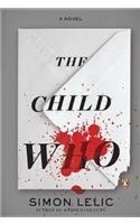 Summary:
A gruesome murder has thrown a British county up-in-arms, and Leo Curtice finds himself the attorney randomly assigned to defend the murderer–a 12 year old boy who killed and sexually assaulted an 11 year old girl. He finds himself seeking to understand what would make a 12 year old kill and finding more empathy for the boy than those around him think is allowable. Meanwhile, threats start coming in against his own family, including his 15 year old daughter.
Review:
This is a ripped from the headlines style novel that falls far short of others in its genre. Apparently, Britain has a real problem with child murderers. The thing is, though, when you’re writing a ripped from the headlines type story, your fictional version needs to bring something to the table that the real life stories and newspaper articles can’t or don’t. 
It’s also problematic when you google about child murderers in Britain and the stories that come up are far more fascinating than the novel you just read. Stories like Robert Thompson and Jon Venables, two ten year olds who tortured and murdered a two year old. Or Mary Bell an eleven year old who killed and tortured other children without remorse. In contrast our story here is about a twelve year old boy who hits on an eleven year old, is rebuffed, and proceeds to knock her down, bludgeon her, and assault her with a stick. Horrible? Yes. But with far more motive than two ten year olds abducting and killing a two year old. See the difference? The true to life stories push us to question and understand human development and behavior. The fake one seems rather easily written off as a vicious twelve year old who can’t handle the word no from a girl he likes. It’s as if the author was trying to play off of a phenomenon in Britain but missed the crux of what makes it so fascinating. Twelve is hardly a youth in the way that ten is.
Then there is the whole side-plot about Curtice’s daughter. From the beginning of the book you think she was murdered eventually somehow in some connection with the case. Wanting to find out how this occurred is what keeps the reader interested and the plot moving in spite of the problems addressed earlier. This, though, is ultimately a red herring of a plot point. The daughter was a runaway. Yes, the father didn’t know it at first, but she just ran away because of all the stress from the case. That’s it. As a reader, it felt like Lelic played a dirty trick on me, and I really didn’t like that.
Ultimately, Lelic tried to write a ripped from the headlines style story akin to Room
2 out of 5 stars
Source: Netgalley

Book Review: A Stolen Life by Jaycee Dugard
 Summary:
On June 10, 1991, eleven year old Jaycee Lee Dugard was abducted from her school bus stop by Phillip and Nancy Garrido with the aid of a stun-gun. Jaycee was locked up in a backyard compound and repeatedly raped and abused by Phillip in a bid to satisfy his pedophilia. Over the course of her 18 year captivity, Jaycee gave birth to two daughters in the compound. Eventually with her increasing age, the sexual assaults stopped, but she was still held captive. Finally, on August 26, 2009, Phillip brought Jaycee and her daughters with him to the parole office in an attempt to explain away why he was spotted in public with the two girls. Jaycee, who hadn’t been allowed to speak her name for 18 years, was able to write it down for the police. This is the memoir of her experience and gradual recovery from the captivity.
Review:
Jaycee wrote this memoir without the assistance of a ghost writer, something very uncommon in memoirs by victims of abduction. She states in the beginning that her way of remembering things is a bit off because of the trauma, but that her way of telling her story will provide a genuine experience for the reader to truly see how the abduction affected her. She is correct that the memoir is not set up in a traditional way, but this tends to make for stronger books when discussing something as painful as this. It reminds me a bit of the very non-traditional story-telling methods used in another memoir When Rabbit Howls. Eliminating the ghost writer and letting the victim speak grants us, the readers, the opportunity to truly connect with a survivor. I humbly thank Jaycee for her bravery in this.
Most of the chapters start with Jaycee remembering the events from the perspective of her younger self. This absolutely makes scenes such as her first molestation by Phillip incredibly haunting. She then ends each chapter with a reflection from her adult, free perspective on the past. This structure is unique, but it provides an interesting perspective, showing both Jaycee the victim and Jaycee the survivor. Toward the end of the book this structure is lost a bit as we suddenly are shown many pages from the journal Jaycee carefully kept in captivity, as well as talking in a more present manner about the therapy she’s been going through. Her therapist sounds truly remarkable. She uses horses to help the survivors deal with problems, which seems to work incredibly well for Jaycee who often only had animals around to talk to during her 18 year ordeal.
Although Jaycee does recount her abuse and manipulation at the hands of Phillip, that is not at all what stands out in this memoir. What comes across is what a strong, sensitive, caring woman Jaycee is. She is not lost in woe is me. She does not even think she has it the worst of anyone in the world. The one thing she repeatedly states she’s learned is that she was not assertive enough as a little girl, and that personality trait backfired on her repeatedly throughout the ordeal. She states that she sees this as the reason abuse of all kinds are able to go on, because people don’t speak up.
There are moments in which all of us need to have a backbone and feel that we have the right to say no to adults if we believe they are doing the wrong thing. You must find your voice and not be afraid to speak up. (page 143)
This message of “speak up” is stated repeatedly throughout the book and leaves the reader feeling empowered rather than downtrodden at such a tale. If Jaycee could live through such a situation and come out of it stronger and as an advocate for victims and survivors of abuse to speak up, how can any of us do any less?
I recommend this book to those who enjoy memoirs and survival stories and can handle scenes of a disturbing nature.
4 out of 5 stars
Source: Amazon

 Support my work with a tip or browse my shop for curated book club guides, how to guides, cross-stitch patterns, and more!


This work by Amanda Nevius is licensed under a Creative Commons Attribution-Noncommercial-No Derivative Works 3.0 United States License.
 Opinions of a Wolf