
Archive
Book Review: Above Ground by A. M. Harte (Series, #1)
 Summary:
Lilith Grey has spent her entire life living below ground–among the lucky descendants of the humans who escaped there before catching the virus that turned the rest of humanity into monsters from fairy tales. But one day Lilith and her friend Emma get temporary vaccines and go above ground to a tourist theater to view these vampires and shapeshifters in person. When everything goes horribly wrong, Lilith finds herself whisked away from the carnage on the back of a werewolf. Can she ever get back below ground?
Review:
I was hesitant to accept a YA book for review, since the genre is not one I tend to enjoy. But I had previously read and thoroughly enjoyed a book by this indie author, so I decided to give it a go. Her other work, Hungry For You
The basic concept is intriguing. Many post-apocalyptic stories feature humans living in bomb shelters or other similar underground enclosures but not for the reasons put forth in this novel. This unique twist is what I’ve come to expect from Harte’s writing, and it definitely was the part of the story that kept me reading. Seeing how the mutated humans lived above ground versus how the non-mutated lived below ground was intriguing and interesting. I wish more time had been spent building this world and less on the emotions of the main character (not to mention her friend, Emma, and the werewolf, Silver). The scifi explanations for the fantastical creatures was also engaging, but again not enough time was spent on it. Similarly, while the typical werewolves and vampires exist among the infected above ground, there are also the more unique such as the ewtes who mutated to live in the water but can walk on the ground with water tanks. Actually, I could have easily spent an entire book among the ewtes. They were far more interesting than our stereotypical main character Lilith. The world and minor characters are what kept me reading….not the plot or main characters.
The initial plot set-up is painfully stereotypical. Clueless teenage girls wind up in danger. Two men save them. One is an angst-ridden werewolf. The other is a mysterious, handsome intelligent fella. The girls protest they can care for themselves but the reader can see they can’t really. The main teenage girl feels inexplicably pulled to the werewolf angst man. The werewolf angst man feels drawn to the teenage girl and angsts about it. And on we go. The last few pages of plot, thankfully, didn’t take the typical turn, but honestly the pay-off was incredibly minor compared to the rest of the stereotypical YA plot. Even just making it a teenage boy from below ground saved by a female werewolf would have been a change enough to make me more interested. I also was disappointed to see no depth or examination of the human condition here, which I saw in Harte’s previous work. I was excited to see what depth she could bring to YA but she didn’t even bring an empowered female main character to the genre. Quite disappointing.
Ignoring my own quips with the plot and main characters, the book simply does not read like a solid first entry in a series. It gives the reader mere tastes of what we want to know from a first book in a series, like who the DEI are and why everyone is afraid of them, while lingering on things like how the main character craves the werewolf. That is fine if it was a paranormal romance, but it feels more like it is meant to be a post-apocalyptic/dystopian style novel. A clearer world needs to be established and characters more fully fleshed-out if they are to hold up a whole series. There has to be a clear world and a three-dimensional main character set up before the danger if the reader is to feel any connection or caring at all. As it is, I mostly just wanted to wander off and follow the ewtes.
Overall, then, this is definitely a book for YA fans only. It’s the basic plot from YA with a twist set in a unique future world that was fun to visit. YA fans will have to try it out for themselves to determine how much they will enjoy that visit.
3 out of 5 stars
Source: Kindle copy received from author in exchange for my honest review

Giveaway! The author is running a giveaway along with her month long blog tour. Check out the rafflecopter for details!
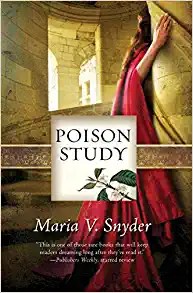
Book Review: Poison Study by Maria V. Snyder (Series, #1) (Bottom of TBR Pile Challenge)
Summary:
Yelena is on death row for killing a man in the military state of Ixia but on the day of her execution she faces a choice. Become the Commander’s food taster and face possible death by poison every day or be hanged as planned. Being a smart person, Yelena chooses the former. Now that she has admittance to the inner circle of the military state, she quickly comes to see that not everything is quite as it seems….not even her own personal history or her heart.
Review:
*sighs* You guys. I have got to stop letting people convince me to pick up books using the phrase, “I know you don’t like [blank] but!” That is how this book wound up on my tbr pile. “I know you don’t like fantasy, but!” and also “I know you don’t like YA, but!” oh and “I know you don’t like romance in YA, but!” A reader knows her own taste. And I don’t like any of those. I still came at it with hope, though, since I did like one fantasy book I read this year (Acacia). There’s a big difference in how they wound up on my pile though. I chose Acacia myself because its reviews intrigued me. Poison Study was foisted upon me by well-meaning friends. So, don’t get my review wrong. This book isn’t bad. It’s just what I would call average YA fantasy. Nothing made it stand-out to me, and it felt very predictable.
The world of Ixia felt similar to basically every other fantasy world I’ve seen drawn out, including ones friends and I wrote up in highschool. Everyone has to wear a color-coded uniform that makes them easily identifiable. There are vague similarities to the middle ages (like Rennaisance-style fairs). There are people in absolute control. There is magic and magicians who are either revered or loathed. There are all the things that are moderately similar to our world but are called something slightly different like how fall is “the cooling season.” Some readers really like this stuff. I just never have. I need something really unique in the fantasy world to grab me, like how in the Fairies of Dreamdark series the characters are tinkerbell-sized sprites in the woods who ride crows. That is fun and unique. This is just….average.
Yelena’s history, I’m sorry, is totally predictable. I knew why she had killed Reyad long before we ever find out. I suspected early on how she truly came to be at General Brazell’s castle. I didn’t know the exact reason he had for collecting these people, but I got the gist.
And now I’m going to say something that I think might piss some readers off, but it’s just true. What the hell is it with YA romance and exploitative, abusive douchebags? This may be a bit of a spoiler, but I think any astute reader can predict it from the first chapter who the love interest is, but consider yourself warned that it’s about to be discussed. Yelena’s love interest is Valek, the dude who is the Commander’s right-hand man and also who offers her the poison taster position and trains her for it. He manipulates her throughout the book, something that Yelena herself is completely aware of. There are three things that he does that are just flat-out abusive. First, he tricks her into thinking that she must come to see him every two days for an antidote or die a horrible death of poisoning. (Controlling much?) Second, he sets her up in a false situation that she thinks is entirely real to test her loyalty to him. (Manipulative and obsessive much?) Finally, and this is a bit of a spoiler, even after professing his love for her, he asserts that he would kill her if the Commander verbally ordered it because his first loyalty is to him. What the WHAT?! Even the scene wherein he professes his love for Yelena he does it in such a way that even she states that he makes her sound like a poison. There’s a healthy start to a relationship. *eye-roll* All of this would be ok if Yelena ultimately rejects him, asserting she deserves better. But she doesn’t. No. She instead has happy fun sex times with him in the woods when she’s in the midst of having to run away because Valek’s Commander has an order out to kill her. This is not the right message to be sending YA readers, and yet it’s the message YA authors persist in writing. I could go into a whole diatribe on the ethics of positively depicting abusive relationships in literature, especially in YA literature, but that should be its own post. Suffice to say, whereas the rest of the book just felt average to me, the romance soured the whole book. It is disappointing.
Ultimately then, the book is an average piece of YA fantasy that I am sure will appeal to fantasy fans. I would recommend it to them, but I feel that I cannot given the positively depicted unhealthy romantic relationship the main character engages in.
2 out of 5 stars
Source: PaperBackSwap

Book Review: Dark Life by Kat Falls (Series, #1) (Bottom of TBR Pile Challenge)
 Summary:
Ty was the first person born subsea. His family are settlers on the bottom of the ocean, a new venture after global warming caused the Rising of the seas. Ty loves his life subsea and hates Topside. One day while adventuring around in the dark level of subsea, he stumbles upon a submarine and a Topside girl looking for her long-lost older brother. Helping her challenges everything Ty believes in.
Review:
This is one of those rare YA books that gives me renewed hope for the genre. There are no stupid love triangles. The adults are intelligent and good parents. There are bigger worries than who you’re taking to prom. There’s adventure but no gratuitous violence. Romance but in a healthy way. Basically, it’s everything you’d hope for in a YA book. I’d gladly hand this to any teen or preteen looking for a good read and feel happy in doing so too.
The post-apocalyptic setting is unique, intelligent, well thought-out, and supported by science. Creating a new American frontier under the ocean is delightful, and Falls draws on the American pioneer experience in cute, tongue-in-cheek ways. For instance, the settler kids call their parents “Ma” and “Pa.” They earn their acres by successfully farming them for 5 years (a common time-frame in the old west). Plus, the world is different beyond subsea as well, reflecting drastic changes that would occur with such a huge change in the world. There are people called “floaters” who live in houseboats. Those who still live on land live in huge skyscrapers, and everyone sends their kids to boarding schools. Perhaps most interestingly is the fact that ever since the falling of the land into the ocean the US has been under “emergency law.” A harrowing possibility to any astute YA reader today.
Ty and Gemma are adventurous and intelligent yet still flawed in their own ways. Gemma can be too impulsive, Ty too cautious. This is naturally part of what makes them a good potential couple. They balance each other. Similarly, Ty’s parents are smart and caring, yet still capable of being wrong sometimes, even though well-intentioned. They’re an example of the type of parent we hope most kids will have. In contrast, Gemma is an orphan with an evil boarding school mistress to provide an adult for kid to hate.
The plot is deliciously complex and for once I actually did not guess the ending. It left me surprised and happy simultaneously. Falls does not take the easy way, but she also doesn’t use any lame deus ex machinas.
I feel my review is not doing this book justice. Suffice to say it is a richly complex world she has created, filled with characters that are worthy of being looked up to but with interesting scifi elements to keep the interest level high. I found myself never wanting to leave the subsea world and sort of wishing living subsea was an option in real life.
Overall, I recommend this to fans of YA scifi, but also to anyone with a curiosity about what it might be like to live on the bottom of the ocean as a new pioneer.
5 out of 5 stars
Source: PaperBackSwap

Book Review: Z for Zachariah by Robert C. O’Brien (Bottom of TBR Pile Challenge)
 Summary:
Sixteen-year-old Anne Burden has been living alone in her family’s farming valley ever since nuclear war left everything around the edges dead. She’s created a quiet, calm life for herself and the animals left alive until one day she sees smoke on the horizon. A man enters the valley in a radiation-proof suit. At first Anne is cautious but then happy to no longer be alone. Soon, however, the man’s sinister side starts to show.
Review:
This is a complex, thought-provoking with a surprise ending that is a bit….off-putting.
Anne Burden is a surprisingly pulled together gal for someone who just lost everyone and everything she knew to nuclear holocaust. She has a surprising amount of faith and is accepting of her fate. Her buddhist-like nature is admirable, but does seem a touch unrealistic.
There are many complexities in the plot that have no easy answers and keep the reader thinking. Is the man a bad guy or has the radiation poisoning simply addled his brains? Is it best to stay put where you are temporarily safe or take a risk and seek out other survivors? What things are ok to do to survive and what things are not? These deep questions, questions that have nothing to do with the school dance or which boy to choose are refreshing to see in YA. Putting the main character into extreme situations allows O’Brien to bring up more serious life questions. Although I don’t always agree with Anne’s decisions, I do respect her thought process.
The ending came kind of out of left field for me, and I am still dissatisfied with it. Anne’s decision to run instead of to stay and fight is an odd choice for a YA book. In fact the book reads very pacifistic, almost dangerously so. Running is not always an option. Sometimes you have to stand and fight. Hold your ground. Similarly, I do not believe the man would have given Anne any genuine tips on which direction to go out of sudden remorse. It seems out of character and done simply to give a more eloquent couple of closing paragraphs.
Thus, the book is a fast-paced read with important life questions. The main character makes some questionable decisions, though, and I am not entirely comfortable with the ultimate message it contains. I recommend it to fans of YA or post-apocalyptic fiction capable of taking the message with a grain of salt.
4 out of 5 stars
Source: PaperBackSwap

Book Review: A Crack in the Line by Michael Lawrence (Series, #1) (Bottom of TBR Pile Challenge)
 Summary:
Alaric lives in the crumbling Withern Rise house with his widowed father. Nothing has been the same since his mother’s death in a train accident two years ago. Now his dad is off helping his girlfriend get ready to move in with them, and his crazy Aunt Liney is there to keep an eye on him. Miserable, he touches a carving his mother made of the house from wood from the family tree years ago and finds himself transported to a parallel universe where a girl, Naia, is living his life–only with their mother still alive.
Review:
This may be one of those YA books that only someone in the midst of teen angst can truly appreciate, or perhaps an adult with a strong fear of losing their mother.
Alaric is an angsty teen, perhaps with good reason, but he’s annoying nonetheless. Thankfully, his Aunt Liney is present, and she is a breath of fresh air. The long-suffering, quirky aunt who was almost aborted and does not exist in the alternate reality is clearly important, but we never find out why. Probably this is key later in the trilogy, but I doubt I’ll struggle through simply to find out just how she’s a key factor. I also must admit that I find the obvious pro-life slant in Aunt Liney’s storyline annoying.
Although Alaric’s motivation for coming to and continually returning to the Naia’s parallel universe is clear, her motivations are not. Her world seems quite ideal, and Alaric is an unwelcome intrusion into it. She does not seem to possess a naturally curious or quizzical nature. This leaves half of the plot, Naia’s part in it, unclear.
The parallel worlds are interesting, but not nearly as creative as, say, Stephen King’s. The differences are all incredibly minor, based off of decisions and chances playing out in two different scenarios. A baby could be a boy or a girl. A mother could live or die. A sister could be aborted or kept. Yet how Lawrence draws the line on what counts as a chance or a decision is very unclear. Is every single choice and instance a decision? That would make the universes go on forever, which just seems highly illogical and improbable. I simply could not sustain my disbelief quite enough to get into it.
All of that said, I could see a teenager enjoying this story. Particularly one upset with his parents or wishing his life was minutely different in some way. I thus recommend it to a teen into fantasy and the concept of parallel universes.
3 out of 5 stars
Source: PaperBackSwap

Book Review: Rage by Jackie Morse Kessler (Series, #2)
 Summary:
Melissa Miller is your typical 16 year old–mom, dad, annoying sister, a jerk of an ex-boyfriend–with one small difference. She deals with her emotions by cutting herself. She keeps a razor in a locked box in her closet and pulls it out when she gets overwhelmed. One night she accidentally cuts too deep, and Death shows up with an option. Either die now or become one of the Horsemen of the Apocalypse–War. Missy chooses the latter option, and as she gets to know the other Horsemen and her job as War, she starts to realize she needs to face the rage inside her.
Review:
Speaking as someone who knows a lot about mental illness, self-injury is one of the illnesses that people who don’t have it have the most difficulty understanding. It seems bizarre to those who don’t self-injure, even as for the self-injurer those moments of cutting or burning or whatever chosen method are the best coping mechanism they can come up with. It’s not easy for those who don’t self-injure to understand, which is why I am so impressed at how well Morse Kessler has grasped the inner workings of the self-injurer in order to write such a well-rounded, sympathetic character as Missy.
Missy is simultaneously relatable as a typical teenager, for instance she gets horribly embarrassed at a party one night, but she also has this deep, dark, misunderstood secret. Gradually other teens find out and are either concerned or lash out at her due to their fear and lack of understanding, but Missy feels that she can’t confide in even the sympathetic ones. In perhaps one of the most powerful passages, the reader gets to see exactly why Missy cuts, while she simultaneously explains why she can’t explain it to her sister.
She could tell her that she turned to the blade because she wanted to live and sometimes pain was the only thing that kept her alive. She could tell her that she was terrified of things she couldn’t even begin to name, that friends could be fickle and lovers could be false. She could try to explain all of that and more, and maybe her sister would understand. But trust was as fragile and cutting as a crystal sword. (page 100)
That is perhaps the most clear, succinct explanation of self-injury I’ve seen outside of nonfiction clinical books. Missy’s reasons for cutting are clear, even as it becomes more and more evident to the reader that this coping mechanism is not truly addressing Missy’s real problems.
Of course, the fantasy element comes to play here again, and it works perhaps even better this time around. Giving the fantasy personas for Missy to talk to and express herself to gives her a safe space to think out her emotions instead of cutting them out. There are also a few cameos from Famine, which is fun to see after reading the first book. The fantasy also works here because it helps give the book a distance that makes it less triggering. There are intense emotional moments, but then Death shows up with a humorous quip to lighten the situation. It addresses the real problems without getting bogged down in over-emotionality.
This book will give self-injuring teens a way to see themselves reflected in literature and accepted and loved for who they are. It will give them a chance to maybe address their own emotions and issues. Similarly, non-self-injuring teens will hopefully become more empathetic to their peers who struggle with it. It’s a book that is simultaneously enlightening but not preachy. I highly recommend it to teens and those who work in mental health or with teenagers.
5 out of 5 stars
Source: Amazon

Previous Books in Series:
Hunger, review
Counts For:

Book Review: How I Live Now by Meg Rosoff
 Summary:
Daisy’s stepmother has convinced her father to send her off to England to live with her aunt and cousins, and Daisy really doesn’t mind. She hates her life in NYC anyway, and life in the countryside seems like a welcome change. Her cousins are quirky and fun, and Aunt Penn is sweet and practices a relaxed parenting style. When Aunt Penn goes away for a work trip, terrorist acts occur in London effectively leaving the kids on their own. On their own to explore feelings and actions they might not otherwise have felt free to.
Review:
The big rumblings about this YA book is that there is incest in it. In the grand scheme of shocking incest though, this incest is just….not that shocking. It’s between two cousins who’ve never met until they’re teenagers. *shrug* Plus, the incestuous relationship is really not the main focus of the story at all. It holds center stage for maybe two chapters. Two very chaste chapters. Oh sure, an astute reader knows what’s going on, but there are no lengthy sexual passages. The most we get to witness is a kiss. So, this book is really just really not about incest, ok? If that was keeping you from reading it, don’t let it. If that’s why you wanted to read it, go read Flowers in the Attic
So what is the story about? Quite simply, it’s about the impact living in an age of world-wide terrorism has on young people. On their perceptions, decisions, morals, and more. As someone who was only a sophomore in highschool when 9/11 happened, I feel safe in saying that Rosoff depicts the experience of a young person growing up in this world very well. The mixture of relaxing and having fun while the adults panic around you with nights of fear are perfectly woven.
Daisy’s voice is wonderful to listen to. She’s an appealing, funny narrator with an acute wit. She is truly someone to like and root for. Similarly, her female cousin, Piper, who she becomes a pseudo-parent to, is extraordinarily interesting and appealing. In fact, I’m hard-pressed to name a character who isn’t well-rounded.
Unfortunately, all of these positives about the book come to a crashing halt at the end. All I can tell you without spoiling the ending is that Rosoff did not take her themes as far as I was hoping she would take them. In my opinion, she copped out, and I was sorely disappointed. The ending reads almost like the beginning of the Beauty and the Beast fairy tale, and I was just left feeling as if Daisy and her cousins had let me down. What could have been an extraordinary book became just average.
Thus, if you are looking for a YA take on the impact life with terrorism has had on the younger generation, but aren’t expecting anything mind-blowing, you’ll enjoy this book. If what you’re after is shocking YA, however, look elsewhere.
3.5 out of 5 stars
Source: PaperBackSwap

Book Review: Hunger by Jackie Morse Kessler (Series, #1)
 Summary:
Lisabeth Lewis thought it was just a nightmare. Death coming to her when she tried to commit suicide with her mom’s antidepressants and offering to make her Famine–one of the four horsemen of the apocalypse–instead of letting her die. It’s just all way too ironic, her as Famine. After all, she’s fat. She has to watch what she eats very carefully. The Thin voice tells her all the time exactly how many calories each bit of food is and how much exercise it’ll take to burn it off. Yes. Lisabeth Lewis is fat. So why would Death assign Famine to her anyway?
Review:
When I heard the concept of this new YA series–each horseman of the apocalypse representing and dealing with a mental health issue relevant to teens–I was incredibly skeptical. Writing about mental illness in a way that teens can relate to without talking down to them as well as in a responsible manner is difficult enough without having a fantasy element present. Toss in the fantasy and I was worried this would either read like one of those old 1950s cautionary films shown in highschools or would miss dealing with the mental illness entirely. Boy was I wrong. Kessler has found such a unique, creative way to address a mental illness yet cushions it in the fantasy so that it isn’t too in your face. It’s the ideal scenario for teens reading about it, but it’s also enjoyable for adults.
The fantasy element is very tongue-in-cheek. It strongly reminds me of Buffy the Vampire Slayer in style. For instance, Death resembles a heroin-chic dead rock star, and he speaks in a mix of classic English and mocking teen speak to Lisa.
“Thou art Famine, yo,” Death said. “Time to make with the starvation.” (Location 661)
It quickly becomes apparent that Death and the Horsemen aren’t entirely what they initially seem to be. Indeed, they seem to function to get Lisa out of her own head and problems and to look at the greater world around her. She literally travels the world on her horse and sees real hunger, and it affects her. It doesn’t make her feel guilty for being anorexic, but it makes her want to be better so she will be strong enough to help others. That’s a key element of any mental illness treatment. Getting the person to see outside of themselves, and Kessler has personified it through the Four Horsemen.
She, Lisabeth Lewis, seventeen and anorexic and suicidal and uncertain of her own path–she’d done something that mattered. She’d ignored her own pain and had helped others. Maybe she wanted to live after all. (Location 2007)
Of course the non-fantastical passages dealing with Lisa’s anorexia and her friend’s bulimia are incredibly realistic. If they weren’t, the book would immediately fail as the whole thing would ring false to the teens reading it. Her anorexia is dealt with as a very real thing even as the Four Horsemen are presented as either truth or hallucinations of her starved mind. This is key. The anorexia cannot be presented as an element of fantasy.
I was concerned the ending would be too clean-cut. I won’t give any spoilers, but suffice it to say, Kessler handles the ending in a realistic, responsible manner. There are no easy solutions, but there are solutions to strive for.
Overall, Hunger takes the incredibly real problem of anorexia and presents it with a touch of fantasy to help bring the reader not only into the mind of the anorexic but also outside of herself to look at the bigger picture. It is an inspiring, fresh take on YA lit dealing with mental illness, and I highly recommend it to fans of YA lit as well as those interested in literature dealing with mental illnesses.
5 out of 5 stars
Source: Amazon

Counts For:

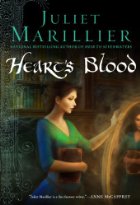
Book Review: Heart’s Blood by Juliet Marillier
 Summary:
This retelling of the classic fairy tale, Beauty and the Beast, is set in a medieval Ireland facing the constant threat of Norman invasion. Caitrin, an Irish lass trained in the trade of a scribe by her now deceased father, runs away from an abusive situation and stumbles upon the mysterious Whistling Tor. The crippled lord of the area lives in Whistling Tor and seeks a scribe. The local villagers warn Caitrin against taking the summer job due to a fear of the host living on the hill, but Caitrin sees no other choice.
Review:
Fantasy is one of those genres that I have never been able to get into, but I do love fairy tales, so I thought maybe a retelling of a classic would work for me. When will I ever learn that I just don’t like fantasy?
Marillier does all the elements of a fantasy book well. She sets up the mysterious, old land of Ireland with just enough description to place the reader there but not so much as to slow down the action. Gothic mystery seeps through every page. The idea of the non-human servants and household members of the castle are creatively handled, as is the lord’s beast-like qualities. The members of the host who could so easily have flowed together are artfully individualized.
Additionally, the romance between Caitrin and the lord of the castle is one I actually approve of for once in a YA book. They both are flawed and have issues to work on, but love each other and have good hearts. Thank you. That’s what a relationship is supposed to look like. I would be entirely comfortable seeing a teenage girl reading this. It’s a healthy, realistic relationship.
Still, though, I had to force myself to slog through the book. I was bored a lot of the time. I don’t like long descriptive passages of a forest. I don’t like reading about dull politics of various areas of Ireland. I’m not interested in explanations of the other-worldly figures. The most interesting part to me was the mirrors all over the household, and they were not addressed fully to my liking. In spite of being able to recognize this as a well-told story, it failed to draw me in. I don’t particularly know why. My best guess is that it is fantasy, and fantasy has always bored me. I was hoping venturing away from the more typical knights in shining armor and dragons style fantasy would solve the problem, but I was wrong.
Thus, this YA fantasy retelling of Beauty and the Beast is creative and well-done. I recommend it to those who know they enjoy a good fantasy story, but those who do not should probably skip it.
3 out of 5 stars
Source: PaperBackSwap

Book Review: Anna and the French Kiss by Stephanie Perkins
 Summary:
Anna Oliphant’s dad totally sold out and started writing crappy books that for some reason became incredibly popular. Now he’s insisting that she spend her senior year at a boarding school–School of America in Paris. Anna knows she should be enjoying her year abroad, after all, it is Paris! But she can’t help but miss her friends and family at home. She slowly starts to find her own new circle of friends and discover the wonderful things in Paris…..and to realize that she may be falling for one of her friends. A boy who is decidedly off-limits for multiple reasons.
Review:
Perkins takes a typical YA storyline–teenage girl sent away to boarding school, complete with teen angst–and puts just the right amount of her own twists and flavors in it to make for a delightful, unique read. I enjoyed this as an adult, but I’m sure 15 year old me would have been in love with it, re-reading it, and sighing over the main interest St. Clair.
The setting of Paris is delightful. Perkins captures the binary of excitement and trepidation at being in another country for the first time enough so that Anna is realistic but not annoying. Similarly, all of the characters act like actual human beings. They are neither perfect nor evil. They are simply doing their best to figure out how to function in the world. I appreciated this, and I’d imagine teen readers would too. Similarly, Perkins describes Paris in such a way that I wanted to move there instantaneously myself if for no other reason than the descriptions of the bread and eating meals in cemeteries. This is what it should be to be young. Angst combined with first-time glorious experiences.
Perkins manages to be both subtly funny:
“Huh?” I have such a way with words. I should write epic poetry or jingles for cat food commercials. (Location 1054-1058)
And perfectly capture what it is to be an adolescent female:
It makes me dizzy. It smells like freshly scrubbed boy. It smells like him. (Location 3100-3104
This is what an ideal YA book should be. Realistic about what young people face, but also about who young people are. Holding out hope that they can become good people, and they can learn and grow and overcome their mistakes. I highly recommend it to teen girls, as well as to adult women who still enjoy YA.
5 out of 5 stars
Source: Amazon

 Support my work with a tip or browse my shop for curated book club guides, how to guides, cross-stitch patterns, and more!


This work by Amanda Nevius is licensed under a Creative Commons Attribution-Noncommercial-No Derivative Works 3.0 United States License.
 Opinions of a Wolf