
Archive
Book Review: Claws and Saucers by David Ellroy Goldweber
 Summary:
An alphabetical guide to scifi, horror, and fantasy movies made between 1902 and 1982.
Review:
One thing I have learned from the two movie reference guides I’ve received for review since starting this book blog is that movie reference guides are not for me. Frankly with things like, oh, the internet, they’re just not useful the way they were back when I was in undergrad and professors wouldn’t accept IMDB as a reference in your English paper comparing books to their movie versions. But I digress.
Putting on my librarian cap then why does this reference guide get 2 and not 3 stars? (3 indicating not for me but maybe for others). It frankly bothers me how not academic it is. It essentially reads as a list randomly assembled by some random dude down the road, not a professor of the history of film or a film critic or anything like that really. This would be great for a blog, but not for a serious reference book. Additionally, maybe the print edition is better, but the ebook version is badly formatted and contains none of the pictures promised in the blurb.
The book basically then is your neighbor yammering in alphabetical order about random movies he selected from the early 1900s with all of the natural individual prejudices and caveats that go along with that. There’s nothing academic about it, and when push comes to shove, it’s something that would be better off as a blog than a book. I will give it this though: the title and cover are excellent.
2 out of 5 stars
Source: Netgalley

Book Reread Review: Strawberry Girl by Lois Lenski
 Summary:
Birdie’s just moved to Floridy from Caroliny to farm strawberries with her family. But their neighbors, squatters headed by a mean drunk of a dad, won’t make life easy for them.
Review:
Rereading a childhood favorite is a dangerous endeavor. However, last year rereading Reddy Fox went well, so when the ebook version of this Lois Lenski classic showed up on Netgalley, I just had to try it out. I can see why I enjoyed it as a child, but I can’t really imagine adding it to the collection if I was a public librarian or, in the realm of more possibility, giving it to my nephew.
This is part of a series that Lenski wrote and illustrated in the 1940s about children living in different regions of America. The thought process was that kids saw children around the world in literature but not the vastly different ways of growing up all over America. A good idea, for sure. I can totally see why these books, written in painstaking vernacular to boot, were popular back then. They just didn’t age as well as they could have. Or, at least, this one didn’t.
Unlike the Little House series where the problems and dramas and joys are relatable, Birdie’s family basically repeatedly lets the neighbors walk all over them. There are also odd conundrums, such as how is Birdie’s family so working class and yet mysteriously has money? Most bothersome, though, is the fact that the central conflict of neighbor worthless father is wrapped up overnight when he gets saved at a revival meeting. Only the most evangelical of children will accept that as a fix. Plus, it gives an unrealistic expectation to children that the serious problem of an addicted parent can be solved with some yelling from a preacher. Not the most useful of message to be giving to children.
Although it’s not an unenjoyable read and the details of life in rural Florida in the 1940s are painstakingly accurate, it just simply hasn’t aged as well as other classics. It is still well-written, researched, and illustrated, however. I’d recommend it to adults with an interest in the history of American children’s literature.
3 out of 5 stars
Source: Netgalley

Book Review: Robopocalypse by Daniel H. Wilson (Audiobook narrated by Mike Chamberlain)
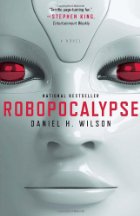 Summary:
Cormac Wallace reviews the surveillance tape taken by Rob (robots) during the New War–the war between humans and robots. He thus recounts the history of the war to the reader.
Review:
Basically this is supposed to be World War Z only with robots. It falls incredibly short.
What makes World War Z such an awesome book (beyond the fact that zombies are better than robots) is that it is a mock oral history of a war. This is a thing that actually happens after a war in real life. Oral historians go around and gather real information from the survivors about the war. Although the NPR style narrator frames the chapters, they are all given by different survivors from their own perspectives.
The problem with Robopocalypse is that it tries to use the same method for a very different story. Much as Wilson may want a robot war to be like a zombie war, it ISN’T. And it shouldn’t be recounted in the same way. Wilson sort of realizes this, because he has Wallace recount the war by watching the “black box” surveillance of Rob. The thing is, though, that really doesn’t work in book form.
A) Why would Cormac write down something that is already available visually? Why wouldn’t he just copy/pasta the videotape and send it out?
B) The chapters swing wildly between Cormac describing what he’s seeing on screen (insanely boring) and random first hand accounts from everyone from himself to dead people. Yeah. Dead people have first-person accounts in this book. THAT MAKES NO SENSE.
Also, the pacing is off. The build up to Rob attacking is painfully slow, but Rob taking over misses a lot of the details that would be interesting. Similarly, details as to how people all over the world start collaborating and beat the brilliant Rob is sped up and glossed over too much. Essentially, things that should have more space in the book have too little, and things that should have very little space have too much.
I have to say that the narration by Mike Chamberlain did not help matters any. His voice is practically monotone, and he adds nothing to the story.
The concept of a robot war is a good one, although I admit to having more loyalty to zombies. However, the format used in World War Z just will not work in a robot war. Wilson should have focused on one small group of people or actually tried out the whole oral history thing. This bouncing around between perspectives and verbally recounting surveillance footage simply does not work. I cannot recommend this book. There is simply far better plotted scifi out there.
2 out of 5 stars
Source: Audible

Friday Fun! (Musings On My IBS)
Hello my lovely readers!
This week I haven’t seen much of my library since I’ve been participating in the Science Librarian Boot Camp. I’ll be posting my notes from the Neuroscience section next week, since I think those were the most interesting (at least so far). Perhaps the capstone this morning will be inspiring as well and make the grade too though. :-)
It’s been great to see some of my librarian friends this week, although the Boot Camp was a bit of a struggle. I’ve been experimenting with eating less dairy for multiple reasons (primarily health). I ate quite a bit of dairy on the first day of the conference and subsequently had a flare-up of my IBS. Not pleasant, trust me. :-/ It was frustrating and frankly hard on me emotionally. I’ve struggled with this syndrome for so many years and just when I think it’s mostly under control, something happens again. Although I am passionate about heath, it is frankly sometimes difficult to have to be so incredibly strict on my diet, stress level, sleep amount, etc…. or pay the consequence of being physically ill almost immediately. Trust me, I wish I could indulge in gluttony periodically with the only consequence being a few extra miles on the treadmill! But I know in the grand scheme of things it’s a minor thing to have to deal with, and I am lucky that Boston is such a mecca of vegan food. The key for me, I think, will be figuring out how much indulgence is acceptable to my body. Nobody can be strict all the time! In the meantime, FSM bless Boston for having indulgences like vegan cupcakes.
I also guess this just means I’m going to have to start requesting vegan food at the conferences.
This weekend I’m hoping to see one of my good friends, resume work on my next novel (tentacles, oh my!), and of course gym it. Happy weekends!
Book Review: The Value of Rain by Brandon Shire
 Summary:
Charles hasn’t been home since his mother and uncle sent him away to an insane asylum at the age of fourteen after he was found in the embrace of his first love–Robert. Now, ten years later, his mother, Charlotte, is dying, and he comes back to take his revenge.
Review:
This is one of those genre-defying books. Although classified as LGBTQIA+, it is so much more than a genre. Shire explores the devastating effects of prejudice, hate, secrets, and lies throughout family generations, and that is something that is simultaneously universal and tragic.
The book constantly takes the reader by surprise. At first it seems an expected my-family-didn’t-love-me-because-I’m-gay story, but Charles does *not* get a free pass simply because he is hurt by his family. He is given chances at new life and redemption from a hate-enshrouded existence, but he doesn’t choose that path. It is painful to watch, and yet simultaneously understandable. I applaud Shire for not taking the easy way and by making Charles an easy hero.
The writing is particularly eloquent and strong in description, especially when describing painful topics. For instance:
She had lived in the maze of Charlotte’s thumbprint and she had not survived. (location 1349)
On the other hand, the dialogue sometimes struggles in comparison to the lyrical descriptions. For instance, characters often say people’s names more frequently than is natural. This is a kink that I am sure will be ironed out with time and experience.
I also loved and was totally shocked by the ending. That is not an easy thing to do to this reader.
Overall this book represents all that can be great about indie publishing. It is a deep, dark story with a minority, tragic hero that most likely would not be told at a traditional publishing house due to the fact that it does not easily fit into any one genre or marketing scheme. Of course, that is also why I love it.
Recommended to those with an interest in LGBTQIA+ main characters and multi-generational family dramas.
4 out of 5 stars
Source: Kindle copy from author in exchange for my honest review

Note: Half of all proceeds donated to LGBT Youth Charities.
Cookbook Review: Olive Trees and Honey: A Treasury of Vegetarian Recipes from Jewish Communities Around the World by Gil Mars
 Summary:
Just as the title implies, this is a collection of recipes from Jewish communities around the world that are suitable for vegetarians.
Review:
Vegans beware. When this says it’s a vegetarian cookbook, it really means it! Almost every recipe is drenched in animal products, primarily dairy and eggs.
The Introduction explains the various food cultures that have sprung up in Jewish communities around the world, complete with maps and such. This part was fascinating, although I felt that it was a bit too Old Wold focused. I know for instance that there are strong Jewish cultures in Argentina and Brooklyn, but they are not included in the book.
After the Introduction is an explanation of vegetarian foods incorporated into Jewish holidays. I found this part rather averagely done and skimmed over it.
The recipes are oddly divided up. The chapters are: cheese and dairy spreads; pickles, marinated vegetables, and relishes; salads; soups; savory pastries; cooked vegetable dishes; vegetable stews; legumes; grains; dumplings and pasta; eggs; sauces and seasonings. As you can tell, some of the recipes are put together based on the type of dish (salad, soup) and others based on the ingredients (eggs, legumes). This makes the book appear disorganized. Also the complete lack of dessert is sad.
Beyond the maps in the Introduction, there are no pictures. Additionally, the recipes are mostly designed to serve 6 to 8. I’m not sure what planet the author is from, but that is not a typical family sized meal in America. I must admit, that I didn’t try any of the recipes because I couldn’t find a single one I wanted to try. They are all completely swimming in cholesterol and insane food portion sizes. Looking at the soups, which should presumably be a healthier option, the Persian Onion Soup on page 123 contains 3 eggs and the Hungarian Cream of Mushroom Soup on page 125 contains TWO CUPS of sour cream. Similarly, almost all of the breads and pastries are fried. My cholesterol practically spiked just looking at the cookbook.
Essentially, then, this book is a good introduction to Old World style Jewish food but ignores the healthier options that I know from experience exist in Jewish communities in the Americas. It is difficult to enjoy the cookbook since there are no pictures or colors. Additionally, all of the recipes are designed for 6 to 8 servings, which is a bit large for the typical American household. Overall, then, I would recommend this book to those with a vested interest in Jewish culture and cuisine who can see past the dull layout and design of the cookbook.
3 out of 5 stars
Source: Public Library

Book Review: Haunted by Glen Cadigan
 Summary:
Mark is an Iraq War vet with PTSD, so he counts himself lucky when a Gulf War vet gives him the chance to be a security guard at an office tower. Unfortunately, he’s the night watchman, and he doesn’t seem to be alone in the tower.
Review:
This is a unique, sympathetic story idea that is not as well-executed as it deserves.
Mark is ultimately a well-rounded character, but it takes too long to get to know him in this novella. Since it is in first-person narrative, he has the option of holding off on telling us about his PTSD symptoms and how they affect him. While a soldier would certainly most likely be more stoic in a traditionally masculine way, it gets in the way of the reader understanding where Mark is coming from and empathizing with him. He *tells* us that his PTSD makes his life difficult, but we don’t really ever see it.
Because this is a first person novella, this problem with the characterization gets in the way of the strengths of the scifi/fantasy plot, which is honestly fairly unique. I was glad I got to the end and saw the surprise reveal, but I certainly wasn’t expecting such a good twist from the rest of the book.
Essentially, the scifi/fantasy element of the book is strong, but the characterization at the center of the first person narrative is weak. Although Mark is a soldier, Cadigan shouldn’t be afraid to let us see the vulnerability of his PTSD. Recommended to fans of a unique ghost story looking for a quick read.
3 out of 5 stars
Source: Kindle copy from author in exchange for my honest review

Counts For:
Book Review: Death By Petticoat: American History Myths Debunked by Mary Miley Theobald
 Summary:
This history book has assembled the most often-repeated myths of US History and one-by-one debunks them.
Review:
There is not much to say about a book that is so short. Listing only 63 myths, each summed up within one or two sentences and then “debunked” in under a page, it is possibly the shortest history book I’ve ever read.
The myths and debunking are interesting, but there’s far too few of them. Additionally, while images are given citations, the debunkments aren’t! Well, why should I believe what you’re saying, Theobald, as compared to anyone else? Just because you *claim* there aren’t any records of thus-and-such doesn’t mean that there aren’t unless you back it up with solid evidence. While I enjoyed the myths and the talk about them, I can’t take it seriously as an academic due to a complete lack of citations.
The cover is super-cute though.
Overall, recommended to people who want to know what the myths are, but not to anyone seeking serious history.
2 out of 5 stars
Source: Netgalley

Book Review: The Far Side of the Sky by Daniel Kalla
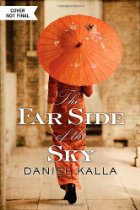 Summary:
After Kristallnacht, Franz Adler, a secular Austrian Jew, is desperate to save the remaining members of his family–his daughter Hannah and sister-in-law Esther. The only place they’re able to find letting in refugees is the relatively border-lax Shanghai.
Meanwhile, Mah Soon Yi, aka Sunny, the daughter of a Chinese doctor and American missionary, is trying to deal with the partial Japanese occupation of her home city of Shanghai while working as a nurse in one of the large hospitals and volunteering in the Jewish Refugee Hospital.
Review:
It’s difficult to review a book that the author obviously put a lot of research effort into, as well as passion for social justice, but that I just personally didn’t end up liking. The story itself isn’t bad, if a bit far-fetched. Clearly based in fact and solid research. I believe the problem lies a bit in the writing.
When I read historic fiction, I like seeing history through the eyes of one person (possibly two). It brings the huge picture you get otherwise down to a personable level. The problem with this book is that it kind of fails to keep things at that personal level. There’s far too much contact with actual big movers and shakers from the historic events. How the heck is this Dr. Adler in so much contact with the Japanese and Nazi elite? One scene like that can be quite powerful in a book, but not multiple ones. It takes it from the realm of historic fiction to that of fantasy.
Additionally, I feel that a bit too often Kalla tells instead of shows. Two characters will be talking about something the reader doesn’t yet know about, such as how the city of Shanghai is set up politically, and instead of putting it into the dialogue, the book just says “And then he told him about thus and such.” That makes for dull reading.
So, really, to me, the plot itself is unique in choosing a population and area of WWII that is not written about that much. The author clearly did his research and has a passion for the time period and issues faced by the people, but the story would be better served if it was made more about the everyman and dialogue and action were used more effectively.
Overall, this is a unique piece of historic fiction that will mainly appeal to fans of the genre looking for a new area of WWII to read about.
3 out of 5 stars
Source: Netgalley

Friday Fun! (The Only Shoes I Talk About: Gym Shoes)
Hello my lovely readers!
I feel like I’m being terribly dull after the excitement of my Seattle and gashed knee Friday Fun posts but things have been honestly rather calm around here.
*looks around*
*knocks on wood*
Well, besides the Social Sciences Librarian Boot Camp and the release of my book that is. ;-)
The most exciting things that happened in the last week were:
- My recently planted container garden seeds sprouted.
- I wore out my gym shoes and bought new ones.
Ok, so, to me the fact that seeds that are organic, heirloom, and over two years old sprouted was pretty damn miraculous, particularly given that right after I planted and liberally watered them we had no sun for around four days. (Things got…moldy). But I am literally speaking to you about plants growing, so.
It also was a big deal to me that my gym shoes wore out. We’re talking holes appeared and a heel is half off. To me this is a sign that my fitness thing went from an attempt to a part of my life. I literally worked out so much that I wore my gym shoes out. Wow. To celebrate, I let myself buy nice ones. When I put my feet in them, they said ahhhh.
Oh, before I go, btdubs, I finally realized I totally neglected to put my novella I published almost a year ago, Ecstatic Evil, on Smashwords for all of you lovely folks without kindles, so it is up there now.
Waiting For Daybreak will be there as well after the first 90 days of exclusivity to Amazon are up, aka on September 4th.
Happy weekends!
 Support my work with a tip or browse my shop for curated book club guides, how to guides, cross-stitch patterns, and more!


This work by Amanda Nevius is licensed under a Creative Commons Attribution-Noncommercial-No Derivative Works 3.0 United States License.
 Opinions of a Wolf