
Archive
Book Review: The Time Machine by H. G. Wells (Bottom of TBR Pile Challenge)
 Summary:
Nobody is quite sure whether to believe their eccentric scientist friend when he claims to have invented the ability to travel through time. But when he shows up late to a dinner party with a tale of traveling to the year 802,700 and meeting the human race, now divided into the child-like Eloi and the pale ape-like ground-dwelling Morlocks, they find themselves wanting to believe him.
Review:
I was always aware of this scifi classic but oddly had managed to never hear any spoilers. When I saw it available for free on the kindle, I decided I should download it for when a classic scifi mood struck me in the future. I’m glad I did because it was there and waiting for me when that mood did strike, and it was completely satisfying. Like when you eat a food you’ve been craving for days.
The structure and writing style are typical for the late 1800s. An unnamed narrator tells us of a strange person he met who then takes over the narration to tell us about an event that happened to him. In this case, that second narrator is the Time Traveler. The Time Traveler then expounds quite eloquently and philosophically on everything that has happened to him. I enjoy this storytelling method, because it gives space for the narrator of the strange tale to do this philosophical thinking. It makes sense to think about what you’ve learned when you’re talking about a past event. The events are exciting, but they don’t happen at such a break-neck speed that the reader doesn’t have time to think on what they might mean. After reading a lot of more modern dystopias, it was interesting to read a slower paced one. Both storytelling techniques work well, but it was definitely a nice change of pace for my reading personally.
The dystopia is really enjoyable. Instead of getting hung up on politics or climate change, the dystopia revolves entirely around evolution. The Morlock/Eloi split happened because of the ever-increasing gap between the haves (the future Eloi) and the have-nots (the future Morlocks). The Eloi are childlike in both stature and behavior. They are the ultimate end result for what happens when people have no responsibilities and everything done for them, which is clearly how Wells sees the then modern-day elite functioning. The Time Traveler talks about the ultimate evolutionary faults of a living that is too easy at multiple times.
Strength is the outcome of need; security sets a premium on feebleness. (page 30)
In contrast, the Morlocks live underground in old industrial tunnels. They are physically strong but have lost their humanity due to a lack of the finer things. They have no contact with the natural beauty of the world and so have turned into these ape-like, cannibalistic creatures. The Time Traveler expounds on this:
Even now, does not an East-end worker live in such artificial conditions as practically to be cut off from the natural surface of the earth? (page 50)
I really like that this dystopia is so well thought-out but simultaneously so simple and easy to understand.
The plot itself kept me on the edge of my seat and constantly surprised at what happened. Although it’s obvious the Time Traveler makes it back from his first voyage, there are other threats and dangers that are sufficient to keep the reader engaged. The ending actually surprised me as well.
This book has withstood the test of time extremely well. It has not yet saturated pop culture to the extent that the potential reader is unavoidably spoiled for the details of the plot or the ending. The dystopia is unique and interesting, in spite of the proliferation of dystopian literature since then. The philosophical thoughts of the Time Traveler are still applicable to modern society.
Overall, this is a piece of classic scifi that has aged very well. It simultaneously entertains and challenges the reader. In addition, it is a short read for a classic, more similar in length to modern fiction. It is the ideal read for both hard-core scifi fans and those interested in dipping their toe in classic scifi. Highly recommended!
5 out of 5 stars
Source: Amazon
Buy It
Note: the Kindle edition is free
Book Review: A Room with a View by E. M. Forster (Bottom of TBR Pile Challenge)
 Summary:
When Lucy Honeychurch goes to Italy, accompanied by her spinster aunt, she doesn’t want or expect much, except perhaps a room with a view. But she meets George Emerson and his father, two socialist atheists, and they put her world in a bit of a tizzy. That all gets left behind, though, leaving room for her to meet the man who will become her fiancee, Cecil. Back in England, her courtship is soon interrupted by the unexpected arrival into their little town of the Emersons.
Review:
I wanted to like this book. It sounded like an older progressive, feminist romance novel, and that’s something I can definitely get behind. The romance, though, turned my stomach, and all of the characters left me sour.
This is a slow-moving book. The scenes it sets are neither rich nor interesting. I expected to feel more enveloped in Italy, akin to how I felt when reading Adriana Trigiani, but this didn’t happen. It felt a bit like your cousin who isn’t very good at describing things is trying to tell you all about her vacation to Italy without the help of pictures. In a book where not very much happens for at least the first 2/3 of it, this is more important of a shortcoming than it might otherwise be.
I cannot name a single character in the book I enjoyed, although Lucy’s brother at least elicited a neutral feeling from me. They’re all about what you would expect from upper middle class British in the early 1900s. Lucy is dull and timid. Her aunt is mean and overly concerned about appearances. One suitor is is an upper-class prick, and the other is a supposed “bad boy,” although only in the sense that if this was a boarding school he might not tie his tie properly. It all was so predictable and dull. I was expecting a fiery heroine but instead I got Miss Plane Jane from down the road.
What really swayed me against the book, though, was one of the scenes we are clearly supposed to find very romantic, but which I found problematic at its most basic level.
Lucy was playing tennis with a bunch of people, and she winds up walking through the garden back toward the house with George. George knows she is engaged to Cecil, and Lucy has expressed to him a few times that she is not interested in pursuing a relationship with him. He grabs her, at which point the following happens:
“No–” she gasped, and, for the second time, was kissed by him. (page 174)
This is the second time, because the first kiss was a mutual one that happened in Italy many months prior. So what happens is that George grabs her without asking, knowing she is uninterested and engaged to another man, she tells him no, and he proceeds to kiss her anyway. This sexual assault is supposed to endear George to us!!! It is incredibly offensive, and I was so turned off I wanted to stop reading. I didn’t so I could write an honest review for you all, but honestly the entire rest of the book was soured for me because we are expected to root for Lucy to estrange herself from her friends and family to marry a man who clearly shows zero respect for her as a person, a man who has sexually assaulted her. How is that a romance? Putting forward stories like this as the desired norm, as a couple who are deeply in love and should be looked up to and aspired for, isn’t good for anyone reading these books. Relationships and romance should be based on mutual trust and respect. It’s ok for a person to make a mistake. We’re all human. But these mistakes should be acknowledged as mistakes and apologized for, never to be done again. Not held up as the romantic actions of a person in love.
This reads as a mid-range, late 1800s style British romance, in spite of being published in the early 1900s. I could see this being for someone else who enjoys that style more than I do, but I cannot in good faith recommend it when the romantic hero of the book sexually assaults the heroine, and we are supposed to root for him to win her heart.
2 out of 5 stars
Source: won from a book blog

Book Review: American Science Fiction: Four Classic Novels 1953-56
 Summary:
The Library of America collects together great pieces of American literature into themed books. This can be anything from an author, to writing on aviation, to the Harlem Renaissance, to transcendentalism. Clearly this is a collection of classic 1950s scifi, in particular covering the time period from 1953 to 1956. The books included in the collection, in order of publication date, are:
The Space Merchants
More Than Human
The Long Tomorrow
The Shrinking Man 
Review:
This is my second Library of America read, and I think I’m officially addicted. There’s something delightful about burying yourself in a topic or theme of American literature complete with useful notes that are not overwhelming but still give you enough background knowledge to come away with more than just the joy of reading the books but some understanding of the time period and genre. Since this collection gathers up books written by different authors, I will review the books individually but first I want to say that any Library of America book is always worth your time. Just be sure to choose a topic or author that interests you.
The Space Merchants
This was my favorite book in the collection by far. I’ve been telling anyone who will listen that it is basically Mad Men IN SPACE. What is not to love about that?! In addition to that, it can sometimes be difficult to be sucked in by older scifi because even if the theme or ideas it addresses was new in its time, I’m from a later time and have heard it a million times already. This book somehow manages to be unique in spite of all the books about a future awash in consumerism that I’ve read. I think what gives it the unique edge is the dual focus on advertising and the conservationist movement. Also the relationship between the main character and his doctor wife is progressive and refreshing. She is smart, her own person, has her own career and ideas, and she is still depicted in a positive light. Also the idea of a trial marriage is essentially the couple living together before getting married, which was surprising to see in something from the 1950s. It also manages to be witty while addressing hard-hitting issues. It’s the perfect scifi.
5 out of 5 stars
More Than Human
This book in contrast was dull and borderline offensive, repeatedly, throughout. Sturgeon utilizes lyrical prose to the extent that the plot suffers. He gets so caught up in making the language beautiful that the plot gets shoved to the side, and the reader is left wondering what, precisely, is going on. The book is divided into thirds, and the first third is the most confusing of all. Sturgeon repeatedly changes perspectives between different characters with no rhyme, reason, warning, or even signal. There’s not even handy squiggly lines letting you know you’re into a new section. This improves a bit in the final two sections of the book, but only a bit. The borderline offensiveness comes in with three of the characters. There are twin girls who can teleport, and beyond their teleportation skills their most identifiable characteristics are: 1) they never keep their clothes on and 2) they are black. They of course are referred to as “Negro” or “colored” throughout the book, which is better than the baby with Down’s Syndrome who is described as a “mongoloid,” and never even is given a name but is simply referred to as “Baby.” The crux of the idea–that people come together with different psychic abilities as the next step of evolution–is creative and interesting, but the execution is dull and drags.
3 out of 5 stars
The Long Tomorrow
It’s not an unheard of idea for a post-apocalyptic society to revert to less technology-laden ways of doing things, but the execution is certainly unique here. Many people are fascinated by Mennonite and Amish culture, and this takes that culture and adapts it to a scifi, post-nuclear future. It is definitely engaging. The plot is strong and consistent. I was particularly impressed with how Brackett shows the passage of time when nothing necessarily happens, such as when the main character spends a few months laying low and helping with the crops. Motivation is clear, and the setting is well-done. I was disappointed though with the very narrowly envisioned role for women. It makes sense that women would be put into traditional roles in the groups modeled after the Mennonites and the Amish, but even the most progressive group presented in the book still seems to think women can only cook and clean. It’s disheartening. The male main characters spend their time striving for knowledge and indeed the point of the book seems to be about the need humans have to acquire knowledge, but it also gives the impression that this should only be embraced in men. The one female character who shows any similar leanings is fairly quickly quashed back to the home. I found this extra disappointing since this is the only book in the collection written by a woman. The rest of the read is enjoyable and imaginative though.
4 out of 5 stars
The Shrinking Man
This book feels the most formulaic of the bunch, perhaps because this trope has made its way so solidly into scifi. Some person finds something about themselves slowly changing and they can’t do anything to stop it. Toss in the ant-sized person, and it struggles to find anything unique to say. I’m no expert, so perhaps this was the first book to have this kind of plot, but the fact remains that there’s nothing that makes this one stick out as special. In fact, as a child of the 90s, I found myself repeatedly thinking that Honey, I Shrunk the Kids

3 out of 5 stars
In Conclusion
This is an interesting collection of 1950s scifi that clearly shows what scientific advancements had people thinking and concerned, primarily nuclear war/weapons/power but also the newly highly commercialized culture, as well as possibilities in psychiatry. A couple of the books fall short of being truly entertaining in modern times, but they are still interesting to anyone who enjoys the history of scifi. Additionally, The Long Tomorrow
4 out of 5 stars
Source: NetGalley

Mini Movie Reviews #1
I feel like I generally don’t have quite as much to say about movies as I do about books. Perhaps that’s because they only take an hour or two of my time, whereas books you live with for several hours, even days or weeks. In any case, although I really don’t watch much tv (and when I do, it tends to be nonfiction like cooking shows), I do periodically watch movies. Some of them popular, some of them older or documentaries you might not know about. After having seen mini reviews on other folks’ pages, I decided this format would be ideal for my movie reviews. A movie will periodically get a fully fleshed-out review if I have a lot to say about it.
So here we go, in the order in which I watched them.
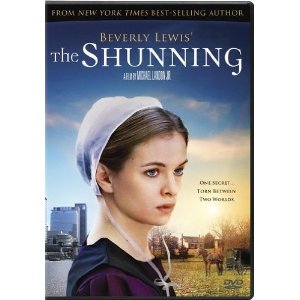 The Shunning
USA
2011
Not Rated
Contemporary Drama
4 out of 5 stars

I read the original bonnet books back when I was in middle school, which started with The Shunning. I was happy to see it pop up on my Netflix. (I believe it was a made for tv movie, possibly for the Hallmark channel?) This isn’t your typical bonnet romance. Katie Lapp is struggling with the idea of her marriage to a man she doesn’t love after the death of her first love. She also likes playing guitar and singing, which is frowned upon in the Amish community. When she learns that she is adopted, her whole world is rocked. It’s a great film both to see Amish life and to consider issues of identity and adoption. I can think of quite a few of my friends and followers who would enjoy it
Unspeakable Acts
USA
1990
Not Rated
Docudrama
3 out of 5 stars
It’s odd, I generally don’t go for courtroom drama books, but the movies sometimes work for me. This one from 1990 is about the daycare child abuse scare that happened in the 1980s and looks at the groundbreaking case that made certain aspects of children testifying easier in court. One fun thing, one of the mothers is Bebe Neuwirth (Lilith from Frasier), and it was pretty….odd seeing her in a loving mother role. This docudrama addresses the controversial methods of questioning toddlers about situations at daycares. The movie falls solidly on the pro-questioning side. I enjoyed it. It was a bit slow-moving and sometimes the acting was a bit over-the-top, but it does a good job encouraging parents to be communicative with each other and to actually bother to ask their kids questions like they are real people (which indeed they are). Some viewers might be disturbed by the graphic descriptions of child abuse.
 Creature From the Black Lagoon
USA
1954
Not Rated
Horror
4 out of 5 stars

I’ve been working my way through the 100 Horror Movies to See Before You Die, starting with the ones available on Netflix. This one is about a group of scientists who think they’ve discovered an artifact of the missing link in human evolution deep in the Amazon. They get there and of course discover that the missing link is actually a living creature. Let me just say upfront, yes it is abundantly obvious that this is one of those movies about white guys being scared of non-white guys stealing their women. Bare that in mind when watching this, and you will come away with a totally different viewing than those who don’t. It’s easy to see why it became a classic. The underwater shots are absolutely incredible. There are in particular these scenes wherein the woman is swimming in a gorgeous pure white swimsuit (I know, I know), and the creature is swimming underneath her in tandem. How they pulled that off in the 1950s, I don’t know. It is a highly watchable film and a great way to start a discussion of the racism in the 1950s. Perhaps even to try to convince those who would say otherwise that the good old days weren’t really so good. Side-note: there is a great scene where the woman scientist and the dude she’s dating are asked when they are gonna get married. It’s been a while. Only to find out they’ve been dating 6 months. o_O
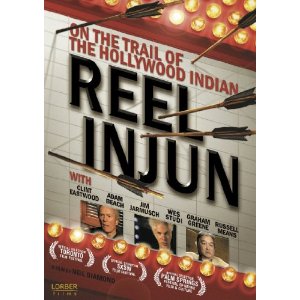 Reel Injun
USA
2009
Not Rated
Documentary
5 out of 5 stars

This documentary looks at the stereotypes and use of Native Americans in American cinema as a lens for considering Native identity and the American Indian Movement (AIM, the name for the Native American civil rights movement). The documentary eloquently moves decade by decade, presenting clips and interviewing actors, directors, and AIM activists. It completely blew my mind. For instance, I didn’t know that during the silent movie era there was a strong group of Native filmmakers who made their own, powerful movies. It was when the talkies came that the cowboy and Indian trope came about and also when every Native everywhere was re-written as a Plains Indian. For ease. Then in the 1970s and 1980s after the civil rights era, we started to get the ass-kicking Natives as a reflection of the anger in the movement. It’s impossible to come even close to telling you all everything I learned or how powerful the movie was for me. I will say, though, that I found the part about how Marlon Brando turned down his Oscar due to the treatment of Natives in cinema by sending Sacheen Littlefeather up in full Apache clothing to turn it down for him completely shocking. I had no idea that such a movement exists in Hollywood, but it does, as is also evidenced by Clint Eastwood’s involvement in this documentary. It’s encouraging to hear that not everyone in Hollywood sits by while this shit goes down. In any case, a powerful documentary and a great starting point for getting your feet wet in the Native American civil rights movement.
 The Invisible Man
USA
1933
Not Rated
Horror
2 out of 5 stars

Another entry in the 100 Horror Movies to See Before You Die. A scientist manages to make himself invisible but doesn’t have an antidote ready. Also he goes crazy. Allow me to say, yes I realize this is super-old and they still managed to do the slowly revealing the invisible dude scenes, which is an amazing achievement in cinema. Watch clips of those parts on youtube. The storyline itself is super boring and not well structured, and the science is rather shoddily done. It was good for a few laughs. For the first 55 minutes. The rest was suffering and wanting to rip my hair out. I think one of my live tweets from watching it sums it up best, “The best part of this movie is the knowledge that this dude is running around nekkid.” Because his clothes are visible, you see.
That’s about a month’s worth of movies. Stay tuned for more quick thoughts next month!
Source: Unless otherwise noted, all movies watched via Netflix.
Book Reread Review: Strawberry Girl by Lois Lenski
 Summary:
Birdie’s just moved to Floridy from Caroliny to farm strawberries with her family. But their neighbors, squatters headed by a mean drunk of a dad, won’t make life easy for them.
Review:
Rereading a childhood favorite is a dangerous endeavor. However, last year rereading Reddy Fox went well, so when the ebook version of this Lois Lenski classic showed up on Netgalley, I just had to try it out. I can see why I enjoyed it as a child, but I can’t really imagine adding it to the collection if I was a public librarian or, in the realm of more possibility, giving it to my nephew.
This is part of a series that Lenski wrote and illustrated in the 1940s about children living in different regions of America. The thought process was that kids saw children around the world in literature but not the vastly different ways of growing up all over America. A good idea, for sure. I can totally see why these books, written in painstaking vernacular to boot, were popular back then. They just didn’t age as well as they could have. Or, at least, this one didn’t.
Unlike the Little House series where the problems and dramas and joys are relatable, Birdie’s family basically repeatedly lets the neighbors walk all over them. There are also odd conundrums, such as how is Birdie’s family so working class and yet mysteriously has money? Most bothersome, though, is the fact that the central conflict of neighbor worthless father is wrapped up overnight when he gets saved at a revival meeting. Only the most evangelical of children will accept that as a fix. Plus, it gives an unrealistic expectation to children that the serious problem of an addicted parent can be solved with some yelling from a preacher. Not the most useful of message to be giving to children.
Although it’s not an unenjoyable read and the details of life in rural Florida in the 1940s are painstakingly accurate, it just simply hasn’t aged as well as other classics. It is still well-written, researched, and illustrated, however. I’d recommend it to adults with an interest in the history of American children’s literature.
3 out of 5 stars
Source: Netgalley

Book Review: David Goodis Five Noir Novels of the 1940s and 50s by David Goodis
 Summary:
The Library of America collects together great pieces of American literature into themed books. This can be anything from an author, to writing on aviation, to the Harlem Renaissance, to transcendentalism. This collection is David Goodis’s best works, all of which happen to be noir. Obviously the most well-known noir author is Raymond Chandler, but one of Goodis’s works was made into a Bogie and Bacall movie, so he’s not too far behind. The books in order of year published included in this collection are:
Dark Passage–A man framed for his wife’s murder escapes San Quentin and investigates the case with the aid of a beautiful woman in San Francisco.
Nightfall–A WWII veteran on his way to Chicago for a job finds himself inextricably linked to a robbery and murder and goes on the lam.
The Moon in the Gutter–A dockworker becomes obsessed with figuring out who raped his sister, leading to her ultimate suicide.
The Burglar–A man in his 30s who fell into the world of thieving during the Great Depression tries to get out but his tutor’s daughter keeps sucking him back in.
Street of No Return–A hobo finds himself implicated in a cop murder in the middle of race riots between whites and Puerto Ricans.
Review:
I am a huge fan of noir. I even took a noir class in undergrad, so when this showed up on Netgalley, I knew I wanted to read it, particularly since I recognizedDark Passage as a film I had watched last year. Surprisingly, we didn’t read any Goodis in that class, so it was fun to try out someone who’s not Chandler. I think Chandler found more of a niche than Goodis what with the fact his main character is the same in every novel. Goodis explores a bit more. His books all have a noir feel, but they don’t follow the exact same formula. For instance, instead of a hardboiled private dick, you might get a hardboiled thief or artist or hobo. Plus the books tend to be a bit more tragic than most noir I have read.
Goodis’s writing at the sentence level has the tongue-in-cheek wit that I so enjoy.
“Madge is a fine girl.”
“Maybe one of these days she’ll get run over by an automobile.”
“It’s something to pray for.” (location 801)
He also is fabulous at setting a scene so richly that it seems as if it is our world but simultaneously is Wonderland.
She had seated herself in a deep sofa that looked like it was fashioned from pistachio ice cream and would melt away any minute. (location 5039)
The mystery aspects of his storylines are unpredictable, don’t always wrap up neatly, and yet make sense once they are revealed to you. Unfortunately, these strengths are offset by his weak romance writing. Every single romantic interest in all of the books are a small-framed, lean woman with light brown hair. The author has a type, we can definitely see that. Beyond that, though, the love is always instant. They see each other across the room and fall for each other. And both people acknowledge this and say it’s something that can’t be helped and they are at its beck and call. This would be less of a bother except that the main characters often make important decisions based on this new “love.” For instance, one of the characters gives up his career for this woman he barely knows. Who does that?! It’s therefore difficult to be sympathetic to the characters when you are thrown out of believability. That’s unfortunate because the scene setting and mystery plots are so strong.
The best work of the bunch is The Moon in the Gutter where the impetus for a lot of the action is not the romantic interest, but the love between siblings. Additionally, it looks at issues of class, being stuck where you are, having who you can love and build a life with dictated to you by that classism innate in society. The grittiness is extreme. We’re talking about a dockworker dealing with his sister’s rape and subsequent suicide. Yet Goodis acknowledges the good there too for the blue collar dock workers and their families. Their lives are passionate and intense in a way that sitting around sipping wine and discussing the symphony just isn’t.
Overall, Goodis exhibits a lot of the qualities of good noir writing. His style is dark and gritty, often with a femme fatale. His stories offer more variety than those of other noir writers, but still fall solidly within and as a great example of the genre. I recommend this collection to those who know they are a fan of noir, and the book The Moon in the Gutter
4 out of 5 stars

Source: Netgalley
Book Review: The Penelopiad by Margaret Atwood
 Summary:
Hopefully anyone who’s read The Odyssey
Review:
I’ve taken to loading an audiobook on my ipod for those frequent times when I either have to walk from a T stop or am crammed onto a train with literally no elbow-room to hold onto my kindle. I was excited to see this on the shelf at my library, since I had decided rather spur of the moment to pick one up, and I do love Atwood. Plus, this is only three discs long, which is good for my audiobook attention span.
For me the story ultimately fails, although I don’t blame Atwood for that. The thing is, Penelope, to a modern woman, is kind of pathetic. It’s not easy to make her into a heroine we can root for, the way we can root for Odysseus. Ok, so he’s a womanizer and a liar, but he’s also brilliant and hilarious. The kind of guy you want to be friends with, but don’t want to date. Yet Penelope not only is married to him, but has never stood up to him. Even when he’s been gone for years and years fighting in a war. Atwood is a great writer, but that’s just not a situation you can fix. I completely get Atwood’s fascination with Penelope’s story, not to mention the 12 maids. I don’t think any woman can read The Odyssey
Penelope comes across as a woman who lived in tough times to be a woman, yes, but who never does anything really to fight the status quo. She can’t even bring herself to stand up to the elderly maid who takes the run of her household. Plus, she willingly puts her maids into situations where they are likely to get raped (indeed, do get raped) and then doesn’t stand up for them when her wayward husband finally comes home. Is it within character? Sure. Is it something that holds up as the main focus of a story? Nope.
I did enjoy Atwood’s modern take on the Greek chorus using the dead 12 maids. I appreciate her choice to include a chorus in the book, as well as how she played with different ancient and modern music styles. It even left me wishing the maids were the focus of the book instead of Penelope! Of course, interspersing music between chapters is something I’ve seen Atwood do before in The Year of the Flood
So what does this all ultimately mean? Atwood’s writing style is creative and pleasant as always, but the topic of the book just isn’t. I think the constraints of who Penelope is from such an ancient story placed a sour note on Atwood’s work that normally isn’t there. It’s an interesting exercise, but not one I found particularly enjoyable to read. I was more interested in it as an academic exercise. If you’re a fan of retellings of the classics, you’ll be intrigued by it.
3 out of 5 stars
Source: Public Library

Movie Review: Guess Who’s Coming to Dinner (1967)
 Summary:
A liberal couple’s beliefs are challenged when their daughter comes home from a Hawaiian vacation with a surprise fiance who just so happens to be black.
Review:
I am chagrined to say that I saw the awful, horrible 2005 remake of this classic prior to seeing the classic version. That attempt at humor (that was totally unfunny) thus had me coming at this film rather skeptically, but it was in my suggested films pile on Netflix, and given that I’d just finished up The Real Help Reading Project, I thought a classic 1960s film exploring the black/white issues in America just might be interesting. It certainly was not what I was expecting.
First, the cast is absolutely stellar, featuring Katharine Hepburn, Sidney Poitier, Katharine Houghton, Spencer Tracy, Beah Richards, Cecil Kellaway, and Isabel Sanford. These people have serious acting chops, and I doubt a lesser cast could have pulled off this film. In particular, I cannot imagine another person in the role of the mother than Katharine Hepburn. Now THERE is an actress.
The film feels more like watching a dramatic play in three acts. There is a lot of dialogue and emotional speeches. It may feel a bit heavy-handed to the modern viewer, but it must be remembered the world this film was made in. One line really reminds the viewer, when the young couple are reminded that their relationship is still illegal in sixteen or seventeen states. Wow, ok, suddenly both sets of parents’ concern that their children are choosing an incredibly tough life for themselves doesn’t seem like such an over-reaction. It puts the whole film a bit more into perspective.
That’s what the film is really about. It isn’t about either set of parents being prejudiced against a skin color. They’re concerned that the prejudice of the world will make the marriage unbearable for their children. The movie is about choosing to stand up and hold on to the ones you love in the face of prejudice. That’s a powerful message and not at all the issue I was expecting to come to the surface in this film.
Now consider all of those to be reasons to watch this classic that’s a classic for a reason. I now want to talk about one character whose presence was totally different to me since doing The Real Help–that of the white family’s maid, Tillie. Tillie’s role seems to be that of reassuring the (white) audience that not just the white parents are concerned about this black man John. She immediately is in fisticuffs over the whole thing. She tells John, “I don’t care to see a member of my own race getting above himself. ” She threatens him that she knows his type and although he may be able to fool the white folks, he’s not fooling her. She even says, “Civil rights is one thing. This here is somethin else!” The daughter tells Tillie that she loves her and loving John is no different, and the parents even have her come sit down for the big finale stating that she’s “one of the family.” What is fascinating about this completely false and stereotyped role of Tillie in this film is that it is there in the midst of a forward thinking main plot. It is as if the filmmakers wanted to give the audience the familiar, non-threatening, stereotyped role of the trustworthy black help that is in favor of the status quo to help them feel more comfortable during the film. Perhaps that is the case. But even if the choice was deliberate and worked for the audience at the time, I personally found the role to be Tom-ing and distracting from the much better main storyline. However, it is also fascinating how a movie with a role like this *still* is better than The Help.
Overall, this is a classic deserving of the title. Although it is a bit dated, if the audience bares in mind the actual world of race and racism at the time the film was produced, they will be surprised at how progressive it actually was.
4 out of 5 stars
Source: Netflix

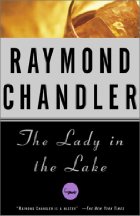
Book Review: The Lady in the Lake by Raymond Chandler
 Summary:
Everyone’s favorite hard-boiled private eye Marlowe is back, and this time he’s been hired to track down a respectable entrepreneur’s wild wife. She sent a telegram weeks ago stating she was going to marry her boy toy, Lavery, but Lavery was spotted in Hollywood and claims to have no idea where Mrs. Kingsley is. The last place she was known to be was at the Kingsleys’ lake-side country cottage, so that small town is where Marlowe starts his investigation.
Review:
I first encountered Chandler in a film noir class I took in undergrad. Ok, so that class was my first encounter with noir too, but it introduced a whole new genre to me to fall in love with. So whenever I stumble upon a Chandler book in a used bookstore, I absolutely must buy it. There’s simply no question. This will probably continue until I have collected them all.
The entries are always narrated by Marlowe, and The Lady in the Lake does not fail to smoothly represent everything there is to love about him. He’s darkly cynical yet possesses a striking wit even in the face of getting a beat-down from the cops (which happens in pretty much every book. Lots of dirty cops in Marlowe’s world). Without Marlowe’s voice and ever-present intelligence, the books would not be what they are. Thankfully, his presence is just as perfect here as in the other Chandler books.
So what about the story? Well, this time the story is not set entirely in LA. A solid half of it is in the countryside. While I enjoyed those scenes, I must admit I did miss the LA grittiness a bit. Although the scene where the grieving husband drags his wife’s corpse out of the lake on his back was every bit as gritty as any city scene.
The mystery made so much sense in the end that I was kicking myself for not figuring it out. I still can’t believe I didn’t figure it out! How Chandler came up with these twists and turns and managed to write them without giving it away is beyond me. I doubt anyone will be disappointed with the mystery. I literally had no idea what was going on into Marlowe explained everything in the classic film noir wrap-up scene.
The femme fatale was a weak point in this entry, however. I think this is why I really liked it but didn’t love it. She just didn’t seem sexy enough. Violent, yes. Brutal, yes. But sexy? Ehhhh. Personally I always perceive the femme fatale as a gorgeous black widow spider, and well this one just failed a bit on the gorgeous glamor aspect. She was still a femme fatale, but perhaps a bit disappointing.
Overall, I truly enjoyed my time in Marlowe’s world with this entry. Marlowe is someone whose presence it is always worth being in, regardless of whether his surroundings are perfect or not. I recommend this to noir fans, highly. Those new to the genre, I recommend start with The Big Sleep.
4 out of 5 stars
Source: Harvard Books used book cellar
Buy It

Counts For:

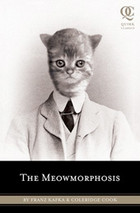
Book Review: The Meowmorphosis by Franz Kafka and Coleridge Cook
 Summary:
Gregor Samsa goes to bed and wakes up as an adorable snuggly kitten! He has trouble making up his mind about anything, though, and is easily distracted by things like dust and canned fish. Plus, his family clearly are not cat people.
Review:
This is the first Quirk Classic that I’ve read, mainly because all the others were based on classics I don’t like to start with (Jane Austen and Anna Karenina). However, “The Metamorphosis” is one of my faaaavorite short stories. Although, I will always insist that Gregor woke up as a grasshopper, not a cockroach. (I was the only one in my AP English class who thought this. Whatever). In spite of its (epically awesome win) name, this actually also incorporates another Kafka story “The Trial,” which I have not read. Anyway, when this came up as an EarlyReviewer I obviously needed to have a copy.
The main problem with reworking “The Metamorphosis” to be a cat is that, well, cats are adorable and playful and perfectly normal household cats whereas a giant insect is not. A lot of the depression, ennui, and conflict in the original story comes from Gregor being an insect. While Cook does a good job showing the internal workings of a cat brain to go with their adorably quirky behavior, the actions of the family are less understandable. What is up with this family hating on their adorable son? Why do they lock him away in a room? What is up with that? Of course this gets addressed later when Gregor grows to a disturbingly large size and can barely move around. I couldn’t help but think of that obese cat that was on the news last year. However, at that point he was sort of just becoming the monster they were treating him as. Ok, I just read what I wrote, and quite possibly that is the point of the story. However, while reading it, it certainly bogged me down.
I also have to say that I didn’t like the illustrations that went with the story. Somehow, the illustrator actually managed to make pictures of cats that I didn’t squee over. There’s something wrong with that picture.
Overall I’d say that I don’t feel like I wasted my time reading this, per se, but I also sort of wish I’d just re-read “The Metamorphosis” and hunted down a copy of “The Trial.” As someone who can be a bit of an emo reader at times, nothing beats Kafka’s brand of ennui and depression. Why brighten it up with a kitty? Just…..why?
I’d recommend this book to that odd juxtaposition of reader who loves depressing European lit and doesn’t mind it being brightened up by an adorable kitty. I think only you will know if that describes you.
3 out of 5 stars
Source: Free copy from the publisher via LibraryThing’s EarlyReviewers in exchange for my honest review
Buy It

 Support my work with a tip or browse my shop for curated book club guides, how to guides, cross-stitch patterns, and more!


This work by Amanda Nevius is licensed under a Creative Commons Attribution-Noncommercial-No Derivative Works 3.0 United States License.
 Opinions of a Wolf