
Archive
Book Review: Oryx and Crake by Margaret Atwood
 Summary:
Snowman used to be Jimmy. Jimmy was a word person in a science person world. He couldn’t splice genes to make rakunks or even to make new types of plants. He could sell them to the public who lived outside of the safe Compounds though. Jimmy was with Oryx, although he had to share her with Crake. Now, Snowman must take care of the Crakers with their rainbow of colors, naturally insect-repellant skin, and complex mating rituals. Snowman is alone except for the Crakers. Everyone else died in the bloody pandemic. Or did they?
Review:
This is a companion novel to Year of the Flood (review), although Oryx and Crake was published first. Companion novel means they’re set in the same time-span in the same universe and some characters may briefly cross over, but you don’t necessarily need to read them in a particular order or even read all of them.
Atwood is one of my favorite authors, so I have no idea how to react to the fact that I didn’t like this book. I didn’t hate it, but I didn’t like it. It was a bit of a struggle to get through. As usual, Atwood sets scenes beautifully, but I felt no emotion driving the story. I believe Oryx and Crake suffers from the fact that love triangle of Oryx, Crake, and Jimmy is only hinted at throughout the book, only to be revealed in such a manner that it rings false. Jimmy seems to surf through life on a wave of ennui, until Oryx shows up and cheers him up, but how does she do it? We just don’t ever really find out, because our narrator is Snowman–the version of Jimmy who’s lost his mind. Perhaps Atwood was trying to show a culture that had reached a point where people just couldn’t be truly happy. That’s a good thing to show, but it makes for a boring narrator.
What I really wanted to know about was what made Crake do the things he did. He’s clearly either a mad-man or a genius, but we never get to find out much about him at all. I wish he had been the narrator. To see inside his mind would have been amazing. I could have even overlooked the fact that he’s not a woman.
That’s the other thing that bugged me about this book. Atwood usually writes with female main characters, but in this instance, men were the main players. That kind of pisses me off. Was she unable to imagine a woman doing something so evil? A woman being so stupid? That’s just as sexist as women never being the hero. I would have enjoyed the book so much more if Jimmy and Crake were women (heck, Oryx could have stayed a woman too. That would have been an interesting change).
When you compare this to Year of the Flood, it’s evident that what Oryx and Crake lacks is the emotions driving the bigger picture. It’s a well-imagined and creative big picture, which is what makes the book still readable. I’m sure some people would like it, but don’t come into it expecting Atwood’s more typical emotion-driven story. You won’t find it.
3 out of 5 stars
Source: PaperBackSwap

Book Review: Battle Royale Ultimate Edition Volume 1 by Koushun Takami (Manga) (Series, #1)
A Note on Me and Graphic Novels:
This, believe it or not, was my first foray into the world of graphic novels. I was spurred into this new territory by my intense love of the movie Battle Royale. I know that there’s also a traditional book out there, but I’d heard the manga is what the author feels really fulfills his vision of the story. I received the first volume of the ultimate edition, which contains the first three mangas in the series, for Chrismukkah. I wasn’t sure if I’d enjoy reading a graphic novel. I tend to associate them with superheroes, and I’m not generally a fan of superhero stories (except Ironman. Robert Downey Jr., *swoon*). But this. This was a story I already knew I liked, so I came at the genre with a much more open mind than the once or twice I flipped through a superhero graphic novel. You guys, I absolutely love the feeling of reading a graphic novel. I could literally feel different parts of my brain working at it than that work when reading a regular book, playing videogames, writing, or watching a movie. It’s like a portion of my brain was like “Oh hai. You finally remembered I exist!” I love that I’m only reading dialogue, because I hate extensive descriptions in books. I love that the drawings are art that I actually enjoy looking at the fine details of. I love it that when I flip back to show scenes to other people, I notice things in the drawings I didn’t see the first time around. I’m officially a convert to the genre, but you still won’t see me reading about superheroes anytime soon.
 Summary:
In an alternate history of Japan, Japan comes under the rule of a totalitarian, isolationist government after WWII. The government rules through terror, and part of that terror is selecting, supposedly via lottery, one 9th grade class every year to compete in a televised game where it is kill or be killed. Shuuya never expected to win this lottery, but when his class goes on a field trip, upon arrival they discover that they are this year’s participants on an island location. They discover collars on their necks that will detonate if more than one is left alive at a certain point and also if they wander into the randomly assigned and changing forbidden zones. As the teens attempt to survive the game through various methods, flashbacks tell the story of the 9th grade class members.
Review:
I absolutely love this story. I love violent, gory stories, and there are creative deaths galore here. For instance, the weapons include a scythe, and that scythe gets used. In one particularly memorable scene, a girl desperately attempts to stuff a boy’s brains back into his skull. It’s freaking amazing. There’s also graphic sex, ranging from rape to love. I don’t like my books to pretend like sex doesn’t happen in the real world, because um, it does. The fact that sex can be wonderful and about emotions or horrible and about power is wonderfully depicted.
The manner of introducing these characters tossed together in a horrible situation then expanding on who they are via flashbacks is very reminiscent of Lost. Of course, here the characters knew each other, at least somewhat, before the game. The flashbacks fit in perfectly with the action of the game, and they reveal just enough about the characters without revealing too much. From a cooking class that solidified a friendship to crimes committed to lessons learned from an activist uncle, the flashbacks are endlessly fascinating.
Seeing these characters in what most certainly feels like a hopeless situation orchestrated by a powerful government far bigger than they are is truly powerful reading. It leaves the reader wondering not only what makes people do bad things, but also how to define what is good and bad given various situations. Is it actually good to team up and attempt to buck the system or will that just cause more pain in the end? Is suicide a bad thing when it’s kill yourself or kill others?
If you enjoy Lost, The Hunger Games, violence, psychology, or even just graphic novels, you will enjoy this book. I highly recommend it and can’t wait to read the next volume!
5 out of 5 stars
Source: Gift

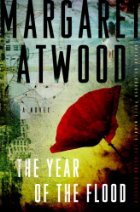
Book Review: The Year of the Flood By Margaret Atwood
 Summary:
Toby, a spa-worker, and Ren, an exotic dancer and prostitute, have both survived the waterless flood–a global pandemic that has killed almost all of humanity. They also both used to live with The Gardeners, a vegetarian cult that constantly warned of the impending apocalypse. A series of flashbacks tells how they survived the pandemic while the question of what to do now that the pandemic is mostly over looms large in their lives.
Review:
Margaret Atwood is one of my favorite authors. I love dystopian books, and she has an incredible talent for taking the current worries and news items and turning them into a near-future dystopia. Toby’s and Ren’s world prior to the waterless flood isn’t anything to be happy about. Slums dominate. Gangs run rampant. The world is now run by a giant evil corporation (which is somehow worse than a giant evil government? *shrugs*). It’s really the little things that makes this future world believable. Kids wear bracelets that have live mini jellyfish in them. Species have been spliced together to make new, more usable ones, such as the Mo’Hair–a sheep whose wool makes perfect fake hair for women. The people who don’t live in slums live in corporation-run compounds where everything they do is monitored. What makes this dystopia wonderful is how plausible it all seems.
Really, though, all of these dystopian features are just a back-drop for the real stories. Toby spends years hiding with The Gardeners and running because one man, Blanco, decided he owned her upon having slept with her. When Toby defied him, he vowed to kill her. He haunts her life for years on end. Similarly, Ren falls in love with a boy in highschool who breaks her heart yet somehow keeps coming back into her life and repeating the damage.
This is a book about mistakes. About how thinking we own the Earth and its creatures could cause our own demise. About how sleeping with the wrong man just once can haunt you for years. About how loving the wrong man can hurt you for years.
This is what I love about Atwood. She has such wonderful insight into what it is to be a woman. Insight into what haunts women’s dreams. When women talk about what scares them, it isn’t nuclear war–it’s the man in the dark alley who will grab her and rape her and never leave her alone. Toby’s Blanco is the embodiment of this fear. She sees him around every corner. She’s afraid to go visit a neighbor because he might find her on the street walking there. Setting this fear in an other world makes it easier for female readers to take a step back and really see the situation for what it is. Yes, he’s a strong, frightening man, but Toby let him disempower her by simply fearing him for years. This is what Atwood does well.
The pandemic, however, is not done so well. Too many questions are left. Where did the pandemic come from? Does it work quickly or slowly? Some characters seem to explode blood immediately upon infection, whereas others wander around with just a fever infecting others.
Similarly, the reader is left with no clear idea as to how long it has been since the pandemic started. On the one hand it seems like a month or two. On the other hand, the stockpiles of food The Gardeners made run out quite early, and that just doesn’t mesh given how much attention they gave to them prior to the pandemic.
I also found the end of the book extremely dissatisfying. It leaves the reader with way too many unanswered questions. In fact, it feels completely abrupt. Almost like Atwood was running out of time for her book deadline so just decided “ok, we’ll end there.” I know dystopian novels like to leave a few unanswered questions, but I don’t think it’s appropriate to leave this many unanswered.
The Year of the Flood sets up a believable dystopia that sucks the reader in and has her reconsidering all of her life perceptions. Unfortunately, the ending lets the reader down. I think it’s still worth the read, because it is enjoyable for the majority of the book, and I am still pondering issues it raised days later. If you’re into the environmental movement or women’s issues, you will enjoy this book–just don’t say I didn’t warn you when the ending leaves you throwing the book across the room. ;-)
4 out of 5 stars
Source: Library

Book Review: Fourth Realm Trilogy By John Twelve Hawks


Summary:
John Twelve Hawks presents us with a near-future dystopia in the Fourth Realm Trilogy—The Traveler, The Dark River, and The Golden City. In this vision of the world Earth as we know it is actually just one of six realms of parallel universes. Travelers are the only ones who can move between these parallel universes. Saints with visions of heaven and hell and motivating, compassionate people such as Buddha are examples of past travelers. They seek to keep people aware of their “Light” aka soul. An evil organization called The Brotherhood has been seeking for generations to wipe out travelers, as they believe they cause dissent. Working against The Brotherhood are Harlequins–people raised from birth to defend travelers at all costs. The Brotherhood thought they had succeeded and have started building a panopticon–a virtual prison in which everyone is constantly under surveillance for “their own protection.” However, two brothers–Michael and Gabriel–are actually travelers. Michael sides with The Brotherhood in an effort to ensnare humanity, while Gabriel teams up with Maya, a Harlequin. The two brothers thus are pit against each other in an effort to enslave or save humanity.
Review:
The Fourth Realm Trilogy is decidedly a series with a message and an agenda. “John Twelve Hawks” is actually a pen-name, and the publisher claims that he does try to live off the grid out of a concern about loss of freedom via invasion of privacy with new technology. There is skepticism as to whether this is true or a marketing hype. Regardless, whoever the author is, his main concern is definitely loss of privacy to technology, and this is abundantly evident in the trilogy.
This is a plot-driven trilogy. It reads like an action film in the feel of The Matrix. Further it is exciting because the world the characters live in looks exactly like our own, right down to the surveillance cameras in London. The only difference is these parallel universes, which is a feature I enjoyed a lot. Dystopian novels are usually either completely bound in our world or take place in an entirely different one. This trilogy utilizes both approaches, and this kept it from feeling like an updated version of 1984.
There are many characters. Thankfully, they are distinct enough that keeping track of them is relatively easy, but sometimes Twelve Hawks does not pay enough attention to character development. Particularly toward the end of the trilogy, characters will suddenly make a decision or behave in a manner that comes out of nowhere and is completely out of character. These moments are jarring and distract from the plot.
The plot itself is a good, complex one. It takes place all over this world and journeys to every single realm. Two plot sequences I particularly enjoyed were one in an off-the-grid commune in the south-west US and another in Japan. Twelve Hawks must have travelled extensively, because the descriptions scream “I’ve been there. I know what it’s really like.” There was one plot hole in The Dark River that still bothers me. I think what probably happened is there’s an explanation for the action, but Twelve Hawks neglected to write it in. However, the ending makes up for the plot hole as I was unable to predict it. I absolutely love unpredictable endings that keep me page-turning right up until the end.
Another enjoyable element of the trilogy is the violence. It is chock-full of creative deaths, and even characters who don’t die get beat up a lot–in all realms. An example of the level of violence is a scene where three characters’ limbs are simultaneously wripped off in front of an audience. However, most of the violence is more of the ninja type, due to the presence of the sword and martial-arts trained Harlequins. Twelve Hawks’s strength is writing action sequences, so these are great fun to read.
A mark against the trilogy is periodic character speeches that are obviously Twelve Hawks voicing his opinion. This a typical short-coming of dystopian novels though. Authors with a dark vision of the future can’t seem to help proselytizing in an attempt to save it. I don’t hold this against the novels, but other readers might find it more annoying. There’s essentially one speech a book.
If you enjoy Quentin Tarantino movies or want a more grown-up, spiritual version of The Hunger Games, definitely give the Fourth Realm Trilogy a chance. I doubt you’ll be disappointed.
4 out of 5 stars
Source: Bought The Traveller, borrowed The Dark River and The Golden City from the library


Book Review: Pretties By Scott Westerfeld (Series, #2)
 Summary:
Tally Youngblood lives in a dystopian society where everyone is given an operation at the age of 16 that makes them perfectly pretty. What is not known by the general population is that during the operation lesions are put on the brain to make people dumbed down and easy to control. A few people are selected to be “Specials.” They don’t have the lesions and control the rest of the society. Some people resist the operation and the control and live in the wilderness, calling themselves “Smokies.”
After being captured from The Smoke, Tally has been made pretty. She has mostly forgotten her experiences and has a new boyfriend, Zane. They belong to a New Pretty clique called The Crims. The book follows what occurs after teens from the New Smoke bring Tally pills created by adults in the New Smoke that are supposed to cure the brain lesions. She and Zane share them and begin plotting their resistance of the regime and escape from New Pretty Town.
Review:
I am quite torn about this book.
On the one hand, I like that Westerfeld is clearly gradually moving our traditional hero, Tally, toward turning into one of the bad guys in this society. It’s a move not commonly seen in YA lit, and I think it’s a bold thing to do. It could lead teens to question what makes people behave badly versus what makes people behave well. It’s a bit reminiscent to me of the key question in Wicked: Are people born bad or do circumstances make them that way?
On the other hand, I am profoundly disturbed at how Westerfeld presents Shay, Tally’s one-time best friend and the one who came up with the plan to escape to The Smoke in the first book, Uglies. Tally followed Shay there, won over the guy Shay had her eye on, and betrayed Shay to the Specials, causing her to be turned Pretty. Oh, and in Pretties she completely leaves Shay out of the whole pills-curing-people-and-escaping-to-New-Smoke-thing.
Since Tally is leaving Shay out, Shay is left to her own devices. These are delineated in the chapter titled “The Cutters.” In this chapter Tally and Zane discover that Shay has discovered a way to temporarily clear the fuzziness in her head caused by the operation. She is ceremonially cutting herself and has some followers who are now doing the same. They call their clique “The Cutters.”
Self-injury is a real element of multiple mental illnesses. People suffering from depression, post-traumatic stress disorder, dissociative identity disorder, and borderline personality disorder will display this symptom. However, it is most well-known and highly associated with Borderline Personality Disorder (BPD), which is already stigmatized and misunderstood by the media and general population.
Westerfeld’s presentation of self-injury in his storyline reinforces multiple stereotypes regarding it. First is the idea that self-injurers only cut. This is not the case. Burning, head banging, hitting things until your knuckles bleed, picking at and peeling skin, and pulling out hair are just some of the multiple methods people used. Cutting, burning, and head banging are the most common. Thus, showing all of The Cutters using the exact same self-injury method to clear their heads is misleading.
Second, Shay and the other Cutters proudly display their scars and make a show of the bleeding. Self-injurers must face the prejudice that they do this for attention, that they do it in places people will notice to garner that attention. For the vast majority of self-injurers this is not the case. They do it in places that are easy to hide, such as upper thighs, or purposefully wear long sleeves to hide the marks. They are usually profoundly ashamed of what they did, or at least terrified that people will find out. It would be much more accurate to portray Shay cutting herself in a private room and have Tally accidentally see it, than to have the large ceremony in the middle of a park that is portrayed in the book.
Third, while it is true that some self-injurers say their mind feels clearer from injuring, others say it helps them shut down emotions they don’t want to feel. It’s perfectly plausible for Shay to be in the former group, but it seems to me that at least one of her followers would be in the latter group.
My real issue though comes from the fact that Tally seeing Shay self-injuring is the final decisive straw to her. She emphatically announces that Shay is crazy, and Zane agrees with her. No one dissents from this viewpoint. Shay’s scars are the markers that she’s gone off her rocker; there’s no turning back. To top it all off, the cutting is what makes the evil Specials decide that Shay and her group should be Specials themselves, thus associating self-injury not only with “being crazy” but also with being evil. Additionally, the ceremony in the middle of the woods is clearly connotated as being primitive.
Can you imagine what reading this portrayal would do to a teen struggling with self-injury? She is portrayed as purely crazy, evil, and primitive. Shay is a lost cause in the book, and clearly the teen must be too. So little sympathy is given to Shay. Not even a spark of goodness is visible in her.
I’m not the type to say that if you display thus-and-such group as evil you’re saying they’re all evil. I think it’s just as discriminatory to always portray a certain group as good. However, the portrayal of Shay turns so one-dimensional with the on-set of her self-injury. There is zero depth to her character, zero exploration of her as a conflicted person. She could have had rich character development. Indeed, the entire group of “Cutters” could have been a wonderful opportunity for Westerfeld to explore more depth in his story-telling.
Yet he went the easy, sensationalist route and portrayed an evil, crazy, primitive female slashing her arms while reciting a spell, letting the blood drip down in the rain.
An incredible image to visualize? Yes. A deep, accurate one? No.
2.5 out of 5 stars
Source: Library
Previous Books in Series:
Uglies

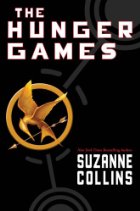
Book Review: The Hunger Games by Suzanne Collins
I’m going to start to attempt to feature a review of a book, videogame, or movie once a month. Be warned there may be spoilers. Here’s the first!
Summary:
A dystopian novel set in a future on the North American continent where the USA used to be. Land mass is significantly less due to global warming, and a new nation has been in place for quite some time called Panem. It consists of 12 districts and the capitol. Once a year each district must send one adolescent boy and one adolescent girl, chosen by a lottery, to the capitol to participate in The Hunger Games. The Hunger Games is a reality show that takes place in an environmental dome, each year the environment is different. The adolescents must fight until only one remains alive. The book focuses on a girl, Katniss, who ends up being the girl token from District 12.
Review:
I absolutely loved this book. I read it in one day, as I could not put it down. While I love reading, this type of all-engrossing engagement with a book has not happened for me in a long time.
First of all, I love the fact that the hero of the novel is female. Far too much literature out there features a male main character, and most of the books featuring female main characters are those gushy girly-girl books. They may be a fun quick read, but they don’t have any meat. This isn’t true of The Hunger Games. Katniss needs to be smart and strong in her struggle to stay alive, not only during The Games, but before even entering them. She is the sole provider for her mother and sister. Here is a strong female character, but simultaneously Collins does not make an issue of the fact that she is female. Since it is a first-person narrative, you don’t even realize her gender until around three pages in. Some reviewers *cough* male ones *cough* have complained that Katniss is cold, unfeeling, and not feminine. These complaints wouldn’t be made if she was a male character in the exact same situation behaving the exact same way. Katniss does have feelings, just as people of both genders do, but she is in a tough situation and must make tough choices. It’s wonderful to watch her struggle to make the right ones.
I also like that Collins took something we use as entertainment, reality tv, and shows how easily it could come to be distorted and used as a horrifying tool against the people. Dystopian literature is strongest when it takes something from the present and shows a plausible way it could go horribly awry.
Finally, Collins’ writing is beautiful. The conversations flow easily, the action sequences are vividly depicted, and secondary characters are quickly fleshed-out as complete people.
My only complaint is a major spoiler, as it has to do with the end of the book, so I will just let it be known that I am on Team Peeta and this is one decision of Katniss’s that makes very little sense to me.
5 out of 5 stars
Source: Library

 Support my work with a tip or browse my shop for curated book club guides, how to guides, cross-stitch patterns, and more!


This work by Amanda Nevius is licensed under a Creative Commons Attribution-Noncommercial-No Derivative Works 3.0 United States License.
 Opinions of a Wolf