
Archive
Book Review: The Emerald Diamond: How the Irish Transformed America’s Greatest Pastime by Charley Rosen
 Summary:
Did you know baseball has been entwined with Irish-Americans from the very beginning of the sport? Rosen goes through the history of baseball, focusing in on how Irish-American players, managers, and owners impacted the game.
Review:
I picked this up from my pile of older review copies to read in honor of St. Patrick’s Day. I’m part Irish myself and was a US History major in undergrad, so the concept of the book definitely appealed to me. The book addresses the interesting topic of Irish-Americans in baseball but unfortunately presents the history in an only sometimes interesting way and utilizes sloppy research.
The book starts in the 1800s and works its way up through time, ending many chapters with a modern day interview to reflect upon the ideas presented in the chapter. The earliest chapters are the most interesting. They take the events and use them to tell the story of how Irish-Americans broke into baseball partly because many careers were closed off to them due to anti-Irish discrimination in America (No Irish Need Apply). Originally, the game was much less regulated, and the Irish-American players brought with them a willingness to be sly and rough that added an element of excitement to the game that brought out more viewers. Reading about how the rules slowly changed and how Irish-Americans impacted those changes was definitely fascinating. It was also disturbing to discover how many players in the early years had serious addiction problems, not to mention the presence of multiple suicides. Unfortunately, the opportunity to analyze this phenomenon and discuss it in depth is passed by, as is most true historical analysis.
Starting in the early 20th century, the formatting of the book changes so that instead of telling a story, the heading of a year is given and bullet-points of events for that year are listed. Some of these bullet-points break out to be actual stories, instead of just pure listing of facts, and that is what kept me reading. But mostly about half the book is just lists of baseball facts. It reminded me of reading Chronicles in the Bible (so-and-so begat so-and-so). There are some interesting tidbits in there, but they are few and far between.
I was truly appalled when I flipped back to check the references in the back that almost all of them are secondary sources, and a significant number are Wikipedia. It’s one thing to start your research at Wikipedia to familiarize yourself with the topic and then broaden out to more scholarly work and primary sources. It’s another thing entirely to publish an entire book that basically just sums up Wikipedia. A work of historic nonfiction should seek out as many primary sources as possible, read secondary analyses, and provide analysis both of the primary and secondary sources. What Rosen has done is mostly to regurgitate what Wikipedia and other secondary sources have already said. The exception to this is the modern day interviews Rosen conducted, but they make up a small portion of the book. Perhaps 15%. If the book had consisted of interviews with modern Irish-American players and descendants of Irish-American players and managers, complete with analysis and investigation using primary and secondary materials, that would have been a fantastic book. Instead we get a relisting of information already gathered (and better sourced) in secondary sources spiced up with a few interviews. If I had bought this book, I would have returned it.
Overall, there are some interesting tidbits about how Irish-Americans impacted the game of baseball. Unfortunately, large parts of the book are lists of facts, with no analysis or storytelling, Additionally, Rosen relied primarily on secondary source materials, mostly Wikipedia, to research his book. The reader could get similar information from Wikipedia themself and have the ability to click through to the source materials. I would suggest doing that over buying this book. For those seeking a book on the topic, I recommend The Irish in Baseball: An Early History
2 out of 5 stars
Source: Print copy from publisher in exchange for my honest review

Book Review: The Hornet’s Sting: The Amazing Untold Story Of Second World War Spy Thomas Sneum by Mark Ryan (Bottom of TBR Pile Challenge)
 Summary:
Thomas Sneum was a Danish Allied spy during World War II who was periodically suspected of being a double agent. Partially due to this suspicion and partially due to infighting between the two British spy agencies (SIS and SOE), he never got the attention or respect he deserved. Mark Ryan, the author, found out about him and set out to get to know him. Both personally and through research. Here he tells the true story of Tommy Sneum and sets the record straight once and for all.
Review:
I picked this book up during a kindle sale because I’m a big WWII buff and who doesn’t love real life spy stories? I thought it was a sure bet, but apparently even a true life spy story can be written in a dull manner.
It’s impossible to read the book without learning a lot. For instance, I had no idea that Britain had two different spy agencies that were battling each other for control of spying missions. This infighting between the SIS and the SOE led to lack of communication and lack of a solid spy front with one, unified plan. Similarly, I didn’t know it was common practice to take people who had escaped from behind Nazi lines, train them as spies, then re-drop them back in their home countries. I always thought the resistance movement just built up from the inside and then they contacted the Allies on the outside with information. How much more complex it was is really interesting. I also loved learning more about those from occupied countries who escaped and fought in other militaries against the Nazis. In spite of learning all of these new to me facts about WWII spying, the book manages to be dull. Ryan tends to wander off on side diatribes about the intricacies of red tape and paperwork instead of focusing in on the more action-oriented, interesting bits of the spying. He also spends a lot of time giving the full name of every single person even vaguely connected with Tommy and the spying, even if they really have no impact on the story. The book could really have used a bit more streamlining and focus to keep the energy up. Just because it’s nonfiction doesn’t mean it can, or should, meander.
Tommy Sneum is hard to root for. He’s not a likable guy. He abandons his wife and infant daughter to go be a spy. That could definitely be seen as valiant, however, he expresses consistent distate for his wife and a lack of concern or care for even knowing his daughter. He certainly comes across in the book as a guy just after adventure, not so much a man looking to protect his country or his family. Similarly, Tommy express arrogance when it comes to women, claiming that they essentially would go sleep with him at the drop of a hat or a snap of his fingers. He does not come across as seeing women as people but rather as recreational objects. One story that really demonstrates this is he tells the author that he had a threesome once, and he was upset that the women dared to pay attention to each other at all, rather than 100% to him. Sex is supposed to be about people giving to each other, not about one person being worshiped. His general attitude towards women gave me a squicky feeling throughout the book. Of course, most people are not all bad or good. Tommy is no exception. He expresses a real openness toward a male colleague who was known to be bi. He refuses to view all Germans as evil monsters and insists, to those high up in the British resistance no less, that most Germans are just caught up in Hitler’s war machine. Of course, these even-handed views are almost universally held of men.
Perhaps the most interesting part of the book is Ryan’s investigation into the accusations that Sneum was a double-agent. This part of the book isn’t really played up in the blurb, which I think is unfortunate. Ryan did a lot of investigative work and lays out all the details that he believes clears Sneum’s name. Seeing how Sneum and his methods were misunderstood by the British and also how having two different spy agencies working led to misunderstandings was truly fascinating, and I’m glad Ryan took the time to work at finding the truth.
Overall, this is a rather slow-paced work of historic nonfiction that focuses in on the red tape and organizational aspects of spying more than exciting adventures. It does good work in determining that Sneum was not a double agent in WWII. Sneum’s womanizing can be a bit tedious at times, although his even-handed perspective on the German people is good to see. Recommended to those interested in the organizational aspects of spying in WWII, including very minute details.
3 out of 5 stars
Source: Amazon
Buy It
Note: Apparently this book is no longer available on the kindle.

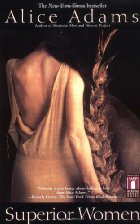
Book Review: Superior Women by Alice Adams (Bottom of TBR Pile Challenge)
 Summary:
When Californian Megan Greene runs has a steamy affair in the summer of 1943 with a Harvard student visiting the west coast for the summer, she decides to follow him back to the east coast and attend Radcliffe. There she meets four other women, three of whom it might be more accurate to call frenemies than friends. Their lives and destinies repeatedly intertwine throughout the tumultuous changes of mid-20th century America.
Review:
I kept my eye out for this book when it was named as a read-a-like to my 2011 5 star read The Group
The book covers 1940s to 1980s America, yet as the decades move on, less and less is said. The 1940s are expressed clearly with exquisite detail, and I was excited to see what would happen with the 1950s and the 1960s. But the 1950s slowed down, the 1960s were barely touched upon, the 1970s were jumped over almost entirely, and the 1980s were the final chapter of the book. The pacing was all off. I wanted to know these women in as much detail in the latter decades as in the first. Instead of feeling like I knew them more and more intimately, they increasingly became strangers to me.
One thing that I think really works against the book is it is neither an ensemble nor a one character piece. Most of the book is told about Megan, but not all of it. We get snippets of the other characters, meaning perspectives that Megan is not privy to, but not enough to ever truly know them. Since most of the book is about Megan, these bits away from her feel sort of like the story is robbing us of more time with the main character we are interested in. Similarly, reading the blurb and the title, I thought this was going to be an ensemble book, which is not what we get either. I wanted to know much more about two of the characters in particular, Peg, who comes out as a lesbian at some point in the 1960s, and Cathy, who has an affair with a priest. These two stories are wonderfully intriguing, particularly Peg’s since her love of her life is met on a mission to register black voters in the American south, and her love interest is a Latina woman. There is so much meat to that storyline, and yet it is barely touched upon while we instead listen to Megan hem and haw about her job, and Lavinia try to figure out how best to cheat on her husband. The balance of telling this ensemble piece was just entirely off.
Similarly, while big issues and events of mid-20th century America were briefly touched upon, the book never really presented a truly personal look at any of them. For instance, Megan has a friend who is bashed in a drive-by gay bashing but we never get to see Megan emotionally deal with this stark reality. She hears about it, calls him, and moves on. Similarly, as previously mentioned, Peg comes out as a lesbian, and we see a snippet of her depression caused by living the lie of being straight, but we never get to understand the emotions or impetus behind her bravely coming out and living in a visible, inter-racial lesbian relationship in the south. It is disappointing because we get a taste of really encountering these historical issues, but we never actually get to.
In spite of all these problems, I still enjoyed reading the book well enough. The plot, while frustrating, does progress forward in an interesting fashion. The characters, although frequently two-dimensional, are bright and vivid. I came away with the perspective I always have with historical fiction about women’s history. That I am grateful I was born in a different time, because we women have much more opportunities available to us now. So I appreciated my visit to that time period but it was a bit disappointing.
Overall, if you are a huge fan of historical fiction about women’s issues, this is an interesting book to add to your repertoire. It is a good comparison to others that did it differently or better, and it is still fun to visit those time periods. If this type of literature is not generally your cup of tea, though, I would suggest you instead read stronger competitors in that genre, such as The Group
3.5 out of 5 stars

Book Review: Half of a Yellow Sun by Chimamanda Ngozi Adichie (Audiobook narrated by Robin Miles)
 Summary:
The Nigerian-Biafran War (or the Nigerian Civil War, as it is also known) is seen through the intertwining lives of four different people. The daughter of a wealthy Igbo couple, Kainene, with a fierce business sense. Her fraternal twin sister, who is also the beautiful one, Olanna, an academic in love with a revolutionary-minded man named Odenigbo. Kainene’s boyfriend then fiancee, the white English writer Richard. And Ugwu. Olanna’s houseboy who came to them from a rural village. Their lives are irreparably impacted, and in some cases destroyed, by the war for a cause they all believe in, but that the world largely ignores.
Review:
I originally intended this Nigerian book to be my final read for the Africa Reading Challenge 2012, but even though I started it in November, the audiobook took over three months to get through, so it ultimately missed counting for the challenge. I thought it was much longer than my usual audiobook fare, but a quick check of the listen length shows that it is 18 hours and 56 minutes long, which is only about 7 hours longer than my norm. So why did it take me so long to finish? Well, I just didn’t enjoy it that much.
I believe I was expecting something else from Adichie, since I had previously read her book Purple Hibiscus
As far as the plot goes, it was interesting but it was a bit confusing. Part of my confusion could have been because I listened to it, but from my understanding when I was listening, first there was an affair, then we jumped back to before the affair, then we jumped forward, then we jumped back to a different affair that came before the first affair. It was profoundly confusing. Particularly with a child referred to only as Baby (with no explanation about this for quite some time) who also randomly shows up and disappears. There was already so much going on with four different main characters and the war that this non-linear plot felt unnecessarily extraneous and confusing. However, it is possible that this plot is more clear when reading the print version, as opposed to the audio version.
The language of the writing itself is pretty, and I found periodic astute insights that I’ve come to expect and enjoy from Adichie. For instance,
Why do I love him? I don’t think love has a reason. I think love comes first, and the reasons come later.
Passages like these are what helped me enjoy the book to the extent that I did.
There is one plot point in the book that truly distressed me, so I feel I must discuss it. It is a spoiler though, so consider yourself spoiler warned for this paragraph. Throughout the book, the narration style is third person limited, which means that it is told in third person, but the reader knows what is going on in the main character’s head and is generally limited to that character’s perspective. The point of view is switched around among the four main characters, one of whom is Ugwu, the houseboy. We thus get to know him as the houseboy, he gradually grows up, and then later he is conscripted into the Biafran army. At this point, he participates in a gang rape on a waitress in a bar. I read a lot of gritty things. I routinely read books offering up the point of view of sociopaths or serial killers. I’m not averse to seeing the world through a bad person’s eyes, or through the eyes of a person who does bad things. But it has to be handled in the appropriate manner. I felt that there was entirely too much empathy toward Ugwu in the case of the gang rape. Adichie sets it up so that he walks in on his fellow soldiers gang raping this woman, and he says he doesn’t want to participate, they question his manhood, he admits in his head that he is turned on by the view of her pinned to the ground crying with her legs held apart having just been raped by a different soldier, and he participates. I think what disturbed me the most about this passage was how the narration makes it seem so ordinary. Like it’s something any man would do in that situation. Like it’s only natural he’d be turned on and get a hard-on from seeing a woman forcibly pinned to the ground so she can be gang raped by a bunch of men including himself. I think it’s awful to treat men like that. To act like they clearly are incapable of standing up for what’s right or that they’ll get a hard-on any time they see an orifice they can physically bang. Men are human beings and are entirely capable of thinking with more than their penis. Now, obviously there are men who rape, but there has got to be more going on there then I have a hard on and there’s a woman who I can stick it into. To treat rape that simply is a disservice to men and women’s humanity alike. Part of the reason why this reads this way is that we don’t know Ugwu well but we know him well enough to think that he’s an at least moderately decent young man. We don’t see a gradual downfall. No one holds a gun to his head or even implicitly threatens him with death if he doesn’t participate. It makes it seem like war makes men, even moderately good men, rape, as opposed to war simply providing more opportunities for rapists to rape. That is a perspective that I do not endorse, that I do not enjoy having sprung upon me in my literature, and that I found triggering as well. I was shocked to see it in a book by Adichie. Shocked and disappointed. It left me wishing I could scrub my brain of the book. Wishing for those hours of my life that I spent listening to it back.
Now, let me take a moment to speak about the narrator, Robin Miles. Miles is an astounding narrator. Her audiobook narration is truly voice acting. She is capable of a broad spectrum of accents, including Nigerian, British, and American, and slips in and out of them seamlessly. She easily creates a different voice for many different characters. I absolutely adored listening to her, in spite of not enjoying the book itself. Her performance of this book is easily a 5 star one.
Overall, though, the high quality narration simply could not make up for a story that failed to hit the mark with me on so many levels. It covers an important time period in Nigeria, and the highly important human rights issue of the genocide of the Igbo, but the style in which it does simply misses the mark for me. If this was all, I would still recommend the book to others who are more fond of a more impersonal, sweeping narration style. However, I also found the treatment of rape in the book to be simultaneously offensive and triggering. For this reason, I cannot recommend this book, although I do recommend the audiobook narrator, Robin Miles.
2 out of 5 stars
Source: Audible

Book Review: Midnight in Peking: How the Murder of a Young Englishwoman Haunted the Last Days of Old China by Paul French
 Summary:
In 1937 the entire world is on the brink of war. In Peking, China, the Japanese invaders are encroaching. In the midst of this chaos the adopted daughter of British consulman is brutally murdered, her body found in the shadow of the Fox Tower, universally viewed with suspicion by the Pekingers as haunted by spirits. Due to the special circumstances, the murder investigation requires the presence of both a Chinese and a British investigator. They must race to find Pamela’s murderer before the Japanese engulf the city.
Review:
This true crime novel takes a bit to get things set up, but once they are, oh my how it sucks you in.
My fellow librarians will appreciate the backstory of how this true tale was discovered by French. In the Afterword he states that he was digging around in some archives and stumbled upon a box of evidence that Pamela’s father sent off to the government, which was never really looked at and just put away in storage and then into archives. It was through libraries that he even discovered this fascinating, intersectional true crime. I think that’s encouraging to any librarian who has ever spent hours making a finding aid for archives.
So just what makes this true crime more fascinating than others? Pamela was the adopted daughter of Werner, and her adoptive mother died at a young age. She had been away at boarding school in Tientsin and was home for the holidays. Because she was born in China but was also adopted by British consulman, there is an interesting assimilation into Chinese culture going on in her life that we don’t often see in Western novels. Peking itself featured the legations and white districts for multiple different white Western countries. This means that because Pamela was technically a British citizen murdered on Chinese ground both the Chinese and the British police force had to be involved and work together in the investigation. Officer Han and DCI Dennis certainly make for a unique investigation team. In addition, Pamela’s body was discovered in the shadow of the Fox Tower, and this led to speculation about fox spirits, which in Chinese tradition show up as wily women. Of course quickly the seedy underbelly of Peking is implicated, featuring a multicultural bunch of addicts, dope dealers, brothels, and more, and naturally some of the classy elite start to be implicated into that underworld as well. Add in the fact that the Japanese invasion was encroaching and toss in the first rumblings of Communism, and it makes for a story that is impossible to not find fascinating.
French unfurls the story well. He quotes only when it is fairly certain what was said, but summarizes scenes well. A clear picture of both Pamela and Peking are rendered fairly early in the novel. I also appreciate that he spent time at the end talking about what happened to all of the key players and discussing how all-encompassing the Japanese invasion were. I think what he handled best though was presenting people as individuals and not representative of their race or nation or even class. In a true crime as multicultural as this one, that is important. It’s also nice that in a story that could have easily turned into victim blaming, which happens so often when the victim is a young woman, he eloquently avoids any hint of that:
Pamela wasn’t perfect; she was making the same mistakes many girls do when experimenting with their independence, their newfound power on men. Her tragedy was to encounter the wrong men, at just the wrong moment. (location 2834)
I did, however, feel that the beginning was a bit lacking. It took a bit to truly get into the story. A faster pace or a more clear this is where we are going set-up would have been nice. At first it felt like the rather dull story of some poor little imperialist rich girl. But that’s not the story at all. The story is that of an adopted girl in a country where she just so happens to be the color of worldwide colonizers, but it is instead the story of a diverse group of people horrified by the brutal murder of a young woman by a diverse group of sick, twisted people. It would be nice if that was more clear from the beginning.
Overall, this is a well-told, historic true crime novel that manages to avoid victim blaming and also embrace multiculturalism. It will be of particular interest to anyone with a fascination for Chinese or WWII history.
4 out of 5 stars
Source: Netgalley

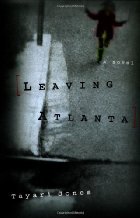
Book Review: Leaving Atlanta by Tayari Jones (Audiobook narrated by ensemble)
 Summary:
It’s 1979 in Atlanta, Georgia, and someone is kidnapping–and killing–black children. How this terror haunts one fifth-grade classroom is told through three different perspectives. Tasha, whose parents are “living apart” for a while. A painfully intelligent boy named Rodney who does not actually consider himself lucky to still have his father at home. And Octavia, better known as Sweet-Pea by her family and Watusi by her classmates. She’s the darkest-skinned child in the classroom, and is ridiculed by them all, but she has a spirit that outshines everyone.
Review:
The Atlanta child murders of 1979 to 1980 were a real thing that overshadowed the author’s own childhood. Jones clearly remembers what it was to be in fifth grade and relates those emotions with raw detail, but she also brings along an educated adult’s understanding of race and race relations in the American south. This all combines to create a powerful story that sweeps the reader away to another place and time while simultaneously leaving them with greater understanding.
The book is divided into three sections. Each child’s tale is told through a different narrative method. Tasha’s uses third person. Rodney’s second person, where the reader is told “you are” in an attempt to put the reader closer into Rodney’s shoes. Finally, Octavia’s is told in first person. Tasha’s story covers the first part of the school year, Rodney’s the second, and Octavia’s goes through January. It’s an interesting narrative choice that ultimately works. The reader sees three different reactions to the child murders and race relations at three different points in the crisis, in addition to the children’s observations of other people’s reactions. It provides a multi-layered perspective that clearly demonstrates the complexity of all points the story touches upon: crime, race relations, broken families, class issues, and even just the process of growing up.
I appreciate the narrative complexity that Jones chose, but I do feel the story told suffers a bit. I identified so much more strongly with Octavia than either of the other two children because her voice and personality were able to shine through so much more clearly. Of course, it’s possible that this is the whole point. In fact, it does feel a bit like the whole book is just building up to Octavia’s story. But although I had a similar level of attachment to Tasha, I simply didn’t feel that way for Rodney. Part of that could have been the narrator chosen for Rodney. His voice was rather flat and dull without the nuance of the other two narrators. But I don’t think that the second person narrative tense helped much. Thankfully, Rodney’s portion of the book was quick, and the other two sections more than made up for it.
Speaking of the other two narrators, I feel bad that I was unable to find any of the ensemble’s names. The women who narrated Tasha and Octavia did a phenomenal job. They captured both the age and the dialect of the children without once slipping into a tone that could be perceived of as false or mocking. They truly embodied the little girls, and I felt I got something extra from listening to the audiobook, which is precisely how it should feel. It’s unfortunate that the narrator for Rodney failed to do the same thing, providing a rather lackluster, mediocre performance.
The social justice commentary enmeshed in the book is brilliant. One cannot possibly read this book and not see how racism and entrenched classism negatively impacts children and families. Even at ten, these children get it that the media and police care less about them getting kidnapped that they would if they were white. Even at ten the children have already learned racism so well that they ostracize the darkest child in their class. (This book made me very interested in reading more about racism within the black community). Most powerful to me, though, particularly after reading the books in The Real Help Reading Project, is how subtly Jones demonstrates the difficult choices parents and other adults must make to provide what is best for their children and how that is exacerbated by inequality. I’d be more clear, but that would give away the ending of the book. Suffice to say it’s a powerful message presented in a subtle manner through a little girl with whom it is impossible not to establish a connection.
Overall this is an engaging, thought-provoking piece of historical fiction. It brings the reader directly into a classroom of fifth graders to see how not just a kidnapping and killing spree but also enmeshed racism and sexism impact the present and future of children. Recommended to fans of historical and literary fiction.
4 out of 5 stars
Source: Audible

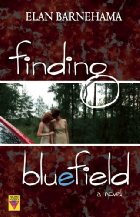
Book Review: Finding Bluefield by Elan Barnehama
 Summary:
It’s the 1960s, and Barbara thinks she has enough on her hands handling medical residency as a woman. She doesn’t need the complications of dating women on top of that…or the risk to her profession of rumors that she’s a lesbian. But when she meets local cook, Nicky, all these cautions go out the window. Soon they’re a couple, and Nicky is determined to have a baby for them to raise together.
Review:
I read this book because my previous read from this indie publisher (Bold Strokes Books) was such a unique, well-written piece of LGBTQIA+ lit, and I was excited to get more. Unfortunately, the quality of this book does not come close to that of Lemon Reef
The plot is moderately common in lesbian fiction. Girl meets girl. Couple wants a baby. Girl gets pregnant. Can they raise the baby and keep the relationship going. With the added backdrop of prejudice and changing rights from the 1960s through the 1980s, it had the potential to be more unique and add an interesting twist, particularly since Nicky is supposed to be involved in the Civil Rights movement. Unfortunately, none of this really pans out. There are tantalizing teases of something more or something unique such as when Nicky gives a ride to a black man trying to escape from mob “justice” in the small town or when Barbara cheats on Nicky in New York City, but none of these ideas are brought to fruition. In fact, the whole book feels more like a moderately fleshed-out plot outline for a future book. Like, here are the key points, and I’ll flesh them out later. Only this is the finished book. There will be no more fleshing out of the plot. It’s frustrating to read because just when you think something is about to happen, the idea gets dropped and you skip ahead a few years.
Similarly, the characters are never fully realized. They are extremely two-dimensional, even the two main characters. I actually found myself mixing Barbara and Nicky up repeatedly, which is intensely problematic. They are two separate people, and their relationship is the focus of the novel, yet even after the entire book they are mostly unclear to me, except that Nicky has green eyes. They simply don’t feel like real people to the reader at all, which is a problem in general but even more so when the book is trying to both be character-driven and address rights issues.
A book needs at least a compelling plot or engaging characters to be readable and both to be great. This book has neither. I can see potential in the plot and sentence structures for good writing, but the author needs to work on both expanding into greater plot detail as well as on improving characterization.
2 out of 5 stars
Source: Netgalley

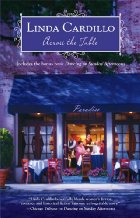
Book Review: Across the Table / Dancing on Sunday Afternoons by Linda Cardillo (Bottom of TBR Pile Challenge)
 Summary:
This book actually consists of two different books packaged together into one. They are both standalones, not in a series together.
Across the Table
Follow three generations of an Italian-American Boston family, starting with Rose, who marries a navy seaman right before WWII breaks out. The family ultimately buys a restaurant on Salem Street in the historic North End, and food and the family business both help keep the family together through trials and heart-aches.
Dancing on Sunday Afternoons
Cara goes to care for her grandmother, Giulia, who has fallen and broken her hip on a visit back to the old country of Italy. While visiting her, Giulia reveals to her the story of her first love who died when Cara’s father was just a baby.
Review:
This book made it onto my tbr pile because I found it on trash day on top of a neighbor’s recycling pile. It was one of those cases where obviously someone had given up actually packing for their move and was just chucking it all. The book was in pristine condition, so I yoinked it away (along with two others). Shocker: when I opened this to read it, I discovered that it’s signed by the author. I also didn’t realize until I started reading it that there’s actually two totally separate books in it. The cover only says the first title and mentions a bonus book in rather small type. So this one was full of surprises!
Across the Table
This story is based on the author’s family history, and you can honestly tell. It’s full of so much heart and reality. It’s not your typical romance or women’s fiction. The family felt entirely real, and you could understand why they made the choices they did, even if you wouldn’t have done the same thing. I found Rose by far to be the most interesting, but that’s not really a surprise. I’ve always had a thing for the 1940s, and her life in that decade was simultaneously unique and typical. She spent a couple of years before the war on a tropical island (whose name I cannot remember, I apologize) with her husband. It all felt very South Pacific, but she states that spending this time there gave her and her husband a solid base for the rest of their lives together. They had to really depend on each other. She also said that living there made her question the racism she was raised in and ultimately stop her racist thoughts and actions. They were never extreme, just that avoidance of people visibly different from you that you sometimes see. I also loved that the story is based to solidly in Boston. Cardillo obviously grew up here or visited family a lot here, since she understands simple things like how it takes an hour at least to get from the North End to Cambridge, or how different one side of the river is from the other. The family business and food aspects were also perfectly handled. Just enough to set the atmosphere but not so heavy-handed you wonder if the author forgot about the relationships at the heart of the story. There’s also a nice touch of an uncle/brother/son who is gay, and his Catholic family’s reaction to this is a positive, refreshing change. Perhaps even more so since the reader knows the story is based on a real family. Overall, I absolutely loved this book. It had everything I like in both historic and women’s fiction.
5 out of 5 stars
Dancing on Sunday Afternoons
In contrast, this book was far more tedious and full of cliches and….well basically everything that I don’t like about historic and women’s fiction. Giulia’s immigration story and her family are not particularly easy to empathize with. Her family is incredibly wealthy in Italy, and everyone worries more about appearances than about actually doing the right thing. Even Giulia’s rebellion of marrying the man she wants to marry isn’t all that admirable. She only does it ultimately with the family’s blessing, and her reaction when her husband dies is appalling. (This is not a spoiler. You learn in the first chapter that Giulia’s first husband died). I know that old families really could be like this, but I guess it made less sense being told this way since Giulia was telling the story to her modern granddaughter. I didn’t see any wisdom of age coming through in the telling. I know when my older family members tell me something from their youth, they also discuss what they learned from it. They try to impart some wisdom on me so I don’t make similar mistakes or so that I’m willing to take similar risks. Giulia’s story just doesn’t feel like an elderly person relating to a young family member. I suppose if you really love historic, clean romance novels, you might enjoy this one more than I did. Personally I need this genre to have something extra to really grab me.
3 out of 5 stars
Overall, then, I must average the two books out. I loved the first, but felt that I was not the target audience for the second. It is worth noting that the second was actually Cardillo’s first novel, so her second book was a big improvement. I’ll be keeping my eye on this author, particularly for more work set in Boston. As far as recommendations go, I recommend these books to fans of historic fiction with a focus on romance and women’s personal lives.
4 out of 5 stars
Source: recycling bin

Book Review: The Outside Boy by Jeanine Cummins (Bottom of TBR Pile Challenge)
 Summary:
Christy is a Traveller, what Irish gypsies call themselves, in the 1950s. He’s eleven, and his family is about to stay in one town for a whole 40 days and 40 nights for Lent so he and his cousin, Martin, can get ready for confirmation. Christy has always thought his mam died giving birth to him, but when his grandda dies, he finds a newspaper clipping that shows his mam holding him when he’s months old. Thus begins a quest to find out who he really is.
Review:
The particular copy I read I won on a book blog somewhere (I’m afraid I didn’t write down the name), but I also received an ARC during one of the holiday swaps one year. It’s interesting to me, then, that this book wound up on my tbr pile both because I was interested and because someone else thought I would enjoy it. And of course I did.
It is honestly, immediately abundantly clear that Christy’s mother isn’t a Pavee (a Traveller). I was thus skeptical that the story would hold my interest, since predictable ones don’t tend to. I am pleased to say that I was wrong about this on both counts. Although it’s true that Christy’s mother isn’t a Traveller, everything else about her and Christy’s history is actually quite surprising and moving. I’m glad I stuck with it.
The book examines many different issues, some universal and others specific to Irish history. There of course is the issue of identity. Who we are and what makes us that. Is it nature or nurture? The often tough relationship between fathers and sons during the son’s adolescence is also wonderfully presented. Of course a book about gypsies also addresses prejudice, stereotyping, and the norm. Cummins doesn’t sugar coat things. She shows the positive and negative aspects of Traveller culture, which is as it should be. No culture is all perfect or all bad. What the book does a great job of doing is showing how kids learn prejudice and how multiculturalism can enrich everyone’s lives. Some people are one way and some another, and neither is necessarily bad. The book also touches on the animosity between Protestants and Catholics in Ireland, as well as the very real issue of Irish society stealing babies from single mothers in that time period. I know that sounds like a lot, and honestly I’m surprised now that it’s all listed out at how much was touched upon. Cummins strikes the perfect balance of touching on real issues without ever seeming pushy or forced.
Although the storyline and characters are good, it didn’t 100% draw me in. I think it moves a bit too slowly for me in the first half or so of the book. I also, honestly, struggled to like Christy. I eventually came to understand his viewpoint and choices, but I still find him kind of annoying. His father, on the other hand, is incredibly interesting and wonderful, and I kind of wish we had a book about him instead of about Christy. But, some readers enjoy more slowly paced books and others might relate better to Christy than I did. It just personally is what made it a book I liked but didn’t love.
Overall, this book is an interesting entry in historic Irish fiction. It looks at Ireland in the 1950s through the eyes of a small band of gypsies, which is certainly a unique viewpoint. The writing is fluid, if a bit slow-moving, and the plot is not as predictable as it seems at first. Recommended to fans of historic fiction and works set in Ireland.
4 out of 5 stars
Length: 360 pages – average but on the longer side
Source: Won on a book blog (If it was yours, let me know, and I’ll link to you!)
Buy It
If you found this review helpful, please consider tipping me on ko-fi, checking out my digital items available in my ko-fi shop, buying one of my publications, or using one of my referral/coupon codes. Thank you for your support!
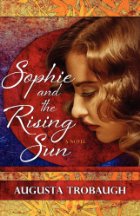
Book Review: Sophie and the Rising Sun by Augusta Trobaugh
 Summary:
Sophie was raised in the rural American south by her elderly widowed mother and two crazy aunts. She was always reserved and a real lady, especially after having lost the first boy she liked in the Great War. Now the year is 1941, and her neighbor Miss Anne has taken on a Japanese-American gardener. He’s not white, but he’s not quite black either, and he and Sophie have painting in common.
Review:
I was excited to see an Asian male/white female (amwf, as it’s known online) story pop up on Netgalley. They can be hard to find, and I thought the dual extra setting of the racist rural south and WWII would make it more interesting. I still don’t doubt that these positive things are what the author was going for, but it didn’t quite come through for me in the story.
Trobaugh picked an interesting writing structure that I found worked well for the story. It’s a mix of an elderly Miss Anne relating her part of the story of what she saw occur between Sophie and Mr. Oto and an omniscient third person narration. This lets the reader see both what the town saw as well as some private moments between Sophie and Mr. Oto that we would not have otherwise seen. It also helped keep the pace flowing forward.
There were also some truly beautiful sequences in the book, such as this sentence:
Too hot. Feel like Satan sucking the breath right out of this old world. (location 1631)
I am disappointed then that I felt the story itself didn’t live up to the writing. Trobaugh falls prey to some stereotyping tropes, and I don’t believe she realized she did. I genuinely believe she meant the story to be progressive, but the two minority characters in the story are two-dimensional and essentially act out the roles assigned to them in American pop culture.
In spite of falling for a white woman, everything else about Mr. Oto is stereotype 101 for Asian-American men. He is: quiet, reserved, effeminate, painfully polite, and bows all the time. The bowing really bothered me, because Mr. Oto was born in America to first generation immigrant parents. I don’t know any first generation Americans who hold on to societal norms from their parents’ country around anyone but their family. The bowing is used as a plot device to show how Mr. Oto is “different” and makes some of the rural whites uncomfortable. I kept hoping that maybe Mr. Oto was putting on an act for the white people to keep himself safe and we would see that he was actually a strong man around Sophie in private, but no. He is precisely the emasculating stereotype of an Asian-American male that we first see.
The other minority character is “Big Sally.” She is, surprise surprise, domestic help. Anyone who was here for The Real Help Reading Project will be aware of all the stereotypes surrounding black women domestic workers. The main one being of course that they’re happy to be the help and will gladly help out white women who are kind to them with their problems. Kind of the all-knowing wise woman who just so happens to scrub your floors. I was truly saddened to see Sally show up and play this role to a T. She overcleans around the white women she doesn’t like to make them feel dirty, but she has no problem stepping right in and fixing everything up for Sophie. There is a scene that made me cringe where she sits down and has a heart-to-heart with Sophie and basically sorts out all of her life problems. I know that Trobaugh thought she was writing a positive image of a black woman, but the character is pure stereotype. She exists to help Sophie and Miss Anne. She ends up being buddy-buddy with Miss Anne and living with her. In the 1940s and 1950s rural south. Yeah. Right. I’m not saying there can’t be a black woman character who is domestic help. That was indeed reality for that historical time period. But why couldn’t there be a scene where Sally and Mr. Oto talk about being othered in the town? Where they talk about the dangers to Mr. Oto after Pearl Harbor and how they are similar to some of what Sally has faced as a black woman? That would have been a truly progressive plot element, and I’m sorry the opportunity wasn’t taken.
Overall then, Trobaugh can indeed write. The book was highly readable and contains some eloquent passages. In spite of attempting a progressive message, though, the book falls to the easier method of plugging in a couple of stereotyped, two-dimensional characters. I hope in future works Trobaugh will put more work into developing truly three-dimensional minority characters. This will strengthen her work and make it more than just a piece of chick lit repeating the same old tropes.
3 out of 5 stars
Source: Netgalley

 Support my work with a tip or browse my shop for curated book club guides, how to guides, cross-stitch patterns, and more!


This work by Amanda Nevius is licensed under a Creative Commons Attribution-Noncommercial-No Derivative Works 3.0 United States License.
 Opinions of a Wolf