
Archive
Book Review: God Bless You, Mr. Rosewater by Kurt Vonnegut

Summary:
A satire on free enterprise, money, and capitalism in America told by examining the fictional Rosewaters–an uber-wealthy American family whose ancestor acquired his wealth by essentially profiteering during the Civil War. The current Rosewater fights in WWII and returns with two crazy ideas. First, that everyone deserves to be equally happy. Second, that people who inherited wealth did nothing to deserve it. He responds to this conundrum of conscience by returning to his ancestor’s hometown and using the Rosewater Foundation to help the “useless poor.” In the meantime, a lawyer by the name of Mushari decides to attempt to prove that Mr. Rosewater is insane, and the foundation money should be handed off to his cousin, currently a suicidal, middle-class insurance man.
Review:
How to review Vonnegut? Upheld as the epitome of 20th century American writing. He is certainly prolific, and some of his books absolutely deserve the high praise (Slaughterhouse-Five
I think part of the problem stems from the fact that the first third of the book is focused on Eliot Rosewater, the next on his cousin, and the last on Eliot again. Just as I was getting into Eliot’s story, it switched to his cousin. Then when I was getting into his cousin’s story, it switched back to Eliot. To top it all off, the ending left me with little to no resolution on either one. Maybe Vonnegut’s point is that capitalism either makes you crazy or depressed with no way out? I’m not sure.
That’s not to say that this wasn’t a fun read, though. Vonnegut crafts the mid-western town Eliot lives in and the Rhodes Island seacoast town his cousin lives in with delicious detail. What is interesting about both are of course the people in the towns surrounding the main characters, and not the main characters themselves. In particular the Rhodes Island town is full of surprisingly well-rounded secondary characters from the cousin’s wife who’s experimenting in a lesbian relationship, to the local fisherman and his sons, to the local restaurant owner who is intensely fabulous (yes, the gay kind of fabulous. There’s quite a bit of LGBTQIA+ in this book). I was so interested in this town. This was a town that actually demonstrated the problems innate in some people having too much money while others don’t have enough. This was so much more interesting than Rosewater’s sojourn in Indiana. But then! Just when I was really getting into it and thinking this book might approach Slaughterhouse-Five
Much more interesting than the heavy-handed money message was the much more subtle one on the impact of war. Mr. Rosewater’s sanity issues go back to WWII. I won’t tell you what happened, because the reveal is quite powerful. Suffice to say, Vonnegut clearly understood the impact WWII had on an entire generation and clearly thought about the impact of war on humanity in general. In this way, this book is quite like Slaughterhouse-Five
Overall, if you’re a Vonnegut enthusiast, enjoy reading for setting and character studies, and don’t mind a message that’s a bit heavy-handed, you will enjoy this book. Folks just looking for a feel of what makes Vonnegut held in such high esteem should stick to Slaughterhouse-Five
If you found this review helpful, please consider tipping me on ko-fi, checking out my digital items available in my ko-fi shop, buying one of my publications, or using one of my referral/coupon codes. Thank you for your support!
3.5 out of 5
Length: 190 pages – average but on the shorter side
Source: PaperBackSwap
Buy It (Amazon or Bookshop.org)
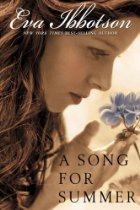
Book Review: A Song for Summer by Eva Ibbotson
 Summary:
Ellen’s staunchly feminist, progressive family found themselves flabbergasted by their daughter’s preference for honing her homemaking skills. However, with time they came around, and they are pleased to see her leave for a house matron position at a boarding school in Austria. Her childhood has prepared her for dealing with the eclectic, progressive teachers, but the little school has more problems to face than unusual teaching styles and the lonesomeness of the children of wealthy world travelers. Trouble is brewing in Europe in the shape of the Nazi movement in Germany. Of course, Ellen may have found an ally in the form of Marek, the school’s groundskeeper.
Review:
I have been fascinated with WWII ever since I was a very little girl. Also, I have no issue with feminists cooking meals for people or keeping house. Feminism is about men and women being able to do what makes them happy, not just what they’re “supposed” to do. I therefore expected these two elements to come together to make for an intriguing read. Unfortunately, I was wrong.
The main problem is Ellen. I simply don’t like her. I can’t root for her. I can’t enjoy any scene she’s in. In fact, I wanted multiple times to shove her into the lake the school is on. Now, I don’t have to like a main character to enjoy a book, but I do need at least one other character in the book to dislike her, so I’m not going around thinking something is wrong with me. However, everyone in the entire book simply loves Ellen. They frequently call her “angelic,” and everyone essentially worships the ground she walks on. Every man of anywhere near a suitable age for her falls madly in love with her. I can give that a pass in paranormal romance, as there’s a lot of supernatural stuff going on, but this is supposed to be a normal girl. Not every man is going to fall in love with her. It’s just preposterous! That doesn’t happen! Ellen is, simply put, a dull, boring woman with no true backbone. If this was a Victorian novel, she’d be fainting every few pages.
Then there’s Marek, her love interest, who I also completely loathed. Everything he does, even if it’s helping others, is for purely selfish reasons. He also has a wicked temper and frequently dangles people out of windows. Why Ellen becomes so obsessed with him is beyond me.
Ibbotson also obviously scorns many ideals that I myself hold dear. Any character who is a vegetarian or against capitalism or in favor of nudity is displayed as silly, childish, or selfish. There is a section in which the children are being taught by a vegetarian director and some of them switch to being vegetarian as well, and of course Ellen finds this simply atrocious and worries about the children. Naturally, the director is later villainized. Clearly anyone who eats “nut cutlets” for dinner simply cannot be normal. I expect an author’s ideals to show up in a book, but the book’s blurb certainly gave no indication that a book taking place largely at a progressive boarding school would spend a large amount of its time mocking those same values.
In spite of all that I can’t say that this is a badly written book. Ibbotson is capable of writing well, I just don’t enjoy her content at all. After finishing it, I realized it reminded me of something. It reads like a Jane Austen novel, and I absolutely loathe those. So, if you enjoy Jane Austen and WWII era Europe settings, you’ll enjoy this book. Everyone else should steer clear.
2.5 out of 5 stars
Source: PaperBackSwap

Book Review: Breakfast at Tiffany’s: A Short Novel and Three Stories by Truman Capote
 Summary:
Breakfast at Tiffany’s
A nameless narrator recalls the eccentric 19 year old neighbor he once had in New York City–Holiday Golightly. He reflects on their friendship of just over one year, and wonders where she is now.
“House of Flowers”
Ottilie works as a prostitute in Port Au Prince. She lives in a beautiful house with fine things, but one day at a cock fight, she falls in love and leaves the city for the country with her new husband. Will she regret her decision?
“A Diamond Guitar”
A man in prison for 99 years plus 1 day in a tropical location is well-respected by the other prisoners for his ability to read. One day, a new inmate arrives serving a 2 year sentence. He is young, beautiful, and can play the guitar wonderfully.
“A Christmas Memory”
A man recalls his early Christmases spent with an older relative who had never wandered far from home, but had a love of life the other adults in his family mistook for a bad influence.
Review:
I read this book due to watching Breakfast at Tiffany’s (review) and really enjoying it. Various friends told me they were curious to know my reaction to the different ending in the book, so I decided to read it.
Capote’s strength as a writer is in setting the scene. I could vividly picture the scenes in every single story, despite their vastly different settings. This is what made the stories readable in spite of their plotlines being not particularly my cup of tea. I felt that Capote just approached the edge of something phenomenal, biting, and truthful, but then stopped. Stories that could have been touching and powerful were therefore decidedly average.
What I loved about the movie version of Breakfast at Tiffany’s is that it took a loving look at someone with mental issues and showed how she could get better. There is none of that hope in the short novel. Holly comes off entirely as someone out to use other people, and there is an unforgivable scene with her cat. I came away hating Holly, whereas I felt I was made to understand a possibly unlikable person in the film. This made the short novel quite disappointing and is exemplary of everything I disliked in this collection of Capote’s works.
That said, his writing style is highly readable, and I enjoyed the message in “A Christmas Memory” very much, even if the title is entirely uncreative.
My advice to any who love the film is to skip this if they wish their opinion of the characters to remain untarnished. Those who enjoy mid 20th century American short fiction will enjoy this collection, however.
3 out of 5 stars
Source: PaperBackSwap

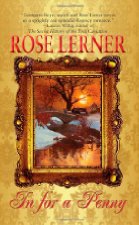
Book Review: In For a Penny by Rose Lerner
 Summary:
Nev Bedlow’s partying days are over. His father got his brains blown out in a duel, and now Nev must deal with the family’s massive debt, as well as tend to their much too neglected country estate. He must marry new money and pretty, witty Penelope seems just the ticket.
Penelope wasn’t after a title. In fact, she was dutifully waiting, hoping her parents would eventually approve an engagement with her friend Edward, but when Lord Bedlow shows up asking for her hand in marriage, she finds herself saying yes.
The new couple not only must get to know each other and see if love can form, but also deal with the threat of a riot of the tenants, Nev’s impatient younger sister Louisa, and threatening neighbors.
Review:
Regency romance isn’t normally my thing, but I read a review on a book blog (I can’t remember which) that intrigued me. It was well worth it. In For a Penny doesn’t look at the past through rose-colored lenses. It faces the facts of life back then for men as well as women of all stations. However, unlike books of that time period that ignored the occurrence of things like sex, this book includes them. Put those two together, and you get a really pleasant read.
The characters are highly relatable and are not stock characters. Penelope is virginal and innocent due to her station, not because that’s just how women were. An actress is provided as a nice contrast, showing that with the sexual freedom of lower classes came great risk. Nev sports his own kind of innocence, a complete obliviousness to the pain and suffering in the world that then comes to meet him head-first. Instead of a dashing lord, we see a young man whose father failed to properly prepare him for adulthood. It puts exactly the type of human emotion into the story that is necessary for the romance to ring true.
That said, I didn’t completely love it. There were a few scenes that read a bit clunky. Beyond that, I’m not sure why I didn’t love it. I suspect that it’s just that it’s not my favorite genre, and thus even though it is done well, it will never be an intensely loved book in my mind.
However, I was pleasantly surprised by the real emotions and situations in this regency romance and hope to come across more like it. If you enjoy romance or historical fiction, I encourage you to give this book a chance. I bet you will enjoy it.
4 out of 5 stars
Source: PaperBackSwap

Book Review: Revolution Is Not a Dinner Party by Ying Chang Compestine
 Summary:
Ling lives in China with her surgeon father and traditional Chinese medicine doctor mother. She enjoys her English lessons with her father and hates that her mother makes her eat things like seaweed and tofu. She hears talk about a revolution, and it comes home when her father’s study is converted into a one-room apartment for Comrade Li. Everything in her apartment complex starts to get scary with speakers blaring Mao’s teachings all day and more and more rules, but when her upstairs neighbor, Dr. Wong, disappears, Ling really starts to realize that this revolution is no dinner party.
Review:
I read some really amazing books set in China in undergrad. Balzac and the Little Chinese Seamstress springs to mind, so I came in to this book expecting to love it. I found myself struggling at first, however. I believe it’s the narration style. It is a child’s voice, but it is told in the first person past tense. That would make sense if it was an adult or even an older child looking back, but the narration doesn’t know any more than the child in the moment does. Again, that would make sense if it was the present tense, but it isn’t. I found it all very distancing, and it made it difficult to get into the story. An afterword informed me that this is a “fictionalized” look at real events in the author’s life. This explains the narration style, but I really wish she would have just told her memoir. Imagine, she really lived through revolutionary China with a Western-educated surgeon father. That’s such an excellent story in and of itself; I don’t see why she felt the need to fictionalize it.
Once I got past the narration style, I really appreciated two elements of this story. One is that it takes a completely unglamorized look at what any massive political change looks like to a child. Through the eyes of a child who doesn’t understand politics, it just all looks so silly. At one point she says she doesn’t understand why she shouldn’t wear flowered dresses if she likes them. Reading that makes you stop and think. It really should be that simple, the way a child sees it. People should be able to do the things they enjoy, yet adults make everything so painful and complicated.
The other element, and what is the core of the story, is that this is really a story about a father/daughter relationship, and I have a serious soft spot for those. I think they aren’t looked at in a positive light in literature enough, and Compestine presents it in such a beautiful, realistic manner.
However, even with these two positive elements, I have to say that I don’t see this story sticking in my head the way other non-western fiction has. It feels like a one-time read to me. Maybe that wouldn’t be the case, except that the ending is so abrupt. I feel that Compestine left the whole story untold, maybe because she was at a loss between fiction and memoir.
Overall, if you can enjoy the narration style and like non-western father/daughter stories, you will find your time reading this book well-spent.
3.5 out of 5 stars
Source: PaperBackSwap

Book Review: The Thing from the Lake By Eleanor M. Ingram
 Summary:
In the 1920s Roger Locke is a composer living in New York City. He buys a house by a lake in Connecticut as a country retreat and appoints his cousin, Phyllida, and her husband, Ethan Veer, as caretakers of the property. His first night on the property, he meets a woman–whether spirit or alive, he can’t tell–and is promptly intrigued by her. His visits quickly turn sinister, though, as a dark force based in the lake comes at night to threaten Roger away from the woman. What is the thing in the lake? Who is this woman? Can Roger defeat the dark force thereby returning himself and his cousins to their idyllic lifestyle?
Review:
I had a feeling I was going to like The Thing from the Lake when I discovered that every chapter started with a relevant quote pulled from the classics of the western canon, and I was right. Ingram weaves a complex tale, filled with surprising twists and turns. Just when you think you know what the overarching point is, or where the story is going to go next, you find out that you were wrong.
Ingram artfully goes back and forth between the daytime where the story is more period piece and the nighttime, which is all horror. It is a very New England tale, featuring small farmers, big city dreams, references to the Puritans, and quirky, drawling neighbors. While Phyllida and Ethan are believable and infinitely likeable, Roger’s immediate infatuation with the woman is a bit suspect. It seems shallow how infatuated with her hair and her scent he is, but I think he later proves himself. Sometimes people just know when they meet, so I’m willing to give Roger the benefit of the doubt.
Ingram leaves it up to the reader whether to believe the scientific or the supernatural explanation for the goings on at the lake. It reminded me of my class on the Salem Witch Trials a bit, and I’d be willing to bet that Ingram was at least partially inspired by them. It’s not easy to make both answers to a mystery equally plausible, but she pulls it off wonderfully.
The only thing holding me back from completely raving about the book is that there are parts that smack of historic misogyny. I’m not blaming Ingram. For her time period, many of her thoughts were quite progressive, and I’m sure Roger is an accurate representation of many men of that time period. However, when he speaks about how his “plain cousin” Phyllida is so much more comely when she’s doing “womanly” household chores, it makes me cringe, and not in the good horror way. Thankfully, these instances are not that frequent, so they’re easy enough to glide over.
The Thing from the Lake is a surprisingly thought-provoking book. I highly recommend it to everyone, but particularly to those who enjoy New England literature or light horror.
4 out of 5 stars
Source: Librivox recording by Roger Melin via the Audiobooks app for the iTouch

Book Review: The Sweet Smell of Success and Other Stories by Ernest Lehman
 Summary:
A collection of Ernest Lehman’s noir style short fiction, including The Comedian and The Sweet Smell of Success, which was turned into a film in the 1950s. Varying in length from flash to many pages, most of the stories address the damage caused to individuals by the overly hungry theater, movie, and television industries. Some of the stories also look at individuals suffering from discontent in marriage.
Review:
My first entry in my reading challenge to read books I bought for university but never got around to reading. This was assigned for my Film Noir class in conjunction with watching The Sweet Smell of Success. I loved that class and at least enjoyed the assigned books that I read at the time. Unfortunately, I can’t say the same for these short stories.
Lehman’s writing doesn’t just evoke the past of the 1950s, it evokes an alternate, incredibly depressing universe. I have the feeling that was his point in writing these stories. The entertainment industry is evil and will slowly rob you of your soul. There’s definitely merit in that, but it can get a bit depressing and redundant to read the same theme over and over again.
I also found the dialogue jarring. The characters do things like call other men “baby,” and I can’t help but wonder if people actually talked like that back then. It made the stories ring a bit more fake to me than I think they should have.
Three of the stories revolve around press agent Sidney Falco and columnist J. J. Hunsecker. While I enjoyed these short stories it felt as if someone had ripped out three chapters from a back and handed them to me out of order. I wish Lehman had written this as a book or novella. He clearly had an affinity for these characters, as he repeatedly came back to them to explore them, so I wonder why he never just wrote a long piece about them.
The Comedian though is where Lehman hits his stride in this style and theme. He takes just the right amount of time to tell the story. He subtly lets us know the background information vital to feeling something for these characters on this crucial day, and the overarching them of the story is deeper than “the entertainment industry is evil.” Oh, it is still represented as bad, but that is not the main point of the story, which makes it stronger. I recommend reading this short story if you can get your hands on it.
Overall, if you’re in the mood for a marathon session of dark noir, you’ll enjoy this book. Otherwise, I’d recommend finding one of the short stories to get a taste of the 1950s version of the genre.
2.5 out of 5 stars
Source: University bookstore

Book Review: Setting Free the Bears By John Irving
 Summary:
John Irving is an American writer best-known for The World According to Garp and A Prayer for Owen Meany. Setting Free the Bears is his first novel and is set in Europe as opposed to New England. Hannes Gaff has failed his exam at university in Vienna. Distressed he goes to a motorcycle shop where he meets Siegfried Javotnik. Siggy convinces Gaff to buy a motorcycle together to adventure across Europe. Their adventure takes a side-turn though when Siggy becomes obsessed with letting loose the zoo animals in Vienna and Gaff becomes obsessed with a girl named Gallen.
Review:
Irving utilizes a storytelling technique I’ve always particularly enjoyed–a character finding a notebook and the character and reader reading that notebook together. Here Siggy’s voice is bookended by Gaff’s. I had a difficult time getting into the book and was frustrated with it at the end. It wasn’t until reflection that I realized I enjoyed Siggy’s story, but not Gaff’s.
Siggy is an excellent character. Through his notebook we see how his parents’ unconventional meeting and marriage as a result of uncontrollable war circumstances has made him the slightly crazy person he is today. Personally I think he is just misunderstood, which is why I had issues with Gaff worrying about going crazy like Siggy. Siggy isn’t crazy; he’s just unconventional.
Gaff, on the other hand, is not a well-rounded character. He is someone who I don’t understand and couldn’t relate to. Although his crush on Gallen is the catalyst for a key plot point, I actually felt that he had infinitely more feelings for Siggy. There’s nothing wrong with that, but it did make some plot points feel forced.
Overall, this is a typical 1960s generation book. Siggy and Gaff feel like the middle lost generation. Their parents were defined by the war, but they are defined by nothing. All that matters about their lives is their pre-histories–how their parents met and were impacted by the war. They are left meandering through history on a motorcycle attempting to figure out exactly how things turned out this way from the few clues the war-time people will let them have. Those who enjoy this theme of the 1960s will enjoy this book. Others who enjoy Irving’s writing style would be better off reading The World According to Garp.
3 out of 5 stars
Source: Library

Book Review: The Carousel Painter By Judith Miller (ARC)
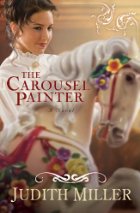 I was quite excited to be the recipient of my first ARC (Advanced Reading Copy). I hadn’t realized when I put myself on the list that The Carousel Painter was published by Bethany House, a Christian publishing group. I actually read a lot of Bethany House books when I was growing up, so I am quite familiar with the genre, but since deconverting from Christianity at 20, let’s just say, Christian fiction isn’t my first reading choice. However, I’d made a promise to the publisher, so I decided to give it a fair shot. Not to mention, this would be a great exercise in being a fair critic.
Summary:
After her father dies, leaving her without family, Carrington Brouwer moves from France to Ohio to stay with her friend Augusta Galloway while looking for work in the late 1800s. Augusta’s father owns a carousel factory, and Carrie sees an opportunity to put her painting skills to good use. At the pressure of the women of the family, Mr. Galloway hires her, even though she will be the only woman working in the factory. Carrie must deal with the prejudices and fears of the men and their wives, as well as of the community, while addressing her own problems with pride and God. She also must deal with Augusta’s suitor, Tyson, who makes inappropriate moves on her and attempts to pin the theft of Mrs. Galloway’s jewels on her.
Review:
Miller possesses writing talent on the sentence level, for sure. The sentences flow well, and the dialogue is relatively believable. She shows forward-thinking for her genre by giving Carrie an independent spirit and not condemning it. At first I was excited that she seemed to be offering a relatively unique storyline to her genre.
However, the addition about half-way through of the plot-line of Carrie being a suspect in the theft of Mrs. Galloway’s jewels is a widely used one. The good Christian must suffer and have faith her innocence will be proven in the end. It was incredibly predictable. Plus it simply felt out of place and jarring given the beginning of the story.
I was also bothered by Carrie’s quirk of giggling when she’s nervous or upset. It’s such a misogynistic stereotype–the giggling female, and it simply did not fit with the rest of Carrie’s character.
I did appreciate, and I think fans of the genre will too, that Carrie’s faith and God were not the focus of nearly every single the page. Carrie growing in faith is part of her life and is addressed as such, but it is not the focus of the story. It’s simply a fact about her that comes up periodically. I know when I was into Christian lit as a teen, I would often wish they’d just tell me the story for once instead of preaching all the time. Yet I also know that fans of Christian lit will expect at least a little bit about God in the story. I think Miller struck this balance well.
Overall, it’s a step in the right direction for the genre, but Miller could have done a much better job writing a believable, unpredictable storyline while pushing the envelope against misogyny.
2.5 out of 5 stars
Source: ARC from publisher via LibraryThing‘s Early Reviewers program.

 Support my work with a tip or browse my shop for curated book club guides, how to guides, cross-stitch patterns, and more!


This work by Amanda Nevius is licensed under a Creative Commons Attribution-Noncommercial-No Derivative Works 3.0 United States License.
 Opinions of a Wolf