
Archive
Book Review: Maplecroft by Cherie Priest (Series, #1)
 Summary:
“Lizzie Borden took an axe; gave her mother forty whacks….”
Any New Englander knows the nursery rhyme based on the true crime story of Mr. and Mrs. Borden who were murdered with an axe in 1892. In spite of being tried and acquitted for the murders, their daughter (in the case of Mrs. Borden, step-daughter), was widely believed to actually be responsible for the murders. In this book, she definitely was, but maybe not for the reasons you might think.
A darkness is trying to take over Fall River, Massachusetts, and Lizzie and her ailing sister Emma are all that might stand between the town and oblivion, with Lizzie’s parents being the first casualties in the battle.
Review:
I grew up chanting the nursery rhyme about Lizzie Borden the first half of which is quoted above (this perhaps says an awful lot about New Englanders, but I digress), and I also love tales from the Lovecraft universe, which also originated in New England. When I heard about this book that mashed up the two, I put it on my wishlist. Lo and behold, my future sister-in-law, who had never even seen my wishlist, bought it for me for Christmas last year. I thought this would be the perfect read for the fantasy challenge, and although it was a bit different than what I was expecting, I still enjoyed the mix of Lovecraft and women’s history that Priest has woven and am eagerly anticipating reading the sequel.
The story is told through a combination of first person accounts from Lizzie, Emma, and Nance, diary-style entries by their neighbor doctor, letters, police and fire reports, and first person ramblings of a professor from Miskatonic University (another Lovecraft element). Some readers may be put off by the combination of first person perspectives, but I’ve always enjoyed this style, particularly when it includes things like letters and police reports. I felt that it was one of the strengths of the book, and I also particularly enjoyed getting to see both Emma’s and Lizzie’s perspectives, as well as that of Lizzie’s lover, Nance.
The Lovecraft mash-up basically is that some sort of Dark One in the deep is out to turn everyone on the seacoast either into worshippers or victims or literally turn them into monstrous ones who live in the deep. Emma and Lizzie’s parents were among the first to begin succumbing to this infection and that is why Lizzie had to kill them. Lizzie and Emma now are conducting research, trying to figure out how to prevent the Dark One from actually rising up. This is all extremely Lovecraftian, including the fact that some of these developments don’t make a ton of sense, but things just don’t make sense in the dark fantasy world of Lovecraft, so I was ok with that. Readers new to the world of Lovecraft might be a bit more frustrated by how inexplicable most things to do with the Dark Ones and the deep are, however.
I particularly enjoyed how Priest explores how societal and cultural norms of 1890s New England affects women’s lives. Emma could be a scientist now that women are being accepted into colleges, but she chooses to instead write her scientific papers under a male pseudonym because she believes she would never garner respect otherwise. Lizzie and Nance are in love and must hide it, although Lizzie often feels why should she bother when she is already disgraced after the trial. The clashes between Lizzie and Emma regarding both her affair with Nance and the fact that Lizzie believes in trying out magical and fantastical defenses against the Dark One whereas Emma believes purely in science are interesting reading. They are two very different people who are thrust together both by virtue of being siblings and by the fact that as women in the 1890s their lives are limited.
On the other hand, in spite of liking the characters of the neighbor doctor and the Miskatonic professor and enjoying the exploration of Lizzie’s and Emma’s relationship and getting to see some of Emma’s character, I couldn’t help but feel that Lizzie didn’t get a chance to be enough in this book. Lizzie Borden is such a looming large figure in local history, even on the book cover she presents as a bad-ass in a period skirt holding a bloody axe. In contrast in the book she spends a lot of time dealing with her annoying sister. Similarly, I’m not a fan of the fact that Lizzie does very little of rescuing herself in this book, which is, I believe, if the historic Lizzie really did kill her parents, what she actually did in real life. To me Lizzie has always been a woman who said fucking enough and took an axe and dealt violently and finally with her problems. Whereas in the book, she starts off off-screen that way (we don’t actually see her kill her parents) and she sort of tapers off. Much as I enjoyed seeing her messed up relationship with Emma, I couldn’t help but feel it would have ended more powerfully if she’d said fucking enough and whacked Emma through the skull for being such an insufferable bitch and in the way all the time. This was my main issue with the book.
My second, more minor, issue is that I felt the plot takes too long to build up to actual horrifying events and/or murders. The first murders, as I mentioned before, happened off-screen. The beginning of the book then is a build-up of a lot of tension with not much actual gore or murder occurring. I should mention that I was watching “The Lizzie Borden Chronicles” on tv at the same time as I was reading this book. In that show, Lizzie kills at least one person an episode. Now, some of that gets over the top, but it does get the idea of the pacing one would expect from this type of story right. More mayhem. More murder. More danger. More often.
On a positive note, the scenes between Lizzie and Nance are beautifully done, and while I was frustrated to see Lizzie turn a bit into a lovesick fool, I was very glad it was happening with Nance. Their relationship and dynamic jumped off the page and really brightened up the book for me.
The set-up at the end of the book for the sequel is well-done, although I’m uncertain how the series can proceed forward so far removed from the actual historical event, I am excited to read it and see what happens.
Overall, this Lovecraft fantastical take on the Lizzie Borden of history and what led to the murders of her parents hits just the right note for Lovecraft fans. Readers who are new to the dark fantasy world of Lovecraft may be a bit surprised by the slow burn of the horror and how much of it winds up not making much sense, but those readers who can embrace this style of dark fantasy will enjoy it. Those looking for a bad-ass Lizzie should be aware that this Lizzie only acts when absolutely necessary and then with restraint, and they should perhaps tune into the made for tv movie Lizzie Borden Took An Ax instead. Recommended to fans of Lovecraft who are interested in getting some local history woven in to the New England settings they are familiar with from the Lovecraft universe.
If you found this review helpful, please consider tipping me on ko-fi, checking out my digital items available in my ko-fi shop, buying one of my publications, or using one of my referral/coupon codes. Thank you for your support!
4 out of 5 stars
Length: 435 pages – average but on the longer side
Source: Gift

Counts For:

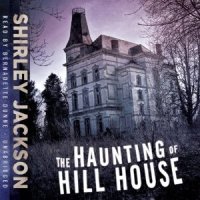
Book Review: The Haunting of Hill House by Shirley Jackson (Audiobook narrated by Bernadette Dunne)
 Summary:
Dr. Montague is a scholar of the occult, and he invites three other people to stay with him in Hill House, which is notorious for being haunted. There’s jovial Theodora, timid Eleanor, and the future heir of the house, Luke. What starts as a light-hearted adventure quickly turns sinister in this horror classic.
Review:
I actually started reading this audiobook way back in September for the Readers Imbibing Peril challenge. It’s only 7.5 hours long, so I thought it’d be a quick read. I think the fact that it wasn’t demonstrates quite well how not drawn into the story I was. This is a classic haunted house tale that perhaps might not work for the modern reader, depending on how much horror they generally imbibe.
This is going to be a quick review because I honestly don’t have too much to say about the book. Four people arrive at a house. Things appear normal, except one of them, Eleanor, clearly is a bit more emotionally unstable than the rest. She is, for instance, shocked that anyone is interested in her or asks her questions. She also has trouble with her own identity, such as knowing for sure what she likes to eat. Odd things start to happen in the house, and because Eleanor is odd, the others aren’t sure if it’s the house doing them or Eleanor herself. Eleanor becomes overly attached to Theodora. Drama ensues.
None of the house horror scenes really got to me, because frankly I’ve seen worse in plenty of other horror I read. I do love the genre. The parts that actually disturbed me were when the others in the household were inexplicably cruel to Eleanor. That dynamic of an odd woman randomly tossed in with strangers who proceed to be mean to her in a highschoolish way held my interest more than the house did. People and their cruelty are so much more frightening than a haunted house. I understand that the book is sort of leaving it up to the reader to wonder if the house or the people really drive Eleanor crazy, but frankly I think the ending removes all question on this point.
Similarly, there are definitely some undertones in the Theodora/Eleanor relationship that indicates they might possibly have had a fling early on and then Theodora abruptly distances herself from Eleanor when she gets too clingy. None of this is said outright, however it is heavily implied that Theodora’s roommate back home is her lover who she had a quarrel with, and she and Eleanor establish a close bond early on in the book. The problem is this all stays subtext and is never brought out in the open of the book. I get it that this book was published in 1959 so it probably had to stay subtext and was most likely shocking to a reader in the 50s. But to me, a modern reader, it felt like the book kept almost getting interesting and then backing off from it. The combination of the former issue and this one meant that I was left feeling unengaged and uninterested. Basically, I feel that the book didn’t go quite far enough to be shocking, horrifying, or titillating.
The audiobook narration by Bernadette Dunne was excellent as always, and the main reason I kept listening rather than just picking up a copy of the book and speed reading it. I love listening to her voice.
Overall, this classic was boundary pushing when it was first published but it might not come across that way to a modern reader. Readers who read a lot of modern horror might find this book a bit too tame for their tastes. Those interested in the early works of the genre will still enjoy the read, as will modern readers looking for horror lite. Readers looking for the rumored LGBTQIA+ content in this book will most likely be disappointed by the subtlety of it, although those interested in early representation in literature will still find it interesting.
If you found this review helpful, please consider tipping me on ko-fi, checking out my digital items available in my ko-fi shop, buying one of my publications, or using one of my referral/coupon codes. Thank you for your support!
3 out of 5 stars
Length: 182 pages – average but on the shorter side
Source: Audible

Book Review: Brains: A Zombie Memoir by Robin Becker (Bottom of TBR Pile Challenge)
 Summary:
Jack Barnes once was a college professor, but now he’s a zombie. A zombie who can think. Think, but not talk. He can, however, still write. So he keeps a memoir of his quest to gather other thinking zombies and bring their case for equality to their creator, the man who started the whole zombie outbreak.
Review:
I picked this up during the height of the zombie craze in the used book basement of a local bookstore for dirt cheap. (It looked brand new but only cost a couple of dollars). I’m glad I got it so cheap, because this book failed to deliver the sympathetic zombies I was looking for.
The idea of thinking zombies who challenge the question of what makes us human is interesting and is one multiple authors have explored before. It’s not easy to make cannibalizing corpses empathetic. Zombies are so naturally not empathetic that to craft one the reader can relate to is a challenge. Without at least one zombie character the reader empathizes with, though, this whole idea of maybe zombies are more than they seem will fail. And this is where this book really flounders. Jack was a horrible person, and he’s a terrible zombie. And this is a real problem when he narrates a whole book whose plot revolves around zombies demanding equal treatment. Jack is a snob, through and through. It feels as if every other sentence out of his mouth is him looking down upon someone or something. This would be ok if he grew over the course of the novel. If his new zombie state taught him something about walking in another person’s shoes. But no. He remains exactly the same throughout the book. He has zero character growth away from the douchey snobby professor who looks down on literally everyone, including those within his own circle. This isn’t a mind it’s fun or even enlightening to get inside of. It’s just annoying. As annoying as fingernails on a chalkboard.
The plot is ok. Jack gathers other thinking zombies and heads for Chicago to find the man who created the zombie virus and convince him to advocate for them. Their standoff is interesting and entertaining. But the ending beyond this standoff is unsatisfying.
It also bugs me that this is a memoir written by this guy but it is never clear how this memoir made it into the reader’s hands. With a fictional memoir, I need to know how I supposedly am now reading something so personal. I also had trouble suspending my disbelief that a slow zombie managed to have time to write such descriptive passages crouched in a corner at night.
Overall, this is an interesting concept that is poorly executed with an unsympathetic main character. Recommended that readers looking for a zombie memoir pick up Breathers: A Zombie’s Lament
If you found this review helpful, please consider tipping me on ko-fi, checking out my digital items available in my ko-fi shop, buying one of my publications, or using one of my referral/coupon codes. Thank you for your support!
2 out of 5 stars
Length: 182 pages – average but on the shorter side
Source: Harvard Books

Counts For:

Book Review: From a Buick 8 by Stephen King (Bottom of TBR Pile Challenge)
 Summary:
When Pennsylvania state troopers are called in for an abandoned car, they expect it to be a simple report and transfer to impound. But instead they find a car that is slightly off. It looks like a Buick 8 but isn’t quite one. Plus its engine by all laws of mechanics should not work. The troopers agree to make the Buick their responsibility, putting it in a shed and keeping an eye on it. Because it’s not just a car. It might not be a car at all.
Review:
I was told before I read this by other Stephen King fans that it’s not one of King’s better books, but I would like to read everything he has written, so I picked it up anyway. This is a book that builds thrills slowly and gently to a conclusion that may not seem satisfying to many readers.
The biggest thing that I think took the thrills out of the book for me is that I am not a car person. When the narrator was describing the Buick 8, I had no idea any of it was off at all, so it didn’t give me the creeps. When they first describe the engine, for instance, I was surprised they were freaked out by it because it just seemed like a mysterious engine to me….like all engines. I definitely think there are more thrills to be found here if the reader is a car person. A car person will get caught up in what’s awry with the Buick, and see it as the mystery that the state troopers recognize it to be immediately.
What this book excels at is what King always excels at. The book establishes the place and feeling of rural Pennsylvania beautifully. The characters all speak in accurate and easily readable dialogue. There is a large assortment of characters, and they are easy to tell apart. The timeline of the book is carefully selected for just the right tempo for the book. These are all wonderful things that kept me reading and made me engaged with characters I might not normally identify with.
Some readers might find that the plot and thrills move too slowly for them. The Buick has issues gradually over time, and the conclusion they build to might not feel like a satisfying conclusion for all readers. Personally, I enjoy slower moving thrillers, so this worked for me, but it might not work for all. Similarly, I believe the ending will be more satisfying to those who have read the entire Dark Tower series than to those who have not. What is going on with the Buick is more understandable and a bigger deal if the reader is aware of all of the context provided by the Dark Tower.
Overall, if you are a car person who will appreciate a car that is slightly off and also enjoys slowly moving thrillers enhanced by a strong sense of place, this will be a great read for you. Similarly, those who have read the Dark Tower may be interested in this book due to some possible connections to that series. If neither of those descriptions fit you, you may want to pick up a different Stephen King book for your thrills. He certainly has plenty to choose from.
If you found this review helpful, please consider tipping me on ko-fi, checking out my digital items available in my ko-fi shop, buying one of my publications, or using one of my referral/coupon codes. Thank you for your support!
3 out of 5 stars
Length: 467 pages – chunkster
Source: Harvard Books

Counts For:
Book Review: Breed by Chase Novak (Series, #1) (Audiobook narrated by Peter Ganim)
 Summary:
When Leslie married Alex, she knew they both agreed on wanting children. What she didn’t realize, though, was how fiercely Alex, the last son in a long line of wealthy and powerful New Yorkers, would want only their own biological children. He’s willing to try anything to get them biological children, and she feels she can’t deny him one last-ditch effort with a doctor in Slovenia that a couple from their infertility support group swears worked for them. And the woman has the baby bump to prove it. So they fly off to Slovenia, and from the first instant in the doctor’s office, Leslie feels that something just isn’t right….
Review:
I’m a real sucker for evil pregnancy/children stories. Rosemary’s Baby

Essentially, the parents’ genetics were so messed up by the treatments performed by the doctor that they start turning into something different from human. Something a bit more animalistic. The children, of course, also have some of this animalistic genetics, but most of the differences don’t show up until puberty. This allows the children to be innocents for most of the book while their parents have gone off the rails from their very first treatment. My favorite part of this book is how it offers a smart critique of pushing our bodies to do something they don’t want to do. Where is that line? How far should we push things with science and at what point will using science make us something different from human? And is that something different going to necessarily be better? Leslie clearly feels that her children were ultimately worth everything she, her husband, and their bodies went through, but the book itself leaves the answer to that question up to the reader.
Beyond this concept, though, the actual execution of the characterizations and the plot get a bit messy. The writing can sometimes wander off onto tangents or become repetitive. Some aspects of the plot are explored too much whereas others are glossed over too quickly. The book starts out tightly written and fast-paced but toward the end of the book the plot gets disjointed and goes a bit off the rails. Part of the issue is a bit of a lack of continuity regarding just how messed up Leslie and Alex actually are by the treatments. Are they still at all human or are they completely untrustworthy? Is there any possibility of redemption for them? At first both seem equally far gone but then Leslie seems to pull back from the edge a bit, thanks to a MacGuffin. It’s hard to be frightened of the situation if the frightening aspect of the parents comes and goes at will.
Similarly, in spite of the book wanting us to root for Alice and Adam (the twins Leslie and Alex have), it’s hard to really feel for them when they come across as extraordinarily two-dimensional, particularly Alice. Children characters can be written in a well-rounded way, and when it’s well-done, it’s incredible. Here, though, Alice and Adam seem to mostly be fulfilling the role of children and not of fully fleshed characters.
Most of these issues are more prevalent in the second half of the book, so it’s no surprise the ending is a bit odd and feels like it leaves the reader hanging. I was surprised to find out there’s a sequel, as I thought this was a standalone book. On the one hand I’m glad there’s another one, because the story isn’t finished. On the other, I’m not a fan of such total cliffhanger endings.
Overall, the first half of the book offers up a thrilling and horrifying critique of just how far people should be willing to go to get pregnant. The second half, however, is not as tightly plotted and drops the well-rounded characterization found in the first half of the book. Recommended to pregnancy and/or genetic modification horror enthusiasts who may be interested in a different twist but won’t be disappointed by a cliffhanger ending.
If you found this review helpful, please consider tipping me on ko-fi, checking out my digital items available in my ko-fi shop, buying one of my publications, or using one of my referral/coupon codes. Thank you for your support!
3 out of 5 stars
Length: 310 pages – average but on the longer side
Source: Audible

Counts For:
Book Review: A Banquet for Hungry Ghosts by Ying Chang Compestine (Bottom of TBR Pile Challenge)
 Summary:
According to Chinese tradition, those who die hungry or wrongfully come back to haunt the living. Compestine presents here eight different ghost stories, each correlated along with a course in a banquet and richly steeped in Chinese culture and history.
Review:
I picked this up because I had previously read Compestine’s book Revolution Is Not a Dinner Party
The eight short stories are organized into appetizers, main courses, and desserts. The titles are for the food being served that course, such as “Tea Eggs” or “Long-life Noodles.” The food mentioned in the title also appears somewhere in the story as a key part of the plot. It’s a gorgeous way to organize the short stories and makes them also feel like diverse parts of a whole.
The short stories are mostly set in 20th century China, but a couple feature 20th century characters investigating something from the more distant past or being haunted by more ancient ghosts. One story is set in New York City and features a Chinese-American family.
The stories, universally, quickly establish the setting and characters. They all subtly teach some aspect of Chinese culture or history. For instance, one story looks at medicine under Communism in China, while another features preying mantis fights. At the end of each story, a brief blurb gives further details about two to three aspects of Chinese culture or history featured in the story. Most surprising, and incredibly welcome, at the end of each short story, Compestine gives a recipe for the featured food! It reminded me of how cozy mysteries often feature patterns or recipes at the end of the book, only this time the recipes are found in a shorty story horror collection. Brilliant!
What about the horror aspect of the short stories? I found them simultaneously plausible and sufficiently scary. I was a bit on the edge of my seat without being scared out of my wits, which is exactly what I was looking for.
Overall, I immensely enjoyed each of these short stories, from the touch of horror to the settings to the amount I learned about Chinese culture and history to the wonderful recipes. Highly recommended to anyone with even a moderate interest in China, Chinese culture, or Chinese food. Even if horror isn’t usually your genre, give these ghosts a chance. You’ll be glad you did.
If you found this review helpful, please consider tipping me on ko-fi, checking out my digital items available in my ko-fi shop, buying one of my publications, or using one of my referral/coupon codes. Thank you for your support!
5 out of 5 stars
Length: 192 pages – average but on the shorter side
Source: Better World Books

Counts For:
Book Review: The Walking Dead: The Fall of the Governor: Part One by Robert Kirkman and Jay Bonansinga (Series, #3) (Audiobook narrated by Fred Berman)
 Summary:
In the aftermath of her rebellion attempt against The Governor, Lilly Caul is starting to see him as a man who does what it takes to protect the citizens of Woodbury. So when strangers in riot gear and prison suits underneath show up at Woodbury, she believes The Governor that they’re out to get their supplies and that the woman, unprovoked, bit his ear. But not everyone believes The Governor, and The Governor starts to think he can use the doubters to his advantage.
Review:
This non-graphic novel series telling the backstory of the big bad villain of the graphic novel Walking Dead series started off incredibly strong but, unfortunately, each new entry in the series gets worse and worse. Instead of lending new light to the backstory of The Governor and Woodbury, this entry retells scenes readers of the graphic novel have already seen, simply from The Governor and other residents of Woodbury’s perspectives.
While I understand that some things readers of the graphic novel series already know may need to be briefly mentioned again for those who are only reading the print books, a sizable portion of this book features scenes already told once in the graphic novels. Many of these scenes were disturbing enough in the graphic novels, such as the scene in which Michonne is repeatedly raped and beaten by The Governor. Retelling them from the perspective of The Governor just felt unnecessary and was frankly difficult to listen to. It would have been better to have left out showing that scene again and instead showed the, well-told and well-done scene of The Governor after her rapes Michonne back in his apartment where he tries to rationalize his behavior. This lends new insight into the character without forcing the readers to, essentially, re-read.
The characterization of Lilly Caul continued to bother me. First she hates The Governor and leads a rebellion, then turns right around and becomes loyal to him? What? This makes zero sense and is never fleshed out enough to make sense. Similarly, how she handles one particular plot development feels like lazy, cliched writing of women, which bothered me.
Speaking of writing of women, while I understand that the third person narration is supposed to simultaneously be from an evil guy’s perspective, how the narrator talked about Michonne really bothered me. We are constantly reminded that she is black. She is never just “the woman” she is always “the black woman” or “the dark woman.” Her dreadlocks are mentioned constantly. Whereas white characters, Latino characters, and male characters are referred to once with descriptors about how they look, her looks are constantly described. I understand looks need to be described periodically, but this is far too heavy-handed and in such a way that it feels like the narrator feels it necessary to constantly remind the reader that she is “other” and “different from us.” Worse, she is also referred to as a “creature,” etc…, particularly during her rape scenes. I never felt Michonne was mishandled in the graphic novels. She’s a bad-ass woman who just happens to be black in the graphic novels. Here, though, the descriptions of her feel like they are exoticized, which feels entirely wrong for a book in which we mostly just see her being raped. She is depicted so animalistically, it made my stomach turn. Even when she is among her friends, the narrator feels it necessary to constantly refer to her otherness.
So what’s done well in this book? The scenes where we finally learn how the double-cross happens and see it plotted and carried out from the bad guys’ perspective is chilling and enlightening. It’s also really nice to get to actually see the scene where Michonne beats the crap out of The Governor. If other scenes had been left out, the characterization of Lilly Caul and descriptions of Michonne handled better, and the whole book tightened up (and probably part two included here), it could have been a strong book.
Overall, fans of the series will be disappointed by the repetition of scenes they’ve already seen and the overall shortness and lack of new information in this book. Some may be bothered both by how Michonne is presented in this book, far differently from how she is in the graphic novel series, as well as by seeing some of the rapes from The Governor’s perspective. Recommended to hard-core fans who feel they need to complete reading the companion series to the graphic novels.
If you found this review helpful, please consider tipping me on ko-fi, checking out my digital items available in my ko-fi shop, buying one of my publications, or using one of my referral/coupon codes. Thank you for your support!
2 out of 5 stars
Length: 256 pages – average but on the shorter side
Source: Audible

Previous Books in Series:
The Walking Dead: Rise of the Governor, review
The Walking Dead: The Road to Woodbury
Counts For:
Book Review: The City of Time and Memory Part I by J. A. Childress (Series, #1)
 Summary:
Zak wakes up from a night of drunken revelry to find himself in his apartment but not his apartment building. His apartment is now part of a massive structure of multiple different architectural styles that looks like it goes on forever. Plus his bathroom is missing. Shreya wakes up in her car in a parking garage to Hungry Eyes playing on the radio and an ominous car nearby nicknamed “Die Pflaume.”
Review:
This first entry of a new serial does a quick job establishing a strong setting but just when the action gets going, it leaves the reader hanging.
When I accepted this review copy, I must admit that I didn’t realize it was the first entry in a serial, I thought it was in a series. Serials offer small episodes of an overarching story in bite-size chunks the reader picks up. Think of it as reading an episode of your favorite tv series. I think it would help if this was marketed more clearly as a serial, since certain readers love that reading experience and others aren’t too keen on it. Making it clearer that it’s a serial will help it better reach the right readers.
A good serial entry will read much like an episode in a tv show with a large, overarching plot, but also a smaller plot that can be told in one episode that is, ideally, tied to the overarching plot in some way. This gives the reader the satisfaction of completing a piece of smaller plot but also keeps them engaged in the series as a whole. This serial does a good job setting up the overarching plot. People are waking up in what appears to be an alternate universe that is possibly punishing them for something they did that they can’t remember with sinister beings chasing them or tormenting them from afar. It’s a good mystery, but it is just getting going when the serial entry stops. This would be ok, but the big weakness of the serial entry is that there is no self-contained smaller plot. Thus, instead of feeling any sense of satisfaction of having learned something or completed one mystery, the two main mysteries of the overarching plot are just getting going and then stop abruptly. Without the presence of a second, self-contained, smaller plot for this entry in the serial, this just leaves the reader feeling cheated out of getting the whole story, rather than the dual experience of satisfaction at the wrap-up of the smaller plot and intrigue at the larger plot.
The setting of the alternate universe is well-established and delightfully creepy. Everything being just a little bit off is creatively written without being in the reader’s face. The author also includes a drawing of a mysterious symbol that Zak sees, which helps build the atmosphere.
In contrast, Zak and Shreya feel a bit two-dimensional, but this is possibly because they have such a short time in which to be established. Similarly, the demonic character who chases Zak comes across as corny, straight out of a B movie, not frightening like he is, presumably, supposed to. The world building is so good that the two-dimensional good guys and cheesy bad guys stick out like a sore thumb.
The one flaw in the writing style is there are way too many similes. At times it feels that every other sentence contains one. Any descriptor used too much can go from artful to annoying. A lighter hand on these would be helpful in future entries.
Overall, this first entry in the serial establishes a delightfully creepy alternate universe where everything is just off. The lack of a smaller, self-contained plot in addition to an overarching plot will make this frustrating to read, unless the reader has the next entry at hand to read immediately. Recommended primarily to horror fans who like their horror in small bites and enjoy the concept of a serial who won’t mind waiting a bit for the conclusion to the mystery in future entries.
If you found this review helpful, please consider tipping me on ko-fi, checking out my digital items available in my ko-fi shop, buying one of my publications, or using one of my referral/coupon codes. Thank you for your support!
3 out of 5 stars
Length: 37 pages – novella
Source: Kindle copy provided by author in exchange for my honest review

Book Review: The Red Church by Scott Nicholson (Series, #1)
 Summary:
The Red Church was the base of a new cult started by Wendell McFall in the 1860s. But when he took things too far and sacrificed a child, his congregation hung him from a tree. Nowadays, the children of the town view the Red Church as haunted…and so do some of the adults. When Wendell’s descendant, Archer, returns to his hometown from California, he brings the cult back with him in a new form. Archer claims he is the second son of God, and that Jesus was the first son who failed to deliver God’s true message. When he reclaims the Red Church and murders start occurring, half the town suspects Archer, while the other half falls under his spell.
Review:
This book was loaned to me by someone who really enjoyed the series. For most of the book, I felt that it was well-written horror but of a religious bent that isn’t for me. However, the ending doesn’t quite live up to the rest of the book.
At the beginning, the book feels like a horror story written by a Baptist person truly committed to their faith. The main antithesis to Archer’s cult is the Baptist church in town. At the core of the conflict are a married couple. The wife falls firmly under Archer’s spell while the husband stays true to the Baptist church. Their two small boys are caught in the middle. The most interesting parts of the story are when the third person narrator focuses in on these two boys, showing their crises of faith and the siren call of the cult, as well as the confusion engendered when their mother and father fight over religion. I could definitely see this reading as a richly crafted, frightening horror for someone who is Baptist, or at least Protestant, themselves. For the non-Christian or non-religious reader, however, the frequent mentions of Jesus, capitalizing pronouns referring to God, and attempts at creating horror at the mere idea of not following Jesus fail to aid in establishing the horror. They become something to skim past rather than part of the atmosphere of the book.
For most of the book, the basic plot of Archer versus the family and the sheriff and the crime scene detective flows nicely with just the right touch of horror. Toward the end of the book, just who Archer is and what precisely is going on becomes muddled. A lot of what happens with Archer and his church just doesn’t make a lick of sense. In spite of the religious leanings of the book, I was still engaged and wanting to solve the mystery of Archer. Instead, who he is and what the rules of the world are become increasingly muddled. The ending generally should clear things up, not leave things more confusing than they were before. That kind of confusing ending would be disappointing to anyone who read the book.
I also was disappointed by one particular aspect of the ending. A person who was abusive gets forgiven because forgiveness is what the Baptist church teaches. It bothers me when books brush off abuse as something just getting Jesus in your heart can fix. It’s misleading and dangerous to encourage people to think that way. Granted, this is a horror book, so it’s doubtful many children will be reading it, but that still doesn’t make it a good message.
The characters are interesting and widely varied. The children, particularly, are well-written. The scenes are well-envisioned and communicated. I never had any issues imagining any of the scenes vividly.
Overall, this is a well-written horror book that flounders a bit at the end. It is richly steeped in the Baptist faith. As such, I recommend it most highly to Protestant horror fans who don’t mind a bit of a confusing ending that doesn’t answer all the questions.
2 out of 5 stars
Source: Borrowed

Book Review: The House of Azareal by Erik Dreistadt
 Summary:
Christopher is so grateful for his twins that seem a true miracle after he and his wife, Annamarie, had trouble conceiving. He can hardly believe it’s their 8th birthday already, and he won’t let anything spoil the celebration, not even an odd nightmare about being eaten by hellhounds he had the night before. But his children wander off into the woods after the party. When Christopher and Annamarie find them, they’ve stumbled upon an abandoned house. The children convince them to explore it. But the house quickly turns into a living nightmare. A nightmare designed and run by Azareal.
Review:
This is my second read of the twelve review copies I accepted for review here this year (see the complete list). I was looking for a shorter read after my previous two chunksters, and this short, fast-paced horror seemed like the perfect fit for my mood. The book puts a fresh twist on both haunted houses and trouble conceiving horror plots, although the writing style and dialogue struggle to support the excellent plot.
The story at first appears to be a straight-forward haunted/evil house plot. Right away, I liked that Azareal’s house isn’t the one the family lives in or one the family has just moved to. Instead, it is a house found in the woods, akin to Hansel and Gretel. That’s a trope I enjoy, and I liked seeing it used in the plot. Having the parents go into the house with the children was the first of several twists on tropes in the plot that made the book so engaging. From the point the family enters the house onward, the plot continues to twist and turn unexpectedly, yet believably. Gradually it becomes apparent that this is more than a haunted house book, it includes the occult, as well as a trouble conceiving plot. The fact that the results of using the occult to aid in conceiving doesn’t have consequences for eight years is a nice twist. Most books show consequences either during the pregnancy or immediately after the baby is born. The inclusion of new twists on both of these horror plots in one book makes the book fast-paced and engaging. It is a quick read that will propel you forward to see how it ends.
Unfortunately, the writing style doesn’t quite live up the high quality of the plot. Some of the dialogue feels forced and awkward. Similarly, while some scenes are set well, others are written in an awkward manner with focus on minute details that are irrelevant to the plot or the setting and not enough focus on other details that are. The writing style is good enough that it doesn’t ruin the enjoyment of the book, but it does knock it down a couple stars. The book is mostly well edited with the exception of one grammar mistake made quite a few times. Either using its for it’s or vice versa. Since it’s the same mistake made repeatedly, it’s easy enough to gloss over when reading it. However, I would advise for future books that the author keep an eye out for this particular issue during the editing process, especially since the rest of the grammar and spelling is so well-edited.
Overall, this is a fast-paced read that combines two horror plots into one book and puts unique twists on both. The writing style isn’t quite as good as the plot, but it’s still an enjoyable read. I’m looking forward to future works by the author. Recommended to horror fans looking for a quick, unique read.
3 out of 5 stars
Source: kindle copy from author in exchange for my honest review

 Support my work with a tip or browse my shop for curated book club guides, how to guides, cross-stitch patterns, and more!


This work by Amanda Nevius is licensed under a Creative Commons Attribution-Noncommercial-No Derivative Works 3.0 United States License.
 Opinions of a Wolf