
Archive
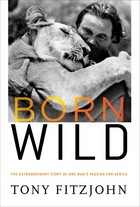
Book Review: Born Wild by Tony Fitzjohn
 Summary:
Tony Fitzjohn never quite fit in in England or the middle class existence he was adopted into at a young age. By his early 20s, he was roaming around Africa, and eventually found a job with George–the elderly Englishman famous for his belief in reintroducing lions into the wild whose efforts were chronicled in Born Free. In his biography, Tony accounts the steps in his life that led up to his assistantship with George, the two decades he spent learning from him in Kenya, and the efforts he himself has made in Tanzania’s parks.
Review:
This autobiography (memoir?) is an example of how you can not particularly like a person but still admire and respect the work they do. I know I would never in a million years get along with Tony. He’s hard-headed, stubborn, a womanizer (prior to getting married in his 40s), matured very late in his life, and can be remarkably short-sighted in how his actions affect others. And yet.
And yet he has an incredible passion for animals and the environment. He’s faced down poachers, corrupt government employees, and charging rhinos with frankly, balls of iron. All for the love of not just the big cats like lions and leopards, but rhinos and wild dogs as well. I find it fascinating how his love of adventure gradually showed him that animals are not ours to use and abuse. I wish I had had the time to copy the quote exactly from the book before I had to return it to the library, but essentially he says that we are meant to be stewards of the land that all the rest of the non-human animals need to survive and do what they’re meant to do. He talks at length about how rhinos often don’t get as much attention because they don’t form a bond, really, with their caretakers the way orphaned big cats do, but that’s not who they are! Rhinos are aggressive, love fighting each other. They fight and they mate and that’s what they do and that’s beautiful because that’s who they are. Letting animals be who they are and do what they do–that’s our real role as humans.
Of course, the animal rights message doesn’t really come out until the end of the memoir. The beginning is Tony reflecting on his childhood and early years in Africa. He traveled all over the continent a lot, never really sticking to one country until he met George and stayed put in Kenya for quite a while at the Kora reserve. At times the writing when he’s recounting his life can be a bit dull. He seems more focused on naming everyone he ever came across than in telling a story. This holds true up until the trust sends him to AA and after that he meets his now-wife Lucy. From then on it is as if a haze is lifted and his passion for everyone around him, the animals, and his family comes through. I have no doubt that this is at least in part due to his no longer drinking. It is clear that there are swaths of the prior years that he does not recall. He even recounts one story that a friend told him when staging his intervention of him getting into a bar fight that he doesn’t even remember happening. All this is to say, the first half or so of the book is fun bits of lions mixed in between rather dull sections of him just getting the information through to the reader that will be important later.
But the elements with the lions that hold us over in the meantime are absolutely worth it. It is evident that through all of Tony’s flaws, he has a natural ability to work with big cats and an innate understanding and love of them. He does not doubt their ability to feel emotions or communicate with people.
Sheba [lioness] had been so fond of her brother that when he died, she had led George to the spot, watched him bury Suleiman [her brother], and then sat on the grave for days, refusing to leave him alone. (page 112)
He also has an understanding of human society and mores and how they affect the animal world that comes through abundantly clearly:
By pushing up the price of oil, Sheikh Yamani and his cohorts had multiplied the Yemeni GDP sevenfold. A rhino-horn dagger is a symbol of manhood in Yemen, so an entire species was all but wiped out in order that a load of newly oil-rich Yemenis could have fancy dagger handles. (page 76)
When he writes of the poachers and big game hunters fighting with the environmentalists for control of the land, I was aghast at the methods both groups used. They often would kill a big cat, cut off its head and paws, then skin it and leave it right in the environmentalists’ path. This level of cold-heartedness and cruelty baffles me. Although one could possibly argue that the poachers saw this atrocity as the only way out of poverty, there is zero excuse for the wealthy, white big game hunters who just callously view it as sport.
I suppose some people may see Tony’s and other western people’s work in Africa for the animals as neocolonialist. I don’t see it that way at all. Tony by nature of his upbringing had the wealthy connections needed to fund projects working with the animals. When Kenya and Tanzania were caught up in civil wars and reestablishing their nations, even wealthy Africans would most likely donate that money toward people, not animals. Plus, Tony’s work has provided stable employment to Tanzanians and Kenyans for over 20 years, as well as bringing in more tourism. Tony himself points out that a lot of the big animals were gone due to colonial big game hunters, and he views his work as a sort of retribution for the colonial period. I perhaps wouldn’t take it that far, but I do see his point.
One thing I will say, though, is I do view it very hypocritical that Tony sends his own children away to a wealthy boarding school in Kenya rather then sending them to the school located in the park in Tanzania that his trust set up and runs. If it’s good enough for the Tanzanian kids, why isn’t it good enough for his own? That stung of elitism to me.
Although the book can be slow-moving at times, the good bits make up for it. Tony and his work for animal rights are inspirational. His life shows how much one person can accomplish by taking it one step at a time.
I pulled myself together and thought about what George would do. Of course I knew already. George would put his head down and keep going, one step at a time. It was the way he approached everything. (page 184)
Overall, I recommend this memoir to nonfiction lovers with a passion for Africa, environmentalism, or animal rights.
4 out of 5 stars
Source: Public Library

Book Review: Out of the House of Bondage: The Transformation of the Plantation Household by Thavolia Glymph (The Real Help Reading Project)
 Summary:
Thavolia Glymph analyzes the power relations between black and white southern women within the plantation household in the antebellum, Civil War, and immediately post-Civil War American South utilizing primarily slave narratives/interviews and the diaries and letters of white mistresses.
Review:
I am chagrined to admit that not only is this the first time I was late on the schedule of The Real Help Reading Project I am co-hosting with Amy, but I was exactly a week late! The lesson I have learned? Never schedule a timely thing for a holiday weekend. I apologize to Amy and everyone following along for making you wait, but at least it was Amy’s turn to host! Moving right along….
Whereas Labor of Love, Labor of Sorrow was extraordinarily all-encompassing, here Glymph narrows her focus severely to only relationships between black and white women in traditional plantation households in the American South. She, alas, stops her analysis around the turn of the 20th century, only venturing into the unique relations within the domestic work realm depicted in The Help in the epilogue. However, this book is quite valuable in that it analyzes the relationships that led up to that odd dynamic of the 1950s and 1960s.
This book covers a lot of information, but what sticks out the most to me in retrospect was how much work and effort it took to maintain a racist, unequal society. The white mistresses had this odd, completely illogical dichotomy of viewing black women both as inferior and needing their guidance and as naturally suited to hard labor. My eyes practically bugged out of my head when reading of white women teaching black women to do chores that supposedly white women were too weak to do….and yet they were perfectly capable of doing them well enough to show the black women what they wanted done. Um….what? That is the sort of illogical situation that only someone entirely committed to a belief system, no matter how wrong, will be able to come to terms with.
Similarly, the former mistresses predicted the imminent downfall of their former house slaves only to find themselves hired by these same freedwomen to sew fine dresses for them with the money they earned by working the plantation. Yet, the former mistresses persisted in believing in the racial inferiority of the freedwomen. Perhaps the most mind-boggling to me was the story of one former mistress who wound up teaching at a freed black school, yet even though she was with these children daily, she still believed in white supremacy. Why this persistent need to believe you’re better than someone else? Personally, it seems to me that the white men were so constantly judgmental of the white women that they reacted by taking it out on those society deemed inferior to them. If black free women rose to their same status, then who would they take their frustrations out on? This logic doesn’t free the white women of the guilt that they definitely deserve, but it does help to make sense of their ability to take on completely illogical stances.
I feel that I am repeating myself a bit with this project, but the books repeatedly demonstrate how inequality on any level acts as a poison to the whole society. I hope that is something that we modern readers will bare in mind in our own daily lives.
3 out of 5 stars
Length: 296 pages – average but on the shorter side
Source: BookU
Buy It (Amazon or Bookshop.org)
Please head over to Amy’s post to discuss this book!
If you found this review helpful, please consider tipping me on ko-fi, checking out my digital items available in my ko-fi shop, buying one of my publications, or using one of my referral/coupon codes. Thank you for your support!
Book Review: Lean, Long & Strong The 6-week Strength-training, Fat-burning Program for Women by Wini Linguvic
 Summary:
In this book Linguvic seeks to lay out multiple strength training routines for women that can be done within your own home with minimal equipment. The routines are divided into core, lower body, and upper body. Each of these have beginner, intermediate, and advanced options. The routines are designed to be combined in various ways to either fat-blast or target core, lower body, or upper body. The book includes a nutrition guide.
Review:
This is one of those times where I really wish I hadn’t trusted the reviews on Amazon and instead borrowed the book from the library. Granted, I got it for only $3 from Better World Books, but it proved to be utterly useless for me.
Linguvic is definitely a strong woman in all of her pictures, but there is NO WAY she got that strong doing these wimpy routines. I’d been strength training for nine months prior to getting this book hoping to expand my routine, and they were all simply way too easy for me. There is nothing intermediate or advanced about this book. It is beginner all the way.
Almost all of the moves include using an exercise ball and a towel and maybe a set of hand-weights. Personally I find exercise balls to be more trouble than they’re worth you can just bench press or use a Roman chair. They’re rolly and annoying. However, I suppose if you’re the timid type wanting to start to work out and not join a gym just yet, it could work for you.
That said, a solid half of the moves are stretches. Stretching is not going to give you muscles, so I have no idea why she dedicates so much space to them.
The nutrition section is disappointing, but that’s not surprising given that I’m veg, and she’s an omnivore. It gives good basic tips, but they’re ones you could get on the internet for free, (such as eat breakfast, don’t eat processed food, etc…)
I think this book suffers a bit from false marketing. It is not a book that will work for any woman at any strength training level. It is clearly a book designed for women who are going from doing nothing physical to attempting to begin building some muscle. It is a beginner’s book. Even as a beginner’s book, though, it is lacking in variety and truly challenging moves.
Overall, there is some value in this book in that it consists of non-threatening, quick routines that women who have never exercised before may find simple enough to stick with. If it will get them off the couch, then it has done something. If you have any experience with strength training at all, though, don’t waste your time with it.
2 out of 5 stars
Source: Better World Books

Book Review: Labor of Love, Labor of Sorrow by Jacqueline Jones (The Real Help Reading Project)
 Summary:
Professor Jacqueline Jones presents the extensively researched history of the dual working worlds of black American women–at home and in the workforce–from slavery to present. She highlights the ways in which the unique cultural history of slavery as well as being subject to both sexism and racism have impacted black American women’s lives.
Discussion:
This is the second book for the Real Help reading project I’m co-hosting with Amy. I specifically requested that she host the discussion for this book for a special reason. Jacqueline Jones was my professor for one of my classes required for my history major at Brandeis University (she now teaches at University of Texas), and suffice to say, she and I did not get along very well. I was concerned that this history might make it difficult for me to discuss this book, so I asked Amy to host. She obliged. I am going to do my best to discuss this book without bias, but my personal experiences with Jackie Jones (as the Brandeisians called her) definitely gave me my own perspective in reading the book.
I was completely engrossed in the slavery and Jim Crow sections of the book. They taught me a lot I was previously unaware of, as I always kind of avoided the Civil War in my American history classes. (I focused on colonization, Revolutionary War, westward expansion, and WWII). For instance, it was interesting to see how the matriarchy slave owners forced upon slaves affected and impacted black culture even to this day. It was also the first time I saw sharecropping explained and spelled out. It is easy to see how black women, particularly ones widowed or single mothers, would choose to move to a city and become domestic help to escape the back-breaking work of share-cropping.
The book also demonstrates how black American culture has come to depend upon the iconic image of the strong black woman to help them through horrible racism and working conditions. Yet, by the end of the book, we can see that this means a lack of support for black women that is reflected in long-term illnesses and mental illness. Although black women are to be respected and lauded for their role in helping their communities, it is time that less is laid upon them. One obvious thing? Less time spent serving whites.
Since this was read largely to combat The Help, which takes place specifically in a domestic environment during the Civil Rights movement, I want to take a moment to discuss what I learned about that specific era in this book, because the book as a whole obviously covers a very large period of time. The book clearly demonstrates that the Civil Rights movement was BLACK women fighting for BLACK people and sympathetic whites came down from the north to help with things like voter registration, and they were then housed by BLACK women who would literally sit on their porch with a gun to protect the workers. This is in stark contrast to the image laid out in The Help where a WHITE woman comes and convinces the black workers to talk to her for their rights.
Additionally, the book repeatedly demonstrates how black women constantly throughout American history have sought to get out of white homes for any other kind of labor (except in the case of sharecropping). The role of domestic simply rings too close to slavery, and can you blame them? It certainly is apparent that many, if not the majority, of white employers sought to use black domestics as as close an approximation to slave labor as possible. One issue I don’t think the book addressed well enough is that any situation where one is working as a servant in another person’s home serves to antagonize relationships between the two groups. There is no friendliness there. One person is doing a menial chore in the home of another that the other is wealthy enough to not have to do. How could that possibly bring about anything but negative feelings?
Now, ok, here’s my criticism of the book. I feel that in Prof Jones’ passion for the plight of minorities in the US, she can sometimes over-compensate the opposite direction. By that I mean, she sometimes presents minorities as super-human or at no fault for their own actions or she’ll ignore negatives entirely. For instance, we only got two paragraphs out of 480 pages on black women working in prostitution. Personally, I wanted to know more about this, as it is a type of work black women have engaged in (as have every color/race of women ever), and I wanted to know the specific roles sexism, racism, and a hostile culture played in that for them. Specifically, I was interested about how the idea of lighter colored black women being more desirable to white men that we saw in the first book of our challenge might have carried over to prostitution in the 1920s and 1930s. But Jones doesn’t talk about this, and from my own personal experience with her, I speculate this is partly a blinders on her eyes issue.
Similarly, one thing that really irritated me was every time Jones tells a story of a woman working herself to the bone trying to provide for her children only to have her husband abandon her, Jones excuses the man by saying….”Well…..racism,” and moves on. Certainly, I am sure that some of these men were simply stressed out and thus abandoned their families, but I’m also certain that some of them were just assholes and would have done so in a completely non-racist society. To wit, I believe Jones falls too hardly on the nurture side of nature/nurture, when psychiatry has repeatedly demonstrated that it actually is a combination of the two that determines an individual’s behavior. By this I mean, I am certain that a non-racist society would lead to a larger percentage of happy, healthy families, but it by no means would wipe out all questionable behavior by all members of that race. To suggest that all members of a race would be “good” minus racism is just as racist as to suggest that all members of a race are “bad.”
That said, while I enjoyed the earlier portions of the book, as well as the sections on domestic labor in the 1950s and 1960s, I do think the book tries to tackle a bit too much in one entry. The sweep is almost overwhelming at times when reading it. I’d recommend getting a print copy so you can skim for the chapters of most interest to you or so that you can read various sections as questions arise.
Source: Amazon

Please head over to Amy’s post to discuss this book!
Book Review: Hetalia: Axis Powers by Hidekaz Himaruya (series, #1) (manga)
 Summary:
The nations involved in WWII and the events leading up to it are personified as over-the-top manga characters and through manga-style scenarios the historic events leading up to WWII are explored.
Review:
One of my good friends loaned this to me informing me that I would love it. I DID. I REALLY DID. I haven’t seen WWII this funny since Hogan’s Heroes was a mild obsession of mine in middle school, only this is historically accurate.
Each nation’s stereotypes (that are partly true) are blown over the top for the manga characters. France is proud and snobby but pathetically weak. The UK acts like a put-upon uncle who really just wants everyone to start acting their age. Japan is impatient with Germany for including Italy in their alliance. Italy is really short and loves pasta. The US can’t stop eating hamburgers long enough to speak with his mouth empty. It just goes on and on from there. Every page or two depicts a different historic event that set the scene for WWII to explode across the globe, complete with footnotes to clarify anything that might not be entirely clear from the manga-style interaction.
I was a History major in undergrad, and WWII was “my war.” (Every History major has a favorite war. My close second was the Revolutionary War, but I digress). In any case, I have a lot of knowledge about WWII, and Himaruya clearly knows his stuff, but he also gets the irony and funny aspects of different cultures clashing, and that’s what makes Hetalia so incredible. It felt like reading nonfiction in an incredibly entertaining way. It reminds me of back when the History Channel was amazingly cool.
I can’t wait to swap this for the next book in the series from my friend. I’m incredibly curious as to how Himaruya will handle the more serious topics such as the Bataan Death March and the Holocaust in the future entries.
While I loved this book, I primarily recommend it to fans of humorous manga and WWII buffs primarily. I have the feeling others might not “get it.”
5 out of 5 stars
Source: Borrowed

Book Review: A Stolen Life by Jaycee Dugard
 Summary:
On June 10, 1991, eleven year old Jaycee Lee Dugard was abducted from her school bus stop by Phillip and Nancy Garrido with the aid of a stun-gun. Jaycee was locked up in a backyard compound and repeatedly raped and abused by Phillip in a bid to satisfy his pedophilia. Over the course of her 18 year captivity, Jaycee gave birth to two daughters in the compound. Eventually with her increasing age, the sexual assaults stopped, but she was still held captive. Finally, on August 26, 2009, Phillip brought Jaycee and her daughters with him to the parole office in an attempt to explain away why he was spotted in public with the two girls. Jaycee, who hadn’t been allowed to speak her name for 18 years, was able to write it down for the police. This is the memoir of her experience and gradual recovery from the captivity.
Review:
Jaycee wrote this memoir without the assistance of a ghost writer, something very uncommon in memoirs by victims of abduction. She states in the beginning that her way of remembering things is a bit off because of the trauma, but that her way of telling her story will provide a genuine experience for the reader to truly see how the abduction affected her. She is correct that the memoir is not set up in a traditional way, but this tends to make for stronger books when discussing something as painful as this. It reminds me a bit of the very non-traditional story-telling methods used in another memoir When Rabbit Howls. Eliminating the ghost writer and letting the victim speak grants us, the readers, the opportunity to truly connect with a survivor. I humbly thank Jaycee for her bravery in this.
Most of the chapters start with Jaycee remembering the events from the perspective of her younger self. This absolutely makes scenes such as her first molestation by Phillip incredibly haunting. She then ends each chapter with a reflection from her adult, free perspective on the past. This structure is unique, but it provides an interesting perspective, showing both Jaycee the victim and Jaycee the survivor. Toward the end of the book this structure is lost a bit as we suddenly are shown many pages from the journal Jaycee carefully kept in captivity, as well as talking in a more present manner about the therapy she’s been going through. Her therapist sounds truly remarkable. She uses horses to help the survivors deal with problems, which seems to work incredibly well for Jaycee who often only had animals around to talk to during her 18 year ordeal.
Although Jaycee does recount her abuse and manipulation at the hands of Phillip, that is not at all what stands out in this memoir. What comes across is what a strong, sensitive, caring woman Jaycee is. She is not lost in woe is me. She does not even think she has it the worst of anyone in the world. The one thing she repeatedly states she’s learned is that she was not assertive enough as a little girl, and that personality trait backfired on her repeatedly throughout the ordeal. She states that she sees this as the reason abuse of all kinds are able to go on, because people don’t speak up.
There are moments in which all of us need to have a backbone and feel that we have the right to say no to adults if we believe they are doing the wrong thing. You must find your voice and not be afraid to speak up. (page 143)
This message of “speak up” is stated repeatedly throughout the book and leaves the reader feeling empowered rather than downtrodden at such a tale. If Jaycee could live through such a situation and come out of it stronger and as an advocate for victims and survivors of abuse to speak up, how can any of us do any less?
I recommend this book to those who enjoy memoirs and survival stories and can handle scenes of a disturbing nature.
4 out of 5 stars
Source: Amazon

Book Review: The Last Manchu: The Autobiography of Henry Pu Yi, Last Emperor of China by Henry Pu Yi, translated by Paul Kramer
 Summary:
Henry Pu Yi became the last emperor of China when he was almost three years old. During the chaos of a post-WWI China fighting between republics and war lords, he would periodically rule, be a figurehead, or be in hiding on foreign-held embassy land. Working with the Japanese in WWII he sought to refind his throne by ruling as the figure-head of the Japanese-held Manchuria region. He then was held prisoner by the Soviets for five years before being turned over to the communist Chinese for thought reform.
Review:
Although the translator states that Henry Pu Yi’s life is an excellent way to examine how China survived so many upheavals in the early 20th century, after reading the autobiography I simply cannot agree. Henry Pu Yi’s life was incredibly unique and absolutely not a reflection of what was really going on in China at the time. If anything, he seemed to operate from an oblivious perspective up until the communists kind of smacked him in the face with reality. For instance, during the time of chaos, civil wars, and famine in China prior to WWII, he states:
Just as food was cooked in huge quantities and not eaten, so was a vast amount of clothing made which was never worn. (location 544)
When reflecting on his past perspectives, it is evident that his past self did not understand why such wastefulness would infuriate China’s poor or make them push for a republic via Chiang Kai-shek. Of course, one cannot entirely blame Henry Pu Yi for this short-sightedness. He was raised from a young age being treated as a god by all those around him, being told it was his destiny to be the holy emperor. That would mess with anyone’s mind. However, as he became older he did have teachers and advisors who tried to enlighten him, he just refused to listen.
Eventually, Henry Pu Yi reached this odd mental compromise where he believed everything Western was good, except for their ruling system.
I also became far more convinced than I had ever been in the days when Johnston was with me that everything foreign was good and everything Chinese, except the Imperial System, was bad. (location 2184)
His selfish mindset saw everything good he himself could garner from the west, but didn’t seek out anything positive to change or do for his people. This self-centeredness in a ruler is disturbing at best.
This is even more evident during the time of his life when Pu Yi was puppet ruling for Japan in Manchukuo (Manchuria). Pu Yi increasingly came to fear more and more for his life as it became more evident that Japan would lose the war. The more afraid he was, the more he beat members of his household and staff. Yet he simultaneously claimed to be a good Buddhist who would not even harm a fly. It seems the only thing Pu Yi excelled at was compartmentalizing his actions. A former servant of Pu Yi summed up his personality quite eloquently during one of the criticism sessions of the communist thought reform:
Pu Yi is both cruel and afraid of death. He is suspicious, tricky and a hypocrite. When he beat or scolded his servants, it was not for mistakes they committed, but due to his own mood at the time. (location 4020)
Pu Yi, for most of his life, was incredibly selfish. He was obsessed with his own death and life and with maintaining his emperor status. He cared little to nothing for those around him or for the people of China. One must wonder how things may have been different if a strong, selfless man had been made emperor during the same time period.
Thus for most of the autobiography, we’re reading about a most unsympathetic man from his own perspective. That can become a bit tough to endure. The light of the autobiography comes in the last quarter of the book, though, when he recounts his time in thought reform.
The translator refers to this time period as Pu Yi being brainwashed. I can’t say that it appeared that way to me at all. Pu Yi was not tortured, made to starve, or beaten. He was simply placed in prison and reformed. Frankly, I think his time in communist prison did him a world of good. Suddenly he was having to fend for himself. Where before he never even had to open a door or mend a button, suddenly he did. Slowly the communists gave him more and more responsibilities so that eventually he was on the same cleaning and work rotation as the other men in the prison. Pu Yi says himself that he came to realize how truly useless he was at doing anything worthwhile. Although at first he blames those who raised him, he comes to acknowledge his own bad character eventually, being ashamed for how he behaved. When he is eventually deemed reformed by the communists, he enters society as an equal and works hard to do his fair part. Personally I think if American prison systems could have this kind of excellent 180 result, we would soon see a much smaller inmate population. For isn’t the purpose of prison supposed to be reform? And one cannot deny that Pu Yi came out a better man than he went in, even if communist China has made many other mistakes, it is evident with Pu Yi things were handled quite well. A man was reformed and made useful in society instead of senselessly killed off.
It is a bit of a wait to get to the interesting thought reform portion of the book, however. Pretty much everything before that makes you want to attack Pu Yi through the pages. His style is a bit rambling, although the translator claims that’s partly just Chinese culture versus Western culture. It is an interesting read, but I do think it will only really hold the attention of those with a strong interest in China.
3.5 out of 5 stars
Source: Amazon

Book Review: I Am Hutterite by Mary Ann Kirkby
 Summary:
Mary Ann Kirkby recounts her unique childhood in her memoir. She was born into a Hutterite family. The Hutterites are a religious sect similar to the Amish only they believe that living communally is a mandate for Christians. Mary Ann recounts her childhood both in the religious sect (her particular group was located in western Canada), as well as the journey and culture shock she went through when her parents left the Hutterites when she was nine years old.
Review:
I actually read this memoir because of the situation in which I first ran into Hutterites and have been fascinated with them ever since. For a couple of years, my father and brother lived in Montana. I went to visit them and was shopping in Victoria’s Secret at the mall and rounded the corner to discover traditionally-garbed Hutterite women buying thongs. I had no idea what a Hutterite was, but instantly hunted down my brother elsewhere in the mall to find out who these people were. All that the “English” seemed to know about them was that they lived in a commune, dressed kind of like the Amish but different, traveled all together to town in a few big vans, and the Hutterite women were always buying thongs at Victoria’s Secret. Hutterites are rather quiet about their lifestyle though, so when I stumbled across this on a new releases list, I knew I needed to read it to find out more about the community.
This is a completely fascinating memoir that I devoured in one day. Mary Ann is able to see both the faults and the beauty of various experiences in her childhood with the clear eye of an adult. Yet simultaneously she harbors no ill-well toward either the Hutterites or her parents or any of those who made her transition from a Hutterite girl to an “English” woman more difficult. Kirkby writes with a sympathetic ear to all those she encountered in her life, which is a refreshing change in the memoir genre.
Additionally Kirkby’s writing offers an immersion into the fascinating world of communal living with a religious belief system to hold it all in place. Kirkby recounts a childhood where no homes were kept locked, everyone was always welcome in everyone else’s home, and most meals of the day were eaten communally with your age-mates. In fact, one of the biggest changes for Kirkby when her family left the Hutterites was suddenly needing to interact with her siblings on a regular basis instead of her same-age female friends. She also had trouble understanding the English need for privacy in the home or the relative silence with which meals were eaten.
Another point of interest is that Kirkby’s father was from a Russian family that was persecuted in Europe and had to run to Canada to escape the Nazis. His father sought refuge and a sense of safety in the community of the Hutterites. Conversely, her father who grew up in this safety found himself craving more freedom than the strict rules and constructs of the commune would allow for. The book thus not only recounts a unique girlhood and insight into the Hutterite way of life, but also addresses the age-old question of freedom versus security.
Anyone interested in the Hutterite communities or unique childhoods will absolutely enjoy this memoir. It is well-written, intriguing, and contains not a trace of bitterness. I highly recommend it.
5 out of 5 stars
Source: Amazon

Book Review: Heinrich Himmler: The Sinister Life of the Head of the S.S. and Gestapo by Roger Manvell and Heinrich Fraenkel
 Summary:
Manvell and Fraenkel conducted years of meticulous research both with primary documents and those who actually knew Himmler to bring about a biography of the man infamous for being in charge of the S.S., Gestapo, and concentration camps that made the terror of Hitler’s reign possible. They seek to provide a well-rounded look at Himmler’s entire life for those with some familiarity with the events of World War II.
Review:
This was a fascinating and difficult book to read, not because of the writing style or the atrocities recounted, but because the authors succeeded in putting a human face on Heinrich Himmler. In the intro to the book, the authors state:
The Nazi leaders cannot be voided from human society simply because it is pleasanter or more convenient to regard them now as outside the pale of humanity. (location 31)
In other words, the easy thing to do is pretend the Nazi leaders or anyone who commits atrocities is something other than human. That they are monsters. When in fact, they really are still people like you and me, and that should frighten us far more than any monster story. What leads people to do horrible things to other people? What makes them bury their conscience and humanity and commit acts of evil? This biography thus does not say “here is a monster,” but instead says, “Here is this young boy who became a man who committed himself to a cause and proceeded to order acts of evil upon others. What forces came together to mold him into someone who would do these things?”
One of the more fascinating things brought to light in this book is that Himmler was never actually fit into the ideal of a top-notch Aryan male he himself advocated. In fact throughout his life he was sickly, pale, and scholarly. He tried in school to fit in with the athletic boys but never succeeded in anything for any length of time except fencing. Instead of accepting who he was, he continually pushed his sickly body past its limits throughout his life, trying to force it to fit into his ideals of what it should be. He actually enlisted his own personal healer, a masseuse trained by a talented Chinese doctor, throughout the war. This masseuse, Kersten, was working as a spy for the Allies and was instrumental in convincing Himmler to release various people from concentration camps throughout the war. His sickly body then not only opened him up to the Allies for a convenient spy, but also was key in how he related to the world. He projected his own insecurities about the ideal body onto everyone else.
Himmler’s anxiety to destroy the Jews and Slavs and place himself at the head of a Nordic Europe brash with health was a compensation for the weakly body, the sloping shoulders, the poor sight and the knock-knees to which he was tied. (location 2189)
This physical weakness and obsession does not mean he was a weak man, however. He was profoundly intelligent and detail-oriented. He easily became obsessed with ideas he came up with and would search for proof of them excluding any and all evidence to the contrary. Those of us who went to liberal, private colleges where we were taught to adjust our worldview for new, challenging ideas may be surprised to learn that Himmler read obsessively. The fact though is that Himmler sought out in his reading sources that would simply support his previously established, prejudicial worldview.
Like Hitler, he [Himmler] used books only to confirm and develop his particular prejudices. Reading was for him a narrowing, not a widening experience. (location 2547)
Thus we cannot depend on reading alone to prevent close-mindedness.
As the Nazi regime continued on, Himmler grew more and more committed to his obsessions. Those who knew him well described the frenzy and meticulousness with which he worked over every detail toward his final goal of the “Aryan race” being in control of Europe.
Himmler’s need to rid himself of the Jews became an obsession. The ghosts of those still living haunted him more than the ghosts of those now dead; there were Jews everywhere around him, in the north, in the west, in the south, in the areas where his power to reach them was at its weakest. (location 2074)
The information on Himmler at this time period certainly sound like a man suffering from intense paranoia. Think of John Nash in A Beautiful Mind and how he firmly believed government agents were all around him persecuting him. The difference is that this physically weak, close-minded, paranoid man was given immense power over the lives of millions instead of simply being a professor. It is easy after reading this book to see how Himmler could easily have been that crazy neighbor worried that the people across the street were watching him all the time instead of the engineer behind genocide. All it took was placing near total power and trust in his hands to turn him into the organizer of a genocide.
There will always exist human beings who, once they are given a similar power over others and have similar convictions of superiority, may be tempted to act as he [Himmler] did. (location 592)
The lesson the authors send home repeatedly then is that Himmler was just a man overcompensating for a physically weak body who grasped onto the idea that he was actually superior to others simply because of his ancestors with a tendency toward paranoia who was given a dangerous amount of power. It is easy to imagine how the entire situation could have worked out differently if some sort of intervention had happened earlier in his life. If he was taught that everyone was valuable for different reasons that have nothing to do with their physical abilities or ancestry. If he had initially read books that weren’t racist and xenophobic. If he was never swept into the Nazi Party mania in the 1930s. If he had been maintained as an office worker in the Nazi party instead of being given so much power. It’s a lot of if’s, I know, but it’s important to think about all the ways to prevent something like this from ever happening again. Although the authors’ primary point is “be careful who you allow to have power,” I would also add “intervene when they are young to prevent the development of a xenophobic, paranoid personality to start with.” With both precautions in place, perhaps we humans as a group can avoid such atrocities in the future.
Readers should note that this book is written by Europeans and not “translated” into American English. Additionally, periodically the authors sway from the strict chronological method of a biography to follow one thought or event through to its conclusion then back-track. This was a bit distracting, but absolutely did not prevent me from learning much about Himmler, WWII, and the Holocaust that I did not previously know.
Overall, I highly recommend this to those with an interest in WWII in particular, but also to anyone interested in the prevention of future genocides. It offers great insight into how these atrocities came to be.
4 out of 5 stars
Source: Amazon

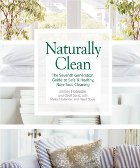
Book Review: Naturally Clean: The Seventh Generation Guide to Safe and Healthy, Non-Toxic Cleaning by Jeffrey Hollender
 Summary:
An introduction to the green concept of natural cleaning, this book gives an overview of why chemical cleaners are bad for people and the environment. Summaries of the scientific evidence are followed by introductory advice on all-natural cleaning and keeping your home as unpolluted as possible.
Review:
Although the concept of cleaners polluting the home seems at first glance like a non-issue, the scientific evidence presented in this book clearly demonstrates that it is an issue. For example:
“Ordinary household products such as cleansers, cosmetics, and paints are now the Los Angeles region’s second-leading source of air pollution, after auto tailpipe emissions, air quality officials say.” Location 182
Ok, but we don’t want to live in dirty squalor, right? The book goes on to clearly point out various natural, safe cleaners that work just as well as regular cleaners, although perhaps requiring a bit more elbow grease.
Although at first I was concerned that the fact that the book was written by the founder of the Seventh Generation cleaning company would lead it to bias or to essentially be an ad for their products, neither was the case. Where products are listed, natural cleaning competitors are included. Further, instructions are given on cleaning your house with products as cheap as vinegar and hydrogen peroxide.
Be cautioned, though, that this is definitely an introductory book. It reads more as a pamphlet to get you headed in the right direction than as a change your entire life guide. As such, I recommend it to those who’ve never considered the benefits of cleaning with natural products before.
3.5 out of 5 stars
Source: Amazon

 Support my work with a tip or browse my shop for curated book club guides, how to guides, cross-stitch patterns, and more!


This work by Amanda Nevius is licensed under a Creative Commons Attribution-Noncommercial-No Derivative Works 3.0 United States License.
 Opinions of a Wolf