
Archive
Book Review: The Hornet’s Sting: The Amazing Untold Story Of Second World War Spy Thomas Sneum by Mark Ryan (Bottom of TBR Pile Challenge)
 Summary:
Thomas Sneum was a Danish Allied spy during World War II who was periodically suspected of being a double agent. Partially due to this suspicion and partially due to infighting between the two British spy agencies (SIS and SOE), he never got the attention or respect he deserved. Mark Ryan, the author, found out about him and set out to get to know him. Both personally and through research. Here he tells the true story of Tommy Sneum and sets the record straight once and for all.
Review:
I picked this book up during a kindle sale because I’m a big WWII buff and who doesn’t love real life spy stories? I thought it was a sure bet, but apparently even a true life spy story can be written in a dull manner.
It’s impossible to read the book without learning a lot. For instance, I had no idea that Britain had two different spy agencies that were battling each other for control of spying missions. This infighting between the SIS and the SOE led to lack of communication and lack of a solid spy front with one, unified plan. Similarly, I didn’t know it was common practice to take people who had escaped from behind Nazi lines, train them as spies, then re-drop them back in their home countries. I always thought the resistance movement just built up from the inside and then they contacted the Allies on the outside with information. How much more complex it was is really interesting. I also loved learning more about those from occupied countries who escaped and fought in other militaries against the Nazis. In spite of learning all of these new to me facts about WWII spying, the book manages to be dull. Ryan tends to wander off on side diatribes about the intricacies of red tape and paperwork instead of focusing in on the more action-oriented, interesting bits of the spying. He also spends a lot of time giving the full name of every single person even vaguely connected with Tommy and the spying, even if they really have no impact on the story. The book could really have used a bit more streamlining and focus to keep the energy up. Just because it’s nonfiction doesn’t mean it can, or should, meander.
Tommy Sneum is hard to root for. He’s not a likable guy. He abandons his wife and infant daughter to go be a spy. That could definitely be seen as valiant, however, he expresses consistent distate for his wife and a lack of concern or care for even knowing his daughter. He certainly comes across in the book as a guy just after adventure, not so much a man looking to protect his country or his family. Similarly, Tommy express arrogance when it comes to women, claiming that they essentially would go sleep with him at the drop of a hat or a snap of his fingers. He does not come across as seeing women as people but rather as recreational objects. One story that really demonstrates this is he tells the author that he had a threesome once, and he was upset that the women dared to pay attention to each other at all, rather than 100% to him. Sex is supposed to be about people giving to each other, not about one person being worshiped. His general attitude towards women gave me a squicky feeling throughout the book. Of course, most people are not all bad or good. Tommy is no exception. He expresses a real openness toward a male colleague who was known to be bi. He refuses to view all Germans as evil monsters and insists, to those high up in the British resistance no less, that most Germans are just caught up in Hitler’s war machine. Of course, these even-handed views are almost universally held of men.
Perhaps the most interesting part of the book is Ryan’s investigation into the accusations that Sneum was a double-agent. This part of the book isn’t really played up in the blurb, which I think is unfortunate. Ryan did a lot of investigative work and lays out all the details that he believes clears Sneum’s name. Seeing how Sneum and his methods were misunderstood by the British and also how having two different spy agencies working led to misunderstandings was truly fascinating, and I’m glad Ryan took the time to work at finding the truth.
Overall, this is a rather slow-paced work of historic nonfiction that focuses in on the red tape and organizational aspects of spying more than exciting adventures. It does good work in determining that Sneum was not a double agent in WWII. Sneum’s womanizing can be a bit tedious at times, although his even-handed perspective on the German people is good to see. Recommended to those interested in the organizational aspects of spying in WWII, including very minute details.
3 out of 5 stars
Source: Amazon
Buy It
Note: Apparently this book is no longer available on the kindle.

Book Review: The Gifts of Imperfection: Let Go of Who You Think You’re Supposed to Be and Embrace Who You Are by Brené Brown
 Summary:
Brené Brown, PhD, LMSW, is a social work research professor. She’s spent years studying vulnerability, courage, worthiness, and shame. In this book, she presents her research on what she calls “Wholehearted living,” a way of living shared by the most content people she has interviewed in her years of research. Dr. Brown argues that the key to a happy, fulfilled life is to engage with the world from a place of worthiness. The book also offers 10 guideposts on how to fully achieve Wholehearted living.
Review:
Dr. Brown was a guest speaker on the only podcast I listen to (On Being with Krista Tippett). Her episode where she discussed the power of vulnerability struck such a chord with me that I sought out one of her books to read. This was the first one I could get my hands on. Although at first the text seems simplistic, particularly compared to the podcast I listened to, with time the overarching picture Dr. Brown is painting becomes clear, and it truly is inspirational.
The guideposts each consist of one thing to cultivate and one thing to let go of. Each guidepost ends with suggestions for working on both. For instance, guidepost two is cultivate self-compassion and let go of perfectionism. The chapter ends with a link to an online quiz to see which areas of self-compassion you need more work on. I like that Dr. Brown gives the reader both something to stop doing and something to replace it with. It’s easy to say, “Don’t do this,” but it’s much harder to give someone something positive to replace it with. Some of the guideposts felt more relevant than others, but that will definitely be a personal thing for each reader. For instance, I didn’t really need someone to tell me to get creative instead of comparing myself to others, but I did need to hear about cultivating calm and stillness and letting go of anxiety. How useful you will find the book will probably be related to how many guideposts are applicable to your own life. Skim through the table of contents and see how the different guideposts resonate with you.
Dr. Brown’s advice is based on scientific research, but she also brings a real person element to her book. She is very honest with the reader about her own vulnerabilities as a person and as a woman and which guideposts she struggles the most with herself. Some of her stories may seem a bit silly at first to the reader, particularly since Dr. Brown’s life seems to be a relatively easy one, but ultimately they lend a sense of connection and realness to the book that allows the reader to ponder the information at a deeper level.
The issues she addresses are quite universal, including: the desire to fit in, shame, authenticity, perfectionism, resilience, hope, addiction, and power. At first what she states may seem obvious or too simple, but the reader will find themselves returning to these simple sentences later on at key moments and saying, “Huh, it’s not as obvious or as simple as I thought at first.” Here are just a few examples:
Because true belonging only happens when we present our authentic, imperfect selves to the world, our sense of belonging can never be greater than our level of self-acceptance. (page 26)
Healthy striving is self-focused–How can I improve? Perfectionism is other-focused–What will they think? (page 5)
I define calm as creating perspective and mindfulness while managing emotional reactivity. (page 106)
When we value being cool and in control over granting ourselves the freedom to unleash the passionate, goofy, heartfelt, and soulful expressions of who we are, we betray ourselves. When we consistently betray ourselves, we can expect to do the same to the people we love. (page 123)
Although the book can at first seem obvious and Dr. Brown’s personal examples overly simple, this book actually takes a complex topic and clearly explains it at a personable level, complete with suggested methods to implement the changes Dr. Brown suggests. This book presents the scientifically-researched fact that a happy, fulfilled life comes from living authentically and being kinder to yourself. Recommended to anyone feeling frazzled, stressed, or generally dissatisfied with their life. Dr. Brown’s book shows another, simpler way to be.
4 out of 5 stars
Source: Library

Book Review: Will I Ever Be Good Enough?: Healing the Daughters of Narcissistic Mothers by Karyl McBride
 Summary:
A guidebook for adult women raised by a mother with Narcissistic Personality Disorder (NPD). Dr. McBride is a therapist with many years of experience treating daughters of NPD mothers and also with treating people with NPD. Additionally, she herself is the daughter of a woman with NPD. The book is divided into three sections to help the daughters of mothers with NPD to heal and take charge of their lives. The first section “Recognizing the Problem,” explains what maternal NPD looks like. The second section, “How Narcissistic Mothering Affects Your Entire Life,” explains the impact NPD mothers have on their daughters, both as children and as adults. The third section, “Ending the Legacy” is all about healing from the NPD mothering and breaking the cycle of Narcissism. Dr. McBride offers clinical examples from her practice as well as detailed, clearly explained exercises to aid with healing.
Review:
It’s not easy to find a book addressing healing from abuse that manages to walk the fine line of understanding for all involved and absolute condemnation of the abusive actions and that simultaneously encourages agency and healing without making the survivor become stuck in a victim’s mentality. Dr. McBride strikes this balance eloquently.
The three sections of the book work perfectly for guiding the reader through understanding precisely what happened in her childhood, how it impacts her adulthood, and how to regain agency of herself and her life. NPD is not a mental illness that is well-understood or recognized. The first section thus must explain NPD and how NPD leads to abusive mothering without demonizing the mother suffering from NPD. It is incredibly difficult not to demonize people with NPD. People with NPD tend to be self-centered, manipulative, and resistant to treatment. McBride manages to simultaneously describe the person with NPD in a sympathetic light and condemn their behavior. This section also serves to provide an aha moment for the reader. It will immediately be clear if your mother has/had NPD or not, and if she does/did, it will shine a light on the daughter’s childhood, proving she is not crazy or ungrateful. Some of the signs of a mother with NPD include: the mother demanding praise for everything she’s ever done for the daughter, a lack of compassion or empathy for the daughter, approval for who the mother wants the daughter to be instead of who she is, the mother perceives of the daughter as a threat, the mother is jealous of the daughter for various reasons, the mother is overly critical or judgmental, the mother uses the daughter as a scapegoat for her bad feelings, the mother treats the daughter like a friend, no boundaries or privacy, the mother involves the daughter prematurely in the adult world, and more.
This section also explains why the book is only about daughters of mothers with NPD and not for her sons as well.
A mother, however, is her daughter’s primary role model for developing as an individual, lover, wife, mother, and friend, and aspects of maternal narcissism tend to damage daughters in particularly insidious ways. Because the mother-daughter dynamic is distinctive, the daughter of a narcissistic mother faces unique struggles that her brothers don’t share….A narcissistic mother sees her daughter, more than her son, as a reflection and extension of herself rather than as a separate person with her own identity. She puts pressure on her daughter to act and react to the world and her surroundings in the exact manner that Mom would, rather than in a way that feels right for the daughter. (6-7)
The next section looks at what impact being raised by a mother with NPD has on the daughter’s adult life. McBride factually explains where some of the daughter’s less healthy behaviors and thought processes may come from without falling into the trap many childhood healing books fall into of repeatedly directing negative energy toward the parent. Some of the issues that may be present in an adult daughter raised by a mother with NPD include: high-achieving or self-sabotaging or waffling between the two, difficulty understanding and processing feelings, inappropriate love relationships that are dependent or codependent or giving up on relationships entirely, fear of becoming a mother herself, unconsciously mimicking her mother’s parenting with her own children or doing the exact opposite of what her mother did.
The final section is all about the daughter healing, overcoming, and taking agency for herself. McBride encourages therapy, but also offers at-home tips and exercises for those who cannot afford it. An example of one of these is the “internal mother” exercise. This exercise involves many steps, but it essentially seeks to replace the internal negative messages the daughter has from her own mother with more positive messages that are the type the daughter wanted from her real mother. The daughter grieves the mother she never got to have and learns to parent herself. Much of the work in this section involves grieving the mother and childhood the daughter never got to have, accepting it for what it is, giving herself the encouragement and mothering she needs, learning to set boundaries, and the daughter coming to be in charge of her own life. The exercises are not simple and may seem a bit overwhelming to the reader at first, but they do serve to mimic the real therapy process, encouraging introspection, journaling, grieving, and behavioral changes.
One thing I really appreciate about McBride’s approach is how she handles the adult relationship between daughter and mother. She 100% encourages the daughter to make the choice that is right for her own emotional health and that simultaneously does not expect miracles from her mother. Since most people with NPD don’t receive successful treatment, McBride carefully admonishes the daughter to base her decision based on her mother’s proven behavior. She encourages setting clear boundaries, and individuating oneself from mother. But she also acknowledges that having a relationship at all with a mother with severe NPD might not be possible.
We have to acknowledge that a narcissistic mother may be too toxic to be around. In many situations, daughters have to make the choice to disconnect completely from their mothers because the toxicity damages their emotional well-being. While others around you may not understand it, this is a decision that you get to make for your own mental health. (184)
Refusing to give one-size-fits-all advice on the relationship between a narcissistic mother and her adult daughter is just one example of the many positives of this book. McBride offers insight, advice, and isn’t afraid to say what might be painful to hear. She has done an excellent job putting the therapy process into book format, as much as possible.
Overall, this book tackles an incredibly difficult topic in an even-handed, clear manner. Its focus on just daughters of mothers with NPD allows Dr. McBride to give targeted examples and advice to the reader. It never excuses the mother’s behavior, firmly condemning it, but still exhibits compassion for the mother suffering from NPD. Any woman who thinks she may have been raised by a woman with NPD should read this book and see if any of it rings true for her. Additionally recommended to anyone interested in how NPD impacts parenting and the next generation.
5 out of 5 stars
Source: Amazon

Counts For:

Book Review: The $100 Startup: Reinvent the Way You Make a Living, Do What You Love, and Create a New Future by Chris Guillebeau
 Summary:
Guillebeau investigated what makes microbusinesses (small businesses typically run by one person) successful by conducting a multiyear study interviewing more than 100 successful microbusiness entrepreneurs. Here he presents his findings on what makes for a successful microbusiness and offers advice on how you can become a successful microbusiness entrepreneur too.
Review:
I found this book in a list of top books for small businesses published in 2012. The title totally intrigued me, since starting up a business with very little funds is quite appealing. I’m so glad I picked it up. This is an awesome small business book. It’s written for entrepreneurs, not MBAs, and it’s easy to understand, concise, engaging, and memorable. Perhaps most importantly, the few tips and tricks I’ve tried out so far have actually worked.
The book is clearly organized with no-nonsense, easy-to-understand chapter titles like “Hustling: The Gentle Art of Self-Promotion” accompanied by memorable, informative illustrations. This organization extends to the content of the chapters. When possible, Guillebeau provides subcategories and lists, putting the information into smaller, more digestible chunks. His writing also captures this no-nonsense, straight-forward style.
Focus relentlessly on the point of convergence between what you love to do and what other people are willing to pay for. (loc 2406)
It’s pretty near impossible to misunderstand any of the points he makes. The chapters also provide graphs, illustrations, references, and guides to further aid you in following the steps laid out.
In spite of laying out steps and guidelines, Guillebeau successfully avoids promoting an unbelievable “one-size fits all” miracle model. He talks about what worked and didn’t work for the successful entrepreneurs he interviewed, but he also points out repeatedly that it’s important that the reader understand herself and her strengths and weaknesses and always remember she knows her potential business and personality the best.
People who know less about the business than me do not get to make decisions about it. (loc 3296)
This honesty that one-size does not fit all and the clarity with which Guillebeau presents his research grants the book a trustworthy, believable vibe. It instills faith in the reader and brings out her passion for her own ideas. Plus, the fact that this is based on real research and not just Guilleabeau’s own experiences means the tricks and tips are more likely to work. Nothing works perfectly every time, and the market is an unpredictable place, but having this research as a guide can help the reader avoid at least some of the hiccups, bumps, and pitfalls in starting and running a microbusiness.
Overall this is a well-organized, honest book clearly written for the entrepreneur, not an MBA. It is based on market research, not exclusively the author’s own experiences, and offers tips and advice, not a one-size fits all model. Anyone interested in starting their own small business or in what makes small businesses succeed should definitely give this book a read.
5 out of 5 stars
Source: Library
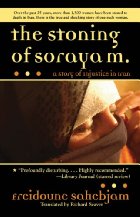
Book Review: The Stoning of Soraya M.: A Story of Injustice in Iran by Freidoune Sahebjam (Bottom of TBR Pile Challenge)
Summary:
Sahebjam, a French-Iranian journalist, was traveling through Iran in the 1980s when he had to stop in a small village. An elderly woman, Zahra, asked him for tea so she could tell him the story of what happened to her niece, Soraya, mere weeks before. Sahebjam grants narrative to her tale to get the story of injustice out.
Soraya was a typical rural Iranian woman. Married to a villager at a young age. Her husband, Ghorban-Ali, became less and less invested in his family and more and more likely to beat them. He also became increasingly interested in young women in the city. When a criminal posing as a mullah comes to town, Ghorban-Ali sees the perfect opportunity to be rid of his wife without any costs of divorce. He, the mullah, and an easily swayed widower friend corroborate to falsely accuse Soraya of adultery and sentence her to death by stoning.
Review:
Things can easily go awry when the powers of justice are held in the hands of a select few. A lot rests on whether or not those few are good people. This book tells that tale, and it tells it movingly, regardless of whether or not all the facts of the story are precisely correct. The biggest facts are accurate, and that is what matters.
Sahebjam is a French-Iranian journalist. He thus has both the perspective of insider and outsider, which is the ideal one for a story like this. He understands the people and the village but he also knows how to present and explain things to the non-Iranian reader. Sahebjam clearly and honestly states from the beginning that he got this tale from one eyewitness. Some might argue that this story thus isn’t researched well enough or thoroughly vetted. It is indeed one eyewitness account passed through an author (and for English speakers, a translator). But the core of the injustice is verifiable: the handling of adultery in Islam. Combine this with religion and state being one and the same, and it’s easy to see how if this story didn’t indeed already happen how it could easily come to be.
The first half of the book introduces us to Sahebjam, Zahra (the aunt), and Soraya, as well as the organization of the small town and the adultery laws as followed by fundamentalist Islam. Sahebjam does a good job introducing all the people and explaining the context of the injustice without overwhelming the reader with info dumping.
Essentially, in Islam, when it comes to adultery, the woman has to do all the proving.
When a man accuses his wife [of adultery], she has to prove her innocence [in Islam]. This is the law. On the other hand, if a woman makes an accusation against her husband, she has to produce proof. (location 1079)
If the woman is wealthy, she can pay off the mullah (think of it as paying a penance in Catholicism). But:
In most cases the woman [accused of adultery in Iran] is poor—which means she is a virtual slave to her husband. She has no rights, except for the meager right to remain silent. All the husband needs to win his case of infidelity is two eyewitnesses, who are generally friends and accomplices. As for the accused woman, she has to prove her innocence and that is impossible: no one will come to her aid; no one will bear witness on her behalf. (location 129)
Regardless of whether or not Soraya was a real person (and I do believe she was), these are problematic laws that leave the door wide open for abuse by a few corrupt people. This book demonstrates that danger eloquently.
Sahebjam clearly made a choice to make the tale flow better by giving it some narrative qualities. He inserts dialogue he clearly wasn’t there to hear, and he even talks about what was going on inside people’s heads. I didn’t like that he did the latter, especially. I understand dialogue can help make a nonfiction book flow a bit, and I’m ok with that. But claiming to know what was going on inside people’s minds turned me off the narrative a bit. It leaves the door open for criticism of a story that needs to be taken seriously, and I wish he had made other narrative choices.
At first, it is easy to be irritated by Soraya’s choice to remain silent when accused. She gives up so quickly, one wonder why she never advocates for herself. But in retrospect, it’s a clear, yet subtle, depiction of what can happen to a victim of abuse over time. Eventually their spirit is just beaten out of them. Soraya demonstrates what happens when abused people are left to deal with the abuse and abuser on their own.
Overall, this book highlights the inequality innate is Muslim adultery laws, as well as the dangers of leaving justice to the hands of a few. The narrative structure doesn’t precisely suit a nonfiction account of an event, but the bones at the core of the injustice are still verifiably true. Readers who prefer a dry, precise nonfiction might not be able to look past the narrative structure. Those who can will find a moving tale of how easy it is for injustice to take over a community.
4 out of 5 stars
Source: Amazon

Book Review: Chop Suey: A Cultural History of Chinese Food in the United States by Andrew Coe (Bottom of TBR Pile Challenge)
 Summary:
American Chinese food is different from Chinese Chinese food. This is a well-known fact. Coe tells the history of how Chinese food came to America and changed and adapted to the cuisine we know today. Along the way, some of the stories of Chinese immigrants to America and Chinese-Americans are told as well.
Review:
I love food, and I love history, so a book telling the history of a specific cuisine totally appealed to me. Unfortunately, this book missed the mark for what could have been an enticing history of American style Chinese food. Instead, it gets hung up in the early history of both Chinese food in China and Chinese food in America in the 1800s then hops, skips, and jumps over how it changed through the 1900s up to present. While this information is interesting, it is not the history of American Chinese food it is presented as.
The main issue with the book is it spends almost 1/4 of its time exploring the history of Chinese food in China. While I learned some interesting facts, such as that tofu was invented in the Han Dynasty (page 80), this information is not necessary to convey how Chinese food came to America and changed. A much briefer introduction to where Chinese food was at before coming to America would have sufficed. The best part of the book is when it discusses Chinese food in America in the 1800s and explores how US-born Americans’ embracing of Chinese food or not depended on many factors such as the current rates of xenophobia, job markets, and prices. Viewing the history of the American west coast through the perspective of Chinese immigration and Chinese restaurants was truly fascinating. One of the more fascinating things that I learned in this section was a detail of the history of the racist perception of Asian men as not masculine. In that time period, when Chinese immigrants were competing with white Americans and Irish immigrants for railroad and other jobs, the backlash was that since Chinese men “didn’t need” to eat meat to work long hours they could afford to take a lower rate of pay. Articles attacked the Chinese diet as a sign that Chinese men are less masculine since they “don’t need” meat the way white American and Irish-American men do. One article title from this time period cited in the book is “Some Reasons for Chinese Exclusion. Meat vs. Rice. American Manhood against Asiatic Coolieism. Which Shall Survive?” by Samuel Gompers (page 141). As a vegetarian, I found it fascinating that the sexist perception of a less meat-centric diet (the Chinese did indeed eat meat, just less than American men), has both such a far-reaching history and was used to fuel xenophobia and racism against immigrant workers. It is clear to me after reading this that a large part of the work for vegetarians is to get rid of the faulty correlation between meat and masculinity. I could see fixing this having other positive outcomes as well, such as fighting against misperceptions of the masculinity of other cultures.
Unfortunately, the wonderful details found in the chapters on the 1800s gradually cease to exist as the book moves up through time. While the 1920s get some special attention, such as touching on the fact that Chinese restaurants survived Prohibition well because they had never served alcohol anyway (page 189), slowly these details fall away until we get nothing but the bare bones of how Chinese restaurants functioned and interacted with American history in the rest of the 20th century up to present. There is even one rather aggravating long aside exploring President Nixon’s visit to China. While his visit to China definitely gave a resurgence of interest in Chinese food in the US, it was again unnecessary to give such incredible details on Nixon’s visit. It could have been simply stated, instead, that Nixon visited China, bringing Chinese food to the forefront of American thought again and giving a resurgence of interest in Chinese cuisine. The book has a tendency to lollygag on topics that are not actually what the book is supposed to be about. While these topics can be interesting and Coe explores them well, they are not what the book supposedly is about. It would be better to present the book with a different title or edit the focus back to simply Chinese-American cuisine.
One other factor that made me enjoy the book less is that Coe shows a clear bias toward Chinese culture. There is nothing wrong with enjoying Chinese culture, but Coe says some things that if he had said them in reverse would be considered completely unacceptable to say. He frequently presents the Chinese people as more civilized, their way of doing things as more logical and simply better, and even scoffs at the level of advancement of European countries compared to China at one point (page 94). Lack of bias and simply presenting the facts is the strength of historical nonfiction works. It would have been nice to see that level of professionalism in this book, regardless of Coe’s personal views.
Overall then, while I learned some new facts about both Chinese-American cuisine and Chinese-American history, the book wanders significantly through Chinese history and Chinese cuisine as well. Interesting, but not what the title implies the book is about. Coe also shows some bias that should not be present in a history book. These are easily skimmed over, however, and thankfully do not come up very often. Recommended to those with an interest in both Chinese-American and Chinese history in addition to the history of American style Chinese cuisine, as all three are covered rather equally.
3 out of 5 stars
Source: Amazon

Cookbook Review: Green Smoothie Magic – 132+ Delicious Green Smoothie Recipes That Trim and Slim by Gabrielle Raiz
 Summary:
Lots of leafy greens are important to incorporate into your diet for health reasons (vitamins! fiber!) but it can be difficult to work them in. Enter the green smoothie. Blend up the greens with other ingredients to give yourself a delicious sweet or savory drinkable treat and get 1 to 2 cups of leafy greens into your belly in the time it takes to drink a drink! Raiz walks you through all the steps to incorporating green smoothies into your life from the basics of what greens to use and how to what makes a good blender to recipes to how to tweak and personalize the recipes.
Review:
I picked up this cookbook when I spotted the kindle version on sale for 99 cents because I wanted exactly what it promised. A way to work in more leafy greens into my life in a delicious way.
The cookbook is organized into sections entitled: introduction, the magic of the green stuff, not all green smoothies are green, don’t get stuck with the same green, greens, how green should my first smoothies be?, green smoothie magic basics, the pragmatic approach to health nutrition and everything!, freezing fruit, green smoothie rescue — what to do if a recipe doesn’t work out!, about blenders and blending, about drinking and storing your smoothie, green smoothie magic 101: instructions at a glance for blending any smoothie, and green smoothie magic recipes. If that sounds like a lot of sections, it’s because it is. Raiz has a lot of information to give the reader. She clearly knows what she’s talking about, and I found a lot of what she had to say very useful! Particularly how to pick the right blender, the different flavors of greens and how to pick which ones to use, how to store greens, how to save a smoothie that doesn’t taste quite right, and the basic elements of a smoothie. Also, the recipes of course! But how this valuable information is organized is a bit haphazard and can sometimes be repetitive. I’m glad I took the time to read it all and glean out the important bits, but I’m not sure everyone would stick it out through such a disorganized and long introduction. A more concise introduction to the hows and whys of green smoothies is needed.
The recipes themselves are creative without going too far off the deep-end in exotic ingredients. For instance, even though Raiz recommends making your own nut milks, she provides substitutions for those of us who would rather not do that. The recipes are easy to read, fully utilizing bullet-points and simplicity. I really appreciated that. There are also full-color illustrations throughout the cookbook , although they are primarily of the ingredients and not the smoothies themselves. I get it that green smoothies tend to be, well, green colored, but a few more smoothie pictures would be nice.
So I read through the whole book and was ready to try a recipe. I knew from reading the book that my low-powered food processor wasn’t ideal for blending but would work with a recipe with less tough ingredients (for instance, the beet smoothie might be a bit too much for my food processor). I also followed Raiz’s newbie caution and went with a recipe with a more traditional smoothie taste to ease myself into it. Below is the recipe I tried out with a picture of the result.

My first homemade green smoothie! In a wine glass because everything tastes better in a goblet.
“Cinnamango Smoothie (location 1558)
Blend first:
1 cup water with 1/4 cup almonds (soaked overnight) OR 1 cup nut milk OR 1 cup coconut water
Then add:
1 cup mango (frozen)
cinnamon, salt, and vanilla
2 cups spinach leaves (or any combination of mild greens)
1 T chopped mint leaves
Ice and extra water to get your desired temperature and consistency.”
You can see how simple the instructions are. It is a smoothie after all. I left off the introductory paragraph, which is primarily featured in the earlier recipes and talks more about the ingredients, and skipped right to the actual recipe. The ingredients introduction is nice and makes it more conversational, but it is a smoothie after all. You just put in the general ingredients to fit your tastes and away you go, and most of the recipes utilize this simpler style I chose here.
I used coconut water for the base of my smoothie, and my mango had kind of defrosted by the time I got home from the grocery store. I also didn’t have spinach, but I did have swiss chard from my CSA, which was listed as a mild green in the cookbook, so I subbed those in. When I took the first taste, it felt too strong and not smoothie-like enough to me. So I read over the section on how to fix your smoothie and noticed that Raiz states that the temperature of the smoothie affects the taste. Perhaps my mango being defrosted mattered? So I added in ice, blended again, and voila! An incredibly delicious green smoothie! It was, admittedly, a bit less well-blended than I would have preferred, but I was well aware that was the fault of my food processor, not the recipe.
So what’s the verdict? Well, I got so excited about green smoothies after this cookbook that my partner got me a blender for my birthday (using the recommendations in Raiz’s book to help him choose which one). So I’d call it a success! The recipes are easy, adaptable, and Raiz arms you with troubleshooting techniques to help you learn to get it right. The beginning of the book needs more focus, organization, and clarity to help Raiz’s true expertise and talent shine through but if you want to start incorporating green smoothies into your life, this book is a great place to start. It both explains greens and green smoothies and blenders AND gives you a bunch of adaptable, easy recipes to get going.
4 out of 5 stars
Source: Amazon

Book Review: Where the Blind Horse Sings: Love and Healing at an Animal Sanctuary by Kathy Stevens (Bottom of TBR Pile Challenge)
 Summary:
When Kathy Stevens decided to change careers mid-life, she wanted to do something that would help animals and let her teach. She landed on the idea of founding an animal sanctuary. But this book is very minimally about Kathy. It is mostly about the animals that came to find a safe haven at the sanctuary she founded. Animals like Rambo the sheep who guards other animals. Paulie a former cockfighting rooster who loves car rides. And of course a blind horse once terrified to move who now goes for trail rides.
Review:
This book wasn’t what I was expecting, which was an account of setting up and running an animal sanctuary. Instead it is a collection of short stories about individual animals who live at Catskill Animal Sanctuary, in the vein of James Herriot, although not quite to that classic’s level.
The stories are roughly grouped based on the situations that led the animals to the sanctuary, their personality, and of course some ultimate peaceful deaths at the sanctuary. I was a bit frustrated that instead of telling one animal’s story end to end, they were split up among sections. I can understand not wanting to end every chapter with an animal’s death, but I also think seeing one animal’s life in a complete story would be more touching. On the other hand, I also appreciated how clearly the different animals’ personalities were drawn without ever venturing into the land of hypothesizing. One doesn’t have to impose their own beliefs on an animal to clearly see the difference between a hurt, abused animal and a happy one. Stevens presents the difference quite clearly without venturing into speculation, which I think will give the book the broadest audience.
In spite of the dark past lives of these once abused animals, the book is a light read, both in spirit and in content. You won’t learn the nitty gritty of founding and running an animal sanctuary, which I think is too bad. It’d be nice if there was even an epilogue about more of the day to day realities of rescuing animals. On the other hand, the light, easy read gives the book a broader audience. It also features a suggested further reading list at the end, as well as links to the sanctuary’s website and invitations to visit, so those who want more can seek it out.
Overall, this is a well-written, feel-good collection of stories of the animals of Catskill Animal Sanctuary. It doesn’t provide much insider information on the running of animal rescue charities, but it does provide insight into the personalities of farm animals. Recommended to animal lovers who enjoy short stories.
4 out of 5 stars
Source: Amazon

Book Review: Midnight in Peking: How the Murder of a Young Englishwoman Haunted the Last Days of Old China by Paul French
 Summary:
In 1937 the entire world is on the brink of war. In Peking, China, the Japanese invaders are encroaching. In the midst of this chaos the adopted daughter of British consulman is brutally murdered, her body found in the shadow of the Fox Tower, universally viewed with suspicion by the Pekingers as haunted by spirits. Due to the special circumstances, the murder investigation requires the presence of both a Chinese and a British investigator. They must race to find Pamela’s murderer before the Japanese engulf the city.
Review:
This true crime novel takes a bit to get things set up, but once they are, oh my how it sucks you in.
My fellow librarians will appreciate the backstory of how this true tale was discovered by French. In the Afterword he states that he was digging around in some archives and stumbled upon a box of evidence that Pamela’s father sent off to the government, which was never really looked at and just put away in storage and then into archives. It was through libraries that he even discovered this fascinating, intersectional true crime. I think that’s encouraging to any librarian who has ever spent hours making a finding aid for archives.
So just what makes this true crime more fascinating than others? Pamela was the adopted daughter of Werner, and her adoptive mother died at a young age. She had been away at boarding school in Tientsin and was home for the holidays. Because she was born in China but was also adopted by British consulman, there is an interesting assimilation into Chinese culture going on in her life that we don’t often see in Western novels. Peking itself featured the legations and white districts for multiple different white Western countries. This means that because Pamela was technically a British citizen murdered on Chinese ground both the Chinese and the British police force had to be involved and work together in the investigation. Officer Han and DCI Dennis certainly make for a unique investigation team. In addition, Pamela’s body was discovered in the shadow of the Fox Tower, and this led to speculation about fox spirits, which in Chinese tradition show up as wily women. Of course quickly the seedy underbelly of Peking is implicated, featuring a multicultural bunch of addicts, dope dealers, brothels, and more, and naturally some of the classy elite start to be implicated into that underworld as well. Add in the fact that the Japanese invasion was encroaching and toss in the first rumblings of Communism, and it makes for a story that is impossible to not find fascinating.
French unfurls the story well. He quotes only when it is fairly certain what was said, but summarizes scenes well. A clear picture of both Pamela and Peking are rendered fairly early in the novel. I also appreciate that he spent time at the end talking about what happened to all of the key players and discussing how all-encompassing the Japanese invasion were. I think what he handled best though was presenting people as individuals and not representative of their race or nation or even class. In a true crime as multicultural as this one, that is important. It’s also nice that in a story that could have easily turned into victim blaming, which happens so often when the victim is a young woman, he eloquently avoids any hint of that:
Pamela wasn’t perfect; she was making the same mistakes many girls do when experimenting with their independence, their newfound power on men. Her tragedy was to encounter the wrong men, at just the wrong moment. (location 2834)
I did, however, feel that the beginning was a bit lacking. It took a bit to truly get into the story. A faster pace or a more clear this is where we are going set-up would have been nice. At first it felt like the rather dull story of some poor little imperialist rich girl. But that’s not the story at all. The story is that of an adopted girl in a country where she just so happens to be the color of worldwide colonizers, but it is instead the story of a diverse group of people horrified by the brutal murder of a young woman by a diverse group of sick, twisted people. It would be nice if that was more clear from the beginning.
Overall, this is a well-told, historic true crime novel that manages to avoid victim blaming and also embrace multiculturalism. It will be of particular interest to anyone with a fascination for Chinese or WWII history.
4 out of 5 stars
Source: Netgalley

Book Review: Fire in the Ashes: Twenty-Five Years Among the Poorest Children in America by Jonathan Kozol
 Summary:
Jonathan Kozol’s books about his social justice work among inner city children in the 1980s and 1990s brought attention to the starkly uneven educational opportunities presented to children in America. Now the children he originally met are young adults, and through this memoir telling of his friendships with them, he explores their lives and what it means to be successful when everything is stacked against you.
Review:
Long-time followers of my blog know that my undergraduate university (Brandeis University) seeks to instill in its students a sense of social justice, and that certainly worked with me. So when books like this pop up, I’m instantly interested in reading them. True equality means equal opportunities and safety for all, and a book like this is a bit unique in that it doesn’t just look at inequalities but also examines the long-term effects of attempts at intervening and helping people who basically got the short end of the stick. Kozol succeeds quite well in analyzing what has worked and what hasn’t in the Bronx where a large part of his social justice career has been.
The chapters each focus on a different child, although a couple of children get their own chapters. Kozol met the children either in one of the infamous 1980s NYC homeless shelters or at an after-school tutoring program offered at a church (St Ann’s) in the Bronx. There are a few things that are immediately apparent from observing the long-term trajectory of these kids, which is why a book like this is so valuable for social justice work.
First, all of the kids who were homeless or who spent a long time in homeless shelters had many more problems and difficulties later in life. It is clear that homelessness has a long-lasting negative impact on children, no matter how many good opportunities come to them later in life. Similarly, girls seem to stand a better chance than boys of climbing out of the poverty they grew up in. Kozol never makes any clear speculative statements as to why he thinks this is, but the multiple lives we observe clearly demonstrate that boys are more targeted than girls both by the crime lords and by the police. They are both presumed to want to participate in crime and presumed to already be participating in crime. If you live in just this neighborhood and see just this world where almost everyone you see except maybe a parent or a teacher expects you to become a criminal, it’s no wonder that the boys are struggling more than the girls. This is a great example of how patriarchy hurts men too. These assumptions about masculinity and roles in the community are hurting them.
The other big theme of the book is of course how educational inequality entrenches classism and racism. Kozol has spent most of his career working in improving education so it’s not surprising this is a theme of the book. One thing that stood out to me was how quickly kids are lost if they never get a firmly established literacy and sense of confidence in their ability to learn. Once kids start getting held back a grade or fall below grade level, it is incredibly easy to become discouraged and turn to what appears to be an easier life of crime. And it’s not the kids’ fault that they are struggling at school. The class sizes are too large, the teachers are frequently inexperienced or, in the case of one school, were never even trained as teachers at all. There is frequent teacher turnover, too heavy of a focus on just getting the kids to pass the achievement tests and not establish real learning and literacy. There is a real problem with violence and bullying. The list goes on and on. It goes beyond the schools though. Outside of school the children are never truly safe. There are shootings and stabbings and rapes, and we’re not talking down an alley. We’re talking in the lobby or stairwell or elevator of their apartment buildings. How can anyone focus on learning and growing up when that is all around them? It’s a big problem, and one that is not easily solved.
Kozol ends the book by talking about what he sees as progress and how the now grown-up kids he worked with see possible solutions. He’s adamant that even small gains are gains. He views any child whose life ultimately is one of peace and self-worth as an accomplishment, whether they even completed high school or not. To a certain extent I agree with him, but to a certain extent I agree much more with one of the grown-up kids (who just so happens to be about my age) who argues that small changes aren’t good enough. That the inequality is so deeply entrenched that we must truly rock the system and not just save one child at a time. She does ultimately agree that the small changes are still worthy of praise and is working on a degree in sociology so she may go back to the Bronx and focus in on small changes. That then is the question at the heart of this book and one for which there are no easy answers. How do we fix this problem?
It’s difficult to say who this book will appeal to. It’s not a clear treatise on the educational system or social justice. It is one man’s observations of the lives and life stories of inner city youth he worked with. It is not academic per se but it’s also not exactly a memoir either. I think perhaps that it will appeal most to anyone whose day to day job involves having small influences on the education of individuals. It clearly shows how much impact one person can have on another person’s life, particularly when it comes to education and literacy.
Overall then I recommend this to those who work in education whether formally or informally. It is encouraging to see the perspective of an older person who has clearly seen how his life work has impacted the kids he worked with.
4 out of 5 stars
Source: Netgalley

 Support my work with a tip or browse my shop for curated book club guides, how to guides, cross-stitch patterns, and more!


This work by Amanda Nevius is licensed under a Creative Commons Attribution-Noncommercial-No Derivative Works 3.0 United States License.
 Opinions of a Wolf