
Archive
Book Review: The Time Machine by H. G. Wells (Bottom of TBR Pile Challenge)
 Summary:
Nobody is quite sure whether to believe their eccentric scientist friend when he claims to have invented the ability to travel through time. But when he shows up late to a dinner party with a tale of traveling to the year 802,700 and meeting the human race, now divided into the child-like Eloi and the pale ape-like ground-dwelling Morlocks, they find themselves wanting to believe him.
Review:
I was always aware of this scifi classic but oddly had managed to never hear any spoilers. When I saw it available for free on the kindle, I decided I should download it for when a classic scifi mood struck me in the future. I’m glad I did because it was there and waiting for me when that mood did strike, and it was completely satisfying. Like when you eat a food you’ve been craving for days.
The structure and writing style are typical for the late 1800s. An unnamed narrator tells us of a strange person he met who then takes over the narration to tell us about an event that happened to him. In this case, that second narrator is the Time Traveler. The Time Traveler then expounds quite eloquently and philosophically on everything that has happened to him. I enjoy this storytelling method, because it gives space for the narrator of the strange tale to do this philosophical thinking. It makes sense to think about what you’ve learned when you’re talking about a past event. The events are exciting, but they don’t happen at such a break-neck speed that the reader doesn’t have time to think on what they might mean. After reading a lot of more modern dystopias, it was interesting to read a slower paced one. Both storytelling techniques work well, but it was definitely a nice change of pace for my reading personally.
The dystopia is really enjoyable. Instead of getting hung up on politics or climate change, the dystopia revolves entirely around evolution. The Morlock/Eloi split happened because of the ever-increasing gap between the haves (the future Eloi) and the have-nots (the future Morlocks). The Eloi are childlike in both stature and behavior. They are the ultimate end result for what happens when people have no responsibilities and everything done for them, which is clearly how Wells sees the then modern-day elite functioning. The Time Traveler talks about the ultimate evolutionary faults of a living that is too easy at multiple times.
Strength is the outcome of need; security sets a premium on feebleness. (page 30)
In contrast, the Morlocks live underground in old industrial tunnels. They are physically strong but have lost their humanity due to a lack of the finer things. They have no contact with the natural beauty of the world and so have turned into these ape-like, cannibalistic creatures. The Time Traveler expounds on this:
Even now, does not an East-end worker live in such artificial conditions as practically to be cut off from the natural surface of the earth? (page 50)
I really like that this dystopia is so well thought-out but simultaneously so simple and easy to understand.
The plot itself kept me on the edge of my seat and constantly surprised at what happened. Although it’s obvious the Time Traveler makes it back from his first voyage, there are other threats and dangers that are sufficient to keep the reader engaged. The ending actually surprised me as well.
This book has withstood the test of time extremely well. It has not yet saturated pop culture to the extent that the potential reader is unavoidably spoiled for the details of the plot or the ending. The dystopia is unique and interesting, in spite of the proliferation of dystopian literature since then. The philosophical thoughts of the Time Traveler are still applicable to modern society.
Overall, this is a piece of classic scifi that has aged very well. It simultaneously entertains and challenges the reader. In addition, it is a short read for a classic, more similar in length to modern fiction. It is the ideal read for both hard-core scifi fans and those interested in dipping their toe in classic scifi. Highly recommended!
5 out of 5 stars
Source: Amazon
Buy It
Note: the Kindle edition is free
Book Review: Listening To Dust by Brandon Shire
 Summary:
A chance meeting between orphaned British writer, Stephen, and American soldier, Dustin, leads to a passionate love affair in England. But when Dustin chooses to go back home to his small Southern town to care for his mentally challenged brother, Stephen is left behind, sending letters that are never answered. He finally decides to follow Dustin home and arrives only to discover that Dustin is no more.
Review:
This is my second read by Brandon Shire. The first, The Value Of Rain
There are some commonalities in the stories. Both feature a gay man who grew up in an unaccepting family and show the impact that has on their lives. But that’s where the similarities cease. Listening To Dust
The writing is again gorgeous. Even now I can feel the hot dustiness of Dustin’s hometown and also the comforting cool greenery of Stephen’s grandmother’s French cottage. Shire elicits both place and emotions so powerfully that it is impossible not to be moved by the story.
I also really enjoyed the various commentary throughout the book on love, words, and actions. What love is, what it does, and whether words or actions are worth more.
So I guess we were both right, and both wrong about actions and words. Like the two of us, one is empty without the other. (location 1014)
The sex scenes manage to be steamy and emotional. What I might call literary sex scenes. When I read them, I felt them in my knees.
Even now I can feel the heat from your palm as you cupped the back of my head and pulled my lips those last few inches, how you opened your body and begged me with your soul. (location 1726)
Damn.
So what held me back from 5 stars? As previously stated, I wasn’t a huge fan of Stephen’s voice, although I respected his experiences. He sometimes grated on me a bit. I’m not sure if it was his slight Britishisms or how much he got hung up in his own head but he sometimes irritated me in a way that kept me from getting completely engrossed in the story. But this is a small thing, really, when compared to the story as a whole and the beautiful writing.
Overall, this is a book that sweeps the reader away to multiple, disparate places to explore both love and the far-reaching affects of a harsh family life. It should appeal to any who enjoy a heart-breaking contemporary LGBTQIA+ romance.
4 out of 5 stars
Source: Kindle copy from author in exchange for my honest review
Note: 10% of all proceeds donated to LGBT Youth Charities combating homelessness.
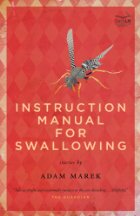
Book Review: Instruction Manual for Swallowing by Adam Marek
 Summary:
A collection of fourteen short stories taking one ordinary experience and inserting an extraordinary fantastical, scifi, or bizarro instance into the situation, seeing how the main character reacts.
Review:
A mixed collection, containing both 2 star and 5 star stories, although most stick right around the 3 star mark. The stories veer between scifi and fantasy, although both have some bizarro element in them.
Where Marek excels is when he takes a little talked-about male experience and utilizes the unique qualities of genre fiction to explore it. The only 5 star story in the collection, “Boiling the Toad” explores a male victim of domestic violence. It does this in a powerful way without demonizing all women. The story starts as “my life is so bizarre” but eventually becomes all too real. It’s interesting to note that this is also the opposite of many stories in the collection. Many start ordinary and turn bizarre. Starting bizarre and turning ordinary worked much better. Similarly, “Testicular Cancer vs. The Behemoth” explores male feelings about a cancer that is only possible to get if you have testicles. Marek fairly eloquently presents the main character as attempting to defend his perceived manhood by trying to protect his girlfriend from a Godzilla-like monster attacking the city. These stories are interesting, and I enjoyed exploring them.
Where the collection fails and flounders, though, is when the main character is self-centered and perceives of women as objects or only existing for his pleasure. It’s incredibly difficult to feel any empathy for a character who wants to cheat on his wife but ends up failing because of a mysterious puking illness he gets at the sushi restaurant (Sushi Plate Epiphany) or to care about a man who calls his pregnant wife a monster and tries to cheat on her while she’s still carrying his children (Belly Full of Rain). A lot of these stories incited an eye-roll and “boohoo it’s so horrible to be a man” sarcastic response from me, which I seriously doubt was what the author was going for.
Then there are the stories that simple don’t seem to have any point or make any sense. They seem to just be getting going when Marek stops them abruptly. Or they do seem to be at their end but there is just no point. Both “the Forty-Litre Monkey” and “Jumping Jennifer” have a great set-up of a mystery but that mystery is never addressed. They stop too soon. “Instruction Manual for Swallowing” and “The Thorn” are highly fantastical yet the conflict isn’t set up enough so as to be interesting.
Marek’s writing style varies widely between the perfect tone for bizarro genre fiction and being overly pretentious for his genre. For instance he writes sentences like this:
Being in the room felt like being suffocated in an armpit. (location 55)
But also pretentiously calls a college quad a “quadrangle” (“Jumping Jennifer”).
Overall then this is a widely varied collection of bizarro short fiction. Some of the stories offer wonderful insight into male issues while others wallow annoyingly in the minds of terrible men who only think they have a problem, while still others set up a fantastic world but are ultimately boring due to lack of conflict. If you are intrigued by any of the stories mentioned, I would advise getting a copy from the library since they will be quickly read, and you can return it when done. Definitely feel free to skip around in this collection.
3.5 out of 5 stars
Source: Netgalley

Book Review: Chop Suey: A Cultural History of Chinese Food in the United States by Andrew Coe (Bottom of TBR Pile Challenge)
 Summary:
American Chinese food is different from Chinese Chinese food. This is a well-known fact. Coe tells the history of how Chinese food came to America and changed and adapted to the cuisine we know today. Along the way, some of the stories of Chinese immigrants to America and Chinese-Americans are told as well.
Review:
I love food, and I love history, so a book telling the history of a specific cuisine totally appealed to me. Unfortunately, this book missed the mark for what could have been an enticing history of American style Chinese food. Instead, it gets hung up in the early history of both Chinese food in China and Chinese food in America in the 1800s then hops, skips, and jumps over how it changed through the 1900s up to present. While this information is interesting, it is not the history of American Chinese food it is presented as.
The main issue with the book is it spends almost 1/4 of its time exploring the history of Chinese food in China. While I learned some interesting facts, such as that tofu was invented in the Han Dynasty (page 80), this information is not necessary to convey how Chinese food came to America and changed. A much briefer introduction to where Chinese food was at before coming to America would have sufficed. The best part of the book is when it discusses Chinese food in America in the 1800s and explores how US-born Americans’ embracing of Chinese food or not depended on many factors such as the current rates of xenophobia, job markets, and prices. Viewing the history of the American west coast through the perspective of Chinese immigration and Chinese restaurants was truly fascinating. One of the more fascinating things that I learned in this section was a detail of the history of the racist perception of Asian men as not masculine. In that time period, when Chinese immigrants were competing with white Americans and Irish immigrants for railroad and other jobs, the backlash was that since Chinese men “didn’t need” to eat meat to work long hours they could afford to take a lower rate of pay. Articles attacked the Chinese diet as a sign that Chinese men are less masculine since they “don’t need” meat the way white American and Irish-American men do. One article title from this time period cited in the book is “Some Reasons for Chinese Exclusion. Meat vs. Rice. American Manhood against Asiatic Coolieism. Which Shall Survive?” by Samuel Gompers (page 141). As a vegetarian, I found it fascinating that the sexist perception of a less meat-centric diet (the Chinese did indeed eat meat, just less than American men), has both such a far-reaching history and was used to fuel xenophobia and racism against immigrant workers. It is clear to me after reading this that a large part of the work for vegetarians is to get rid of the faulty correlation between meat and masculinity. I could see fixing this having other positive outcomes as well, such as fighting against misperceptions of the masculinity of other cultures.
Unfortunately, the wonderful details found in the chapters on the 1800s gradually cease to exist as the book moves up through time. While the 1920s get some special attention, such as touching on the fact that Chinese restaurants survived Prohibition well because they had never served alcohol anyway (page 189), slowly these details fall away until we get nothing but the bare bones of how Chinese restaurants functioned and interacted with American history in the rest of the 20th century up to present. There is even one rather aggravating long aside exploring President Nixon’s visit to China. While his visit to China definitely gave a resurgence of interest in Chinese food in the US, it was again unnecessary to give such incredible details on Nixon’s visit. It could have been simply stated, instead, that Nixon visited China, bringing Chinese food to the forefront of American thought again and giving a resurgence of interest in Chinese cuisine. The book has a tendency to lollygag on topics that are not actually what the book is supposed to be about. While these topics can be interesting and Coe explores them well, they are not what the book supposedly is about. It would be better to present the book with a different title or edit the focus back to simply Chinese-American cuisine.
One other factor that made me enjoy the book less is that Coe shows a clear bias toward Chinese culture. There is nothing wrong with enjoying Chinese culture, but Coe says some things that if he had said them in reverse would be considered completely unacceptable to say. He frequently presents the Chinese people as more civilized, their way of doing things as more logical and simply better, and even scoffs at the level of advancement of European countries compared to China at one point (page 94). Lack of bias and simply presenting the facts is the strength of historical nonfiction works. It would have been nice to see that level of professionalism in this book, regardless of Coe’s personal views.
Overall then, while I learned some new facts about both Chinese-American cuisine and Chinese-American history, the book wanders significantly through Chinese history and Chinese cuisine as well. Interesting, but not what the title implies the book is about. Coe also shows some bias that should not be present in a history book. These are easily skimmed over, however, and thankfully do not come up very often. Recommended to those with an interest in both Chinese-American and Chinese history in addition to the history of American style Chinese cuisine, as all three are covered rather equally.
3 out of 5 stars
Source: Amazon

Book Review: Tracking the Tempest by Nicole Peeler (Series, #2) (Audiobook narrated by Kate Reinders)
 Summary:
Things have gotten interesting since Mainiac Jane True found out she’s half selkie. She discovered the whole world of supernatural beings, started training and honing her own powers with the help of a local goblin, and of course met and started dating the sexy vampire Ryu. After being caught up in the mystery that was a supernatural person killing halflings, Jane really just wants to focus in on power honing and Ryu. Particularly with Valentine’s Day approaching. But when she goes down to Boston for her first visit to his home, she ends up getting caught up in his current investigation. Going after a dangerous halfling who just escaped from an illegal lab.
Review:
I enjoyed the first entry in this series as a surprisingly humorous paranormal romance set in the unusual (for pnr) setting of Maine. So when I needed a new audiobook for a roadtrip and saw this lounging on audible, I snatched it up. I kind of regret that choice because not only did I enjoy this entry in the series less but I also apparently misremembered how well I liked the first book in the series. I only rated it as 3.5 stars but remembered enjoying it at at least 4. Hindsight is not always 20/20. Essentially, everything that kinda sorta rubbed me the wrong way in the first book got worse instead of better, and the things I liked became worse as well.
The humor takes a nosedive. Whereas the first book deftly handled a dry New England sense of humor, here things turn mean and inappropriate. Jane laughs at things she shouldn’t laugh at and invites the reader to as well, and it becomes deeply awkward. Like hanging out with a friend who thinks they’re funny but is in fact offensive.
I was excited to see what Peeler did with Boston, and I admit some things she handled well. She nailed the neighborhood of Allston, for instance, but she also put Ryu’s home in Bay Village. Ryu is supposed to be a wealthy vampire, but instead of putting him in Beacon Hill or a wealthy suburb like Cambridge or Newton, she puts him in a neighborhood that is actually a lower to middle class neighborhood that is slowly being gentrified. That’s not where a home like Ryu’s supposedly is would be located. This is a neighborhood that border the Massachusetts Turnpike (noisy big road, for non-Americans). It’s not the mecca of wealth that Peeler seems to think it is. A big mistake like that is rather jarring when she got details like how the exit of the T in Harvard Square is called the Pit, a bit of knowledge even some locals don’t have. On the other hand, she seems to think that the Boston Public Garden closes at night and has a big scene where Ryu takes Jane there on a romantic late-night date. Um. No. The Garden doesn’t close at night. It is, however, full of people trying to sell you drugs. Yes, yes, ideal for a romantic date. This unevenness in knowledge of Boston and its surrounding areas made reading the setting uncomfortable and awkward.
The issue of Ryu being an obvious jerk continues. It’s clear from the beginning of the book that a break-up is coming and Jane is being set up with another character. It’s kind of annoying for the book to be this predictable, but it is paranormal romance, and Jane does ultimately stand up for herself, so I was ultimately ok with this. In fact, the way Jane stands up for herself is handled so well that it saved the book from getting 2 stars instead of 3.
The last, and most important, thing that made the book deeply upsetting for me was the fact that Jane is not once but twice put into a situation where she is about to be raped. Rape comes up a lot in paranormal romance and frankly it bothers me. These are worlds in which women are powerful, talented, and often gifted with great gifts. So why must their confrontations so frequently devolve into threatened or real rape? I get it that rape is a very real thing in the real world, and I am completely fine with it existing as a plot point in horror, dystopian or post-apocalyptic scifi, and mysteries. Horror is supposed to push the boundaries of comfort. Dystopian and postapocalyptic scifi is frequently presenting humanity at its worst, and rape is one of the worst. Mystery needs a victim, and frequently murder victims are also raped. But in a battle between supernatural creatures in a book that is supposed to be a romance suddenly tossing in rape as a weapon doesn’t read right. It removes so much agency from the main female characters. Like, what, she’s always easily defeated because you can just threaten to shove your dick into her against her will and suddenly she will acquiesce to your viewpoint? It’s paranormal romance. Why can’t the paranormal world have fights where rape threats and attempted rapes aren’t a thing?
What really bothered me about the second scene this happened in with Jane is the level of victim blaming that happens as well. Jane has just successfully escaped from the first rape attempt. She saves herself. This is great, and she does it with a mixture of trickery and violence that is commendable. But then a man shows up and immediately takes over. He says he needs to protect her; he’s going to walk her out of this situation. Jane insists she needs to pee. She goes to pee, against his protests, and when she comes back out, he’s gone because another group of villains have him, and Jane starts to be attacked by a known violent rapist. She later blames herself for having to go pee, and no one argues with her that she has every right to pee when she needs to. So we have a powerful halfling who can’t go pee by herself because she might get attacked and raped? That is so incredibly victim blaming and putting all the responsibility for safety on the woman that I can’t even properly articulate how angry it makes me.
Kate Reinders, the narrator, mostly does a good job. She lands the complex voice of Jane quite well. The only negative I can say is that she mispronounces some New England words and city names. But her narration did make the book more enjoyable for me.
Combine these issues (aside from the audiobook narration which was fine) together with the fact that the plot is basically the previous book’s plot flipped in reverse (violent halfling killing supernatural people instead of supernatural person killing halfling), and I can safely say I won’t be continuing on in the series. The only thing that saves the book from a lower rating is the fact that Jane ultimately does stand up for herself. But for me it was too little too late. Not recommended. Unless you enjoy bad humor, awkward settings, and rape threats and victim blaming of the heroine.
3 out of 5 stars
Source: Audible

Previous Books in Series:
Tempest Rising
Book Review: A Room with a View by E. M. Forster (Bottom of TBR Pile Challenge)
 Summary:
When Lucy Honeychurch goes to Italy, accompanied by her spinster aunt, she doesn’t want or expect much, except perhaps a room with a view. But she meets George Emerson and his father, two socialist atheists, and they put her world in a bit of a tizzy. That all gets left behind, though, leaving room for her to meet the man who will become her fiancee, Cecil. Back in England, her courtship is soon interrupted by the unexpected arrival into their little town of the Emersons.
Review:
I wanted to like this book. It sounded like an older progressive, feminist romance novel, and that’s something I can definitely get behind. The romance, though, turned my stomach, and all of the characters left me sour.
This is a slow-moving book. The scenes it sets are neither rich nor interesting. I expected to feel more enveloped in Italy, akin to how I felt when reading Adriana Trigiani, but this didn’t happen. It felt a bit like your cousin who isn’t very good at describing things is trying to tell you all about her vacation to Italy without the help of pictures. In a book where not very much happens for at least the first 2/3 of it, this is more important of a shortcoming than it might otherwise be.
I cannot name a single character in the book I enjoyed, although Lucy’s brother at least elicited a neutral feeling from me. They’re all about what you would expect from upper middle class British in the early 1900s. Lucy is dull and timid. Her aunt is mean and overly concerned about appearances. One suitor is is an upper-class prick, and the other is a supposed “bad boy,” although only in the sense that if this was a boarding school he might not tie his tie properly. It all was so predictable and dull. I was expecting a fiery heroine but instead I got Miss Plane Jane from down the road.
What really swayed me against the book, though, was one of the scenes we are clearly supposed to find very romantic, but which I found problematic at its most basic level.
Lucy was playing tennis with a bunch of people, and she winds up walking through the garden back toward the house with George. George knows she is engaged to Cecil, and Lucy has expressed to him a few times that she is not interested in pursuing a relationship with him. He grabs her, at which point the following happens:
“No–” she gasped, and, for the second time, was kissed by him. (page 174)
This is the second time, because the first kiss was a mutual one that happened in Italy many months prior. So what happens is that George grabs her without asking, knowing she is uninterested and engaged to another man, she tells him no, and he proceeds to kiss her anyway. This sexual assault is supposed to endear George to us!!! It is incredibly offensive, and I was so turned off I wanted to stop reading. I didn’t so I could write an honest review for you all, but honestly the entire rest of the book was soured for me because we are expected to root for Lucy to estrange herself from her friends and family to marry a man who clearly shows zero respect for her as a person, a man who has sexually assaulted her. How is that a romance? Putting forward stories like this as the desired norm, as a couple who are deeply in love and should be looked up to and aspired for, isn’t good for anyone reading these books. Relationships and romance should be based on mutual trust and respect. It’s ok for a person to make a mistake. We’re all human. But these mistakes should be acknowledged as mistakes and apologized for, never to be done again. Not held up as the romantic actions of a person in love.
This reads as a mid-range, late 1800s style British romance, in spite of being published in the early 1900s. I could see this being for someone else who enjoys that style more than I do, but I cannot in good faith recommend it when the romantic hero of the book sexually assaults the heroine, and we are supposed to root for him to win her heart.
2 out of 5 stars
Source: won from a book blog

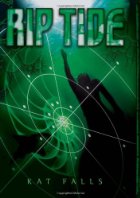
Book Review: Rip Tide by Kat Falls (Series, #2) (Audiobook narrated by Keith Nobbs)
 Summary:
Ty lives with his pioneer family subsea but he can’t convince his crush Gemma to leave Topside. Why is she so afraid of subsea? This was his biggest problem until his parents get kidnapped by surfs when they attempt to do a trade. Plus, Gemma wants to convince her fugitive brother to let her tag along with him. And townships keep disappearing, only to turn up later, chained up and anchored subsea with everyone dead inside. It’s a giant web of mysteries but do they intertwine at all?
Review:
I absolutely loved the first entry in this scifi series, which is unusual for me, since it’s YA. Not generally my genre. So I was excited to see the sequel available on Audible. It’s still an exciting adventure and interesting world but not quite as tightly and expertly constructed as last time.
Whereas Ty’s voice worked perfectly in the first book, in this one he reads a bit young. He went through a lot in the first entry, he should have presumably matured a bit more than he has. Similarly, Gemma hasn’t developed much since the first book either. I think these characters should have been given more space to grow more. Particularly in a YA series, it’s important to let the characters develop and mature at a more rapid rate. That’s the reality for teenagers after all.
Plot-wise, I honestly felt that there was a bit of a deus ex machina at work that also didn’t fully play into the rules of the world as originally set up. Still, though, the mystery is well-plotted and difficult to predict. It includes real danger without being too violent. It’s the perfect level of thriller for a YA reader who’s not so into the gore. On the other hand, I also found it frustrating that Ty’s parents aren’t around for most of the book. One of the things refreshing about the first one was that his parents were actually present and helpful without being too pushy or overshadowing. This time around, Falls went the more popular YA adventure route and just flat-out got rid of them for most of the book.
But the world Falls has built is still rich and unique, and she expanded upon it. We now get to see more of what the surf life is like, in addition to more of the shady side of things, such as the boxing/fighting rings. We also see some more of the government and law enforcement and have a better understanding of the world as a whole. It’s all richly imagined and drawn, right down to what styles of clothes different groups wear to what they eat. One detail I particularly enjoyed was that the surfs, a poor outcast lot, eat a lot of fish and blubber because it’s easy to catch, whereas Ty’s family eats a lot of vegetables because they grow them. Details like that really make a world.
The audiobook narrator, Keith Nobbs, read the whole thing a bit flat for my taste. He didn’t have as much enthusiasm and inflection as I thought was appropriate for a book about a subsea adventure starring two young teenagers! The production quality was high, he was easy to understand, but he didn’t really bring Ty to life. I’d recommend reading the print book over the audio, honestly.
Overall, then, the characters are a bit slow in their development and the plot feels a bit lazier than last time, but the characters are still well-rounded and the plot maintains an appropriate level of mystery. Toss in the richly imagined and describe post-apocalyptic and very wet world, and it’s well worth the read.
4 out of 5 stars
Source: Audible

 ,
, Book Review: iD by Madeline Ashby (Series, #2)
 Summary:
Javier is a vN. A self-replicating humanoid robot built by fundamentalist Christians to help humanity left behind after the rapture but then bought out and sold by a secular organization after the Christian company failed. He was living on an island run by his powerful vN girlfriend, Amy. Free from all humans and therefore free from the failsafe that makes him avoid harming them at all costs. He wants his failsafe-free girlfriend to free him from his own, but she refuses. So when a human shows up on the island and activates his failsafe, everything comes crashing down around him. Now he’s on a race to save Amy….and destroy his failsafe.
Review:
I was really excited for the second book in this series about ai written by a woman author. I love getting to see scifi topics like ai explored from a woman’s perspective. So I was a bit disappointed to have the story shift focus from a woman in the first book (Amy) to a man in the second (Javier).
Ripping Amy out from under us is an interesting choice. On the one hand, I appreciate series that switch perspectives like this because we get to see more of the world of the novel and gain a clearer understanding of it. On the other hand, part of why I liked the series to begin with was that we were seeing a powerful female robot for once. So I was skeptical about this choice at first. Ultimately, however, the perspective switch worked for me because it basically is following the hero’s sidekick when the hero is decommissioned. It’s still interesting to see the gender swap happening in the sidekick. It’s also interesting because although Javier is male, he’s also a robot with a failsafe, so he is more akin to an enslaved person than to a humanoid free male. It’s interesting but it saddens me that this perspective makes it seem like things like trading sex for travel are the only options for people in that situation. Sex is power, yes, but it’s not the only tool women have available to them. I’m not sure how I feel about the fact that the book seems to be saying that anyone in that situation, regardless of gender, would use these resources because they have to. I can see not having a lot of choices. And I can understand having to choose to do something you don’t morally want to do because the end result is so needed. But I would expect to see a lot of soul searching and thought process behind that choice because it is still a choice. Javier doesn’t seem to do much choosing or thinking, and I think that’s not a fair representation of what it actually is like to be a woman. We still have choices, and because it’s not always easy to do precisely what we want to do, what choice we make takes more thoughtfulness, if anything. There’s not always a good choice available. But there are always choices. I would like to have seen Javier doing more thinking and choosing between different difficult choices rather than seeing himself as having to do X to get to Z.
The world building is still strong in this book. Instead of being stuck on an island for the whole time, the events in the beginning of the book allow us to see much of the world, not just America, through the eyes of Javier. There is, unfortunately, quite a bit of confusion in the world at this time so it’s difficult to understand precisely what is going on or how the world got to this place. I believe this is just the situation that is typical of a second book in a series (or the third book in the trilogy), so I expect a lot of the confusion to clear up in the third book. If anything the mystery increased with this book, which is not a bad thing.
Overall, this book builds further on the world presented in vN through the eyes of Amy’s male sidekick, Javier. Some of the precise effects of the gender swapping and queering of gender in the robots isn’t as well thought-out as it could be but this does not detract from the interesting perspective on artificial intelligence presented by Ashby. Fans of the first book should hold out beyond the first couple of chapters and give Javier a chance as our guide through the world. The perspective he brings is still unique to the world of ai scifi.
4 out of 5 stars
Source: Netgalley

 ,
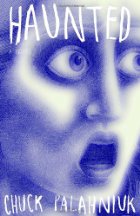
, Book Review: Haunted by Chuck Palahniuk (Bottom of TBR Pile Challenge)
 Summary:
A bunch of people sign up, individually, for a writer’s retreat. Telling no one where they’re going, they vow to write the next great American novel. They wind up locked away in the opposite of the lap of luxury, however. Trapped in a dusty old theater, they quickly become focused on an entirely different type of story. What happens to these writers is interspersed with poetry about each person and short stories written by each of them while locked in the retreat.
Review:
I am a huge Palahniuk fan. Fight Club
I struggle with short story collections. I like them to be all connected somehow, even if it’s just by theme, so at first I really liked the idea of a collection of short stories written by people at a writer’s retreat. It’s a good idea, but it’s not executed very well. The short stories are awesome! The connecting bits of narrative aren’t so much. Basically, the writers decide that they should spin what happens at the retreat to be as horrible as possible to help get a movie deal out of it after the fact. So they focus on twisting the facts and committing atrocities against themselves and each other to make for a better story. I totally got what is being said about writers procrastinating by making drama in their own lives instead of actually writing. I liked that part. But there also wasn’t enough realness in the connecting bits to keep me interested. I found myself dreading them whereas I really enjoyed the short stories, which made for an uneven reading experience.
One of the short stories contained in this collection is Palahniuk’s famous “Guts.” The one that makes people faint. (Palahniuk has made it available online for free here). This was definitely the best short story in the collection, and I can see why it became so famous. It also sets the tone for a lot of the stories in the collection. There’s one with people randomly getting smashed in a city. There’s also one about the possible origins of the Sasquatch myth. My second favorite after “Guts” was actually about an inn near a hot springs in the mountains. That one grossed me out *almost* as much as “Guts,” and also had something deeper to say, I think. All of this is to say that if you read and enjoyed “Guts,” you’ll like the short stories in this collection. They’re gross, horrifying, and stick with you.
Overall, it’s an interesting idea for unifying a short story collection. Ultimately, though, I would have liked it better as a straight-up short story collection, maybe even including the writer’s retreat as a short story by itself. This fact might make me rate the book lower, but the inclusion of so many high quality short stories keeps the book itself rating highly. Grab this if you’ve read and enjoyed “Guts.”
3.5 out of 5 stars
Source: Brookline Booksmith

Cookbook Review: Green Smoothie Magic – 132+ Delicious Green Smoothie Recipes That Trim and Slim by Gabrielle Raiz
 Summary:
Lots of leafy greens are important to incorporate into your diet for health reasons (vitamins! fiber!) but it can be difficult to work them in. Enter the green smoothie. Blend up the greens with other ingredients to give yourself a delicious sweet or savory drinkable treat and get 1 to 2 cups of leafy greens into your belly in the time it takes to drink a drink! Raiz walks you through all the steps to incorporating green smoothies into your life from the basics of what greens to use and how to what makes a good blender to recipes to how to tweak and personalize the recipes.
Review:
I picked up this cookbook when I spotted the kindle version on sale for 99 cents because I wanted exactly what it promised. A way to work in more leafy greens into my life in a delicious way.
The cookbook is organized into sections entitled: introduction, the magic of the green stuff, not all green smoothies are green, don’t get stuck with the same green, greens, how green should my first smoothies be?, green smoothie magic basics, the pragmatic approach to health nutrition and everything!, freezing fruit, green smoothie rescue — what to do if a recipe doesn’t work out!, about blenders and blending, about drinking and storing your smoothie, green smoothie magic 101: instructions at a glance for blending any smoothie, and green smoothie magic recipes. If that sounds like a lot of sections, it’s because it is. Raiz has a lot of information to give the reader. She clearly knows what she’s talking about, and I found a lot of what she had to say very useful! Particularly how to pick the right blender, the different flavors of greens and how to pick which ones to use, how to store greens, how to save a smoothie that doesn’t taste quite right, and the basic elements of a smoothie. Also, the recipes of course! But how this valuable information is organized is a bit haphazard and can sometimes be repetitive. I’m glad I took the time to read it all and glean out the important bits, but I’m not sure everyone would stick it out through such a disorganized and long introduction. A more concise introduction to the hows and whys of green smoothies is needed.
The recipes themselves are creative without going too far off the deep-end in exotic ingredients. For instance, even though Raiz recommends making your own nut milks, she provides substitutions for those of us who would rather not do that. The recipes are easy to read, fully utilizing bullet-points and simplicity. I really appreciated that. There are also full-color illustrations throughout the cookbook , although they are primarily of the ingredients and not the smoothies themselves. I get it that green smoothies tend to be, well, green colored, but a few more smoothie pictures would be nice.
So I read through the whole book and was ready to try a recipe. I knew from reading the book that my low-powered food processor wasn’t ideal for blending but would work with a recipe with less tough ingredients (for instance, the beet smoothie might be a bit too much for my food processor). I also followed Raiz’s newbie caution and went with a recipe with a more traditional smoothie taste to ease myself into it. Below is the recipe I tried out with a picture of the result.

My first homemade green smoothie! In a wine glass because everything tastes better in a goblet.
“Cinnamango Smoothie (location 1558)
Blend first:
1 cup water with 1/4 cup almonds (soaked overnight) OR 1 cup nut milk OR 1 cup coconut water
Then add:
1 cup mango (frozen)
cinnamon, salt, and vanilla
2 cups spinach leaves (or any combination of mild greens)
1 T chopped mint leaves
Ice and extra water to get your desired temperature and consistency.”
You can see how simple the instructions are. It is a smoothie after all. I left off the introductory paragraph, which is primarily featured in the earlier recipes and talks more about the ingredients, and skipped right to the actual recipe. The ingredients introduction is nice and makes it more conversational, but it is a smoothie after all. You just put in the general ingredients to fit your tastes and away you go, and most of the recipes utilize this simpler style I chose here.
I used coconut water for the base of my smoothie, and my mango had kind of defrosted by the time I got home from the grocery store. I also didn’t have spinach, but I did have swiss chard from my CSA, which was listed as a mild green in the cookbook, so I subbed those in. When I took the first taste, it felt too strong and not smoothie-like enough to me. So I read over the section on how to fix your smoothie and noticed that Raiz states that the temperature of the smoothie affects the taste. Perhaps my mango being defrosted mattered? So I added in ice, blended again, and voila! An incredibly delicious green smoothie! It was, admittedly, a bit less well-blended than I would have preferred, but I was well aware that was the fault of my food processor, not the recipe.
So what’s the verdict? Well, I got so excited about green smoothies after this cookbook that my partner got me a blender for my birthday (using the recommendations in Raiz’s book to help him choose which one). So I’d call it a success! The recipes are easy, adaptable, and Raiz arms you with troubleshooting techniques to help you learn to get it right. The beginning of the book needs more focus, organization, and clarity to help Raiz’s true expertise and talent shine through but if you want to start incorporating green smoothies into your life, this book is a great place to start. It both explains greens and green smoothies and blenders AND gives you a bunch of adaptable, easy recipes to get going.
4 out of 5 stars
Source: Amazon

 Support my work with a tip or browse my shop for curated book club guides, how to guides, cross-stitch patterns, and more!


This work by Amanda Nevius is licensed under a Creative Commons Attribution-Noncommercial-No Derivative Works 3.0 United States License.
 Opinions of a Wolf