
Archive
Book Review: Blonde Bombshell by Tom Holt (Bottom of TBR Pile Challenge)
 Summary:
A sentient bomb is hurtling through outer space toward Earth, better known to the bomb creators as Dirt. You see, Dirt’s music is making the inhabitants of Ostar (a canine species) completely loony. But the bomb stops in its tracks and orbits around Dirt to try to figure out whatever happened to the *first* bomb that the Ostars sent out. Dirt doesn’t seem to have any sophisticated defense system to speak of, so what gives? Meanwhile, Lucy Pavlov, the creator of new computer programming protocols that led to a leap in technology, is seeing unicorns in her forest. Also a bank security executive is trying to figure out just how, exactly, money is teleporting out of banks. In between getting very drunk and trying to forget about that one time aliens stole his dog.
Review:
This made it onto my TBR pile thanks to multiple comparisons to Douglas Adams’ Hitchhiker’s Guide to the Galaxy
The plot is complex without being confusing. It revolves around three people (well, one is a bomb) who are connected in mysterious ways they just don’t know yet. It kept me guessing, managed to surprise me a few times, and had some delightfully creative elements, such as the fact that the bomb can create probes to send down to Earth that appear to humans like organic matter. Or even the fact that the bomb can sit there and slowly decide whether or not to go off. Clever.
I also appreciated an imagined future where people have handheld devices that are given a simple name rather than compounding a bunch of words together. The former makes more sense since in reality that is what companies do. (For instance, Google Glass or iPad as opposed to handheldpersonaldevice. Don’t laugh. I’ve seen something very similar to that in scifi). In this book the iPhone device is the Warthog. With no further explanation given. This is scifi done well. The reader can tell what a Warthog is from how the characters use it. Holt never over-explains.
The characters were rather two-dimensional, but that works well for the humor, not to mention for the fact that one of them is a bomb. If a character has a good heart but is a lazy drunk because aliens stole his dog, well that’s enough for the reader to know in a book like this. Motivation enough is present for the characters to be recognizable as people and to move the plot forward.
As for the humor, I found it quite witty, although not quite as gut-wrenching as Hitchhiker’s Guide to the Galaxy
Now, I was a bit let-down by the ending. I didn’t really like the final plot twist. It kind of….creeped me out a bit and left me on a bit of a down note instead of the delightful upswing I felt throughout the rest of the book. I think other people might enjoy it more than me. It really depends on your feelings about people and pets and having pets. It’s not enough of a let-down to keep me from recommending or enjoying the book. It was just enough to keep it from 5 stars.
Overall, this is a delightfully witty piece of scifi with a unique plot. Recommended to scifi humor fans, particularly those who enjoy Douglas Adams.
4 out of 5 stars
Source: PaperBackSwap

Book Review: Half of a Yellow Sun by Chimamanda Ngozi Adichie (Audiobook narrated by Robin Miles)
 Summary:
The Nigerian-Biafran War (or the Nigerian Civil War, as it is also known) is seen through the intertwining lives of four different people. The daughter of a wealthy Igbo couple, Kainene, with a fierce business sense. Her fraternal twin sister, who is also the beautiful one, Olanna, an academic in love with a revolutionary-minded man named Odenigbo. Kainene’s boyfriend then fiancee, the white English writer Richard. And Ugwu. Olanna’s houseboy who came to them from a rural village. Their lives are irreparably impacted, and in some cases destroyed, by the war for a cause they all believe in, but that the world largely ignores.
Review:
I originally intended this Nigerian book to be my final read for the Africa Reading Challenge 2012, but even though I started it in November, the audiobook took over three months to get through, so it ultimately missed counting for the challenge. I thought it was much longer than my usual audiobook fare, but a quick check of the listen length shows that it is 18 hours and 56 minutes long, which is only about 7 hours longer than my norm. So why did it take me so long to finish? Well, I just didn’t enjoy it that much.
I believe I was expecting something else from Adichie, since I had previously read her book Purple Hibiscus
As far as the plot goes, it was interesting but it was a bit confusing. Part of my confusion could have been because I listened to it, but from my understanding when I was listening, first there was an affair, then we jumped back to before the affair, then we jumped forward, then we jumped back to a different affair that came before the first affair. It was profoundly confusing. Particularly with a child referred to only as Baby (with no explanation about this for quite some time) who also randomly shows up and disappears. There was already so much going on with four different main characters and the war that this non-linear plot felt unnecessarily extraneous and confusing. However, it is possible that this plot is more clear when reading the print version, as opposed to the audio version.
The language of the writing itself is pretty, and I found periodic astute insights that I’ve come to expect and enjoy from Adichie. For instance,
Why do I love him? I don’t think love has a reason. I think love comes first, and the reasons come later.
Passages like these are what helped me enjoy the book to the extent that I did.
There is one plot point in the book that truly distressed me, so I feel I must discuss it. It is a spoiler though, so consider yourself spoiler warned for this paragraph. Throughout the book, the narration style is third person limited, which means that it is told in third person, but the reader knows what is going on in the main character’s head and is generally limited to that character’s perspective. The point of view is switched around among the four main characters, one of whom is Ugwu, the houseboy. We thus get to know him as the houseboy, he gradually grows up, and then later he is conscripted into the Biafran army. At this point, he participates in a gang rape on a waitress in a bar. I read a lot of gritty things. I routinely read books offering up the point of view of sociopaths or serial killers. I’m not averse to seeing the world through a bad person’s eyes, or through the eyes of a person who does bad things. But it has to be handled in the appropriate manner. I felt that there was entirely too much empathy toward Ugwu in the case of the gang rape. Adichie sets it up so that he walks in on his fellow soldiers gang raping this woman, and he says he doesn’t want to participate, they question his manhood, he admits in his head that he is turned on by the view of her pinned to the ground crying with her legs held apart having just been raped by a different soldier, and he participates. I think what disturbed me the most about this passage was how the narration makes it seem so ordinary. Like it’s something any man would do in that situation. Like it’s only natural he’d be turned on and get a hard-on from seeing a woman forcibly pinned to the ground so she can be gang raped by a bunch of men including himself. I think it’s awful to treat men like that. To act like they clearly are incapable of standing up for what’s right or that they’ll get a hard-on any time they see an orifice they can physically bang. Men are human beings and are entirely capable of thinking with more than their penis. Now, obviously there are men who rape, but there has got to be more going on there then I have a hard on and there’s a woman who I can stick it into. To treat rape that simply is a disservice to men and women’s humanity alike. Part of the reason why this reads this way is that we don’t know Ugwu well but we know him well enough to think that he’s an at least moderately decent young man. We don’t see a gradual downfall. No one holds a gun to his head or even implicitly threatens him with death if he doesn’t participate. It makes it seem like war makes men, even moderately good men, rape, as opposed to war simply providing more opportunities for rapists to rape. That is a perspective that I do not endorse, that I do not enjoy having sprung upon me in my literature, and that I found triggering as well. I was shocked to see it in a book by Adichie. Shocked and disappointed. It left me wishing I could scrub my brain of the book. Wishing for those hours of my life that I spent listening to it back.
Now, let me take a moment to speak about the narrator, Robin Miles. Miles is an astounding narrator. Her audiobook narration is truly voice acting. She is capable of a broad spectrum of accents, including Nigerian, British, and American, and slips in and out of them seamlessly. She easily creates a different voice for many different characters. I absolutely adored listening to her, in spite of not enjoying the book itself. Her performance of this book is easily a 5 star one.
Overall, though, the high quality narration simply could not make up for a story that failed to hit the mark with me on so many levels. It covers an important time period in Nigeria, and the highly important human rights issue of the genocide of the Igbo, but the style in which it does simply misses the mark for me. If this was all, I would still recommend the book to others who are more fond of a more impersonal, sweeping narration style. However, I also found the treatment of rape in the book to be simultaneously offensive and triggering. For this reason, I cannot recommend this book, although I do recommend the audiobook narrator, Robin Miles.
2 out of 5 stars
Source: Audible

Book Review: The Long Quiche Goodbye by Avery Aames (Series, #1) (Bottom of TBR Pile Challenge)
 Summary:
Charlotte Bessette is ecstatic that her slightly eccentric French grandfather and grandmother have handed over the running of their small town cheese shop to her and her cousin, Matt. She and Matt have redecorated the place for the 21st century and have added a wine annex. Everyone is excited for the grand re-opening but when their landlord turns up dead on their doorstep stabbed with one of their cheese knives and Charlotte’s grandmother standing over him, both the shop and the family are at risk.
Review:
Cozies are, by their very nature, absolutely ridiculous and difficult to explain. I generally default to an explanation like, “It’s murder! With arts and crafts and cooking! But not too much blood and no sex! And the titles are puns!” At this point the person I’m talking to generally looks at me like I’m nuts and wanders off. But even though the cozy genre is ridiculous and tough to explain, there are things that work for it and things that don’t. This book is definitely a cozy but it combines the cozy elements oddly, making it fall short of awesome into the decidedly meh category.
Most cozies have a moderately ridiculous plot involving a dead body being found and a woman ultimately amateur investigating the crime. The crime in this one was odd. A landlord who nobody likes is stabbed directly in front of the cheese shop on grand reopening night. Oh, and he’s stabbed with a cheese knife. Sometimes I think authors just don’t research and realize how hard it actually is to stab someone in the chest. A cheese knife wouldn’t cut it. (See what I did there?) So that had me rolling my eyes from the start. The ultimate whodunit was also a bit bizarre and had me scratching my head. It made some sense but it also sort of felt a bit like the author just chose whoever would be the most surprising as the killer, instead of really thinking through the logic and motivation. It’s also a bit problematic to have the murder victim be some sleaze everybody in town hates. This felt like a choice to give the mystery more easy suspects rather than, again, based on thinking through logic, motivation, and real crimes.
Then there’s the issue of the main character, Charlotte, who ultimately investigates. She doesn’t really have the get up and go gumption necessary for someone to start investigating something on her own. She’s….kind of snooty and prissy. A good cozy main character should be into her arts and crafts but also possess a lot of independent spirit and gumption. Charlotte is surrounded by people like that–her grandmother, her shop employee–but she herself isn’t like that at all. Yes, her grandmother is accused of a crime she didn’t commit and that’s a big impetus to do something, but it just feels out of character for Charlotte to do investigation. Similarly, Charlotte’s romantic interest felt forced and fake, which was awkward. In a genre where we get no sex scenes, the romance should be very well done, which it was there, but it wasn’t truly engaging.
The quirky characters in the town, besides Charlotte and her love interest, were interesting and just the right blend of quirks and reality to suit a cozy. Similarly, I was glad to see some cheese-heavy recipes in the back. I also thought the pun title was great and played in well to the mystery without giving too much away.
Personally, I think there are better, more engaging and funny cozy series out there to invest my time in. However, if you are a huge cozy fan and don’t mind the oddly snooty, timid main character and a slightly silly mystery plot, then you should give it a go. The cheese angle is certainly unique.
3 out of 5 stars
Source: PaperBackSwap

Book Review: Braided by Elora Bishop (Series)
 Summary:
A lesbian retelling of Rapunzel. Gray, a witch’s daughter, visits Zelda every day. The witch switched Gray’s fate into Zelda, so now Zelda is the one entwined with the spirit of the tree that the people worship. She must live on the platform and every day lower her hair for people to tie ribbons and prayers into. Gray feels horrible guilt over their switched fates, but she’s also falling in love with Zelda.
Review:
I’m a sucker for fairy tale retellings, although I can be fairly picky about whether or not I like them. But Rapunzel is a tale that is not redone often enough, in my opinion, and the fact that it was a lesbian version made me jump at this novella.
It’s nice that the retelling doesn’t just change the genders of the main romantic pairing and leave it at that. In the original version, a married couple steal from a witch’s garden and in payment they must give her their unborn child who she then locks up into a tower. She would let her long hair down for her witch/mother to use as a ladder to get into the tower. A prince years later hears her singing in the tower and helps her escape. In this retelling, the people worship a tree. When the tree starts to die they tie its spirit into a person. That person lives on a platform in the tree and the people pray to him/her. When the person dies, the fate to be tied to the tree randomly chooses a baby by putting a tree pattern on their chest. This fate is supposed to be Gray’s, but her mother somehow acquires another baby, Zelda, and with magic cuts the fate out and ties it to her instead. Gray knows this and at first visits Zelda out of guilt but eventually falls in love with her. This version, surprisingly, is actually a lot more fantastical and magical. There is even a quest within an alternate dimension/dream world. I enjoyed the increase in the otherworldly feel, and I liked that it lent the twist of a parent trying to protect her child rather than a mother smothering her child.
The writing has an earthy, magical quality to it. It’s definitely language that is looking to be pretty, and it mostly succeeds. The romance between Zelda and Gray is sweet and very YA. Their passion revolves entirely around kissing and holding. I like that it gives a soul and connection to the romance without ignoring the physical aspect. It’s the perfect balance for this type of story.
While I enjoyed reading the story, I must admit it wasn’t my ideal retelling of Rapunzel. I didn’t like the religious aspect that was drawn into it, and I did feel that Zelda falling for Gray was a bit fast, particularly given the fate switching aspect of the story. I was also disappointed to see that in spite of all the other changes in the story, the Rapunzel character is still blonde. I’m not sure why no one ever seems to change this when retelling Rapunzel.
Overall, this is a fun retelling of Rapunzel, particularly if you’re looking for a non-heteronormative slant or enjoy a more magical feel. Note that this is part of a series entitled Sappho’s Fables
4 out of 5 stars
Source: Amazon

Book Review: The Caline Conspiracy by M. H. Mead
 Summary:
In near future Michigan, a geneticist is murdered by his pet caline–a new pet created by gene splicing to have all the best characteristics of dogs and cats combined and guaranteed to be docile. His widow doesn’t believe that their beloved pet could possibly have done the killing so she hires private investigator Aidra Scott to prove her innocence. But as Aidra digs deeper into the mystery she finds far more intrigue than the possibility of a framed pet. This intrigue could rock a nation already debating geneticism.
Review:
I was intrigued primarily by the idea of calines. As an animal lover I couldn’t help but be fascinated by the idea of a caline. While the calines are pulled off well, they are not the focus of the book. This is definitely a near future scifi mystery, and it’s well-done.
The plot is a typical murder mystery with a twist. The pet is possibly framed, and the pet was created in a lab by geneticists. While I had my suspicions about whodunit early on, I must admit I wasn’t entirely right, plus there was an added twist at the end that I didn’t see coming. The plot will definitely keep you reading, even if you’ve read a lot of mysteries.
That said, there was at least one dead-end in the plot that I found frustrating. Aidra goes to visit the fringe group that protests genetic manipulation and gets tossed out on her ass, but we never really find out why the group was so hostile or much else about that angle into the whole thing really. Between that and the twist at the end, I was left wondering if a follow-up novel is intended, although all signs indicate the authors don’t intend to write one. If they don’t, I must say I found that the plot left me hanging a bit.
The main character is a single mother of a young teenage boy. This is different from what we see in a lot of mystery, and I enjoyed the new perspective. The cast was also quite diverse, which is appropriate for the setting. The characters were fairly well-rounded for a mystery novel. One thing that did bug me is that some Britishisms slipped into the American text. Long-time readers know that this is an issue that really bugs this particular reviewer. The authors (M. H. Mead is a pen-name for a pair of writers) try to explain this away by mentioning that Aidra is originally from the UK. While that explains some of her own Britishisms, it doesn’t explain why they sneak into the narration.
Overall, this is a fun scifi mystery. It consists of an interesting germ of an idea with a few plot twists to keep the reader guessing. It could use a few more tweaks, but fans of the mystery genre will enjoy it.
4 out of 5 stars
Source: Kindle copy provided by authors in exchange for my honest review.

Book Review: Succubus Dreams by Richelle Mead (Series, #3)
 Summary:
Seattle’s succubus, Georgina Kincaid, has a lot on her hands between dating her human author boyfriend, Seth, (and not sleeping with him to protect his life energy), adjusting to her new managerial position at the bookstore, and her usual succubus requirement of stealing good men’s life energy by sleeping with them. So the last thing she needs is another new assignment from hell, but that’s what she’s getting. Seattle is getting a second succubus, a newbie she has to mentor. When she starts having dreams about having a normal, human life and waking up with her energy drained, it all turns into almost too much for one succubus to handle.
Review:
I don’t tend to expect urban fantasy series to improve as they go on, but I do hope they’ll at least maintain the quality I got in the first few books. Color me surprised then when I tackled the third book in the Georgina Kincaid series and discovered it actually got better. It got amazing in fact.
The premise of this series is already unique in urban fantasy. Our heroine is one of the “bad guys.” It of course is deeper than that. Mead presents the battle of good versus evil as far fuzzier and gray than many urban fantasy series do. I really enjoy those gray areas, and the moments where it’s easy to see and understand various viewpoints and sides. Because Georgina is a richly developed character and a conflicted succubus, she grows and changes over the course of the books, but her growth is not oversimplified to some direct trajectory out of being a succubus. If anything as Georgina comes to slowly, painfully understand the world around her and her own strengths and shortcomings, things become more convoluted and difficult for the reader to predict. This plot complexity in addition to getting the bad guy’s perspective is a large part of what keeps me coming back to the series, and it just is even better in this book. We learn more about what makes Georgina tick and see more glimpses of her past. It’s truly engaging.
Of course the other part that makes this series so addictive and readable is the super-hot and frequent sex scenes. Georgina is a succubus after all, and a girl’s gotta eat. Every scene manages to be erotic without being over-the-top, and they never become repetitive or boring. Some of them are simply sensual without any “official” sex happening. (Georgina has to give the man an orgasm for it to count). In this book alone we cover a performance at an exhibitionist club, a sensual foot massage, lap dances, bent over a desk as a school girl, and a standing session in a ritzy apartment in front of large windows (and I’m probably missing a couple that stood out to me less). And every single one of those has something going for it. In addition to the scenes there’s the added factor that, since Georgina is a succubus, she can shapeshift. Let’s just say, Mead uses this to the fullest of its potential.
The part of the plot that takes part only within this book, as opposed to the overarching series plot, is good. It brings in new elements of the underworld (and Heaven), without failing to revisit old ideas and characters. It is different enough from the previous plots to be engaging without being so different as to seem out of place in Georgina’s world.
This entry in the series is a hot read with an engaging plot. I could not put it down, and I was sorely tempted to run right out and buy the next book. Fans of the first two books will not be disappointed with the third and should continue on to it as soon as possible.
5 out of 5 stars
Source: Gift

Previous Books in Series:
Succubus Blues
Succubus On Top
Counts For:
Book Review: Midnight in Peking: How the Murder of a Young Englishwoman Haunted the Last Days of Old China by Paul French
 Summary:
In 1937 the entire world is on the brink of war. In Peking, China, the Japanese invaders are encroaching. In the midst of this chaos the adopted daughter of British consulman is brutally murdered, her body found in the shadow of the Fox Tower, universally viewed with suspicion by the Pekingers as haunted by spirits. Due to the special circumstances, the murder investigation requires the presence of both a Chinese and a British investigator. They must race to find Pamela’s murderer before the Japanese engulf the city.
Review:
This true crime novel takes a bit to get things set up, but once they are, oh my how it sucks you in.
My fellow librarians will appreciate the backstory of how this true tale was discovered by French. In the Afterword he states that he was digging around in some archives and stumbled upon a box of evidence that Pamela’s father sent off to the government, which was never really looked at and just put away in storage and then into archives. It was through libraries that he even discovered this fascinating, intersectional true crime. I think that’s encouraging to any librarian who has ever spent hours making a finding aid for archives.
So just what makes this true crime more fascinating than others? Pamela was the adopted daughter of Werner, and her adoptive mother died at a young age. She had been away at boarding school in Tientsin and was home for the holidays. Because she was born in China but was also adopted by British consulman, there is an interesting assimilation into Chinese culture going on in her life that we don’t often see in Western novels. Peking itself featured the legations and white districts for multiple different white Western countries. This means that because Pamela was technically a British citizen murdered on Chinese ground both the Chinese and the British police force had to be involved and work together in the investigation. Officer Han and DCI Dennis certainly make for a unique investigation team. In addition, Pamela’s body was discovered in the shadow of the Fox Tower, and this led to speculation about fox spirits, which in Chinese tradition show up as wily women. Of course quickly the seedy underbelly of Peking is implicated, featuring a multicultural bunch of addicts, dope dealers, brothels, and more, and naturally some of the classy elite start to be implicated into that underworld as well. Add in the fact that the Japanese invasion was encroaching and toss in the first rumblings of Communism, and it makes for a story that is impossible to not find fascinating.
French unfurls the story well. He quotes only when it is fairly certain what was said, but summarizes scenes well. A clear picture of both Pamela and Peking are rendered fairly early in the novel. I also appreciate that he spent time at the end talking about what happened to all of the key players and discussing how all-encompassing the Japanese invasion were. I think what he handled best though was presenting people as individuals and not representative of their race or nation or even class. In a true crime as multicultural as this one, that is important. It’s also nice that in a story that could have easily turned into victim blaming, which happens so often when the victim is a young woman, he eloquently avoids any hint of that:
Pamela wasn’t perfect; she was making the same mistakes many girls do when experimenting with their independence, their newfound power on men. Her tragedy was to encounter the wrong men, at just the wrong moment. (location 2834)
I did, however, feel that the beginning was a bit lacking. It took a bit to truly get into the story. A faster pace or a more clear this is where we are going set-up would have been nice. At first it felt like the rather dull story of some poor little imperialist rich girl. But that’s not the story at all. The story is that of an adopted girl in a country where she just so happens to be the color of worldwide colonizers, but it is instead the story of a diverse group of people horrified by the brutal murder of a young woman by a diverse group of sick, twisted people. It would be nice if that was more clear from the beginning.
Overall, this is a well-told, historic true crime novel that manages to avoid victim blaming and also embrace multiculturalism. It will be of particular interest to anyone with a fascination for Chinese or WWII history.
4 out of 5 stars
Source: Netgalley

Book Review: Captain America: Winter Soldier Ultimate Collection (Series, #1-9 and 11-14) (Graphic Novel)
 Summary:
Captain America has been increasingly violent and melancholy lately, and SHIELD is worried about him. When his arch-nemesis, the Red Skull, turns up as a corpse, things go from troubled to worse for Captain America. Ghosts of his past increasingly haunt him as the desire for the Cosmic Cube wreaks havoc once again.
Review:
I admit that I am new to the traditional comic book characters. I found my way into graphic novels via manga followed by more literary graphic novels followed by The Walking Dead, none of which are really comic book characters, per se. But I, just like most of the world, watched the new movies featuring Iron Man and Thor and loved them. So I decided to try to start reading the comic books, a daunting task for a newbie. I did my best to find a good introductory book, but I admit I probably should have actually watched Captain America before deciding to start with him.
Captain America is my least favorite of the Avengers. He, to me, is so incredibly lame. Whiny and lame. And traditional. I really should have started this comic book adventure with Iron Man.
Anyway, point being, take my review with the grain of salt that 1) I am new to traditional comic book characters 2) I don’t like Captain America.
The story itself is bright and action-packed. Once I understood who the Red Skull and Bucky were, I started to get the feel for the tension in the story. The pages are well-drawn and easy to follow with lots to suck the reader in. Fans of Captain America will probably appreciate the chance to get to know more of his backstory, particularly concerning Bucky, his side-kick, and what happened to him. The Cosmic Cube was amusing as ever to watch corrupt people, and I definitely was surprised by the plot twist at the end. In spite of my distaste for the character, I was a bit tempted to read more.
Overall, then, this is an action-packed entry in the Captain America canon that simultaneously provides character development and backstory. Recommended to fans of Captain America.
3 out of 5 stars
Source: Amazon

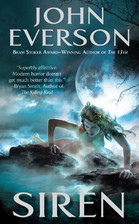
Book Review: Siren by John Everson
 Summary:
Evan walks the seacoast of his small town every night reliving the horror of watching his son drown. But one night he hears a beautiful song and discovers a perfectly naked, perfectly beautiful woman attached to it. As he begins an affair, willfully oblivious to anything about the woman beyond her beauty, he fails to realize he is falling for the siren of Delilah.
Review:
I picked this up during one of the monthly kindle book sales on a whim, and am I glad I did! This book was simultaneously terrifying and electrifying. The flip-flop between fear and titillation was a truly delightful reading experience, and it came with a well thought-out plotline and delicious settings to boot.
Evan is not a likeable guy. In fact, Ligeia, the Siren, is more likable than he is, and she routinely rips people’s throats out with just her teeth. But disliking Evan works for the story. It lets the reader invest in Ligeia and see her side of things. There are ways in which she is a monster, yes, but there are also ways in which she is quite human. Having a deeply flawed male “victim” to her charms allows the reader to see the monster in us all.
Both the horror and the sex scenes are adeptly written. The sex scenes are titillating without being too much, and, similarly, the horrific scenes are grotesque without going too far. The presence of both in the story makes for an ever-changing, exciting read. Similarly, the plot is complex without being overly so and managed to keep me guessing. It also strikes the balance quite well.
I also really enjoyed the light commentary on hunting and eating another species. It provides a depth to the story beyond simply lust leading one astray.
Kind of puts a whole new spin on fishing, doesn’t it? Here you men are always out there reeling in the fish, and here’s a half-fish woman who’s reeling in the men. (page 146)
Of course, there is also commentary on cheating and the other woman. There has to be, since Ligeia is Evan’s mistress. I must admit that that basic plot can sometimes upset me, so I do think it distracted me a bit from enjoying the book as much as I would have otherwise. On a similar note, the ending is not quite what I would have hoped for, although it did make sense in the context of the story.
Overall, this is an interesting mix of horror and erotica that is fast-paced and enjoyable. Those sensitive to cheating as a plot device or explicit deaths may want to exercise caution. Recommended to those who would enjoy their horror and erotica together.
4 out of 5 stars
Source: Amazon

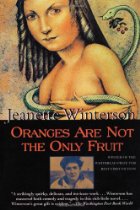
Book Review: Oranges Are Not the Only Fruit by Jeanette Winterson
 Summary:
Jeanette has the dubious distinction of being raised by one of the most vocal women in the fire-brand style Evangelical church in a small British town. Although she at first is different among her school chums for her beliefs, soon she becomes marked as different in her church for her homosexuality. Her journey from differently religious to outcast young adult is chronicled here.
Review:
I picked this up when I heard that it’s a lesbian classic that simultaneously addresses being raised fundy. Having been raised fundy myself (and left), I tend to find these leaving the faith stories highly relatable, and I knew the added queer element would just make it all the more interesting of a read for me.
One interesting thing to note about this book is that no one can quite agree if it’s a novel or a memoir. Winterson herself says that while this was inspired by her own childhood, it is the lite version. Hers was much worse. Given this statement, I choose to respect the author and view this as a novel, but potential readers may want to be aware of this element of the book.
Jeanette (the character) is immediately immensely likeable. Whereas her mother is overbearing and negative, Jeanette is highly intelligent and witty. Her observations on the Bible and religion in the early parts of the book before she realizes she is gay are hilarious, particularly to anyone raised in a fundamentalist faith.
I didn’t know quite what fornicating was, but I had read about it in Deuteronomy, and I knew it was a sin. But why was it so noisy? Most sins you did quietly so as not to get caught. (location 533)
As the book moves from Jeanette’s early life to her adolescence the writing style changes a bit. Winterson inserts various fantastical fancies of Jeanette’s that are clearly her way of trying to discover who she is and explore her options. Some readers might be thrown by these, but I found them delightful. It’s a coping mechanism that I think many people use but few authors put down on paper.
Through these periodic fantastical tales combined with the more traditional narrative, we slowly see Jeanette fall in love with another girl at her church. We then see the fall-out. The two girls torn apart. The attempts at exorcisms. Jeanette is left bereft and confused because, unlike myself, she still wanted her faith. She wanted to believe in God the way she was raised to and to be allowed to love women. She can’t figure out why she can’t have both and thus is left wandering lost and confused.
The novel never makes it clear if Jeanette comes to terms with her lesbianism by letting go of her religion or by finding a more accepting one. It kind of ends on an uncertain, agnostic if you will, note. But that’s really irrelevant. What matters is how beautifully the novel shows the pain that adolescents are needlessly put through when those around them won’t love them for who they are.
At last she put on her gloves and beret and very lightly kissed me goodbye. I felt nothing. But when she’d gone, I pulled up my knees under my chin, and begged the Lord to set me free. (location 1180)
It’s not a book with a clear ending or easy answers, but neither is life really, is it? What it does possess though is a great ability to show a reader the life of a child raised Evangelical who later just cannot fit the mold demanded of her. And that’s a powerful story that needs to be told over and over again until people get it that we can’t do that to children.
Recommended to those with an interest in unique story-telling techniques and coming out stories.
4 out of 5 stars
Source: Amazon

 Support my work with a tip or browse my shop for curated book club guides, how to guides, cross-stitch patterns, and more!


This work by Amanda Nevius is licensed under a Creative Commons Attribution-Noncommercial-No Derivative Works 3.0 United States License.
 Opinions of a Wolf