
Archive
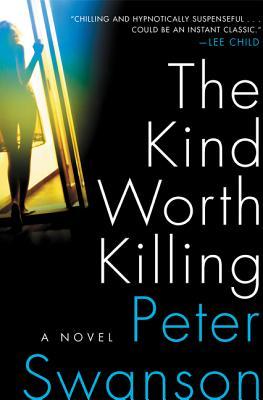
Book Review: The Kind Worth Killing by Peter Swanson
 Summary:
On a night flight from London to Boston, Ted Severson meets the mysterious Lily Kintner. Sharing one too many martinis, the strangers begin to play a game of truth, revealing intimate details about themselves. Ted talks about his marriage and his wife Miranda, who he’s sure is cheating on him. But their game turns dark when Ted jokes that he could kill Miranda for what she’s done. Lily, without missing a beat, says calmly, “I’d like to help.”
Review:
You know from that description that this is going to be a thriller. I was fairly certain it would be in the vein of Gone Girl, and it certainly was.
This book takes you on a delightful rollercoaster of emotions. It’s hard to determine precisely who to root for because they’re all just so darn despicable. In a way, you’re kind of glad that they’re taking things into their own hands amongst themselves because then society won’t be burdened by dealing with it ourselves. On the other hand, there’s certainly an aspect of “look how off the rails things get when we let just any individual decide who deserves what.” That said it’s never heavy-handed. It has more of a delightful sneaky glance into disastrous lives ala a murdery Lifetime movie.
The plot is kept moving forward and twisty and full of surprises partially through alternate viewpoints (more than two). This is a technique I really enjoy when done well, and it was done quite well here. The transitions felt smooth and natural. Never cheap.
I also must say as a New England local that the author got both the logistics and the vibe of multiple New England locations right, everywhere from the ritziest Boston neighborhoods to central Massachusetts towns to rural Maine. If you want a true sense of the area and can handle some murder, definitely pick this up.
I’m not sure how I feel about how the book ended, which is what kept me from loving it. I knew where it was going by about two-thirds of the way through, and I just don’t think it was as smooth as the rest of the book. That said, I do think it ended at the right point in time (with the particular plot it was telling). It left me perfectly satisfied, unlike quite a few thrillers lately.
If you’re still looking for a quick Halloween read, pick this one up. It’ll keep you up and on the edge of your seat waiting to see who comes out on top.
If you found this review helpful, please consider tipping me on ko-fi, checking out my digital items available in my ko-fi shop, buying one of my publications, or using one of my referral/coupon codes. Thank you for your support!
4 out of 5 stars
Length: 311 pages – average but on the longer side
Source: Library
Book Review: The Girl in the Red Coat by Kate Hamer
 Summary:
Carmel Wakeford becomes separated from her mother at a local children’s festival, and is found by a man who claims to be her estranged grandfather. He tells her that her mother has had an accident and that she is to live with him for now. As days become weeks with her new family, 8-year-old Carmel realises that this man believes she has a special gift…
While her mother desperately tries to find her, Carmel embarks on an extraordinary journey, one that will make her question who she is – and who she might become.
Review:
I picked this book up after seeing the title for kind of a ridiculous reason. I’m a big fan of the tv show Pretty Little Liars, and at the time I was in the season where the Big Bad is known as “Red Coat.” I was so stoked to see another mystery surrounding a woman/girl in a red coat that I just had to investigate it. Of course I discovered that it was also a missing/abducted child mystery/thriller (one of my favorite mystery/thriller subgenres), so it quickly ran up my tbr list.
This book tells the missing/abducted child story from both the grieving parent’s and the child’s point of view simultaneously. This is interesting because we can see how they are both changing as time passes, and the mystery becomes not “what is happening to so-and-so” but more “will these two ever find each other again and will they be able to salvage their relationship if they do?”
The mother’s storyline deals with parenting, guilt, and complicated grief. It acknowledges her faults without demonizing her for them. I truly found reading about her struggle to accept and move on without losing hope to be heart-wrenching.
The daughter’s storyline deals with a small girl feeling angry at her mother, grief at her supposed injury and death, and then dealing with having everyone around her believe she has the power to heal through laying on hands. Laying on hands in Evangelical Protestantism is the belief that God can work miracles through you if you lay your hands on a sick person and pray for them. What’s interesting here is that the book takes the position that Carmel does have some sort of mystical healing power, it’s just that it’s not directly related to Jesus and shouldn’t be used to get money from people, the way the man who abducted Carmel uses her to get money out of people. It’s an interesting position to take — that some people can just heal others. I’d say this might be the first magical realism book that worked for me. Because I was really ok with Carmel having this ability just randomly in our world. I also thought that the book manages to not demonize religion. It’s not that religion is bad per se it’s that bad people can twist it to harm others (ain’t that the truth though).
What I found most interesting was the underlying question throughout the book. Carmel and her mother were just not getting along before she was abducted. They didn’t get each other. Is that something they would have been able to get past? Is it something they could get past now if they find each other again?
I think the book answers the most straight-forward questions but it stopped too soon to answer my questions about particular relationships. I think the book either needs a sequel or needed to continue along longer. The point isn’t will this child return physically but rather is this a relationship that could ever be healed.
Recommended to those looking for a child abduction story told from both the parent and the child’s point of view.
If you found this review helpful, please consider tipping me on ko-fi, checking out my digital items available in my ko-fi shop, buying one of my publications, or using one of my referral/coupon codes. Thank you for your support!
4 out of 5 stars
Length: 384 pages – average but on the longer side
Source: Library
Book Review: Girl Against the Universe by Paula Stokes
 Summary:
Maguire is bad luck.
No matter how many charms she buys off the internet or good luck rituals she performs each morning, horrible things happen when Maguire is around. Like that time the rollercoaster jumped off its tracks. Or the time the house next door caught on fire. Or that time her brother, father, and uncle were all killed in a car crash—and Maguire walked away with barely a scratch.
It’s safest for Maguire to hide out in her room, where she can cause less damage and avoid meeting new people who she could hurt. But then she meets Jordy, an aspiring tennis star. Jordy is confident, talented, and lucky, and he’s convinced he can help Maguire break her unlucky streak. Maguire knows that the best thing she can do for Jordy is to stay away. But it turns out staying away is harder than she thought.
Review:
I picked this up because I heard it featured mental illness in a realistic manner, and I think that’s something that’s important, particularly in YA. I was not disappointed.
Maguire has a form of Obsessive-Compulsive Disorder (OCD) that developed in response to trauma. She’s been around when some very bad things happened, and her survivor’s guilt has kind of gotten out of control. The reader meets Maguire initially through her therapy session, where she is definitely a sullen teenager. Maguire’s approach to her mental illness is one of the more realistic parts of the book. She at first very firmly believes that everyone else is crazy in refusing to acknowledge her “bad luck.” But slowly with the help of her therapist she comes to see that maybe it’s all in how she’s perceiving the random universe, and that her magical thinking won’t really fix anything.
While I didn’t think having a love interest was necessary (why couldn’t it be a friend for once), I get why Jordy was included and I liked him beyond the love interest part. Jordy’s existence shows that therapy can be useful for things beyond more serious mental illnesses, such as relearning coping mechanisms or dealing with issues in your family. I also appreciated that for once there wasn’t a love triangle.
I did think the writing was a little bit too simplistic for the audience, and I also thought that sometimes the descriptions were rocky. Some sentences read early first draft with the list of descriptors that are then repeated every time characters show up again. But I also think that YA readers who aren’t used to seeing themselves (or their loved ones) in literature will be so enthralled by Maguire and her realistic therapy assignments and issues that they will quickly gloss over that.
Recommended to fans to contemporary YA lit looking for a realistic mental illness depiction.
If you found this review helpful, please consider tipping me on ko-fi, checking out my digital items available in my ko-fi shop, buying one of my publications, or using one of my referral/coupon codes. Thank you for your support!
4 out of 5 stars
Length: 400 pages – average but on the longer side
Source: Library
Book Review: Ashes of Honor and Chimes at Midnight by Seanan McGuire (Series, #6 and #7)


Summary:
Book 6
Etienne has a mysteriously powerful changeling daughter no one else knew about who goes missing and now Toby must find her.
Book 7
Goblin Fruit is being sold on the streets and Toby in her grief seeks to eradicate it only to discover the Queen is behind it. Then she gets hit in the face with a pie made of it and since it’s only addictive to humans and changelings she’s now addicted to basically the fantasy equivalent of heroin. Oh also she becomes fixated on reestablishing the rightful heir to the throne, and not just because she’s been exiled by the current Queen
Review:
So here’s the thing. I love reading a good series but generally so long as everything is continuing along at the same quality level as the first couple of books there’s not too much to say about them. But also if you just stop reviewing them it makes it seem like you stopped reading the series, which isn’t the case. So I’m going to be sticking to short reviews for my series reads, and I might start lumping them together, unless there’s one that’s particularly good or one that’s particularly bad.
I’ve mentioned in previous reviews that I’m tired of the series looking for missing kids. This happens again in book 6, and yes it kind of bugged me, but it was different enough that I kept reading. I think having the added factor of learning more about how changelings work and also how Toby’s particular type of fae work helped keep it interesting.
I’d say that book 7 kept me more on the edge of my seat than book 6 because Toby is in more genuine peril and also she is more honest about her feelings for the King of Cats. I find overthrowing one royal person to instill another to be rather boring but Toby’s personal peril helped keep it interesting for me. I also really enjoyed one particular reveal about a longstanding character. That said, all of the political intrigue and the fact that the next book promises only more made me decide it was time to take a break from the series until I’m ready for a read that will be exactly what I am expecting. There’s always room for that in my reading but it can be a bit dull if you read a few too many in a row.
Both of these reads hold enough of what long-time readers of the series have come to expect and new information to be both engaging and not disappointing. It’s a good series but not one that builds intrigue over the course of each book throughout the series.
If you found this review helpful, please consider tipping me on ko-fi, checking out my digital items available in my ko-fi shop, buying one of my publications, or using one of my referral/coupon codes. Thank you for your support!
4 out of 5 stars (each)
Length: 363 pages – average but on the longer side (book 6)
Length: 357 pages – average but on the longer side (book 7)
Source: Library
Previous Books in Series:
Rosemary and Rue, review
A Local Habitation, review
An Artificial Night, review
Late Eclipses, review
One Salt Sea, review
Book Review: Try Not to Breathe by Holly Sedon
 Summary:
Amy Stevenson was the biggest news story of 1995. Only fifteen years old, Amy disappeared walking home from school one day and was found in a coma three days later. Her attacker was never identified and her angelic face was plastered across every paper and nightly news segment.
Fifteen years later, Amy lies in the hospital, surrounded by 90’s Britpop posters, forgotten by the world until reporter Alex Dale stumbles across her while researching a routine story on vegetative patients.
Remembering Amy’s story like it was yesterday, she feels compelled to solve the long-cold case.
The only problem is, Alex is just as lost as Amy—her alcoholism has cost her everything including her marriage and her professional reputation.
In the hopes that finding Amy’s attacker will be her own salvation as well, Alex embarks on a dangerous investigation, suspecting someone close to Amy
Review:
I devoured this book so quickly that I forgot to mark it read in GoodReads for a few weeks. It’s a thrilling read on a lot of levels. Amy’s questionably vegetative state would give anyone chills, as would how she wound up there. Even before full details of the attack are known, everyone knows it was pretty gruesome. Alex’s “functional” alcoholism also sends chills down the spine. She’s lost almost everything, but she still drinks enormous amounts of alcohol every day. The juxtaposition of the two women is what makes the psychological thriller so thrilling. They’re both being held paralyzed in a state by an illness and any one of us could fall to either of those states.
I know the average reader is probably most interested in the mystery aspect of the thriller–the whodunit. I will say in short that it’s a well-done mystery. I had my suspicions but exactly how things ultimately went down was still enough of a surprise that I was delighted, and I thought the resolution was well-done. What I was much more fascinated by though was Alex.
A “trouble-making journalist” or a detective who drinks too much is the norm of thrillers and noir but usually that is played up as something slightly dangerous but also sexy. Here there is nothing sexy about Alex’s alcoholism. She wets the bed every night. It at first seems this is because she drinks at least one glass of water per glass of alcohol to stave off hangovers but later it’s clear it’s from her body shutting down from her alcoholism. Alex is a great example of a “functional” alcoholic. She’s holding down a job (sort of, her alcoholism stole her dream career from her), she runs every day, she’s capable of looking into this mystery of Amy. But slowly other things are revealed that makes it ever clearer that no, she’s not homeless, but she is far from functional, unless by functional you simply mean she can sort of exist in human society. She is nowhere near what she could be because of the alcohol, and she’s lost almost everything (career, husband, and more). I really liked that the reader is both compelled to respect Alex’s smarts and tenacity as a reporter but also to feel empathy and horror at how much alcoholism is stealing from her. Even if the reader doesn’t have an interest in addictions, it still makes Alex a well-rounded character. She is more than just that smart journalist. There are whole worlds going on in her own life outside of her investigation.
Overall, if you’re looking for a thriller with a twisting plot that also turns some thriller/noir conventions on their head (not least of which the fact that both leads are women), then you should pick this book up.
If you found this review helpful, please consider tipping me on ko-fi, checking out my digital items available in my ko-fi shop, buying one of my publications, or using one of my referral/coupon codes. Thank you for your support!
4 out of 5 stars
Length: 368 pages – average but on the longer side
Source: Library
Counts For:
Mental Illness Advocacy (MIA) Reading Challenge
Specific illness –> Addictive Disorders
Trigger Warning/Content Note:
Contains discussions of rape and sexual assault.
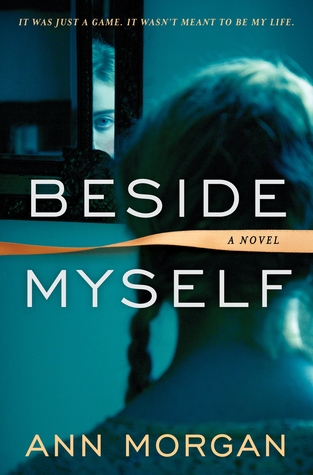
Book Review: Beside Myself by Ann Morgan
 Summary:
When Helen agrees to swap places with her identical twin sister Ellie at the age of six, she thinks it’ll be a short fun game. But then Ellie refuses to swap back. Forced into her new identity, Helen develops a host of behavioral problems, delinquency and chronic instability. With their lives diverging sharply, one twin headed for stardom and the other locked in a spiral of addiction and mental illness, how will the deception ever be uncovered?
Review:
This book is an amazing depiction of gaslighting. Gaslighting is an insidious form of abuse where the abuser insists to the abused that reality is not in fact reality, and the abused is crazy. (For more about gaslighting, see this great information from the National Domestic Violence Hotline). This book makes gaslighting completely real and understandable for anyone, whether they’ve gone through it themselves or not. It’s easy to see immediately how poor Helen gets slowly tortured and driven mad by everyone denying to her that she is who she says she is. The author takes care not to demonize Ellie though, since it’s abundantly clear part of why Ellie doesn’t want to switch back is because their mother has pre-decided which twin will be the good twin and which the bad, and she consequently treats Helen far better than she treats Ellie. Why wouldn’t she not want to switch back?
How this childhood trauma has wounded Helen becomes more clear over the course of the book. But it’s not just a plain recounting of they switched places then Helen went crazy. The book opens with Helen trying to rebuild her life from addiction and Ellie being in a coma from a car accident. Ellie’s husband reaches out to Helen in the hopes that hearing from her twin will bring her out of it, and slowly long-held secrets reveal themselves.
I thought the whole way through the book that it was slowly building to a certain ending. Then something else came at me out of left field and I was left breathless and aching for Helen. That’s not to say it’s a tragic ending, but it is a shocking one. One that left me with a very different “bad guy” than I thought I had the whole book.
It’s a stellar read, and one of those books that I wish I was able to read for the first time again. It’s that good. Recommended to lovers of psychological thrillers and/or twin swap afficionados.
If you found this review helpful, please consider tipping me on ko-fi, checking out my digital items available in my ko-fi shop, buying one of my publications, or using one of my referral/coupon codes. Thank you for your support!
5 out of 5 stars
Length: 315 pages – average but on the longer side
Source: Library
Book Review: Fever by Mary Beth Keane (Audiobook narrated by Candace Thaxton)
 Summary:
Have you ever heard of Typhoid Mary? The Irish-American cook in the early 1900s who was lambasted for spreading typhoid through her cooking. What many don’t know is that she was an asymptomatic carrier. This was the early ages of germ theory, and most didn’t realize you could pass on an illness without any symptoms. Captured and held against her will on North Brother Island, it’s easy to empathize with her plight. Until she’s released and begins cooking again.
Review:
I grew up hearing the cautionary tale of Typhoid Mary, who was mostly mentioned within hearing range in combination with an admonition to wash your hands. But some people (mainly other children) told tales of her purposefully infecting those she served. These sentences were spoken with a combination of fear and awe. On the one hand, how understandable at a time when worker’s rights were nearly completely absent and to be both a woman and Irish in America was not a good combination. On the other hand, how evil to poison people with such a heinous illness in their food. In any case, when this fictionalized account of Mary Mallon came up, I was immediately intrigued. Who was this woman anyway? It turns out, the mixture of awe and fear reflected in myself and other children was actually fairly accurate.
I’m going to speak first about the actual Mary Mallon and then about the writing of the book. If you’re looking for the perfect example of gray area and no easy answers mixed with unfair treatment based on gender and nation of origin, then hoo boy do you find one with Mary Mallon. The early 1900s was early germ theory, and honestly, when you think about it, germ theory sounds nuts if you don’t grow up with it. You can carry invisible creatures on your skin and in your saliva that can make other people but not yourself sick. Remember, people didn’t grow up knowing about germs. It was an entirely new theory. The status quo was don’t cook while you’re sick, and hygiene was abysmally low…basically everywhere. It’s easy to understand how Mary was accidentally spreading sickness and didn’t know it. It’s also easy to understand why she would have fought at being arrested (she did nothing malicious or wrong and was afraid of the police). Much as we may say now that she should have known enough to wash her hands frequently. Wellll, maybe not so much back then.
Public health officials said that they tried to reason with Mary, and she refused to stop cooking or believe that she was infecting others. This is why they quarantined her on North Brother Island. Some point to others (male, higher social status) who were found to be asymptomatic carriers who were not quarantined. True. But they also acknowledged the risk and agreed to stop doing whatever it was that was spreading the illness. Maybe Mary was more resistant because of the prejudice she was treated with from the beginning. Or maybe she really was too stubborn to be able to understand what a real risk she posed to others. Regardless, it is my opinion that no matter the extraneous social factors (being a laundress is more difficult than being a cook, people were overly harsh with her, etc…) Mary still knowingly cooked and infected people after she was released from North Brother Island. Yes, there were better ways public health officials could have handled the whole situation but that’s still an evil thing to do. So that’s the real story of Mary Mallon. Now, on to the fictional account (and here you’ll see why I bothered discussing the facts first).
At first Keane does a good job humanizing a person who has been extremely demonized in American pop culture. Time and effort is put into establishing Mary’s life and hopes. Effort is made into showing how she may not have noticed typhoid following her wherever she went. She emigrated from Ireland. She, to put it simply, saw a lot of shit. A lot of people got sick and died. That was just life. I also liked how the author showed the ways in which Mallon was contrarian to what was expected of women. She didn’t marry. She was opinionated and sometimes accused of not dressing femininely enough. But, unfortunately, that’s where my appreciation fo the author’s handling of Mallon ends.
The author found it necessary to give Mallon a live-in boyfriend with alcoholism who gets almost as much page time as herself. In a book that should be about Mary, he gets entirely too much time, and that hurts the plot. (There is seriously a whole section about him going to Minnesota that is entirely pointless). A lot of Mary’s decisions are blamed on this boyfriend. While I get it that shitty relationships can cause you to make shitty decisions, at a certain point accountability comes into play. No one held a gun to Mary’s head and made her cook or made her date this man (I couldn’t find any records to support this whole boyfriend with alcoholism, btw).
On a similar note, a lot of effort is made into blaming literally everyone but Mary for the situation. It’s society’s fault. It’s culture’s fault. It’s Dr. Soper’s fault. They should have rehabbed her with a new job that was more comparable to cooking than being a laundress. They should have had more empathy. Blah blah blah. Yes. In a perfect world they would have realized how backbreaking being a laundress is and trained her in something else. But, my god, in the early 1900s they released her and found her a job in another career field. That’s a lot for that time period! This is the early days of public health. The fact that anyone even considered finding her a new career is kind of amazing. And while I value and understand the impact society and culture and others have on the individual’s ability to make good and moral decisions, I still believe ultimately the individual is morally responsible. And at some point, Mary, with all of her knowledge of the fact that if she cooked there was a high probability someone would die, decided to go and cook anyway. And she didn’t cook just anywhere. She cooked at a maternity ward in a hospital. So the fact that the book spends a lot of time trying to remove all personal culpability from Mary bothered me a lot.
I’m still glad I read the book, but I sort of wish I’d just read the interesting articles and watched the PBS special about her instead. It would have taken less time and been just as factual.
If you found this review helpful, please consider tipping me on ko-fi, checking out my digital items available in my ko-fi shop, buying one of my publications, or using one of my referral/coupon codes. Thank you for your support!
Source: Audible
3 out of 5 stars
Length: 336 pages – average but on the longer side
Buy It (Amazon or Bookshop.org)
If you found this review helpful, please consider tipping me on ko-fi, checking out my digital items available in my ko-fi shop, buying one of my publications, or using one of my referral/coupon codes. Thank you for your support!
Book Review: One Salt Sea by Seanan McGuire (Series, #5)
 Summary:
Someone has kidnapped the sons of the Duchess Dianda Lorden, regent of the Undersea Duchy of Saltmist. To prevent a war between land and sea, Toby must not only find the missing boys, but also prove that the Queen of the Mists was not behind their abduction. She’ll need all her tricks and the help of her allies if she wants to make it through this in one piece.
Review:
I’ll keep this review short and sweet, because if you’ve made it to book 5 in this series, you already know if the writing style works for you or not. So specifically, how did this particular plot work out?
This is the Toby Daye book I’ve liked least so far in the series. Part of that is probably for personal reasons, but part of it is for repetitive plot reasons. Toby just….seems to have to save children an awful lot. Now, I’m not saying that an urban fantasy that basically involves someone solving crimes in a world where there’s a huge taboo on murder of immortals won’t repeat some crimes. I am saying that I think doing abducted children again right after a book that did that theme so incredibly well (Blind Michael is the ultimate in creepy) is just too repetitive. There are actually some sly nods to the reader that the author knows abducted children plots are happening a lot. Toby comments something along the lines of gee she’s sure sick of saving children. If your main character is sick of saving kids, maybe the readers are tired of reading it. Just saying. Beyond that, there were two other things that made me meh about this plot.
First, we’re clearly supposed to sympathize with Toby in the whole “whyyy does everyone think I’m a terrible mother” plot, but honestly I don’t sympathize with her, and I do think she’s a terrible mother. So. There’s that. But I fully admit to having some of my own mom issues, so it might be harder for me to see this with a neutral viewpoint. Other readers may have a different experience. But be prepared to possibly like Toby less.
Second, you know how most romances have various love interests and you’re on a certain team? Well, I am 100% #TeamTybalt, and I was not pleased by all the Connor scenes. I just find him dull and drab and I am massively creeped out by the webs between his fingers that never go away. Plus…male selkies….eh. This book could easily be called the #TeamConnor book so readers who like him….enjoy. For the rest of us, you might find yourself rolling your eyes a bit.
I know that sounds like a lot of negatives but it is the book I’ve liked least in the series so far, in spite of really enjoying the series, so it seemed apt to discuss at length why it didn’t work so well for me. All of that said, I read it quickly, and I fairly soon picked up the next book in the series, so I certainly didn’t hate it. A lot about the series works really well for me, there are just certain aspects of this book and plot that I think might make it less enjoyable for certain readers compared to the rest of the series.
If you found this review helpful, please consider tipping me on ko-fi, checking out my digital items available in my ko-fi shop, buying one of my publications, or using one of my referral/coupon codes. Thank you for your support!
3 out of 5 stars
Length: 354 pages – average but on the longer side
Source: Library
Previous Books in Series:
Rosemary and Rue, review
A Local Habitation, review
An Artificial Night, review
Late Eclipses, review
Book Review: The Undomestic Goddess by Sophie Kinsella
 Summary:
Workaholic attorney Samantha Sweeting has just done the unthinkable. She’s made a mistake so huge, it’ll wreck any chance of a partnership.
Going into utter meltdown, she walks out of her London office, gets on a train, and ends up in the middle of nowhere. Asking for directions at a big, beautiful house, she’s mistaken for an interviewee and finds herself being offered a job as housekeeper. Her employers have no idea they’ve hired a lawyer–and Samantha has no idea how to work the oven. She can’t sew on a button, bake a potato, or get the #@%# ironing board to open. How she takes a deep breath and begins to cope–and finds love–is a story as delicious as the bread she learns to bake.
But will her old life ever catch up with her? And if it does…will she want it back?
Review:
Long-time readers of this blog will know that I’m a Sophie Kinsella fan, so it should come as no surprise that I liked this book. But let me say I love love loved this book. It’s my favorite Kinsella book I’ve read so far. It was funny but also a beautiful love story and also great commentary on life and priorities. It gave me the warm fuzzies, you guys.
I think one of the things I like best about Kinsella books is how they present all of women’s life options as totally valid ones, even if the heroine herself doesn’t realize that at first. What matters most is the heroine doing what makes her happy, and often the drama comes from the heroine forcing herself to be something she’s not or align herself with life values she doesn’t have. In any case, this book walks a great line of neither demonizing career women nor women who stay at home. It also doesn’t present doing a high-powered, high-education track as better than doing a traditionally blue collar job like housekeeping or cooking. Yes, at first Samantha thinks one of them is better and looks down on the other, but ultimately she realizes the pluses and minuses of both types of jobs, and I really like seeing that in chick lit. A lot. I also really enjoyed seeing the struggle Samantha has between part of herself wanting the high-powered career and part wanting the quiet life at home. I think that’s a feeling many modern women can relate to.
The romance is also quite sweet. The early on playing between Samantha and her man and how that progresses made me feel like I was cozied up in a just the right temperature bath. But I also really liked that the book shows that compromise in a relationship is necessary. Both of them have to adjust their perceptions to fit the new reality of each other and both are willing to make compromises and meet in the middle.
Of course it’s also funny. What’s not funny about a lawyer trying to keep house when she doesn’t know anything about cleaning or cooking? At some point though the humor transitions into scenes that I can only describe as warm and glowing. That focus in on what really matters in life.
I was entertained. My life goals and ambitions were strengthened and validated. And I (maybe) (ok, definitely) cried happy-ever-after tears at the end of the book. I suppose if you’re a reader who doesn’t understand people who want to work a job they at least moderately enjoy and live life at a reasonable pace with lots of time with those they love then you might not enjoy this book. But I’d also say you need to read it and take a hard look at Samantha’s life before and after her lessons.
If you found this review helpful, please consider tipping me on ko-fi, checking out my digital items available in my ko-fi shop, buying one of my publications, or using one of my referral/coupon codes. Thank you for your support!
5 out of 5 stars
Length: 404 pages – average but on the longer side
Source: Library
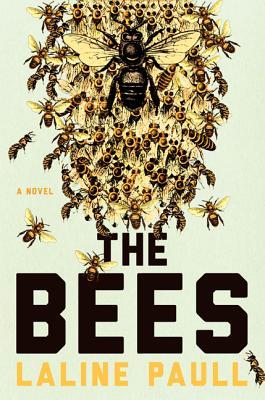
Book Review: The Bees by Laline Paull (Audiobook narrated by Orlagh Cassidy)
 Summary:
Born into the lowest class of her society, Flora 717 is a sanitation bee, only fit to clean her orchard hive. Living to accept, obey and serve, she is prepared to sacrifice everything for her beloved holy mother, the Queen. Yet Flora has talents that are not typical of her kin. And while mutant bees are usually instantly destroyed, Flora is reassigned to feed the newborns, before becoming a forager, collecting pollen on the wing. Then she finds her way into the Queen’s inner sanctum, where she discovers secrets both sublime and ominous. Enemies roam everywhere, from the fearsome fertility police to the high priestesses who jealously guard the Hive Mind. But Flora cannot help but break the most sacred law of all, and her instinct to serve is overshadowed by a desire, as overwhelming as it is forbidden.
Review:
I like books that mix scientific accuracy with a touch of personification of animals, or in this case, insects. I was expecting it to be weird, because it’s about insects, but oh boy was this book weird.
For some reason, I find the title to be hilarious. I just kept walking around saying to myself, “the bees, The Bees, THE BEES.” You may think that sounds ridiculous (and it does, and I am, indeed, a ridiculous person) but this book really closely matches that experience.
I applaud the author all the research she clearly must have done. I think it only makes logical sense that she invented a religion for the bees to follow that revolves around worshiping the queen. The horrifying dystopianesque rigid structure of bee life also makes sense based on what we scientifically know about them. All of that said, it was still deeply odd to read. Priestesses and chanting and drones and evil invading wasps. It struck me as a cartoon that took itself very very seriously. I would have preferred if it perhaps took itself a bit less seriously. Like (I’m aging myself here) SimAnt.


In any case, the book does take itself very seriously, most likely due to the very real and serious fact that bees are dying out, and reasons for this are reflected in the story, as the colony faces many challenges to staying alive. While I was able to take some of these threats quite seriously, like flowers not blooming at the right time, others were written in such a ridiculous way that I just couldn’t. For example, a giant evil cell phone tower that makes the bees lose their way when they’re out flying. It’s practically personified as a giant evil ominous entity, and I found myself laughing when I knew actually this is really a problem for bees. The book is basically caught in this uncanny valley that both prevented me from being moved by it and from finding it completely humorous. It’s a book that I think needed to sway a bit more in one direction or the other.
I was still at least 4 star enjoying it though until the end. I found the end just so deeply depressing and unnecessarily so (the point was made, no need to go so extreme) that I was left frustrated. I think, having read the ending, that perhaps the author didn’t realize that she was at times veering into ludicrous humor, and she maybe intended the whole book to be a Very Serious Read, when it simply was not.
Overall, then, if you’re a reader who is able to take some ludicrousness seriously, you will most likely enjoy the book more and get more emotional depth out of it than I did.
Now, if only there was a SimBees…..
If you found this review helpful, please consider tipping me on ko-fi, checking out my digital items available in my ko-fi shop, buying one of my publications, or using one of my referral/coupon codes. Thank you for your support!
3 out of 5 stars
Length: 340 pages – average but on the longer side
Source: Audible
 Support my work with a tip or browse my shop for curated book club guides, how to guides, cross-stitch patterns, and more!


This work by Amanda Nevius is licensed under a Creative Commons Attribution-Noncommercial-No Derivative Works 3.0 United States License.
 Opinions of a Wolf