
Archive
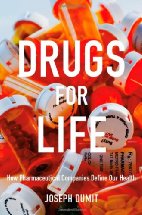
Book Review: Drugs For Life: How Pharmaceutical Companies Define Our Health by Joseph Dumit
 Summary:
Written by a professor of Anthropology, this book explores the interaction of the cultures of medicine, pharmaceuticals, and public health and how they have impacted the modern Western perception of what constitutes health and what makes a person count as healthy.
Review:
I was immediately drawn to this anthropological exploration of what has impacted the modern perception of health and requested it on NetGalley. Although the book can sometimes feel a bit long and repetitive, the information it contains is an even-handed look at the reasons behind so many people in the West being put on preventive prescription medication.
Since this is written by an Anthropologist, not a journalist or a doctor or pharmaceutical representative, it has neither an expose feeling to it nor a particular slant. It’s clear that the author originally was just looking at the culture surrounding healthcare, and the evidence led him down this path. Anyone who is familiar with Anthropology knows that Anthropologists are trained to attempt to avoid biases and just report what they see. Of course, everyone is human, and I definitely think that by the time Dumit finished his research he has formed an opinion that the reader can observe, however he does quite a good job of just presenting the facts.
The book is divided into six chapters, plus an introduction and conclusion. The six chapters are: responding to facts, pharmaceutical witnessing and direct-to-consumer advertising, having to grow medicine, mass health: illness is a line you cross, moving the lines: deciding on thresholds, and knowing your numbers: pharmaceutical lifestyles. The book thus moves from the culture of facts and how we respond to them, to the business of pharmaceuticals, to how public health has impacted how we treat individual health, to how the individual health care consumer responds to the information they hear from all sides. Again, all of this is presented from an anthropological perspective. If a reader has not read an anthropology-research based book before, the way in which Dumit looks at the information may be a bit confusing or surprising at first, since it is more about culture, which may not be expected at first, given the title. However, the second chapter helps this perspective make sense, so even a reader new to this perspective will most likely be able to get into it.
What inspired Dumit to conduct this cultural investigation is the sheer number of drugs the average American is prescribed.
The average American is prescribed and purchases somewhere between nine and thirteen prescription-only drugs per year, totaling over 4 billion prescriptions in 2011 and growing. The range is wide, however, and many people are prescribed few or no drugs each year. (loc 100)
What Dumit’s investigations revealed was a cultural shift from treating an illness after it negatively impacts a person’s life to attempting to prevent illness. Whereas individual doctors may prefer prescribing lifestyle changes (work out more, eat differently, stress reduction), some doctors prefer being able to simply prescribe a drug and some groups of patients may prefer to keep their lifestyle and take a preventative drug. Similarly, the pharmaceutical industry sees preventative drugs that are taken by large groups of people with risk factors as a more monetarily sound investment than generating drugs for an illness that would be taken one-time or simply for the duration of the illness or just from the time of diagnosis to the end of the person’s life. Preventative drugs are prescribed to people who have risk factors for developing an illness, and they then must be taken every day. At the same time as these situations have developed, public health, since the 1970s, has started looking at groups of people at risk for developing a disease that would have a negative public health impact and advising that people with these risk factors be treated to prevent the disease from ever occurring. All of these factors have created the environment in which we now live in the United States where people who are not yet sick are still taking multiple prescription drugs to prevent their getting sick, often in spite of dealing with side effects.
I will now discuss the elements of this overarching concept that I found most interesting. The book contains many more facts and information than this, and if you find any of this at all intriguing, I highly recommend you pick up and read the whole book.
First, there’s the fact that clinical trials are extremely expensive to produce. Pharmaceutical companies thus are most invested in clinical trials whose results would indicate treating the largest number of people for the longest amount of time and, perhaps most importantly, only for those people who are able and willing to pay for these drugs. (loc 145) What this means is that illnesses that only a small percentage of people have are not getting clinical trials for drugs. Similarly, illnesses that a lot of people have but most of those people cannot afford to pay for the drugs, such as tropical diseases prevalent in African countries, also are not getting clinical trials for drugs to treat them. The pharmaceutical companies are businesses that are interested in making money, not in improving the quality of life for everyone on the planet.
Marketers want to maximize the number of prescriptions in order to maximize profits. They see clinical trials as investments whose purpose is to increase sales of medicines. (loc 1415)
I also found the question of what constitutes health and how that has changed over the years fascinating. Originally, people generally only came to the doctor if they felt sick or as if something was off. We are now encouraged to engage in preventative care. How this impacts how we perceive of health is summed up well here:
We have a new mass health model in which you often have no experience of being ill and no symptoms your doctor can detect, but you or your doctor often discover that you are at risk via a screening test based on clinical trials that show some efficacy of a treatment in reducing that risk; you may therefore be prescribed a drug for life that will have no discernible effect on you, and by taking it you neither return to health nor are officially ill, only at risk. (loc 195)
Tied into this idea of risk factors being treated as illnesses and thus healthy people being treated as not healthy is the idea that outliers, variations, and things that are simply socially undesirable can often be reclassified as illness, particularly if doing so means that the pharmaceutical companies will make more money. (loc 1079)
Third, I was intrigued by the discussion on the public health model. Public health seeks to reduce illness in the population as a whole by treating those with risk factors, but also by treating however many it takes to reduce the occurrence of illness. An example of a community-wide public health intervention is adding fluoride to the public drinking water. This is done to everyone in the hopes that it will help prevent cavities, regardless of the actual individual risk factor for developing cavities. A public health intervention that is done only to those with a risk factor is taking statins to lower cholesterol. This is recommended for individuals whose cholesterol falls in a certain range, but there is no exact science in creating that range. In fact, the cholesterol range is frequently lowered, putting more and more people on statins, even if only a small percent (less than 10%) of people are actually helped by being on these statins. The question Dumit raises in this discussion is:
At what point are public health officials justified in intervening on a community-wide basis to protect a group of people who are not all equally at risk and who might not want to be protected? The push and pull of paternalism versus autonomy is a constant refrain in the field. (loc 1667)
Of course, the pharmaceutical companies want more and more people included in the risk factor, they even would probably be fine with everyone being on statins as a community-wide public health intervention, since this increases their sales.
Finally, I was also interested in how the book examines how the average patient population responds to all of this information about risk factors and preventative drugs and medicine and constant flow of health information. Dumit divides the response to this into three general groups: “expert patienthood, fearful subject of duties, and better living through chemistry.” (loc 2842) The expert patient is like the teacher’s pet. They know all their health numbers and risk factors, listen to their doctors, take anything prescribed, and advise others to do the same. These guys are the health seekers. The second category, fearful subject of duties, is motivated by avoiding illness, not by seeking health. The final category of patient is the one I alluded to earlier. These folks won’t change their lifestyle in response to risk factors, but will instead request a pill so that they can continue living how they prefer. Which category do you think you fall into?
I think the book in general could be a bit better organized. My notes, although taken linearly, read as a bit disjointed, with some jumping around among different ideas. The overarching concepts are not laid out as clearly and succinctly in the book as they are in my review. Similarly, some concepts can be repeated a bit too often, leaving the reader feeling like they’ve read this before. Also, sometimes the book delves a bit too deeply into anthropological concepts and methods, given the fact that it is presented as a book for a layman. Finally, I feel the title of the book is a bit too click-baity. It reads as if it was written to sound much more controversial and attacking of the pharmaceutical industry than the book itself actually is. The title reads like the book will be a heavy-hitting expose, when really it is an even-handed piece of anthropology work.
Overall, this book will appeal to anyone interested in how the United States health care culture has evolved to the point it is currently at in regards to prescribing so many drugs. The reader does not have to be a scientist or involved in medicine to understand the book, although portions of it may feel a bit repetitive or overly technical at times. Although the book could be a bit better organized, overall it presents a clear look into the culture of drug prescription in the United States, and I recommend it to anyone interested in that topic.
If you found this review helpful, please consider tipping me on ko-fi, checking out my digital items available in my ko-fi shop, buying one of my publications, or using one of my referral/coupon codes. Thank you for your support!
4 out of 5 stars
Length: 280 pages – average but on the shorter side
Source: NetGalley

Book Review: Rewinder by Brett Battles (Audiobook narrated by Vikas Adam)
 Summary:
It’s 2015, and Denny Younger of New Cardiff, California, is a caste of 8. He loves reading and studying but he knows he will probably end up working in the shops just like his father. But when he takes his placement test, he’s offered a position that he is promised is better, but he can’t know anything about it until he starts working, and he must leave his family behind. Denny’s family life is in pieces, so he eagerly agrees. Before he knows it, he is re-caste as a 5 and soon discovers that he will be traveling through time as an observer, recording family histories for the elite. Even the smallest error in time-travel can have far-reaching consequences, and before he knows it, Denny finds himself racing against time (and other time-travelers) to fix everything. But what does fixing everything actually mean?
Review:
I love a good time-travel book, so when Audible offered this one up to me for review, I eagerly agreed. This is an action-packed book but with far less time-travel than it originally appears and much more parallel universes.
The basic premise of the book is that this is the year 2015 in a wold where the American Revolution never occurred. Without the American Revolution, the British Empire ended up taking over most of the world (except East Asia). Everyone is sorted into extremely strict castes, and family history is everything. These people haven’t made it to the moon yet, but they have managed to discover time-travel. And they use this discovery solely to send people called “rewinders” back in time to verify people’s ancestry to solidify their ranking in this world. Now, this was my first major problem with the book, and it’s a plot point I just never was able to let go of. This society acknowledges the risk of the butterfly effect and yet they brazenly send people willy-nilly through time risking everything for what? Geneaology. And this has been going on for decades with no ill effects. Perhaps other readers can get past the idea that a federally (er, royally) backed agency would do this, but I simply could not.
Naturally, when our brave hero goes back in time, he is the first to woops his way into a butterfly effect. He knows he’s probably done it (he causes someone to leave a location 12 seconds late), but he still pops back up into the present to check on things. Once there, it takes him days to figure out that he’s changed history. Daaaaays. It should really not take him this long to figure this thing out. Denny causes a change. Denny pops up to the present. Denny has troubling connecting to his companion (a person in the present who grounds the person time-traveling), so he gets sick for a few days. Denny then wanders through our universe’s New York City and can’t figure out what’s going on. It takes traveling to California’s New Cardiff (in our world, Los Angeles) and seeing that his family home is gone to figure out what’s happened. Really? A person who has been trained in time-travel takes this long to figure out this very basic time-travel problem? It’s hard to believe, especially after we’ve been told repeatedly how smart Denny is, that he could be that stupid.
Denny then starts living in Los Angeles to investigate this parallel universe. He naturally meets a girl and falls for her. He then has trouble deciding whether to put everything back or not. And of course there are other rewinders out there he must contend with.
The basic plot idea is interesting. What would have happened if there had been no American Revolution and how would a person from that society react if they discovered a different option for their lives? But how the author gets there isn’t fully thought-out or fleshed-out enough. There are too many logical fallacies, such as the ones I’ve laid out above. That said, it was a fun read with a different plot than what has been coming from a lot of YA recently. I was glad to see a scifi that contains some history for YA readers. I also appreciated how many women characters are present in the book, including Denny’s trainer and his nemesis. Similarly, Denny’s world is extremely lacking in diversity due to the success of the British empire and its traditionalism. When he travels to our world, he immediately encounters greater diversity, both of race and of sexuality, and he seems to appreciate that, which is a nice touch.
The narrator does a good job both keeping a good pace and setting the tone for the book. While I understand why the narrator uses a British accent for the British characters from the 1700s, the history geek in me was frustrated, since the stereotypical modern “British accent” didn’t exist back then. (I knew this from my History BA, but here’s an article that explains what I’m talking about).
Overall, this book has an interesting premise and fast-moving plot. It has some romance, but is thankfully free of any love triangles. Time-travel fans may be frustrated by how easily characters brush off the real presence of time-travel issues. The science of time-travel is simply not explored enough, nor is history. However, YA readers looking for a quick read and something different in the genre will most likely enjoy it.
If you found this review helpful, please consider tipping me on ko-fi, checking out my digital items available in my ko-fi shop, buying one of my publications, or using one of my referral/coupon codes. Thank you for your support!
3 out of 5 stars
Length: 300 pages – average but on the shorter side
Source: Free download from Audible in exchange for my honest review

Book Review: Ticker by Lisa Mantchev
 Summary:
Penny Farthing, member of the wealthy elite, is full of tons of energy she mostly uses to ride her motorized high wheel bicycle and collect robotic butterflies. Unfortunately, her clockwork heart doesn’t always entirely keep up with her. Plus she has to wind it. Much more troubling to her, though, is the fact that the creator of her clockwork heart, Calvin Warwick, is now on trial for murdering dozens of people he abducted from the street to practice on before giving her her new heart. When there is an explosion at her family’s factory and Warwick escapes prison immediately after being found guilty of murder (oh, and her parents disappear), Penny and her twin brother and two of their closest friends embark on a journey of intrigue to bring her parents home and Warwick to justice.
Review:
I rarely am actually interested in anything in the Kindle First email (a once-monthly email that informs Kindle owners as to four books they can access ahead of publication for free). I am also not often into most steampunk books. It’s an idea I love, but I often find isn’t executed as well as it should be. When this one popped up, though, I was intrigued for its transhumanist explorations. The book definitely explores the concept of transhumanism via the steampunk idea of augmentation, but it mostly is a story about a young girl’s first love and a bit of a mystery/thriller search for a murderer.
The basic premise that a teenager finds out that the medical device that saved her life was the result of the brutal torture and murder of dozens of people is awesome. This is a more extreme version of the types of realizations that young adults often have. (For instance, I will never forget the first time I realized that sometimes scientists must experiment on innocent animals in the pursuit of cures and the ethical quandary that resulted for me). It works quite well because it is set in an alternate universe. This allows the reader to have some distance to view the ethical issue through but the alternate universe is still similar enough to our own that it is relatable. Penny is always firmly against any unwilling human experimentation (as she should be) but she is left wondering how much responsibility and guilt she should feel for the tortures and murders when she herself was indirectly responsible. She is so grateful to be not only alive but able to function better than she could before. But she is also traumatized at the thought of how she got there. This is the book’s real strength, and I am glad it is out there for the YA audience to read. That said, there are other elements of the book that just don’t quite work for me.
First, the level of steampunk is sometimes a bit ridiculous and isn’t explained well enough. For instance, the world seems to have only robotic butterflies and horses. Why is that? For that matter, it’s deeply confusing to me why this culture would develop a robotic horse and carriage, particularly when they also have motorized bicycles (I won’t call them motorcycles, because they definitely are not nearly so eloquent nor sexy as motorcycles). It’s not a far leap to car from there. The reasons behind the steampunk features are simply never explored. They just are. This may be fine to some readers, but I found it dissatisfying. I particularly really needed to know why the animals are robots.
Second, the society Penny lives in is clearly meant to be a parallel to the British Empire in its heyday. It is highly stratified, classist, regal, and feels oppressive (except for Penny and her family of course *eye-roll*). I have no problem with a book containing this type of society but it is not only never questioned it seems to be held up as an excellent way of living. It’s great that the military just jumps right on in and solves everyone’s problems (including abducting civilians up to their sky fort). It’s oh so wonderful that Penny’s family has all this wealth. It’s tragic for Penny’s family that they lose some product in the factory explosion but the workers and their injuries and lives are barely touched upon. It ends up feeling like whenever any of the elite people in the book (and most of the main and secondary characters are elite, with the exception of one young girl who is saved from her poor destitute life by the military) discusses anything bad about being the lower class, they do so in a “See, I’m a good person because I care about them” tone but not out of any sincerity. None of them have any desire to actually change or fix anything. Indeed, one of the main characters excitedly jumps right in when they are asked to become an honorary member of the military. The book has the tone that the only thing wrong with this alternate universe is the fact that Warwick is a very bad man who experiments on people he snatched from the street. Everything else is fine! When it clearly is not.
Finally, I just don’t particularly care for the main character, Penny Farthing. First there’s her name, which is exactly the same as the name of the style of bicycle she rides (only motorized) (info on the penny farthing). That’s just a bit too cutesy for me. Second, she is a person who is oblivious to her privilege of wealth and access to medical care, even when it is smacking her in the face. She never learns, changes, or grows (beyond falling in love). She briefly realizes “hey, maybe things have been rough on my twin brother too,” but she glosses over that quite quickly. She also eats incessantly in a way that reminds me very much of The Gilmore Girls (here is a great article that talks about why this trope is annoying as hell). Basically, she eats whatever she wants, whenever she wants, primarily junk food, and everyone finds it “oh so adorable” that she is constantly hungry. Oh that Penny Farthing! And she does this all while staying the classic western media ideal of what is attractive! Without working out! So basically she never does that annoying thing women can sometimes do which is to eat a salad and never eat a burger because she’s watching her figure (which men find annoying) but she also is definitely not fat (which men also find annoying). She is the best of both worlds. In Penny’s case, this mystery is explained as the fact that she needs to eat to keep her clockwork heart going. The “science” of that drives me absolutely batty, by the way. My best guess is that the author was possibly going for the idea of how some people, such as people with diabetes, need to eat at evenly spaced times to keep their blood sugar even. However, no one would tell a person with diabetes to eat primarily sugary baked goods at those intervals, which is what Penny mostly eats. Also, diabetes does not equal heart disease so…..the “science” of this makes very little sense. It reads as an excuse to use the Gilmore Girls junk food trope. Finally, it really bothers me that she collects the robotic butterflies. Yes, I know people do this in the real world with real butterflies, but it has always struck me as cruel, and I think it says a lot about her character that she seems so cool with trapping what in her world are perceived of as essentially living creatures for her own amusement and collection.
All of that said, the plot and mystery of Warwick, his escape, and finding Penny’s parents is fast-paced and unpredictable without ever verging into the land of plots that make no sense. It’s an interesting world with an engaging plot built around a cool premise. Where it is weak is primarily in the elements that were either not sufficiently well thought-out, explored, or explained, such as the robotic animals, the functioning of Penny’s heart, etc…
Overall, this has an interesting premise and an engaging plot. It unfortunately doesn’t explore the workings of the society or the steampunk it has created enough, and the main character can be a bit annoying and hard to root for at times. However, those who love steampunk with a dash of mystery and romance will likely enjoy adding it to their repertoire, provided they are ok with the issues outlined above.
If you found this review helpful, please consider tipping me on ko-fi, checking out my digital items available in my ko-fi shop, buying one of my publications, or using one of my referral/coupon codes. Thank you for your support!
3 out of 5 stars
Length: 276 pages – average but on the shorter side
Source: Amazon Kindle First (Free copy of the book provided by Amazon to those with kindles who request it. Requesters are under no obligation to provide a review).

Book Review: Livin’ Lahaina Loca by JoAnn Bassett (Series, #2)
 Summary:
It’s Halloween, and Pali Moon, Maui’s wedding planner, is happy to be back to planning a normal wedding after her adventures earlier in the year. Even if she’s being sent out on Halloween night to Lahaina to look for a bridesmaid who’s gone missing. Pali expects to find her drunk and lost, but what she finds instead is her ponytail in the backseat of her car. Cut off. Pali is very worried about the missing bridesmaid, but no one else–not the bride, groom, or even the police–seem to care. When she starts getting threatening messages, Pali decides it’s up to her to figure out just how much danger the bridesmaid is in.
Review:
This second entry in this near cozy-style mystery series finds the reader again following a wedding Pali is planning gone criminal.
Perhaps some would expect every entry in a mystery series about a wedding planner to involve some wedding going haywire. I suppose that’s fair, although personally I would prefer the source of the mystery to be a bit more shaken up. Something like maybe Pali’s neighbor in the business district going missing, and Pali having to still manage to plan a big wedding while investigating the missing neighbor. However, I can see how some readers would enjoy the predictability of “wedding gone awry” as a mystery plot. In fact, it’s probably a mystery niche I was previously unaware of. Potential readers should know, though, to expect the “wedding gone awry” plot from this series.
Even if readers are ok with the “wedding gone awry” idea being brought back in the second entry, how it goes awry could perhaps be executed a bit more uniquely. In the first book, a groom is missing. In the second book, a bridesmaid is missing. The mystery would read quite differently if, for instance, the bridesmaid winds up dead at the bachelorette party, and Pali has to help clear the bride’s name in time for her wedding. That at least wouldn’t be a missing person all over again.
That said, the reason behind the missing bridesmaid, and the plot that goes along with it is quite different from the first book. Once the reader gets past the first 1/3 of the book or so, things definitely do start to develop differently. The plot particularly surprised me at the end, again, in a way that seemed plausible and logical. I just wish the beginning had been more unique.
Pali’s characterization continues along the same way as the first book. If you liked her in the first, you’ll like her here. If you didn’t, you won’t.
The romance plot is also quite similar to the first book. Pali is still waffling between two men and doing a rather bad job of handling it in an adult-like manner. Again, if you enjoyed the romance in the first book, you’ll enjoy it here. If you didn’t, you won’t.
The setting is still as lovely as in the first book. Hawaii and its culture are beautifully depicted. It’s easy to feel swept away to Hawaii when reading this book.
Overall, this mystery has a plot that starts quite similar to the plot in the first book but that is saved by a drastically different ending and reasons behind the missing person. The main character and romance continue to be a bit ho-hum, but if readers enjoyed them in the first book, they will enjoy them here. Recommended primarily to those who greatly liked the first book in the series.
If you found this review helpful, please consider tipping me on ko-fi, checking out my digital items available in my ko-fi shop, buying one of my publications, or using one of my referral/coupon codes. Thank you for your support!
3 out of 5 stars
Length: 290 pages – average but on the shorter side
Source: Amazon

Previous Books in Series:
Maui Widow Waltz
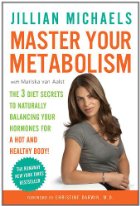
Book Review: Master Your Metabolism: The 3 Diet Secrets to Naturally Balancing Your Hormones for a Hot and Healthy Body! by Jillian Michaels and Mariska Van Aalst
 Summary:
Jillian Michaels became famous for being a personal trainer on The Biggest Loser, a show she has since left. In addition to being a personal trainer, she is also a woman with PCOS (Polycystic Ovary Syndrome), an illness that messes with hormones and often makes the sufferer gain weight due to these hormonal problems. Jillian, with the help of her doctor, takes her years of experience both dealing with her own hormonal issues and training others with them and offers up advice on how to adjust your diet and lifestyle to optimize your hormonal balance for easier health and weight loss.
Review:
Despite its title, this book primarily focuses on achieving health through making permanent changes to your lifestyle, advocating a gradual overhaul with the focus on improving health, with weight loss as a side bonus.
The book opens with an introduction from Dr. Christine Darwin. It then moves to Jillian giving a brief introduction to her own health journey. It was fascinating to learn about how she became a trainer in her late teens, got her job on The Biggest Loser, and was diagnosed with PCOS. This lends a personal touch to the entire book. Jillian isn’t “naturally fit.” She works hard at it and has an illness that actually makes it more difficult to maintain a healthy weight. This book is honest about the fact that achieving fitness is varying levels of difficult for people, but also takes a no-nonsense, if you want health you’ll fight for it, attitude. That attitude may rub some readers the wrong way, but I appreciate it.
The book next tackles explaining how your biochemistry impacts your health and weight and why it’s therefore important to keep them balanced. Readers who enjoy knowing the why’s behind certain bits of health advice (such as keeping your stress levels low, getting enough sleep, not eating after 9pm) will particularly enjoy this section, as it explains the biochemistry behind this advice. Readers who prefer to just get the advice without knowing the why’s can easily skip this bit and just partake of the advice if they so choose. My favorite part of this section is how kind Jillian is about how people may have beat up their bodies so far in life. She’s very encouraging that what’s in the past is in the past, and every body can be improved.
No matter how you’ve abused your body up until now–and I’m willing to bet you have, even if you didn’t mean to–you can make it better. (loc 583)
The next section talks about how various chemicals and hormones in our environments contribute to messed up hormones. Jillian is quite passionate about how things like BPA in cans and hormones in non-organic dairy can pile up to mess up human hormones. Jillian makes a point of saying that even changing one of these things (for instance, buying organic dairy) can help your body, because every little bit helps. However, she is also so passionate about these hormonal and chemical pollutants that it can sometimes seem as if she is telling the reader to change everything all at once, and that can be a bit overwhelming.
Next the recommended diet is tackled, and it’s actually fairly straight-forward. Limit processed foods (and all the HFCS and artificial sweeteners and preservatives that come with it). Focus on eating only things that grew in the ground or had a mother. Limit starchy root vegetables (less than 2 servings a day), alcohol (1 drink per day), caffeine (stick to green tea), soy (2 servings per week), full fat dairy and fatty meats, and canned food (to avoid BPA). She encourages including power nutrients, such as: legumes, alliums, berries, meat and eggs, colorful and cruciferous fruits and vegetables, dark leafy greens, nuts and seeds, organic dairy, and whole grains. Perhaps the most difficult part of the diet, besides cutting out processed food, is the timing of eating she recommends. Eat within an hour of waking up. Eat three more times in the day, once every four hours. Eat until you’re full but not stuffed. Don’t eat after 9pm. The explanation for the timing issue is to help balance your hormones. She also states that you must have fat, protein, and carbs at every meal, but to aim for higher protein, particularly in the evening meal and as you age. The reasoning behind this is you feel more satisfied with all three macros and also are more likely to not lack in any particular nutrient. Two other reasons are that protein increases your metabolism and as people age they need more protein to retain muscles. This is not a particularly challenging diet, nor is it far off from what is generally recommended by doctors and nutritionists as a healthy diet. Again, the most challenging part is the timing issue. Not everyone’s life lets them perfectly space out their meals.
For those readers who are new to eating a whole foods, unprocessed diet, the book includes a sample menu (I believe it covers two weeks, but can’t double-check as it was a library copy). The recipes are perfect for beginner cooks with nothing too complex and not too much time required. Jillian teamed up with a professional for the recipes, and is straight-forward about that.
The book next tackles the six most common hormonal disorders, including PMS, hypothyroid, metabolic syndrome, and PCOS. These hormonal issues require special recommendations and guidelines, and Jillian explains them quickly and clearly.
Finally the book ends with some tips on how to live out the recommended lifestyle, including how to afford and/or find organic food, how to clean your house without chemicals, etc… Just as earlier, Jillian is so passionate about this that it’s possible for the reader to feel overwhelmed at the thought of doing everything, even though Jillian does make a point to state that changing even one thing, or one thing at a time, will help. Perhaps it would help if the book ended with a checklist of the most important changes or how to adapt gradually or something like that to make it feel less overwhelming for the reader.
Besides the fact that sometimes the book can make the lifestyle feel a bit overwhelming, my only other issue with the book was when Jillian recommends that women stop taking hormonal birth control pills and use condoms instead. Condoms are nowhere near as good a form of birth control as hormonal methods, and randomly recommending everyone stop using hormonal birth control is more than just a bit irresponsible. It would have been far more responsible to do something such as suggest that if the reader is concerned about the level of hormones in her birth control to speak to her doctor about lower level hormone options, such as the mini-pill or the IUD, and see if those may work for her. Just flat-out saying everyone use condoms is not helpful. Plus, there is a risk/reward calculation that every individual must make for themselves.
Overall, this book mostly recommends diet and lifestyle changes that would also be recommended by most doctors and nutritionists. The timing of eating is something that is up for debate, but it certainly wouldn’t hurt the reader to try it. Jillian sometimes gets so passionate about all of the lifestyle and diet changes that it can feel overwhelming to the reader. Recommended to those interested in the science behind generally recommended lifestyle changes. Just remember that you don’t have to do everything at once and take the advice with a piece of salt. Do your own research and talk to your doctor before dropping medication/birth control.
If you found this review helpful, please consider tipping me on ko-fi, checking out my digital items available in my ko-fi shop, buying one of my publications, or using one of my referral/coupon codes. Thank you for your support!
4 out of 5 stars
Length: 288 pages – average but on the shorter side
Source: Library

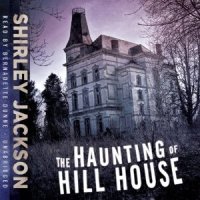
Book Review: The Haunting of Hill House by Shirley Jackson (Audiobook narrated by Bernadette Dunne)
 Summary:
Dr. Montague is a scholar of the occult, and he invites three other people to stay with him in Hill House, which is notorious for being haunted. There’s jovial Theodora, timid Eleanor, and the future heir of the house, Luke. What starts as a light-hearted adventure quickly turns sinister in this horror classic.
Review:
I actually started reading this audiobook way back in September for the Readers Imbibing Peril challenge. It’s only 7.5 hours long, so I thought it’d be a quick read. I think the fact that it wasn’t demonstrates quite well how not drawn into the story I was. This is a classic haunted house tale that perhaps might not work for the modern reader, depending on how much horror they generally imbibe.
This is going to be a quick review because I honestly don’t have too much to say about the book. Four people arrive at a house. Things appear normal, except one of them, Eleanor, clearly is a bit more emotionally unstable than the rest. She is, for instance, shocked that anyone is interested in her or asks her questions. She also has trouble with her own identity, such as knowing for sure what she likes to eat. Odd things start to happen in the house, and because Eleanor is odd, the others aren’t sure if it’s the house doing them or Eleanor herself. Eleanor becomes overly attached to Theodora. Drama ensues.
None of the house horror scenes really got to me, because frankly I’ve seen worse in plenty of other horror I read. I do love the genre. The parts that actually disturbed me were when the others in the household were inexplicably cruel to Eleanor. That dynamic of an odd woman randomly tossed in with strangers who proceed to be mean to her in a highschoolish way held my interest more than the house did. People and their cruelty are so much more frightening than a haunted house. I understand that the book is sort of leaving it up to the reader to wonder if the house or the people really drive Eleanor crazy, but frankly I think the ending removes all question on this point.
Similarly, there are definitely some undertones in the Theodora/Eleanor relationship that indicates they might possibly have had a fling early on and then Theodora abruptly distances herself from Eleanor when she gets too clingy. None of this is said outright, however it is heavily implied that Theodora’s roommate back home is her lover who she had a quarrel with, and she and Eleanor establish a close bond early on in the book. The problem is this all stays subtext and is never brought out in the open of the book. I get it that this book was published in 1959 so it probably had to stay subtext and was most likely shocking to a reader in the 50s. But to me, a modern reader, it felt like the book kept almost getting interesting and then backing off from it. The combination of the former issue and this one meant that I was left feeling unengaged and uninterested. Basically, I feel that the book didn’t go quite far enough to be shocking, horrifying, or titillating.
The audiobook narration by Bernadette Dunne was excellent as always, and the main reason I kept listening rather than just picking up a copy of the book and speed reading it. I love listening to her voice.
Overall, this classic was boundary pushing when it was first published but it might not come across that way to a modern reader. Readers who read a lot of modern horror might find this book a bit too tame for their tastes. Those interested in the early works of the genre will still enjoy the read, as will modern readers looking for horror lite. Readers looking for the rumored LGBTQIA+ content in this book will most likely be disappointed by the subtlety of it, although those interested in early representation in literature will still find it interesting.
If you found this review helpful, please consider tipping me on ko-fi, checking out my digital items available in my ko-fi shop, buying one of my publications, or using one of my referral/coupon codes. Thank you for your support!
3 out of 5 stars
Length: 182 pages – average but on the shorter side
Source: Audible

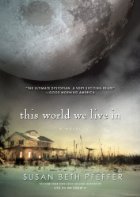
Book Review: This World We Live In by Susan Beth Pfeffer (Series, #3)
 Summary:
Miranda and her mother and brothers have barely survived the long winter that came right after the moon was knocked out of orbit by an asteroid, bringing an apocalypse. She’s been wondering for months what happened to her father and his pregnant new wife. She’s thrilled when they show up on the doorstep when her newborn half brother, but she’s not so sure about the three extra people they’ve brought with them — an adult man and a teenage boy and his little sister.
Review:
The third book in this series reverts back to the Miranda’s journal format of the first. While I appreciate bringing the diverse characters from the first two books in the series together, the use of Miranda’s journal exclusively in telling the story renders the tale a bit less interesting and strong than it could have been.
It should come as no surprise that a YA series featuring a girl in the first book and a boy in the second will bring the two together in the third. I must admit that although when I finished the first book I was very eager to read more about Miranda, when I finished the second I was intrigued at the idea of a series that saw the same apocalypse lived out in different places by different people throughout. That said, getting to know the extensive background of the love interest is appreciated and different but it is a bit jarring to go back to Miranda’s diary after getting to know Alex so thoroughly in the second book. The book could have been much more powerful if Miranda’s journals were interspersed with chapters from Alex’s perspective. Getting this perspective would have helped make their love seem more real, as opposed to just convenient. (Alex is the only teenage boy Miranda has seen in a year). Additionally, in spite of Miranda falling for Alex so fast, he mostly comes across as cold and overly religious in this book, whereas in his own book he was much more empathetic. Certainly the need for survival will make him come across stern, and we know that Alex has a tendency to say important things in Spanish, which Miranda cannot understand. Both of these facts means it would have worked much better to have alternating perspectives, rather than just Miranda’s.
The plot, with the exception of the instant love between Alex and Miranda, is good. It brings everyone into one place in a way that seems natural. The addition of new characters also breathes new life into Miranda’s situation. Plus, Pfeffer does a good job of forcing the family out of their stasis in the home, something that both makes logical sense (these people were not preppers, they are not equipped to stay in their home forever in the apocalypse) and also keeps the plot interesting (one can only read about people holed up in a house for so long). The plot developments also make more sense, scientifically, than in the previous books.
Religion is handled less smoothly here than in the previous two books. Everyone but Miranda’s mother and Miranda has church on Sunday (Protestant or Catholic), and Miranda doesn’t have enough of a reaction to or thoughts about this. She doesn’t really think about faith or spirituality. Church is just something some other people do. This is unrealistic. A teen who has just gone through a disaster and sees her father suddenly take up faith would definitely at the very least have some questions. Given that Alex has a very strong faith and they are interested in each other, one would think they would have some conversations about religion that go beyond whether or not they can have sex before they get married, yet they don’t. The first two books sets a great stage to talk about faith in its many forms, as well as lack of faith, yet the book backs away from actually tackling this issue. If it had, it would have offered something truly thought-provoking in the read. Instead it’s a post-apocalyptic survivor romance. Not a bad thing but not what I was expecting based on the first two books.
Overall, this is an interesting next entry in the series that brings Miranda and Alex back to the readers and moves the plot forward. However, it dances around the issue of faith vs. lack of faith brought up in the first two books, eliminates Alex’s voice from the story, and suffers from some instant romance. Those already invested in the series will still enjoy seeing what happens to Alex and Miranda, although skimming for plot points is recommended.
If you found this review helpful, please consider tipping me on ko-fi, checking out my digital items available in my ko-fi shop, buying one of my publications, or using one of my referral/coupon codes. Thank you for your support!
3 out of 5 stars
Length: 261 pages – average but on the shorter side
Source: Library

Previous Books in Series:
Life As We Knew It
The Dead and The Gone
Book Review: Bad Elephant Far Stream by Samuel Hawley
 Summary:
When Far Stream is still a young elephant in the late 1800s, not yet full grown and learning from her mother, aunties, and grandmother, humans trap and capture her and other members of her herd. She is shipped to America and sold to a traveling circus. Over the years, she slowly comes to be known as a bad elephant who must be put down. But is she really bad?
Review:
I was quite excited when this book was submitted to me for review. A piece of historic fiction from the perspective of an animal, focusing on animal rights problems in the circus? Such a perfect fit! This is a well-researched and written piece of historic fiction that eloquently depicts the minds of elephants as similar to and yet different from those of humans.
The book opens with a scene of a so-called bad elephant about to be executed. The humans state they are doing so humanely and nothing can be done because the elephant has gone rogue and killed too many humans. The book then flashes back to see the elephant’s life from the elephant’s perspective, leaving it up to the reader to determine if the elephant is actually bad. The humans calls her Topsy, but her elephant name is actually Far Stream. What follows in the flashback is a delicately handled and clearly exquisitely researched tale of the life of a circus elephant in the late 1800s in the US.
From the beginning, the author makes it clear that elephants are intelligent, with lives, families, and emotions of their own. Quite a bit of this is backed up by science, such as elephants crying and also mourning dead members of the herd. There are also those who think that elephants might communicate via sign language and/or telepathically, and the book fully embraces both ideas. What results in telling this tale from the elephant’s perspective is a scene of one intelligent species enslaved by another that is heartbreaking to read. What really makes the story work, though, is that the author strikes the perfect balance between showing the horror of being a circus elephant and also not fully demonizing humans. There are good humans (trainers and non-trainers) who love the elephants and treat them well but simply do not understand that elephants are more intelligent and have a richer emotional life than they give them credit for and by simply keeping them away from the roaming herd life they were made for they are hurting them.
Everything about the circus in the late 1800s in the US was clearly thoroughly researched by the author. The historic setting and ways of life flow smoothly and fit perfectly within the plot. They are presented simply as reality without any unfortunate modern commentary or forcing of unnaturally modern ideas into the plot. Reading this book truly transported me back in time, and it was fascinating and enjoyable, as well as heartbreaking.
Although the reader knows from the beginning that Far Stream will be executed, how she gets there is still a mystery and is handled delicately enough that the plot has momentum.
The one bit that didn’t really work for me is how the book presents what appears to be elephant spirituality. There is one scene where Far Stream and another elephant appear to hallucinate, and it is never entirely clear what actually happened. Similarly the ending goes to an odd spiritual place that just left me confused, rather than in the strong emotional state I was in the moments immediately prior to this. I found the elephant spirituality bits to be a touch confusing that lessened the emotional strength of the rest of the book, which came across much more matter-of-fact. Some readers may enjoy and relate to the spiritual aspect more than I did, however.
Overall, this is a piece of thoroughly researched historic fiction with a smooth moving plot and an empathetic, well-rounded main character. It clearly demonstrates how animals humans once thought were less intelligent and less emotional than we now know them to be came to be mistreated, setting up a precedent for that mistreatment that to some extent continues to this day. Highly recommended to readers who enjoy historic fiction and animal main characters.
If you found this review helpful, please consider tipping me on ko-fi, checking out my digital items available in my ko-fi shop, buying one of my publications, or using one of my referral/coupon codes. Thank you for your support!
4 out of 5 stars
Length: 272 pages – average but on the shorter side
Source: Kindle copy from author in exchange for my honest review

Book Review: The Underworld King by Ranjit More (Series, #1)
 Summary:
Drumila, four-armed king of the daityas, seeks to take them above ground to escape their enemy the naagas, giant flame-breathing serpents. Meanwhile, Krishna (the highest-ranking god) sends his daughter, Nandini, to Earth in human form to weaken Drumila and keep him from crossing the barrier from Earth into the higher plains. Unfortunately, Nandini ends up liking Drumila a bit more than they bargained for.
Review:
I was excited to have a fantasy based in a non-European mythology submitted to me, and wow is this different from the typical European-based fantasy. In a good way. This is a dense, different fantasy with a strong learning curve unless the reader is already very familiar with Hinduism.
The basic story reads just like mythology. This has pros and cons. On the plus side, it feels quite fantastical. On the minus side, some of the plot points can be cringe-worthy (such as an unwanted kiss that could have turned into a rape if the female character hadn’t suddenly 180ed from zero interest to desire) and the characters can be a bit two-dimensional. This will bother some readers, but those who enjoy mythology, in spite of its shortcomings, will appreciate this read. Personally, I generally prefer if authors update and modernize their mythological rewritings a bit more, but not all readers feel that way.
The author is well-aware that Hindu mythology won’t be familiar to many Western readers, so he offers an extensive footnotes that are well hyperlinked in the ebook that explain both definitions of words and various aspects of Hindu mythology. This means that the reader learns a lot but it does also slow down the reading of the book and breaks up the immersion in the world. The footnotes are a good idea but perhaps if some of the words and concepts were better incorporated and explained within the writing itself then there could be fewer footnotes that offered greater explanations of more value.
The ending is a bit abrupt. It’s clear this is intended to be the first book in a series, but an extremely abrupt ending like this one makes it difficult to feel like the reader got a full book out of the deal. It feels more like the pilot of a tv show than the first book in a series.
I would give this book a more full review, but it has been pulled from publication since the review copy was sent to me. I really wish when authors and/or publishers choose to do this that they would notify those of us with review copies. While I enjoyed the read enough to not regret reading it, it feels rather silly for me to bother reviewing a book no one else can get their hands on anymore.
Overall, this is a fantasy book set firmly in the tradition of Hindu mythology that will best appeal to readers who enjoy the traditional features of mythology and don’t mind an abrupt ending.
If you found this review helpful, please consider tipping me on ko-fi, checking out my digital items available in my ko-fi shop, buying one of my publications, or using one of my referral/coupon codes. Thank you for your support!
3 out of 5 stars
Length: 252 pages – average but on the shorter side
Source: Kindle copy from author in exchange for my honest review
Buy It Currently not available for purchase.
Book Review: Brains: A Zombie Memoir by Robin Becker (Bottom of TBR Pile Challenge)
 Summary:
Jack Barnes once was a college professor, but now he’s a zombie. A zombie who can think. Think, but not talk. He can, however, still write. So he keeps a memoir of his quest to gather other thinking zombies and bring their case for equality to their creator, the man who started the whole zombie outbreak.
Review:
I picked this up during the height of the zombie craze in the used book basement of a local bookstore for dirt cheap. (It looked brand new but only cost a couple of dollars). I’m glad I got it so cheap, because this book failed to deliver the sympathetic zombies I was looking for.
The idea of thinking zombies who challenge the question of what makes us human is interesting and is one multiple authors have explored before. It’s not easy to make cannibalizing corpses empathetic. Zombies are so naturally not empathetic that to craft one the reader can relate to is a challenge. Without at least one zombie character the reader empathizes with, though, this whole idea of maybe zombies are more than they seem will fail. And this is where this book really flounders. Jack was a horrible person, and he’s a terrible zombie. And this is a real problem when he narrates a whole book whose plot revolves around zombies demanding equal treatment. Jack is a snob, through and through. It feels as if every other sentence out of his mouth is him looking down upon someone or something. This would be ok if he grew over the course of the novel. If his new zombie state taught him something about walking in another person’s shoes. But no. He remains exactly the same throughout the book. He has zero character growth away from the douchey snobby professor who looks down on literally everyone, including those within his own circle. This isn’t a mind it’s fun or even enlightening to get inside of. It’s just annoying. As annoying as fingernails on a chalkboard.
The plot is ok. Jack gathers other thinking zombies and heads for Chicago to find the man who created the zombie virus and convince him to advocate for them. Their standoff is interesting and entertaining. But the ending beyond this standoff is unsatisfying.
It also bugs me that this is a memoir written by this guy but it is never clear how this memoir made it into the reader’s hands. With a fictional memoir, I need to know how I supposedly am now reading something so personal. I also had trouble suspending my disbelief that a slow zombie managed to have time to write such descriptive passages crouched in a corner at night.
Overall, this is an interesting concept that is poorly executed with an unsympathetic main character. Recommended that readers looking for a zombie memoir pick up Breathers: A Zombie’s Lament
If you found this review helpful, please consider tipping me on ko-fi, checking out my digital items available in my ko-fi shop, buying one of my publications, or using one of my referral/coupon codes. Thank you for your support!
2 out of 5 stars
Length: 182 pages – average but on the shorter side
Source: Harvard Books

Counts For:

 Support my work with a tip or browse my shop for curated book club guides, how to guides, cross-stitch patterns, and more!


This work by Amanda Nevius is licensed under a Creative Commons Attribution-Noncommercial-No Derivative Works 3.0 United States License.
 Opinions of a Wolf