
Book Review: The Big Time by Fritz Leiber (Series, #1)
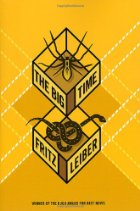 Summary:
It’s the Time War, and the Spiders and Snakes are battling each other up and down the timeline in an attempt to give time the ultimate outcome they each are hoping for. Nobody knows precisely who the spiders and snakes are, but they briefly resurrect humans and ask them if they want to participate in the war. Those who say yes become the soldiers, nurses, and the Entertainers who provide rest and relaxation for the soldiers in the waystation. One waystation is about to hit a ton of trouble when a package shows up and a soldier starts talking mutiny.
Review:
I’m a fan of time-travel as a scifi trope, and I liked the concept of a time war, so when I saw this sitting on my virtual ARC pile, I figured it would be a quick, appealing read. The book is less about time-travel, and more a type of scifi game of Clue, with everyone trapped in a waystation instead of a house trying to figure out who turned off the machine that connects them to the galaxy, rather than solve a murder.
The book takes place entirely within the waystation. The waystation exists outside of time to give the time soldiers a place to recuperate without the pressures of time travel. All but one of the soldiers are men, and most of the Entertainers are women. The one female soldier is from ancient Greece, the clear idea being that her era of women are the only ones tough enough to be soldiers. This definitely dated the book and led to some eye-rolling on my part. On the plus side, the book is narrated by a woman, and she is definitely one of the brains of the bunch. There thus is enough forward-thinking that the sexist distribution of time soldiers doesn’t ruin the book; it’s just irritating.
The crux of the book is the soldiers wondering who, exactly, is telling them what to do up and down the timeline and worrying that they are ruining time, not to mention the planet Earth they once knew. The soldiers are told they’re on the side of the good guys, yet the good guys are insisting that Russia must be stopped at all costs, even if that means the Germans winning WWII. Thus, the soldiers are awkwardly paired up with Nazis in the fight. It’s interesting to force the Allies to attempt to see Germans in a different light. However, the whole idea that Russia (and Communism) will ruin the world is just a bit dated. It’s easy to get past, though, since the dilemma of how to know if who you are following is making the right choices is a timeless one.
The attempted mutineer ends up trying his mutiny because he falls in love with one of the Entertainers.
I decided they were the kind that love makes brave, which it doesn’t do to me. It just gives me two people to worry about. (loc 10353)
The attempted mutiny against the cause is thus kind of simultaneously blamed on love and on the woman behind the man starting the drama. It’s true that love makes people do things they wouldn’t ordinarily do, but I do wish the characters were more even-handed in dealing out the blame for the mutiny to both halves of the couple. On the plus side, it is left unclear if the mutiny is a good or bad idea, so whether the idealistic couple in love are right or not is up to the reader to decide.
The final bit of the book dives into theories about time-travel, time, and evolution. It’s a bit of a heady side-swipe after the romping, Clue-like plot but it also shows how much of an impact the events of the book have on the narrator. At the beginning, the narrator states it was a life-changing sequence of events, and the wrap-up deftly shows how it impacted her.
Overall, this is a thought-provoking whodunit mystery set in an R&R waystation in a time-travel war. Some aspects of the book did not age particularly well, such as the hysterical fear of Communism and the lack of women soldiers, but the heart of the book is timeless. How do you know if those in charge are right or wrong, does love make you see things more or less clearly, and does evolution feel frightening and random when it’s happening. Recommended to scifi fans with an interest in a scifi take on a Clue-like story.
If you found this review helpful, please consider tipping me on ko-fi, checking out my digital items available in my ko-fi shop, buying one of my publications, or using one of my referral/coupon codes. Thank you for your support!
3 out of 5 stars
Length: 128 pages – novella
Source: NetGalley

Book Review: Charlotte Sometimes by Penelope Farmer (Series, #3) (Bottom of TBR Pile Challenge)
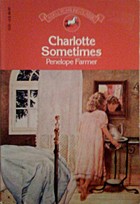 Summary:
When Charlotte goes away to boarding school for the first time, she’s very excited to get the bed with the particularly pretty wheels right next to the window. When she wakes up, though, the view from the window looks different, and people are calling her Clare! She discovers she’s traveled back in time to the same bed in the same boarding school, but during World War I. The next morning, though, she wakes up in the present again as Charlotte. This pattern continues, meaning both she and Clare are Charlotte….sometimes.
Review:
I picked this book up because I have an affinity for both boarding school books and time-travel books. This looked like the best of both worlds to me. A fun middle grade book that introduces to the reader to two different past time periods–the late 1960s of Charlotte’s present and the nineteen-teens of Clare’s present.
This book is the third in a series, but it is completely possible to read it as a standalone. No mention is made of the events in the first book, and the second book is actually about what Charlotte’s little sister does while she’s away at boarding school.
The concept is intriguing, because instead of time-travel happening once and landing the person stuck in the past (or future), Charlotte keeps switching, spending every other day in the 60s and every other day in the teens. (I get a migraine when the barometric pressure changes….I can only imagine how I’d feel if I time travelled! Do you think I could bring my green lamp therapy with me?)
In addition to the usual issues time-travel books bring up, such as what stays the same and what is actually different throughout time, it also brings up the key question of identity. What makes Charlotte Charlotte? Is she still Charlotte when she’s being called Clare? Why does hardly anyone notice that Clare has changed? Or Charlotte for that matter? The book thus addresses identity issues that middle grade readers might be going through, but in a subtle way through the time-travel trope.
Were you some particular person only because people recognized you as that? (page 66)
The time-travel itself is left as a fantastical mystery, rather than being given a scientific explanation. There’s something magical about the bed that only makes Charlotte and Clare switch places, but no one else. This works without an explanation because the young girls being subjected to the time-travel just accept it without explanation. This is their reality, and it doesn’t matter why it’s happening, they just have to deal with it. Some readers, though, might struggle with the fact that the time-travel itself is never explained.
The one thing that disappointed me about the book, and that I think would have made it a classic and a five star read, is that the book only explores what happens to Charlotte when the girls switch places. Clare, her experiences, and her perspective are only heard about through third parties. The book, while in third person, is entirely Charlotte’s perspective. Clare, a reserved, proper girl from the nineteen-teens must have been shocked by both the technology and the mores of the 1960s she suddenly found herself in. So much more could have been explored by telling both Charlotte’s and Clare’s story. The book misses an opportunity by only focusing on the modern day girl going back in time. The girl being thrust into the future, a future where she finds out Britain wins the war, and there is suddenly no food rationing or flu epidemic, that is such a cool story in and of itself, and Farmer just never ventures out to tell it.
Interestingly, the British band The Cure released a song called “Charlotte Sometimes” that they admitted was pulled directly from this book. Not just the title, but song lyrics are pulled from the first couple of lines of the book. Even the music video features scenes from the book. It seems to be quite a mystery who the actress was who played Charlotte in the video. She wasn’t credited, and there’s a lot of posts on the internet with people speculating about who she might be. In any case, Penelope Farmer was…not amused by the whole thing. But back to the book.
Overall, this is a book that sets up a fantastical world of time-travel within a boarding school. It utilizes the switching of two girls with each other in time to explore questions of identity in a way that surely will appeal to many middle grade readers. The book does not fully explore the story the way it possibly should have, but the young reader will probably enjoy filling in those gaps themselves. Recommended to all fans of boarding school, time-travel, or historic fiction set during World War I’s homefront.
If you found this review helpful, please consider tipping me on ko-fi, checking out my digital items available in my ko-fi shop, buying one of my publications, or using one of my referral/coupon codes. Thank you for your support!
4 out of 5 stars
Length: 174 pages – average but on the shorter side
Source: Better World Books

Previous Books In Series:
The Summer Birds
Emma in Winter


Edit note: Thanks to Vicky for pointing out it was published in 1969.
Friday Fun! (May: MLA Chicago and Boston Calling)
Hello my lovely readers! You may have noticed the blog was a bit quieter than usual this month. That’s because I had my annual conference for work, and I extended my Memorial Day three day weekend into a five day one. The month was so incredibly full of both good and stressful busyness, I’m kind of amazed I managed to blog at all!

Lake Michigan at sunset.
Every year for work I attend the Medical Library Association’s annual conference. This year the conference was in Chicago. I’d never been to Chicago before, and I made sure to make the most of my limited free-time to see the city! I walked through Millennium Park and got a selfie in the bean, went to American Girl Place on the Magnificent Mile (and bought a mini version of the Native American doll, Kaya), and went to Navy Pier. I also checked out the Chicago History Museum and got to see items that were melted in the Chicago Fire, such as marbles. I walked through Lincoln Park and went to the Peggy Notebaert Nature Museum where I got to hang out in a butterfly conservatory room. None landed on me, but I got some great pictures! My partner’s sister and her husband live in Chicago, so I went and had dinner with them at a Chicago style hot dog restaurant that actually had vegetarian hot dogs. Score! They also took me to see Lake Michigan, and I was blown away by how soft the sand is and how the lake is so large it looks like the ocean. I guess they don’t call them the Great Lakes for nothing! I know that sounds like a lot to squeeze into the amount of time I wasn’t at the conference, but I am the queen of getting a lot of sightseeing done in a short amount of time. I pre-plan, using Pinterest and its great maps feature, and plot out routes and timing so I can get everything in. Plus, in museums, I only check out the exhibits of greatest interest to me.
Of course, the main reason I was in Chicago was for work. I attended the conference, listening to many excellent plenary speakers, as well as presentations by various librarians and library students on their projects and papers, and networked with vendors at the opening event. This year I was an official blogger for the poster sessions. You can see my blog posts here. Our library director also took us all out for Chicago style deep dish pizza. While I enjoyed the deep dish pizza, it was a lot like lasagna without the pasta, I can’t imagine eating it more than a few times in my lifetime. I still prefer the thin crust brick oven or thick crust New England styles! When I got back to Boston, I taught a library skills class and presented a poster at an education event on my work’s campus. After all of that work, I took my five day Memorial Day weekend!

Edward Sharpe and the Magnetic Zeros performing at Boston Calling.
The reason I took the long weekend was because my bf and I wanted very much to attend Boston Calling, Boston’s live music festival. My favorite band, The Decemberists, and his favorite band, Built to Spill, were both playing, as was the band that sings our song, Edward Sharpe and the Magnetic Zeros. The festival was Friday night, Saturday, and Sunday. It’s held in the center of Boston, at Government Center, on two stages. The architecture there is very brutalist, and the entry to the festival had signs up denoting male and female. We figured out later the signs were just telling you if the person doing the wanding was a man or a woman, it wasn’t intended to split up the crowd along gender lines, but the whole thing felt quite dystopian when we arrived and lent the concert a pretty damn cool vibe. I had such an incredibly wonderful time at the festival, I can barely put it into words. Hearing Edward Sharpe and the Magnetic Zeros sing our song live was stellar. I had seen The Decemberists once before, but not as up close as I got at this concert. It was raining when they came out, which, if you know their music, gave the performance such a perfect atmosphere. They sang both old and new songs, and it was just amazing. I also really enjoyed watching my partner’s favorite band, Built to Spill. They have amazing guitar skills, and their fans are of the cool head bob variety, so it was the perfectly chill performance for the sunny, relaxing day. When we weren’t at the concert, we went a long motorcycle ride and grilled for the first time this season. It was a great vacation!
Just because I’ve been busy doesn’t mean I haven’t been reading. I finished seven books this month, three more than usual, but only managed to review two of them so far. Definitely be prepared for an onslaught of reviews in the next couple of weeks!
I was also too busy for stitching most of the month. I would have stitched on my trip to Chicago, but fellow cross-stitchers and embroiderers stated that, even though the rules don’t say you can’t have a sewing needle, a lot of the times they get confiscated. I didn’t want to risk it. Once my vacation was over, I picked it back up again. I’m working on the second item for the Foraging New England line, and it is almost done!
Happy reading!
Book Review: The Edible Woman by Margaret Atwood (Bottom of the TBR Pile Challenge)
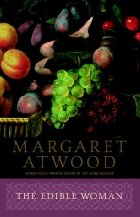 Summary:
It’s the 1960s in Canada, and Marian McAlpin is working writing and analyzing surveys for a marketing research firm. She has a feminist roommate she doesn’t quite understand, and hangs out with the three office virgins for lunch. Her boyfriend is comfortable and familiar. When he proposes to her, the office virgins think she’s hit the jackpot, her roommate questions why she’s following the norm, and her married and very pregnant friend seems hesitant about her fiancee. None of this really bothers Marian, though. What does bother her is that, ever since her engagement, there are more and more things she simply can’t eat. First meat then eggs then even vegetables! She thinks of herself causing them suffering, and she just can’t stomach them. What will happen to her if there’s eventually nothing left for her to eat?
Review:
I’m a fan of a few Margaret Atwood books, and the concept of this book intrigued me. Since I run the Mental Illness Advocacy Reading Challenge, I was also wondering if this might actually be a new take on anorexia. Unfortunately, Marian is not really anorexic, it’s more of an elaborate, overdone metaphor. Perhaps the plot is simply dated, but the interesting concept, when fleshed-out, comes out rather ho-hum.
The novel is divided into three parts, with Marian using first-person narration for the first and third parts, with third person narration taking over for the second. This is meant to demonstrate how Marian is losing herself and not feeling her own identity. It’s an interesting writing device, and one of the things I enjoyed more in the book. It certainly is jarring to suddenly go from first to third person when talking about the main character, and it sets the tone quite well.
It’s impossible to read this book and not feel the 1960s in it. Marian is in a culture where women work but only until marriage, where women attending college is still seen as a waste by some, and where there is a small counter-cultural movement that seems odd to the mainstream characters and feels a bit like a caricature to the modern reader. However, the fact that Marian feels so trapped in her engagement, which could certainly still be the case in the 1960s, doesn’t ring as true, given the people surrounding Marian. Her roommate is counter-cultural, her three office friends claim to want a man but clearly aren’t afraid of aging alone and won’t settle. Her married friend shares household and child rearing with her husband, at least 50/50. It’s hard to empathize with Marian, when it seems that her trap is all of her own making in her own mind. She kind of careens around like aimless, violent, driftwood, refusing to take any agency for herself, her situation, or how she lets her fiancee treat her. It’s all puzzling and difficult to relate to.
The Marian-cannot-eat-plot is definitely not developed as anorexia. Marian at first stops eating certain meats because she empathizes with the animals the meat came from. As a vegetarian, I had trouble seeing this as a real problem and fully understood where Marian was coming from. Eventually, she starts to perceive herself as causing pain when eating a dead plant, bread, etc… The book presents both empathizing with animals and plants as equally pathologic, which is certainly not true. Marian’s affliction actually reminded me a bit of orthorexia nervosa (becoming unhealthily obsessed with healthy eating, source) but the book itself presents eliminating any food from your diet as pathologic. Either Marian eats like everyone else or she is going off the deep-end. There is no moderate in-between.
What the Marian-cannot-eat-plot is actually used for is as a metaphor for how Marian’s fiancee (or her relationship with him) is supposedly consuming her. The more entwined with her fiancee she becomes in society’s eyes, the closer the wedding comes, the less Marian is able to consume, because she herself is being consumed. This would be quite eloquent if Marian’s fiancee or her relationship with him was actually harmful or consuming, but it certainly does not come across that way in what we see of it in the book.
Marian presents herself to her boyfriend then fiancee as a mainstream person, and he treats her that way. He does one thing that’s kind of off-the-rocker (crashes his car into a hedge) but so does she on the same night (runs away in the middle of dinner, across people’s backyards, for no apparent reason and hides under a bed while having drinks with three other people at a friend’s house). The only thing that he does that could possibly be read as a bit cruel is when she dresses up for a party he states that he wishes she would dress that way more often. It’s not a partner’s place to tell the other how they should dress, but it’s also ok to express when you like something your partner is wearing. Personally I thought the fiancee really meant the latter but just struggled with appropriately expressing it, and Marian herself never expresses any wants or desires directly to him on how they interact, what they wear, what they eat, how they decorate, etc…, so how could he possibly know? In addition to never expressing herself to her fiancee, Marian also cheats on him, so how exactly the fiancee ends up the one being demonized in the conclusion of the book is a bit beyond me. He’s bad because he wanted to marry her? Okay…… The whole thing reads as a bit heavy-handed second-wave feminism to me, honestly. Marriage seems to be presented in the book as something that consumes women, no matter if they choose it or are forced into it by society. It is not presented as a valid choice if a woman is able, within her society and culture, to make her own choices.
In spite of these plot and character issues, the book is still an engaging read with an interesting writing style. I was caught up in the story, even if I didn’t really like the ideas within it.
Overall, this is a well-written book with some interesting narrative voice choices that did not age well. It is definitely a work of the 1960s with some second-wave feminism ideas that might not sit well with modern readers. Recommended to those interested in in a literary take on second-wave feminism’s perception of marriage.
3 out of 5 stars
Source: Better World Books

Book Review: Limbo: Blue-Collar Roots, White-Collar Dreams by Alfred Lubrano
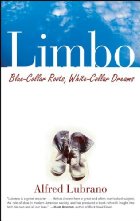 Summary:
What do you call the approximately 1 out of 5 working class American kids who go to college and move into the white collar world? Journalist Alfred Lubrano calls them Straddlers, and the world they live in Limbo. Through interviewing experts on social mobility and class, therapists, and Straddlers themselves, Lubrano seeks to establish the unique challenges and triumphs of moving up the social ladder from blue to white in America.
Review:
I picked this up because I happen to be one of the Straddlers Lubrano is talking about, and I was curious to know both what about my experiences are common among all Straddlers and pieces of advice on navigating the interesting experience of being a Straddler. The book brings to light the often overlooked issue of how changing classes impacts a person’s life, as well as real cultural differences among the blue-collar and white-collar classes in America.
Lubrano begins his book by defining blue and white collar. A blue collar person can make more money than a white collar person (think of a successful plumber versus a struggling journalist). Blue versus white collar isn’t about how much income a person generates, according to Lubrano. What really makes the difference is 1) education level and 2) type of work. The blue collar person may have an associate’s degree or a trade degree or certification. The white collar person will have, at minimum, a bachelor’s degree. The blue collar person generally works with their hands or in service industries. The white collar person works in an office or on a computer. Thus, what generally begins the change from blue to white collar is attending a four-year college.
The book next establishes the blue collar background the Straddler comes from, as well as establishing statistics on class mobility and class differences. By establishing firmly the blue collar background the Straddler comes from and how that affects their thought patterns and approaches, Lubrano lays the groundwork for highlighting the unique struggles Straddlers go through in college and later at their white collar jobs and in their white collar surroundings. The blue collar class elements Lubrano highlights include: being taught that working hard will get you what you want (the ideal of a meritocracy at all levels of society), distrust of the boss/upper-levels of management, intense loyalty to community and fellow workers, high value on obedience and conformity to community, patriotism, straight talking, and emotions being close to the surface and easily erupting.
The next section deals with the blue collar kid starting college. Both blue collar families that push college and those that degrade it are discussed, as well as the reasons for both reactions by blue collar parents to college. On the one hand, there are the parents who view college as a straight-shot meritocracy to a better job, better life, and better ability to live your dreams. On the other hand, there are the parents who are afraid that they will lose standing in their own home if their child outsmarts or outshines them. By and large, however, most blue collar parents fall in the former category. Lubrano points out that blue collar parents don’t intimately know or understand the white collar world they are sending their children into, and thus unknowingly often give them bad information or false hopes. To the blue collar parent, a college degree is a golden ticket, and so the blue collar child is pushed into a culture they are unprepared for.
Straddlers’ parents have such plans for their kids. With strong hopes but scant information, many push their progeny toward the vague realm of Something Better–the glorious middle class. Imbued with these dreams, Straddlers lurch awkwardly out of sheltering enclaves into unknown realms. On their sometimes troubled way, they become educated and awaken to class differences between the past and their would-be future. Priorities shift. Some values change, while some remain constant. Unlike many they meet in the new, white-collar world, these people are hybrids. That duality is their strength and their struggle, and will comfort and vex them throughout their days. (loc 611)
Next, the book tackles the blue collar / white collar culture clash that begins to occur when a blue collar person attends college and will continue throughout their life as a Straddler. Lubrano does an eloquent job of addressing both how the Straddler struggles to understand the white collar world she now inhabits, as well as how the Straddler starts to change and no longer fits in among her family and blue collar people she grew up with. The changes that often make a Straddler no longer fit in among her family include: language, leaving religion, and dietary choices. College makes the blue collar kids change, and often their families are not expecting that. Suddenly, the child speaks like a stranger, eats like a stranger, and no longer feels attached to the family religion. The culture clash between the working class college student and her new peers is perhaps a bit more obvious. The monetary differences are clear immediately. Peers often don’t understand the need to work or the high value of a dollar to their blue collar classmate. More subtle and far-reaching than the different approaches to money, though, are the different approaches to life. White collar kids are raised with self-esteem and feelings of entitlement that blue collar kids never knew existed. They navigate campus with a sureness of belonging, and that surety will aid them throughout their careers.
The book next tackles how these class differences affect the Straddler’s career. This is the most fascinating part of the book. Most people probably expect that a blue collar kid going to college will experience some culture clashes and struggles with the family, but the idea that these struggles will continue past college is not obvious. College is supposed to prep everyone for a career, but the fact is, oftentimes colleges leave the Straddler student floundering on their own. There are generally no classes on how to be white collar, you’re just supposed to know. And it’s not always easy for the Straddler to just pick this up on their own. Lubrano highlights the key areas in which the blue collar culture the Straddler was raised with clashes with the expectations of a white collar job and can hurt a career.
If you come from the working class, you haven’t got a clue how to conduct yourself when you first land in an office. You’re lost if you can’t navigate the landscape–if you follow blue-collar mores and speak your mind, directly challenging authority. Without tact and subtlety, without the ability to practice politics amongst the cubicles, an executive with a blue-collar background will not rise. (loc 2473)
Among the issues Lubrano highlights as frequently arising for Straddlers are a tendency to be lacking in tact, an innate disgust for and inability to handle the inauthenticity demanded by office politics, and a lack of understanding of the manner of dress expected in white collar jobs. Additionally, blue collar homes often denigrate the boss or the man, demanding only loyalty to fellow workers. White collar culture, on the other hand, demands loyalty to firm, not your coworkers, as well as an expectation that you will automatically desire to rise up the ladder and become the man. Perhaps the most difficult skill for Straddlers to learn and appreciate is networking. Blue collar homes teach you to leave work at work. Family time is a sacred space. White collar jobs expect extraneous socializing in the form of networking, additionally they expect the white collar workers’ whole family to participate in their career, when needed. (Think of a networking dinner in the worker’s home). This entire concept rubs the Straddler the wrong way. Networking feels inauthentic and wrong, and the family space feels violated. Additionally, the Straddler was raised believing hard work advances you, not who you know. The idea that you advance farther by networking than by working hard can often sicken a Straddler.
I didn’t realize that doing a job well is no guarantee of advancement and opportunity. There are ways to get ahead that have nothing to do with hard work. But blue-collar people are taught that that’s a person’s only currency–you sell your labor and give the boss an honest eight hours….Along with blatant kissing up, networking and socializing with bosses and colleagues also are dirty words to some Straddlers. It all smacks of phoniness and is antithetical to their blue-collar backgrounds, which emphasize honesty in human relations–”real” relationships. (loc 2735)
The book next discusses Straddler’s romantic lives and experiences parenting their own white collar children. Unless a Straddler dates another Straddler, they will end up dating someone who does not communicate the same way they do. If they date a blue collar person, the same issues they have with their own family arise. If they date a white collar (born and raised) person, then issues in communication similar to the ones they experience at work come up. If the Straddler marries a blue collar person, that person will often feel threatened by their academic interests. If the Straddler marries a white collar person, communication is often an issue. White collar people are taught to manage their emotions and shut down when upset. The Straddler was raised with emotions at the surface in a passionate manner. This can freak out the white collar person, and in turn, the relative calm of the white collar partner can drive the Straddler crazy.
When it comes to kids, most Straddlers talk a lot about trying to keep their kids from having a sense of entitlement. They want them to connect to their blue collar roots, to appreciate blue collar work, and to have blue collar values. The Straddler wants their child to have to struggle, because they value the personal growth they themselves got out of it.
The book closes out with a discussion of what makes a successful Straddler. Ideally, the Straddler will become bicultural. Able to navigate both blue and white collar worlds, and appreciate the positive in both. Unashamed of where they came from and unashamed of where they ended up.
The more successful Straddlers–and by this I mean people who are comfortable with their lives–embrace their middle-class reality while honoring their blue-collar roots. Though they live in limbo, they choose to concentrate on the upside and what makes them unique. (loc 4175)
The book addresses a topic that badly needs to be addressed. If one in five working class kids becomes a Straddler, that’s a huge sociological group that is often not discussed. However, there are some weak points in the book. Although Lubrano acknowledges that Straddlers can come from the city or rural areas, since he grew up in Brooklyn, he tends to focus in on those who come from the city. He could have sought out more Straddlers to interview who grew up rural poor to get a firmer grasp on what their life experiences are like. There are some subtle differences between city and rural blue collar. Similarly, Lubrano mostly interviews people of the same generation as himself. He conducts one series of interviews with three people from a younger generation, but primarily he interviews people from the same age-range. Although it’s obvious these issues are consistent across generations, it would be a stronger book with multiple generation’s voices. Similarly, the book came out in 2005, and an updated edition would be nice.
Overall, this is an engaging read that addresses the sociological issue of moving from blue collar to white collar class. Interviews with both Straddlers and experts brighten and enlighten the text, although the book would benefit from a bit more variety in the Straddlers interviewed. Recommended to anyone who is a Straddler themselves, as well as those who may educate or work with Straddlers and those with an interest in class differences.
4 out of 5 stars
Length: 256 pages – average but on the shorter side
Source: Amazon
Buy It (Amazon or Bookshop.org)
If you found this review helpful, please consider tipping me on ko-fi, checking out my digital items available in my ko-fi shop, buying one of my publications, or using one of my referral/coupon codes. Thank you for your support!
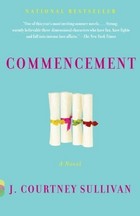
Book Review: Commencement by J. Courtney Sullivan (Bottom of TBR Pile Challenge)
 Summary:
Celia, Bree, Sally, and April wound up on the same small hall their first year at Smith College. Celia is from a traditional Irish Catholic Massachusetts family, although she doesn’t consider herself to be Catholic. Bree arrives at college from the south with an engagement ring on her hand. Sally arrives full of mourning and despair over the recent loss of her mother to breast cancer, and April arrives as the only work-study student on their floor. Paying her own way through school and with a whole slew of issues and causes to fight for. Their friendship is traced from the first weeks at Smith through their late 20s.
Review:
I picked this book up because it was compared favorably to Mary McCarthy’s The Group

What the book does well is evoking the feeling of both being in undergrad and the years immediately after graduation. Sullivan tells the story non-linearly, having the women getting back together for a wedding a few years after college. This lets them reminisce to early years of college and also present current life situations and hopes for the future. After the wedding, the story moves forward to cover the next year. The plot structure was good and kept the story moving at a good pace. It feels homey and familiar to read a book about four women going through the early stages of adulthood. It was hard to put down, and the storytelling and dialogue, particularly for the first half of the book, read like a fun beach read. However, there are a few issues that prevent the book from being the intelligent women’s literature it set out to be.
First, given that the premise of the book is that four very different women become unlikely friends thanks to being on the same hall of a progressive women’s college, the group of women isn’t actually that diverse. They are all white, three of the four are from wealthy or upper-middle-class backgrounds (only one must take out loans and work to pay for school), none are differently abled (no physical disabilities or mental illnesses), and not a single one is a happy GLBTQ person. Given that The Group
The book has a real GLBTQ problem. One of the characters has two relationships. One is with a man and one with a woman. She is happy in both and attracted to both. She takes issue with being called a lesbian, since she states she definitely fantasizes about men and enjoys thinking about them as well. Yet, in spite of the character clearly having both physical and romantic attractions to both men and women, the word bisexual is not used once in the entire book. The character herself never ventures to think she might be bi, and no one else suggests it to her. She struggles with “being a lesbian” and “being out as a lesbian” because she doesn’t think she is a lesbian. The other characters either say she’s in denial in the closet due to homophobia or that she really is straight and she needs to leave her girlfriend. It is clear reading the book that the character struggles with having the label of lesbian forced upon her when she is clearly actually bisexual. This is why she is uncomfortable with the label. But this huge GLBTQ issue is never properly addressed, swept under the rug under the idea that she’s “really a lesbian” and is just suffering from internalized homophobia. The bi erasure in this book is huge and feels purposeful since the character’s bisexual feelings are routinely discussed but the option of being non-monosexual never is. It’s disappointing in a book that is supposed to be progressive and talking about modern young women’s issues to have the opportunity to discuss the issues of being bisexual and instead have the character’s bisexuality erased.
The second half of the book makes some really odd plot choices, showing a highly abusive relationship between one of the characters and her boss. It probably is meant to show the clash between second and third wave feminism, but it feels awkward and a bit unrealistic. Similarly, the book ends abruptly, leaving the reader hanging and wondering what is going to happen to these characters and their friendship. Abrupt endings are good when they are appropriate to the book and mean something, but this ending feels out of place in the book, jarring, and like a disservice to the reader.
Overall, this is a fast-paced book that is a quick, candy-like read. However, it is held back by having the group of women in the core friendship be too similar. Opportunities to explore diverse, interesting characters are missed and bisexual erasure is a steady presence in the book. The ending’s abruptness and lack of closure may disappoint some readers. Recommended to those looking for a quick beach read who won’t mind a lack of depth or abrupt ending. For those looking for the stronger, original story of a group of friends from a women’s college, pick up The Group
3 out of 5 stars
Source: PaperBackSwap
Giveaway Winner: The Second Lives of Honest Men by John R. Cameron (INTERNATIONAL)
 The giveaway winner of one ebook copy of The Second Lives of Honest Men
Comment #1 Tristan Cox AND Comment #2 Amanda Ramsay McNeill!
John generously offered to supply a copy to both entrants! Yay!
Tristan and Amanda, your emails as entered in the comment form have been provided to John who will send along the ebook to you.
Thanks for entering!
Friday Fun! (April: Busyness and Hiking)

The view of Boston on our hike.
Hello my lovely readers!
April was such a busy month, I can actually hardly believe it’s over already! It’s always a busy month for me at work, as I help organize and run an annual event on-campus. In addition this month, we also welcomed a new program to our campus, so the library was very busy putting in the groundwork for supporting students studying that new subject area. I also submitted my first-ever poster abstract. So busy! On top of this, the weekend of my work event was the same weekend as the first motorcycle race weekend of the season for my partner. He was incredibly busy prepping for the races. Instead of just the normal getting everything running again after the long winter, he also was prepping a new (to him) race bike to be track ready. Since I couldn’t go with him for the first race weekend, I wanted to send along something nice, so I made him a pie and cookies for carb-loading at the track. I honestly found the baking to be stress-relieving and really enjoyed it. I’m happy to report both the work event and the first race weekend went well!
In spite of the busyness, we were able to squeeze in quite a few hangouts with friends and dates for ourselves. One of our dates was to hike a local trail on Easter Sunday. It was gorgeous weather in a month of a lot of iffy weather. I always find it so refreshing to get outside and in the woods, and even more so with my boyfriend. We saw lots of jack-in-the-pulpits and also got a great view of Boston.
My stitching slowed down a bit this month, although I did release the first design in a new line–rhubarb in foraging New England. The rest of the patterns for the line are designed but they still need to be trial-stitched! I hope to release at least one of them this month.
I read and reviewed four books this month, sticking to my overall goal of one book a week. I’ll be happy if I manage to stick to that during my upcoming even busier month of May! In my own writing, I’m still working away whenever I have the time on my new book idea, writing background short stories. The typewriter my bf got me for Christmas is coming in really handy, freeing me of distractions.
Happy reading!
Giveaway: The Second Lives of Honest Men by John R. Cameron (INTERNATIONAL)
This giveaway is now over! Thank you all for entering!
It’s time for the third giveaway of 2014 here at Opinions of a Wolf. Lots of the indie authors whose books I accepted for review in 2014 also were interested in me hosting a giveaway at the time of my review, so there will be plenty more coming up in the future too.
There is ONE ebook version of The Second Lives of Honest Men
What You’ll Win: One ebook copy of The Second Lives of Honest Men
How to Enter: Leave a comment on this post stating what historical person you would bring up to the present, if you could.
Who Can Enter: INTERNATIONAL
Contest Ends: May 3rd. Two weeks from today!
Disclaimer: The winner will have their ebook sent to them by the author. The blogger is not responsible for sending the book.
Book Review: The Second Lives of Honest Men by John R. Cameron
Summary:
Professor Jacob Wentworth is the last of his kind, the only humanities professor at the university. With his retirement at the end of the year, the humanities department will officially be closed. But when the university’s star genius student, Bryce, takes a liking for Jacob and what he can teach him, Jacob stays on indefinitely. Jacob has refused to ever use the Interface directly. He won’t put in the contacts or earbuds that open up a whole virtual world. He doesn’t want to give the Company that much control over his life. In spite of his tutelage, years later Bryce is working on improving the Interface, making it into a brain implant instead of contacts. But Bryce’s connection with Jacob has done something to him, and he finds himself distracted by building a time machine and not wanting to help the Company anymore. Together they decide to bring Abraham Lincoln to the present, replacing him with a double just moments before his death. Maybe it will take a man out of time to save the future.
Review:
When this book was submitted to me during my annual review copy open submissions, I was immediately intrigued by the combination of a dystopian future with time-travel and history. Cameron’s story didn’t disappoint. The book gives a unique flair to the concept of fighting an overpowering dystopian government with the addition of time-travel and a historical figure that makes it engaging and highly readable.
The futuristic setting is both well-imagined and evoked in a non-intrusive, showing not telling way. It is easy to relate to Jacob immediately on his walk to work, and the futuristic elements are introduced gradually. It helps that Jacob is a bit of a luddite, as it gives him a bit of an outsider’s perspective to describe things to the reader. The futuristic tech described in the book is well-imagined. High tech contact lenses are definitely the wave of the future, and jumping from that to a neural interface makes total sense. Cameron also takes into account other elements of the future beyond the science, such as climate, politics, and trends. It’s a fun world to visit in spite of it being a dystopia.
Jacob and Bryce start out a bit two-dimensional but grow to be three-dimensional over the course of the story. The addition of the female biologist who assists them manages to add both diversity and a romance, which is nice. She also much more quickly takes on a three-dimensional quality. Having her and the romance around really kick the whole story up a notch. Abraham Lincoln was probably the most difficult character to handle, since he is obviously based on a real person. He is presented respectfully, yet still as a flawed human being. When he speaks, his words are accessible yet sound just different enough to provide the reader with the consistent cue that he is a man out of time.
The plot mostly works well, moving in a logical, well thought-out manner. The end has a bit of a deus ex machina that is rather disappointing.
*spoiler*
A main character is saved from death via time travel, thus making all of the main character “good guys” survive the battle with the Company. Stories about battles of one ideal against another are generally better if at least some casualties are had. I do not count a minor secondary character who dies, since that is akin to killing off a red shirt in Star Trek.
*end spoiler*
Some readers may be bothered by the level of anti-tech found in the book. The Interface isn’t just bad because the new neural version will give the Company control over people. It also is bad because it supposedly inhibits the development of the users’ brains, rendering them to an elementary level of intelligence. The book also strongly argues the idea that friends in virtual reality aren’t real friends, and that old tech, such as print books, are better. Even television is lauded as better than any virtual reality activity. I’m fine with not agreeing 100% with the protagonists in a story. It’s not necessary for me to enjoy it, and I appreciate seeing their perspective and the freedom fight that follows. However, this perspective may bother some readers, so they should be aware it exists within the story.
Overall, this is a well-written, original take on the idea of fighting a dystopian future with an advisor ripped out of time. The book is weakened a bit by a deus ex machina ending. Some readers may not like or enjoy the anti-tech position of the protagonists. It is still a fun frolic through a richly imagined possible future. Recommended to fans of dystopian scifi and US History.
4 out of 5 stars
Source: Kindle copy from author in exchange for my honest review
 Support my work with a tip or browse my shop for curated book club guides, how to guides, cross-stitch patterns, and more!


This work by Amanda Nevius is licensed under a Creative Commons Attribution-Noncommercial-No Derivative Works 3.0 United States License.
 Opinions of a Wolf