
Archive
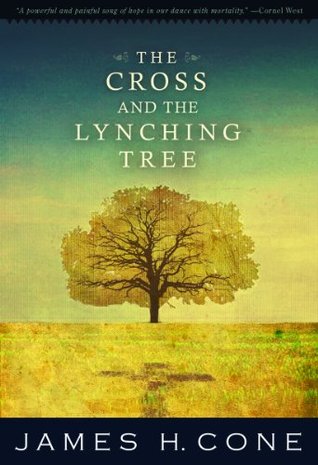
Book Review: The Cross and the Lynching Tree by James H. Cone
Summary:
Dr. Cone is respected as the founder of Black liberation theology. In this book first published in 2011 he explores the connections between the Jesus’s crucifixion and the lynchings committed by white Americans against Black Americans. He also explores in a forthright manner how Christianity is experienced and expressed in Black American churches and directly addresses the seeming contradiction of Black Americans embracing the faith they encountered initially through white enslavers.
Review:
I think it’s important before giving my thoughts on this book to establish for those who may web search their way here who I am. I’m a white, US American woman with the privilege of a Masters degree. While I don’t hazard to guess who Dr. Cone intended to write for, I will say I found both a greater understanding of the Black Christian church in the US and simultaneously called out as a white US American – a couple of times as a white woman specifically. If you are a white US American and not a Christian, this is still a relevant read for you. 79% of Black US Americans consider themselves to be Christian (Pew Research Center) – a greater percent than either US Americans overall or when compared to white US Americans alone. If we are to be good allies, it’s important to understand how this faith intertwines with the atrocious history and (Dr. Cone argues, and I agree with him, continued presence of) lynching in the US.
Dr. Cone gives context for how Black US Americans, especially those who are descendants of enslaved people, came to find and embrace the Christian faith. He also discusses some prominent white and Black theologians, highlighting the differences in how they addressed or, in the case of white theologians, failed to address systemic racism in the US.
I could not find one sermon or theological essay, not to mention a book, opposing lynching by a prominent liberal white preacher.
(loc 79%)
I was particularly moved by the section that discussed how these theologians reacted to the 1963 Birmingham Baptist Church bombing, which resulted in the deaths of four Black girls – Addie Mae Collins (14), Cynthia Wesley (14), Carole Robertson (14) and Carol Denise McNair (11). Dr. Cone’s justified palpable frustration at the general lack of response even in the face of such clear evil was important to hear.
The title of the book alludes to the answer to a couple of questions I’ve heard people ask before – how is the Black Christian experience different from that of white Christians and how did the descendants of enslaved people come to embrace the faith of those who enslaved their ancestors? According to Dr. Cone, Black US Americans saw a fellow sufferer in Jesus and a clear connection between how he was crucified and how Black US Americans are unjustly treated. He also draws attention to how Black churches pay attention to different aspects of the Bible than what you might hear in white churches.
One cannot correctly understand the black religious experience without an affirmation of deep faith informed by profound doubt. Suffering naturally gives rise to doubt. How can one believe in God in the face of such horrendous suffering as slavery, segregation, and the lynching tree? Under these circumstances, doubt is not a denial but an integral part of faith. It keeps faith from being sure of itself. But doubt does not have the final word. The final word is faith giving rise to hope.
(loc 64%)
Dr. Cone directly addresses the frustration of the white people who enforce segregation and lynching and Black people suffering from these things both laying claim to the same faith and how painful that is. My takeaway was that, rather than ask how white supremacists and Black US Americans can lay claim to the same faith, acknowledge that white supremacy is twisting the faith of white US Americans.
Hate and white supremacy lead to violence and alienation, while love and the cross lead to nonviolence and reconciliation.
(loc 46%)
White supremacy tears faith to pieces and turns the heart away from God.
(loc 94%)
Dr. Cone also dedicates space to Black women’s voices, and I was particularly moved by this part as it features Black women directly calling out white women as having the ability to bring change to white supremacy. I have so often heard the opposite, disempowering message that our options of action as white women are limited due to the patriarchy, but that is an overly limited viewpoint. While it is true the patriarchy limits us, we do have the ears of other white folks in a way that Black people often do not, and white women may have more influence over the men in our lives than we may realize. (When I say men in our lives I mean this in the most inclusive way possible – family members, sons, friends, colleagues, etc…) Black women in this book see and call out the power that we white women clearly have with specific examples of how white supremacy responds to perceived affronts on white women. If we have the power to cause harm to Black folks in this way, then we have the power to, at the very least disengage from it by not allowing our experiences to be used as the spark to start off the firestorm, but perhaps we can also use it to quench the violence to begin with. I think it’s important for those reading this not to mistake this as a call for white saviors but rather as a call for white women to cease (knowingly or unknowingly) inciting violence and to work against it. I think of it as the Bible says – take the log out of our own eyes first.
This book also includes some very meaningful explorations of the blues and Gospel music, as well as Dr. Martin Luther King’s theology. It ends with a call to address continued issues, especially as seen through the prison system. As a white woman who grew up rural poor with a large local issue when I was in high school being whether or not to bring in a prison as a source of jobs to an economically depressed area, I viewed this as yet another reason to address efforts toward our incredibly problematic private prison industrial complex in the US.
Through private prisons and the “war against drugs,” whites have turned the brutality of their racist legal system into a profit-making venture for dying white towns and cities throughout America.
(loc 97%)
This clearly was a meaningful read for me, and I can easily see what an important read it is for my fellow white US Americans. It does not give easy answers for what to do, but it demonstrates how white supremacy hurts everyone and leaves one with an urge to be part of the change for good.
4 out of 5 stars
Length: 226 pages – average but on the shorter side
Source: purchased
Buy It (Amazon or Bookshop.org)
If you found this review helpful, please consider tipping me on ko-fi, checking out my digital items available in my ko-fi shop, buying one of my publications, or using one of my referral/coupon codes. Thank you for your support!
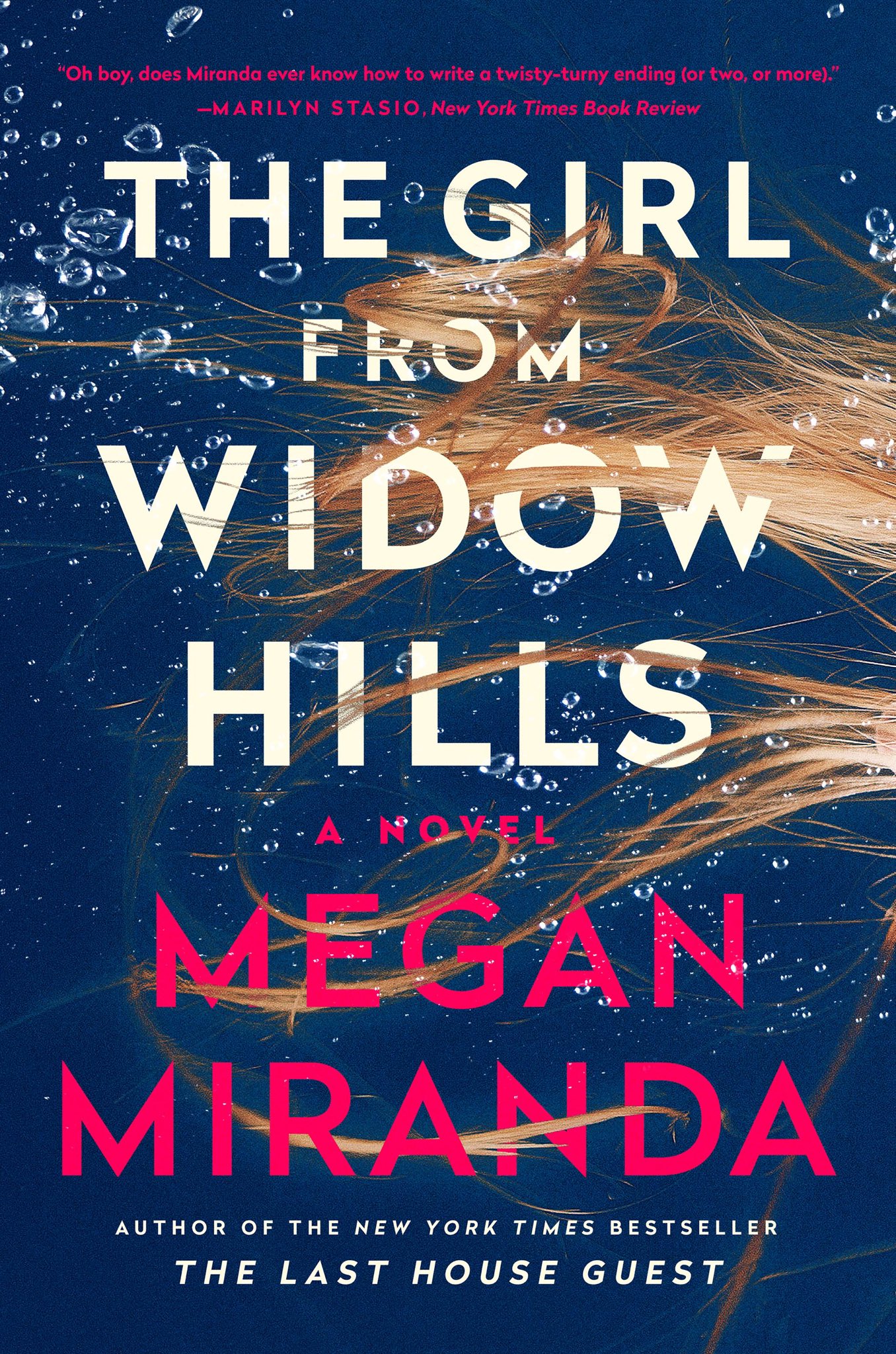
Book Review: The Girl from Widow Hills by Megan Miranda
Summary:
Olivia just wants to live a quiet, simple life as an administrator at a new rural hospital in the American south. She changed her name to leave behind her childhood notoriety as the little girl who was swept away by flood water when she was sleepwalking and was found days later in a drainage pipe. But when she resumes sleepwalking again and literally stumbles over a dead body outside her home, her past starts to come back to haunt her.
Review:
Those of us who grew up in the 90s were consistently regaled with the stories of the little girl Jessica who fell down a well and underwent a dramatic televised rescue in the 80s. I feel like this must be inspired by that story but with a lot of “what-if” questions tossed in. (Jessica herself has lived a very quiet life since the hullaballoo).
Olivia (the woman formerly known as Arden) is likeable yet has realistic flaws. She’s a well-rounded, real character. I especially enjoyed how she decides (early in the book) to buy a home away from the cookie cutter housing built for the hospital workers. The elderly man who sold it to her is also her neighbor, and they have an adorable relationship where they mutually care for one another. Her relationships with her coworkers at the hospital are also a realistic depiction of how she’s sort of part of the club of health care workers but not exactly one, as a staff in administration.
But what about the plot? I really enjoy how right away Olivia is an unreliable narrator to herself through no fault of her own – her sleepwalking. It’s easy to understand why she’s loathe to admit to the circumstances of how she finds the body on her land, and she also has some intense and legitimate questions about how much she can trust herself.
I can’t say too much about why I like this book so much without giving the twists away. However, suffice to say I found the twists interesting. The plot before the twists makes sense with the twist but also didn’t point so directly to it that I guessed it. While the twists solve the mystery, they also leave us with a main character who is still herself – flawed and yet likeable.
Recommended to thriller fans who like a flawed main character and would enjoy an adult (fictional) take on a little girl whose rescue gripped America.
5 out of 5 stars
Length: 325 pages – average but on the longer side
Source: Library
Buy It (Amazon or Bookshop.org)
If you found this review helpful, please consider tipping me on ko-fi, checking out my digital items available in my ko-fi shop, buying one of my publications, or using one of my referral/coupon codes. Thank you for your support!
Book Review: And Now She’s Gone by Rachel Howzell Hall

Summary:
Grayson Sikes is a new private investigator and is taking on one of her first cases, but it’s looking for a man’s ex-girlfriend who doesn’t seem to want to be found. She’s not too keen on trying to find a woman who wants to be gone.
Review:
Do you love black-and-white film noir but wish there was a story with a woman PI? How about a Black woman PI written by an own voices author? How about we get some actual backstory on the PI to find out just why she’s so hard-boiled anyway? And how about a femme fatale is also a Black woman? Then this, my friend, is the book for you.
I was utterly delighted to have a noir with, for once, a different case of characters but that still fits the genre’s markers. There’s even an excellent scene of Grayson pensively taking in the LA skyline with a note that its rich colors are the result of wildfires. I am here for this!
On that note, Grayson is not shy from telling it like it is. She’ll call out the wildfires. She’ll wonder if a witness is describing someone as disagreeable because she’s actually disagreeable or because that’s how Black women can be unfairly perceived. She’ll wonder if an ex-boyfriend really just wants his dog back or if it’s about control. She’ll wonder if the elderly neighbor lady is actually helpful or a busybody. Grayson’s questions are part of what makes her a good PI.
I do want to give a content warning that part of Grayson’s backstory includes both domestic violence and miscarriage [not a plot spoiler], so do please be aware if you prefer to avoid those topics.
Overall, as a fan of noir, I was delighted by finally getting some representation in this story. It both was fun to see and also made the story less predictable and more unique. More variety is a good thing! Pick this up if you love noir and want more or if you’ve never thought it was your jam because of the dripping masculinity. This twists expectations about gender in noir on its head.
4 out of 5 stars
Length: 395 pages – average but on the longer side
Source: Netgalley
Buy It (Amazon or Bookshop.org)
If you found this review helpful, please consider tipping me on ko-fi, checking out my digital items available in my ko-fi shop, buying one of my publications, or using one of my referral/coupon codes. Thank you for your support!
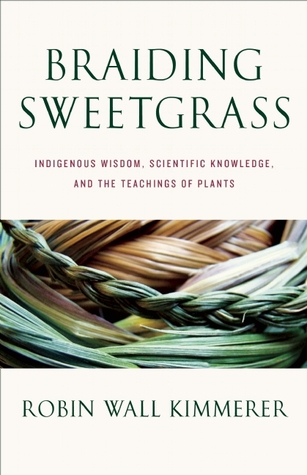
Book Review: Braiding Sweetgrass: Indigenous Wisdom, Scientific Knowledge, and the Teachings of Plants by Robin Wall Kimmerer
Summary:
Member of the Potawatomi Nation and botanist Robin Wall Kimmerer presents a series of essays on plants of North America, incorporating some memoirs from her life and her daughter’s recollections as well.
Review:
It’s difficult to describe how meaningful this book is. The description sounds so simple and yet, to me, it is a collection of scientific and Indigenous knowledge intertwined as near poetry. As an urban gardener who grew up rural among farms, I think of myself as plant knowledgeable, but I was humbled by this book. I also teach, and I found her ruminations on teaching and balancing teaching other people’s children versus your own to be beautifully honest. This book takes time to get through but because of the rich meaning in each essay. You find yourself wanting to savor it.
As a person who feels both spiritually and scientifically minded, this book spoke to me on a mind and soul level simultaneously in ways I cannot fully describe. I wish there was greater focus on teaching this way. I wish the two were not divorced from each other in our society. I think it would be healing to us all and to nature as well if they were not.
Allow me to try to pull out a few meaningful quotes to me by theme.
On morality, contentment, and consumerism:
Refusal to participate is a moral choice.
Transformation is not accomplished by tentative wading at the edge.
Balance is not a passive resting place.
In a consumer society, contentment is a radical proposition.
The consumption-driven mind-set masquerades as “quality of life” but eats us from within.
On teaching and being taught:
The professor made me doubt where I came from, what I knew, and claimed that his was the right way to think.
Teach any who will come.
I’d left my baby girls at home with their dad in order to introduce other people’s children to something they cared little about.
Facts about plants that fascinated me, include that a 3 sisters garden [growing corn, beans, and squash together the Indigenous way] yields more food than if you grew each alone, polycultures are less susceptible to pest outbreaks than monocultures, breathing in the smell of humus (the dirt, not the food) releases oxcytocin, and lichens are actually two beings together (a fungus and an alga). I also learned:
Sweetgrass thrives where it is used and disappears elsewhere.
Plantain is not indigenous but naturalized. It’s so prevalent and well-integrated that we think it’s native.
Estuaries can have the highest biodiversity and productivity of any method.
Forest ecologists estimate that the window of opportunity for cedars to get started occurs perhaps only twice a century.
I hope I have made you intrigued by this book. I loved it so much that I bought myself a copy after starting off with a digital library copy.
5 out of 5 stars
Length: 391 pages – average but on the longer side
Source: Purchased
Buy It (Amazon or Bookshop.org)

 Support my work with a tip or browse my shop for curated book club guides, how to guides, cross-stitch patterns, and more!


This work by Amanda Nevius is licensed under a Creative Commons Attribution-Noncommercial-No Derivative Works 3.0 United States License.
 Opinions of a Wolf