
Archive
Book Review: The Last Hunger Season: A Year in an African Farm Community on the Brink of Change by Roger Thurow
 Summary:
Smallholder farmers make up the majority of Kenya’s food production and yet they face multiple challenges from inefficient planting techniques to bad seed markets that lead to an annual wanjala–hunger season. One Acre Fund, an ngo, saw the gap and came in with a vision. Sell farmers high quality seeds and fertilizers on credit, delivered to their villages, on the condition they attend local farming classes. Roger Thurow follows four families as they try out becoming One Acre farmers.
Review:
Every once in a while there’s a book that you know will impact your entire life. I know this is one of those books.
Thurow strikes the perfect balance between narrating the farmers’ lives and knowledgeably discussing the global politics and environmental problems that also impact the hunger. The information he hands out would be riveting in any case, but how he narrates it kicks it up to another level.
Central to the book is this question:
Why were people still dying of hunger at the beginning of the twenty-first century when the world was producing—and wasting—more food than ever before? (location 202)
I know we all know there is hunger in the world, but it can be easy to ignore when it doesn’t have a face like David or Dorcas, two of the children featured whose mothers flat out do not have food to give them. During the wanjala, since it is most of the families’ first years using One Acre Fund, they do not have enough maize (their staple crop) from the year before. Thus while watching their fields grow, they don’t have enough food to feed their families. During the height of the wanjala the families routinely have tea for breakfast and lunch and maybe some boiled vegetables or bananas for dinner. And they still must farm and go to school. I can’t recall the last time I’ve been so humbled.
Don’t get me wrong. The families profiled in this book aren’t put on a pedestal or romanticized or distanced. They are very real. But their strength and wisdom in the face of so many challenges has no other option but to be inspirational. Because it is so real.
You don’t focus on the afflictions you have, on your poverty; you focus on where you are going. (location 1469)
Makes you feel bad for complaining about morning commutes, doesn’t it?
Beyond talking about the disgusting fact that there is still hunger in a world with so much plenty and demonstrating the resilience of the families, the book also discusses One Acre Fund’s poverty fighting ideas. Basically they operate on the teach a man to fish principle. Thurow talks about how Youn, the founder, believes that bringing in food aid to feed farmers is absurd. We should instead be helping them to farm better. Beyond it not being sustainable to feed everyone year after year, it robs the farmers of their dignity. This was the point I liked best. These people are not dumb or lazy. They are victims of a system that is not working. Helping them help themselves lets them retain their humanity and dignity. I think that’s something that is often missing in charity work and ngos, but it’s vital to truly changing the game.
Overall, if you want a book that will challenge your perceptions, humble you, broaden your horizons, and help you see how to truly fight global poverty, this is the book for you. In other words, this is recommended for everyone.
5 out of 5 stars
Source: Netgalley

Counts For:
Specific country? Kenya

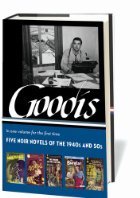
Book Review: David Goodis Five Noir Novels of the 1940s and 50s by David Goodis
 Summary:
The Library of America collects together great pieces of American literature into themed books. This can be anything from an author, to writing on aviation, to the Harlem Renaissance, to transcendentalism. This collection is David Goodis’s best works, all of which happen to be noir. Obviously the most well-known noir author is Raymond Chandler, but one of Goodis’s works was made into a Bogie and Bacall movie, so he’s not too far behind. The books in order of year published included in this collection are:
Dark Passage–A man framed for his wife’s murder escapes San Quentin and investigates the case with the aid of a beautiful woman in San Francisco.
Nightfall–A WWII veteran on his way to Chicago for a job finds himself inextricably linked to a robbery and murder and goes on the lam.
The Moon in the Gutter–A dockworker becomes obsessed with figuring out who raped his sister, leading to her ultimate suicide.
The Burglar–A man in his 30s who fell into the world of thieving during the Great Depression tries to get out but his tutor’s daughter keeps sucking him back in.
Street of No Return–A hobo finds himself implicated in a cop murder in the middle of race riots between whites and Puerto Ricans.
Review:
I am a huge fan of noir. I even took a noir class in undergrad, so when this showed up on Netgalley, I knew I wanted to read it, particularly since I recognizedDark Passage as a film I had watched last year. Surprisingly, we didn’t read any Goodis in that class, so it was fun to try out someone who’s not Chandler. I think Chandler found more of a niche than Goodis what with the fact his main character is the same in every novel. Goodis explores a bit more. His books all have a noir feel, but they don’t follow the exact same formula. For instance, instead of a hardboiled private dick, you might get a hardboiled thief or artist or hobo. Plus the books tend to be a bit more tragic than most noir I have read.
Goodis’s writing at the sentence level has the tongue-in-cheek wit that I so enjoy.
“Madge is a fine girl.”
“Maybe one of these days she’ll get run over by an automobile.”
“It’s something to pray for.” (location 801)
He also is fabulous at setting a scene so richly that it seems as if it is our world but simultaneously is Wonderland.
She had seated herself in a deep sofa that looked like it was fashioned from pistachio ice cream and would melt away any minute. (location 5039)
The mystery aspects of his storylines are unpredictable, don’t always wrap up neatly, and yet make sense once they are revealed to you. Unfortunately, these strengths are offset by his weak romance writing. Every single romantic interest in all of the books are a small-framed, lean woman with light brown hair. The author has a type, we can definitely see that. Beyond that, though, the love is always instant. They see each other across the room and fall for each other. And both people acknowledge this and say it’s something that can’t be helped and they are at its beck and call. This would be less of a bother except that the main characters often make important decisions based on this new “love.” For instance, one of the characters gives up his career for this woman he barely knows. Who does that?! It’s therefore difficult to be sympathetic to the characters when you are thrown out of believability. That’s unfortunate because the scene setting and mystery plots are so strong.
The best work of the bunch is The Moon in the Gutter where the impetus for a lot of the action is not the romantic interest, but the love between siblings. Additionally, it looks at issues of class, being stuck where you are, having who you can love and build a life with dictated to you by that classism innate in society. The grittiness is extreme. We’re talking about a dockworker dealing with his sister’s rape and subsequent suicide. Yet Goodis acknowledges the good there too for the blue collar dock workers and their families. Their lives are passionate and intense in a way that sitting around sipping wine and discussing the symphony just isn’t.
Overall, Goodis exhibits a lot of the qualities of good noir writing. His style is dark and gritty, often with a femme fatale. His stories offer more variety than those of other noir writers, but still fall solidly within and as a great example of the genre. I recommend this collection to those who know they are a fan of noir, and the book The Moon in the Gutter
4 out of 5 stars

Source: Netgalley
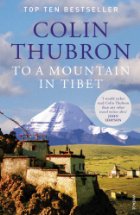
Book Review: To a Mountain in Tibet by Colin Thubron (Audiobook narrated by Steven Crossley)
 Summary:
After the death of his mother, who also was his last living family member, Colin set out on a journey to the mountain of Kailas in Tibet. The mountain is holy to both Hindus and Buddhists and is closely associated with the process of dying and crossing over. Through his eyes we see the people of Tibet and his emotional journey.
Review:
I am not sure if words can describe what an epic miss this book was for me. The combination of British western eyes othering Tibetans, an entire chapter dedicated to his father’s big game hunting, a surprising lack of emotional processing of death, and the *shudders* British accented narrator imitating Indian and Tibetan accents…..oh god. It was painful.
I see nothing wrong with a Western person traveling and appreciating something revered in another culture. If it is done right, it can be a beautiful thing. A lesson in how we are all different and yet the same. Yet through Colin’s eyes I felt as if I was very uncomfortably inhabiting the shoes of a colonizing douchebag. Perhaps part of it was the narration style of Crossley, but it felt as if Colin was judging and caricaturing all of the Tibetans and Indians he met. There was so little empathy from someone supposedly on this journey to deal with death of loved ones. You’d expect more from him. I could accept this perspective more if either Colin learned over the course of the trip or this was an older memoir, but neither is true! This is a recent memoir, and Colin is the exact same self-centered prick he was when he went in.
Similarly, Colin when he is not othering the Tibetans and Indians is either reminiscing joyfully on his father’s exploits as a big game hunter and basically colonizing douche in India or giving us a history lesson in Hinduism and Buddhism. Ok? But he’s not an expert in these religions and also that was not the point of the book? A few explanations here and there, sure, but if I wanted to learn about Buddhism or Hinduism, I sure wouldn’t be getting it from a travel memoir from an old British dude. I’m just saying.
Overall, this is an incredibly odd book. It is a book out of time that feels as if it should have been written by an understandably backward gentleman traveler in the early 1900s, not by a modern man. I honestly cannot recommend it to anyone.
2 out of 5 stars
Source: Audible

Book Review: Evolution in a Toxic World: How Life Responds to Chemical Threats by Emily Monosson
 Summary:
Monosson attempts to explain both current and possible future impacts of chemical pollutants on humans by examining how life responded to toxic threats in the past.
Review:
Allow me to preface my review by saying that although I am not a scientist, my profession is that of a medical librarian, so scientific jargon is not new to me. I would therefore say my understanding of science is somewhere above average American but below actual scientist. I had the impression from the description that this book is written by a scientist for public consumption aka the average American. It misses the mark.
The content is great and informative, but it is couched in such an overload of scientific jargon and an assumption of an above average understanding of how the human body works that it was incredibly difficult to get through in order to glean out the interesting information. Thank goodness I had the kindle version and could look up words easily as I went, or I would have given up within the first chapter. Additionally, just when things were starting to get interesting, such as with how DDT impacts development in utero, Monosson would switch topics. Very frustrating!
That said, I did learn quite a bit from this book. It was just difficult to get to these understandable tidbits given the writing style and structure. Here are a few interesting things I learned:
Like some pervasive computer operating systems, p53 is an archetypical example of the unintelligent design and compromise that is inherent in evolution—a multifunctional, multipurpose transcriptional coordinator that has only lately been retasked to the job of tumor suppression in large, long-lived orgasms….At the end of the day p53, together with all our other suppressor mechanisms, fails half of humanity. (location 1314)
Though two species may share a common ancestor and hence a common ancestral receptor or enzyme, once they part ways on the family tree, the branches evolve independently. (location 1670)
For a genetically male mammal to come out looking and functioning male, he requires in utero exposure to hormones like testosterone and its more potent derivative, dihydrotestosterone, along with a functioning AR. An embryo lacking either hormones or a properly functioning AR (or exposed to chemicals that disrupt either receptor or hormone production) will take on a female appearance, despite possessing a Y chromosome….work by Kelce, Gray, and others revealed that a metabolite of the pesticide DDT was an even more potent inhibitor of the AR than was vinclozolin. Given the ubiquity of DDT and its metabolites, this was a potentially explosive finding. (location 1716)
If our CYP enzymes are increasingly metabolizing a variety of pharmaceuticals, what happens when we add one more, or change our diet, or breathe in chemicals like polyaromatics bound to micron-sized air pollution particulates? (location 2509)
Ultimately though, although I learned a lot, the reading experience itself was a bit daunting for the average American. I believe this book would best be enjoyed by a scientist for whom evolution is not their normal research area. They thus would have an easier time with the jargon, but also not already know what Monosson is talking about.
3 out of 5 stars
Source: NetGalley

Book Review: Acacia: The War With the Mein by David Anthony Durham (Series, #1) (Bottom of TBR Pile Challenge)
 Summary:
The Akarans have ruled the Known World for twenty-two generations, but the wrongfully exiled Meins have a bit of a problem with that. They enact a take-over plot whose first action is assassinating the king. Suddenly his four children are flung to different parts of the Known World in exile where they will need to come to terms with who they are, who the Mein are, and the wrongs past generations of Akarans committed in order to help the Known World make a change for the better.
Review:
I have a big announcement to make. Huge even. THIS IS THE FIRST HIGH FANTASY BOOK I HAVE LOVED. There. I said it! And it’s true.
I wish I had some vague idea of how this ended up on my TBR pile. The only clue I have is that I acquired it via PaperBackSwap, so I know I got it very intentionally after reading a review or something somewhere. But where? And why? Who knows! It was entirely out of my comfort zone, took me much longer than my norm to read (over two weeks according to GoodReads), and yet. I loved every moment of it.
A momentous occasion such as this obviously leaves me asking why. Why when I generally am irritated by most high fantasy did this one not just not bug me but worm its way into my heart? This is a key question, because it’s something that helps stories cross genres. I do have an answer, but of course it has many elements.
First, although this primarily depicts a war, no side is depicted as pure evil or good. Both sides have good points and flaws. Good people work for both. Bad people work for both. The Akaran king isn’t a bad guy per se, but he’s allowing things to happen under his rule that are bad. The Meins have a just cause, but they do horrible things in the process of achieving that cause. This realistic complexity is something that I have found to be sorely missing in other fantasy. The Known World is its own fantastical place with its own cultures and history, but it is realistic in the fact that everything is complex and nothing is clear-cut.
Second, the female characters are incredibly well-written. They are well-rounded, strong and yet vulnerable. Beautiful and yet terrifying. They are innately a part of the world depicted, not just princesses in a tall tower or the girl at the side of the field whose beauty inspires the men. Women are historically a part of the Akaran army, and the two Akaran princesses have strengths and flaws of PEOPLE. They are not “female flaws.” They are people who happen to have vaginas. It is some of the best writing of women I’ve seen from a male writer in a while.
Third, the Known World is complex and eloquently imagined, yet clear and easy to understand. It is its own thing, but it is similar enough to our own real world that I wasn’t left grasping for straws trying to understand things. People in cold climates are pale, and people in deserts are dark. The animals range from recognizable horses and monkeys to fantastical creatures that are a mix of rhinoceroses and pigs. It is creative yet fathomable.
Finally, the storyline is complex. I could not predict what was going to happen next at any moment, really. The ending caught me completely by surprise, and I am baffled as to what Durham will be doing with the middle book of the trilogy. Baffled and impatient.
My god. I love a fantasy story.
Overall, this is now the book I will hold up when people ask me what is good fantasy. It is what leaves me with hope for the genre that it can be more than pasty white men wishing for a patriarchal past of quivering ladies in waiting and knights fighting dragons. Fantasy can imagine a world where some things are better than ours, and yet other things are worse. It can be a reflection of our own world through a carnival mirror. Something that makes us think hard while getting lost. I highly recommend it to anyone looking for those things in their reading.
5 out of 5 stars
Source: PaperBackSwap

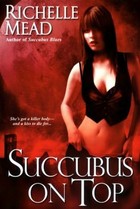
Book Review: Succubus on Top by Richelle Mead (Series, #2)
 Summary:
Georgina Kincaid, the succubus that wishes sex with hot men didn’t always steal their life energy, has held up her side of the bargain with her demon supervisor. She’s been going after quality men in exchange for him not wiping the memory of her human boyfriend, the hot writer Seth. Of course, they can’t have sex together without yanking some years off his life, so when they sleep together, it’s literal sleeping. But life continues in spite of boyfriends and job accolades. Georgina finds herself caught up in helping an old incubus friend, as well as trying to find out what has her coworker, Doug, so full of energy.
Review:
Ahhh, Georgina. You are quite possibly my favorite urban fantasy heroine, although your fixation on Seth kinda bugs me. Anyway, everything that made Succubus Blues so fun is back with a bang this time around. We’ve got crazy sex scenes, paranormal mystery, and an every reluctant succubus.
The story itself is a bit more predictable than the first one, but that’s ok. I may have known right away what was up with the incubus’s project as well as what was wrong with Doug, but it’s so much fun to be in Georgina’s world that I honestly didn’t care that I knew. I mostly delighted in this new version of Seattle that Mead has created.
Georgina is complex and so well-rounded. We constantly learn little snippets of her long life, this time around focusing in more on her succubus years than her human ones. She may have sex down pat, but she still doesn’t have relationships figured out, which is part of what makes her character work. Men can still surprise her sometimes. Especially Seth.
There is honestly not that much else to say about this book. The world is delicious, the plot predictable, the heroine delightful. It’s drizzled in intelligent wit and topped off with some red hot sex scenes. This series is definitely remaining my go to for urban fantasy. Fans of the first won’t be disappointed, and anyone with even an inclination toward the genre should definitely check it out.
4 out of 5 stars
Source: Public Library

Previous Books in Series
Succubus Blues

Book Review: Y: The Last Man: Paper Dolls by Brian K. Vaughan (Series, #7) (Graphic Novel)
 Summary:
Our trifecta of heroes have successfully crossed the Pacific Ocean and are now on the seacoast of Australia. Yorick naturally insists on looking for his long-lost girlfriend in the drug-infested city of Sydney. Meanwhile, Dr. Mann gets wooed by the one-eyed sailor rescued from the pirate ship in the previous book. We also learn more of Ampersand the monkey’s backstory.
Review:
It probably comes as no surprise that I am still loving this series, although I am super-grateful to have one containing so many issues to be holding up so well! Although I’m not a big fan of the Dr. Mann being duped story, the other two more than make up for it.
Seeing Sydney torn apart by heroin provides a different scenario in this post-apocalyptic world. We’ve seen the women fall to violence, over-monitoring, and chaos, but we haven’t seen the self-medication reaction yet. The scenes with the women on heroin are sad and poignant. The perfect backdrop to Yorick’s story.
Naturally as an animal lover and animal rights person I love Ampersand’s backstory. Originally abused and destined for a research lab, his shipping got mixed up and wound up with Yorick to be trained to be a helper animal instead. How this ties in with Dr. Mann is disturbing and the perfect set-up for the next issue. After seeing all he’s been through, I really hope they find Ampersand the next issue!
Overall, the art and story are consistently good and in spite of being the seventh in a long series the storyline has not gotten out of hand or become dull. This is an excellent entry that will leave fans craving more!
5 out of 5 stars
Source: Public Library

Previous Books in Series
Y: The Last Man: Unmanned
Y: The Last Man: Cycles
Y: The Last Man: One Small Step
Y: The Last Man: Safeword
Y: The Last Man: Ring of Truth
Y: The Last Man: Girl on Girl
Book Review: A Dog Named Slugger by Leigh Brill
 Summary:
Leigh Brill recounts in her memoir her life before, during, and after her first service dog, Slugger, a golden retriever with a heart just as golden. Leigh had no idea her cerebral palsy could even possibly qualify her for a service dog until a similarly disabled fellow graduate student gave her some information. Her touching memoir tracks her journey, as well as the life of Slugger.
Review:
This was my first book borrowed from the kindle lending library, and it was such a great experience! I know people were skeptical that maybe only low-quality books would be available, but this one is absolutely stunning. I sort of wish I had bought it, just to support Leigh’s service dog efforts.
It’s difficult for me to describe what a pleasure this book was to read. It covers three areas that are a passion of mine–animals as beings worthy of rights, the experience of any type of disability and the extra difficulties that come with that, and the need for universal rights. Top this off with the fact that this is a memoir, a beautifully written one, and I was left nearly speechless. Leigh’s descriptions of learning to communicate with Slugger, Slugger’s unconditional love healing her heart, and the discrimination she faced in public areas with a service dog, they all left me feeling so connected to her. It’s impossible not to be touched by a story of how an animal changes a person’s life. But how an animal changes a disabled person’s life, a person with a disability that is less obvious than others, a person who other people have laughed at and neglected to help. It’s just yet another example of how powerful the human/animal connection can be when we let it.
Of course, this gorgeous experience wouldn’t be possible without talented writing on the part of Leigh. She manages clear, chronological story-telling without missing the opportunity to reflect on how various experiences affected and changed her. She strikes an eloquent balance between reflecting on her relationship with Slugger and talking about her experiences as a disabled person.
Overall, this is a beautiful memoir that eloquently discusses the companionship of animals, as well as the experiences of a woman with cerebral palsy. I highly recommend it to all, but especially to those with an interest in memoirs and disability studies.
5 out of 5 stars
Source: Kindle Lending Library

Book Review: The Thief by Fuminori Nakamura
 Summary:
The narrator makes his living as a pickpocket in Tokyo. When the man who taught him the art, not to mention his only true friend, finds himself on the wrong side of the Yakuza, he sees the likely impending end to his own life. But can he run or are his heart strings tied to the city?
Review:
Nakamura is a best-selling writer in Japan, and this is his first novel to be translated to English. I’m a fan of the crime/noir novels coming out of Japan, and this one certainly didn’t let me down.
The narrator is everything you want from a criminal lead–sympathetic, dangerous, talented, handsome but not exceedingly so, trapped, creative. It is so seamlessly easy to jump into his head and move through his life.
The story is far more complex than pick-pocketing. We get a peek at the seedy underbelly of Tokyo, but also at the narrator’s poor, rural upbringing. We encounter everyone from the downtrodden son of a prostitute to the (apparently) leader of the Yakuza. It’s glamorous, dirty, and unpredictable.
The ending may turn some readers off. It is an ambiguous one, which I know some people don’t like. I love that kind of ending though, because it leaves me to ponder how I think things turned out. How I hope they turned out. And I didn’t feel at all cheated by it either. It’s well-supported, but stops just short of telling us everything.
Something did hold me back from completely loving the book though. I think it would have been better if we had met the narrator a bit earlier in his career to follow his downward trajectory more completely. It all felt a bit too sudden to me. I wanted to know the narrator and his relationship to his teacher better.
Overall this is a great piece of translated crime fiction that gives the reader a peak at the crime underworld of Tokyo. I recommend it to fans of both unique crime fiction and works in translation.
4 out of 5 stars
Source: NetGalley

 Support my work with a tip or browse my shop for curated book club guides, how to guides, cross-stitch patterns, and more!


This work by Amanda Nevius is licensed under a Creative Commons Attribution-Noncommercial-No Derivative Works 3.0 United States License.
 Opinions of a Wolf