
Archive
Book Review: The Prometheus Project: Trapped by Douglas E. Richards (series, #1)
 Summary:
Ryan and Regan can’t believe their scientist parents made them move from San Diego to the total snoozefest of Pennsylvania practically overnight just so they can work at a boring science corporation, Proact. But when they accidentally overhear their parents talking, they realize there may be more to Proact than meets the eye, and they’re determined to find out!
Review:
I don’t think I realized when I entered the giveaway for this (a really long time ago, sorry about that, Richards!) that it’s a middle grade/children’s series. I don’t usually read below the YA level anymore unless I’m reading to my four year old nephew, but I am a librarian, so I put my librarian cap on for this book. I also tried to hearken back to what I would have enjoyed at the age of eight or nine.
Ryan and Regan are a cute brother/sister pair. Ryan is older and thus underestimates his sister sometimes. They tease each other, but never cruelly, and it is evident that they truly love each other. The sibling dynamic is definitely well-done. It was refreshing to see the adults depicted as adults and not idiots or mean-spirited. What Ryan and Regan accomplish is because they’re the smart kids of smart parents, not out of any short-comings of the adults.
The science is really well-done. Richards’ author bio states that he used to write for National Geographic Kids, and it shows. He explains things eloquently without talking down to kids. All of the science found in the book is factual. I would have loved stumbling upon such learning in fiction as a kid.
The ending has a twist that even I didn’t see coming, and I was sort of expecting to being a grown-up reading it, haha. It’s not cheesy or over-the-top, and I’m betting kids will love the surprise.
My main criticisms are that sometimes the descriptions of the characters focus too much on their hair and eye color to the exclusion of other things, and the book felt too short. It just seemed a bit short for the grade level. Mentally I compared it to Nancy Drew which are generally like 25% longer, and I think that length would be ideal. The sequel is longer though, so that’s a good thing.
Overall I think if you have middle grade reading level kids who like science, mysteries, or scifi you should feel completely confident in handing them this book.
4 out of 5 stars
Source: Won copy in exchange for my honest review from the author via LibraryThing

Book Review: A Stolen Life by Jaycee Dugard
 Summary:
On June 10, 1991, eleven year old Jaycee Lee Dugard was abducted from her school bus stop by Phillip and Nancy Garrido with the aid of a stun-gun. Jaycee was locked up in a backyard compound and repeatedly raped and abused by Phillip in a bid to satisfy his pedophilia. Over the course of her 18 year captivity, Jaycee gave birth to two daughters in the compound. Eventually with her increasing age, the sexual assaults stopped, but she was still held captive. Finally, on August 26, 2009, Phillip brought Jaycee and her daughters with him to the parole office in an attempt to explain away why he was spotted in public with the two girls. Jaycee, who hadn’t been allowed to speak her name for 18 years, was able to write it down for the police. This is the memoir of her experience and gradual recovery from the captivity.
Review:
Jaycee wrote this memoir without the assistance of a ghost writer, something very uncommon in memoirs by victims of abduction. She states in the beginning that her way of remembering things is a bit off because of the trauma, but that her way of telling her story will provide a genuine experience for the reader to truly see how the abduction affected her. She is correct that the memoir is not set up in a traditional way, but this tends to make for stronger books when discussing something as painful as this. It reminds me a bit of the very non-traditional story-telling methods used in another memoir When Rabbit Howls. Eliminating the ghost writer and letting the victim speak grants us, the readers, the opportunity to truly connect with a survivor. I humbly thank Jaycee for her bravery in this.
Most of the chapters start with Jaycee remembering the events from the perspective of her younger self. This absolutely makes scenes such as her first molestation by Phillip incredibly haunting. She then ends each chapter with a reflection from her adult, free perspective on the past. This structure is unique, but it provides an interesting perspective, showing both Jaycee the victim and Jaycee the survivor. Toward the end of the book this structure is lost a bit as we suddenly are shown many pages from the journal Jaycee carefully kept in captivity, as well as talking in a more present manner about the therapy she’s been going through. Her therapist sounds truly remarkable. She uses horses to help the survivors deal with problems, which seems to work incredibly well for Jaycee who often only had animals around to talk to during her 18 year ordeal.
Although Jaycee does recount her abuse and manipulation at the hands of Phillip, that is not at all what stands out in this memoir. What comes across is what a strong, sensitive, caring woman Jaycee is. She is not lost in woe is me. She does not even think she has it the worst of anyone in the world. The one thing she repeatedly states she’s learned is that she was not assertive enough as a little girl, and that personality trait backfired on her repeatedly throughout the ordeal. She states that she sees this as the reason abuse of all kinds are able to go on, because people don’t speak up.
There are moments in which all of us need to have a backbone and feel that we have the right to say no to adults if we believe they are doing the wrong thing. You must find your voice and not be afraid to speak up. (page 143)
This message of “speak up” is stated repeatedly throughout the book and leaves the reader feeling empowered rather than downtrodden at such a tale. If Jaycee could live through such a situation and come out of it stronger and as an advocate for victims and survivors of abuse to speak up, how can any of us do any less?
I recommend this book to those who enjoy memoirs and survival stories and can handle scenes of a disturbing nature.
4 out of 5 stars
Source: Amazon

Book Review: Hungry For You by A. M. Harte

Summary:
A collection of zombie-themed short stories and poetry with the twist that they all have to do with romantic relationships in some way, shape, or form.
Review:
This is a solid collection of short stories and poetry that can be enjoyed one at a time or inhaled in one sitting. I went for the one sitting option.
In some stories Harte sticks to zombie tropes but in not all. The ones where she varies or surprises the reader in some way are definitely the stronger ones. She has an ability to imagine multiple different possible zombie apocalypses that are all, if not equally believable, still believable. Her dialogue is a definite strength, reading as incredibly realistic in the midst of fantastical happenings.
Where she excels though, and where I would encourage her to focus future horror writings, is when she uses the zombies and zombie apocalypse as a metaphor or an instigator for something in a relationship from women’s perspective. My three favorite stories from the collection–“Dead Man’s Rose,” “Seven Birds,” and “Alive”–all feature this element. In “Dead Man’s Rose,” the zombie is a metaphor for an abusive lover who refuses to grant the woman her freedom. In “Seven Birds” the surprise of the zombie apocalypse coincides nicely with an unexpected break-up (I particularly enjoyed that female character’s reaction to both). In “Alive” the female character must deal both with the zombie apocalypse and the emotional fall-out after a one-night stand with a co-worker. These are all three things modern women face in relationships and getting to see them take place in a world infested with zombies (one of my favorite kinds) was such a welcome change! Too often, especially in zombie movies, we see the apocalypse from a man’s perspective and not from a woman’s. I found myself saying to Harte in my head, “Ignore the male perspective and switch to just writing from the female perspective, because you do it so well!” For instance, it’s not every day in a female zombie fiction fan’s life that you come across a resonant passage like this:
When I am lonely for boys what I miss is their bodies. The smell of their skin, its saltiness. The rough whisper of stubble against my cheek. The strong firm hands, the way they rest on the curve of my back. (location 1206)
Never have I come across a passage in zombie fiction that so struck at the heart of what it is to be a modern straight woman, and to have that followed up by oh no zombies was just awesome.
There are a few shortcomings though. A couple of the stories simply felt too short, and a couple of them–“A Prayer to Garlic” and “Arkady, Kain, & Zombies”–just didn’t make much sense to me. I think the former would have benefited from being a bit longer with more explanation, whereas the latter actually felt too long and had a couple of plot holes that I couldn’t wrap my mind around. This collection is periodically more British than at other times. One short story revolves around tea to an extent that I’m afraid a Boston gal like myself just couldn’t quite relate to. I know that those more British stories will definitely appeal to the type who love Doctor Who for instance, though. I also really wish it included a table of contents. That would be super-helpful in revisiting those stories readers would like to revisit.
Overall this book is definitely worth the add to any zombie fan’s collection, but particularly to female zombie fans. It’s different and fun simultaneously.
If you found this review helpful, please consider tipping me on ko-fi, checking out my digital items available in my ko-fi shop, buying one of my publications, or using one of my referral/coupon codes. Thank you for your support!
4 out of 5 stars
Length: 122 pages – novella
Source: Smashwords copy from the author in exchange for my honest review
Buy It (Amazon. Not available on Bookshop.org)
Book Review: The Flight of the Silver Vixen by Annalinde Matichei (series, #1)
 Summary:
Somewhere in outer space is an alien race consisting entirely of females. It’s not that the men are missing; they never existed. This race is known as intermorph, and those like our own are schizomorph. A teenage hover bike gang steals a space craft and finds themselves on a troubled intermorph planet where they must band together and fight as warriors against demons, internal enemies, and a neighboring aggressive schizomorph race.
Review:
This book reads distinctly like what would happen if you gave a bunch of ten year old girls the ability to record their imaginary playtime into a book and try to sell it. Everything from the dialogue to the plot screams, “A bunch of ten year old girls who like being girls but still think boys have cooties wrote this one day playing in their back yard.”
The writing is really bad. Clear characterization is almost non-existent. I was still uncertain as to who exactly various people were at the end of the book. The dialogue reads as so fake that it makes you cringe. It’s full of made-up words and ways of speaking that aren’t explained at all until a glossary at the end of the book. For example, the intermorphs don’t swear, but they do exclaim “g’doinking” when upset. See what I mean about ten year old girls? If I was, for instance, a middle school English teacher, I could see some merit in the writing and would encourage the young person to continue. This, however, is not a middle school English class. This is supposed to be a well-written, well-realized, novel. It is not.
Then there is the whole entire concept in and of itself. A race of just women absolutely can be a creative way to explore gender and sexuality, and I’ve seen it done well by famous feminist scifi authors. This is not done well, however. The intermorphs are all either brunettes or blondes with the brunettes fulfilling the traditional male role, and the blondes fulfilling the traditional female role. Everything about how they interact is a carbon copy of a traditional patriarchy. Just because both genders have vaginas doesn’t make how the brunettes treat the blondes less offensive. I also was incredibly disturbed at how the female main characters talked about the male schizomorphs. They referred to them as “it” and as animals. Even beards on men were degraded and feared. It’s the first time I’ve seen a book somehow manage to be both misogynistic and misandrist. This in and of itself is enough to warrant one star from me, even if the writing was good. This is not a healthy way to perceive men, women, gender, or sexuality.
I absolutely cannot recommend a piece of bad writing full of unhealthy perceptions of gender and sexuality to anyone. My hope is that the author is still quite young and with time will grow to more mature opinions, as well as more mature writing.
1 out of 5 stars
Source: Kindle copy received from author in exchange for my honest review

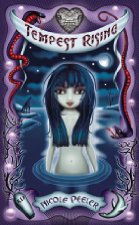
Book Review: Tempest Rising by Nicole Peeler (series, #1)
 Summary:
Jane True lives in a small coastal town in Maine and cares for her father, a stubborn fisherman who refuses to leave his hometown. This means Jane is stuck in a town where everyone pretty much thinks she’s crazy. Everyone except the lesbian couple who run the local bookstore where she works. Even Jane thinks there’s something off about herself what with swimming near the deadly whirlpool The Sow in the ocean in the middle of the night in the winter on a regular basis. But then a neighbor winds up dead, mysterious people show up, and Jane finds out she’s half-selkie, and nowhere near as crazy as she once thought.
Review:
First things first. I absolutely, completely, 100% love the character of Jane True. If she lived in my neighborhood, we’d definitely be the best of friends. She’s smart and loyal with a biting, classic yankee sense of humor. At the same time though, she’s human, flawed, and makes mistakes but not the sort of mistakes that would make you hate her. I also really related to her relationship with her father, as mine has the same debilitating heart disease that her father has. Seeing her see in him the same, strong, blue collar daddy who raised her and who now is struggling with an illness was really refreshing to see in a paranormal romance. It seems like dads tend to be absent in the genre in general, when let’s face it, a lot of women’s dads remain an integral part of their life, even when grown-up.
The storyline itself is fairly complex, and it was a delight to see modern rural New England in literature. The characters also take a random jaunt up to Quebec, which honestly we definitely do periodically. I’ve been to Canada more times than I’ve been to the American south for instance. The settings were fabulous and well-envisioned. Normally I would complain about Jane’s love interest, but it’s obvious to me that she’s going to outgrow him with time.
The one thing I actually didn’t like about the book was the sex scenes, which is kind of problematic for a paranormal romance since that’s kind of half the point. Jane insists her man uses a condom. Ok, fine, write that in there once and then we’ll assume that they have safe sex for the other encounters. The thing is though, Mr. Man Candy complains about having to use a condom every single time, and every single time asks her if they really have to….by dangling the wrapped condom in her face. This is not sexy behavior! This is reason to ditch a guy behavior. She said use it, that means use one until she says otherwise quit being a baby. And frankly, quit ruining my sexy reading by turning into an asshole right before the sexy times. The whole entire sex scene situation is problematic throughout the book, and just gets worse each time they do it. There’s one scene in particular when Jane is down on her hands and knees, and the dude is behind her, and he dangles the condom in her face. Like randomly he’s behind her, she’s getting excited, he’s touching happy places, then bam there’s a condom in her face. WTF. This is not how paranormal romance should work. I get it that we’re not supposed to 100% like the guy, and this is part of the way of showing us he’s an asshole, but still. I hope the whole sex scene situation improves in the next book.
Overall, the character is a rich, engaging, Mainiac with a biting sense of humor, and the world Peeler has created is diverse and engaging. Hopefully the boyfriend situation improves in the later books. Given how much I like the main character (which is rare in paranormal romance), I’ll definitely be reading the next entry. If she sounds engaging to you as well, and you like paranormal romance, you’ll most likely enjoy this book.
3.5 out of 5 stars
Source: Amazon


Book Review: Mai Tai One On by Jill Marie Landis (series, #1)
 Summary:
Newly-divorced Em jumps at the chance to move to Kauai, Hawaii to assist her aging uncle in running his tiki bar. She hires a young, punk-style waitress who seems to be running from bad choices, and she gets to know the aging hula dance group that performs for free (it’s not like anyone would willingly pay them). Em is managing to increase business for the tiki bar and is starting to feel refreshed from her new life when the tiki bar’s neighbor shows up dead in their barbeque pit–with a machete slash through his skull. The gorgeous fire knife spinning detective Roland sees Em, the waitress, and her Uncle Louie as the prime suspects, so clearly Em and the hula group must work together to find the real culprit.
Review:
This was my first foray into the fairly newish cozy mystery genre. A cozy mystery is one involving something violent, but the violence is never particularly shown in a gruesome way, and the characters handle the situation in a humorous fashion. It’s kind of like a modern version of Agatha Christie. They also are really well-known for having puns in the titles. (Another one that springs to mind is The Long Quiche Goodbye
So what about this particular cozy? Well, the pun in the title is cute but doesn’t really have anything to do with the story. I can’t quite figure out what, exactly, is supposedly being tied on or tied up or what have you. No one is killed by ties. Basically, the title is a bit witty, but confusing.
The humor is excellent. I found myself laughing out loud multiple times while reading. In fact, this is the strong point of the book. Think of the wittiest, snarkiest person you know, then imagine that everyone around you has that same sense of humor. It’s delightfully funny and relaxing.
The characterization ranges from really well-done to painfully one-dimensional or lacking in vividness. For instance, all of the Hula Maidens are richly drawn elderly women who still have a lot of spunk and life left in them. Yet the main character, Em, is so dull that I kept mixing her up with the waitress. Similarly, some characters are so over-the-top as to be a bit offensive. For instance, a new addition to the island are Fernando and his boyfriend Wally who are both quite possibly the most flamboyant characters I’ve ever seen in a novel. Now, given the extremes of the Hula Maidens, that’s fine, but Wally is never given another element to his character. Whereas it is later revealed that a lot of Fernando’s flamboyance is an act for his career, Wally is such a gay stereotype he even repeatedly faints and is never given any other realm of possibility besides fabulous gay boyfriend. This is odd because the situation certainly arose to make him more compelling and well-rounded without diverting from the main storyline. Although I appreciate the inclusion of gay characters in the book that the other characters simply accept, I do wish Landis had been a bit more careful with her characterization of them.
The mystery itself isn’t too mysterious. Landis’s one attempt at misleading the reader into believing someone else is the murderer is so obvious as to be painful. I actually cringed on her behalf when reading the passage. The characters and humor are allowed to be obvious, but the mystery shouldn’t be.
I can give a pass to both of those issues considering that this is a cozy, and from what I’ve heard from friends who are fans, these sort of things are common in them. The one big problem though is that this book sorely, direly needed better editing. There were mistakes everywhere, which is baffling considering it comes from a publishing house (who supposedly are better because of the “professional” way they handle things….but that’s an issue for a different post). There were multiple sentences with verbs in the wrong location or written twice. Spelling errors and typos were present throughout. This really distracted me from my enjoyment of the story, because the flow would be interrupted while I double-checked that I read the sentence correctly. There is simply no excuse for such shoddy editing, although it is obviously the fault of the publishing house and editor, not the author.
These things said, though, looking at the book overall, it is still an enjoyable read. Ignoring the editing issues, it is an enjoyable cozy, but not an amazing one. The setting and rambunctious characters of the Hula Maidens hold much promise for future entries in the series. Hopefully it will go uphill from here. I recommend it to people who already know they are fans of cozies, but those who are uncertain should probably give it a pass.
3 out of 5 stars
Source: Amazon

Book Review: I Am Hutterite by Mary Ann Kirkby
 Summary:
Mary Ann Kirkby recounts her unique childhood in her memoir. She was born into a Hutterite family. The Hutterites are a religious sect similar to the Amish only they believe that living communally is a mandate for Christians. Mary Ann recounts her childhood both in the religious sect (her particular group was located in western Canada), as well as the journey and culture shock she went through when her parents left the Hutterites when she was nine years old.
Review:
I actually read this memoir because of the situation in which I first ran into Hutterites and have been fascinated with them ever since. For a couple of years, my father and brother lived in Montana. I went to visit them and was shopping in Victoria’s Secret at the mall and rounded the corner to discover traditionally-garbed Hutterite women buying thongs. I had no idea what a Hutterite was, but instantly hunted down my brother elsewhere in the mall to find out who these people were. All that the “English” seemed to know about them was that they lived in a commune, dressed kind of like the Amish but different, traveled all together to town in a few big vans, and the Hutterite women were always buying thongs at Victoria’s Secret. Hutterites are rather quiet about their lifestyle though, so when I stumbled across this on a new releases list, I knew I needed to read it to find out more about the community.
This is a completely fascinating memoir that I devoured in one day. Mary Ann is able to see both the faults and the beauty of various experiences in her childhood with the clear eye of an adult. Yet simultaneously she harbors no ill-well toward either the Hutterites or her parents or any of those who made her transition from a Hutterite girl to an “English” woman more difficult. Kirkby writes with a sympathetic ear to all those she encountered in her life, which is a refreshing change in the memoir genre.
Additionally Kirkby’s writing offers an immersion into the fascinating world of communal living with a religious belief system to hold it all in place. Kirkby recounts a childhood where no homes were kept locked, everyone was always welcome in everyone else’s home, and most meals of the day were eaten communally with your age-mates. In fact, one of the biggest changes for Kirkby when her family left the Hutterites was suddenly needing to interact with her siblings on a regular basis instead of her same-age female friends. She also had trouble understanding the English need for privacy in the home or the relative silence with which meals were eaten.
Another point of interest is that Kirkby’s father was from a Russian family that was persecuted in Europe and had to run to Canada to escape the Nazis. His father sought refuge and a sense of safety in the community of the Hutterites. Conversely, her father who grew up in this safety found himself craving more freedom than the strict rules and constructs of the commune would allow for. The book thus not only recounts a unique girlhood and insight into the Hutterite way of life, but also addresses the age-old question of freedom versus security.
Anyone interested in the Hutterite communities or unique childhoods will absolutely enjoy this memoir. It is well-written, intriguing, and contains not a trace of bitterness. I highly recommend it.
5 out of 5 stars
Source: Amazon

Book Review: Heinrich Himmler: The Sinister Life of the Head of the S.S. and Gestapo by Roger Manvell and Heinrich Fraenkel
 Summary:
Manvell and Fraenkel conducted years of meticulous research both with primary documents and those who actually knew Himmler to bring about a biography of the man infamous for being in charge of the S.S., Gestapo, and concentration camps that made the terror of Hitler’s reign possible. They seek to provide a well-rounded look at Himmler’s entire life for those with some familiarity with the events of World War II.
Review:
This was a fascinating and difficult book to read, not because of the writing style or the atrocities recounted, but because the authors succeeded in putting a human face on Heinrich Himmler. In the intro to the book, the authors state:
The Nazi leaders cannot be voided from human society simply because it is pleasanter or more convenient to regard them now as outside the pale of humanity. (location 31)
In other words, the easy thing to do is pretend the Nazi leaders or anyone who commits atrocities is something other than human. That they are monsters. When in fact, they really are still people like you and me, and that should frighten us far more than any monster story. What leads people to do horrible things to other people? What makes them bury their conscience and humanity and commit acts of evil? This biography thus does not say “here is a monster,” but instead says, “Here is this young boy who became a man who committed himself to a cause and proceeded to order acts of evil upon others. What forces came together to mold him into someone who would do these things?”
One of the more fascinating things brought to light in this book is that Himmler was never actually fit into the ideal of a top-notch Aryan male he himself advocated. In fact throughout his life he was sickly, pale, and scholarly. He tried in school to fit in with the athletic boys but never succeeded in anything for any length of time except fencing. Instead of accepting who he was, he continually pushed his sickly body past its limits throughout his life, trying to force it to fit into his ideals of what it should be. He actually enlisted his own personal healer, a masseuse trained by a talented Chinese doctor, throughout the war. This masseuse, Kersten, was working as a spy for the Allies and was instrumental in convincing Himmler to release various people from concentration camps throughout the war. His sickly body then not only opened him up to the Allies for a convenient spy, but also was key in how he related to the world. He projected his own insecurities about the ideal body onto everyone else.
Himmler’s anxiety to destroy the Jews and Slavs and place himself at the head of a Nordic Europe brash with health was a compensation for the weakly body, the sloping shoulders, the poor sight and the knock-knees to which he was tied. (location 2189)
This physical weakness and obsession does not mean he was a weak man, however. He was profoundly intelligent and detail-oriented. He easily became obsessed with ideas he came up with and would search for proof of them excluding any and all evidence to the contrary. Those of us who went to liberal, private colleges where we were taught to adjust our worldview for new, challenging ideas may be surprised to learn that Himmler read obsessively. The fact though is that Himmler sought out in his reading sources that would simply support his previously established, prejudicial worldview.
Like Hitler, he [Himmler] used books only to confirm and develop his particular prejudices. Reading was for him a narrowing, not a widening experience. (location 2547)
Thus we cannot depend on reading alone to prevent close-mindedness.
As the Nazi regime continued on, Himmler grew more and more committed to his obsessions. Those who knew him well described the frenzy and meticulousness with which he worked over every detail toward his final goal of the “Aryan race” being in control of Europe.
Himmler’s need to rid himself of the Jews became an obsession. The ghosts of those still living haunted him more than the ghosts of those now dead; there were Jews everywhere around him, in the north, in the west, in the south, in the areas where his power to reach them was at its weakest. (location 2074)
The information on Himmler at this time period certainly sound like a man suffering from intense paranoia. Think of John Nash in A Beautiful Mind and how he firmly believed government agents were all around him persecuting him. The difference is that this physically weak, close-minded, paranoid man was given immense power over the lives of millions instead of simply being a professor. It is easy after reading this book to see how Himmler could easily have been that crazy neighbor worried that the people across the street were watching him all the time instead of the engineer behind genocide. All it took was placing near total power and trust in his hands to turn him into the organizer of a genocide.
There will always exist human beings who, once they are given a similar power over others and have similar convictions of superiority, may be tempted to act as he [Himmler] did. (location 592)
The lesson the authors send home repeatedly then is that Himmler was just a man overcompensating for a physically weak body who grasped onto the idea that he was actually superior to others simply because of his ancestors with a tendency toward paranoia who was given a dangerous amount of power. It is easy to imagine how the entire situation could have worked out differently if some sort of intervention had happened earlier in his life. If he was taught that everyone was valuable for different reasons that have nothing to do with their physical abilities or ancestry. If he had initially read books that weren’t racist and xenophobic. If he was never swept into the Nazi Party mania in the 1930s. If he had been maintained as an office worker in the Nazi party instead of being given so much power. It’s a lot of if’s, I know, but it’s important to think about all the ways to prevent something like this from ever happening again. Although the authors’ primary point is “be careful who you allow to have power,” I would also add “intervene when they are young to prevent the development of a xenophobic, paranoid personality to start with.” With both precautions in place, perhaps we humans as a group can avoid such atrocities in the future.
Readers should note that this book is written by Europeans and not “translated” into American English. Additionally, periodically the authors sway from the strict chronological method of a biography to follow one thought or event through to its conclusion then back-track. This was a bit distracting, but absolutely did not prevent me from learning much about Himmler, WWII, and the Holocaust that I did not previously know.
Overall, I highly recommend this to those with an interest in WWII in particular, but also to anyone interested in the prevention of future genocides. It offers great insight into how these atrocities came to be.
4 out of 5 stars
Source: Amazon

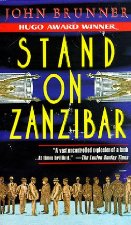
Book Review: Stand on Zanzibar by John Brunner
 Summary:
In the near-future humanity is increasingly facing over-population and all its consequences. In reaction to this, most world governments have established population laws and eugenics boards. In this overly crowded, information overloaded, perpetually on the brink of war society exist Donald and Norman, healthy bachelors who must live as roommates due to the housing crisis. Donald is a dilettante, an information specialist on reserve to be activated as a spy when needed for the US government. Norman is a Muslim African-American working his way up the corporate ladder of the most important technology firm in the world–GT. GT houses the world’s most brilliant computer named Shalmaneser. The intertwining lives of these two oddly well-suited roommates gradually unfold amid digressions into the lives of those they come into contact with and information from the modern-day philosophies and advertizing.
Review:
What is most memorable and striking about this book is not so much the story, although that is fairly unique, but the way in which it is told. Brunner does not simply tell the main storyline, he also immerses the reader into the world the characters live within. To that end, the main storyline (continuity) is interspersed with chapters focusing in on minor characters (tracking with close-ups, essentially short stories), plunging the reader into the middle of the advertizing of the time (the happening world), and works of importance to the world (context). The result is that, although it takes a bit of work to get into the book, in the end the world these characters exist in is much more vivid and clear in the reader’s mind, thus allowing her to more fully understand the characters.
Sometimes this method of writing is a bit difficult to read, of course. For instance, one chapter takes place at a party, and Brunner simply streams all of the conversation together as you would hear it if you were at the party yourself. You catch snippets of bits of different conversations taking place, but never an entire one all at once. It’s the most immersive party scene I’ve ever read, but also took me an inordinate amount of time to get through.
It was also refreshing to have one of the main characters in a futuristic scifi book be a minority. This in and of itself made Stand on Zanzibar a unique, interesting read, and I believe Brunner did a good job portraying both Norman’s struggles with still prevalent racism and presenting him as a well-rounded character.
The major themes of the book, beyond the incredibly meta presentation style, are the very real threat of the loss of privacy and the dehumanization of dependence upon artificial intelligence.
The dehumanizing affect of overpopulation is evident in the language employed by the characters early on in the book.
Not cities in the old sense of grouped buildings occupied by families, but swarming antheaps collapsing into ruin beneath the sledgehammer blows of riot, armed robbery and pure directionless vandalism. (page 52)
These are no longer human cities. They are crawling ant-piles. The vision of piles of swarming ants is simply not a pleasant one. This concept of humanity as a pest is carried even further in a poem from one of the context chapters entitled “Citizen Bacillus,” which begins:
Take stock, citizen bacillus,
Now that there are so many billions of you,
Bleeding through your opened veins,
Into your bathtub, or into the Pacific
Of that by which they may remember you. (page 115)
Not only is this poem taking into account the increasingly suicidal tendencies of the human population in this future society (something that is seen in the animal kingdom when a population becomes overcrowded), but it also is blatantly calling humans a bacteria (bacillus).
The book repeatedly addresses through vignettes, samples of books of the time period, and the lives of the main characters that overpopulation leaves people without enough room to think and figure themselves out in.
True, you’re not a slave. You’re worse off than that by a long, long way. You’re a predatory beast shut up in a cage of which the bars aren’t fixed, solid objects you can gnaw at or in despair batter against with your head until you get punch-drunk and stop worrying. No, those bars are the competing members of your own species, at least as cunning as you on average, forever shifting around so you can’t pin them down, liable to get in your way without the least warning, disorienting your personal environment until you want to grab a gun or an axe and turn mucker. (page 77-8)
In the book “turning mucker” is when a person inexplicably loses their mind and attacks strangers near them. This happens increasingly throughout the book. Thus Brunner’s main point that humans are our own worst enemy is repeated throughout the book.
Added on top of this is the fact that artificial intelligence is outpacing humans. The characters literally cannot keep up with the information overload. They have nightmares about it. They simultaneously depend on the computers and dread them. When one goes awry, they hardly know how to continue on, but simply flounder around. Chad Mulligan (one of my new favorite literary characters) sums it up eloquently:
What in God’s name is it worth to be human, if we have to be saved from ourselves by a machine? (page 645)
Thus, Stand on Zanzibar through postulating an overpopulated future that is overly dependent on technology demonstrates the very real dangers humans pose to ourselves if we outpace either our own minds or our environment’s ability to house us. It is a brilliant read for the meta-literature aspect alone, but the content is also challenging and thought-provoking. I highly recommend it to scifi fans.
4 out of 5 stars
Source: PaperBackSwap

Book Review: The Jungle by Upton Sinclair
 Summary:
In the early 1900s Jurgis and his soon-to-be family by marriage decide to immigrate to the US from Lithuania. Having heard from an old friend that Chicago’s Packingtown is where a working man can easily make his way in the world, this is where they head. Soon the family find themselves deep in the horror that is the regulated in name only meat packing plants. Dominated by a society that circulates entirely around greed and wealth for the few at the expense of the many, the family and individuals within it slowly fall apart. But is there a light at the end of the tunnel?
Review:
My high school English teacher strongly recommended to me that I read this book, claiming that I would love it, and I only just now got around to it. I’m glad that her recommendation stuck in my head, though, because this book is flat-out amazing. It may be the best piece of social justice writing I have ever come across.
Of course that wouldn’t be the case if Sinclair’s abilities to craft a piece of fiction with enthralling characters were not up to par. Fortunately, they are. Jurgis and his family are well-rounded. Scenes are set vividly, and time passes at just the right rate. I would be amiss not to mention that Sinclair suffers from some of the racism rampant during his time-period. African-Americans are presented in a very racist light, as are most Irish-Americans. It surprises me that someone so passionate about social justice could simultaneously be racist, but I suppose we are all have our faults. Fortunately the racism makes up a very small portion of the book that is relatively easy to skim over if that sort of thing in historical classics bothers you.
The primary issues Sinclair addresses in the book are: meat eating, the plight of the working class, greed, and socialism.
Although when it was first published The Jungle created an outcry for better regulation of meat production, in fact the book is strongly against the eating of animals at all.
And then again, it has been proven that meat is unnecessary as a food; and meat is obviously more difficult to produce than vegetable food, less pleasant to prepare and handle, and more likely to be unclean. (Locations 5353-5355)
This strongly vegetarian viewpoint is strengthened by a lengthy scene early in the book in which Jurgis and his family take a tour of a packing plant for the first time and witness the slaughter. The family, and indeed everyone on the tour, are distraught and emotional witnessing the taking of so many lives and hearing the pigs squeal in pain and fear. It is here that Sinclair makes a point about what impact slaughterhouses have on the humanity of the workers, for while the visitors are distraught at the scene, it is soon seen that for the workers
Neither squeals of hogs nor tears of visitors made any difference to them; one by one they hooked up the hogs, and one by one with a swift stroke they slit their throats.(Locations 536-540)
Thus it can be seen that not only is meat eating cruel, inefficient, and unhealthy, but it also dehumanizes those who must participate in the process.
Of course a much more prevalent theme in the book is the plight of the working class of which Jurgis and his family are a part. This can be a difficult book to read at times for it shows how solidly these people are trounced upon by society and greed, no matter how hard they try. First Sinclair establishes how the constant worry over money and survival affects the working class:
Such were the cruel terms upon which their life was possible, that they might never have nor expect a single instant’s respite from worry, a single instant in which they were not haunted by the thought of money. (Locations 1585-1586)
Then Sinclair demonstrates how this rough and tumble, cog in the machine existence slowly wears away the humanity of those fated to suffer from it:
She was part of the machine she tended, and every faculty that was not needed for the machine was doomed to be crushed out of existence. (Page 79)
Society, with all its powers, had declared itself his foe. And every hour his soul grew blacker, every hour he dreamed new dreams of vengeance, of defiance, of raging, frenzied hate. (Page 94)
Sinclair then shows how these dehumanized people are essentially in a prison and are slaves to the greed of others:
There is one kind of prison where the man is behind bars, and everything that he desires is outside; and there is another kind where the things are behind the bars, and the man is outside. (Page 164)
I find that all the fair and noble impulses of humanity, the dreams of poets and the agonies of martyrs, are shackled and bound in the service of organized and predatory Greed! (Page 176)
Now that Sinclair has shown through one family how the current system enslaves and dehumanizes the workers, he has a solid stage to argue against the collection of wealth in the hands of the few, in other words, to argue for socialism.
The power of concentrated wealth could never be controlled, but could only be destroyed. (Page 186)
In America every one had laughed at the mere idea of Socialism then—in America all men were free. As if political liberty made wage slavery any the more tolerable! (Page 183)
By putting faces via the characters of Jurgis and family to the plight of the workers suffering at the hands of greed and the imbalance of wealth, Sinclair sets the stage for the most eloquent argument in favor of socialism I have ever read.
This book profoundly demonstrates how fiction can work for a cause and humanize, familiarize, and bring to home the faces and reality behind the issues of the day. I highly recommend this powerful work to all.
5 out of 5 stars
Source: Amazon

 Support my work with a tip or browse my shop for curated book club guides, how to guides, cross-stitch patterns, and more!


This work by Amanda Nevius is licensed under a Creative Commons Attribution-Noncommercial-No Derivative Works 3.0 United States License.
 Opinions of a Wolf