
Archive
Book Review: The Summoner by Layton Green (Series, #1)
 Summary:
Dominic Grey is a rogue US government agent currently assigned to Zimbabwe when a friend of the US Ambassador disappears in the middle of a tribal religious ceremony. Grey finds himself investigating the disappearance under the watchful eye of the beautiful Zimbabwean government official, Nya and with the aid of a religious studies professor aka cult-buster, Viktor. The investigation soon leads them deep into the dark world of Juju–the religion from which Voodoo originates–not to mention the seedy underbelly of Harare.
Review:
Take Raymond Chandler, transplant him to Africa, update mores to modern liberal ones, toss in some African Juju, and you have Green’s first entry in the Dominic Grey series. If that combination doesn’t make detective mystery fans sit up and say “yes please,” then I don’t know what will.
Dominic is the classic wounded and dark but ultimately has a heart of gold detective hero. He broods. He has far more energy than is logical. He is missing the classic addiction to alcohol of yore, but the side-kick Viktor has that (to absinthe no less), so that is easily forgiven. His backstory is unique, yet relatable, plus there’s Japan and jiujitsu tossed in, which is never a minus.
The love interest is, refreshingly, a bi-racial, self-reliant woman with her own issues and priorities. She is smart, yet not lacking in vulnerabilities. Nya was a refreshing depiction of a female character in a detective mystery, and seeing an inter-racial relationship develop in a book that is not a romance novel was fresh and exciting.
The plot is complex and actually fairly terrifying, even for this hardened horror fan. I did figure it out before it was revealed, but only just barely. I did not, however, predict the ending, which is a definite plus. Those who like some horror and torture in their mysteries will certainly enjoy the plot.
The one draw-back is that Green’s writing struggles a bit on the sentence level. Sometimes the sentences are too simplistic, or he tells the reader a bit too much instead of showing. There are also times when his descriptors are a bit off. For instance, at one point the reader is told that the room smells of vivisection. Most readers do not know what vivisection smells like (thank goodness), so that kind of leaves a blank for the scent in the room. Instead, Green could have said something like, “The room smelled of vivisection–a dark musk mixed with the unmistakable scent of blood.” These issues are less of a flaw than weak characterization or bad plot, though, and I have no doubt that Green’s writing on the sentence level will improve with time and exposure.
Overall, this is an excellent first foray into the world of modern detective mysteries. Grey is an intriguing main character, the plots are unique and modern, and I’m already anticipating the next entrance in the series. I highly recommend it to fans of Raymond Chandler and detective mysteries in general.
4 out of 5 stars
Source: Free kindle copy from the author in exchange for review

Book Review: Glasshouse by Charles Stross
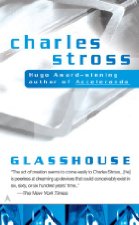 Summary:
Robin lives in the 27th century where your consciousness can be switched from body to body (and not just ortho-human ones) indefinitely. Frequent back-ups in an A-gate protect you from ever really dying. Of course, sometimes people go in to get some memories wiped. This is the closest thing to a chance at a new life. Robin wakes up in one of these facilities with a far more extensive memory wipe than usual. People are trying to kill him, and he finds himself signing up for a social experiment where the experimenters are attempting to recreate the second dark ages–the end of the 20th and beginning of the 21st century. He thinks he’ll be safe here, but he might not be. Is he really at risk though or is he just messed up in the head?
Review:
This future where Earth no longer exists and a person is a person because of their consciousness and not their bodies is incredibly richly imagined. It is abundantly clear that Stross has a clearly laid out society in mind when writing. This is all taking place within a world within a certain timeline within a certain culture. That is what makes for the best scifi reading experience, and Stross pulls it off quite well.
The plot is endlessly surprising and nearly impossible to predict until the last few chapters. Of course any plot involving people who can change bodies with a complex civil war previously fought involving a computer virus that enters people’s consciousness via the A-gates would be complex. But don’t be deterred! It is really not difficult to follow, although you may have to stop to think about it a few times.
I also want to say kudos to Stross for writing such an incredibly GLBTQ friendly piece of scifi that isn’t necessarily about gender or sexuality. It’s the first time I’ve ever seen the terms “cis-gendered and trans-gendered” used in a scifi book. In this future where people can pick whatever body they want, it’s natural for everyone to spend at least a few lifetimes as both a male and a female, although they all ultimately tend to choose one over the other. In fact, a plot-point for the book involves the researchers randomly placing someone who identifies predominantly as female in a male body and the resulting depression from that. Similarly, characters identify as mono or poly, meaning both monogamous and polyamorous sexualities are recognized as equally valid. It is an incredibly welcoming environment where people are encouraged to be themselves that only makes the experiment set during our own time period all the more jolting. I could see any queer person finding this story very relatable.
Unfortunately, the strong set-up kind of lost me toward the end. I’m still not quite sure exactly what I should have taken from the ending, but I felt that it didn’t live up to the incredibly high bar Stross set for himself early on. I’m still glad I read it as it was a very different, unique experience, but I do wish he’d spent a bit more time figuring out an ending worthy of the meat of the book.
Overall, I recommend this to scifi fans, and highly recommend it to GLBTQ readers and advocates.
4 out of 5 stars
Source: PaperBackSwap

Book Review: Soul Hunt by Margaret Ronald (Series, #3)
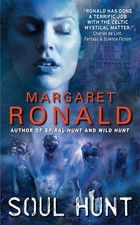 Summary:
Native Bostonian Evie Scolan is an adept bicycle courier and has her first real relationship in a while. Of course, her life isn’t quite that simple. First, she’s The Hound with an uncannily adept sense of smell that helps her find things. Plus her boyfriend is a werewolf. Then there’s the whole try to keep the magical Undercurrent in Boston under control so her beloved city doesn’t fall apart thing. Not to mention the death sentence given to her by yet another sector of the Undercurrent giving her only until Midwinter to pull everything together. Plus the Sox are sucking this season.
Review:
Yet again, I accidentally picked up a book that is partway through a series. I’ve noticed this is a lot easier to do when it’s an ebook than a print book, because the print book tends to have a giant “3” or something on the binding, whereas the ebook gives you zero clue that this is part of a series. Work on that, publishers. Due to this fact, I spent the solid first half of the book trying to figure out what the heck was going on in Evie’s world. Unlike paranormal romance that tends to offer up a quick recap of the important details, it would appear that urban fantasy isn’t so keen on that. Well, that and Ronald’s world she has created is incredibly complex and hard to understand fully part-way into a series.
That aside, however, how is it for an urban fantasy novel? Well, the fantasy element is strong and intensely connected to elements of urban living from good and bad neighborhoods to trolley tracks to old, abandoned buildings, to secret tunnels and ghosts. This has it all if you’re after some seriously steeped fantasy.
Further, as a Bostonian myself, I can tell you that Ronald gets the local slang and layout of the neighborhoods right. Personally, I think she’s a bit heavy-handed with the Red Sox love demonstrated by Evie. I don’t really think Evie would be thinking about the Sox season sucking when she’s currently facing death, but maybe I’m just not enough of a fanatic myself. Hah.
I think, perhaps, that why I couldn’t get into this partway through the way I could other series I started in the middle is that I don’t like Evie, and the mythos of the Undercurrent is way more confusing than it should be. I can’t think of very much that’s appealing or redeeming about Evie as a character, which is problematic when she’s the heroine. Similarly, she’s not beautifully broken or anything. She reads as just…..average. The fact that this is the case when she also has this weird supernatural nose is saying something. Make Evie evil! Make Evie kick-ass! Just don’t make her so dull that I have zero doubt that I wouldn’t give her a second glance if I happened to see her on the streets of Boston.
Similarly, the mythos of the Undercurrent seems to change to suit the author’s needs. Maybe I was missing plot twists from missing the earlier books, but it all just seems so much more complex than it needs to be. Plus, what exactly makes Evie repeatedly go up against demigods when her only supernatural talent is the nose thing? It just doesn’t make sense to me. That and the whole part dog thing is just….ew.
I came into this wanting to love it, as I do with any book set in my home of Boston. The fact is though, too much turned me off from it. It is a fairly well-written urban fantasy, though, and a nice change from the typical southern setting we see. I’d recommend it to urban fantasy fans looking for a change of scenery who don’t mind a rather ordinary heroine who’s basically part dog.
3 out of 5 stars
Source: Amazon

Previous Books in Series:
Spiral Hunt
Wild Hunt


Book Review: The Group by Mary McCarthy
 Summary:
A collection of women graduate from Vassar in the 1930s. Their friendship is known collectively as “The Group,” and their distinctive Vassar education has given them a distinctly liberal view on the world. How this changes with time as they repeatedly encounter societal expectations and relationship problems are told through a series of vignettes that focus in on moments in their lives over the seven years after graduation.
Review:
I am so glad that Nymeth’s review made me add this to my wishlist. This piece of historical fiction told entirely through women’s lives looks at women’s issues in an oft-ignored time period–1930s America. Particular issues that impact these women’s lives and dreams include birth control, gender norms, violence against women, and social justice.
Moving smoothly through the seven years but changing perspectives by spending a chapter or two on each woman in turn, we get a glimpse of their lives. For instance, early in the book we see Kay’s life in detail, but later we only catch glimpses of it through her friends’ eyes. This lends a greater sense of depth and mystery to these women’s lives. What happened to change them? How drastic of an impact did certain events have on their lives? Are they truly happy now? Much like real life, the reader can only speculate based on the limited information she has.
The style of looking at women’s issues in history through the lives of multiple women lends a depth to the story that would not be there if it was told in the traditional manner of focusing in on one single woman. The, essentially, cluster-fuck of circumstances, expectations, and personality that come together to create the different lives they end up leading is endlessly fascinating to study and ponder.
This book humanizes women’s issues in the 1930s and brings them to light in an engrossing manner. I highly recommend this book to anyone with a love of historic fiction or an interest in women’s issues.
5 out of 5 stars
Source: PaperBackSwap

Book Review: Naturally Clean: The Seventh Generation Guide to Safe and Healthy, Non-Toxic Cleaning by Jeffrey Hollender
 Summary:
An introduction to the green concept of natural cleaning, this book gives an overview of why chemical cleaners are bad for people and the environment. Summaries of the scientific evidence are followed by introductory advice on all-natural cleaning and keeping your home as unpolluted as possible.
Review:
Although the concept of cleaners polluting the home seems at first glance like a non-issue, the scientific evidence presented in this book clearly demonstrates that it is an issue. For example:
“Ordinary household products such as cleansers, cosmetics, and paints are now the Los Angeles region’s second-leading source of air pollution, after auto tailpipe emissions, air quality officials say.” Location 182
Ok, but we don’t want to live in dirty squalor, right? The book goes on to clearly point out various natural, safe cleaners that work just as well as regular cleaners, although perhaps requiring a bit more elbow grease.
Although at first I was concerned that the fact that the book was written by the founder of the Seventh Generation cleaning company would lead it to bias or to essentially be an ad for their products, neither was the case. Where products are listed, natural cleaning competitors are included. Further, instructions are given on cleaning your house with products as cheap as vinegar and hydrogen peroxide.
Be cautioned, though, that this is definitely an introductory book. It reads more as a pamphlet to get you headed in the right direction than as a change your entire life guide. As such, I recommend it to those who’ve never considered the benefits of cleaning with natural products before.
3.5 out of 5 stars
Source: Amazon

Book Review: Faeries of Dreamdark: Blackbringer by Laini Taylor (Series, #1)
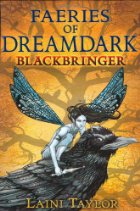 Summary:
Magpie Windwitch has spent most of her life traveling the world with her parents fighting to save the faerie magic and rid the world of demons and devils mannies accidentally loose from their bottle prisons. Now chasing after a surprisingly powerful demon has brought her and her crew of crow guardians back to her birthplace of Dreamdark, a faerie land no mannie can enter. Here she encounters more members of her generation of faeries, including Poppy who can speak to plants and Talon who possesses an extraordinary knitting talent. Soon Magpie will discover not only secrets about the world, but about herself as well.
Review:
I’ve been working at reading from the bottom of my print TBR pile, and I really do wish I could remember what led me to pick up this book. Faeries and fantasy are generally not my thing, but clearly something caught my eye about this story, and rightly so, for I found myself swept into the tale and really quite enjoying it.
Taylor has created a fun heroine with all the usual traits of a chosen one in fantasy. Blessed by those more powerful, something special about her, has a few flaws such as a strong will, yadda yadda. One thing that really sticks out though is that she’s a girl. The chosen champion is a girl, and so was the most famous prior champion. Nice to see that difference! Plus, seeing a guy fall for a girl because she’s exciting, adventurous, and strong-willed is always fun to see depicted for a change. I truly enjoyed Magpie and Talon, and to me they are the ones who held the story together.
The faerie world is richly imagined without crossing over into being overly romanticized or sexualized like so many faerie stories are wont to do currently. The entire setting reminds me of the books about the adventures of animals in the woods that we humans just can’t see that I used to so enjoy reading as a child. It’s just that in this case in addition to the animals, there are faeries.
The author was inspired by her own drawings, and they pepper throughout the book. They are truly beautiful drawings, and I found myself stopping reading entirely just to get lost in them. Don’t read this one on the tiny screen of an iPod.
The mystery itself is logical within the setting, although it honestly seemed a bit trite and commonplace among fantasy. I was hoping for something a bit more unique. Must every fantasy story be about saving the whole world? Additionally, there were a few side-plots that seemed totally unnecessary, particularly once all was revealed at the end of the book.
On the other hand, the more progressive aspects of the story-telling excuse these short-comings in my mind. Taylor gently expresses a necessary respect for all living creatures, as well as non-gendered expectations and inter-racial relationships. I confidently recommend this to those seeking a fantasy story for middle-grade or YA readers with these positive elements.
4 out of 5 stars
Source: PaperBackSwap

Book Review: How I Live Now by Meg Rosoff
 Summary:
Daisy’s stepmother has convinced her father to send her off to England to live with her aunt and cousins, and Daisy really doesn’t mind. She hates her life in NYC anyway, and life in the countryside seems like a welcome change. Her cousins are quirky and fun, and Aunt Penn is sweet and practices a relaxed parenting style. When Aunt Penn goes away for a work trip, terrorist acts occur in London effectively leaving the kids on their own. On their own to explore feelings and actions they might not otherwise have felt free to.
Review:
The big rumblings about this YA book is that there is incest in it. In the grand scheme of shocking incest though, this incest is just….not that shocking. It’s between two cousins who’ve never met until they’re teenagers. *shrug* Plus, the incestuous relationship is really not the main focus of the story at all. It holds center stage for maybe two chapters. Two very chaste chapters. Oh sure, an astute reader knows what’s going on, but there are no lengthy sexual passages. The most we get to witness is a kiss. So, this book is really just really not about incest, ok? If that was keeping you from reading it, don’t let it. If that’s why you wanted to read it, go read Flowers in the Attic
So what is the story about? Quite simply, it’s about the impact living in an age of world-wide terrorism has on young people. On their perceptions, decisions, morals, and more. As someone who was only a sophomore in highschool when 9/11 happened, I feel safe in saying that Rosoff depicts the experience of a young person growing up in this world very well. The mixture of relaxing and having fun while the adults panic around you with nights of fear are perfectly woven.
Daisy’s voice is wonderful to listen to. She’s an appealing, funny narrator with an acute wit. She is truly someone to like and root for. Similarly, her female cousin, Piper, who she becomes a pseudo-parent to, is extraordinarily interesting and appealing. In fact, I’m hard-pressed to name a character who isn’t well-rounded.
Unfortunately, all of these positives about the book come to a crashing halt at the end. All I can tell you without spoiling the ending is that Rosoff did not take her themes as far as I was hoping she would take them. In my opinion, she copped out, and I was sorely disappointed. The ending reads almost like the beginning of the Beauty and the Beast fairy tale, and I was just left feeling as if Daisy and her cousins had let me down. What could have been an extraordinary book became just average.
Thus, if you are looking for a YA take on the impact life with terrorism has had on the younger generation, but aren’t expecting anything mind-blowing, you’ll enjoy this book. If what you’re after is shocking YA, however, look elsewhere.
3.5 out of 5 stars
Source: PaperBackSwap

Book Review: Neuromancer by William Gibson
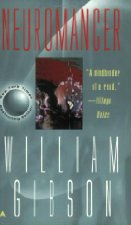 Summary:
Billy Case used to be the best cowboy in the matrix–the digital world you plug yourself into. But then he pissed off the wrong boss who had his neurons fried so he can’t jack in anymore. Case has been biding his time waiting to die in Japan, until a mysterious woman named Molly shows up. She’s tricked out with blades that emerge from under her fingernails and sunglasses built into her skull. She says her boss has a job for Case and will fix his neurons, beginning the adventure of Case’s life.
Review:
This is a good example of how to effectively drop a reader into a completely unfamiliar world and explain nothing and yet have enough make sense for the reader to be invested in the outcome for the characters. Gibson doesn’t explain much to the reader, and yet what doesn’t make sense eventually clicks into place if the reader is persistent enough in the reading.
The settings vary from a creatively imagined future Japan to a Rastafarian space station to what is essentially Miami in outer space. They are all immediately engrossing and intriguing. What led the world to develop this way in Gibson’s imagination? That is never entirely clear, but that’s part of the fun. After all, when is it ever entirely clear why the world works out the way it does?
By far the most interesting character is Molly. Like a Whedon heroine, she kicks ass and takes no names. She is not just brains or brawn; she is both. Case pales abundantly in comparison to her, and he knows it. Although they do hook up, he states that Molly could never really be anyone’s woman. She is her own. Molly’s life is incredibly more interesting than Case’s, and perhaps one of the more frustrating parts of the book is that we only get to see of her what Case gets to see. The book is not about her; it is about Case’s experiences with her. Yet that is also what makes the book intriguing. She flits into and out of Case’s life and yet will linger forever in his memory as someone significant.
Of course, I would be remiss to review this classic piece of scifi without mentioning the impact its imaginings of the internet would have. Obviously there is the matrix and plugging in concepts. The idea of the internet as something that you participate in in a 3D manner. The concept of AI as a computer rather than as a robot. The list goes on and on. If you’re a scifi fan and have not read this book, you really need to. It is clear from page one what an impact Gibson has had on the genre.
The plot itself is convoluted and confusing. I’m still not entirely sure I understand exactly what happened. Yet I’m also not sure Case understands exactly what happened either. This is one of the few times I’ve finished a book and instantly wanted to re-read it, hoping to understand it a bit better the second time around. Yet such a convoluted plot is a bit distracting when there is so much else wonderful going on. It holds the book back from being superb.
Overall, this piece of classic scifi is an interesting character study and immersion in a different world. It would be interesting to anyone who enjoys that type of experience in their reading, but is also a must-read for anyone who considers themselves a scifi fanatic.
4 out of 5 stars
Source: SwapTree

Book Review: The Unit by Ninni Holmqvist
 Summary:
In the Sweden of the near future women who reach the age of 50 and men who reach the age of 60 without having successfully acquired a partner or had children are deemed “dispensable” and sent to live in “a unit.” These units appear at first glance to be like a high-class retirement home, and indeed they have all the amenities. The residents, however, are required both to participate in medical experiments and to donate various organs and body parts up until their “final donation” of their heart anywhere from a year or a few years after their arrival in the unit. Dorrit arrives at the unit depressed, but accepting of her fate as the result of her independent nature, but when she falls in love, she starts to question everything.
Review:
The entire concept of this book intrigued me as it is clearly a dystopia whose focus is on the older generations instead of teenagers and young people. The concept itself is of course frightening to any of us who have come to grips with the fact that some day we will be elderly too. This dystopia is also unique though in that it examines the possible future movement of Swedish society, which is vastly different from American society.
The writing is entirely from the perspective of Dorrit. Although it is clear she is writing from some point after the events occurred, Holmqvist eloquently allows her voice to change to reflect her changing ideas on society, her friends, her family, and her own life. When Dorrit first arrives in the unit, she attempts to defend herself saying that women used to be raised to be independent instead of with such a high focus on producing children that will add product to the GNP. It’s not as if she didn’t want a partner, she did, but it didn’t happen. So why is that her fault? Deeper issues are addressed too such as why does only a new family unit count and not siblings? What about pets? Don’t they need us? The vast implications of such a focus on interpersonal relationships found in the traditional family unit are subtly addressed. What type of people tend to be alone family-less by the age of 50 or 60? One resident in the unit’s library, for instance, points out that
“People who read books…tend to be dispensable. Extremely.” (Page 26)
Of course the setting of this dystopia also brings up other interesting issues that Holmqvist handles quite well. The dystopian setting allows the author to address the perpetual loss of friends that the elderly face as well as seeing themselves and their friends sicken mentally and physically. Placing it in a society in which this is exacerbated by science naturally gives it another level as well as a welcome distance for the elderly reader. This of course is a large part of what makes this dystopia different from the typical YA version. Instead of dramatizing the challenges young people typically face such as their world widening and new knowledge being imparted, this one shows how the world becomes smaller and acceptance that it’s too late to change the world becomes the norm.
Perhaps the most universally interesting issue this dystopia addresses is how much the individual should be willing to sacrifice for the greater good. The residents in the unit are constantly being told that their discomfort in an experiment could improve the lives of hundreds of needed people. Or that they should be perfectly fine with “donating” one of their corneas and going half-blind if it means that a nurse with three children can remain a contributing member of society. While some of the residents grow resentful of this concept, referring to the unit as a free-range organ farm, Dorrit finds leaning on this perceived value helps her with her depression in the unit.
“Otherwise I would feel powerless, which I essentially am, but I can cope with that as long as it doesn’t feel that way too.” (Page 71)
Clearly this book makes one think not just about the issues the elderly face but also about how society as a whole treats them and makes them feel. It also firmly addresses just how much individuality and choice it is justifiable to give up for the greater good. The ending completely shocked me and has left me with even more to ponder than the points given above, but I want to leave those for the future reader to discover.
I am incredibly glad this work was translated into English, and I highly recommend it to everyone, but especially to dystopia and scifi lovers, as well as those interested in sociology and psychology.
5 out of 5 stars
Source: Amazon

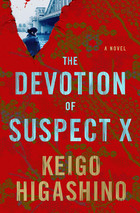
Book Review: The Devotion of Suspect X by Keigo Higashino
 Summary:
In classic noir style, Higashino tells the tale of a mathematician, Ishigami, and a physicist, Yukawa, facing off utilizing only their brilliant minds in a quest to save someone they each love from a life of tragedy. Simultaneously a story of love and betrayal amped up with academia and set against the quintessential backdrop of gritty Japanese city streets–not to mention a lunch box restaurant.
Review:
I fully admit that I put myself in to win this book purely because it’s Japanese literature, and I’m trying to expand my reading horizons to include more non-western lit. I was therefore pleasantly surprised to see so many classic noir elements present in this modern day detective mystery. Noir is one of my favorite genres and adding in the touches of Japan gave it a really fun twist.
It takes a bit for the story to get going and to get into Higashino’s writing style. The sentences lean toward shorter in length than I’m used to. Once I became used to the length difference though I really got into the different type of flow shorter sentences give to a piece of writing. Naturally, this could partly be due to it being a work in translation, but good translators try to give foreign language readers a sense of the original author’s style. I hope the translator succeeded in this regard, because this different style helped give this noir story an extra push in uniqueness.
The mystery itself is nearly impossible to completely solve before the final solution is revealed. The final solution also contains some serious betrayal and an emotional scene that reminded me a bit of some Japanese cinema I’ve seen. So intensely shocking and gritty and occurring in the very last few moments of the story. It moves the story up from a fun way to pass the time to a memorable tale.
The pacing is a bit off, however. Intensity speeds up and slows down repeatedly making it difficult to be totally sucked into the story. A few edits would probably solve this problem leaving the same basic tale but without any unnecessary diatribes. Some may not find the pacing variety as distracting as I did, however.
This Japanese noir piece is artfully pulled off and leaves the reader guessing to the very end. I recommend it to noir and Japanese literature fans alike.
4 out of 5 stars
Source: Won from EarlyReviewers via LibraryThing

 Support my work with a tip or browse my shop for curated book club guides, how to guides, cross-stitch patterns, and more!


This work by Amanda Nevius is licensed under a Creative Commons Attribution-Noncommercial-No Derivative Works 3.0 United States License.
 Opinions of a Wolf