
Archive
Movie Review: Scream 4 (2011)
 Summary:
Sidney has returned to Woodsborough to kick off her book tour–a book all about overcoming being a victim. Dewey is the sheriff and married to Gale. Naturally on the eve of the anniversary of the original ghostface murders, new murders start occurring, and the townsfolk are not blind to the intense metaness of the whole thing.
Review:
The two words that best describe this movie are: hilarious slash-fest. And it knows it too. The insider jokes, the characters’ comments about how meta the whole thing is, movies within movies within movies, and the internet being worked into the plot all work together to make for a deliciously self-aware series that doesn’t take itself too seriously.
I have to say, I yet again did not figure out who Ghostface was, which is a huge plus in a franchise that has had to reinvent a similar theme over and over again. The blood and gore was still at a shocking level. They definitely kicked it up to the next notch. Plus the editing and story keeps everything fast-paced. As my friend who saw it with me pointed out, she didn’t look at the clock once, and that’s rare in a movie nowadays.
Could it have been better? Yes. If the ending had been taken a different direction, it would have gone from better than expected to reawakens the franchise. Alas, they didn’t take that step. It, however, is still an awesome sequel, particularly when Hollywood isn’t exactly known for generating good ones.
I highly recommend it to fans of the Scream franchise. You won’t be disappointed. You may even be surprised.
4 out of 5 stars
Source: theater

Movie Review: The Nightmare Never Ends (1980)
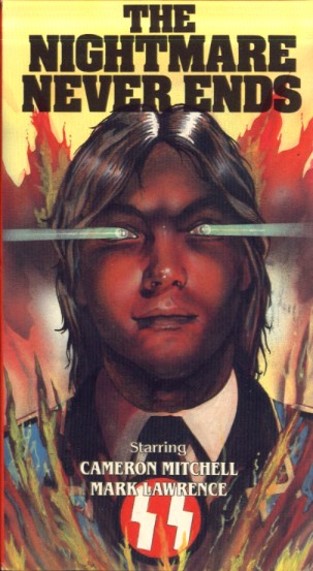 Summary:
A devout Catholic woman married to an atheist professor who has just published a book called God is Dead starts having nightmares about Nazis and dead people in the water. Meanwhile, a Jewish hunter of Nazi war criminals shows up mysteriously murdered with his face ripped off and the numbers “666” tattooed on his chest. The tenuous connections between these two soon reveal a dark presence on the planet.
Review:
This movie can best be summed up in the phrase: Satan at the Disco. Satan is not just alive and beautiful (not handsome, beautiful) but is a disco-going playboy complete with a harem of hypnotized women who actively participated in Nazi atrocities back in the day. In spite of Satan’s presence at the disco, I found myself wanting to go there. I have to say, it certainly seemed more appealing than Tequila Rain on Lansdowne Street.
This film is an odd mix of things done well and things done horribly badly. The special effects are surprisingly good for the time with certain scenes managing to surprise and/or gross out my friend and myself. Of note is one particular scene where a character’s eyeball pops out from his head. Quite gruesome for the special effects of the time. On the other hand, the actress playing the Catholic woman cannot act to save her life. She can, however, scream quite well, which is apparently what she was hired for. The plot is creative and features a fun twist at the end, but it wanders around a bit too much and is confusing for about the first 40 minutes of the film. It needed some serious editing before being filmed. Similarly, the set designers clearly had no comprehension of Jewish culture at all as they decided to show that the Jewish man’s ethnicity by randomly having a fully-loaded menorah ever-present on his nightstand. *face-palm*
In spite of these shortcomings though, the story is still unique enough that the film is enjoyable, particularly if you enjoy bad horror with a touch of classic 1970s disco. I therefore recommend it to the tiny percentage of the population for which both of those statements holds true.
3.5 out of 5 stars
Source: Gift

Book Review: The Day of the Triffids by John Wyndham
 Summary:
Bill wakes up in the hospital the day after a worldwide comet show with his eyes still bandaged from a triffid accident. His regular nurse doesn’t show up and all is quieter than it should be except for some distraught murmurings. Shortly he finds out that everyone who saw the comet show has lost their sight, leaving a random bunch of people who just so happened to miss it the only sighted humans left in the world. A hybrid plant created years ago for its highly useful oil, the triffid, is able to walk and eats meat. Swarms of them are now wreaking full havoc on the people struggling to save the human race.
Review:
This book reads like the novelization of a 1950s horror film. Man-eating plants! Dangerous satellite weapons of mass destruction! Humanity being reduced to the countryside! Classic morals versus new morals! This is not a bad thing, and Wyndham seems to be conscious of the innate ridiculousness of his tale, as it possess a certain self-aware wittiness not often present in apocalyptic tales.
Bill is a well-drawn character who is enjoyable as a hero precisely because he is an everyman who is simultaneously not devoid of personality. He is not the strongest or the smartest survivor, but he is just strong and smart enough to survive. Similarly, his love interest, Josella, impressively adapts and changes over time, and their love story is actually quite believable, unlike those in many apocalyptic tales. In fact, all of the characters are swiftly developed in such a way that they are easy to recognize and tell apart. This is important in a tale with so much going on.
On the other hand, the action is stuttering. It never successfully builds to an intense, breaking point. Multiple opportunities present themselves, but Wyndham always pulls the story back just before a true climax. After this has been done a few times, the reader loses the ability to feel excitement or interest in the characters and simply wants the tale to be over. In a way it is almost as if Wyndha couldn’t quite decide which direction to take the action, so took it briefly in all directions instead. This makes for a non-cohesive story that pulls away from the investment in the rich characters.
Additionally, I do not believe the whole concept of the triffids was used to its fullest extent. The name of the book has triffids in it, for goodness sake. I expect them to feature more prominently and fearfully than they do. Perhaps I’ve just read too many zombie books, but the triffids just seem more like a pest than a real threat. The concept of man-eating plants taking over the world is a keen one, and I wish Wyndham had invested more into it.
Overall, the book is a quick, entertaining, one-shot read that could have been much more if Wyndham had made better choices as an author. I recommend it to kitschy scifi and horror fans looking for a quick piece of entertainment.
3.5 out of 5 stars
Source: PaperBackSwap

Book Review: Cthulhurotica an anthology published by Dagan Books
 Summary:
This collection of short stories, art, and poetry pay homage to H. P. Lovecraft’s Cthulu mythos by adding an erotic twist. Lovecraft was notoriously up-tight about sex, yet his mythos inspires erotica. Stories, poetry, and art draw inspiration from everything from Nyarlathotep, to the Old Ones, to Cthulu himself. These works of art promise spine tingles of both horror and pleasure.
Review:
I knew the instant I saw the gorgeous cover and read the title of this book that I had to read it. I am completely taken with the Cthulu mythos and always felt the only thing it was missing was some raunchy sex. This collection definitely tastefully delivers on both. You won’t find pages and pages of sex, rather the sexual encounters occur as a key plot point to the various stories, rather like well-written sex scenes in romance novels. Only with tentacles. And gore.
Naturally as with any short story collection there are tales deliciously pulled off and others less so. Thankfully, most of the short stories fall into the previous category. Three in particular–“The Fishwives of Sean Brolly”, “The Assistant from Innsmouth”, and “The Summoned”–really rocked my world as they are not only deliciously entertaining, but also offer thoughtful commentary on gender roles and relationships. In fact this is what moves the collection from just a bit of fun to thought-provoking territory, and that is always the sign of a good story.
Further, I am quite pleased to point out that the collection is very GLBTQ friendly. Multiple stories feature non-heteronormative relationships, and the GLBTQ characters are as well-rounded as the straight ones. I offer my applause to Dagan Books for its choices of stories to include.
As far as the artwork, it is all beautiful and impressive. Enough so that I’m seriously considering acquiring a paper copy to keep kicking around my apartment. The pictures suck the viewer in in the tradition of the classic piece of tentacle erotic art “The Fisherman’s Wife.”
Overall, this is a highly entertaining read. Although some of the stories fall short of others in the collection, most of them offer up chills and delights in addition to social commentary. I highly recommend it to those fond of the Lovecraft universe as well as those with an interest in gender/sexuality.
4 out of 5 stars
Source: Amazon

Movie Review: Hostel (2006)
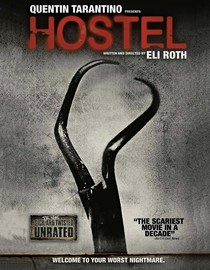 Summary:
Two Americans traveling through Europe are disappointed at the lack of European lady action, when a Danish man informs them of a hostel in Eastern Europe where the women are all over Americans. The men go there, but as new friends and finally one of them disappear, they discover a sinister game played by the Eastern Europeans.
Review:
The concept of this film is great. A rural area where Europeans pay to torture to death people on a sliding scale based on the person’s nationality. Unfortunately, the film takes way, way too long to get there.
My friend and I watching the film turned toward each other after about half an hour of seeing a gratuitous amount of tits and asked, “Um, is this a horror movie or a sex in Europe movie?” Not that we were complaining about the nudity, it’s just we signed up for horror, blood, and guts, not sex. Fine, set it up that these guys are vacationing in Europe, but don’t take so dammed long to do it.
The actual scenes of torture are truly gruesome. There was much vocalization of “ahhh!” and “ewww!” Yet the scenes lacked the depth of similar scenes in Saw or The Human Centipede, because the audience doesn’t yet know why the torture is occurring. It simply feels like depraved torture porn, not part of a storyline.
The ending, however, makes up for that enough so that I’m still pleased I watched the film. Obviously, I can’t tell you the ending, but it is cathartic and surprising.
Overall, fans of horror and Tarantino will be pleased they took the time to watch this film, others should steer clear, however.
3 out of 5 stars
Source: Library

Movie Review: Saw (2004)
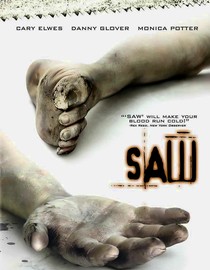 Summary:
Two men wake to find themselves chained on opposite sides of a worn-down, underground bathroom, the newest victims of Jigsaw. Jigsaw doesn’t actually commit murder himself, but instead puts people into situations where they have to make horrible choices in an attempt to save their own life. These men are told the only way out is for one of them to kill the other, and as their time limit ticks on greater amounts of information are revealed about the men’s lives and Jigsaw’s previous victims.
Review:
My very first comment as the end credits rolled was, “Holy crap, I can see why this became a franchise.” The story is sufficiently complex to hold interest. Jigsaw is incredibly creepy as he uses a voice distorted puppet to communicate to his victims. Puppets are always creepy. Bottom line. I love the concept of a serial kidnapper/torturer doing so presumably to teach people a lesson as opposed to just really enjoying gore.
Speaking of gore, it definitely exists in the film, but the most gut-wrenching moments take place just off-screen. Apparently this was re-edited as the original cut showed those moments on-screen, and the MPAA required the cuts for it to receive an R rating. Personally, I think given their low budget, it works better letting the audience’s imagination fill in the worst moments.
Also, Losties will be pleased to know that Michael Emerson, aka creeptastic Ben, has a rather significant role in the film. I loved his acting so much in Lost, and his work here is just as good. I may have squealed a bit every time he showed up on screen. One casting negative, though, is Cary Elwes, who plays one of the men locked in the bathroom, has the worst fake American accent ever. He repeatedly slips in and out of it. I have no idea why they didn’t either just let him be British or hire an American actor for the part. Very odd.
Overall, this horror movie primarily gives viewers chills from the whole idea of such a situation far more so than gore. If horror movies are your thing, you definitely need to give the Saw franchise a shot. It became a franchise for a reason.
5 out of 5 stars
Source: Netflix

Movie Review: Soylent Green (1973)
 Summary:
In the then moderately distant future of 2022, the world has turned to being a congested chaos due to overpopulation and global warming. People survive on various colors of food-like paste sold by Soylent, the favorite of which is Soylent Green. When a police man is called in to investigate the murder of an unusually wealthy man, he realizes it all has to do with the Soylent Corporation and makes a sinister discovery.
Review:
Obviously I came at this movie knowing the “spoiler” that Soylent Green is people. What scifi nerd hasn’t heard that quote? Still, even coming in knowing the big secret, I was expecting more from this film. By far the most enjoyable portion takes place in the wealthy man’s condo where we learn women have come to be attached to condo’s as part of the “furniture” and are passed along with the condo from owner to owner. In return for being the lady of the house, they get safety, security, and food. A whole other story could be told with what is essentially a return to the caveman way of doing things. Unfortunately, this gets glossed over for the supposedly more interesting plot line.
The story is told like a 1970s futuristic version of a film noir. We have the detective fighting all odds to get to the nitty gritty truth of the story. Of course, this is the 1970s version of a future dystopia. As such, the wealthy dwellings look straight out of a 1970s porno, and the unfortunate dystopic surroundings of the poor look eerily similar to a hot and sweaty version of communist Russia. It’s an odd dichotomy that doesn’t quite work.
I was waiting for the film to move from setting up the dystopia to slowly building the horror up, but it never happened. Honestly, given the intensely overpopulated surroundings these people live in and severe lack of food, I actually came away thinking that recycling the dead almost seemed logical, and being a vegetarian, that’s quite the leap for me to make! Clearly the film missed its mark somehow. When the policeman rants about the humans being treated as cattle, all I could think was how earlier in the film both he and a friend drooled over a slab of beef. Why should I be horrified that he feels as if he’s being treated like cattle when he would willingly treat cattle exactly the same way? I was left with no sympathy for him, only for the women who get passed along as furniture with the condo’s in this future.
Overall, Soylent Green had the potential to tell an interesting story of a future where women revert back to their old subservient roles as a survival tactic. Instead, it unfortunately veers off toward a storyline I find unsympathetic and that rings as falsely horrifying given the general set-up of the movie. There are far better 1970s horror films out there, as well as better dystopias.
2 out of 5 stars
Source: Netflix

Movie Review: Original vs. Remake Comparison: The Last House on the Left (1972 vs. 2009)
 Summary:
1972:
Mary is a sweet-tempered, girl-next-door that every boy in the neighborhood has the hots for, but she has a best friend from the wrong side of the tracks. They frolic in the woods together and drink alcohol kept cool in the river. Mary’s parents do not approve. Mary and her friend go to NYC for a concert, but when her friend tries to score some weed, their night goes horribly awry. Suddenly they find themselves at the mercy of two escape convicts, a son of one of the convicts who does their beck and call for his heroin hits, and a malicious, nympho woman.
2009:
Mary is vacationing in the lakes with her doctor father and lovely mother. She goes into town to hang out with her old friend, and the two of them go back to a hotel room to get high with a teenage boy. But that boy’s father, uncle, and the uncle’s girlfriend come back, and the dad is an escaped con. He decides he can’t let the girls go and kidnaps them, finishing them off in the woods. They wind up car-wrecked and must seek help at a nearby cabin that just so happens to be Mary’s parents’. When they figure out the mystery, all hell breaks loose.
Review:
1972:
This is a classically 70s film featuring everything from feathered hair to 70s music to background music oddly upbeat for the dark tone. The opening shot is essentially of Mary’s 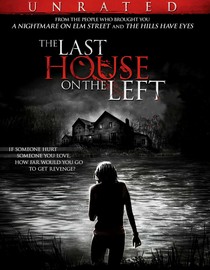 boobs. This was the era of really stretching the boundaries. Everything semi-pornographic and disgusting that they could get away with, they did get away with. There is one, rather controversial, scene in which Mary and her friend are forced to have sex with each other–and need I remind you her friend is female? There is a lot of rape, a lot of blood, and these killers really do kill just for fun. Not to make it sound like this is slasher porn, though. There’s nothing at all remotely sexy about the violence. It’s meant to be disturbing, and it is. There’s one scene in particular that will have all male viewers crossing their legs and quivering in their boots. All that said, this movie definitely reads as campy due to some unfortunate scenes featuring upbeat music and bumbling policemen that feel like they belong more in an episode of Andy Griffith than a horror movie. I’m really not sure what Craven was thinking sticking those scenes in there. There of course also is the enduring problem of the victims being truly, incredibly stupid. Horror is the most horrifying when it feels as if the victims did everything smart, but still got caught. The element of unsuspected revenge is what saves the movie, though.
2009:
This movie is quite creative for a modern horror. It takes a fairly sympathetic main character and has her a make a rather impulsive, but not completely stupid decision. Mary and her friend take far more agency trying to get away. They are far more modern female victims. They fight back physically and not with words and pleading. The cinematography is dark and intense. The convict’s son becomes a far more sympathetic character, and Mary’s parents much more believable as a vindictive pair. The whole plot moves at the perfect pace, and the ending is surprising.
1972 vs. 2009:
I have to say, 2009 wins for horror movie quality. It is put together more smoothly without the odd side-story of the police with the humorous background music. The story is more cohesive. However, surprisingly, 1972 is far more gory and feels more like a slasher. The violence, both sexual and physical, is surprising, and the villains are far more evil. If you’re out for the chills of a good horror, movie, go with the 2009 version. If you’re after sheer blood and violence, go for the 1972 version.
1972: 3.5 out of 5 stars
2009: 4 out of 5 stars
Source: Netflix
1972: Buy It

2009: Buy It

Movie Review: The Host (2006) South Korea Gwoemul
 Summary:
In the city of Seoul a haughty American military officer makes a Korean worker pour formaldehyde down the drain, which empties into the River Han. Shortly a creature mutates and turns into a beast that comes up out of the river and terrorizes the peaceful people living and working beside the river. The government cracks down on everyone who came into contact with the beast, claiming that the mutation is contagious. Meanwhile, the beast captures a little girl, and her whole family escapes quarantine and goes in pursuit of her.
Review:
I’ve developed a fondness for foreign movies, but this one was epically confusing. In fact, I live tweeted it, and my tweets were mostly ones of confusion. I’m really not sure how this movie crossed over abroad the way it did. Think of the worst American horror movie you’ve seen in the last couple of years and think about someone bothering to translate it into Korean. That’s what watching this was like.
First, there’s the main issue of formaldehyde turning only one creature in the whole River Han into a beast. That doesn’t make any sense at all. Period. Then there’s the beast itself. Although the cgi is very good, how it just doesn’t look particularly frightening. It can run around on land, swim, and hang by its tail off the bridges. It frankly looks a lot like a giant fetus running around. I couldn’t stop laughing.
Then there were just a bunch of odd, confusing moments. Maybe it was a cultural thing? Maybe the translation was bad? I’m really not sure. For instance, when the beast first appears, someone calls out that it’s a dolphin and gets all excited. I’m sorry; it looks nothing like a dolphin at any point in time. Wtf? Then there’s the main family. For the longest time, I thought that the little girl and her father were actually brother and sister with a slightly incestuous relationship. They look practically the same age! He gives her beer because she’s “in middle school now.” In fact, the whole family’s relationships with one another were completely baffling. Then there’s one of the weapons used against the beast that was some sort of inflated thing hanging down from a beam or something, and it, swear to god, just looked like a giant, yellow penis. Wtf? There were just too many wtf moments to get into the movie.
The one good thing I can say about the movie is that it reveals quite clearly the anti-American feelings in South Korea. I’m sure it would be interesting as a cultural study for that alone. I guess it was also entertaining, ableit in a wtf way. Given that, I’d recommend it to people with an interest in Korean culture or an enjoyment of bad horror movies.
2 out of 5 stars
Source: Netflix

Movie Review: The Human Centipede: First Sequence (2009)
 Summary:
Two American girls on a road trip through Europe get a flat tire late at night in Germany. They walk to find help, and stumble upon the residence of Dr. Heiter, a first-class surgeon who separates Siamese twins. He promptly kidnaps them, along with an unfortunate Japanese tourist, and announces to them that they will become part of a first-time experiment. He will fuse them together mouth to anus to create the human centipede.
Review:
This independent film mixes two great horror movie classics–kidnapping and a deranged doctor–and combines them into a great idea. It doesn’t quite attain the heights such a great idea should have, but I can easily see it becoming a cult classic.
Dieter Laser, who plays Dr. Leiter, does an excellent job. His facial expressions are magnificently creepy. He is actually German, so his German is perfect, as well as his German accent. Akihiro Kitamura’s performance was also well-done, particularly given that he mostly just gets to yell in Japanese and whimper. The actresses who play the two girls–Ashley C. Williams and Ashlyn Yennie–have painfully annoying voices. It was a blessing that they were the two end sections of the human centipede, because it shut them up.
Given how incredibly idiotic and annoying the two girls are in the beginning of the film, I can’t help but suspect that the writer was trying to make us feel less sympathy for them. Possibly with the hope that it would soften the blow of the gross idea? Maybe.
As far as the grossness inherent in three people being sewed together mouth to anus, they could have taken it much further than they did in the film. Only bits and pieces of the operation are shown, and the human centipede wears bandages so strategically that you don’t really see much of the actual connection. It’s more about the viewer imagining it than actually seeing it. Although the scene where the front unit of the human centipede (the Japanese man, Katsuro) must first *ahem* use the restroom post-surgery is quite gross, it is simultaneously hilarious. If you have a bit of a quirky sense of humor, the horror and gross-out factors of this film are greatly lessened. In fact, I found The Fly to be much more disturbing and disgusting than this film.
Overall, if you enjoy gross-out, B-level horror films, you will have a fun time watching this movie. It’s short, interesting, and different.
4 out of 5 stars
Source: Netflix

 Support my work with a tip or browse my shop for curated book club guides, how to guides, cross-stitch patterns, and more!


This work by Amanda Nevius is licensed under a Creative Commons Attribution-Noncommercial-No Derivative Works 3.0 United States License.
 Opinions of a Wolf