
Archive
Series Review: The Dark Tower Series by Stephen King (spoiler warning)
Introduction:
I post series reviews after completing reading an entire series of books. It gives me a chance to reflect on and analyze the series as a whole. These series reviews are designed to also be useful for people who: A) have read the series too and would like to read other thoughts on it or discuss it with others OR B) have not read the series yet but would like a full idea of what the series is like, including possible spoilers, prior to reading it themselves or buying it for another. Please be aware that series reviews necessarily contain some spoilers.
 Summary:
“The man in black fled across the desert, and the gunslinger followed.” This famous opening line begins the distinctly American fantasy epic tale of Roland the gunslinger’s quest for the Dark Tower. In this fantasy, there are multiple parallel universes, referred to as whens and wheres. The one Roland inhabits that is home to the Dark Tower and beams that keep all the worlds together and operating functionally just so happens to distinctly resemble the old American wild west. Gunslingers in this world are like the knights of the round table in old England, and Roland is the last of his kind. He’s on a quest both to reach the Dark Tower and save it and the beams, as  they seem to be breaking. Through the course of his quest, Roland draws three new gunslingers and a billy-bumbler to become his ka-tet–his family bound by ka (fate) not blood. These new gunslingers all come from America, but from different whens and versions of America. Eddie is a heroin addict. Susannah is an African-American woman from the 1960s who is missing both of her legs from the knees down and has Dissociative Identity Disorder (more commonly known as multiple personality disorder). Jake is a boy from a wealthy family in NYC that hardly pays attention to him. Oy is a billy-bumbler; a creature from Roland’s world that looks a bit like a dog with a long snout and a curly tail but is able to talk. After training and bonding together, they continue on their quest for the Dark Tower. A quest that leads them through old ruined cities in Roland’s world, gangster territory
  and rural Maine in America, a countryside farming community where almost all births are twins, and much much more. The ultimate questions of ka, how the worlds are bound together, and just what role this gunslinger has to play in all of it loom at the center of this epic tale.
Review:
The interesting thing about the Dark Tower series is that each book has its own unique vibe, feel, and style to it, yet they together work to make up a complete whole that has its own unique feel to it too. Because of this, certain entries  in the series may appeal less to some people than others. For instance, I did not enjoy Wizard and Glass, because it was essentially a slow-paced wild west romance story, yet I know some readers enjoy that entry immensely. Similarly, I love Song of Susannah for both its horror and the way King structured it using song stanzas to correlate with the sections of the book, yet I know some people who found it too dense for one entry in the series. The thing is though, to me, the Dark Tower is more about the experience of reading the series as a whole than the individual books. I’m perfectly willing to work through a book or a few chapters that aren’t quite the genre I prefer, because I know that will change up later on and whatever is being discussed is important to the story as
  a whole. It frankly is interesting to read a series that explores so many different genres within itself. It makes the whole concept of parallel worlds more believable as each area they go through feels different.
The characterization at first seems simplistic. There’s Roland the gunslinger. He’s got a one-track mind in pursuit of the tower. He’ll do anything to reach it, even if it’s questionable. Is he justified in his vehemence? It’s hard to tell at first. Similarly, the man in black who he is originally pursuing is extraordinarily one-dimensional. He is just an evil magician, and that is all. Similarly, when Eddie, Susannah, and Jake are first drawn into Roland’s world, they are also one-dimensional. Eddie is just the junky. Susannah is the crazy woman with multiple  personalities. Jake is a lonely, frightened little boy. Yet as the series progresses, King gradually develops the characters to be rich and multi-dimensional. Their characters are so intensely vivid, including even Oy, that I actually found myself crying as bad things happened to various members of the ka-tet. Eddie overcomes his addiction, as well as the emotional wounds inflicted on him by his older brother to grow up and become a true man. Susannah does not lose her multiple personalities, but she learns to work with them. They are a part of her, and she grows to accept that. She stops being bitter about her accident and her lot in life and comes to be self-sufficient and caring of those around her. Jake quickly grows to become a confident young man who cares for his ka-tet, but especially Oy and Roland. Finally, Roland gradually learns to open himself up to relationships. Although
  the tower still calls to him, he finds himself questioning if maybe the ka-tet is better than the tower.
The horror elements in the series definitely live up to what one would expect from King. There are disgusting moments, such as a man sick from the weed drug in Roland’s world that makes users go insane. There are also truly terrifying moments such as when a baby boy turns into a spider and eats his own mother via her breast. Then there are mentally disturbing themes such as the children who get stolen by the wolves and are returned with their brains completely ruined. It is later discovered that their brain power was fed to telepaths in service of the Crimson King who is seeking to destroy all the worlds. Whatever flavor of horror suits you best, you will find it in the series.
The themes of love and building your own family and being at the hands of fate are what truly carry the series, though. These themes are what make the reader care about the horrors that are happening to Roland and his ka-tet. They’re what makes it possible to suspend disbelief about multiple worlds being held together by a tower, a rose, and beams. The ideas of self-sacrifice, serving your purpose, and caring for others who ka has brought into your life are powerful and subtly expressed. To me the whole concept of making your own family is the most endearing part of the series, and I loved seeing it portrayed in such a subtle, tender manner.
Of course what really brought the series to a whole new level for me is the ending. It blew me away. It was completely unexpected. Roland reaches the tower after having lost his ka-tet. He goes in and climbs with each floor displaying items and smells to represent each year of his life. He reaches the top door and pulls it open only to realize, horrified at the last moment, that he is being pulled through back to the desert where the series began. The voice of the tower speaks to him about his journey. That he’s done it before. That he’s learning a little each time. It points out that Roland realized his mistake in not taking a few moments to pick up the horn of Eld, so this time, it is strapped to Roland’s side, where it wasn’t originally. For a moment Roland remembers what has just occurred, but soon he just feels it was all a mirage. A heat-induced daydream of finally reaching the dark tower. He continues on, ending the series with the same sentence it began with.
Personally, I feel that this puts the series in a whole new light. Who exactly is this Roland that he is so important that he has to redo this quest until, presumably, he gets it right? Why did King choose to tell us about one of the times he didn’t get it right? What did he get wrong? What lessons is Roland supposed to be learning? Will Roland ever escape the cycle or is it some sort of hell punishment he’s doomed to repeat forever? Of course, it all reads a bit like the belief in reincarnation and learning something each life cycle. In any case, it made me personally want to immediately start rereading the series, searching for clues about the repetition of the journey. It brings the series to a whole new philosophical level that truly elevated it in my mind from a fun fantasy to an epic.
Overall, there are parts of the series I didn’t enjoy, and due to the vast variety of genres represented in the series, most people will probably dislike or struggle with at least bits of it. However, when the series is put together and all the pieces click together in your mind, it becomes an unforgettable, completely American epic. A wild west fantasy is unique, and the themes and philosophical questions explored underneath the entertaining prose make for something even deeper than that. I am incredibly glad I took the time to read this series, and I would recommend it to anyone. It is well worth the time invested.
5 out of 5 stars
Source: borrowed, Harvard Book Store
Books in Series:
The Gunslinger, review, buy it
The Drawing of the Three, review, buy it
The Waste Lands, review, buy it
Wizard and Glass, review, buy it
Wolves of the Calla, review, buy it
Song of Susannah, review, buy it
The Dark Tower, review , buy it


Book Review: The Dark Tower by Stephen King, (Series, #7)
 Summary:
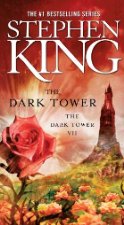
Roland and his ka-tet face their greatest challenges yet. First they must successfully save the rose in NYC. Then they must find each other, and Susannah and Jake need to escape the low men who would harm them. Also on their list before continuing to pursue the Dark Tower is to stop the breakers who mean to destroy the beam, thereby leading the worlds to ruin. Can they save the beam? Will Roland reach his beloved Dark Tower with his ka-tet whole or shattered? Will he reach it at all? The Dark Tower looms with a far greater presence than ever before, calling to both Roland and reader commala-come-come.
Review:
Now I understand why people who’ve read the entire Dark Tower series rant with showers of praise about it. This final entry in the series totally blew my mind. The settings were perfectly drawn and easy to visualize. The multiple plot lines were all complex and yet simultaneously easy to follow. I cried multiple times reading this book, including in public, and those who know me know that I generally don’t cry at stories. All of the characters of the ka-tet are treated with full-formed character development. They are richly drawn, but it is also easy to see how they have grown and changed throughout the series. The multiple, inter-locking worlds of Roland and his ka-tet suddenly snap into place in the reader’s mind, and suddenly everything is nearly as clear as it probably is for King.
This book is quite long, but it didn’t feel like it. I wanted to read it nearly constantly, yet I had to put it down periodically due to the emotional wringer King was bringing me through. It’s been so long since I read a series that wasn’t either a trilogy or a serial romance that I’d forgotten how emotional it can get to have a long, fully realized tale told with characters you’ve grown to know and care for. These people read as real people, and the world feels real. It makes me want to go look for my own unfound door to journey to a parallel reality. Even though at first I kind of laughed at the idea of a rose and a tower and beams somehow controlling and seeing over multiple worlds, at some point I bought into it. I suspended my disbelief, and that’s exactly what a spinner of tales is supposed to be able to help his readers do.
What made me truly fall in love with the story and make me want to instantly start re-reading the series over again from the beginning is the ending. I wouldn’t give it away and ruin the experience of discovering it yourself for anybody, so just let me say, it totally blew my mind. I did not see it coming. It made my perspective on the whole tale change, which explains why I want to re-read it so much. (Maybe next year). I can also say that the ending makes reading the rest of the long series entirely worth it. Definitely don’t give up on the series part-way through. Continue all the way to the end.
If you’ve been reading the Dark Tower series and are uncertain about continuing, absolutely do. I don’t hesitate to say that the last entry in the series is tied for the best and will totally blow your mind. I highly recommend the whole series, but I especially encourage anyone who has started it to finish it. It’s well worth your time.
5 out of 5 stars
Source: Harvard Book Store
Previous Books in Series:
The Gunslinger, review
The Drawing of the Three, review
The Waste Lands, review
Wizard and Glass, review
Wolves of the Calla, review
Song of Susannah, review
Reading Challenge: R.eaders I.mbibing P.eril
 I love horror. Love love love it. I know a lot of readers don’t. They say it scares them too much or keeps them awake at night. The thing is, I used to be one of those readers! I used to avoid horror because when I was younger horror would absolutely petrify me for weeks on end. I’d think every squeak my old house would make was the boogey-man coming to get me. But then I decided, “Enough of this shit! I’m letting my fears get in the way of an entire genre.” So I dabbled my toes, then I jumped in, and now it’s one of my favorite genres. Horror lets me get lost in a world where it’s ok to be scared and supernatural things occur and I basically get to watch car crashes repeatedly. It’s awesome. The whole genre. I can’t believe how much I’d be missing if I’d continued to avoid it! For instance: Zombies. Tree porn. Everything Stephen King ever wrote. You get my point.
Anyway, so when I saw via Chris at Book-a-rama that Carl of Stainless Steel Droppings is hosting a mystery/suspense/thriller/dark fantasy/gothic/horror/supernatural reading challenge for the spooky fall months of September and October entitled R.eaders I.mbibing P.eril, I knew I wanted to sign up. Not that I won’t be reading horror for these two months anyway, but I thought if I signed up, it’d alert you guys to the challenge. Maybe one of my lovely readers is tentative about one of those genres? Well this is the perfect opportunity to stretch your boundaries! Plus you’ll be in the company of a lovely bunch of people for a couple months to do it.
Of course, that’s my other reason for participating. I want to virtually meet other book lovers who are reading horror!
Originally, in light of the fact that I try to keep my reading unstructured and fun, I was going to sign up for one of the lower levels of the challenge….then I saw how much of my TBR pile fits! Lol, so I’m signing up for the Peril the First level: read four books that fit into any of the genres I mentioned above.
My potential reads for the challenge (direct from my TBR pile) include:
- An Edgar Allan Poe collection whose name is escaping me at the moment
- The Lady in the Lake
by Raymond Chandler
- Thinner
by Stephen King
- The Dark Tower
by Stephen King
- The Vampire Lestat
by Anne Rice
- Hunt Beyond the Frozen Fire
by Gabriel Hunt
- His Father’s Son
by Bentley Little
- Fragment: A Novel
by Warren Fahy
- The Day of the Triffids
by John Wyndham
- The Devil You Know
by Mike Carey
I hope you’ll sign up and do the challenge with me! Especially if you’re afraid of horror. You can sign up for one of the lower levels and just dip your toe in. :-)
Any votes for which four out of my list I should read?
Movie Review: Slither (2006)
 Summary:
When an asteroid comes to a small, southern US town, it brings with it alien slug-like creatures who infest a local man. His wife is the first to notice something askew, but not before the slugs manage to impregnante a local woman. Can she and the golden-hearted sherriff save the day?
Review:
The two most important things to know about this movie are: 1) It was written and directed by James Gunn Dawn of the Dead 


Probably the best part of this movie, besides watching Fillion, is the special effects. The slugs look totally believable, and as the husband becomes more taken over by the aliens, he looks increasingly like Brundle in The Fly
My main gripes with the film are that the husband is kind of miscast. It’s really not believable that his wife ever married him to start with. He at least needed a better looking face or something. Plus his acting prior to all the special effects taking place is kind of iffy. I also wished the slugs had wreaked a bit more havoc prior to entering the bodies whereupon we can’t see them anymore. They were cool to look at.
Overall, you’re going to enjoy this film if you enjoy B-level, gross-out horror. It’s not up the level of The Fly
3 out of 5 stars
Source: Netflix

Movie Review: Shrooms (2006)
 Summary:
Five Americans–two straight couples and one single gal–go to Ireland with two sole purposes: take shrooms and land their Irish pal as a boyfriend for the single gal. Their friend takes them into the forest and aids them in gathering the shrooms. As they are making the tea, the Irishman tells them the tale of the Black Brother and the Lonely Twin, an evil priest and the boy he tortured at a now abandoned school for troubled youth nearby. As the night wears on the next day comes, the friends are left wondering if the horrors they are now seeing are the result of an open portal to the supernatural or just a bad trip.
Review:
This was a fun twist on the slasher flick norms, obviously not too heavy on characterizations as I can’t remember most of the character’s names. I do know the annoying jock guy was named Bluto, because that’s just a hilarious name. Anyway, the story is told from the perspective of the member of the group who ate a bad shroom and is now having premonitions about people’s deaths. That part is rather like Final Destination
The Black Brother is deliciously creepy. He alternates between moving on what appear to be broken feet, floating, and crawling down from the trees. His face is always obscured by his monk-like robe. The cinematography is pretty good for a B-level horror flick. The premonition and supernatural bits are just wobbly enough to give the viewer a bit of a high feeling themselves without being too distracting from the story.
The acting is typical of what you find in B level movies. The actors all have their shrieking down to a science. They’re good at being scared, which is all that really matters. Unfortunately, the actor who plays the Irish guy is completely incapable of an Irish accent and manages to just sound British the entire time. That’s a bit distracting, but oh well.
There is one scene early in the movie that sold it to me right away as a slightly laughable but still creepy slasher flick. It involves a hallucinated cow who warns Bluto that he’s about to become a “dead fucker.” I mean, a creepy talking cow? Total B-movie win!
What really moved Shrooms
If you enjoy B-level slasher flicks with a sense of humor, such as Final Destination
4 out of 5 stars
Source: Netflix
Book Review: Slither by Edward Lee
 Summary:
Nora and Loren are polychaetologists–worm scientists. They are asked by their college to accompany a National Geographic photographer to an island off the coast of Florida to help her photograph a rare worm. They are accompanied by a member of the military, as it is an island that is unused military property. Also coming surreptitiously to the island are two criminal brothers and their mutual girlfriend to check on their pot growing operation and a group of four college students looking to party. What they don’t know is that the island is gradually becoming infested with a parasitic worm. Only this worm isn’t microscopic. It’s huge and has multiple, gruesome ways of using its hosts. As the various groups try frantically to avoid the worms and their ova, it seems that someone in toxin-blocking suits is watching them.
Review:
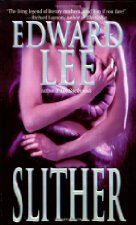
I originally picked this book up and read its blurb because of the cover. I mean, look at that! Such a striking piece of art. Upon reading the description, I decided it sounded a bit like a slightly more phallic Michael Crichton-esque book. In a way, it certainly is. It has the group with scientists attempting to solve a situation that is putting civilians at risk. The similarities kind of end there, however.
This is definitely a horror book, but I wouldn’t call it a scientific horror book. There’s nothing particularly plausible about any of it. I’d absolutely classify it more as the B-type movie gross-out fest. Lee does the gross-out part well. I found myself continually surprised and disgusted by the various things the worms do to human beings. The worms are…well, they’re so gross that it took me a bit longer than usual to read this book because I couldn’t read it right before bed or while I was eating. So he’s definitely good at that!
The book blurb hints at exciting sexual tension, but the sex veers much more strongly toward sexual abuse or gross sex than fun, crazy sex. I didn’t particularly find this bothersome, although a bit sad for the characters. However, I know some readers find that triggering, so you should be aware.
I enjoy watching B films with silly effects and bad dialogue, but it’s a lot more tedious to read awful dialogue than it is to hear it, for some reason. The dialogue really, truly is atrocious. Particularly bad is when Nora talks or thinks. It’s like Lee has never been around a nerdy woman in his life. It’s not much better when he’s writing anyone’s thoughts. They all have the most inane thoughts I’ve ever read. This actually was so tedious to get through that I almost gave up on the book a few times in the beginning. I’m glad I didn’t, because the end is absolutely a surprise. Not so much in the who survives sense, but in the mystery of the worms. It was a satisfying payoff, but I wish he’d either gotten to it sooner.
I feel that overall this is a decent horror book. It’s entirely possible that the beginning just didn’t jive with me, but would with others. I recommend it to fans of gross out horror who don’t mind flimsy dialogue.
3 out of 5 stars
Source: PaperBackSwap

Movie Review: The Fly (1986)
 Summary:
Seth Brundle’s future is looking up. He is on the verge of completing a teleportation machine and is dating the journalist who is chronicling his creation of this wonderful new invention. One drunken night brought on by unwarranted feelings of jealousy, he makes himself the first human test subject for teleportation. Unfortunately, a fly teleports along with him, and the machine merges their DNA, beginning Seth Brundle’s gradual, gruesome transformation into Brundlefly.
Review:
A horror movie hasn’t made me cringe and shriek to an extent like The Fly did in a long time. I love a good horror movie, and the filmmakers hit all the right notes to make a viewing a mind-tingling, gross-out pleasure. The urban loft sets are the perfect back-drop to the scientific horror. The 80s clothes and hairstyles enhance the visual appeals instead of distracting from it. The dialogue is ideal, having the characters say just enough to keep the story going but not too much to distract from the visual horror.
Seth Brundle’s gradual transformation is a terrific mix of his body gruesomely changing and him visibly losing his mind. Jeff Goldblum does a fantastic acting job, showing the remnants of Brundle’s human mind and the emerging of his Brundlefly mind. He manages to pull this off through the grotesque make-up, and it is this superb acting that really makes the horrific scenes read as real and not fake, B-movie material.
I have not enjoyed a horror movie this much in ages. If you’re a fan of horror or 1980s films, you absolutely must watch The Fly. I doubt you will be disappointed.
5 out of 5 stars
Source: Netflix
Movie Review: Killer Klowns from Outer Space (1988)
 Summary:
It looks like a meteor has crashed near a small town, but it actually is a space ship. A space ship that looks exactly like a giant circus tent. Oh, and did I mention that it’s full of aliens that look like deformed clowns armed with guns that shoot cotton candy that wraps its victims up into cocoons? Facing off against these creatures are a teenage gal, her current flame, and the cop who used to date her. Will anyone in the town survive the night?
Review:
Confession. I used to be deathly afraid of clowns. We’re talking 5 year old me would instantaneously cry upon merely seeing one at a distance. Although I’m mostly over that now, I was a bit nervous that watching a clown horror movie would stir things back up. Well, I definitely wouldn’t call this a horror movie.
It is the perfect blend of ridiculousness and horror tropes that it takes to make a deliciously campy horror film. I found myself laughing throughout and delighted at the various directions the writers took traditional circus elements to make them dangerous and evil.
There’s popcorn that turns into evil clown heads (but only after being in a dark space). People are turned into pods of cotton candy that hang ominously inside the ship. The balloon animals come to life and are evil. To someone who always found the circus a bit….odd….it’s totally delightful.
The movie also has its own theme song that is still earworming me days later. The song, clothes, and acting are all wonderfully 80s. From the main girl’s hair to the grouchy cop to the teens running an ice cream truck in an attempt to get girls, it gets just the right combination of elements that screams–this is why the 80s was awesomely weird.
If you appreciate camp, the 80s, or light horror, you’ll enjoy this film.
4 out of 5 stars
Source: Netflix
Book Review: The Collected Public Domain Works of H. P. Lovecraft
 Summary:
Lovecraft was an American author of horror living during the late 19th and early 20th centuries. He has a bit of a cult following, largely due to a creature featured in some of his stories known as Cthulu. (I’d link, but your experience will be much more amusing if you google “cthulu”). Some common themes in his horror include eerie things coming from ocean depths, scientific reanimation of corpses, human-like apes, the dreamworld, and ancient myths being fact. This collection includes 24 short stories–The Alchemist, The Beast in the Cave, Beyond the Wall of Sleep, The Cats of Ulthar, Celephais, The Crawling Chaos, Dagon, The Doom that Came to Sarnath, Ex Oblivione, Facts Concerning the Late Arthur Jermyn and His Family, Herbert West: Reanimator, Memory, The Music of Erich Zann, The Nameless City, Nyarlathotep, The Picture in the House, Polaris, A Reminiscence of Dr. Samuel Jackson, The Statement of Randolph Carter, The Street, The Terrible Old Man, The Tomb, The Tree, and The White Ship.
Review:
I decided I needed to actually read some Lovecraft after getting swept up in the Cthulu subculture last December through Cthulumas hosted on Tor.com. So I searched Librivox via the Audible app and found this collection. Unfortunately, there was no Cthulu in it. Also unfortunately, I wasn’t too impressed by most of the stories.
I think the main issue is that a lot of the horror just didn’t age well. Lovecraft’s stories depend largely on the unknown, only a lot of what was unknown in his time is known now. For instance one of his stories focuses around the mystery of the North Star, which isn’t so mysterious anymore. They also depend on unexplored territories on the continents, whereas now it’s space that is unexplored. I can’t get into the character’s mindset of fear when he reads simply as naive and uneducated.
His stories that center around the hypothetical reanimation of the dead are some of the best ones. They read like a mix of zombie and Frankenstein, and it works because we still don’t know what happens after death. Herbert West: Reanimator was one of the only stories to give me the actual chills.
I would be amiss not to mention the racism evident in his stories. Any that feature Africa talk of a pervasive fear of what lies in the depths of the continent and repeatedly mention apes mixing with men. Even if he was unaware that he was harboring racism, these read at the very least as being anti-miscegenation. It’s hard to listen to stories whose horror centers around fear of what people look like as opposed to what they may be capable of doing.
Similarly, he read as being anti-science. Any scientists in his short stories are portrayed as sticking their noses where they don’t belong. Apparently, we can never fathom the universe, so we better not. It’ll hurt us if we try. I found myself rolling my eyes at the sleep stories. They were all so ridiculous when I know doctors and researchers studying sleep. It’s really not this dangerous other-world he presents it to be.
Where Lovecraft is at his strongest is when he veers from his typical themes. My loyal readers probably won’t be surprised at all that one of the most pleasurable reads to me was The Cats of Ulthar, which basically presents animals as sentient and capable as humans.
I can only hope that the Cthulu stories fall more in the category of Herbert West: Reanimator and The Cats of Ulthar. The rest wrought a decided “meh” reaction from me. I’d recommend them only if you have no issue reading horror centering around unknowns that are now known.
2 out of 5 stars
Source: Librivox recording via Audible app for the iTouch and iPhone
Book Review: The Thing from the Lake By Eleanor M. Ingram
 Summary:
In the 1920s Roger Locke is a composer living in New York City. He buys a house by a lake in Connecticut as a country retreat and appoints his cousin, Phyllida, and her husband, Ethan Veer, as caretakers of the property. His first night on the property, he meets a woman–whether spirit or alive, he can’t tell–and is promptly intrigued by her. His visits quickly turn sinister, though, as a dark force based in the lake comes at night to threaten Roger away from the woman. What is the thing in the lake? Who is this woman? Can Roger defeat the dark force thereby returning himself and his cousins to their idyllic lifestyle?
Review:
I had a feeling I was going to like The Thing from the Lake when I discovered that every chapter started with a relevant quote pulled from the classics of the western canon, and I was right. Ingram weaves a complex tale, filled with surprising twists and turns. Just when you think you know what the overarching point is, or where the story is going to go next, you find out that you were wrong.
Ingram artfully goes back and forth between the daytime where the story is more period piece and the nighttime, which is all horror. It is a very New England tale, featuring small farmers, big city dreams, references to the Puritans, and quirky, drawling neighbors. While Phyllida and Ethan are believable and infinitely likeable, Roger’s immediate infatuation with the woman is a bit suspect. It seems shallow how infatuated with her hair and her scent he is, but I think he later proves himself. Sometimes people just know when they meet, so I’m willing to give Roger the benefit of the doubt.
Ingram leaves it up to the reader whether to believe the scientific or the supernatural explanation for the goings on at the lake. It reminded me of my class on the Salem Witch Trials a bit, and I’d be willing to bet that Ingram was at least partially inspired by them. It’s not easy to make both answers to a mystery equally plausible, but she pulls it off wonderfully.
The only thing holding me back from completely raving about the book is that there are parts that smack of historic misogyny. I’m not blaming Ingram. For her time period, many of her thoughts were quite progressive, and I’m sure Roger is an accurate representation of many men of that time period. However, when he speaks about how his “plain cousin” Phyllida is so much more comely when she’s doing “womanly” household chores, it makes me cringe, and not in the good horror way. Thankfully, these instances are not that frequent, so they’re easy enough to glide over.
The Thing from the Lake is a surprisingly thought-provoking book. I highly recommend it to everyone, but particularly to those who enjoy New England literature or light horror.
4 out of 5 stars
Source: Librivox recording by Roger Melin via the Audiobooks app for the iTouch

 Support my work with a tip or browse my shop for curated book club guides, how to guides, cross-stitch patterns, and more!


This work by Amanda Nevius is licensed under a Creative Commons Attribution-Noncommercial-No Derivative Works 3.0 United States License.
 Opinions of a Wolf