
Archive
5 More Questions About Books
You guys may remember the previous meme post I did 5 Questions About Books, which I acquired from Syosset Public Library’s Readers and Reference blog. Well, the lovely Sonia of the library, contacted me with the complete list of questions they use in case I wanted to do another meme! So here’s 5 More Questions About Books, and as before, feel free to use the meme yourself.
What book is on your nightstand right now?:
The Angry Heart: Overcoming Borderline and Addictive Disorders: An Interactive Self-Help Guide by Joseph Santoro, PhD. It’s a great book, and I highly recommend it!
What is a book you’ve faked reading?:
Bleak House by Charles Dickens. It was assigned for a required course in British literature. I attempted to read it, but after a couple of chapters and with the other homework I had going on that semester, Sparknotes became my very dear friend. For the record, I aced the exam questions on it. ;-)
What’s a book that’s changed your life?:
The Handmaid’s Tale by Margaret Atwood. I was raised in a very traditional, religious, patriarchal manner, and this book was what spurred me on to investigate other ways of looking at the world. Needless to say, I am no longer religious; I am a feminist. This book is what started me on the path to free-thought, and I will always love Margaret Atwood for that.
Can you quote a favorite line from a book?:
“…If death
Consort with thee, death is to me as life;
So forcible within my heart I feel
The bond of nature draw me to my own;
My own in thee, for what thou art is mine:
Our state cannot be severed, we are one,
One flesh; to lose thee were to lose myself.”
Adam to Eve, Paradise Lost by John Milton. One of my favorite quotes of all time.
What’s your favorite book genre?:
This should come as absolutely no surprise to anyone, but dystopian literature followed closely by scifi with horror a super-duper close third.
Book Review: The Andromeda Strain by Michael Crichton
 Summary:
The US government is searching for new biological weapons by sending satellites into the edges of the atmosphere to collect bacteria strains that may exist there but not on earth. Due to concerns of contamination on reentry, an emergency team called Wildfire is created as a contingency plan. When a satellite crashes in the Arizona desert, grotesquely killing all but two residents of a small town, the team of scientists is put to the test in a race to protect humanity.
Review:
An up-front confession: Michael Crichton is one of my favorite authors. I love how realistic his science is, and he writes suspense quite well. I was therefore excited to read his first book. Unfortunately, Andromeda Strain did not live up to these expectations.
The suspense is killed right off the bat with the narration style. The story is told as if it is a report being written up by someone after the event. This means that we not only know that some of humanity survives this impending doom, but that society is still held together enough to want a report. If I’m sure that everything is going to turn out hunky dory in the end, I’m just not going to be all that concerned throughout the book. Similarly, the characters aren’t fleshed out as well as in later books. They are basically their careers. Here’s the bacteriologist. Here’s the professor. here’s the surgeon. They don’t come across as real, rounded people, so I completely failed to care about them at all. This isn’t good for suspense, because if I don’t care about the characters, I’m not going to worry about them too much.
Crichton’s ability to set a scene shines through well in this book, however. Wildfire’s underground station is vividly imagined, as is the scene at the small town in Arizona. It was simultaneously gruesome and exciting. Similarly, his ability to weave real science into a fake scenario is carried off flawlessly here. The glimmers of the writing that would later appear in Jurassic Park and Prey is clear.
Speaking of the science, Andromeda Strain doesn’t age well. An entire page is devoted to explaining binary like it’s this huge complicated thing, which it isn’t to anyone who grew up with computers. Indeed, a lot of the book is devoted to explaining the huge computer in Wildfire’s base. Unlike biological science, in which the basics stay the same, technology changes rapidly. I don’t think it’s a wise choice to focus on in a scientific thriller, unless you are projecting plausible possibilities in technology in the future. Or super awesome possible technology the government may already have. Crichton does this really well in Prey, which is all about nanotechnology. Science horror needs to take me into a world that is a bit more awesome than my own, not lamer. Thankfully, Crichton figured this out in his later books.
If you’re a Michael Crichton fan, The Andromeda Strain is worth the read to see where he started. If you’re new to him though, I’d recommend starting with some of his later books such as Jurassic Park or Prey.
2.5 out of 5 stars
Source: Bought at Violet’s Book Exchange

Movie Review: Invasion of the Body Snatchers (1978)
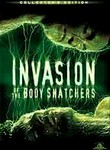 Summary:
Elizabeth wakes up one morning to discover her boyfriend, Jeffrey, being distant and acting odd. She nearly immediately intuitively senses that this man is not Jeffrey. The only people to believe her are her boss, Matt, and an author and his wife. Together the four of them struggle against the nearly invisible alien invasion of a type of plant that morphs human bodies in with their own personalities, thereby replacing the humans.
Review:
This is a remake of the 1956 movie of the same name. I was told you don’t need to watch the 1956 version first, but now I’m not so sure. A lot of the story just didn’t make any sense, and I’m wondering if those are plot points that were better addressed in the 1956 version. For instance, what makes someone at risk to become an alien hybrid? We know that the aliens came into Elizabeth’s household on a flower, yet her boyfriend morphs overnight whereas she does not. Why? Similarly, a process is started by the aliens and at some point it becomes dangerous for that person to sleep, for when they sleep, the metamorphosis completes. Why isn’t everyone transforming in their sleep? At what point is it dangerous to sleep? Why does sleep complete the metamorphosis? For that matter, why do the aliens duplicate the humans’ dna in a pod? Why don’t they just invade the body and combine dna that way? Why does the person’s body disappear when the pod is complete? Why have they come to earth? And for the love of god, why do they make that horrible screeching noise? I’m pretty sure plants don’t generally make noise. Obviously, this movie left me with a lot of questions and not many answers, and that’s something I don’t tolerate well from my scifi movies. If you’re going to do scifi, do it well. Build a world that is not our own but still makes sense! It ruins the experience for me if I’m continually yanked out of that world by my brain going, “Wait…..what?!”
On the other hand, the special effects are really good for the 1970s. The opening with the alien life wafting around space is impressive and reminded me of cgi. The pods are simultaneously realistic-looking and grotesque. Whatever noise they recorded for the aliens screeching is truly spine-chilling.
Two items of note. The first is that you get to see Jeff Goldblum of Jurassic Park in another brainy, geek role, which is fun. Also, there’s some brief nudity, which is always fun in a movie when it’s not in the context of awkward, obviously not really happening sex.
If you like scifi you won’t regret watching this movie. Just be sure to have something to do while you watch it–like knitting, or a game of Clue–to keep your mind off of the glaring plot holes and unanswered questions.
2 out of 5 stars
Source: Netflix

Movie Review: Phantasm (1979)
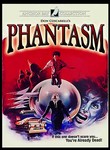 Summary:
After Mike’s parents and a family friend die, he starts to suspect something sinister is going on at the Morningside funeral home. After seeing cloaked dwarves and a flying sphere of death, he manages to convince his brother Jody that not all is right. The two set out to defeat The Tall Man before any more townspeople die.
Review:
It’s rare for a movie to be simultaneously funny and scary, but Phantasm pulls it off well. The Tall Man is incredibly spooky. His mere appearance makes you jump. Yet the dialogue provides comic relief. An example is early in the movie, Mike thinks he’s heard something sinister in the woods. Jody respond, “Ah, it was probably just a gopher in heat.”
The spooky elements are actually creative. Very few horror tropes are utilized. Some of the scenes reminded me of The Shining, with the eerie, waiting, quiet. The audience and the character knows something is afoot, yet there is nothing right then that is actually wrong. It gives delicious chills down the spine.
What really tips this over into awesomeland, is the character Reggie–an ice cream truck driver. For almost the entire movie, he wears his ice cream man uniform complete with a giant black bow tie, yet he manages to be badass. He jams on the guitar with the teenagers and fights a good fight. He’s such a creative character, going beyond the immediate perception of an ice cream man. I wish there were more characters like him in horror movies.
If you enjoy old-school horror with a touch of comedy, or just want to see some creative scares, I recommend Phantasm.
4 out of 5 stars
Source: Netflix

Book Review: Wizard and Glass By Stephen King (Series, #4)
 Summary:
Roland and his ka-tet escape Blaine the Train, but they accidentally wind up off the path of the beam and in yet another alternate version of Jake, Eddie, and Susannah’s world. They start following an interstate, heading for a palace and hoping therein lies the solution for returning to the path of the beam. One night while traveling, Roland finally tells them what has been haunting him all this time with the story of the summer he was 14 years old and his first love.
Review:
As with The Waste Lands, this book reads like multiple books in one. I was expecting that, since The Waste Lands ended abruptly without solving the problem of Blaine the Train. This book takes care of that storyline, then jumps into a flashback that lasts almost the entire book then jumps back to the present and attempts to solve a big problem. It’s a lot for one book to handle, and it would have worked better if Lud and Blaine the Train were one book taking place after The Waste Lands but before Wizard and Glass. If after doing this, King had shortened the flashback, The Wizard and Glass would be an excellent book. Of course, he didn’t do it that way.
Now that I am this far into the series, I’m seeing that King, whether intentionally or not, is writing different bits of the series as different genres. This could be why it holds wide appeal–if someone doesn’t like the genre the story is currently being told in, it will change soon enough. The first book is mainly a travelogue. The second a horror story. The third is a mix of scifi with the time paradox and horror again with Lud and Blaine the Train. Here, we get partly fantasy with the current issues for Roland’s ka-tet, but mostly a medieval romance–the story of Roland and Susan.
That medieval romance starts out well. King sets up three dialects–High Speech, In-World Speech, and Mejis accent–very well. All three are easy to differentiate, and yet are easy to read. Roland’s world is a wonderful mix of the knights of Arthur and the fabeled American west. It’s fun to read, but only when something’s really happening. That’s the problem with the flashback. It feels too long, because very little happens in large portions of it. Roland, Cuthbert, and Alain must spend most of their summer in Mejis waiting, and instead of telling the reader “wow, they waited a long time,” King makes the reader wait too, and it’s fucking boring and annoying. I seriously wanted to give up, and right when I was about to, the action started again. Finally. The action makes excellent use of this mix of fantastical and wild west, but it really takes too long to come about.
As far as the characters go, I know I’m supposed to feel for Susan, but I honestly found her annoying and dull, which is problematic since she’s Roland’s first love. Also, after all this time of Roland stating how Eddie is almost as funny as Cuthbert, I was expecting Cuthbert to be, y’know, funny. He’s not. He acts like that boy in school who used to pull your braids and think it was funny. He’s just juvenile, not witty. On the other hand, the character of the witch Rhea is excellently done. She’s simultaneously disgusting and intriguing, and she’s one of the few who manages to out-wit Roland, partly because he underestimates her since she is an old, disgusting woman. If only Cuthbert and Alain had been so vividly drawn instead of wandering shells of people for Roland to talk at.
The book is a necessary read if you plan on finishing the series. It gives important insight into why Roland is the man he is today, not to mention explains how the ka-tet escapes Blain the Train and gets back on the path of the beam. I think this is the almost inevitable dull book in an overall good series. Just take my advice and skim over the dull part of Mejis until the action picks up again.
2.5 out of 5 stars
Source: Borrowed
Previous Books in Series:
The Gunslinger, review
The Drawing of the Three, review
The Waste Lands, review

Movie Review: The Shining (1980)
 Summary:
Jack Torrance thinks he’s found the ideal job. He, along with his wife and son, can move into a Colorado hotel and take care of it for the winter in exchange for a living stipend. An aspiring novelist, Jack sees this as such a perfect opportunity to write that he shrugs off the story of the previous caretaker who murdered his wife and daughters and then committed suicide. At first everything is fine, but soon the sinister forces in the hotel start to work on Jack and his psychic son.
Review:
Wow. I love horror movies, but it takes a certain combination of plot and visual to really scare me. The Shining has scares in spades.
For the person who’s freaked out by visuals, there’s blood pouring out of elevators, corpses, and of course Jack Nicholson’s amazing facial contorions when his character turns sinister. Truly the movie would not have been anywhere near as frightening without Nicholson’s ability to contort his face into so many different frightening combinations. The man’s face was made to act.
What really got to me though is the psychological aspect of this story. What really makes this story worth it is the question of how much of what is going on is in the characters’ minds. The truly evil things that happen are performed by characters whose minds are not all there. They have lost their tenuous grasp on reality, and that is more frightening than any axe murderer, because anyone could go crazy. Essentially, anyone could turn into a monster.
Take these two elements and toss in a bit of a last-minute puzzle at the end, and you’ve got the perfect formula for an excellent horror movie.
5 out of 5 stars
Source: Netflix

Movie Review: Rosemary’s Baby (1968)
I love horror films, and I’d been meaning to watch this classic for quite some time. Netflix is so good for making you finally get around to seeing movies you’ve always meant to see.
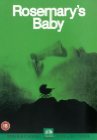 Summary:
Rosemary and her actor husband move into a new apartment despite protestations from a friend that the building has a bit of a history of odd things happening. Their new neighbors are a friendly, elderly couple. In fact, Rosemary finds them to be a bit too friendly, but her husband likes them and insists the friendship be kept up. Soon Rosemary is pregnant, but there is something odd about her pregnancy she can’t quite put her finger on until it is too late.
Review:
This is the type of horror story I love. Something sinister lurking in the background of the main character’s life. Everyone around her telling her she’s the crazy one or that she’s paranoid with only the main character and the viewer seeing what’s really going on. This gives such a different scared vibe than the more typical, oh we’re in a scary hotel room for one night ahhh.
The cinematography has that classic 1960s feel that I personally love. Maybe there’s a technical term for it, I don’t know, but it’s that awkward shot. Instead of every shot being perfectly clean cut like in modern films, the actors aren’t always in center and focused. People are off to the side. It gives almost a mockumentary film feeling without any of those staged interviews.
Mia Farrow’s acting is truly excellent. Her facial expressions show the wheels turning in her head even when other characters are in the room with Rosemary. You can see how Rosemary senses something is wrong, yet she isn’t sure what exactly.
Ruth Gordon, playing the elderly neighbor woman, also offers up an excellent acting job. She plays to perfection that horribly annoying elderly woman who everyone else finds delightful but you just want to stop touching your throw pillows. It may seem like an easy part to play, but it is a fine line to walk, and she executes it perfectly.
I think what kept me from loving the movie as opposed to just really liking it were the odd dream sequences. These too have a classic 1960s feel, but not in a good way. They feel fake, and jerked me out of the world I had been sucked into. I think most of the dream sequences could have been done without.
There is no way to discuss the social commentary this movie makes without giving away a massive spoiler, so let me just say that women’s agency is central to the plot of this film and is one of the main reasons I liked it.
If you enjoy horror, 1960s cinematography, or subtle social commentary, you will enjoy this film.
4 out of 5 stars
Source: Netflix

Book Review: Breathers By S. G. Browne

Summary:
Billing itself as a rom-zom-com (romantic zombie comedy), Breathers looks to get into the psyche of those reanimated corpses out to eat your brains, not to mention deep-fry your fingers. Andy is in his 30s and living in his parents’ basement after reanimating from a car crash that left his wife permanently dead. Andy is depressed and slowly decaying, but all that changes when he starts attending Undead Anonymous weekly meetings. There he meets Rita, and together with other members, they stumble upon southern zombie Ray who gives them jars of his venison that tastes remarkably good to Andy and has some interesting affects on him.
Review [spoiler warning]:
Breathers starts out with a bang. Nothing sucks you in quite like a main character waking up from an alcohol-induced blackout to discover he’s killed his parents and stuffed their dismembered bodies in the fridge and freezer. Browne’s dark humor serves the storyline well. It’s not easy to take a repulsive, cannibalistic, walking corpse and make him a sympathetic character instead of the terrifying other, and Browne achieves this…..to a certain extent.
At first Andy and the reader don’t know that the “venison” he’s eating is actually people. Both the reader and Andy see the positive effects of eating humans before they fully realize that’s what he’s eating. (Although, come on, I had my definite suspicions, even in a world where vampires are “vegetarians” and have Tru Blood.) Andy stops decaying and starts protesting for his civil rights to be reinstated, for zombies to be recognized as equal and valid. This is a popular, obvious analogy for various human rights fights going on around the globe. Awesome. It’s great for people who aren’t ordinarily treated as an other to get a first-person account of what that’s like.
This analogy though is why I have a bit of a problem with the twist toward the end whereby we see that eating humans leads to cravings for more humans and eventually we have a full-out blood bash eating a house full of frat boys. Aesthetically, as a horror fan, I love the blood bash. Nothing quite like reading a first-person account of what it’s like to eat another human being alive. However, the lesson learned here is that while the other may seem cute and cuddly, all your suspicions about them are true. Don’t trust them for a minute or they’ll turn full evil on you.
Browne doesn’t seem to have an issue demonizing select groups. The whole frat boys stealing limbs from zombies as pledges followed by the zombies eating the frat boys and their various one-night stands and girlfriends reeks of a weak, geeky boy’s wet dream. Revenge of the nerds zombie-style.
It’s unfortunate that Browne lets his bitterness undermine his enjoyable writing style–a wonderful mix of humor and horror. Hopefully his next effort leaves the personal grudges behind and just gives us the humorous horror we want.
If you found this review helpful, please consider tipping me on ko-fi, checking out my digital items available in my ko-fi shop, buying one of my publications, or using one of my referral/coupon codes. Thank you for your support!
3.5 out of 5 stars
Length: 310 pages – average but on the longer side
Source: Library
Buy It (Amazon or Bookshop.org)
 Support my work with a tip or browse my shop for curated book club guides, how to guides, cross-stitch patterns, and more!


This work by Amanda Nevius is licensed under a Creative Commons Attribution-Noncommercial-No Derivative Works 3.0 United States License.
 Opinions of a Wolf